Feeds:
Færslur
Athugasemdir

Posts Tagged ‘Arctic fox’

IMG_2200

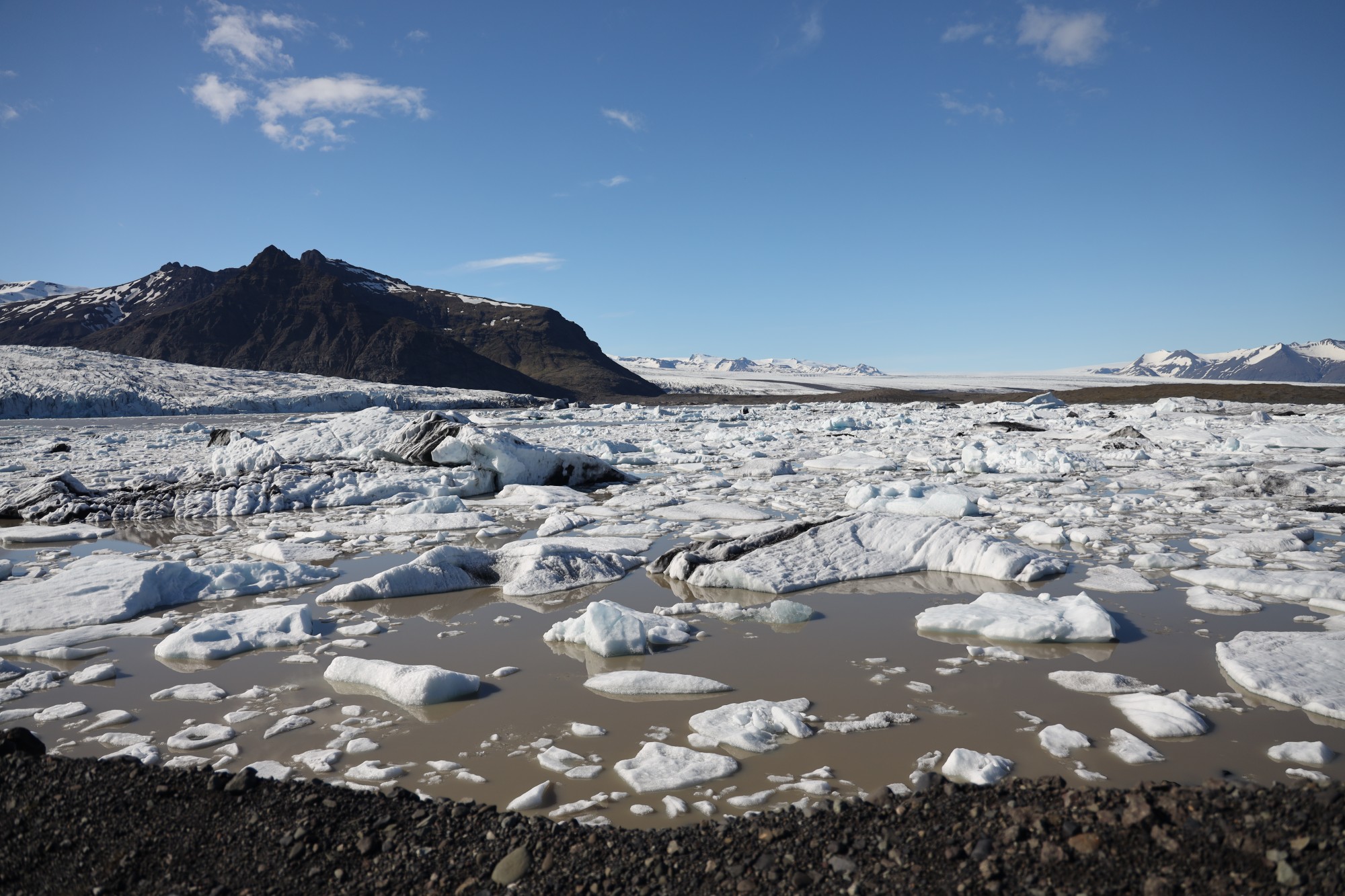
It was at the beginning of January that I needed to find recordings related to glaciers for Kristjan Maack’s photography exhibition at the Reykjavík Museum of Photography that I had to run a few selected recordings through a spectrogram. Including this recording that I recorded at Fjallsárlón in the wonderful COVID year of 2020 when the number of tourists decreased so sharply that it was possible to record at this place as well as at various other places without much interference from tourists and car traffic.
I myself find it strange that I had not run this recording through a spectrogram earlier because I remember well that I had slept all night in a Bivi bag, not far from the recording location. So I had no idea what I had recorded that night.
This recording has several interesting soundscapes during these 30 minutes while it runs. In fact, it is very interesting to listen to it all, i.e. for 14 hours.
It is recorded on 4 channels. Two microphones were on the shore of the lagoon and two hydrophones were in the lagoon. What you hear is therefore the entire soundscape that can be found in this place at a time when there is calm and quiet, before it starts to get more windy and rough. The background noise is entirely from the surface. In this calm wather, the surf is heard out on the Atlantic coast (and some traffic too) in the right channel, the echo of the surf from the mountains is in the left channel. When it starts to get rough, you can hear ripples on the surface of the lagoon.
The more I listen to this recording, the more interesting I find the background noise. How it changes slowly while birdlife and other things in the environment go about their business. Somehow this background noise is reminiscent of what is heard underwater at sea when recording from a boat drifting with currents and winds.
There is not much sound below the surface of the lagoon, although there was a lot of ice on the lagoon. This reflects a slow melting, as the temperature of the lagoon is only about one degree and the lagoon is salt-free, unlike Jökulsárlón. However, you can hear air bubbles bursting from the icebergs like a faint bird’s chirp. Occasional clicks and pops as the ice splits, crumbles and turns. . You can also hear yaks touching and scraping the bottom of the lagoon.
This part of the whole recording was made at sunrise early in the morning and the sun was starting to warm the environment. You can hear it clearly in the Rode NT1 microphone when the metal housing clicks due to temperature changes.
I let these clicks be because many people have asked me about this microphone for outdoor recordings. But these clicks are mostly heard during sudden temperature changes.
This recording is rather low-key, but has endlessly something interesting to offer, Sometimes it is something related to the ice in the lagoon, sometimes it is the glacier and sometimes it is the animal and bird life that is a pleasant surprise. At the same time, the background noise is in constant motion.
I think it is likely that I will put more of this recording on the website later

(mp3 256kbps / 56,5Mb)

Recorder: Sound devices MixPre6
Mics: Rode NT1 (90°30cm NOS) & Benthowave BII-7121 (AB 2m)
Pix: Canon EOS-R

Weather: Calm, 2-14°C, clear sky.
Location: 64.012605, -16.388963
Read Full Post »

IMG_2200

I don’t expect many people to be interested in listening to this recording. It is mainly a silence. But this is just a normal natural Icelandic soundscape in calm winter weather, so I have a lot of stuff like that in my collection which I think should be published in this blog
At least I can tell. it is very good to fall asleep from recording like this.
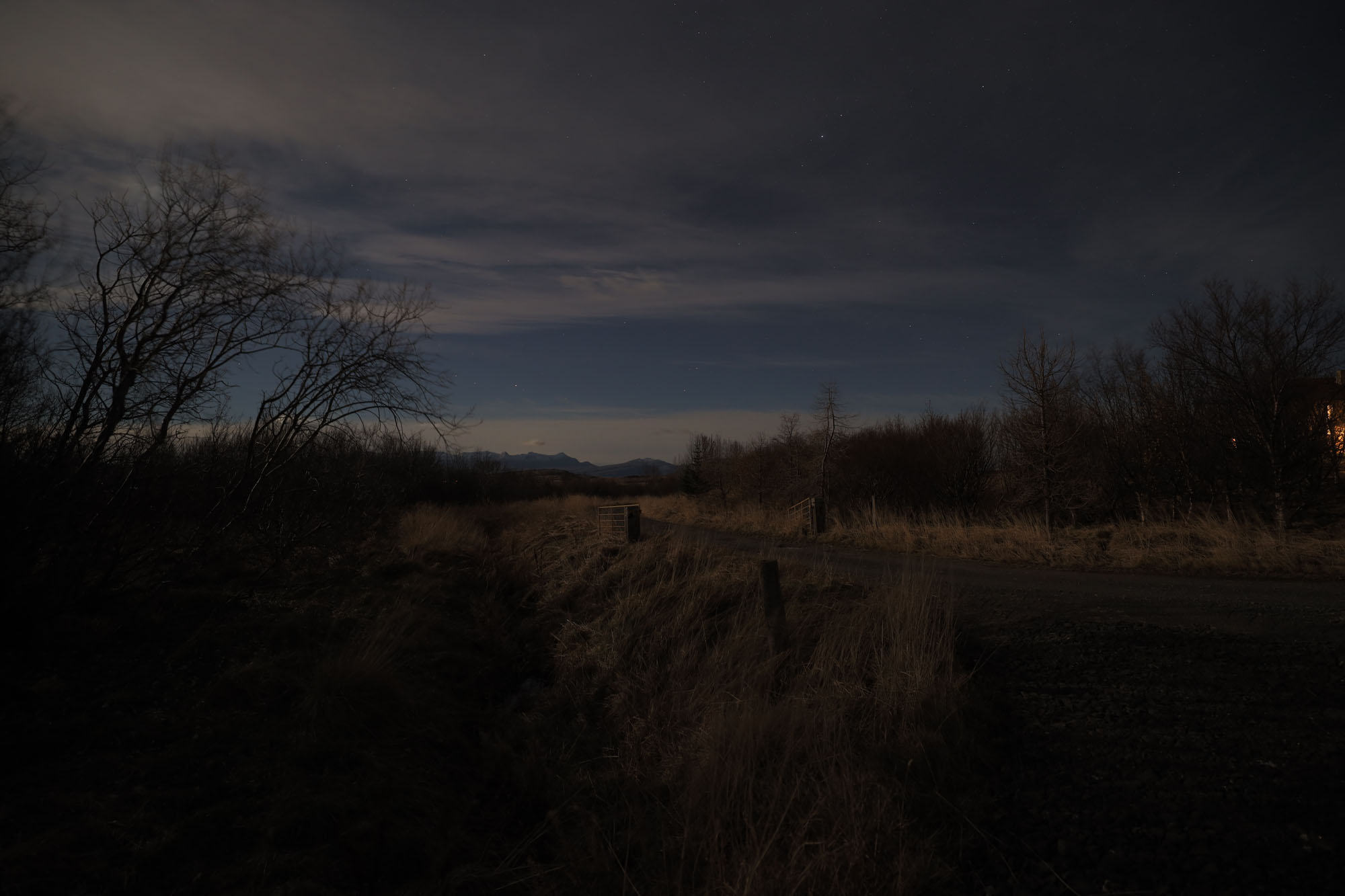
This one was made overnight on 4th of March 2023 and the time is around 5 o’clock. For some reason, there was unusually low traffic that night. Perhaps it had to do with the fact that the television that evening had some musical contest, so lots of folks in the county had been drinking alcohol that night. So there were few people who could or had to drive unnecessarily around the countryside that night.
But anyway it is a traffic noise in this recording. Mainly from the main road no:1 for about 5km away and one car will pass by the recording location, 250 meters away. So don’t play this too loud.
As expected at this time of year, silence was something that was significant from nature’s side. Fortunately, the weather was completely calm. It gave me the opportunity not to use low pass filter LPF, which gave me the ability to listen for a variety of low-frequency sounds that I’ve often encountered on this recording site before but has been hard to explain. Was it an earthquake or something else?
When silence is greatest, there is little or nothing that attracts attention in this recording. Two foxes can be heard calling. Rock ptarmigan, ducks and swans in the distance. But as ears sink deeper into the material and every sound is separated from each other and from the background noise, there is the „sound of water“. Sound of wet grass. Maybe an ice crystal transformed to a drop of water. At times, you may hear a „flow of water“. Probably a small creek far away or maybe as well an underground water flow because there is no stream nearby. But the ground in this place has thin soil on a rocky glacial soil
The background noise is equally fascinating. Some of them are known and could best be considered as „technical problems“. But there are also intriguing things to be found because sometimes it is hard to figure out where this noise comes from.
So let’s talk about „background noise“
At the lowest frequency, the vibrations caused by the wind are usually almost always detected, i.e. “Brown noise”. Hence, it is usually necessary to use HPF for all outdoor recordings, except in recordings like this where the weather’s so calm that it’s like being in a wardrobe. This recording, as well as others I’ve done at this location, may include rumbles or knocks that may come from a horse or horses from a great distance, possibly some kilometers away. I think this noise coming this distance travels through the ground. It might be earthquakes, but it is unlikely in this recording. Apart from the distinctly low frequency of sounds that take place in a particular setting, I suspect that the constant rumblings that can be heard in the recording have both technical and natural explanations, which mostly though is related to turbulence in the air.
On the other side of the frequency curve, at the highest frequencies, “blue noise”.
It is usually only self noise from the microphones and recorder’s amplifiers. I tried very carefully to use RX for noise reduction, but there is always a limit to what is possible to do without spoiling the recording.
In the middle is “Green noise,” something that always interests me. This is a background noise that normally includes sounds that may come from far away and be heard only in a calm weather.
There is something called “Sea State Zero Noise,” a natural silence, or background noise in the oceans. I believe that something similar is happening here. This is noise, which is due to a number of natural factors, but mainly because of the wind and water in the combination of temperature and atmospheric conditions. Today, though, „mechanical traffic“ has constantly been overwhelming the natural noise. The source of this “green noise” like the recording below has a possible origin from car traffic up to 20Km away. From the surf at the beach shoreline 20 to 30 km away as well from a waterfall behind hills, in a canyon 7km away. None of these sounds are discernible to the bare ears. So for me it is often good to identify which direction this theme comes from by recording in IRT setup as this one.
In this recording (or that night) this green noise varies as a calm wave in different frequencies. Whether it is due to variations in air pressures or layering of temperatures or something else, I cannot easily confirm
Therefore, it is best to listen and let the imagination guide you to the course.
For those of you who find a lot of noise in this recording, I would like to remind you that it was recorded with 50dB gain. In post-production the gain is increased by another 25db, up to -10dB peak. So I agree, this recording certainly doesn’t sound good. But I think you can’t do better with the Lewitt 540s and Sonosax SX-R4+ in silence.
Quality open headphones are recommended while listening at low to mid volume.
If the media player doesn’t start to play, please reload this individual blog in a new tab or frame.

  (mp3 256kbps / 56Mb)

Recorder: Sonosax SX R4+
Mics: Lewitt LCT540s in IRT setup
Pix: Canon EOS-R
Location: 64.673374, -21.628710
Weather: Calm, partly cloudy, 0°C
Information about „color of noise

Read Full Post »