Feeds:
Færslur
Athugasemdir

Posts Tagged ‘Breiðamerkurjökull’

IMG_2200

Here is one of those recordings that I record without being directly aware of what will come out of it. Equipment is placed in a suitable location where the wind was minimal and left there for 30-40 minutes while taking a walk. So I really don’t know what is being recorded until much later when you have time to listen and process the recording.
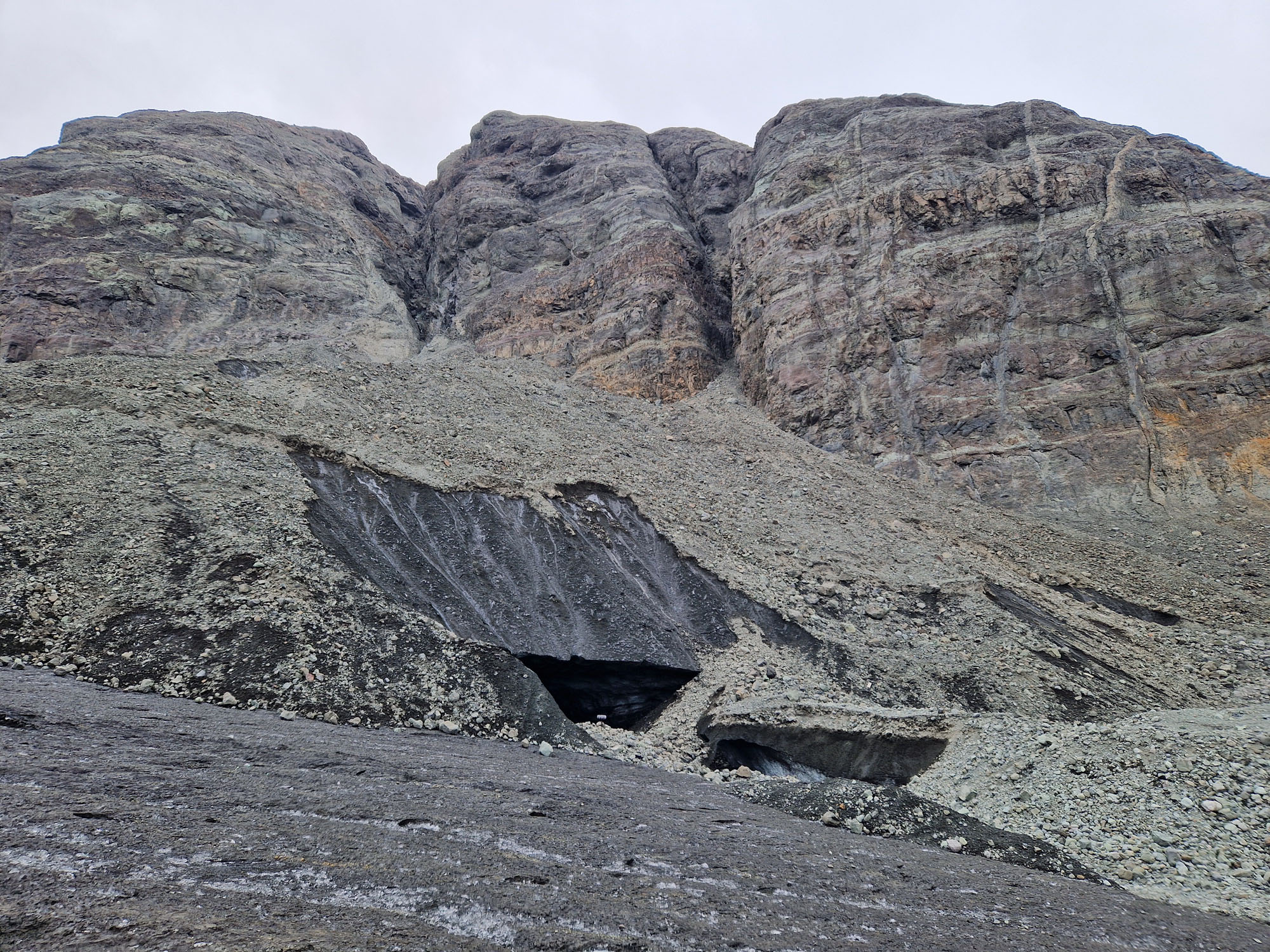
In fact, I knew of a rockfall at this location and was rather afraid about leaving the equipment behind, because the ice cave that the recording equipment was in might as well collapse. Then there would be a mud and rock slide from the mountain slope that would submerge everything.
This ice cave was at the end of Breiðamerkurjökull icefall, in a place where the glacier was probably 300 meters thicker only 40 years ago when I first came to this part of Iceland. Now the glacier is not more than dirty, „dead“ ice. A lot of it is buried under sand and rocks.
For centuries, the glacier has scraped the slopes of the mountains in Suðursveit. When the glacier retreated, gravel and rocks fell from the mountain slopes on the glacier below, which then formed a thick insulating layer over the ice closest to the mountain slopes. Under normal circumstances for centuries, the advance of the glacier would have carried this gravel down to the glacier toe. But the glacier has for two decades stopped advancing in this place. The glacier has lost all its mass so it will not crawl anymore in this place. The glacier lies flat and dirty towards the sun in the south, thin and melts rapidly. However, the ice that is covered with gravel and rocks melts much more slowly. Therefore, e.g. still possible to see ice high up on the mountain slope of Vestur Miðfell, although it is probably 30-40 years since the glacier was there and reach so high in the mountain slope
The pleasant surprise of this recording was that the wind did not interfere with the recording. You can hear mudslides sliding down the ice-covered mountain slope with all kinds of sounds that sometimes remind of car traffic. Sharp clicks in the rock as it bounces all around the mic and in good headphones you can hear the rock bouncing over the mic.
You will hear people speaking in the distance, which was several hikers coming from the glacier.
You might hear a lot of „white noise“ in this recording but it is mainly coming from nearby rivers, the wind and rapidly melting glaciers which are usually astonishingly noisy when they melt fast .
Quality open headphones are recommended while listening at medium to high volume.
But be careful. This recording has a high dynamic range and can damage both speakers and your hearing if it is played too high.

(mp3 256kbps /62Mb)

Recorder: Sound devices MixPre6
Mics: Sennheiser MKH8020/8040. (2x2ch Baffled AB35)
Pic. Samsung S22

Location: 64.134056, -16.226150
Weather: cloudy, dry, up to 8 m/sec, 7°C,
Read Full Post »

IMG_2200

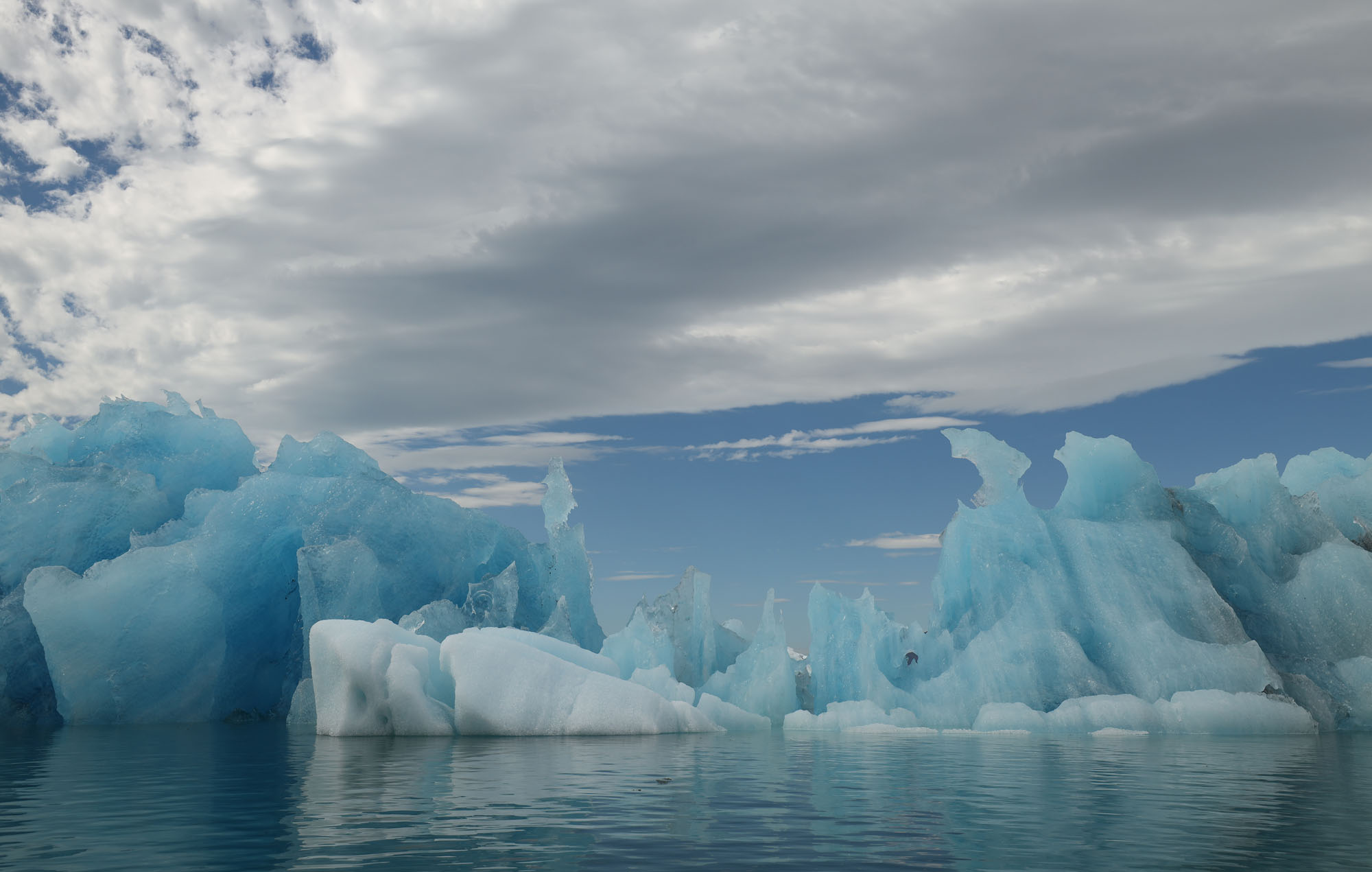
Jökulsárlón is a fascinating glacial lagoon. It is about 300m deep below the glacier tongue and from Kayak I have measured with sonar a spot which was more than 280m deep. It is deeper than many places far away in the Atlantic ocean. So if something happens in this lagoon, like Iceberg calving, the sound will echo in this huge space down there as in a large dome.
It has been almost eight years since I recorded the sound in Jökulsárlón for the first time. I was both surprised and disappointed. The sound was much richer than I thought and because of this loud and rich sound down there it was clear I could not get a detailed sound of it when an Iceberg was scratching the bottom of the lake, or calving glacier.
The most common sound there is a loud „spark sound“ when highly pressed air bubbles break out of the ice, but also when dripping water falls on the surface from the melting ice above. Sometimes the iceberg moves and scratches the gravel in the bottom of the lagoon.
The following recording is made from a Kayak, where the lagoon is 40-80 meters deep and not far away, about 200-400m, from the place I did the recording 8 years ago.
You will hear a buzzing engine noise from sightseeing boats in this recording which has sadly increased in the past decade on the lagoon. Because of increasing tourist traffic this lagoon has almost constant engine noise pollution, both above and under the surface between 9-19 o´clock every day mainly during the summer time.
It is anyway interesting to use the engine noise to get insight into how loud the natural soundscape is in this lagoon. If there were NO ice surrounded by salty seawater, then engine noise would have been echoing loudly in the space below the surface, just as an noisy moped gang was driving inside Pantheon in Rome.

(mp3 256kbps / 63Mb)

Recorder: Sound devices MixPre6
Mics: Benthowave Bll-7121 hydrophones  1,8meters apart.
Pix: Canon EOS R

Location: 64.048029, -16.192690
Weather: Calm to breeze. cloudy around 13 °C
Recording date: 25th of June 2021

Read Full Post »

IMG_2200

Recording Icelandic glaciers aims to be my main passion for the coming years.
Unfortunately, I feel I’m starting too late because the sounds have changed significantly over the last 20-30 years. It is because they have lost a lot of mass, especially on the edges of the glaciers where they mainly produce sound.
It is becoming increasingly difficult to get to places where a glacier is crawling because there are no roads or tracks near the places that are considered suitable for recording today.
Not enough. Most of the glaciers are within national parks and protected areas today. Therefore, I need to apply for a permit to go to various places within the national park to record.
Once in place, it is not a given that it is possible to record exactly where it would be best to get an interesting sound. It must be taken into account that glaciers are not playgrounds and they can be dangerous. Glacier lagoons’ coastline are also dangerous when large pieces of ice fall from glaciers and large icebergs flip over and break down in pieces.
Weather conditions are also important. I am used to record continuously for many hours, even days, so calm and dry weather most of the time is always on the wish list.  
Last summer Jökulsárlón lagoon and Breiðamerkurjökul glacier were my main targets. It was slightly more difficult than I thought in the beginning, mainly because I did not have a clue what microphones worked best for this project so I brought with me microphones for all kinds of situations which is a hell a lot of stuff. In the end it was my parallel MKH8020/8040 rig which worked best for this glacier project last summer. Mainly because glaciers are not so quiet and therefore microphones with the lowest noise floor are not so important . 
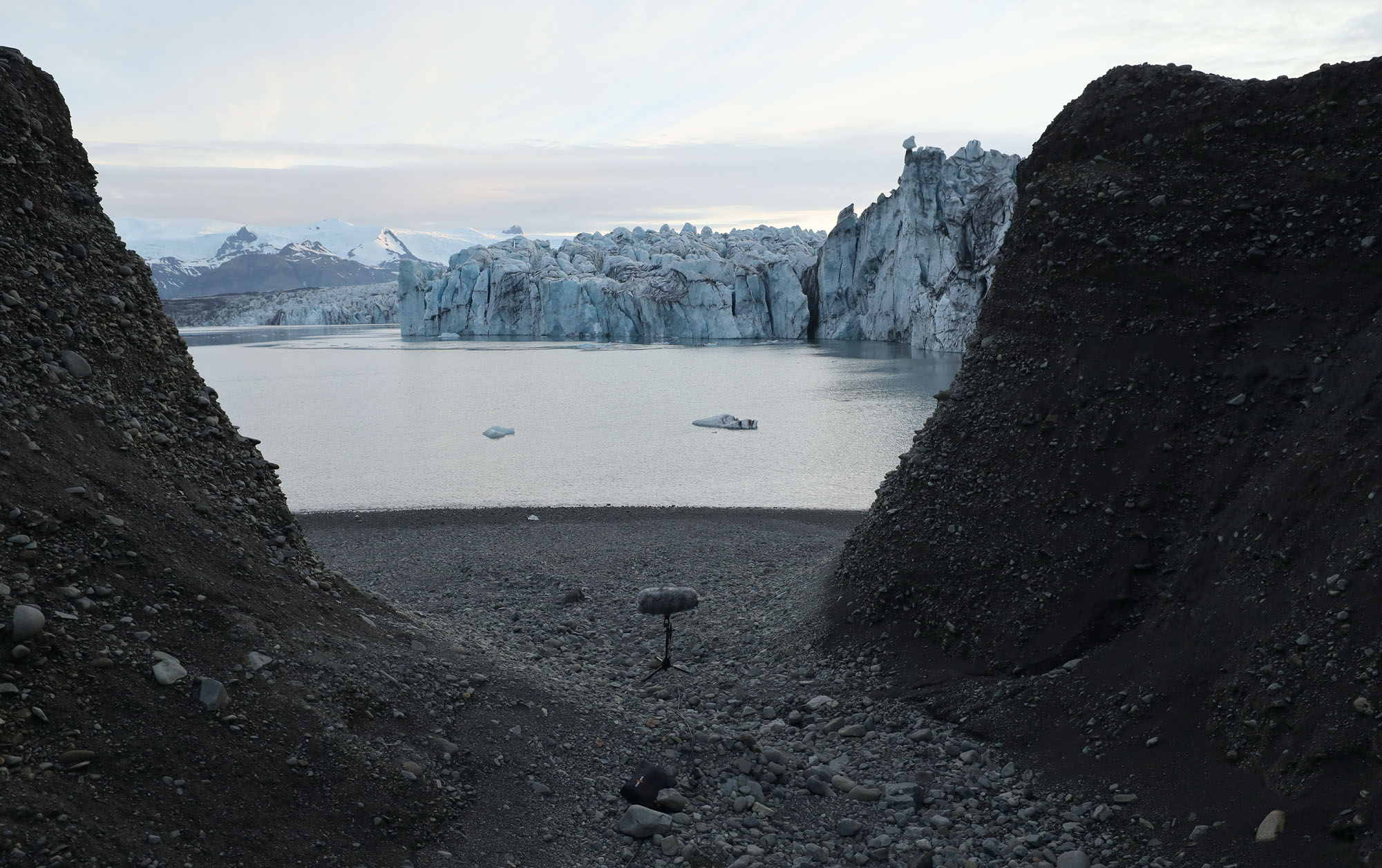
It takes me almost two hours to sail on pedal Kayak with all luggage to the location near the glacier. I started immediately to record with two recorders after arriving. Then it takes me almost a day to find the best location for the microphones. It was not the best place to get the highest quality of sound recording. But they were sheltered from the wind and in safe distance from big waves or tsunami from the lagoon.
This following recording is a part of a 20 hour recording on this location. 
WARNING. This recording has a wide dynamic range. It includes several blasts (especially at 6:34) which are very loud that can damage speakers, headphones or your hearing if played too loud.
As usual for nature recordings it has not got any process in post. Just add gain about 20dB. Therefore is clipping inevitable in the „blast“ at 6:34.
Quality open headphones are recommended while listening at low to mid level, or in speakers at low level.

(mp3 256kbps / 56,3Mb)
If the media player doesn’t start to play, please reload this individual blog in new tab or frame

Recorder: Sound devices MixPre6
Mics: Sennheiser MKH8020/8040 in Parallel AB40. Mixed50/50%
Pix: Canon EOS R

Location: 64.109285, -16.243593
Weather: 4°C 2-4m/sek, cloudy

Read Full Post »