Feeds:
Færslur
Athugasemdir

Posts Tagged ‘Common Redpoll’

IMG_2200

Here is a recording that was left to run for a whole summer night, 29th of June, 2023.
The summer vacation was coming to an end, I had been suffering from a kind of flu for a month. I had no energy for long, difficult journeys, or lying outside in any weather to record and bird life that had been extremely silent all spring due to the cold and wet.
Field recording is by no means an easy and blissful job.
Although it is often possible to be filled with hopelessness and feel as if nothing has been recorded, it always becomes clear on closer listening that interesting material is often hidden somewhere in long recordings.
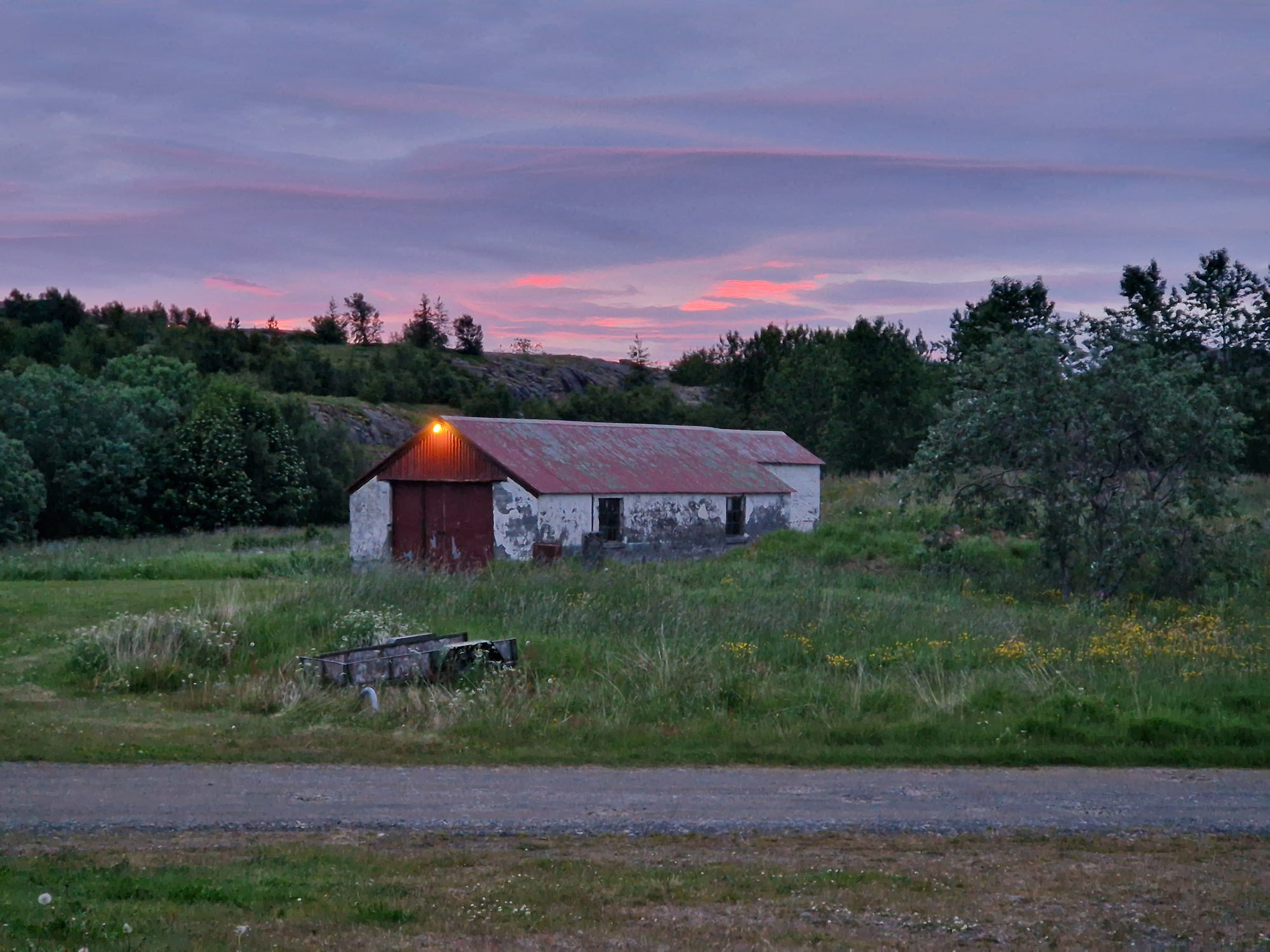
Here is one recording that I recorded at a farm that I have access to.
This night I decided to use the NT1 beneath a house wall to have a shalter against the wind. The choice of NT1 was made because if I had used an omni microphone there would have been an annoying reflection or echo from the house wall.
It is dawn and you should hear a lot of birdsong. But the wind drowns out all the birdsong.
But then the wind starts to calm down and you can hear more birdsong and bird actictivity, both near and far.
This recording is a bit of a mystery. It is therefore likely that I will later put another part of it on the web.
Quality open headphones are recommended while listening at low to mid volume.
If the media player doesn’t start to play, please reload this individual blog in a new tab or frame.

  (mp3 256kbps / 64Mb)

Recorder: Sound Devices MixPre6
Mics: Rode NT1 (NOS 30cm/90°)
Pix: Samsung S22

Weather: Windy up to 15m/sec, coudy, about 4°C
Location: 64.673300, -21.629835
Read Full Post »

IMG_2200

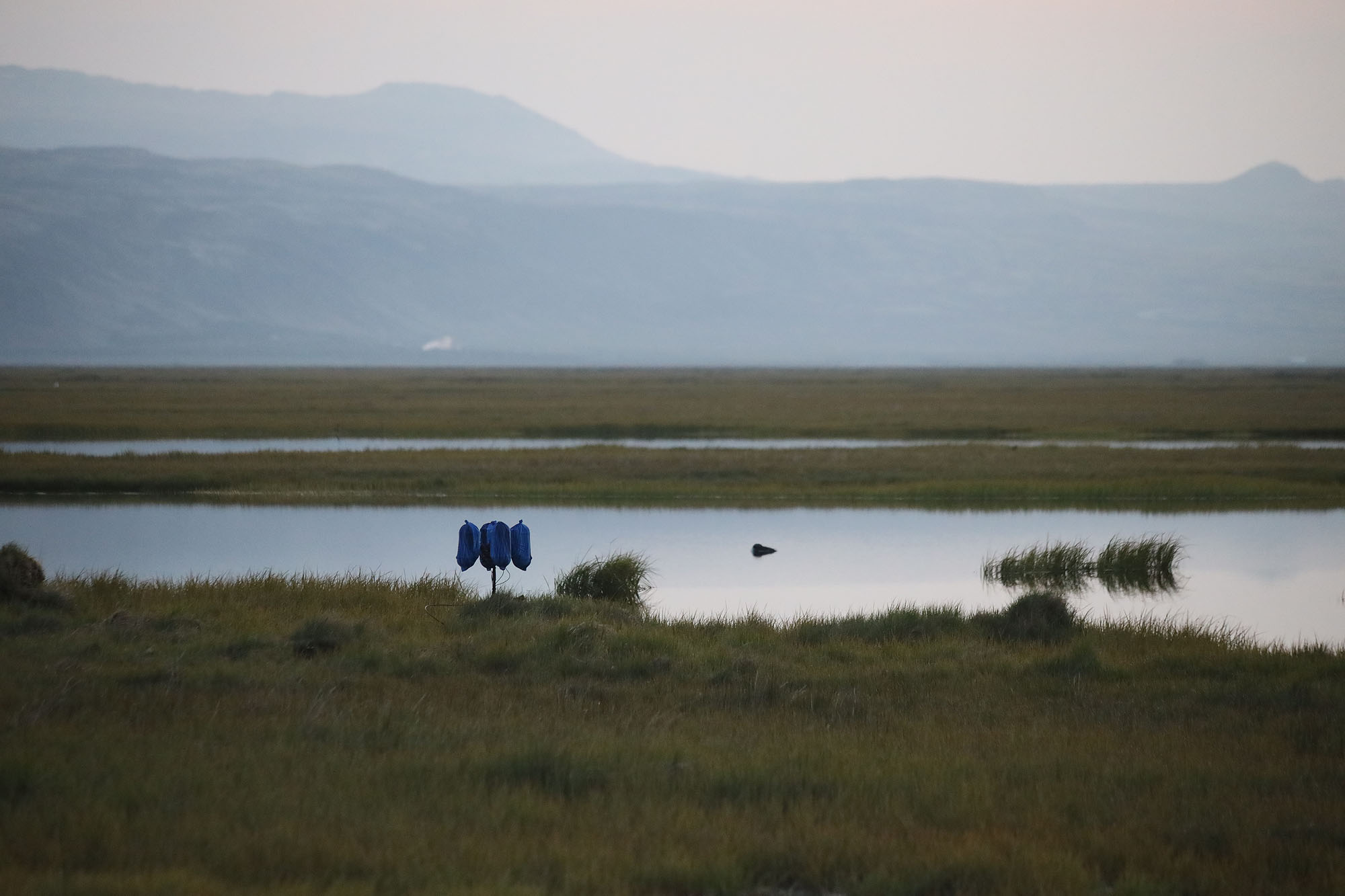
I think I have annual recordings from the same place in the nature reserve in Flói in southwest Iceland almost since 2009. The reason is simple. It’s always interesting to follow the local acoustics from year to year. So I don’t have to spend a lot of time finding a location for the microphone. They stand in the same place unless something else disturbs it, e.g. high ground water level or something else that hasn’t yet happened to me. I go to the place hoping that there is no one in „my place“ in the parking lot where I can pull out my 75 meter 4ch long cable to the place where I have always recorded. I find a good ground for the microphones, get in the car, start recording and go to sleep.
I usually wake up when someone comes driving into the parking lot about 4-6 hours later.
I usually never listen to what I recorded, except when I need to look for something interesting to post on this audio blog like now.
It is well worth having a recording from Flói this month when 15 years have passed since this audio blog went online. Flói has followed this blog ever since I got my first HD recorder. It was then that the batteries suddenly lasted longer than 30 minutes, but it opened up a whole new world for me to record in nature.
Here is an audio recording from June 13, 2023. The area was extremely wet after heavy rains. I positioned the microphones to be in close proximity to the Read necked phalarope. But maybe there wasn’t as much activity as I wanted. But instead you can hear various sounds that I am not quite sure where they are coming from. There are weak „clicks“ that can be heard e.g. for 1:30 min in this recording as well during the 30 minutes that the recording lasts.
As usual, there are many species of birds in Flói. Red-throated Loon. Red-necked Phalarope, Common Snipe, Golden Plover, Whimbrel, Common Eider and certainly other duck species as well. Common Redshank, White Wagtail, Winter Wren, Northern Wheatear, Common Redpoll, Snow Bunting, Swan and maybe other bird species that I cannot name.
Background noise is some traffic and surf from the south coast and air traffic.
You can hear it occasionally in the wind because I covered the wind shield with buff but not fur. Instead, you can hear much better in subtlety details.
This is an extremely low-key recording, except where you hear the Red-throated Loon. The recording was recorded with 50db gain (40Hz HPF), then the gain was further increased by +10dB in post-processing.
Quality open headphones are recommended while listening at low to mid volume.
If the media player doesn’t start to play, please reload this individual blog in a new tab or frame.

(mp3 256kbps / 64Mb)

Recorder: Sound devices MixPre6
Mics: Lewitt LCT540s (IRT cross 90°/30cm)
Pix: Canon EosR

Location: 63.900935, -21.191930
Weather: Cloudy, calm, about 5°C

Read Full Post »

IMG_2200

It’s time for me to put a recording from my new Zoom F3 on the web.
The recording is from Stafholtstungar in Borgarfjörður, western Iceland, 4th of June 2022.
This is a 30 minutes part of another 35 hour long recording at circa 5AM. All these 35 hours I used only three 10Ah / 5V Li-Ion batteries. So each battery, which is smaller than the recorder, lasts for 12 hours.
It is different from around the mid eighties when I tried to record a natural sound on a Sony TC-D5M cassette recorder with a 4Ah acid battery that lasted for about 3 hours, or for 30 minutes with internal batteries.
The microphones in this recording were Rode NT1  in AB45 setup, dressed in Rycote WS2 windshields, about 20cm from the ground. It was recorded at 32bit / 48khz, with a recording gain at „32“ which I could believe was comparable to a 45dB gain at Sound Devices. In post-production, the recording was normalized by + 22dB up to -6dB and then converted to mp3 256kbps.
Various bird species are in the recording, such as Redwing, common snipe, common redpoll, whooper swan, raven, rock ptarmigan and definitely other birds too.
The name „Lambaklettur“ (Lamb rock) is a rocky hill above the recording site.
Quality open headphones are recommended while listening at medium or low volume
If the media player doesn’t start to play, please reload this individual blog in a new tab or frame.

  (mp3 256kbps / 56Mb)

Recorder: Zoom F3
Mics: Rode NT1. AB45 setup
Pix: Canon Eos R

Location: 64.675900, -21.623373
Weather: Dry, calm, clear sky, 5°C

Read Full Post »

IMG_2200

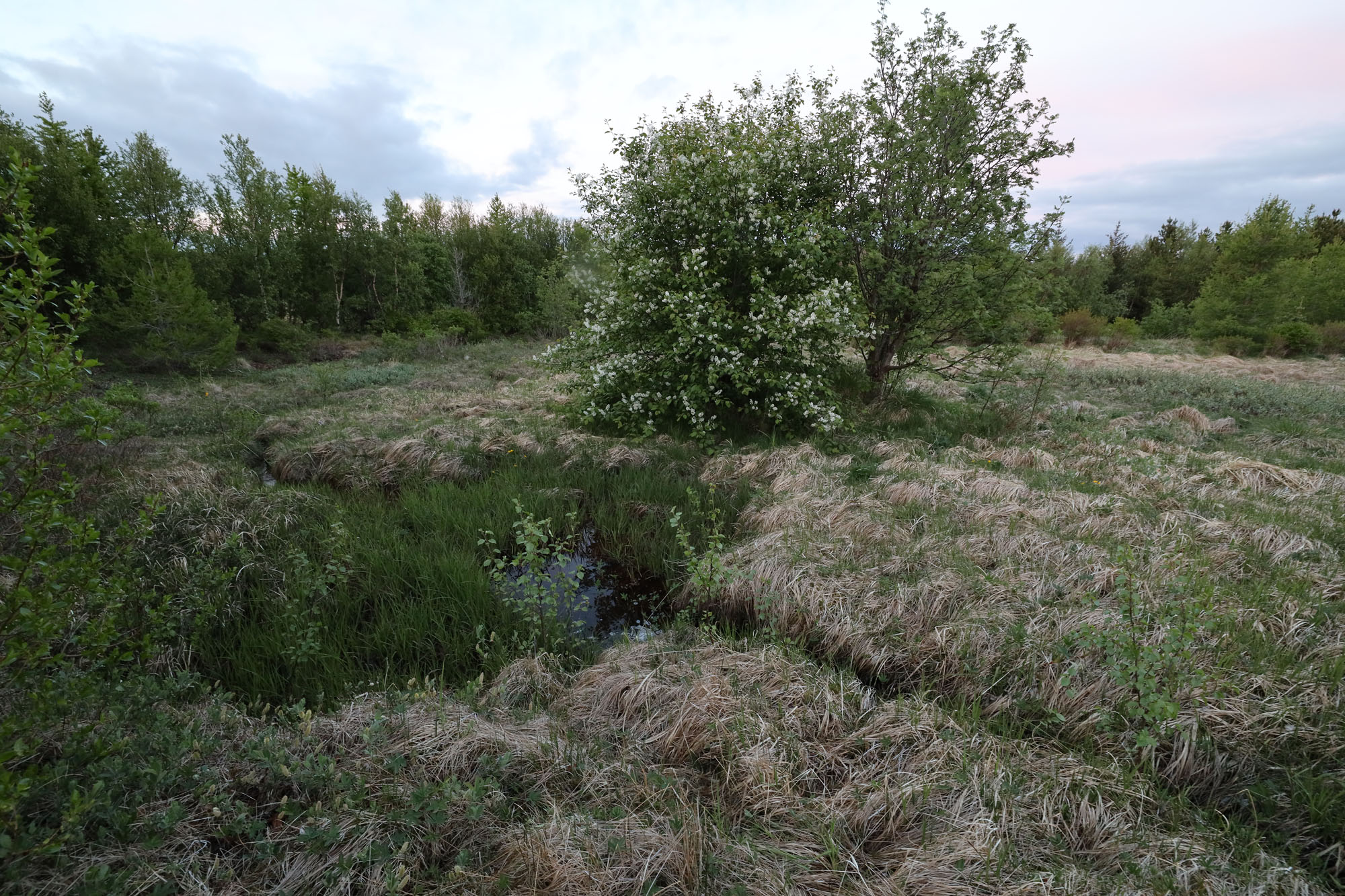
For several years I have recorded the soundscape at the same spot when I visit a cottage in west Iceland. Every time I record there I get something different and interesting, all year around.  Forestry has changed the birdlife a lot on this spot in the last 20 years.  Birds like Redwings, Common Redpoll, Eurasian Wren and Starlings are now in increased numbers since the beginning in this century.
I recorded this spot overnight both 6th and 7th of July 2021.
Lot of chicks had already left the nests so the grass field around the microphones was full of birds searching for insects which can be heard in this recording.
The following recording is not an example of the „best part“ which I record these two mornings. It is just a part of the first WAV file at the 6th which I choose because of low traffic. So more of these two days’ recordings will be audible in this blog in the future.
The time is between 2:30 am to 3:05. It is calm and quiet in the beginning until the Common Snipe begins to make a noise with its tail. Young Redwings, Common Redshanks and Snipes are all around the microphones. Other birds are not far away such as European Golden Plovers, Whimbrel, White Wagtail, Eurasian Wren, Rock Ptarmigan, and Whooper Swans in the distance.
This was recorded with four channel IRT setup, but sadly one of the cable was broken so I could only use three of the channels which was though easy to mix into INA-3
This was recorded at 48dB gain (HPF@80hz). In post the gain was increased about 30dB plus gentle RX noise reduction.
Quality headphones are recommended while listening at low or mid level or in speaker at low level.
If the media player doesn’t start to play, please reload this individual blog in a new tab or frame.

(mp3 / 256mbps 69,8Mb)

Recorder: Sound devices MixPre6
Mics: Lewitt LCT540  (IRT setup)
Pix: Canon EOS R

Location: 64.673368, -21.628709
Weather: Calm, cloudy, about 12°C
Other recordings from this location in Stafholtstungur:

Read Full Post »