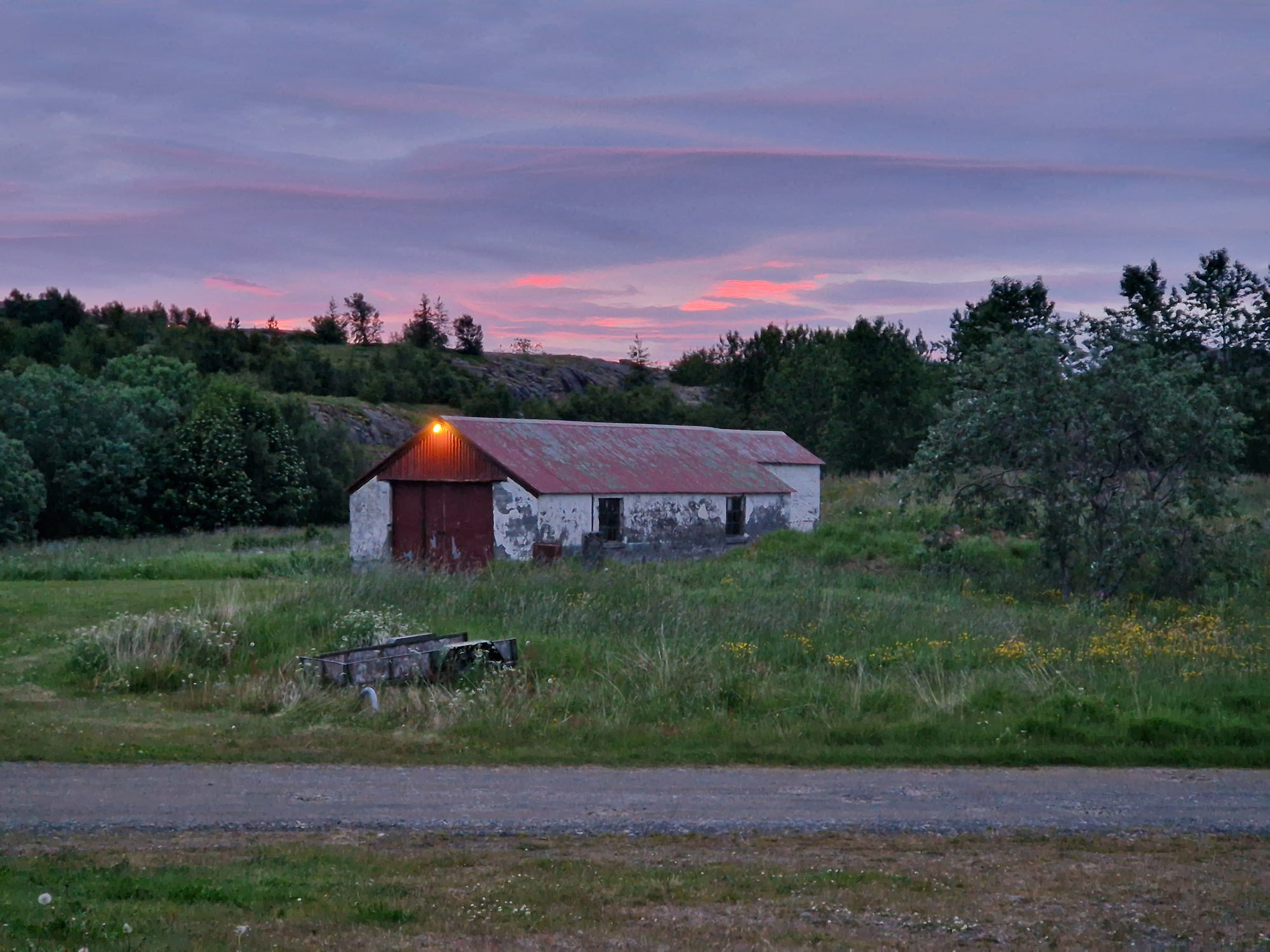
I have been recording soundscapes on a piece of land I own in the western part of the country for the past few years. In the winter it has been dead silence and in the summer abundant birdlife. Some of these recordings have found their way here to my sound blog.
It is quite wooded there in the countryside, I am quite aware that this will change the composition of bird species over time. I think for example that the Golden Plover has practically disappeared from this area and has moved higher up to the heath. However, Golden Plover can be seen in groups in early spring in farmers’ fields, but then they disappear to the heath where there are no trees. I remember before tree planting became common, there were much more Golden Plovers in human settlements than today.
In the accompanying recording, however, you can hear the Golden Plover. It can also be heard in birds that have always been there, i.e. for the time of tree planting such as Whimbrel, Common Redshank, Black Tailed Godwit and Common Snipe.
Then I hear a bird that I have not heard before which I think is Common Shelduck (3:30min). It surprises me a bit because this is not the preferred area of this species, although they are seen on the move early in the spring.
The bird that has completely changed the soundscape in my county is primarily Redwing. Redwing is not my favourite songbird at all, but it can be an interesting study to study the differences in their songs based on the region. The differences are quite a bit, and I have mentioned it before. and it is work that I would like to do if I live long enough to do such a thing.
I am not going to be long in this post because I would rather be recording these days than hanging in front of the keyboard.
I must say though. This recording was recorded in IRT cross. I usually arrange the microphones clockwise 1-left, 2-right, 3-left, 4-right. I tend to do it the same way when I post content on the web. I do it because various types of background noise such as river noise and car traffic sound better balanced, which can also be constantly changing during the recording. The same can be said for wildlife. The recording sounds not unlike an AB recording.
Here, however, I arrange the channels 1-left, 2-right, 3-right, 4-left. The recording therefore sounds no different from if I had used a Jecklin disk, with a 180° sound field in each direction. This often gives a clearer stereo image of the environment, but it also sounds a little narrower. For me, who knows the recording location, this kind of mix gives me a good idea of which direction the sounds are coming from.
There is another thing that is clear about this recording. The microphones are not covered in fur but in blue Buff. The result is quite striking. Birds do not seem to make any warning sounds and are clearly not afraid of the microphones.
The recording was made between 5-6 am. This is a lowkey recording, except at one point (24:50min) where a Redwing is very close to the microphones.
Quality open headphones are recommended while listening at low or comfortable level.
If the media player doesn’t start to play, please reload this individual blog in a new tab or frame.
(mp3 256Kpbs / 60Mb)
Recorder: Sound devices 788
Mics: Lewitt LCT540s (ITR cross, 4xNOS)
Pix: Samsung S26
Location: 64.673359, -21.628687
Weather: Calm, partly cloudy, 5°C