Feeds:
Færslur
Athugasemdir

Posts Tagged ‘European Golden-Plover’

IMG_2200

Here is a recording that came as a surprise after I put it in Spectrogram, because I was sure that I had not recorded anything special.
Earlier the evening before the recording started, a lot of wind had been forecast for later that night. So I was not spreading recording equipment around me as I would have liked in this wonderful and secret place in the highlands.
However, I decided to use Lewitt LCT540s in an IRT cross in a sheltered place from the coming storm. Two of the four microphones were pointed as much as possible into the ground, while the other two were allowed to point out into an open area. The recording seemed to only sound interesting in the wind that was present when I started the recording. The entire time I had been at this place in the highlands, I had not heard birds or any other life. Only in the wind and the flow of water in the nearby water sources.
But later that night while I was sleeping, a completely calm weather came that seemed to awaken a lot of birdlife. Birds that I had neither seen nor heard earlier the days before.
However, I never noticed this peaceful weather that night or this bird song. I just went to sleep in the breeze and woke up in a storm. It was therefore quite amusing to discover that I had managed to record the birdsong even though the microphones were placed in the wrong place for such a thing. It was first and foremost the microphones facing the ground that captured the most bird song. Those facing out into the open mainly recorded the behavior of Red necked phalarope which were at a considerable distance and goose in far distance.
To be honest, considering the placement of the microphones, this is a surprisingly good recording. This can probably be attributed to these excellent Lewitt microphones, also because they were not very visible to the birds that are best heard because they do not emit warning sounds. But if I had worn the microphones in something other than fur and been positioned closer to where the birds were, I would have achieved incredibly clear recordings in the most subtle way. In addition, very distant sounds would have become more clear and focused. But it is always difficult to be prepared for such weather conditions that it is possible to be without fur in Iceland when such times are perhaps 6-12 hours a month.
You can hear in the entire recording running water, also a kind of rumbling from running water that I assume could be a stream of spring water below the ground. But in this area there are huge water sources that could probably serve a city of millions with fresh water. The sound was recorded at +50dB gain and increased by +20dB in post up to -10dB. No RX noise reduction, mainly because I have never been satisfied with the result when I have used the LCT540. But EQ was used. Sharply pulled down below 50hz and above 10Khz, mainly to bring down unnecessary rumble and white noise from the equipment.
Quality open headphones are recommended while listening at low to mid volume.
If the media player doesn’t start to play, please reload this individual blog in a new tab or frame.

(mp3 265kbps / 66Mb)

Recorder: Sound Devices MixPre6
Mics: Lewitt LCT540s (IRT cross setup)
Pix: Samsung S22

Weather: Calm cloudy, about 7°C
Location. Secret place on the Icelandic highland

Read Full Post »

IMG_2200

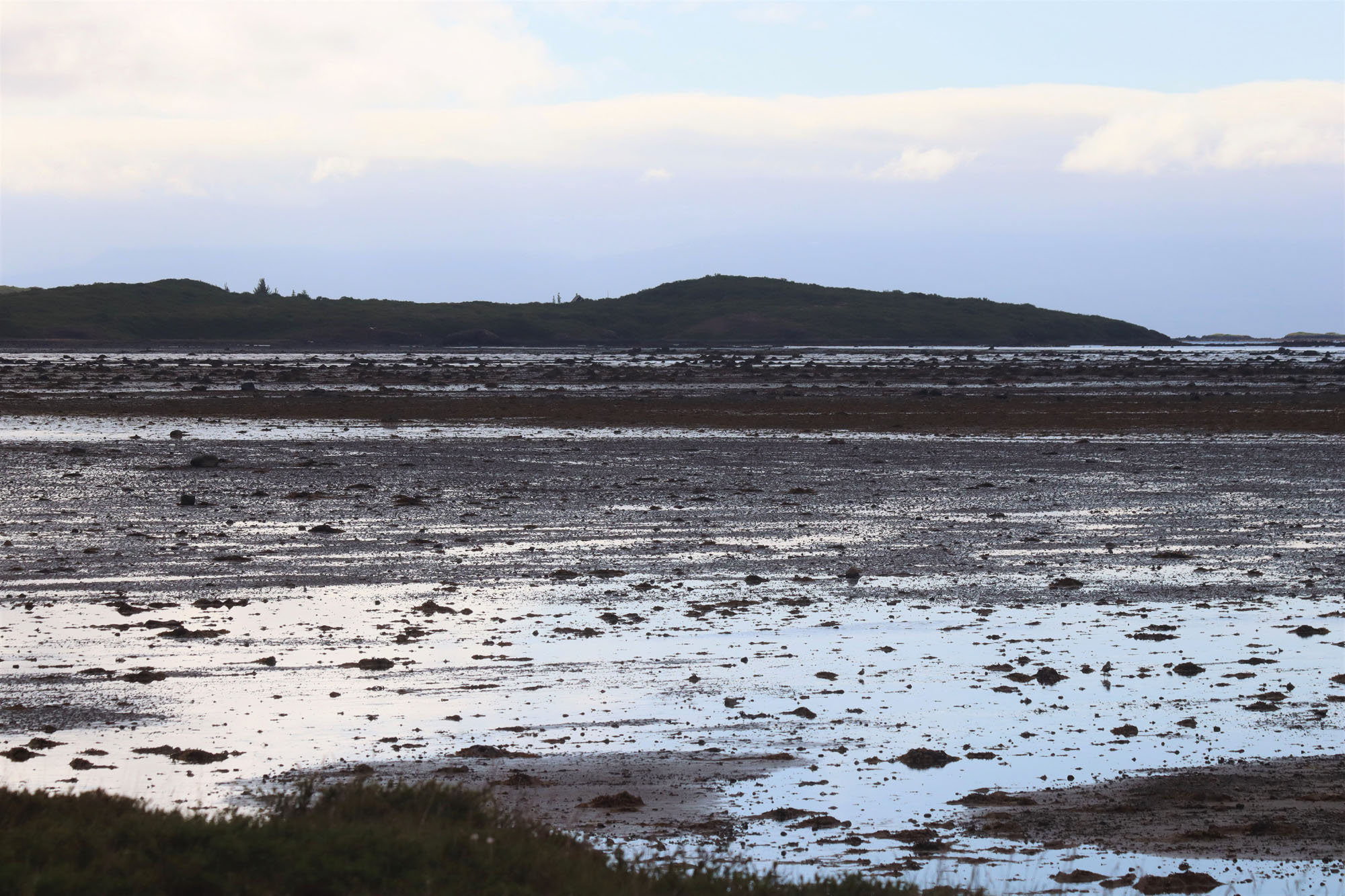
Last summer 2023 I went to a place I haven’t recorded much. Was it at Strandir in northwest Iceland. A friend invited me to stay in an apartment for a few days in Drangsnes, so I tried to use the time as well as I could for field recordings in the area.
It actually didn’t go very well. I had come down with a bad flu the same week as summer vacation started so I had little to no energy for many weeks. I was also facing another problem. The whole time I was in the area there was a strong wind except for maybe 1-2 hours during some nights. It was also rather cold, so nature was rather silent. Much of the material I caught these days was therefore not particularly interesting.
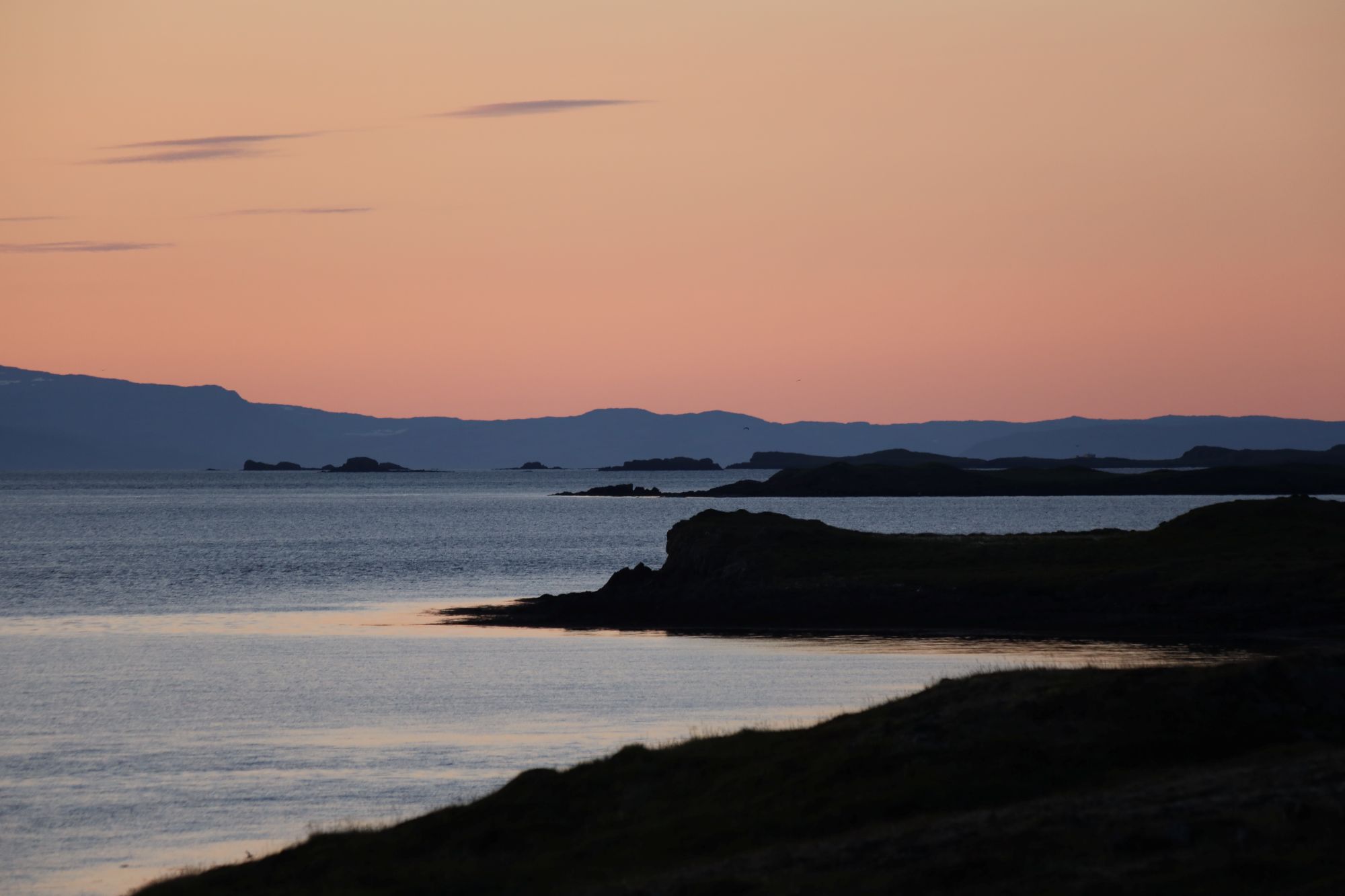
However, I had the opportunity one calm night to record a nice peace at the coastline. Part of it is here below. It’s very likely that I will put more of this recording on the web later, because the soundscape changed a bit during the 3-4 hours I was recording.
It is the summer solstice so it is therefore bright all day long. The recording starts at 23:45 and ends at 00:20 o´clock.
This is a typical soundscape in fjords in northern Iceland and in fact everywhere around the arctic circles.
This is a high gain recording.  Recorded at +50 db. Then add about 20dB up to -7dB peak RMS. No noise reduction in post. Just fade in and out.
Many bird species are in this recording. There was several gull species, at last great black backed gull. Arctic tern, common eider, whimbrel, European golden plover, red throated loon, Common loon, arctic puffin and Eurasian oystercatcher. Sheep were not far away and seals were lying on rocks near the beach.
Quality open headphones are recommended while listening at low to mid volume.
If the media player doesn’t start to play, please reload this individual blog in a new tab or frame.

(mp3 256kpps / 63Mb)

Recorder: Sound devices MixPre6
Mics: Lewitt LCT540s (IRT cross – 30cm/90°)
Pix: Samsung S22

Weather: Calm, cloudy, about 7°C
Location: 65.692865, -21.558621

Read Full Post »

IMG_2200

Thanks to COVID, I got a unique opportunity this summer to record in places I have so far not been able to record because of traffic, mainly due to tourists. One such site was Skeiðarársandur, a broad sandy wasteland along Iceland’s south-eastern coast, between the Vatnajökull icecap and the sea. This area has been a „desert“ with deadly glacial rivers for centuries. But due to global warming and receding glaciers, rivers have disappeared. Instead, vegetation like moss, grass and trees has occupied some areas without human intervention.
It is therefore obvious that biodiversity will change significantly in the coming years.
Here is a part of an 8-hour-long recording that was taken just east of the dry riverbed of Skeiðarár, which was a huge glacial river for centuries until a few years ago when it disappeared due to changes in Skeiðarárjökull glacier.
This is a recording of silence. The microphones were placed beside a small creek which can be found all over Skeiðarársandur. Because of the wind I did not use a tripod, they just stood on the windshield on the ground which gave a pretty good result.
The background noise is mainly a gust of wind stroking the ground and surf among the coast, about 20-30Km away
Birds in this recording are Common Ringed Plover, European Golden Plover, Dunlin, Purple Sandpiper, Common Snipe, Whimbrel, Common Redshank, Whooper Swan, Greylag Goose.
Quality open headphones are recommended while listening at low to mid level, or in speakers at low level.
The name of this blog „Dögun við Eyrar“ means „Dawn at Eyrar“ (Eyrar is the name of the place)
Other recordings from Skeiðarársandur can be found here

( mp3 256kbps / 63Mb )
If the media player doesn’t start to play, please reload this individual blog in new tab or frame

Recorder: Sound devices MixPre6
Mics: Lewitt LCT540s (IRTcross) channels counter clockwise 1-2-3-4 = L-R-L-R
Pix: Canon Eos R

Loation: 63.972468, -16.956438
Weather: Clear sky. Gust up to 6m/sec. around 10°C
Recording time between 5.am to 6.am

Read Full Post »

IMG_2200

It is rear now a days to discover new places without traffic or engine nose. I found one in June 2019. It was at Fellströnd, in the northwest of Iceland. That means I have natural silence for more than a one hour. It is a south part of a peninsula which only have gravel roads and no shopping service so motorist are normally not driving there for pleasure.
Less human traffic means more biodiversity. It thrives better in places with less farming and fast driving cars. One roadkill can as well mean a death of the whole family. Car covered with smashed bugs means less food for birds… and so on. This is clearly visible and audible in those areas which have „industry“ farming and lots of fast driving traffic.
No traffic, or engine noise, means more natural silence and more transparent soundscape. Therefor it is very interesting to listen to this recordings. It is even possible to hear sheep footsteps far away and detect what bird species are in the area, even far away. In fact it is possible to analyze the situation of the biodiversity.
This is a high gain recording, recorded at +50dB. Gain was then increased in post about +25dB, normalized at -8dB and gently NR.
This is a part of 10 hour recording. This part was recorded between 7 and 8 in the morning at 21st of June.
Many bird species are audible in this recording. Black tailed Godwit, Common Redsank, Whimprel, Red necked Phalarope, Eurasian Oystercatcher, Common Ringed Plover, European Golden Plover, Dunlin, Raven, Redwing, Purple Sandpiper, Meadow Pipit, Geylag Goose, Whooper Swan, Red Throated Diver and Common Eider. I am almost sure I have not counted them all.
You can hear sheep footsteps which was though far away, also birds wing flaps as a low rumble noise.
Quality open headphones are recommended while listening at low or medium level.

(Mp3 256Kbps / 48Mb)
If the media player doesn’t start to play, please reload this individual blog in new tab or frame

Recorder: Sonosax SX-R4+
Mics: Sennheiser MKH20 (AB40)
Pix: Canon EOS M50
Location: 65.169836, -22.404601
Weather: Calm, cloudy ca 13°C

Read Full Post »

IMG_2200

Imagine, It is 3:30, mid summer morning. You are within five kilometers from the arctic circle and two and a half kilometers from the north Atlantic ocean. It is calm, and dry and the sun which has never goes completely down this night, gives a silk smooth light through thin layer of clouds. The biosphere is remarkable. It is visible everywhere. From bugs in the grass, fish in the brook to the birds in the air or in the field. All living species seems to be busy to live in beautiful harmony with Mother nature,
You are located at Skinnalónsheiði (heathland) which is close to Hraunhafnartangi peninsula, northern most part of Iceland.
Just a few weeks earlier this place was frozen under ice and snow, extremely quiet and almost a lifeless place.
The following recording is quiet, even though it’s biological busiest time of the year. Bird songs and call’s are mostly in the distance, but sometimes something catches the attention, like the wriggling fish in the brook, or different uncommon songs from different bird species.
Background noise is mostly surf from the ocean two and half kilometers away or sometimes swarm of midges.
Many bird species are in this recording. Whooper Swan, European Golden-Plover, Common Ringed Plover, Whimbrel (European), Black-tailed Godwit (islandica), Dunlin, Purple Sandpiper, Common Snipe, Common Redshank, Parasitic Jaeger, Great Black-backed Gull, Arctic Tern, Red-throated Loon, Meadow Pipit, Snow Bunting, Rock Ptarmigan and Great Northern Diver, Great Black-backed Gull, Graylag Goose, Long-tailed Duc.
Another recording was made that same night several kilometers away, nearby Hraunhafnartanga peninsula. Listening here.
Quality open headphones are recommended while listening at low to mid level, or in speakers at medium level.

(256mbps mp3 / 74Mb)
If the media player doesn’t start to play, please reload this individual blog in new tab or frame

Recorder: Sound devices MixPre6
Mics: Sennheiser MKH20 (AB40)
Pics: LG G6
Location: 66.513116, -16.149781
Weather: Calm, dry, light clouds, 11C°
Recording date: 29th of May 2018

Read Full Post »