Feeds:
Færslur
Athugasemdir

Posts Tagged ‘Icelandic highland’

IMG_2200

Here is a recording that came as a surprise after I put it in Spectrogram, because I was sure that I had not recorded anything special.
Earlier the evening before the recording started, a lot of wind had been forecast for later that night. So I was not spreading recording equipment around me as I would have liked in this wonderful and secret place in the highlands.
However, I decided to use Lewitt LCT540s in an IRT cross in a sheltered place from the coming storm. Two of the four microphones were pointed as much as possible into the ground, while the other two were allowed to point out into an open area. The recording seemed to only sound interesting in the wind that was present when I started the recording. The entire time I had been at this place in the highlands, I had not heard birds or any other life. Only in the wind and the flow of water in the nearby water sources.
But later that night while I was sleeping, a completely calm weather came that seemed to awaken a lot of birdlife. Birds that I had neither seen nor heard earlier the days before.
However, I never noticed this peaceful weather that night or this bird song. I just went to sleep in the breeze and woke up in a storm. It was therefore quite amusing to discover that I had managed to record the birdsong even though the microphones were placed in the wrong place for such a thing. It was first and foremost the microphones facing the ground that captured the most bird song. Those facing out into the open mainly recorded the behavior of Red necked phalarope which were at a considerable distance and goose in far distance.
To be honest, considering the placement of the microphones, this is a surprisingly good recording. This can probably be attributed to these excellent Lewitt microphones, also because they were not very visible to the birds that are best heard because they do not emit warning sounds. But if I had worn the microphones in something other than fur and been positioned closer to where the birds were, I would have achieved incredibly clear recordings in the most subtle way. In addition, very distant sounds would have become more clear and focused. But it is always difficult to be prepared for such weather conditions that it is possible to be without fur in Iceland when such times are perhaps 6-12 hours a month.
You can hear in the entire recording running water, also a kind of rumbling from running water that I assume could be a stream of spring water below the ground. But in this area there are huge water sources that could probably serve a city of millions with fresh water. The sound was recorded at +50dB gain and increased by +20dB in post up to -10dB. No RX noise reduction, mainly because I have never been satisfied with the result when I have used the LCT540. But EQ was used. Sharply pulled down below 50hz and above 10Khz, mainly to bring down unnecessary rumble and white noise from the equipment.
Quality open headphones are recommended while listening at low to mid volume.
If the media player doesn’t start to play, please reload this individual blog in a new tab or frame.

(mp3 265kbps / 66Mb)

Recorder: Sound Devices MixPre6
Mics: Lewitt LCT540s (IRT cross setup)
Pix: Samsung S22

Weather: Calm cloudy, about 7°C
Location. Secret place on the Icelandic highland
Read Full Post »

IMG_2200

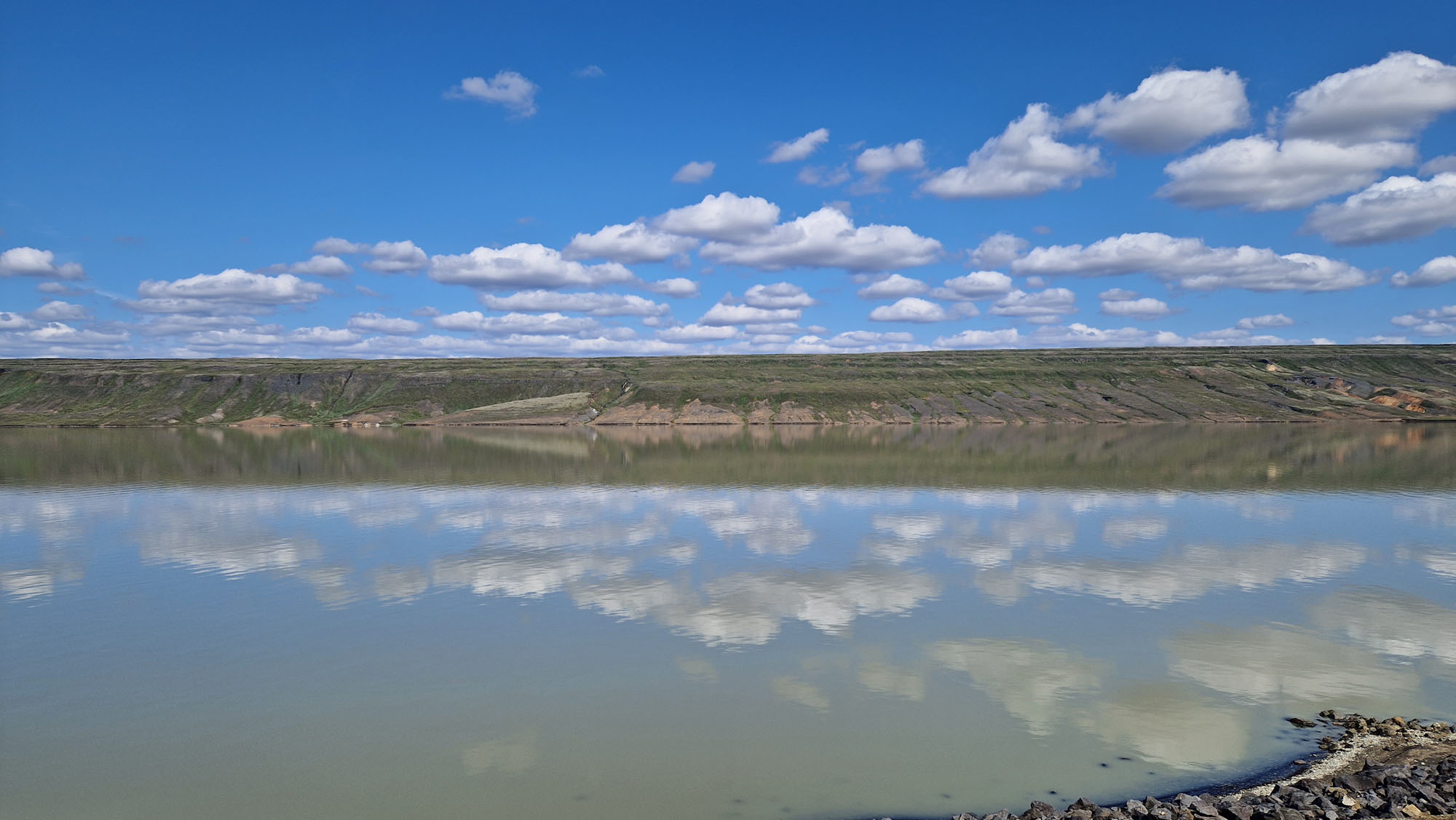
Early in July 2023 I spent one night at Sultártangalón lagoon recording in three locations.
In the morning when I was leaving, it was sunny, calm and very hot, in the Icelandic way. The sight over the mirror smooth lagoon made me stop the car and enjoy the view. The recorders were ready and connected in the car, so I quickly set them up by the reservoir and took a short walk while they were recording.
The result was this. Typical Icelandic highland silence. Nothing interesting as an audio recording, but what caught my attention was the background noise of waterfalls and streams across the lagoon. This noise changed the EQ slowly in a variable thermal upstream due to the influence of the sun radiation.
Several bird species can be heard in this recording. These include Raven, Golden Plover, Dunlin, White Wagtail, Meadow Pipit and Red Throated Loon.
This was recorded with MKH8020/8040 in a fur wind shield, which was not the best choice, because the silence was considerable. Audio was recorded on MP6 with 50dB gain and in post-processing the gain was increased by another 20dB so they reached -10dBu.The MKH microphones were therefore not the most suitable for this moment. It would have been better if I had recorded with the LCT540s in IRT, to better capture all the small details all around.
To cancel out the loss of certain frequencies due to the fur wind shield, I raised the mid frequency by +2dB.
This is a rather sensitive recording. So I wasn’t using RX de-noise. But instead since nothing in the recording reaches frequencies higher than 8Khz, I lowered the EQ above 10Khz by a few dB to reduce the self noise in the microphones.
Quality open headphones are recommended while listening at low to mid volume.
If the media player doesn’t start to play, please reload this individual blog in a new tab or frame.

  (mp3 256kbps/56Mb)

Recorder: Sound Devices MixPre 6
Mics: Sennheiser MKH8020/8040 (Baffled AB)
Pix: Samsung S22

Location: 64.230420, -19.383488
Weather: Sunny, clear sky, calm, around 20°C

Read Full Post »

IMG_2200

I spend almost 4 days late June 2017 recording in Þjórsárver area, which is a tundra southeast of Hofsjökull glacier. It was shortly after the road administrator open the Sprengisandur route across the highland, so there was still not much traffic. It was very early this summer so it was possible for me to record birds activity in nests.
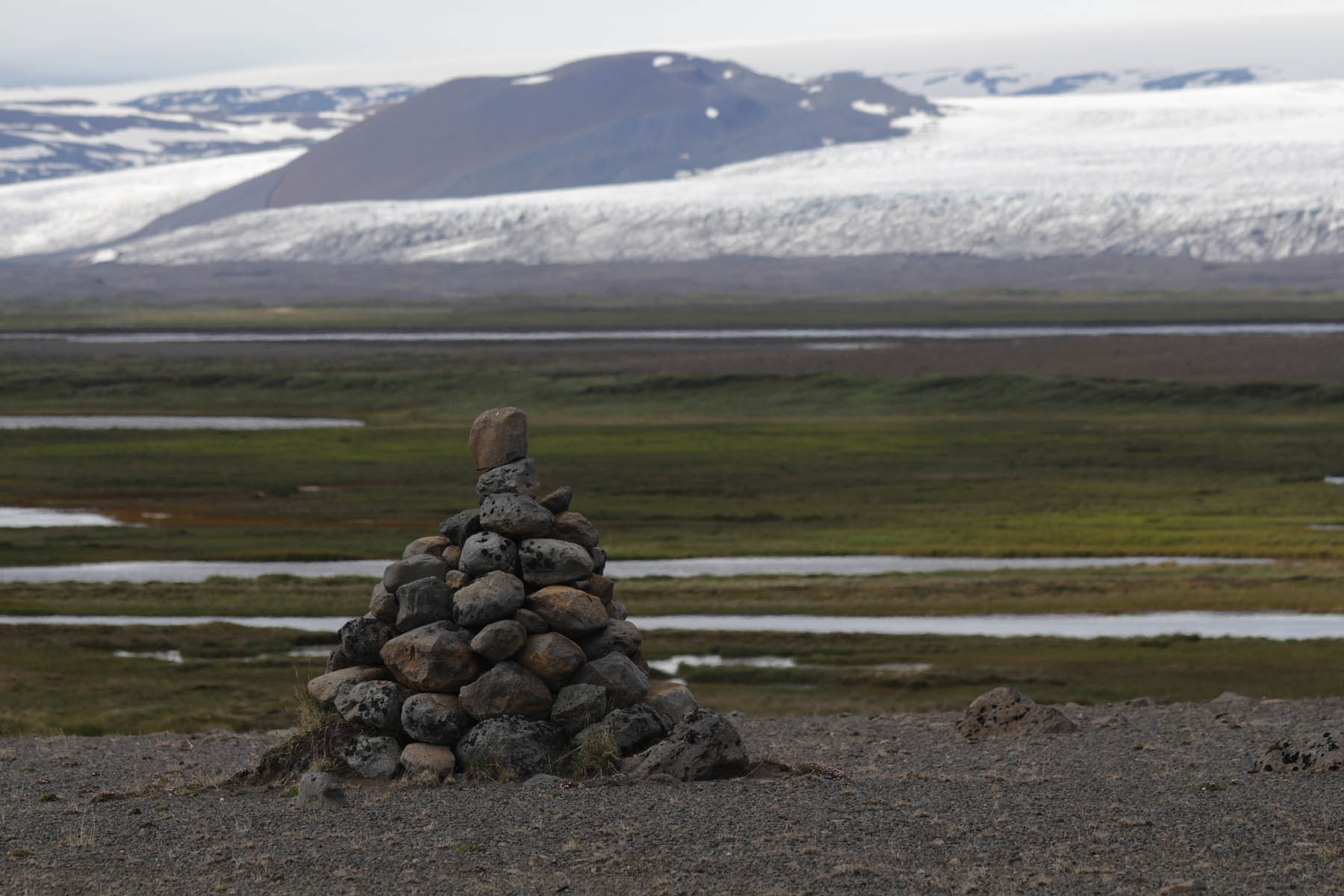
When I arrived at Eyvindakofaver I saw an Arctic fox sneaking around a stone cairns and an angry Snow Bunting flying around. It was a clear message for something interesting to record.
The weather was boring for recording. It was cloudy, the temperature about 4°C and the wind was SW, 5-10 m/sec. But the stone cairn was a suitable cover for the microphones. So I put up my gear and started recording just before midnight and then went to sleep.
At 3:40 the wind suddenly went down for about 30 minutes which was the only minutes with calm weather this four days in the area. Calm weather means normally better detail recording for the birds’ activity and deeper listening to far distance sounds.
Usually Snow Bunting lay eggs two times during the summer so this was likely the previous nesting time.
It is necessary to listen to the whole recording but suddenly something happens in the nest which we humans can guess was probably a brutal rape or other domestic violence.
If you think this was something else, feel free and leave a comment below.
Quality open headphones are recommended while listening in silence at low level, or in speakers at low level.

(256 kbps / 59,4Mb)

Recorder: Sound devices MixPre6
Mics: Sennheiser MKH20 NOS
Pics: Canon EOS-M
Weather. Cloudy, around +3°C, SW, 2m/s
Location: 64.613944, -18.575462

Read Full Post »

IMG_2200

It sounds a bit stupid to record silence. But if the equipment can capture something in the silence you can not hear with your bare ears, then it can be very interesting. For instance, you never know what you will see when you look into the deep space with telescope. You never know what you will hear in the silence with a low noise microphone.
I will not define all my views of different silence, but for sure, silence is never completely quiet and it is my favourite recording material.
Best time to get „silence“ is normally during the night in calm weather after sunny day (like this one). In such moments temperature waves are also calm or in layers, so sound can travel long distances without being disturbed. Noise from one car can travel up to 30 km in open field and if you hear it with your bare ears it will be clearly audible through most quality recording gear today. Amplifying sound with low noise microphone, works like a telescope. It drags weak sound far away closer to your ears. In places where you need to hold your breath to hear probably only your heart beat, it can be a very busy place in your headphones.
But there is also other kind of silence. It is on hot sunny days when wind blows and the air is very unstable. Sound normally does not travel long distances in such circumstances.
One of these days was 18th of July 2016 on the World Listening Day. I was traveling on Kjölur, west highland route in Iceland. The sun was shining all day and the wind was blowing from the south. I took of the main rode and followed a track into Kjalhraun lava field. My plan was to find the mysterious Beinahóll (Bone hill) and the field where Reynistaðabræður (Reynisstada brothers) and almost 200 sheeps lost their lives in a insane weather in September 1780. It is still possible to find bones on this field so for a long time I have bin interested in this tragic story.
But the track through the lava was too ruff for my car so I kept on by food.
Many times for almost three decades it has been my plan to find this place while travelling by bike over Kjölur. I never did it because I was always wearing a green jacket and for superstitions reasons it has been told dangerous.
This time I did not find Beinahól. Instead I started recording the silence in the lava.
The weather was a typical sunny „midday silence“, where the thermal heat from the sun makes the air unstable so sound waves did not travel long distances.
This was one of these days I did not hear any plains or car traffic, even though Kjölur main route was not far away. When I held my breath, I only did hear weak bird song in the distance and some flies around. Because the mics are located close to the ground, you will also hear the wind wipe the ruff lava surface.
This recording is captured with MKH20 microphones and SD744 recorder. Gain was set at 56dB and HPF 80Hz. In post the gain was again raised about 25dB. Below 20Hz and above 10Khz the freq. was pulled down by 25dB.
Quality open headphones are recommended while listening at low to mid level, or in speakers at low level. Hold your breath while listening 🙂

(256Kbps / 46Mb)

Recorder: Sound devices 744
Mics Sennheiser MKH20 (AB40 setup)
Pics. EOS-M
Weather. Sunny, about 18°C, calm up to 3 m/s in gusts
Recording location: 64.77883, -19.42805

Read Full Post »