It took me a while to make that decision to put this recording on the web. Mainly because then I would normally have had to tell about the recording location.
But I’m going to say as little as possible, even though the story of the location is for me more interesting than this recording.
The location will therefore be a mysterious part of this recording.
The reason I don’t want this place to be attractive is mainly because then I am sure this place is likely to be destroyed.
Every time I visit this place it is like the time is standing still.
In some weather conditions, getting to this location from a busy road can be like going through a time machine.
Quite a few people know about this house, and it’s not quite in the public eye today.
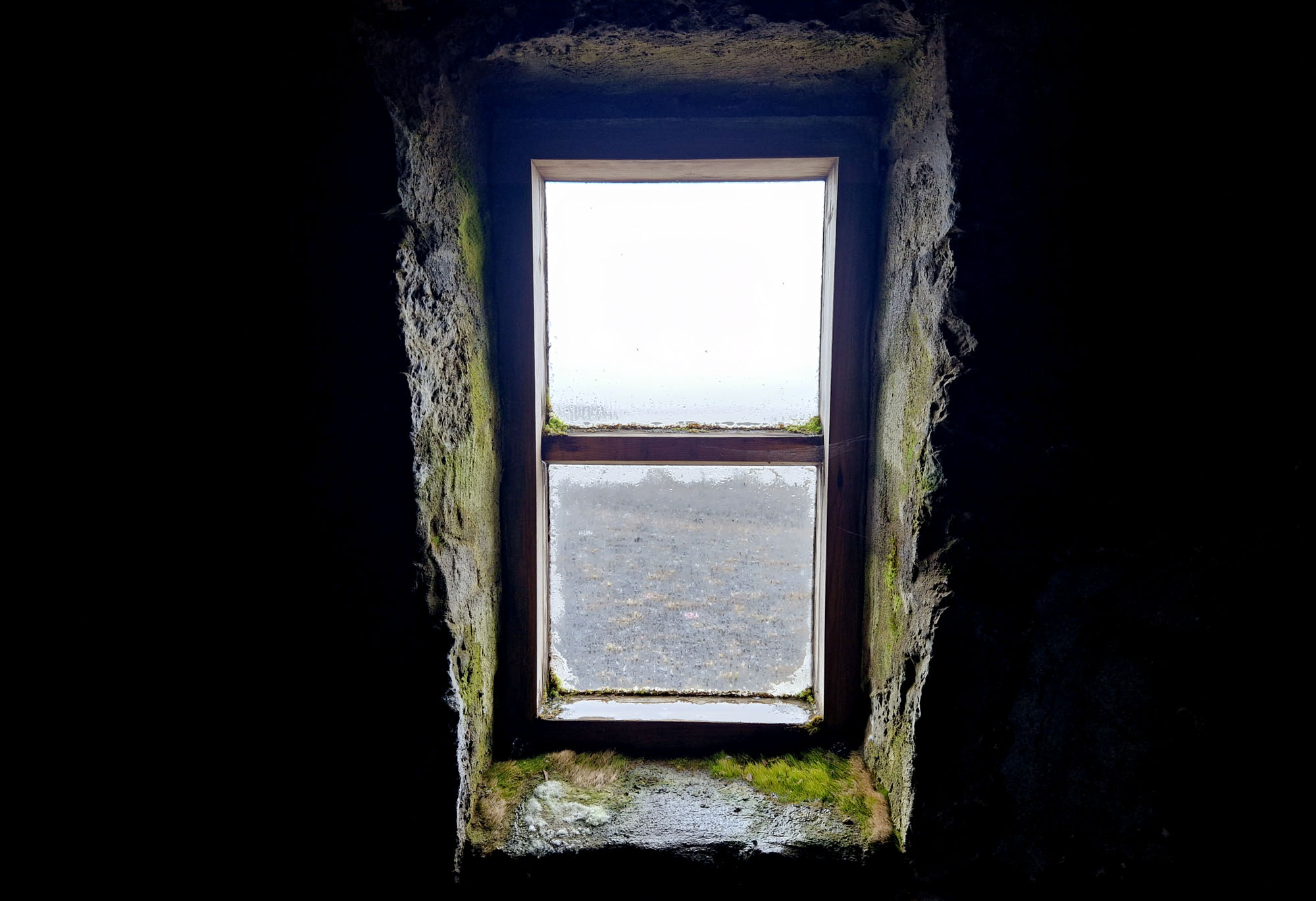
This is a stone-clad house, built in 1883. It was supposed to serve as a shelter for travelers and mail carriers, but it fell into disuse because of ghosts.
I have been coming there regularly for nearly 40 years, mostly before the turn of the century in my bicycle tours, sometimes staying overnight and seeking shelter, or just sweeping the floor and writing in the guest book. The place is therefore quite dear to me.
The weather in Iceland so far this summer has been both cold and windy, and although I am much better equipped for traveling today than I was last century, I felt the need to seek shelter at the house this summer. There were quite familiar sounds in the house that I recorded there in 3 different places. Here is one of those recordings. Rain and wind hit the windows intensely and the front door from time to time, which is most likely the ghost knocking the door.
Quality open headphones are recommended while listening at low to mid volume.
If the media player doesn’t start to play, please reload this individual blog in a new tab or frame.
The Jökulsá á Fjöllum river was a large obstacle in the past. River crossings on horseback were not possible so ferries were used at three different locations. The refuge hut was built at one of these locations, intended to house the travellers. The river was first bridged here in 1948. The road through Mývatnsöræfi was partially buried underneath the lava flow during the Mývatnseldar eruption in 1875. A few years later a new road was laid though this wilderness. The cairns indicate the location of this road, which is one of the earliest examples of a public road making. This was also used as a postal road.
The refuge hut was built in 1883 from dressed stone quarried from the surrounding area and bound with lime. A number of men participated in transporting the timber, lime and cement for the construction, all the way from Vopnafjörður, Húsavík and Akureyri. The low ceilinged cellar was used as a stable, its entrance having once been protected by a lean-to. The suspected haunting of the hut prevented a proper use of it.
The refuge hut at Jökulsá á Fjöllum plays a role in the novella Aðventa (The good Shepard) by Gunnar Gunnarsson.
Not only was this a period of intense volcanic activity, it was also a time of innovation in building techniques in Iceland, of which the construction of stone houses was a part. Prior to the construction of the refuge hut, stone houses had been built in a few places in the North-east. These included Þverárkirkja in Laxárdalur (1878) and a vicarage in Sauðanes (1879). The construction of the Althing Parliament House in Reykjavík in 1881 also had a considerable impact on the propagation of stone houses in Iceland.
The refuge hut was previously managed by the Icelandic Road Administration, but has been a part of the National Museum of Iceland‘s Historic Buildings Collection since 1988 (*National Museum of Iceland)
The recording starts under the hut´s wall. The wind gently wipes the surface around the hut when a lonely Snow Bunting gives a weak song to the empty black desert.
Then the recording slowly moves from the hut to the river’s bank, to a place that could tell many stories from the past if the stones could speak. The recording ends with a squawk from two Pink Footed Goose that overfly close over river’s surface on the way to the north.
Quality headphones are recommended while listening at low- to mid level.
Sæluhúsið við Jökulsá á Fjöllum.
Fyrr á öldum var Jökulsá á Fjöllum víðfeðmur farartálmi. Áin var hvergi talin reið og voru lögferjur á þremur stöðum. Sæluhúsið var reist við einn slíkan ferjustað en fyrst var brúað hér árið 1948. Þjóðleiðin um Mývatnsöræfi fór að hluta undir hraun í Mývatnseldum árið 1875. Nokkrum árum síðar var ráðist í að leggja nýjan veg um öræfin og var Jakob Hálfdanarson, síðar kaupfélagsstjóri kaupfélags Þingeyinga, valinn til að stýra verkinu. Vörður sýna legu vegarins en þessar vegleifar eru með elstu minjum um opinbera vegagerð á Íslandi en þetta var jafnframt póstleið.
Sæluhúsið var reist árið 1883 úr tilhöggnu grjóti úr nánasta umhverfi. Timbur, kalk, sement og önnur byggingarefni í húsið voru flutt alla leið frá Vopnafirði, Húsavík og Akureyri með aðkomu fjölda manna. Lágreistur kjallarinn var notaður sem hesthús og var inngangsskúr, bíslag, áður yfir kjallaratröppum. Notkun hússins varð þó ekki sem skyldi sökum frásagna um reimleika. Húsið er hluti af sögusviði Aðventu eftir Gunnar Gunnarsson, þar sem greinir frá ferðum Fjalla-Bensa, Benedikts Sigurjónssonar.
Gamalíel Einarsson var fenginn að byggingu sæluhússins sumarið 1883 sem aðalsmiður hússins en Sigurbjörn Sigurðsson, Jakob Sigurgeirsson og Friðrik Guðmundsson áttu þar einnig stóran hlut. Jakob Hálfdanarson mun hafa ráðið staðsetningu og útliti hússins. Landssjóður veitti fé til smíðinnar.
Þessi umbrotatími jarðskorpunnar var einnig tímabil nýrra hugmynda um byggingatækni á Íslandi og var bygging steinhúsa hluti af þeirri nýbreytni. Steinhlaðin hús voru tekin að rísa hér og þar á Norðausturlandi nokkru áður en sæluhúsið reis af grunni. Meðal þeirra voru Þverárkirkja í Laxárdal (1878) og prestsbústaður á Sauðanesi (1879). Bygging Alþingishússins í Reykjavík árið 1881 hafði einnig umtalsverð áhrif til frekari fjölgunar steinhúsa á Íslandi.
Sæluhúsið var áður í umsjá Vegagerðar ríkisins en hefur verið í húsasafni Þjóðminjasafns Íslands frá 1988. (*Þjóðminjasafn Íslands)
Upptakan hefst undir húsvegg sæluhússins þar sem vindurinn gælir við hrjúfa veggi. Einmana sólskríkja gefur tóninn út á eyðisandinn. Upptakan færist síðan hægt og rólega niður að árbakkanum á stað sem eflaust gæti sagt margar fornar raunasögur ef steinarnir gætu talað.
Mælt er með því að hlusta á þessa upptöku í góðum heyrnartólum og á lágum- til miðlungs hljóðstyrk.
Recorder: Sound devices 744
Mics: Sennheiser MKH20 (AB40)
Pics: Canon EOS M (see more pictures)
Recording location: 65.638964, -16.224181
Weather: Cloudy, gusty, ca. 6°C.


 HLJÓÐMYND - SOUNDIMAGE