
I have made a trip to Skorradalsvatn lake several times to record under the ice in recent winters. It has had mixed results and often without success mainly because of poor weather conditions.
It is best to record when it is windy and not too much frost so I can work on the ice without problems. The hole for the hydrophones must not freeze within four hours and I must not get too cold while waiting for the „harvest“. Too much snow on the ice is not on the wishlist, but anyway hydrophone cables buried under snow can avoid wind noise from cables, if the wind is too strong on the surface.
On February 15th I arrived northeast of the lake at a place where I myself can get shelter between high trees even though it is windy out on the frozen lake. At this place I also get rid of the electrical pollution that I have detected further west in this 20 km long lake.
When I arrived at the lake on this fine day, the wind was unfortunately decreasing. I didn’t even notice any „singing“ or „humming“ sound from the lake’s icy surface, even though the wind was blowing. So I wasn’t expecting a powerful musical composition under the ice.
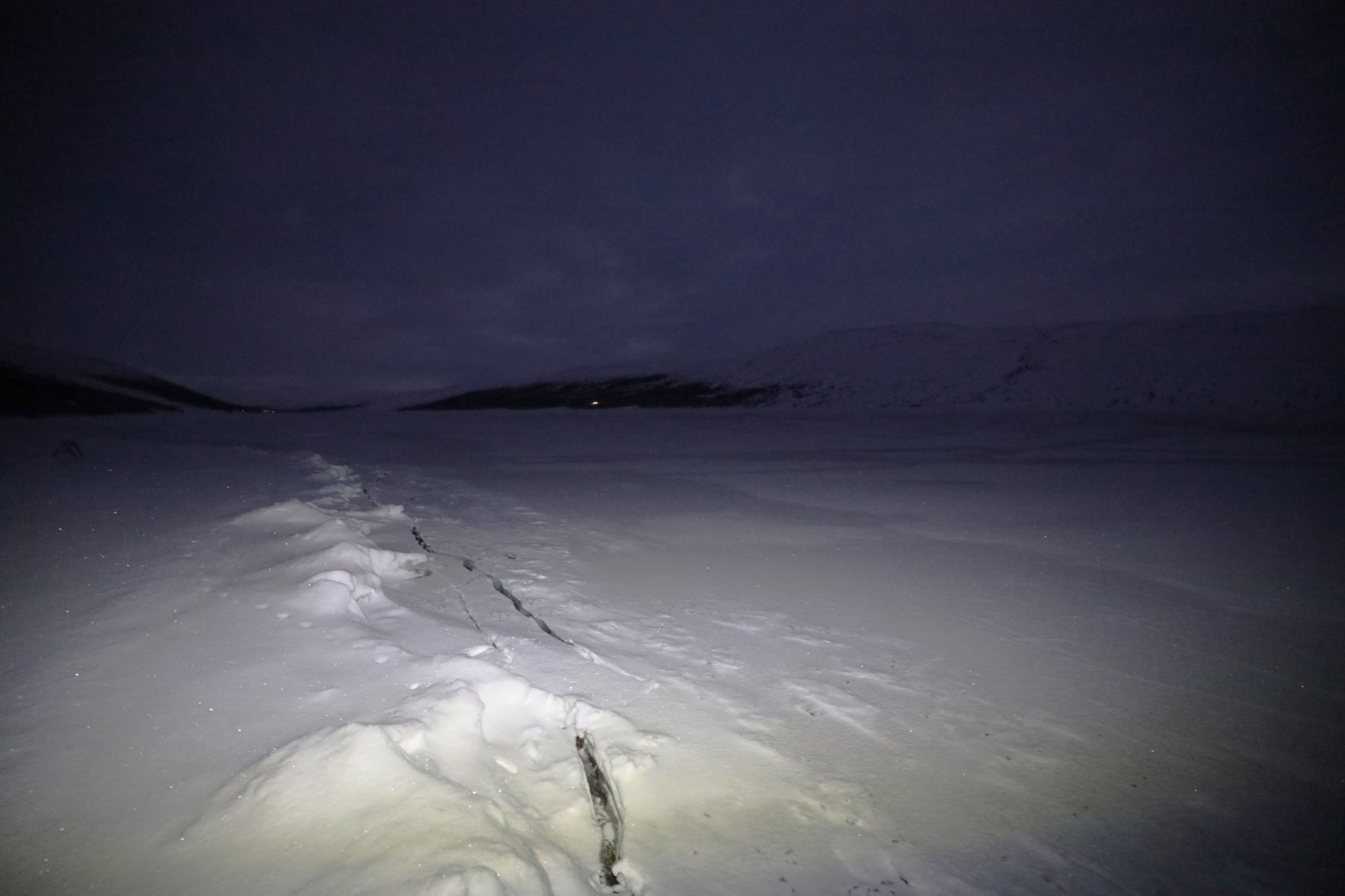
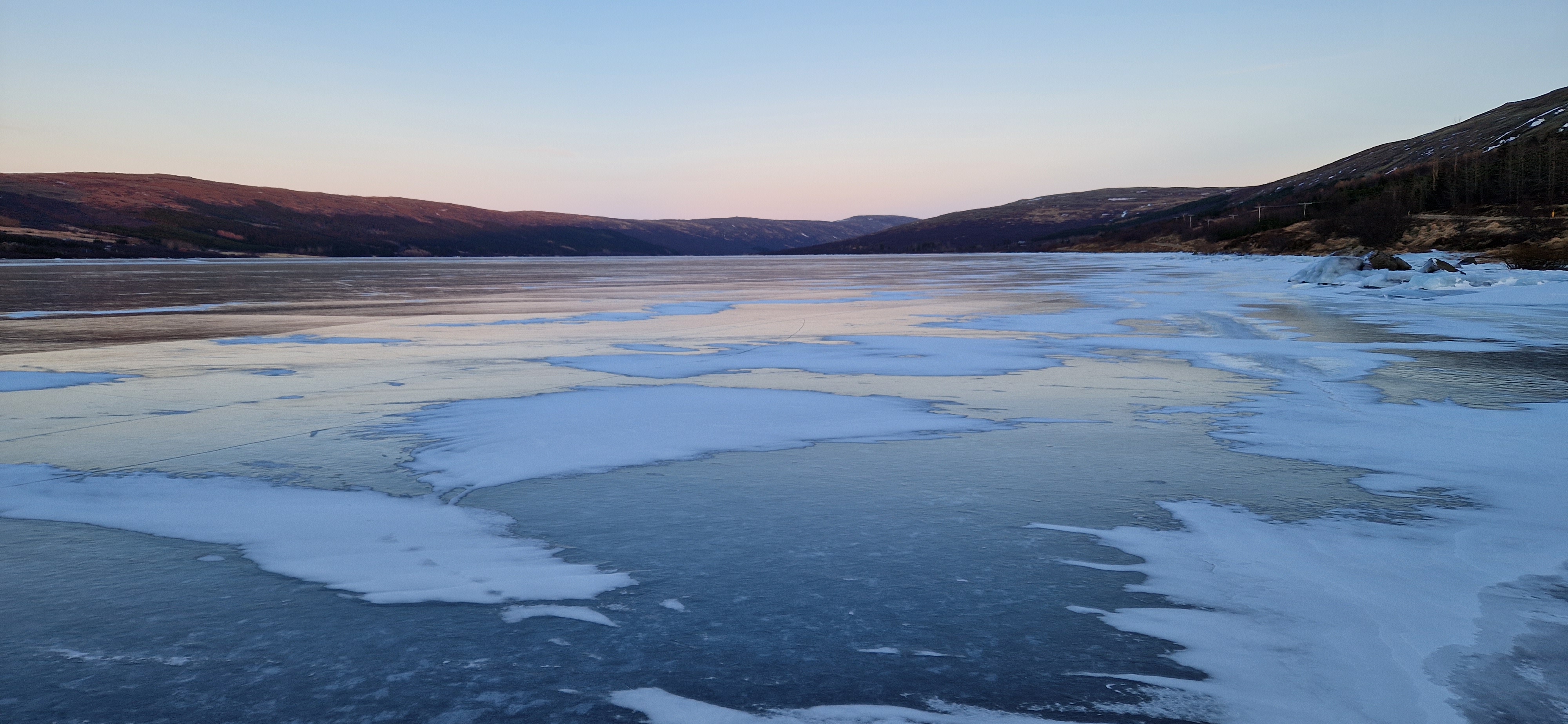
This year the ice was about 35-45 cm thick, combined with Ice slush and nowhere seemed to be like a solid glass. So I realized that the sounds under the ice would be different this year.
I got into some strange trouble on the ice. I first planned to record on a Tascam FR-AV2. But everything was drowned out by white noise, so I switched to a MixPre. There I struggled with a poor power supply connection. I got it working and started recording. Two hours later I arrived at the recording place and noticed the recorder was dead. I started recording again and recorded for another hour.
It turned out when I got home that I had managed to record for an hour in the first recording.
But that was not all. The second recording was at a much lower gain level with more noise, even though I hadn’t changed the settings.
Now a month later the power connection to the MixPre is repaired which will hopefully never cause trouble again. In a recording trip week later I noticed that the 25V Li-Ion battery pack I use for the Hydrophones will drop voltage sharply in frosty conditions which explains lower gain level on the second recording.
But what happens with the Tascam this day, is a mystery
The audio file below is from the first recording. The sound is quite different from those heard when the ice is solid and transparent. The sounds are still interesting and constantly changing due to different winds on the surface.. Some of the sounds surprised me a bit. You can hear car traffic in the recording. But about 200 meters from the recording place is a road by the lake. When cars drive by, heavy rumblings like an earthquake can be heard in the recording, Also a noise when these cars drive over a barred gate.
Quality open headphones are recommended while listening at any comfortable level, but be carefull, there are high dynamic moments.
If the media player doesn’t start to play, please reload this individual blog in a new tab or frame.
(mp3 256kbps / 57,5Mb)
Recorder: Sound devices MixPre6
Mics: Benthowave BII-7121 Hydrophones (AB 5m & 6m deep)
Pic: Samsung S22
Weather: Clear sky, 1-4m/sec, -8 to -12°C
Location: 64.513020, -21.412597



 HLJÓÐMYND - SOUNDIMAGE