Feeds:
Færslur
Athugasemdir

Posts Tagged ‘Pink footed goose’

IMG_2200

Here is a recording that came as a surprise after I put it in Spectrogram, because I was sure that I had not recorded anything special.
Earlier the evening before the recording started, a lot of wind had been forecast for later that night. So I was not spreading recording equipment around me as I would have liked in this wonderful and secret place in the highlands.
However, I decided to use Lewitt LCT540s in an IRT cross in a sheltered place from the coming storm. Two of the four microphones were pointed as much as possible into the ground, while the other two were allowed to point out into an open area. The recording seemed to only sound interesting in the wind that was present when I started the recording. The entire time I had been at this place in the highlands, I had not heard birds or any other life. Only in the wind and the flow of water in the nearby water sources.
But later that night while I was sleeping, a completely calm weather came that seemed to awaken a lot of birdlife. Birds that I had neither seen nor heard earlier the days before.
However, I never noticed this peaceful weather that night or this bird song. I just went to sleep in the breeze and woke up in a storm. It was therefore quite amusing to discover that I had managed to record the birdsong even though the microphones were placed in the wrong place for such a thing. It was first and foremost the microphones facing the ground that captured the most bird song. Those facing out into the open mainly recorded the behavior of Red necked phalarope which were at a considerable distance and goose in far distance.
To be honest, considering the placement of the microphones, this is a surprisingly good recording. This can probably be attributed to these excellent Lewitt microphones, also because they were not very visible to the birds that are best heard because they do not emit warning sounds. But if I had worn the microphones in something other than fur and been positioned closer to where the birds were, I would have achieved incredibly clear recordings in the most subtle way. In addition, very distant sounds would have become more clear and focused. But it is always difficult to be prepared for such weather conditions that it is possible to be without fur in Iceland when such times are perhaps 6-12 hours a month.
You can hear in the entire recording running water, also a kind of rumbling from running water that I assume could be a stream of spring water below the ground. But in this area there are huge water sources that could probably serve a city of millions with fresh water. The sound was recorded at +50dB gain and increased by +20dB in post up to -10dB. No RX noise reduction, mainly because I have never been satisfied with the result when I have used the LCT540. But EQ was used. Sharply pulled down below 50hz and above 10Khz, mainly to bring down unnecessary rumble and white noise from the equipment.
Quality open headphones are recommended while listening at low to mid volume.
If the media player doesn’t start to play, please reload this individual blog in a new tab or frame.

(mp3 265kbps / 66Mb)

Recorder: Sound Devices MixPre6
Mics: Lewitt LCT540s (IRT cross setup)
Pix: Samsung S22

Weather: Calm cloudy, about 7°C
Location. Secret place on the Icelandic highland
Read Full Post »

IMG_2200

Here is an audio recording from a secret spot in the central highlands of Iceland that I have previously shared sounds from. But I will not say where that place is.
By pure coincidence, I was on the outskirts of the central highlands on June 29, 2024 when I heard that a road into the highlands that had been closed all winter had been opened. So I was among the first to enter the highlands and this secret spot this summer.
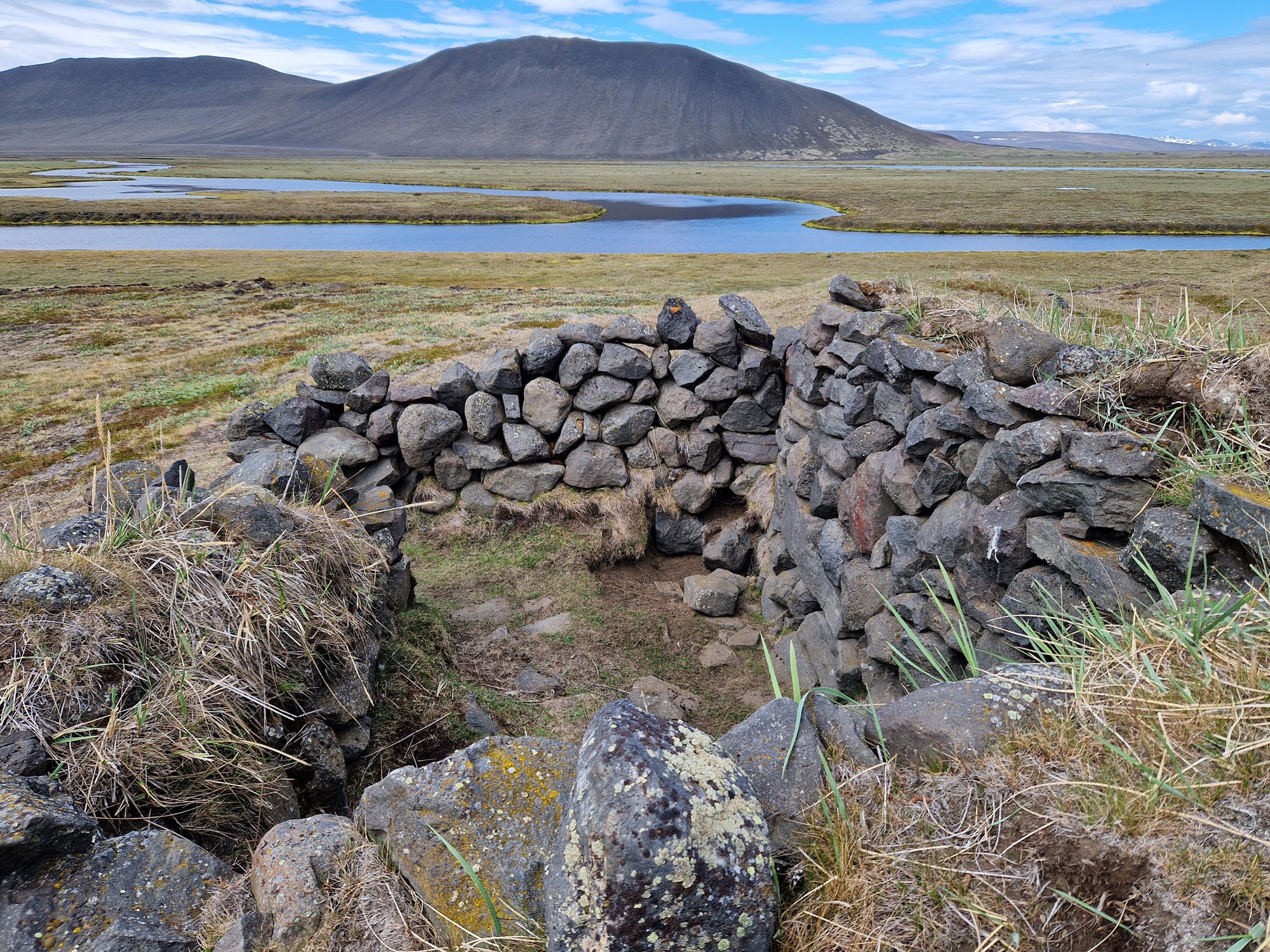
There are old stone/turf ruins at the site where I noticed a White Wagtail had made a nest inside the wall. It was quite windy so it was the perfect opportunity to record what was happening inside the ruins.
For the first few hours, I did not notice much birdlife at the ruins, until very early in the morning. The recording began soon after I noticed the birds had arrived in the area. It was clear that the birds were not happy with these gray furry neighbors so close to their nesting site. One of the birds tried to scare the microphones away with wingbeats and warning sounds. But the microphones stood firm and did not move, so later that night the birds took the microphones in peace.
Later in the morning it was heard that the White Wagtail can make various sounds, probably for communication, but that will be the subject of another post.
This area has incredibly abundant freshwater springs, so it’s a real surprise every time I visit the area. The sound of the water from these springs can be heard in the background of the recording, as well as other birdlife that is always found in such water and vegetation oases in the Icelandic highlands, which are otherwise just a black desert.
The recording was made with a Rode NT1a inside the walls of the ruins. The sound, or stereo image, is therefore a bit strange, but you get used to it.
Recorder was Zoom F3. Digital gain at 256 and HPF 40hz.
In post, add +13dB to normalize, fade in & out, and then downgraded to mp3

(mp3 256mbps / 60Mb)

Recorder: Zoom F3
Mics: Rode NT1a (NOS 90°-30cm)
Pix: Samsung S22

Weather: Calm up to 8m/s, partly cloudy.
Location: Secret place

Read Full Post »

IMG_2200

Natural silence is my favorite recording material, mainly because now a days it is so difficult to find it and it gets more difficult every year. I have been interested for salience in many years, or since I discovered it in my cycling trip all over Icelandic’s highlands about three decades ago. It was before the tourist boom and before Icelanders started to travel in their own country. So I was sometimes alone for many days in the desert. This moments in deep silence have inspired me so much it has shaped my life for lifetime.
One of this quiet places in Iceland was north of Vatnajökull glacier.
Shortly after the millennium, the traffic in this area increased a lot, especially because the Icelandic government had planed to build the biggest dam in Europe (Kárahnjúkastífla dam)  to make electricity for one ALCOA aluminum smelter in Reyðarfjörður, east of Iceland.
All that project ended as a huge natural disaster, which also split the people´s community in Iceland into two groups with and against this project. More information about this disaster can be found on Saving Iceland´s website.
Last time I visited this area was early summer 2018, I spent a night in Vesturöræfi on a place named Kofaalda.
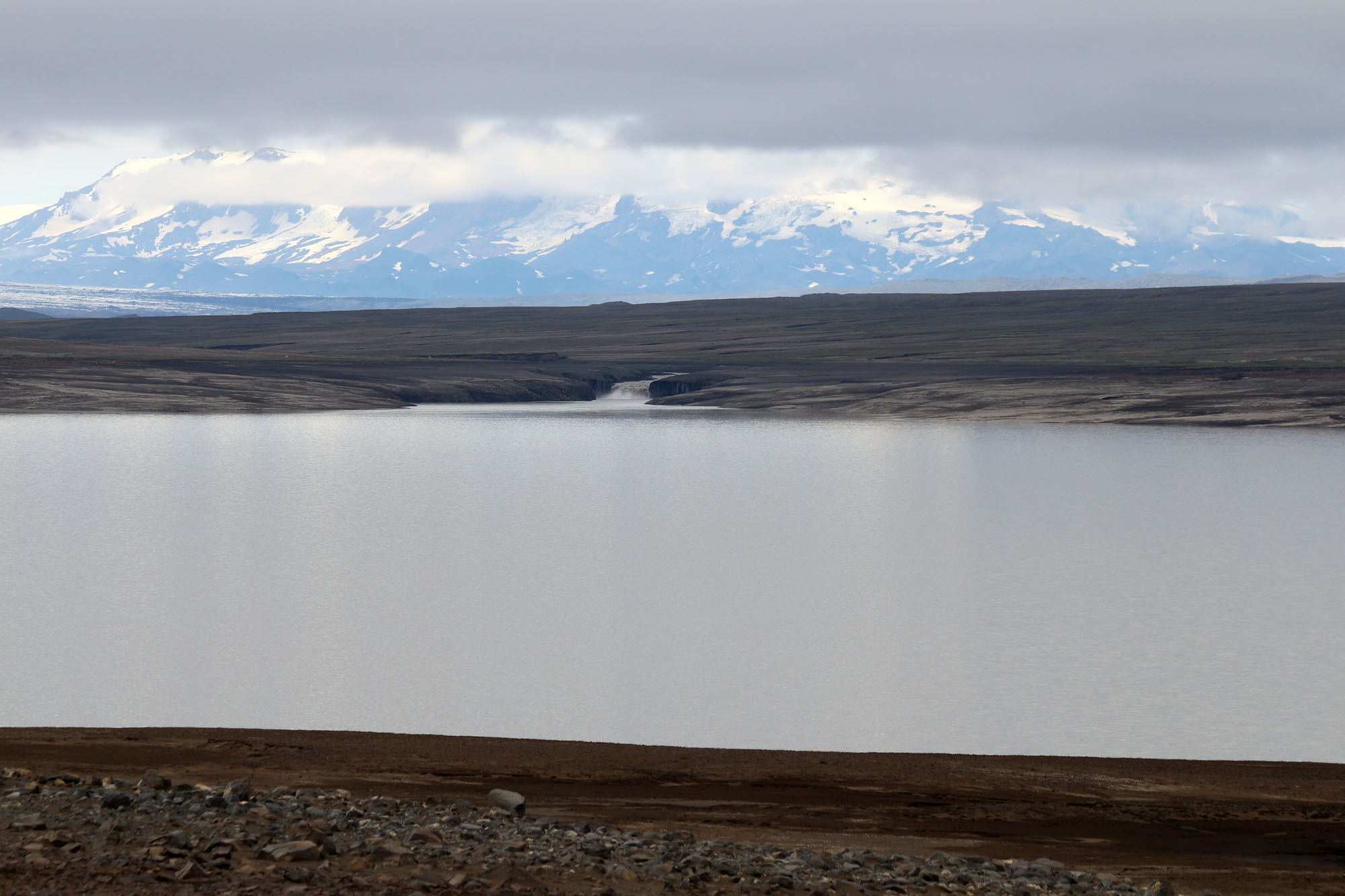
I remembered my first thought when I sat up the recording gear. I was going to waste gigabytes for nothing because I heard nothing. Totally nothing. Well, there were some birds in distance …and yes, on the left side, behind hill about 2 km away there was the river Sauðá and on the right side a waterfall in Kringislá river about 4-5 km away.
I started recording.
It was not until last summer when I got opportunity to make a noise reduction on this recording, I noticed, after about 90dB gain this silence was rich of sound.
Most of this night I was struggling with rumble by gust. But between 5 and 6 o´clock the wind went down and something unexpected happened above end near the microphone.
Several bird species are in this recording: Dunlin, Golden plover, Pink-footed goose, Purple sandpiper, Common ringed plover, Snow bunting and Arctic skua.
Quality open headphones are recommended while listening at low to mid level, or in speakers at low level.
If you have a problem to play recordings in this blog try to open each blog-post in new frame or tab

( mp3 256kbps / 48Mb )
If the media player doesn’t start to play, please reload this individual blog in new tab or frame

Recorder. MixPre6
Mics: Sennheiser MKH20  (AB40 setup laying on the ground)
Pix. Canon EOS-M50. See pictures of the landscape which was drowned by the bloody Kárahnjúkar dam project. „Lost landscape“ Part 1 & Part 2  and more pictures „Cycling trip to east fjords 2006“ Part 1 & Part 2
Location: 64.833417, -15.848694
Weather: Light gust, Calm, cloudy about 3°C

Read Full Post »

IMG_2200

Hólmavatn is a heath lake in the interior in west of Iceland between the two valley Kjarrárdalur and Hvítársíða. It is a part of a big lake system on a heath named Arnarvatnsheiði.
I have once before record the soundscape by this lake before. That was mostly a struggle with wind all the time, so I did not get anything interesting.
But at 22nd of June 2019 the weather forecast was perfect for this area, clear sky and calm most of the night.
I arrived with my gear around 9 pm at my previous recording place. It was still windy and some anglers about 500m away east of the lake. I quickly put up my rigs knowing that a calm weather meant just lot of gnats. I decided to put a two stereo pairs close to the shore, facing out to the lake. LCT450s in NOS about 60 m east from my car and MKH20 pair 70 m in the west. Suddenly around 11pm the wind stopped to blow and I started the recording.
What glorious soundscape. All those small tiny things and all those bird species. The LCT540s sounds much cleaner and brighter than MKH20, I guess mainly because of the different location.
But there was a big problem which I did not notice with my bare ears. The anglers made so much noise it was clear they would destroy my „natural silence“ recordings this night. They were playing a radio all the time, talking, starting car engines, and even worse, soon after I started the recording two of them started a motor boat. All this noise lasted for about two or two and a half hours.
Later that night when this noisy anglers were gone, all the birdsong became calm and less active. I am not sure why, but afterwards when I listened to the recordings it seemed like the anglers on the boat were disturbing birds on their habitat.
Following recording is a part of this „anglers moment“, probably the best part because the motorboat was mostly far east on the lake most of this time.
In the beginning of the recording you can clearly hear tiny sparks. It is coming from foam which forms between stones in the shore during windy days. When the bobbles in this foam blows, they make this tiny sparking sound. During the recording the sparks get fewer and lower because the weather is calm and no waves on the lake.
But there are so many bird species I guess I will not know them all. Great Northern Diver, Read Throated Diever, Arctic Tern, Whooper Swan, Pink Footed Goose, Black Headed Gull, Golden Plower, Dunlin, Whimbrell, Common Snipe, Common Redshank, Arctic Skua, Rock Ptarmigan and probably some other which you are welcome, if you know, to name in comments below.
You will hear the fish jumping and Arctic Tern hunting on the lake surface. Other background noise other than human noise from anglers is mainly from the river Kjarrá which flows in the Kjarrárdalur valley 4Km north of the lake .
This recording got a gently noise reduction, mainly because of high gain.
It was recorded with 47dB gain. In post the gain was normalized +26dB up to -5dB
Quality open headphones are recommended while listening at low to mid level, or in speakers at medium level.

(mp3 256kbps / 68Mb)
If the media player doesn’t start to play, please reload this individual blog in new tab or frame

Recorder: Sonosax SX-R4+
Mics: Lewitt LCT540s (NOS setup)
Pix: Canon EOS M50
Location: 64.799603, -20.895132
Weather: Dry. Mostly calm up to 5m/sec

Read Full Post »

IMG_2200

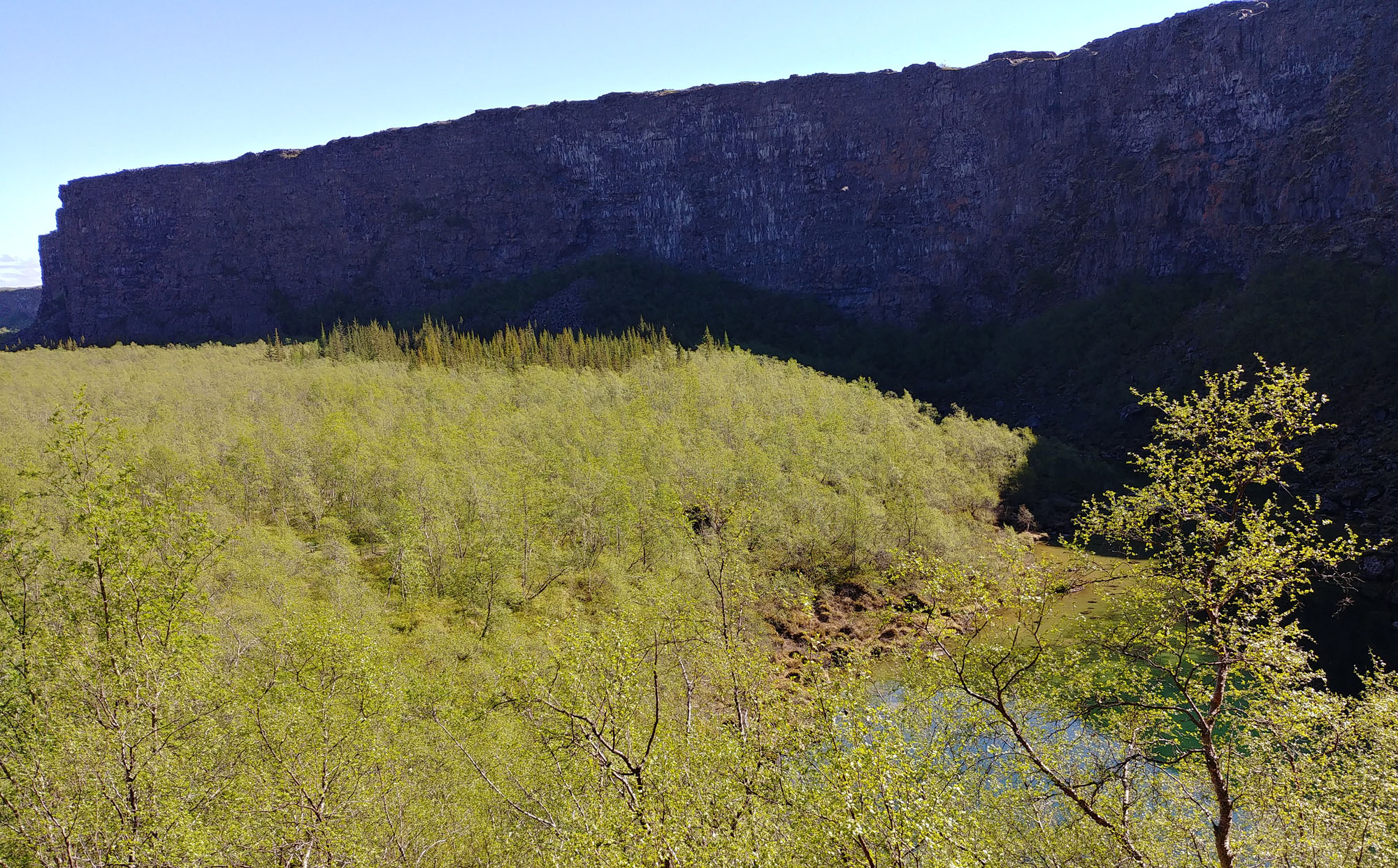
Ásbyrgi has a fantastic soundscape. It is one of the wonders of nature, a forested horse-shoe shaped canyon in Oxarfjordur. Asbyrgi is a part of Jökulsárgljúfur, within the Vatnajökull National Park.
I was there recording over night for ten hours 1st. of June 2018 . I don´t know if it was the time of the year, or something else, but the cliffs were very quiet this night. Usually I have been there later in June and July and the Fulmar in the cliffs have been noisier.
It was around 8 o´clock in the morning, just before the tourist traffic arrived that the soundscape in the canyon changed. It was like the whole biosphere woke up with lots of birds and insects activity. The following recording is the last 30 minutes that day before the soundscape was ruined by traffic noise and yelling tourists. Several bird species are in this recording. Northern Fulmar, Common Snipe, Eurasia Woodcock, Whimbrel, Red-Necked Phalarope, European golden Plover,  Pink footed Goose, Eurasian Wigeon, Eurasian Teal, Redwing, Common Redpoll, and Snow Bunting.
Here you can also listen to older posts from Ásbyrgi: Fairy in Ásbyrgi and Botnstjörn pond in Ásbyrgi.
Quality open headphones are recommended while listening at low to mid level, or in speakers at medium level.

  (mp3 256kbps/62,3Mb)
If the media player doesn’t start to play, please reload this individual blog in new tab or frame

Recorder: Sound Devices MixPre6
Mics: Sennheiser MKH20 (AB40 setup)
Pix: LG G6
Location: 65°59’56.6″N 16°30’44.9″W
Weather: Clear sky, light gust, 5°C

Read Full Post »

IMG_2200

I spend almost 4 days late June 2017 recording in Þjórsárver area, which is a tundra southeast of Hofsjökull glacier. It was shortly after the road administrator open the Sprengisandur route across the highland, so there was still not much traffic. It was very early this summer so it was possible for me to record birds activity in nests.
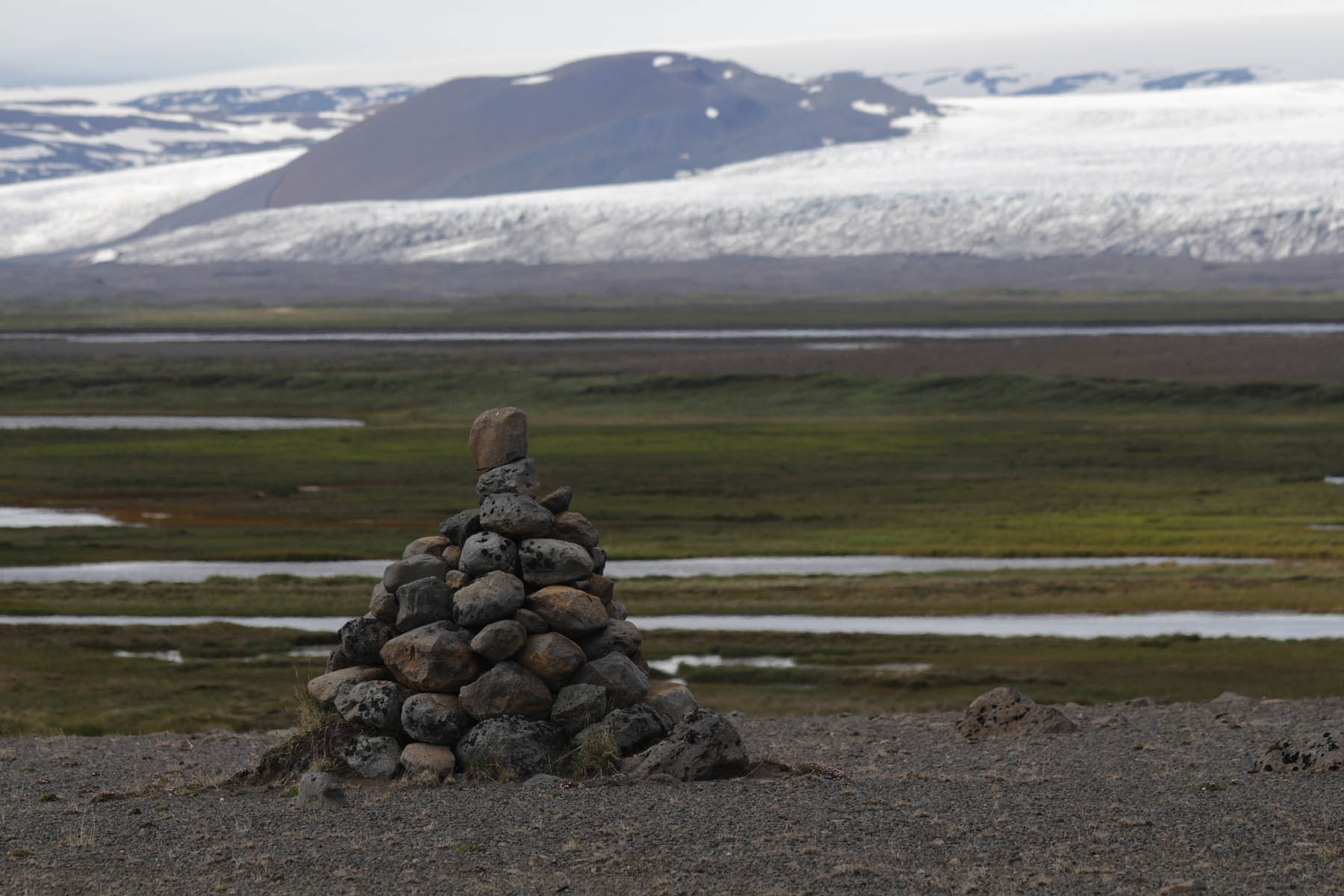
When I arrived at Eyvindakofaver I saw an Arctic fox sneaking around a stone cairns and an angry Snow Bunting flying around. It was a clear message for something interesting to record.
The weather was boring for recording. It was cloudy, the temperature about 4°C and the wind was SW, 5-10 m/sec. But the stone cairn was a suitable cover for the microphones. So I put up my gear and started recording just before midnight and then went to sleep.
At 3:40 the wind suddenly went down for about 30 minutes which was the only minutes with calm weather this four days in the area. Calm weather means normally better detail recording for the birds’ activity and deeper listening to far distance sounds.
Usually Snow Bunting lay eggs two times during the summer so this was likely the previous nesting time.
It is necessary to listen to the whole recording but suddenly something happens in the nest which we humans can guess was probably a brutal rape or other domestic violence.
If you think this was something else, feel free and leave a comment below.
Quality open headphones are recommended while listening in silence at low level, or in speakers at low level.

(256 kbps / 59,4Mb)

Recorder: Sound devices MixPre6
Mics: Sennheiser MKH20 NOS
Pics: Canon EOS-M
Weather. Cloudy, around +3°C, SW, 2m/s
Location: 64.613944, -18.575462

Read Full Post »

IMG_2200

It is easy to go in to a special mood when I think of the Icelandic highland and all the fabulous moments I have experienced there twenty to thirty years ago.
This quiet black desert gives me always a wonderful feeling. Just like I am in love.
Endless fields of weather beaten black and gray gravel, with a soundscape of wind and water, or just a real silence.
River sources and oases are there in many places. This water sources have very often some life. If not just a thin layer of sensitive moss, then grassland with birds, insects and even mammals.
Sadly, many of these wonderful quiet places have been under a threat by humans activity last decades, so they are not anymore this magic places as they were for a lonely cyclist more than twenty years ago. Some of them has been totally destroyed, like huge area in the east highland, like Vesturöræfi 
For that reason I will not inform where the following recording was made. I just like to say, it was recorded in the highland in one of my „hidden places“ that still exists and has not been destroyed with hydro power plant, tourists, offroad driving motorist, or human waste.
This recording is very quiet. It contains a dunlin, howling arctic fox, europian golden plover, red necked phalarope and pink footed goose.
The background noise is a waterflow from nearby water source.
This was recorded 17th of July 2015 around two o´clock in the morning.
Quality open headphones are recommended while listening at low to mid level, or in speakers at low level .

Tófuvæl

Það verður að viðurkennast að á þeim árum sem ég ferðaðist sem mest um landið á reiðhjóli, var ég ekki oft var við tófu, hvað þá að heyra í þeim. Eftir að hætt var að greiða mönnum fyrir skott hafa tófuveiðar svo til lagst af. Tófu er því að fjölga og það líklega um allt land því ég er farinn að sjá hana oftar og heyra.
Það gerðist svo í sumar að ég náði að hljóðrita tófuvæl á hálendinu á einum af mínum leyndu eftirlætis dvalarstöðum frá fyrri tíð.
Í upptökunni hér fyrir neðan má heyra í tófu á 5. mínútu. Hún er því miður í talsverðri fjarlægð enda kannski ekki furða með mann í næsta nágrenni. Þótt þetta sé ákaflega þögul upptaka heyrist líka í lóuþræl, heiðlóu og grágæs, sem og óðinshönum í návígi á 18. mínútu.

 Download mp3 file  (256kbps / 52Mb)

Recorder: Sound device 744
Mics: Rode NT1a (NOS)
Pics: Canon EOS M
Weather: Cloudy, drissle rain, calm- up to 8 m/s, around +3¨C
Location: Sorry, no comment

Read Full Post »