Oliver Kentish was born in London in 1954. He studied cello at the Royal Academy of Music in that city. In 1977 he came to Iceland to play with the Iceland Symphony Orchestra as a substitute and has taught since then. Oliver has been involved with the Icelandic Amateur Symphony Orchestra almost since its founding, first as a cellist, and then as the orchestra’s principal conductor and artistic director for about fifteen years. He currently teaches at the New Music School in Reykjavík.
In addition to teaching, Oliver is a prolific composer, is a member of the Icelandic Composers’ Association and has around three hundred compositions on the Icelandic Music Centre’s register. It is worth mentioning that in 1994 the British government commissioned a work from him as a gift to the Icelandic people on the occasion of the 50th anniversary of the Republic. This work, „Mitt folk“, for baritone solo and symphony orchestra is dedicated to the then President of Iceland, Vigdís Finnbogadóttir.
Oliver’s works have been performed throughout Europe, in the United States and in Russia, and some of them have found their way onto CDs, including with Helga Ingólfsdóttir, Rúnar Óskarsson, Duo Harpverk and Schola Cantorum.
Hrímhvíta móðir was commissioned by the Iceland Amateur Symphony Orchestra in 2024. The work‘s title is taken from a poem by one of Iceland’s most famous poets, Jónas Hallgrímsson (1807-1845) whose poem „Ísland farsælda frón“ is an ode to Iceland, the ‘frost-white mother’ of the title. The work is cast in the form of a concert overture, lasting just over 15 minutes and contains four well-known melodies familiar to most Icelanders. Two of the melodies can be said to be typically Icelandic; the so-called quint-song, which is a uniquely Icelandic vocal tradition where the melody is sung in parallel fifths and the voices cross over in the middle – to which the Hallgrímsson poem is famously set – and another melody, known as Lilja where the unusual intervals give the tune an ambiguous tonality. It is the combination of these two which comprises the climax of the work. The two other melodies which appear are a traditional lullaby, „Kvölda tekur“ and the hymn, „Allt eins og blómstrið eina“ which, however, is not an Icelandic melody; in the Icelandic hymnal the tune is named Antwerp, and dated 1540. The hymn‘s Icelandic text is by another giant of that country‘s poetry, Hallgrímur Pétursson (1614-1674). Even today, this hymn is an integral part of almost every funeral in Iceland.
I have been fortunate enough to get to know Oliver and the work of the Amateur Symphony Orchestra for more than decade and have been able to record almost all of the orchestra’s concerts, which often feature well-known and talented musicians and students. This has always been a fun winter hobby when there is almost nothing to do in field recordings in nature. During this time with the orchestra I have been able to develop my own recording methods, testing all kinds of setup and microphones. These methods generally aim to achieve the best possible recordings with the least possible equipment, taking into account the cramped conditions, fast and easy setting up and compiling. It must be admitted that this simplicity actually affects the quality of these recordings compared to what happens with released material today. But it is based on the simplicity that was common a few decades ago when few channels were used and the recording was allowed to stand without post-processing.
In recent years, these recordings have ended up on the orchestra’s closed website.
Most concerts have been recorded with four microphones in a fixed AB/NOS array at about 3 meters above the middle of the orchestra. Soloists have then been given two channels, usually with a parallel cardioid and omni mics.
The music that follows below was recorded on four channels (AB/NOS) at 3.2 meters above the Amateur Symphony Orchestra in October 2025 in Seltjarnarnes church.
In post-production, little was done other than giving the omni microphones a slight EQ of +/-2dB and using a compressor on the master. Mixed in Sennheiser HD650 headphone
Oliver kindly gave me permission to post this recording.
Quality open headphones are recommended while listening at any comfortable level.
If the media player doesn’t start to play, please reload this individual blog in a new tab or frame.
(mp3 256kbps / 31Mb)
Recorder: Sonosax SX-R4+
Mics: Nevaton MC59O in AB & MC59C in NOS
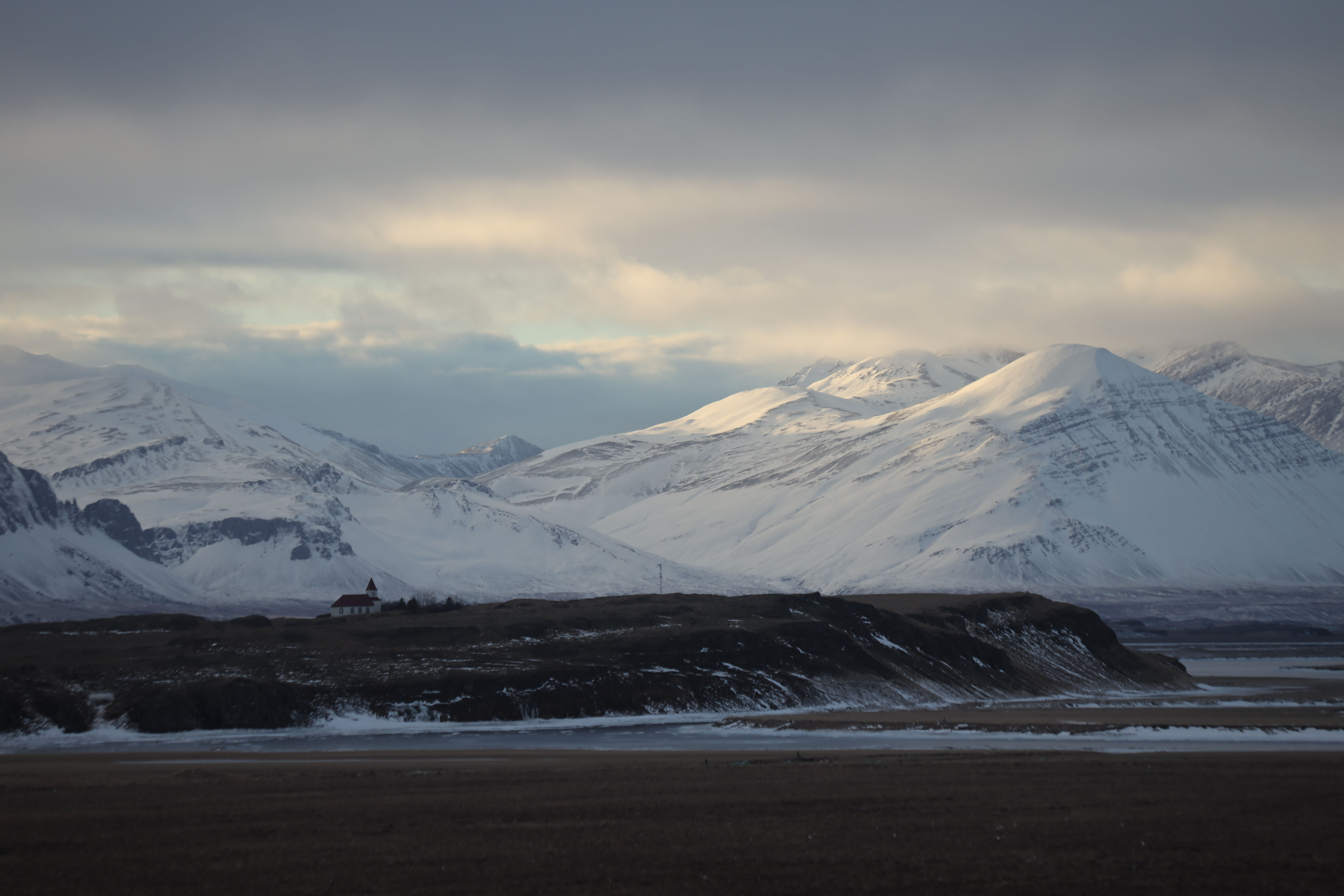
Pix: Canon EosR (Church in Stafholtstungur, west Iceland)
Location: Seltjarnarnes kirkja


 HLJÓÐMYND - SOUNDIMAGE