Feeds:
Færslur
Athugasemdir

Posts Tagged ‘Nætur upptaka’

IMG_2200

I must admit that I have posted a recording with this particular mouse before, but it does not play a major role in this recording.
It is the silence, the „calm“ weather and light gusts that can be heard in the recording that I have now been waiting for for almost two weeks, i.e. the end of May – June.
The summer is not going to start well for sound recordings. Winds are well over 4 m/sec and very cold, sometimes up to -3 °C. Normal wind has been all over the country around 4-9 m/sec up to 20-32 m/sec in some places and days.
The situation has therefore been easily called a traditional „winter storm“, then and when snowfall is added.
In such weather, bird song falls silent and young birds die in nests, although some birds are breeding again.
This weather has also meant that it is not possible to install VLF antennas. But major solar storms have raged in the solar system in recent months. But VLF recordings need same weather situation as microphone recordings. Wind should preferably not exceed 2-3 m/sec if anything is to be interesting in the content of the recordings.
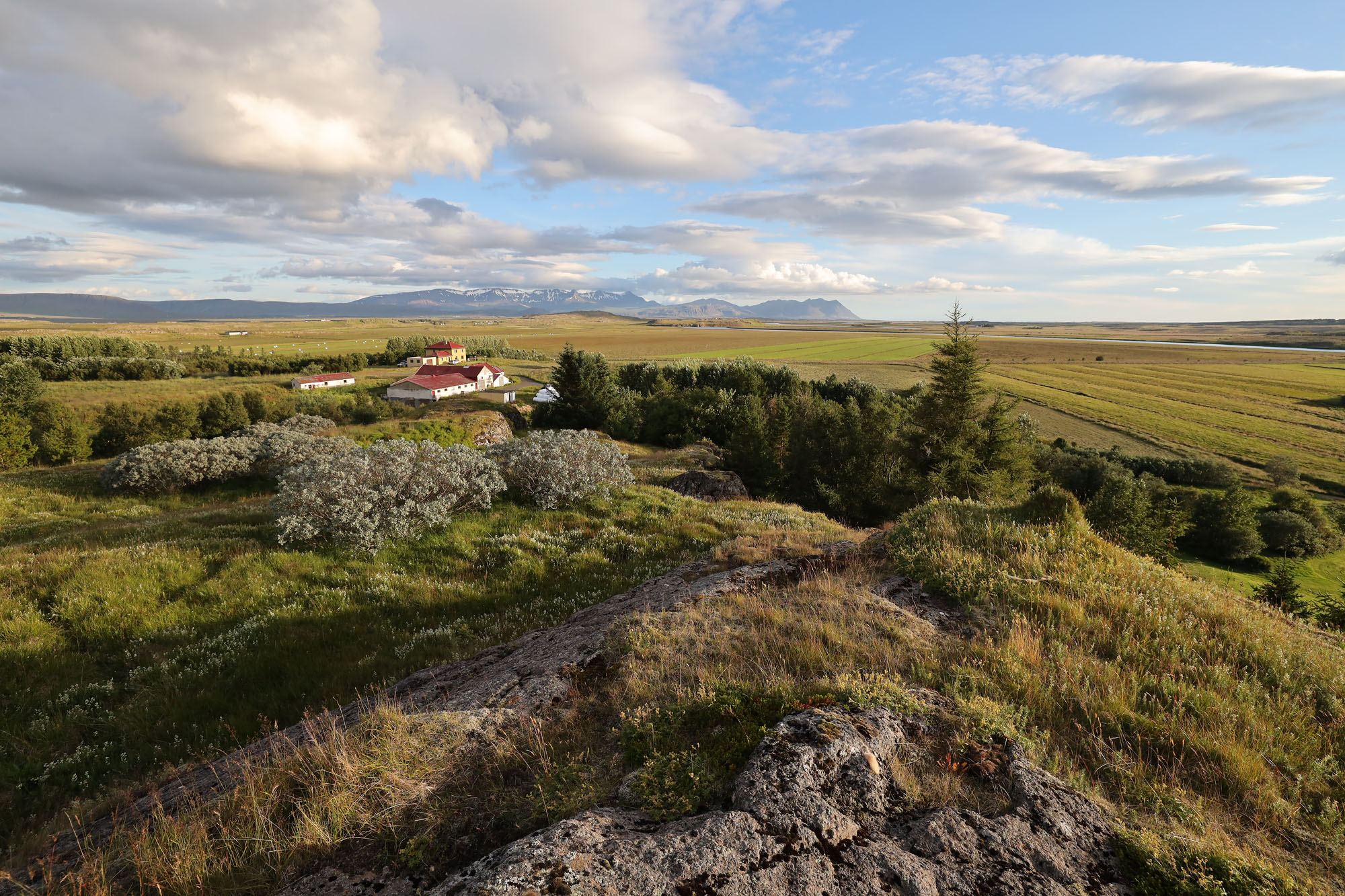
But then we turn to the accompanying recording, it was recorded early in the morning on November 26, 2023 under a full moon in Stafholtstungur at -1°C and 2-3m/sec which rustles gentle straw and leaves.
Because of an earlier experience. This time I thought that I had given the mouse a butter cake, that I spread around the microphones.. It is therefore quite remarkable that the mouse tried to chew on the cables that night. It starts chewing on the microphone cables with great noise (around 20 minutes). Almost throughout the recording, various sounds can be heard that can probably be traced to the mouse, especially in the last three minutes.
As it was getting close to 6am, you could hear some traffic in the distance
The SD788 was recorded with a gain of +48dB with no LPF, which was probably not wise. But if you can get away with it during recording, it’s often more fun to manipulate it afterwards. It was cut below 50Hz and above 10Khz
The gain was increased by another +14 dB to normalize to peak level in post-processing.
Quality open headphones are recommended while listening at low to mid level, or in speakers at medium level.

(mp3 256kbps / 62Mb)

If the media player doesn’t start to play, please reload this individual blog in new tab or frame

Recorder: Sound devices 788
Mics: Lewitt LCT540s ( IRT cross 90°/30cm)
Pix: Canon Eos R

Wether: Calm up to 2 m/sec, partly cloudy.
Location: 64.673381, -21.628700
Read Full Post »

IMG_2200

I do quite a bit of recording music, so it would be nice to be able to publish some of it here, especially music that I think is extremely well played and where the recording has been successful. For example, I have often wanted to put classical music on the web in December and January. But professionals have little interest in giving permission for this, possibly because I only ask these people once.
So I’m going to share different music instead, which is even more beautiful than all music, but it’s birdsong in the spring.
Here is a recording from last spring that I had forgotten I had recorded.
I had a Zoom F3 device recording in several places almost non-stop for several days in Stafholtstungur, western Iceland. I used Rode NT1 microphones and set them up to NOS 90°/30cm. It can hardly be considered the best setup for such long nature recordings. The reason is that sounds such as background noise from the wind, rustling of leaves, running streams and traffic can change a lot in 24 hours, so the sound pressure between channels can easily go out of balance. It can even be detected in this recording. Some traffic can be detected at a distance of 5-10 km in the (left) channel. That’s why it’s usually best to record in AB 40-50cm, if you’re going to record for a long time.
But since I primarily record natural „silence“, there are not many microphones that handle silence well and the ones that do it best are all cardioid, which has led me to start recording a lot in IRT (4ch 90°/30cm)
In some cases, it is possible to set the cardioid up to AB 40-50cm, but you cannot do that unless you intend to record from one direction. In this place the sounds were coming from all directions so it was not available.
It’s a low-key recording, actually amplified silence. Recorded at „Zoom gain at 256“ and HPF 40hz. In post-processing the recording was normalized (+25) up to -7dB 
There is a lot of recorded material here that I feel is a shame to be forgotten on hard disks, so I’m going to allow myself to call this „Part 1“ because Part 2 and 3 and more also need to get here on the web.
The footage will therefore not be exactly from the recording location, but not further than 500 meters away.
Quality open headphones are recommended while listening at low to mid volume.
If the media player doesn’t start to play, please reload this individual blog in a new tab or frame.

(mp3 256kbps /66,5Mb)

Recorder: Zoom F3
Mics Rode NT1 (NOS 90°/30cm)
Mics: Canon EOS R
Weather: Calm, partly cloudy, around 7 to 10°C

Read Full Post »

IMG_2200

It doesn’t happen often that my recordings are „interrupted“ by animals. But it happened last weekend when I was recording at my traditional place in Stafholtstungur in western Iceland. This time it was mice that seemed to gnaw the rubber on the tripod or the cables that ran up to the microphones. When the recording had been going on for three hours and it was 3 o’clock in the morning, the commotion in the mice started to keep me awake. It was as if they had gnawed a hole all the way into the windshield. So I went out and gave them a piece of cake next to the microphone stand. That made them stop biting the microphones. Instead, they started gnawing on the cake, which you can clearly hear after I brought the slice of cake.
This is traditional night silence. The background noise is mainly the wind in the leaves as well as the traffic of individual cars several kilometers away. I did not clean the internal mic noise in this recording as there is no need for it. Here it was recorded with 48dB gain on SD788 and in post-processing the volume was increased by +10dB up to peak -5dB.
Quality open headphones are recommended while listening at low to mid volume.
If the media player doesn’t start to play, please reload this individual blog in a new tab or frame.

(mp3 256kbps / 58Mb)

Recorder: Sound devices 788
Mics: Lewitt 540s, IRT cross setup
Pix: Canon EOS-R
Weather: Calm, about +4°C
Location: 64.155417, -21.834806

Read Full Post »