Feeds:
Færslur
Athugasemdir

Posts Tagged ‘Þúfutitlingur’

IMG_2200

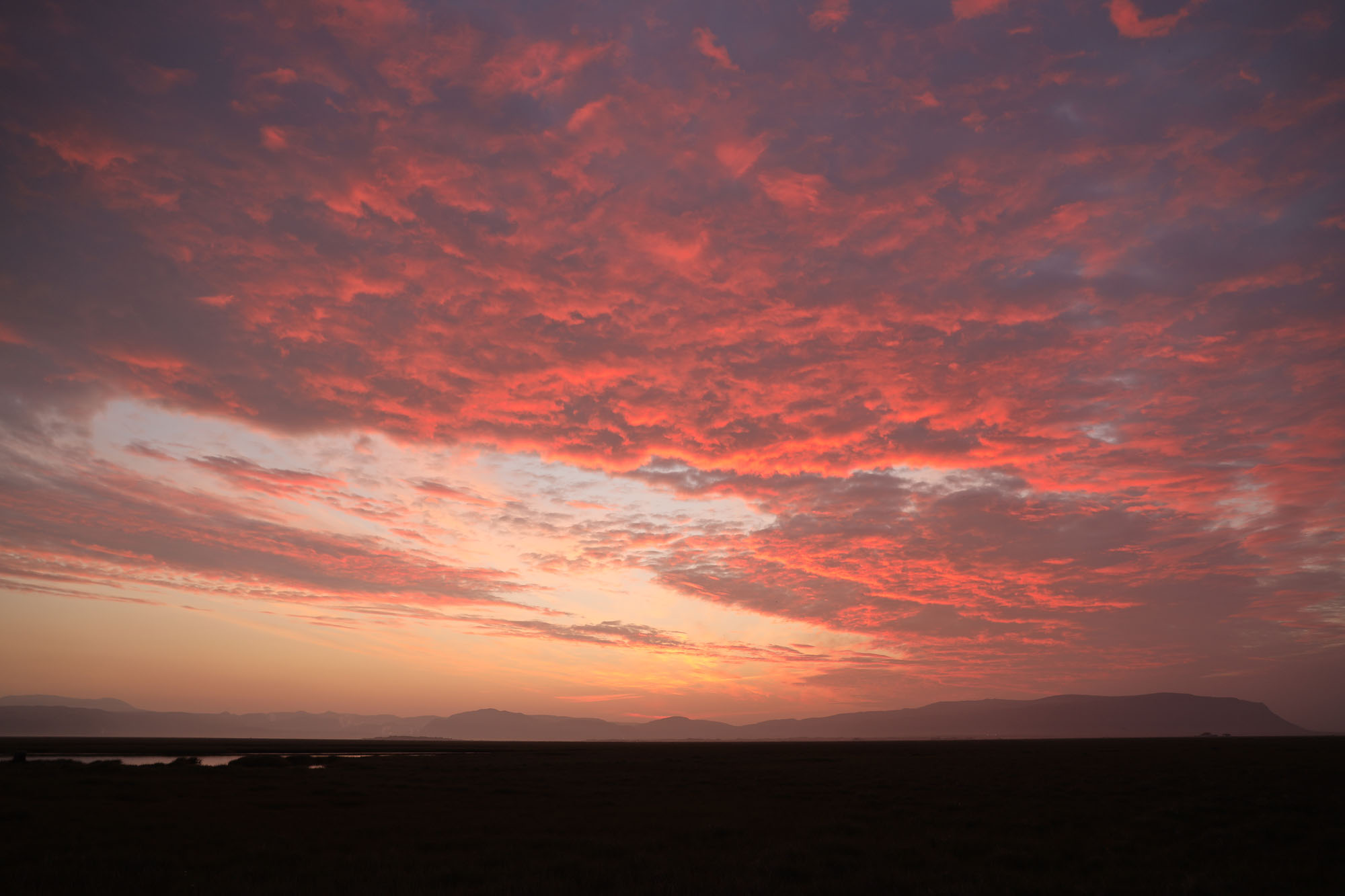
Here is an audio recording from a secret spot in the central highlands of Iceland that I have previously shared sounds from. But I will not say where that place is.
By pure coincidence, I was on the outskirts of the central highlands on June 29, 2024 when I heard that a road into the highlands that had been closed all winter had been opened. So I was among the first to enter the highlands and this secret spot this summer.
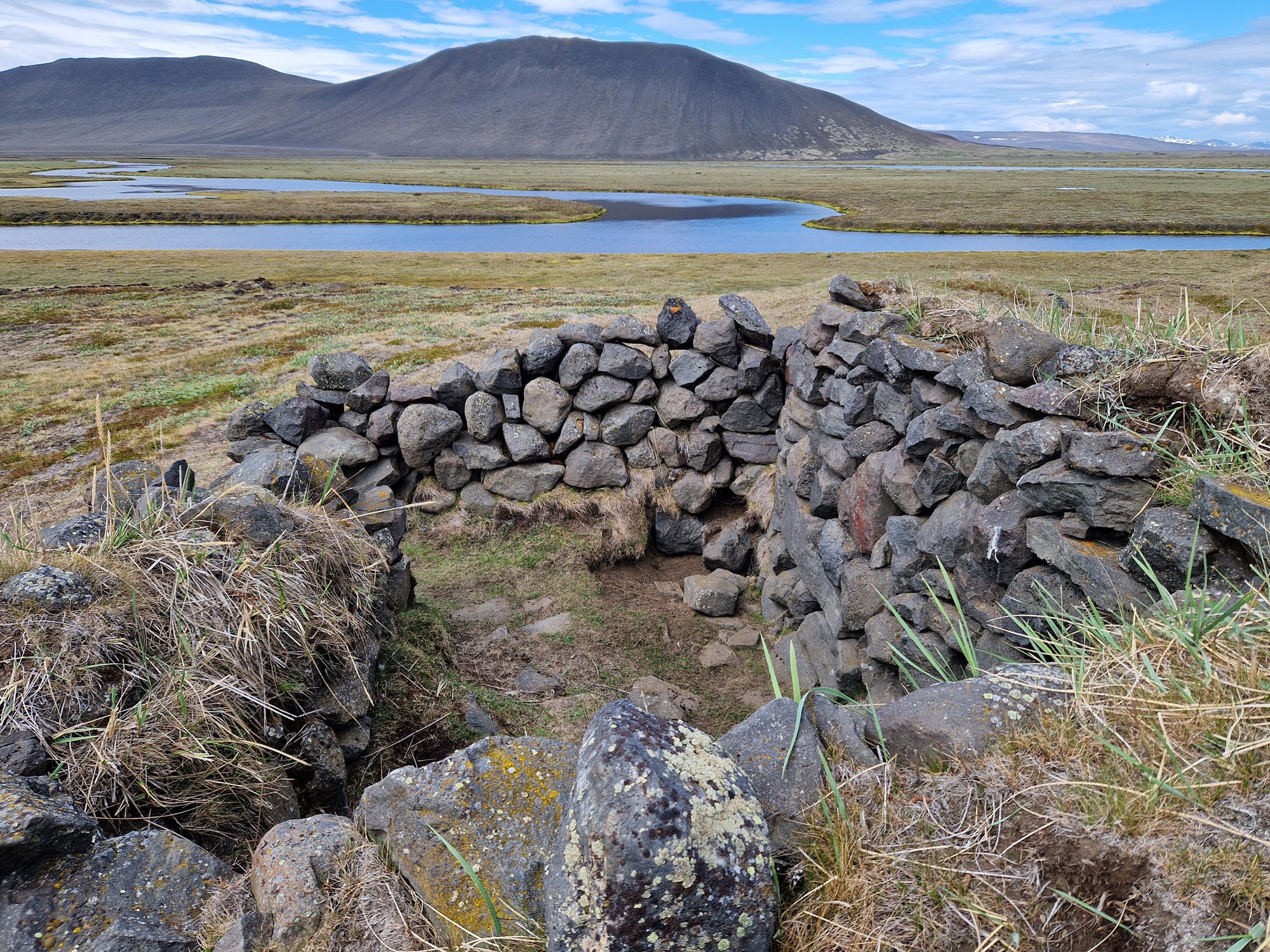
There are old stone/turf ruins at the site where I noticed a White Wagtail had made a nest inside the wall. It was quite windy so it was the perfect opportunity to record what was happening inside the ruins.
For the first few hours, I did not notice much birdlife at the ruins, until very early in the morning. The recording began soon after I noticed the birds had arrived in the area. It was clear that the birds were not happy with these gray furry neighbors so close to their nesting site. One of the birds tried to scare the microphones away with wingbeats and warning sounds. But the microphones stood firm and did not move, so later that night the birds took the microphones in peace.
Later in the morning it was heard that the White Wagtail can make various sounds, probably for communication, but that will be the subject of another post.
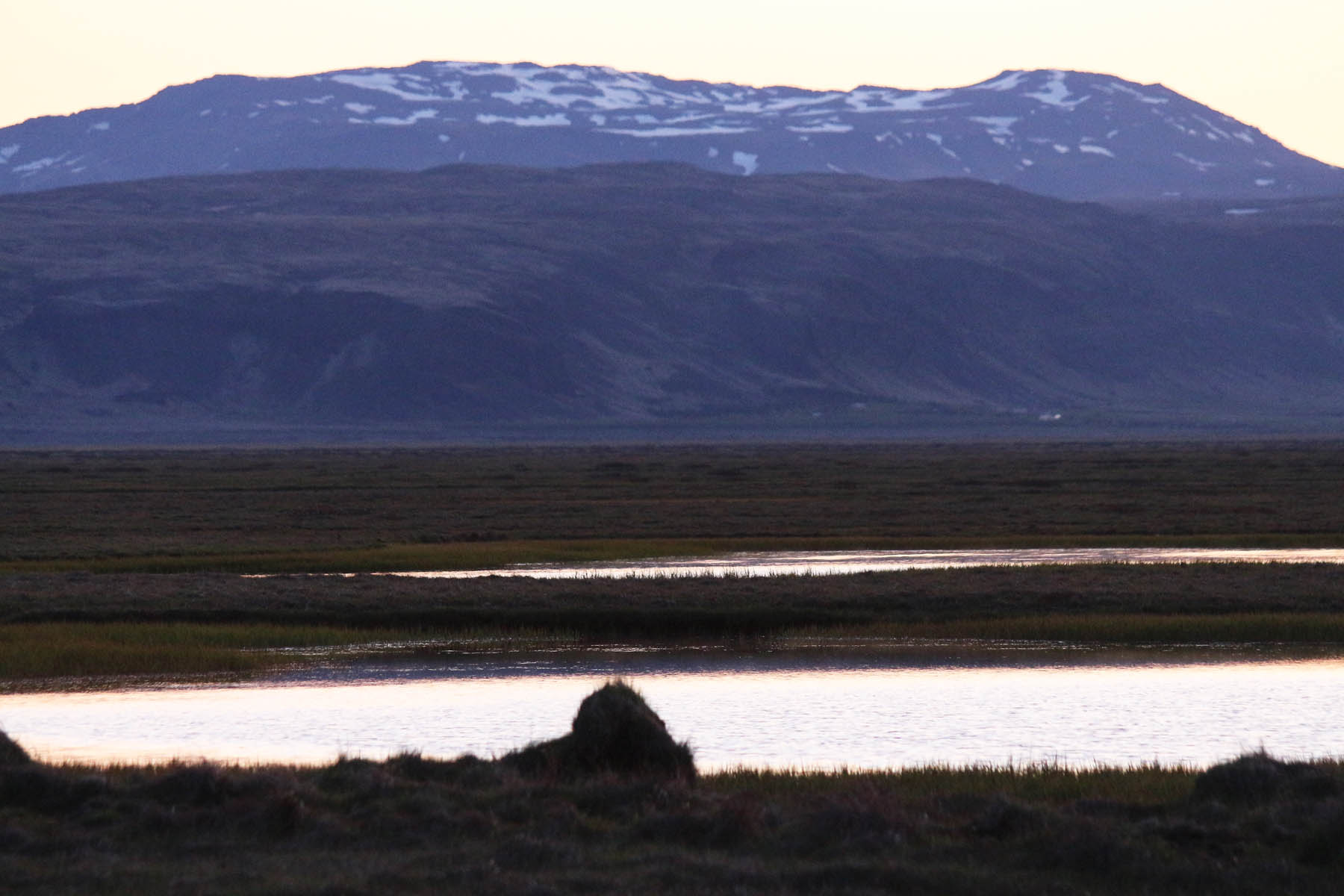
This area has incredibly abundant freshwater springs, so it’s a real surprise every time I visit the area. The sound of the water from these springs can be heard in the background of the recording, as well as other birdlife that is always found in such water and vegetation oases in the Icelandic highlands, which are otherwise just a black desert.
The recording was made with a Rode NT1a inside the walls of the ruins. The sound, or stereo image, is therefore a bit strange, but you get used to it.
Recorder was Zoom F3. Digital gain at 256 and HPF 40hz.
In post, add +13dB to normalize, fade in & out, and then downgraded to mp3

(mp3 256mbps / 60Mb)

Recorder: Zoom F3
Mics: Rode NT1a (NOS 90°-30cm)
Pix: Samsung S22

Weather: Calm up to 8m/s, partly cloudy.
Location: Secret place
Read Full Post »

IMG_2200

Early in July 2023 I spent one night at Sultártangalón lagoon recording in three locations.
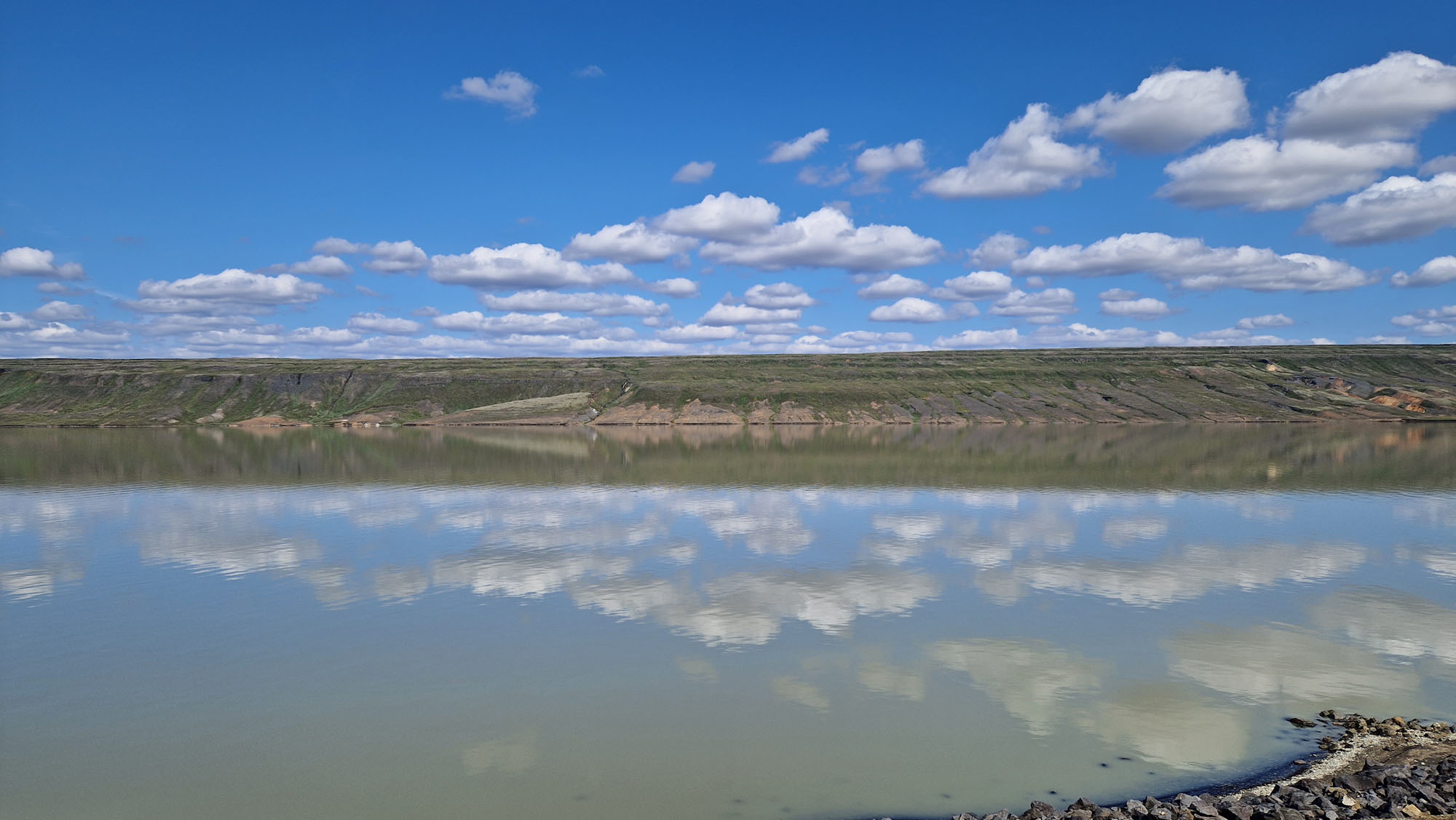
In the morning when I was leaving, it was sunny, calm and very hot, in the Icelandic way. The sight over the mirror smooth lagoon made me stop the car and enjoy the view. The recorders were ready and connected in the car, so I quickly set them up by the reservoir and took a short walk while they were recording.
The result was this. Typical Icelandic highland silence. Nothing interesting as an audio recording, but what caught my attention was the background noise of waterfalls and streams across the lagoon. This noise changed the EQ slowly in a variable thermal upstream due to the influence of the sun radiation.
Several bird species can be heard in this recording. These include Raven, Golden Plover, Dunlin, White Wagtail, Meadow Pipit and Red Throated Loon.
This was recorded with MKH8020/8040 in a fur wind shield, which was not the best choice, because the silence was considerable. Audio was recorded on MP6 with 50dB gain and in post-processing the gain was increased by another 20dB so they reached -10dBu.The MKH microphones were therefore not the most suitable for this moment. It would have been better if I had recorded with the LCT540s in IRT, to better capture all the small details all around.
To cancel out the loss of certain frequencies due to the fur wind shield, I raised the mid frequency by +2dB.
This is a rather sensitive recording. So I wasn’t using RX de-noise. But instead since nothing in the recording reaches frequencies higher than 8Khz, I lowered the EQ above 10Khz by a few dB to reduce the self noise in the microphones.
Quality open headphones are recommended while listening at low to mid volume.
If the media player doesn’t start to play, please reload this individual blog in a new tab or frame.

  (mp3 256kbps/56Mb)

Recorder: Sound Devices MixPre 6
Mics: Sennheiser MKH8020/8040 (Baffled AB)
Pix: Samsung S22

Location: 64.230420, -19.383488
Weather: Sunny, clear sky, calm, around 20°C

Read Full Post »

IMG_2200

It has been several years since I published a recording from Flói nature reserve. The reason is more or less because of foul weather in recent years when I have had the opportunity to record there.
It was no exception last summer from late April to mid July. It was cold, windy and wet most of the time which is actually the high season for birdsong recording.
I went there on the 3rd of July 2021 and recorded overnight. The weather was calm in the beginning but the wind increased over the night. I was also struggling with increased sea tide and therefore a surf noise from the coast line, actually at the same time when the birds were most active during the dawn.
My mics were Lewitt LCT540s in IRT cross setup. Most of the bird’s activity was in front of channel 1&2. Most „silence“ was in front of channel 2&3 and most of the surf and traffic noise was at channel 4&1.
It surprised me how much traffic was there the whole night. There was almost constant rumble in the air during the ten hours I was recording, except between four and five o’clock in the morning. This noise was much more audible than I remember in my earlier recordings. The reason could be found in different mic setup and mics. Ten years ago I used to use NT1a in NOS or AB, pointing towards the open field and keeping the nearest road and coastline behind. I have also used MKH20 in AB which is less sensitive for these details than large capsule mics.
It takes time to search in this 10 hour long recording for some nice sounding 30 minutes moments. Listening to the whole four channels it starts with heavy traffic noise in all channels, then surf noise. Then traffic noise again until the wind and the sun makes the air so unstable close to noon, both traffic noise and bird activity almost disappear in the wind noise.
But with an IRT cross rig I have many options. I can turn off the channel or channels which are disturbing for the soundscape I am looking for.
The recording below is a very good example of this. Instead of using all four channels and mixing them to stereo, I use only channel 2&3 (NOS 90°/30cm) to avoid the surf noise. The time when it starts is about 04:15 so there is almost no traffic noise, but anyway, the recording starts and ends with some engine noise in the distance.
Quality open headphones are recommended while listening at mid or low level.
If the media player doesn’t start to play, please reload this individual blog in a new tab or frame.

Recorder: Sound devices MixPre6
Mics: Lewitt LCT540s,  NOS 30cm/90°
Pix: Canon EOS R

Location: 63.900944, -21.191958
Weather: Calm to breeze, partly cloudy, ca 5-10°C

Read Full Post »

IMG_2200

I think I don‘t need to present the nature reserve in Flói in many words. It is a wetland / moors in south of Iceland. I have already published in this blog several hours of „Flói recordings“.
Last spring was cold, wet and windy so I did not spend much time there. But in June, I stayed there for two nights while I recorded several hours of recordings during the nights.
As usual I fell in to sleep in the field during that time, so I did not know what I was recording. Last week when I was searching trough the recordings, I noticed some interesting moments.
At 14th of June the overnight weather forecast was nice and I started to record at midnight. Between 2 and 5 in the morning the wind went down so the field got „quieter“ for far distance sound waves.
I put up Rode NT1 in NOS in the same place as usual and pointed them to north. The soundscape is always spectacular in this place.
This soundscape is probably not what everyone would hear by bear ears. The recording is highly amplified. In this circumstances and Rode NT1, I normally adjust the gain on the recorder between 54-58dB. In this particular recording the gain is increased again in post about +24 dB so the peak level in one moment (at 13:16) reach 0dBf.
Many bird species are audible in this recording like Red throat Diver, Common Snipe, Golden Plover, Dunlin, Whimbrel, Gull, Arctic Tern, Northern Wheatear, Greylag Goose, Whooper Svan, Meadow Pipit and other bird species I have forgotten, or can’t name. Other audible animals like horses and sheep’s are there too.
Background noise is mostly from the Atlantic ocean’s waves along the south coast behind the mics. Then as usual, traffic noise and sometimes a party music somewhere in the county.
Quality open headphones are recommended while listening at low to mid level, or in speakers at low level.

Flói 2015. 1. Hluti

Hér er á ferðinni upptaka úr friðlandinu í Flóa frá því á laugardagskvöldi og sunnudagsmorgni 14. júní 2015. Eins og fyrri upptökur úr Flóa sem finna má hér á síðunni eru hljóðnemarnir ávallt staðsettir á sama stað við sömu tjörn norðan við fuglaskoðunarhúsið.
Í upptökunni má heyra í ýmsum fuglategundum. Má þar nefna lóm, hrossagauk, heiðlóu, lóuþræl, spóa, máfa, kríu, steindepli, grágæs, álft og þúfutitling. Þá heyrist lika í hestum og kindum.
Bakgrunnssuð er einkum brim meðfram Suðurströndinni og einkum við Ölfusárósa. Svo berst hávaði frá bílum og partítónlist einhvers staðar í sveitinni.
Mælt er með því að hlusta á upptökuna í góðum opnum heyrnartólum og á miðlungs- lágum hljóðstyrk.

Download mp3 file (256kbps / 60,7Mb)

Recorder: Sound devices 788
Mics. Rode NT1 (NOS)
Pix. Canon EOS M
Weather: clear sky, mostly calm, between -1 to 4°C
Time: 14 June 2015, between 2 and 3 o’clock
Location: 63.900933, -21.191876

Read Full Post »