Feeds:
Færslur
Athugasemdir

Posts Tagged ‘Whooper Swan’

IMG_2200

Here is a recording that came as a surprise after I put it in Spectrogram, because I was sure that I had not recorded anything special.
Earlier the evening before the recording started, a lot of wind had been forecast for later that night. So I was not spreading recording equipment around me as I would have liked in this wonderful and secret place in the highlands.
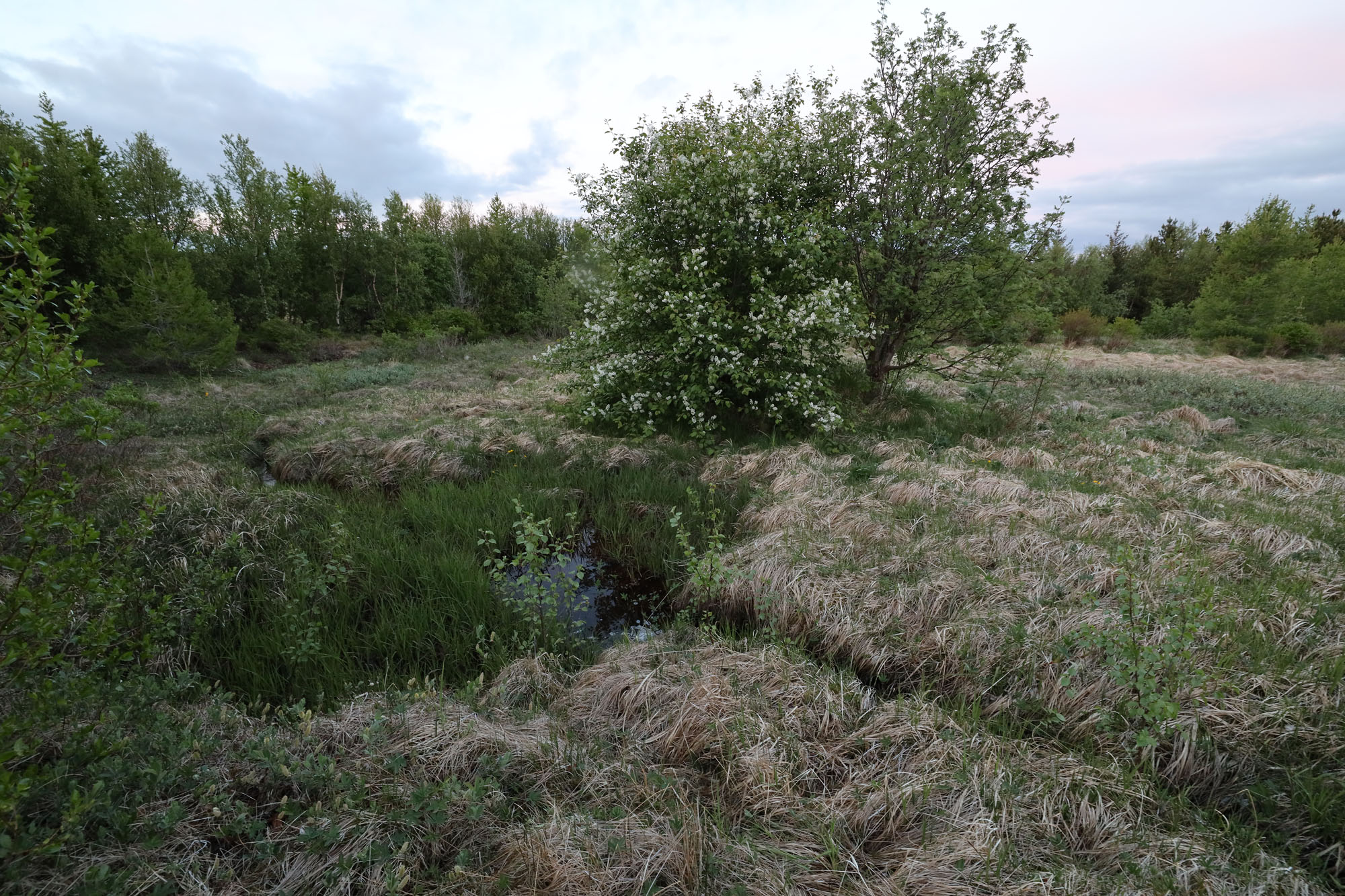
However, I decided to use Lewitt LCT540s in an IRT cross in a sheltered place from the coming storm. Two of the four microphones were pointed as much as possible into the ground, while the other two were allowed to point out into an open area. The recording seemed to only sound interesting in the wind that was present when I started the recording. The entire time I had been at this place in the highlands, I had not heard birds or any other life. Only in the wind and the flow of water in the nearby water sources.
But later that night while I was sleeping, a completely calm weather came that seemed to awaken a lot of birdlife. Birds that I had neither seen nor heard earlier the days before.
However, I never noticed this peaceful weather that night or this bird song. I just went to sleep in the breeze and woke up in a storm. It was therefore quite amusing to discover that I had managed to record the birdsong even though the microphones were placed in the wrong place for such a thing. It was first and foremost the microphones facing the ground that captured the most bird song. Those facing out into the open mainly recorded the behavior of Red necked phalarope which were at a considerable distance and goose in far distance.
To be honest, considering the placement of the microphones, this is a surprisingly good recording. This can probably be attributed to these excellent Lewitt microphones, also because they were not very visible to the birds that are best heard because they do not emit warning sounds. But if I had worn the microphones in something other than fur and been positioned closer to where the birds were, I would have achieved incredibly clear recordings in the most subtle way. In addition, very distant sounds would have become more clear and focused. But it is always difficult to be prepared for such weather conditions that it is possible to be without fur in Iceland when such times are perhaps 6-12 hours a month.
You can hear in the entire recording running water, also a kind of rumbling from running water that I assume could be a stream of spring water below the ground. But in this area there are huge water sources that could probably serve a city of millions with fresh water. The sound was recorded at +50dB gain and increased by +20dB in post up to -10dB. No RX noise reduction, mainly because I have never been satisfied with the result when I have used the LCT540. But EQ was used. Sharply pulled down below 50hz and above 10Khz, mainly to bring down unnecessary rumble and white noise from the equipment.
Quality open headphones are recommended while listening at low to mid volume.
If the media player doesn’t start to play, please reload this individual blog in a new tab or frame.

(mp3 265kbps / 66Mb)

Recorder: Sound Devices MixPre6
Mics: Lewitt LCT540s (IRT cross setup)
Pix: Samsung S22

Weather: Calm cloudy, about 7°C
Location. Secret place on the Icelandic highland
Read Full Post »

IMG_2200

I don’t expect many people to be interested in listening to this recording. It is mainly a silence. But this is just a normal natural Icelandic soundscape in calm winter weather, so I have a lot of stuff like that in my collection which I think should be published in this blog
At least I can tell. it is very good to fall asleep from recording like this.
This one was made overnight on 4th of March 2023 and the time is around 5 o’clock. For some reason, there was unusually low traffic that night. Perhaps it had to do with the fact that the television that evening had some musical contest, so lots of folks in the county had been drinking alcohol that night. So there were few people who could or had to drive unnecessarily around the countryside that night.
But anyway it is a traffic noise in this recording. Mainly from the main road no:1 for about 5km away and one car will pass by the recording location, 250 meters away. So don’t play this too loud.
As expected at this time of year, silence was something that was significant from nature’s side. Fortunately, the weather was completely calm. It gave me the opportunity not to use low pass filter LPF, which gave me the ability to listen for a variety of low-frequency sounds that I’ve often encountered on this recording site before but has been hard to explain. Was it an earthquake or something else?
When silence is greatest, there is little or nothing that attracts attention in this recording. Two foxes can be heard calling. Rock ptarmigan, ducks and swans in the distance. But as ears sink deeper into the material and every sound is separated from each other and from the background noise, there is the „sound of water“. Sound of wet grass. Maybe an ice crystal transformed to a drop of water. At times, you may hear a „flow of water“. Probably a small creek far away or maybe as well an underground water flow because there is no stream nearby. But the ground in this place has thin soil on a rocky glacial soil
The background noise is equally fascinating. Some of them are known and could best be considered as „technical problems“. But there are also intriguing things to be found because sometimes it is hard to figure out where this noise comes from.
So let’s talk about „background noise“
At the lowest frequency, the vibrations caused by the wind are usually almost always detected, i.e. “Brown noise”. Hence, it is usually necessary to use HPF for all outdoor recordings, except in recordings like this where the weather’s so calm that it’s like being in a wardrobe. This recording, as well as others I’ve done at this location, may include rumbles or knocks that may come from a horse or horses from a great distance, possibly some kilometers away. I think this noise coming this distance travels through the ground. It might be earthquakes, but it is unlikely in this recording. Apart from the distinctly low frequency of sounds that take place in a particular setting, I suspect that the constant rumblings that can be heard in the recording have both technical and natural explanations, which mostly though is related to turbulence in the air.
On the other side of the frequency curve, at the highest frequencies, “blue noise”.
It is usually only self noise from the microphones and recorder’s amplifiers. I tried very carefully to use RX for noise reduction, but there is always a limit to what is possible to do without spoiling the recording.
In the middle is “Green noise,” something that always interests me. This is a background noise that normally includes sounds that may come from far away and be heard only in a calm weather.
There is something called “Sea State Zero Noise,” a natural silence, or background noise in the oceans. I believe that something similar is happening here. This is noise, which is due to a number of natural factors, but mainly because of the wind and water in the combination of temperature and atmospheric conditions. Today, though, „mechanical traffic“ has constantly been overwhelming the natural noise. The source of this “green noise” like the recording below has a possible origin from car traffic up to 20Km away. From the surf at the beach shoreline 20 to 30 km away as well from a waterfall behind hills, in a canyon 7km away. None of these sounds are discernible to the bare ears. So for me it is often good to identify which direction this theme comes from by recording in IRT setup as this one.
In this recording (or that night) this green noise varies as a calm wave in different frequencies. Whether it is due to variations in air pressures or layering of temperatures or something else, I cannot easily confirm
Therefore, it is best to listen and let the imagination guide you to the course.
For those of you who find a lot of noise in this recording, I would like to remind you that it was recorded with 50dB gain. In post-production the gain is increased by another 25db, up to -10dB peak. So I agree, this recording certainly doesn’t sound good. But I think you can’t do better with the Lewitt 540s and Sonosax SX-R4+ in silence.
Quality open headphones are recommended while listening at low to mid volume.
If the media player doesn’t start to play, please reload this individual blog in a new tab or frame.

  (mp3 256kbps / 56Mb)

Recorder: Sonosax SX R4+
Mics: Lewitt LCT540s in IRT setup
Pix: Canon EOS-R
Location: 64.673374, -21.628710
Weather: Calm, partly cloudy, 0°C
Information about „color of noise

Read Full Post »

IMG_2200

Early last spring I was asked if I wanted to record a 24-hour long recording for Radio Art Zone.
It wasn’t a problem because I’m used to recording 8-14 hours of content whenever I can.
So I made two / three 24hrs recordings in total.  All recorded in similar locations on the 23rd-25th. April 2022 in the countryside.
I recorded on four channels with an IRT cross version and in two other locations with two channels in AB & NOS.
If I remember correctly, I sent the IRT recording to Radio art project. The AB recording is already audible on this soundblog, „The brook below Lambaklettur
The NOS recording was forgotten, until I found it last week.
It was recorded with Rode NT1 microphones and a Zoom F3 recorder.
This recording contains natural „silence“. When I talk about „silence“ I mean that most people would not hear anything with bare ears. Probably only the blood flow in their own body.
But it was not total silence when this recording started here below. The migratory birds had already started to flock to the country. It was also a drizzly rain and therefore quite humid all night while the recording took place. The fur on the windshield got quite wet and you can hear larger drops falling on the wind shield, on the tripod and on the ground around.
This recording starts around the time when birds start to be heard in the early morning. The windshield is already very wet, so it must have adversely affected the recording quality. But surprisingly it is not heard that the NT1 is cracking due to air humidity.
The Zoom F3 had gain set at „256“ and HPF at 40Hz. I’m used to recording with 47 to 50dB gain for such silent recordings. Gain „256“ is therefore not telling me anything, but having worked on this recording, 256 seems to be something similar to 50 to 55 dB gain. This actually needs further consideration because It can be an important issue. The reason why I don’t record with a gain higher than 50dB on the Sound Devices or Sonosax recorders is to prevent additional „amplify noise“ that I feel increases if the gain is over +50dB. It is therefore  always better to increase the gain digitally“ in post.
I have a hard time realizing this with the F3 device. The noise seems to go hand in hand with different gain. No matter what the gain is. Whether I should generally record with „256“ gain or „128“, when recording quiet soundscapes needs further testing. I find the noise a bit more in this recording than if I had recorded with the Sonosax for example, but that noise I hear and see on spectrograms could also be a sound from the drizzle, or raindrops when they fall to the ground. It can therefore be assumed that there is some natural noise in that recording. Therefore it is not entirely possible to blame F3 or NT1 for all the noise that can be heard.
The first sound file is over 30 minutes long which has got a gentle noise reduction and then below 5 minutes of original recording for comparison (without NR). Both recordings are normalized up to -10dB. The original files from the recorder had a -38dB peak value which is normal for „quiet“ recording like this.
Bird species in this recording is mainly common snipe, whooper swan, black tailed godwit, redwings, whimbrel, golden plover and eurasian wigeon.  Most of them are in the distance in this recording.
I will post the continuation of this recording later. Then the number of birds increases and they come closer to the microphones.
Quality open headphones are recommended while listening at low volume.
If the media player doesn’t start to play, please reload this individual blog in a new tab or frame.

  (mp3 256kbps / 62Mb)

Original recording from Zoom F3, only normalized up to -10dB & downgrade to mp3

  (mp3  256kbps / 9,4Mb)

Recorder: Zoom F3
Mics: Rode NT1 (NOS)
Pics: Canon EOS R

Location:  64.673258, -21.630001
Weather: Drizzle rain, about 4°C

Read Full Post »

IMG_2200

It’s time for me to put a recording from my new Zoom F3 on the web.
The recording is from Stafholtstungar in Borgarfjörður, western Iceland, 4th of June 2022.
This is a 30 minutes part of another 35 hour long recording at circa 5AM. All these 35 hours I used only three 10Ah / 5V Li-Ion batteries. So each battery, which is smaller than the recorder, lasts for 12 hours.
It is different from around the mid eighties when I tried to record a natural sound on a Sony TC-D5M cassette recorder with a 4Ah acid battery that lasted for about 3 hours, or for 30 minutes with internal batteries.
The microphones in this recording were Rode NT1  in AB45 setup, dressed in Rycote WS2 windshields, about 20cm from the ground. It was recorded at 32bit / 48khz, with a recording gain at „32“ which I could believe was comparable to a 45dB gain at Sound Devices. In post-production, the recording was normalized by + 22dB up to -6dB and then converted to mp3 256kbps.
Various bird species are in the recording, such as Redwing, common snipe, common redpoll, whooper swan, raven, rock ptarmigan and definitely other birds too.
The name „Lambaklettur“ (Lamb rock) is a rocky hill above the recording site.
Quality open headphones are recommended while listening at medium or low volume
If the media player doesn’t start to play, please reload this individual blog in a new tab or frame.

  (mp3 256kbps / 56Mb)

Recorder: Zoom F3
Mics: Rode NT1. AB45 setup
Pix: Canon Eos R

Location: 64.675900, -21.623373
Weather: Dry, calm, clear sky, 5°C

Read Full Post »

IMG_2200

For several years I have recorded the soundscape at the same spot when I visit a cottage in west Iceland. Every time I record there I get something different and interesting, all year around.  Forestry has changed the birdlife a lot on this spot in the last 20 years.  Birds like Redwings, Common Redpoll, Eurasian Wren and Starlings are now in increased numbers since the beginning in this century.
I recorded this spot overnight both 6th and 7th of July 2021.
Lot of chicks had already left the nests so the grass field around the microphones was full of birds searching for insects which can be heard in this recording.
The following recording is not an example of the „best part“ which I record these two mornings. It is just a part of the first WAV file at the 6th which I choose because of low traffic. So more of these two days’ recordings will be audible in this blog in the future.
The time is between 2:30 am to 3:05. It is calm and quiet in the beginning until the Common Snipe begins to make a noise with its tail. Young Redwings, Common Redshanks and Snipes are all around the microphones. Other birds are not far away such as European Golden Plovers, Whimbrel, White Wagtail, Eurasian Wren, Rock Ptarmigan, and Whooper Swans in the distance.
This was recorded with four channel IRT setup, but sadly one of the cable was broken so I could only use three of the channels which was though easy to mix into INA-3
This was recorded at 48dB gain (HPF@80hz). In post the gain was increased about 30dB plus gentle RX noise reduction.
Quality headphones are recommended while listening at low or mid level or in speaker at low level.
If the media player doesn’t start to play, please reload this individual blog in a new tab or frame.

(mp3 / 256mbps 69,8Mb)

Recorder: Sound devices MixPre6
Mics: Lewitt LCT540  (IRT setup)
Pix: Canon EOS R

Location: 64.673368, -21.628709
Weather: Calm, cloudy, about 12°C
Other recordings from this location in Stafholtstungur:

Read Full Post »

IMG_2200

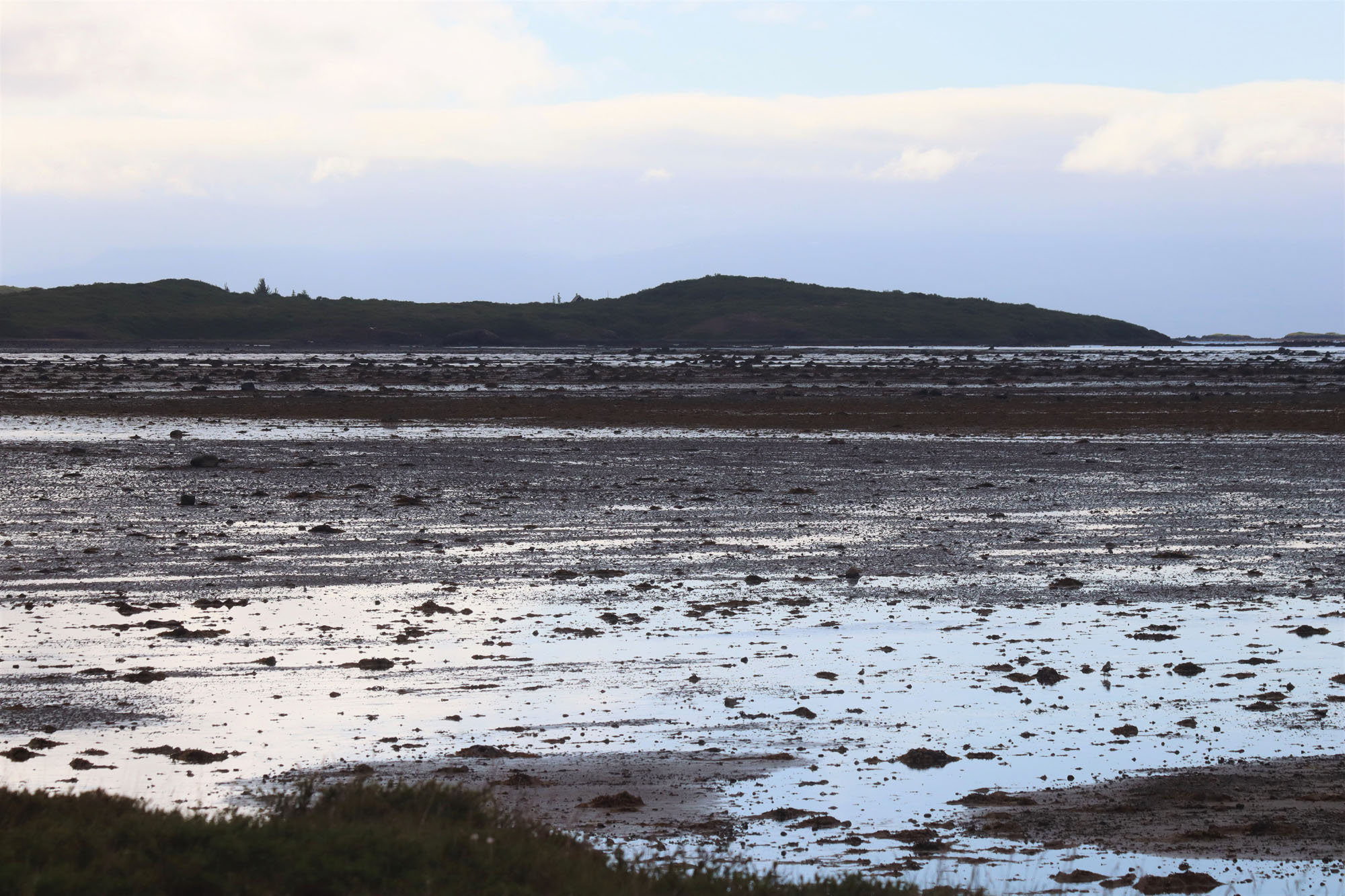
Thanks to COVID, I got a unique opportunity this summer to record in places I have so far not been able to record because of traffic, mainly due to tourists. One such site was Skeiðarársandur, a broad sandy wasteland along Iceland’s south-eastern coast, between the Vatnajökull icecap and the sea. This area has been a „desert“ with deadly glacial rivers for centuries. But due to global warming and receding glaciers, rivers have disappeared. Instead, vegetation like moss, grass and trees has occupied some areas without human intervention.
It is therefore obvious that biodiversity will change significantly in the coming years.
Here is a part of an 8-hour-long recording that was taken just east of the dry riverbed of Skeiðarár, which was a huge glacial river for centuries until a few years ago when it disappeared due to changes in Skeiðarárjökull glacier.
This is a recording of silence. The microphones were placed beside a small creek which can be found all over Skeiðarársandur. Because of the wind I did not use a tripod, they just stood on the windshield on the ground which gave a pretty good result.
The background noise is mainly a gust of wind stroking the ground and surf among the coast, about 20-30Km away
Birds in this recording are Common Ringed Plover, European Golden Plover, Dunlin, Purple Sandpiper, Common Snipe, Whimbrel, Common Redshank, Whooper Swan, Greylag Goose.
Quality open headphones are recommended while listening at low to mid level, or in speakers at low level.
The name of this blog „Dögun við Eyrar“ means „Dawn at Eyrar“ (Eyrar is the name of the place)
Other recordings from Skeiðarársandur can be found here

( mp3 256kbps / 63Mb )
If the media player doesn’t start to play, please reload this individual blog in new tab or frame

Recorder: Sound devices MixPre6
Mics: Lewitt LCT540s (IRTcross) channels counter clockwise 1-2-3-4 = L-R-L-R
Pix: Canon Eos R

Loation: 63.972468, -16.956438
Weather: Clear sky. Gust up to 6m/sec. around 10°C
Recording time between 5.am to 6.am

Read Full Post »

IMG_2200

This following recording was made between 03:00 and  04:00, It is a part of seven hours long recording between 02:00 and 09:00 which I did in Skálholt, south Iceland 10th of July.
The grass was tall so the microphones were almost hidden in the grass. Lots of birds were in this grass searching for food and some of them came close to the microphones.
This is a typical soundscape of silence in a countryside which is not disturbed by traffic or by other engine noise.
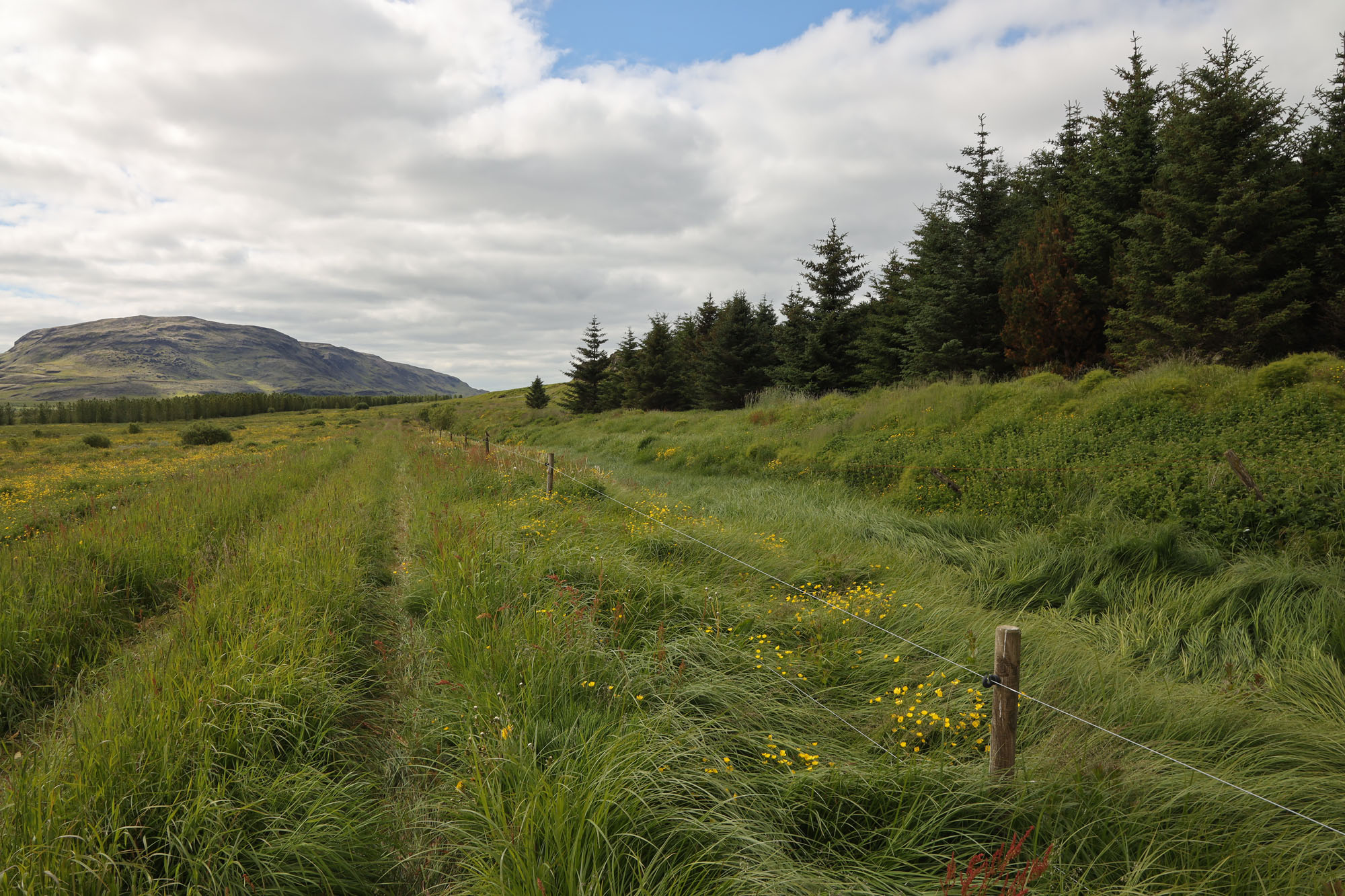
Imagen you self standing in a grassland.  Front of you is a wide open wetland field.  Behind you is a  small hill with tall trees  which make a reflection of some bird calls. Two rivers are in the distance with flocks of whooper swans. The birds are all around you but mostly quiet and busy searching for flies and other insects in the grass all around you.
The recording contains many birds. Like Common Snipe, Golden Plover, Whimbrel, Raven, Common Redshank, Black Tailed Godwit, White Wagtail, Black headed Gull, Rooster, Winter Wren, Northern Wheatear, Snow Bunting, Rock Ptarmigan, Common Starling, Redwing, Whooper Swan, Eurasian Oystercatcher and probably other species.
This recording was made with four Lewitt LCT540s microphones in IRT cross. All capsules are 90° & 30cm apart which was in post mixed to two 180° stereo.
This recording is highly gained with a wide dynamic range so keep it in mind, some moments can be loud
Quality open headphones are recommended while listening at low to mid level, or in speakers at low level.

This recording is my contribution for the world listening day 18th of July 2020

  (mp3 256kbps / 60Mb)
If the media player doesn’t start to play, please reload this individual blog in new tab or frame

Recorder: MixPre6
Mics: Lewitt LCT540s (IRT cross 90¨/30cm)
Pix: Canon EOS R

Location: 64.121864, -20.534631
Weather: Calm, cloudy, around 12°C

Read Full Post »

IMG_2200

After a dark winter with an awful weather nothing is as pleasant when migrant birds arrive to the country in the spring. Most birds arrive in April and May, and few species in Mars and June. So in mid May the air is loaded with birds song. What amazes me always is the fact that many of these birds are coming far distances from hot claimed continents like Africa and when they arrive they still have the power to fly around and sing almost 24/7 in several weeks.
It was no exception to this on May 12, 2019 when I arrived at Stafholtstungur in SW of Iceland  with my recording gear. Lot of snow was still in the mountains and the weather was cold but dry.
There are many bird species in this recording. Common Snipe, Golden Plover, Whimbrel, Common Redshank, Black Taled Godwit, White Wagtail, Winter Wren, Northern Wheatrxear, Snow Bunting, Rock Ptarmigan, Common Starling, Redwing, Great Northern Diver, Read Throated Diver, Whooper Swan, Graylag Goose and probably other species too.
This is a part of 9 hour recording I record over night with four Lewitt LCT540s microphones in IRT cross setup.   
Even though this part was recorded early morning, between 3:00 & 3:30, the recording is disturbed by human traffic in air and on ground. Wind noise which is usually difficult to avoid are audible in some moments. 
I do not strictly follow the rules about the IRT setup. I have 30cm / 90° between all capsules.
Counting clockwise normal arrangement for the channels are 1-2-3-4  to  L-R & Rs-Ls. But I pair these four channels L-R-L-R into stereo. This allows me to record 360° soundscape with four separated microphones without exactly noticing any time errors.
At the same time I also have four stereo recordings into individual directions which can be useful in some circumstances.
The problem with this „IRT stereo mix“ is that I can´t locate the direction of the sound source. But if I need that information I can always get it in the original recording file. 
In this recording Ch1 is facing to north, Ch2 to east, Ch3 to south and Ch 4 to west
This is a high gained recording. Recorder with 50dB gain, plus 24dB in post, close to be normalized (-3dB). So this is a „quiet“ recording even though it seems to be loud.. Quality open headphones are recommended while listening at low to mid level, or in speakers at low level.

(mp3 256kbps / 62Mb)
If the media player doesn’t start to play, please reload this individual blog in new tab or frame

Recorder: Sound Devices MixPre6
Mics: Lewitt LCT540S (IRT cross arrangement)
Pics: Canon EOS-M
Location: 64.673439, -21.628673
Weather: Calm to light gust, Cloudy  about 2°C 

Read Full Post »

IMG_2200

It is rear now a days to discover new places without traffic or engine nose. I found one in June 2019. It was at Fellströnd, in the northwest of Iceland. That means I have natural silence for more than a one hour. It is a south part of a peninsula which only have gravel roads and no shopping service so motorist are normally not driving there for pleasure.
Less human traffic means more biodiversity. It thrives better in places with less farming and fast driving cars. One roadkill can as well mean a death of the whole family. Car covered with smashed bugs means less food for birds… and so on. This is clearly visible and audible in those areas which have „industry“ farming and lots of fast driving traffic.
No traffic, or engine noise, means more natural silence and more transparent soundscape. Therefor it is very interesting to listen to this recordings. It is even possible to hear sheep footsteps far away and detect what bird species are in the area, even far away. In fact it is possible to analyze the situation of the biodiversity.
This is a high gain recording, recorded at +50dB. Gain was then increased in post about +25dB, normalized at -8dB and gently NR.
This is a part of 10 hour recording. This part was recorded between 7 and 8 in the morning at 21st of June.
Many bird species are audible in this recording. Black tailed Godwit, Common Redsank, Whimprel, Red necked Phalarope, Eurasian Oystercatcher, Common Ringed Plover, European Golden Plover, Dunlin, Raven, Redwing, Purple Sandpiper, Meadow Pipit, Geylag Goose, Whooper Swan, Red Throated Diver and Common Eider. I am almost sure I have not counted them all.
You can hear sheep footsteps which was though far away, also birds wing flaps as a low rumble noise.
Quality open headphones are recommended while listening at low or medium level.

(Mp3 256Kbps / 48Mb)
If the media player doesn’t start to play, please reload this individual blog in new tab or frame

Recorder: Sonosax SX-R4+
Mics: Sennheiser MKH20 (AB40)
Pix: Canon EOS M50
Location: 65.169836, -22.404601
Weather: Calm, cloudy ca 13°C

Read Full Post »

IMG_2200

Hólmavatn is a heath lake in the interior in west of Iceland between the two valley Kjarrárdalur and Hvítársíða. It is a part of a big lake system on a heath named Arnarvatnsheiði.
I have once before record the soundscape by this lake before. That was mostly a struggle with wind all the time, so I did not get anything interesting.
But at 22nd of June 2019 the weather forecast was perfect for this area, clear sky and calm most of the night.
I arrived with my gear around 9 pm at my previous recording place. It was still windy and some anglers about 500m away east of the lake. I quickly put up my rigs knowing that a calm weather meant just lot of gnats. I decided to put a two stereo pairs close to the shore, facing out to the lake. LCT450s in NOS about 60 m east from my car and MKH20 pair 70 m in the west. Suddenly around 11pm the wind stopped to blow and I started the recording.
What glorious soundscape. All those small tiny things and all those bird species. The LCT540s sounds much cleaner and brighter than MKH20, I guess mainly because of the different location.
But there was a big problem which I did not notice with my bare ears. The anglers made so much noise it was clear they would destroy my „natural silence“ recordings this night. They were playing a radio all the time, talking, starting car engines, and even worse, soon after I started the recording two of them started a motor boat. All this noise lasted for about two or two and a half hours.
Later that night when this noisy anglers were gone, all the birdsong became calm and less active. I am not sure why, but afterwards when I listened to the recordings it seemed like the anglers on the boat were disturbing birds on their habitat.
Following recording is a part of this „anglers moment“, probably the best part because the motorboat was mostly far east on the lake most of this time.
In the beginning of the recording you can clearly hear tiny sparks. It is coming from foam which forms between stones in the shore during windy days. When the bobbles in this foam blows, they make this tiny sparking sound. During the recording the sparks get fewer and lower because the weather is calm and no waves on the lake.
But there are so many bird species I guess I will not know them all. Great Northern Diver, Read Throated Diever, Arctic Tern, Whooper Swan, Pink Footed Goose, Black Headed Gull, Golden Plower, Dunlin, Whimbrell, Common Snipe, Common Redshank, Arctic Skua, Rock Ptarmigan and probably some other which you are welcome, if you know, to name in comments below.
You will hear the fish jumping and Arctic Tern hunting on the lake surface. Other background noise other than human noise from anglers is mainly from the river Kjarrá which flows in the Kjarrárdalur valley 4Km north of the lake .
This recording got a gently noise reduction, mainly because of high gain.
It was recorded with 47dB gain. In post the gain was normalized +26dB up to -5dB
Quality open headphones are recommended while listening at low to mid level, or in speakers at medium level.

(mp3 256kbps / 68Mb)
If the media player doesn’t start to play, please reload this individual blog in new tab or frame

Recorder: Sonosax SX-R4+
Mics: Lewitt LCT540s (NOS setup)
Pix: Canon EOS M50
Location: 64.799603, -20.895132
Weather: Dry. Mostly calm up to 5m/sec

Read Full Post »

Older Posts »