Feeds:
Færslur
Athugasemdir

Posts Tagged ‘Zoom F3’

IMG_2200

Here is an audio recording from a secret spot in the central highlands of Iceland that I have previously shared sounds from. But I will not say where that place is.
By pure coincidence, I was on the outskirts of the central highlands on June 29, 2024 when I heard that a road into the highlands that had been closed all winter had been opened. So I was among the first to enter the highlands and this secret spot this summer.
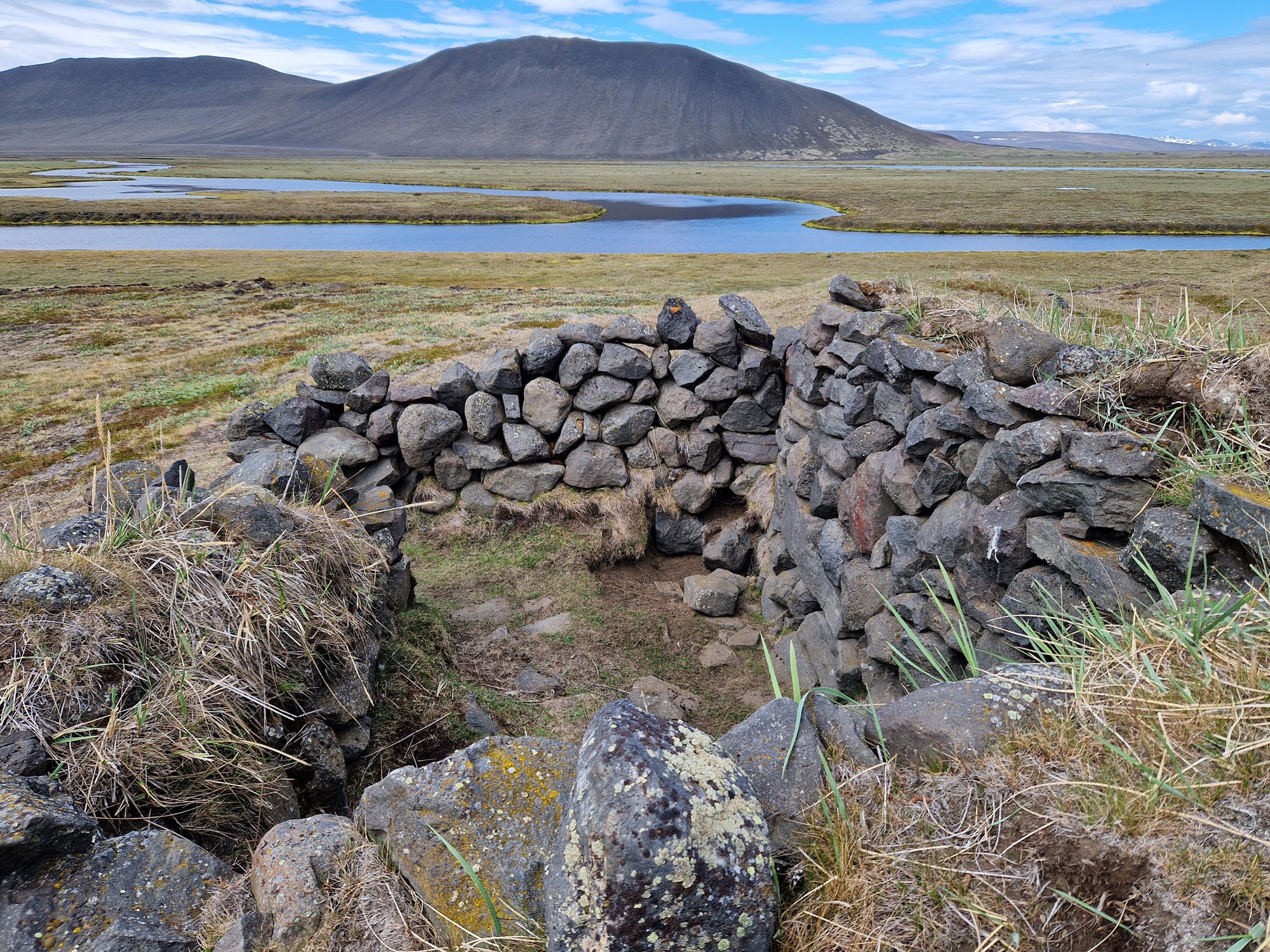
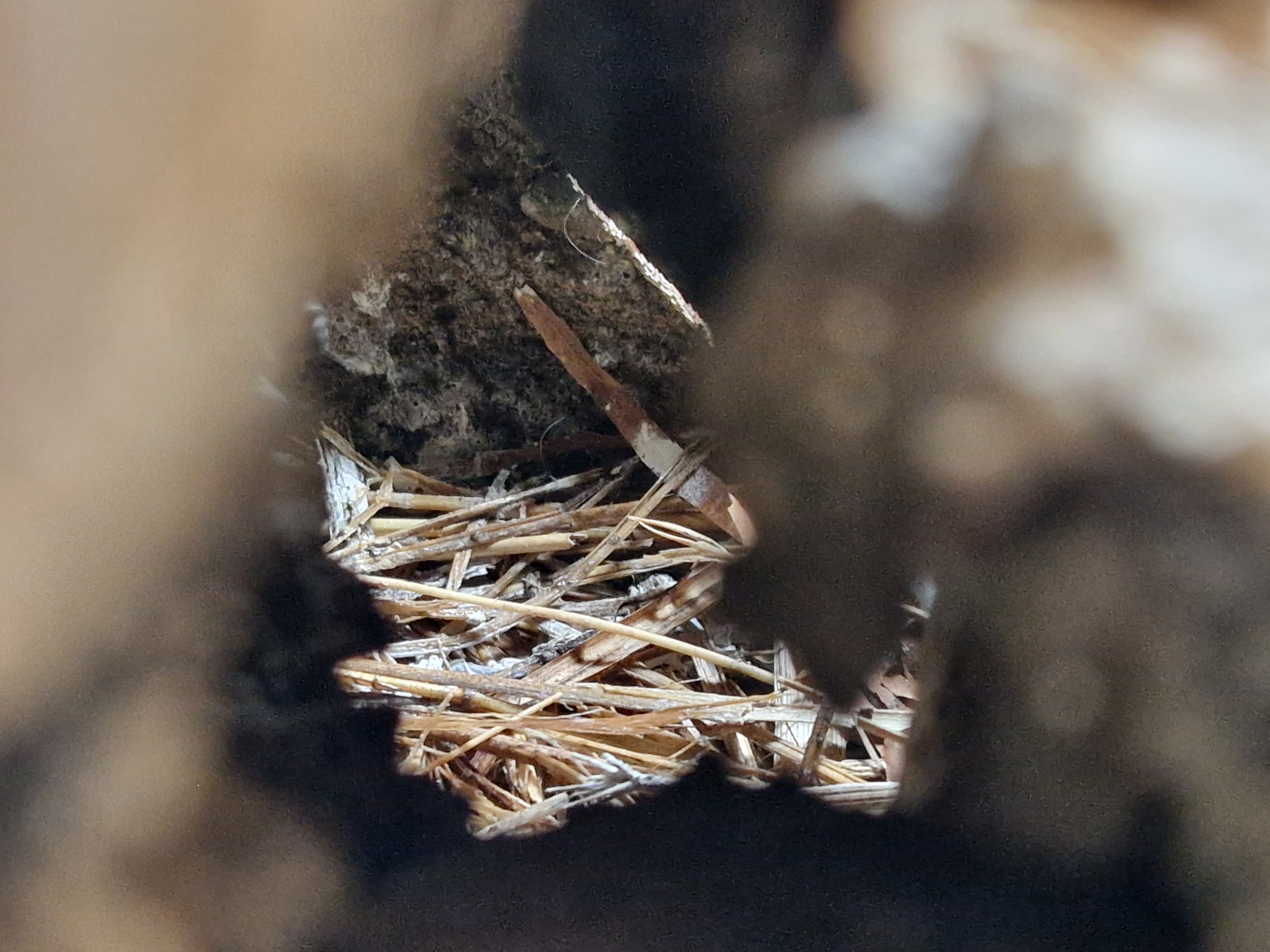
There are old stone/turf ruins at the site where I noticed a White Wagtail had made a nest inside the wall. It was quite windy so it was the perfect opportunity to record what was happening inside the ruins.
For the first few hours, I did not notice much birdlife at the ruins, until very early in the morning. The recording began soon after I noticed the birds had arrived in the area. It was clear that the birds were not happy with these gray furry neighbors so close to their nesting site. One of the birds tried to scare the microphones away with wingbeats and warning sounds. But the microphones stood firm and did not move, so later that night the birds took the microphones in peace.
Later in the morning it was heard that the White Wagtail can make various sounds, probably for communication, but that will be the subject of another post.
This area has incredibly abundant freshwater springs, so it’s a real surprise every time I visit the area. The sound of the water from these springs can be heard in the background of the recording, as well as other birdlife that is always found in such water and vegetation oases in the Icelandic highlands, which are otherwise just a black desert.
The recording was made with a Rode NT1a inside the walls of the ruins. The sound, or stereo image, is therefore a bit strange, but you get used to it.
Recorder was Zoom F3. Digital gain at 256 and HPF 40hz.
In post, add +13dB to normalize, fade in & out, and then downgraded to mp3

(mp3 256mbps / 60Mb)

Recorder: Zoom F3
Mics: Rode NT1a (NOS 90°-30cm)
Pix: Samsung S22

Weather: Calm up to 8m/s, partly cloudy.
Location: Secret place
Read Full Post »

IMG_2200

The summer of 2023 was difficult when it came to recording nature sound. It was always windy, except for a few moments here and there. So I got only a few recordings that I was satisfied with. But this summer 2024, the weather was even worse. The summer started with a snowstorm in the north of the country when many migratory birds had started nesting and everything disappeared under the snow. Actually the whole summer has been both cold and wet, which will not change now in late August .
I haven’t asked any experts in that field, but in my opinion, birdlife has been extremely dull or quiet all over the country. That’s why everything I recorded this summer in places where I should have heard a rich birdlife is almost nothing, except wind and rain sound recorded in temperature between 0-7 °C.
Keep in mind that when the wind exceeds 2-4 m/sec, many sounds that could otherwise travel long distances disappear. In addition, sounds that travel a relatively short distance sound much further away than if it were calm.
On June 1, 2024, I began to realize the situation because I had not been able to record bird life for a whole month of May due to the weather.
So I took the opportunity when I noticed a starling nest inside a wall in an abandoned barn to record a birdlife inside. I was able to record through a small hole in the wall but the bird had access to the nest on the outside.
I used a Nevaton MC50 quad and a Zoom F3 recorder, but made the mistake of recording in X/Y rather than in MS. I say that because the weather sound in this barn was no less interesting than what happens in the starling’s nest.
The background noise is primarily from trees blowing in the wind outside. Some of the windows in the barn are covered with plastic film, so from them comes the sound of drums in gusts and sometimes you can hear rain. You can hear a few migratory birds outside, but otherwise it’s not very lively
Because I record this in a tight situation, close to a corner, I don’t seem to have placed the microphone in the best place. There is therefore not a perfect balance between the right and left channels plus the stereo image is rather tight.
But let’s not let that distract the audience.
Quality open headphones are recommended while listening at low to mid volume.
If the media player doesn’t start to play, please reload this individual blog in a new tab or frame.

  (mp3 256kbps / 63Mb)

Recorder: Zoom F3
Mic: Nevaton MC50Quad  (in XY setup)
Pix: Samsung S22

Weather: Drizzle rain, wind 4-10m/sec, about 5°C
Location:  64.673779, -21.630119 

Read Full Post »

IMG_2200

I do quite a bit of recording music, so it would be nice to be able to publish some of it here, especially music that I think is extremely well played and where the recording has been successful. For example, I have often wanted to put classical music on the web in December and January. But professionals have little interest in giving permission for this, possibly because I only ask these people once.
So I’m going to share different music instead, which is even more beautiful than all music, but it’s birdsong in the spring.
Here is a recording from last spring that I had forgotten I had recorded.
I had a Zoom F3 device recording in several places almost non-stop for several days in Stafholtstungur, western Iceland. I used Rode NT1 microphones and set them up to NOS 90°/30cm. It can hardly be considered the best setup for such long nature recordings. The reason is that sounds such as background noise from the wind, rustling of leaves, running streams and traffic can change a lot in 24 hours, so the sound pressure between channels can easily go out of balance. It can even be detected in this recording. Some traffic can be detected at a distance of 5-10 km in the (left) channel. That’s why it’s usually best to record in AB 40-50cm, if you’re going to record for a long time.
But since I primarily record natural „silence“, there are not many microphones that handle silence well and the ones that do it best are all cardioid, which has led me to start recording a lot in IRT (4ch 90°/30cm)
In some cases, it is possible to set the cardioid up to AB 40-50cm, but you cannot do that unless you intend to record from one direction. In this place the sounds were coming from all directions so it was not available.
It’s a low-key recording, actually amplified silence. Recorded at „Zoom gain at 256“ and HPF 40hz. In post-processing the recording was normalized (+25) up to -7dB 
There is a lot of recorded material here that I feel is a shame to be forgotten on hard disks, so I’m going to allow myself to call this „Part 1“ because Part 2 and 3 and more also need to get here on the web.
The footage will therefore not be exactly from the recording location, but not further than 500 meters away.
Quality open headphones are recommended while listening at low to mid volume.
If the media player doesn’t start to play, please reload this individual blog in a new tab or frame.

(mp3 256kbps /66,5Mb)

Recorder: Zoom F3
Mics Rode NT1 (NOS 90°/30cm)
Mics: Canon EOS R
Weather: Calm, partly cloudy, around 7 to 10°C

Read Full Post »

IMG_2200

Early last spring I was asked if I wanted to record a 24-hour long recording for Radio Art Zone.
It wasn’t a problem because I’m used to recording 8-14 hours of content whenever I can.
So I made two / three 24hrs recordings in total.  All recorded in similar locations on the 23rd-25th. April 2022 in the countryside.
I recorded on four channels with an IRT cross version and in two other locations with two channels in AB & NOS.
If I remember correctly, I sent the IRT recording to Radio art project. The AB recording is already audible on this soundblog, „The brook below Lambaklettur
The NOS recording was forgotten, until I found it last week.
It was recorded with Rode NT1 microphones and a Zoom F3 recorder.
This recording contains natural „silence“. When I talk about „silence“ I mean that most people would not hear anything with bare ears. Probably only the blood flow in their own body.
But it was not total silence when this recording started here below. The migratory birds had already started to flock to the country. It was also a drizzly rain and therefore quite humid all night while the recording took place. The fur on the windshield got quite wet and you can hear larger drops falling on the wind shield, on the tripod and on the ground around.
This recording starts around the time when birds start to be heard in the early morning. The windshield is already very wet, so it must have adversely affected the recording quality. But surprisingly it is not heard that the NT1 is cracking due to air humidity.
The Zoom F3 had gain set at „256“ and HPF at 40Hz. I’m used to recording with 47 to 50dB gain for such silent recordings. Gain „256“ is therefore not telling me anything, but having worked on this recording, 256 seems to be something similar to 50 to 55 dB gain. This actually needs further consideration because It can be an important issue. The reason why I don’t record with a gain higher than 50dB on the Sound Devices or Sonosax recorders is to prevent additional „amplify noise“ that I feel increases if the gain is over +50dB. It is therefore  always better to increase the gain digitally“ in post.
I have a hard time realizing this with the F3 device. The noise seems to go hand in hand with different gain. No matter what the gain is. Whether I should generally record with „256“ gain or „128“, when recording quiet soundscapes needs further testing. I find the noise a bit more in this recording than if I had recorded with the Sonosax for example, but that noise I hear and see on spectrograms could also be a sound from the drizzle, or raindrops when they fall to the ground. It can therefore be assumed that there is some natural noise in that recording. Therefore it is not entirely possible to blame F3 or NT1 for all the noise that can be heard.
The first sound file is over 30 minutes long which has got a gentle noise reduction and then below 5 minutes of original recording for comparison (without NR). Both recordings are normalized up to -10dB. The original files from the recorder had a -38dB peak value which is normal for „quiet“ recording like this.
Bird species in this recording is mainly common snipe, whooper swan, black tailed godwit, redwings, whimbrel, golden plover and eurasian wigeon.  Most of them are in the distance in this recording.
I will post the continuation of this recording later. Then the number of birds increases and they come closer to the microphones.
Quality open headphones are recommended while listening at low volume.
If the media player doesn’t start to play, please reload this individual blog in a new tab or frame.

  (mp3 256kbps / 62Mb)

Original recording from Zoom F3, only normalized up to -10dB & downgrade to mp3

  (mp3  256kbps / 9,4Mb)

Recorder: Zoom F3
Mics: Rode NT1 (NOS)
Pics: Canon EOS R

Location:  64.673258, -21.630001
Weather: Drizzle rain, about 4°C

Read Full Post »

IMG_2200

It’s time for me to put a recording from my new Zoom F3 on the web.
The recording is from Stafholtstungar in Borgarfjörður, western Iceland, 4th of June 2022.
This is a 30 minutes part of another 35 hour long recording at circa 5AM. All these 35 hours I used only three 10Ah / 5V Li-Ion batteries. So each battery, which is smaller than the recorder, lasts for 12 hours.
It is different from around the mid eighties when I tried to record a natural sound on a Sony TC-D5M cassette recorder with a 4Ah acid battery that lasted for about 3 hours, or for 30 minutes with internal batteries.
The microphones in this recording were Rode NT1  in AB45 setup, dressed in Rycote WS2 windshields, about 20cm from the ground. It was recorded at 32bit / 48khz, with a recording gain at „32“ which I could believe was comparable to a 45dB gain at Sound Devices. In post-production, the recording was normalized by + 22dB up to -6dB and then converted to mp3 256kbps.
Various bird species are in the recording, such as Redwing, common snipe, common redpoll, whooper swan, raven, rock ptarmigan and definitely other birds too.
The name „Lambaklettur“ (Lamb rock) is a rocky hill above the recording site.
Quality open headphones are recommended while listening at medium or low volume
If the media player doesn’t start to play, please reload this individual blog in a new tab or frame.

  (mp3 256kbps / 56Mb)

Recorder: Zoom F3
Mics: Rode NT1. AB45 setup
Pix: Canon Eos R

Location: 64.675900, -21.623373
Weather: Dry, calm, clear sky, 5°C

Read Full Post »