Feeds:
Færslur
Athugasemdir

Posts Tagged ‘Fuglar’

IMG_2200

Earthquakes and volcanic eruptions seem to be becoming a daily occurrence for Icelanders. It is best to notice them when such events start to bother you personally. In July I was traveling, including in Fjörður area in North Iceland. On the night of July 15, 2025, I woke up around 5am in a tent to a creaking sound outside my tent. At first I thought a silent electric car was creeping along the gravel road right behind me, but soon fell back to sleep again. The next day I heard that there had been several earthquakes in the area during the time I was there. The strongest one was close to midnight measuring 3.9 and several aftershocks up to 2.0 during the night to the morning
I myself somehow did not notice the 3,9 earthquake. Probably because there was wind and considerable noise from the beach and the large rivers in the surrounding mountains.
But later in the night, It gets calm and foggy and the ambient noise diminished during the aftershocks.
The recording proves what woke me up this night was a landslide in the mountains.
Up on the mountainside above me was a microphone set that managed to record both the rockslide and the gravel slide, but at a considerable distance.
Because of the natural noise in the background in this soundscape the recording itself is rather boring, e.g. stream-rivers in the valley at left side, and waves from the shore at the right side.
But this unpretentious soundscape is very typical in valleys that extend into the sea all around the country. So it can’t be avoided to put something like this on this blog. Under all normal circumstances, such a recording would simply go into storage with all the other 90% of similar recordings.
One thing that can be noticed in this recording is that just before the aftershock and the rockfall this morning, the birds seem to react in some way. After this first earthquake, for about 20 minutes, you can regularly hear rocks falling and gravel sliding.
Quality open headphones are recommended while listening at low to mid volume.
If the media player doesn’t start to play, please reload this individual blog in a new tab or frame.

  (mp3 265kbps / 55,3Mb)

Recorder: Tascam FR-AV2
Mics: Sennheiser MKH20 (AB45)
Pix: Samsung S22

Weather: Partly cloudy, 1-2 m/sec, 15°C
Location: 66.136151, -18.068340
Skjálftalísa Verðurstofunnar
Read Full Post »

IMG_2200

I do quite a bit of recording music, so it would be nice to be able to publish some of it here, especially music that I think is extremely well played and where the recording has been successful. For example, I have often wanted to put classical music on the web in December and January. But professionals have little interest in giving permission for this, possibly because I only ask these people once.
So I’m going to share different music instead, which is even more beautiful than all music, but it’s birdsong in the spring.
Here is a recording from last spring that I had forgotten I had recorded.
I had a Zoom F3 device recording in several places almost non-stop for several days in Stafholtstungur, western Iceland. I used Rode NT1 microphones and set them up to NOS 90°/30cm. It can hardly be considered the best setup for such long nature recordings. The reason is that sounds such as background noise from the wind, rustling of leaves, running streams and traffic can change a lot in 24 hours, so the sound pressure between channels can easily go out of balance. It can even be detected in this recording. Some traffic can be detected at a distance of 5-10 km in the (left) channel. That’s why it’s usually best to record in AB 40-50cm, if you’re going to record for a long time.
But since I primarily record natural „silence“, there are not many microphones that handle silence well and the ones that do it best are all cardioid, which has led me to start recording a lot in IRT (4ch 90°/30cm)
In some cases, it is possible to set the cardioid up to AB 40-50cm, but you cannot do that unless you intend to record from one direction. In this place the sounds were coming from all directions so it was not available.
It’s a low-key recording, actually amplified silence. Recorded at „Zoom gain at 256“ and HPF 40hz. In post-processing the recording was normalized (+25) up to -7dB 
There is a lot of recorded material here that I feel is a shame to be forgotten on hard disks, so I’m going to allow myself to call this „Part 1“ because Part 2 and 3 and more also need to get here on the web.
The footage will therefore not be exactly from the recording location, but not further than 500 meters away.
Quality open headphones are recommended while listening at low to mid volume.
If the media player doesn’t start to play, please reload this individual blog in a new tab or frame.

(mp3 256kbps /66,5Mb)

Recorder: Zoom F3
Mics Rode NT1 (NOS 90°/30cm)
Mics: Canon EOS R
Weather: Calm, partly cloudy, around 7 to 10°C

Read Full Post »

IMG_2200

Early last spring I was asked if I wanted to record a 24-hour long recording for Radio Art Zone.
It wasn’t a problem because I’m used to recording 8-14 hours of content whenever I can.
So I made two / three 24hrs recordings in total.  All recorded in similar locations on the 23rd-25th. April 2022 in the countryside.
I recorded on four channels with an IRT cross version and in two other locations with two channels in AB & NOS.
If I remember correctly, I sent the IRT recording to Radio art project. The AB recording is already audible on this soundblog, „The brook below Lambaklettur
The NOS recording was forgotten, until I found it last week.
It was recorded with Rode NT1 microphones and a Zoom F3 recorder.
This recording contains natural „silence“. When I talk about „silence“ I mean that most people would not hear anything with bare ears. Probably only the blood flow in their own body.
But it was not total silence when this recording started here below. The migratory birds had already started to flock to the country. It was also a drizzly rain and therefore quite humid all night while the recording took place. The fur on the windshield got quite wet and you can hear larger drops falling on the wind shield, on the tripod and on the ground around.
This recording starts around the time when birds start to be heard in the early morning. The windshield is already very wet, so it must have adversely affected the recording quality. But surprisingly it is not heard that the NT1 is cracking due to air humidity.
The Zoom F3 had gain set at „256“ and HPF at 40Hz. I’m used to recording with 47 to 50dB gain for such silent recordings. Gain „256“ is therefore not telling me anything, but having worked on this recording, 256 seems to be something similar to 50 to 55 dB gain. This actually needs further consideration because It can be an important issue. The reason why I don’t record with a gain higher than 50dB on the Sound Devices or Sonosax recorders is to prevent additional „amplify noise“ that I feel increases if the gain is over +50dB. It is therefore  always better to increase the gain digitally“ in post.
I have a hard time realizing this with the F3 device. The noise seems to go hand in hand with different gain. No matter what the gain is. Whether I should generally record with „256“ gain or „128“, when recording quiet soundscapes needs further testing. I find the noise a bit more in this recording than if I had recorded with the Sonosax for example, but that noise I hear and see on spectrograms could also be a sound from the drizzle, or raindrops when they fall to the ground. It can therefore be assumed that there is some natural noise in that recording. Therefore it is not entirely possible to blame F3 or NT1 for all the noise that can be heard.
The first sound file is over 30 minutes long which has got a gentle noise reduction and then below 5 minutes of original recording for comparison (without NR). Both recordings are normalized up to -10dB. The original files from the recorder had a -38dB peak value which is normal for „quiet“ recording like this.
Bird species in this recording is mainly common snipe, whooper swan, black tailed godwit, redwings, whimbrel, golden plover and eurasian wigeon.  Most of them are in the distance in this recording.
I will post the continuation of this recording later. Then the number of birds increases and they come closer to the microphones.
Quality open headphones are recommended while listening at low volume.
If the media player doesn’t start to play, please reload this individual blog in a new tab or frame.

  (mp3 256kbps / 62Mb)

Original recording from Zoom F3, only normalized up to -10dB & downgrade to mp3

  (mp3  256kbps / 9,4Mb)

Recorder: Zoom F3
Mics: Rode NT1 (NOS)
Pics: Canon EOS R

Location:  64.673258, -21.630001
Weather: Drizzle rain, about 4°C

Read Full Post »

IMG_2200

This recording is actually recorded in a „natural silence“, far away from traffic in open landscape, which can be said to be my area of interest. But the weather, as so often before, was no way to work with me. Windy and wet which means I was not able to record the „depth in the field“ that can often be heard through good recordings, recorded in calm, dry weather.
There is no doubt when I say that 95% of all the recordings I record in Icelandic nature sounds like this. Therefore, it is also wrong not to report it with examples.
Here is one. The location is the highland at Arnarvatnsheiði, northwest Iceland near a place called Hæðarsporður
I had to find a sheltered place close to the ground to protect the microphones as much as possible from wind and rain. Close to the ground isn’t a good position for microphones, but often only way to record something for a days or a weeks
While Rode NT1 is a cardioid I couldn’t find an ideal location, so it is not a good balance between right and left channels. Right channel has noise from the Norðlingafljót river just over a km away, as well as there is less bird life on the left side
The result is as it is.
This is a part of a ten hours long overnight recording. During the night the windshield gets very wet, so one of the reasons why this recording sounds a bit „dull“.
The soundscape was quiet as usual on the Icelandic highland. It was almost impossible to hear anything except wind noise. The recorder was at +50 db gain on SD788. In post the gain was increased by about +25db (up to -7db). RX noise reduction was not used. Wind noise was decreased below 100Hz with EQ, also NT1´s white noise was lowered above 10Khz about -3db,  and -6db at 15khz.  Normally it does not harm the recording while bird songs which have the highest frequency range in Icelandic nature are mostly below 7Khz.
Quality open headphones are recommended while listening at low volume
If the media player doesn’t start to play, please reload this individual blog in a new tab or frame.

  (mp3 256kbps / 55,8Mb)

Recorder: Sound Devices 788
Mics: Rode NT1 (NOS 90°/30cm)
Pix: Canon EOS-R

Weather: Windy up to 8m/sec, drizzle rain, foggy & 5°C
Location: 64.854845, -20.545331

Read Full Post »

IMG_2200

I always miss those times in the last century when I rode on a bicycle alone for weeks in the highlands. I knew every single road and trail that could be found on maps, and other routes too. I had a special ability to look at maps and make detailed travel plans based on route conditions and weather forecasts. I knew very well my physical limitations and all the places where I could seek from bad weather. Therefore I never had any problems in my travels.
Without meeting people or seeing human structure, nature and I merged into one. The journeys were therefore both mentally and physically rejuvenation.
After the year 2002, cars and traffic began to increase rapidly in Iceland. Mountain huts that used to be shelters were now closed. Many emergency huts were removed due to poor handling. It became increasingly difficult to travel without being disturbed by noisy humans and without shelter in remote locations.
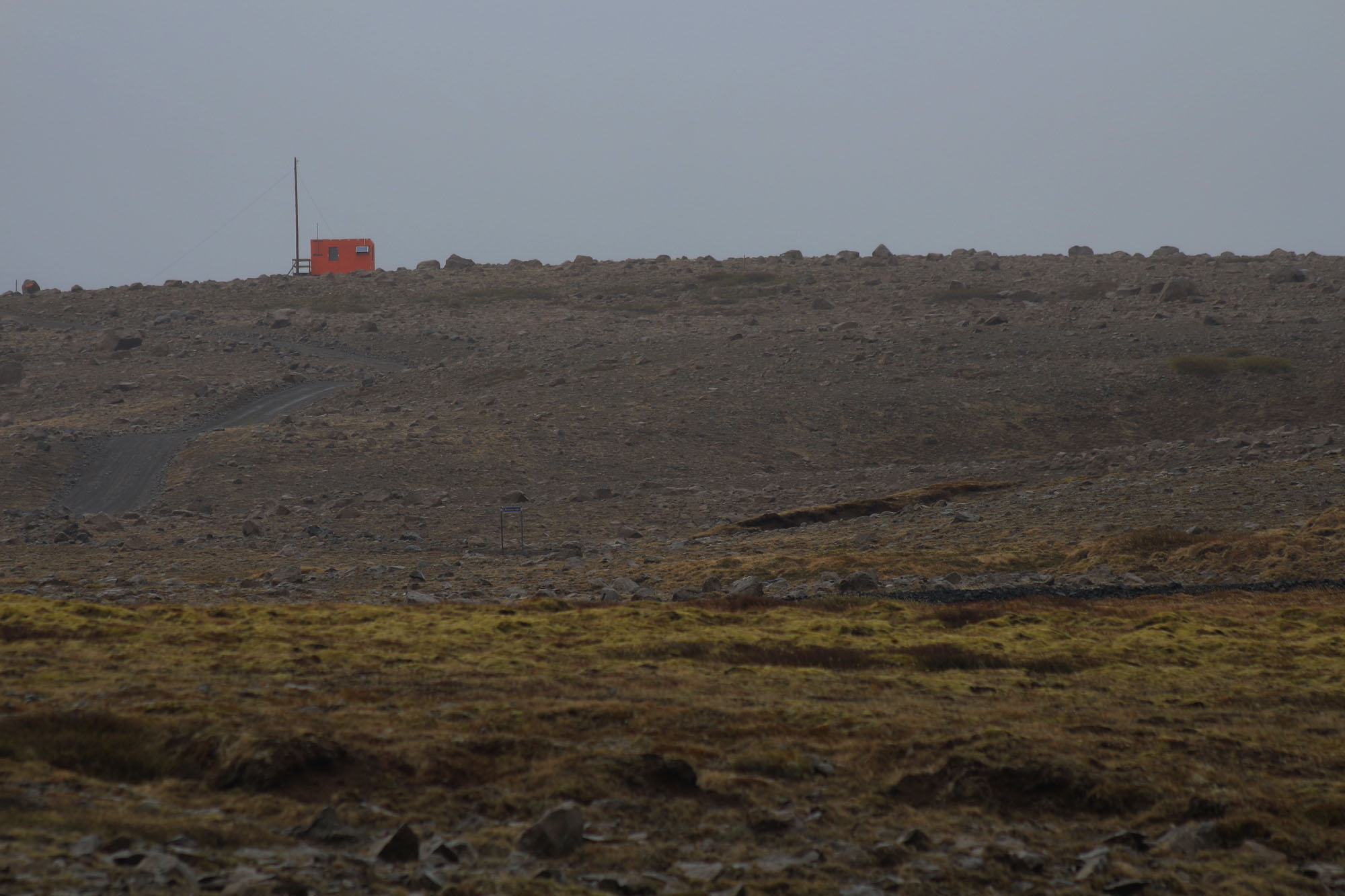
One of these very few emergency huts that still exist and are open and have saved many lives is on a Kaldidalur route. For me this hut was often a first overnight stop from Reyakjavík on the way to cross the highland.
I was in Kaldidalur 28th of May 2017 to record the surroundings. I decided to record beside the hut to record a familiar sound.
This is a typical soundscape for Icelandic highland. Birds in the distance and windy and if not windy and rainy then complete silence.
Inside the hut was normally the same sound but more silent, except if there was buzzing fly in the window.
Even though it is many years since this soundscape was part of my daily experience, I get an undeniable nostalgia for the past for listening to this recording
Quality open headphones are recommended while listening at mid or low level.
If the media player doesn’t start to play, please reload this individual blog in a new tab or frame.

  (mp3 256Kbps / 63,7Mb)

Recorder: Sound Devices 744T
Mics: Rode NT1 NOS
Pix: Canon EOS-M

Location: 64.447652, -20.961026
Weather. Cloudy, 4-10m/sec, drizzle rain. 5°C

Read Full Post »

IMG_2200

It has been several years since I published a recording from Flói nature reserve. The reason is more or less because of foul weather in recent years when I have had the opportunity to record there.
It was no exception last summer from late April to mid July. It was cold, windy and wet most of the time which is actually the high season for birdsong recording.
I went there on the 3rd of July 2021 and recorded overnight. The weather was calm in the beginning but the wind increased over the night. I was also struggling with increased sea tide and therefore a surf noise from the coast line, actually at the same time when the birds were most active during the dawn.
My mics were Lewitt LCT540s in IRT cross setup. Most of the bird’s activity was in front of channel 1&2. Most „silence“ was in front of channel 2&3 and most of the surf and traffic noise was at channel 4&1.
It surprised me how much traffic was there the whole night. There was almost constant rumble in the air during the ten hours I was recording, except between four and five o’clock in the morning. This noise was much more audible than I remember in my earlier recordings. The reason could be found in different mic setup and mics. Ten years ago I used to use NT1a in NOS or AB, pointing towards the open field and keeping the nearest road and coastline behind. I have also used MKH20 in AB which is less sensitive for these details than large capsule mics.
It takes time to search in this 10 hour long recording for some nice sounding 30 minutes moments. Listening to the whole four channels it starts with heavy traffic noise in all channels, then surf noise. Then traffic noise again until the wind and the sun makes the air so unstable close to noon, both traffic noise and bird activity almost disappear in the wind noise.
But with an IRT cross rig I have many options. I can turn off the channel or channels which are disturbing for the soundscape I am looking for.
The recording below is a very good example of this. Instead of using all four channels and mixing them to stereo, I use only channel 2&3 (NOS 90°/30cm) to avoid the surf noise. The time when it starts is about 04:15 so there is almost no traffic noise, but anyway, the recording starts and ends with some engine noise in the distance.
Quality open headphones are recommended while listening at mid or low level.
If the media player doesn’t start to play, please reload this individual blog in a new tab or frame.

Recorder: Sound devices MixPre6
Mics: Lewitt LCT540s,  NOS 30cm/90°
Pix: Canon EOS R

Location: 63.900944, -21.191958
Weather: Calm to breeze, partly cloudy, ca 5-10°C

Read Full Post »

IMG_2200

Hjörleifshöfði is a 221 m-high inselberg in southern Iceland. It consists of palagonite. The mountain is located on the Mýrdalssandur outwash plain about 15 km east of the village Vík í Mýrdal, and was an island in the Atlantic Ocean several centuries ago (More info: Wikipedia).
I have very often visited this mountain, both those years when I was used to travel by bike in Iceland and now resent years when I am on my field recording trips.
But in recent years, mainly because of tourist traffic, it has not been so pleasant to stay there overnight to enjoy the natural soundscape, which can be a very different on each side of the mountain.
Thanks to COVID I got the opportunity on the 21st of June 2021 to record the soundscape on the west side without traffic noise from the main road, motor vehicles or tourists around me.
Even without traffic noise it has always been difficult to record this place because of the surf along the coast line which makes constant rumble in the background.
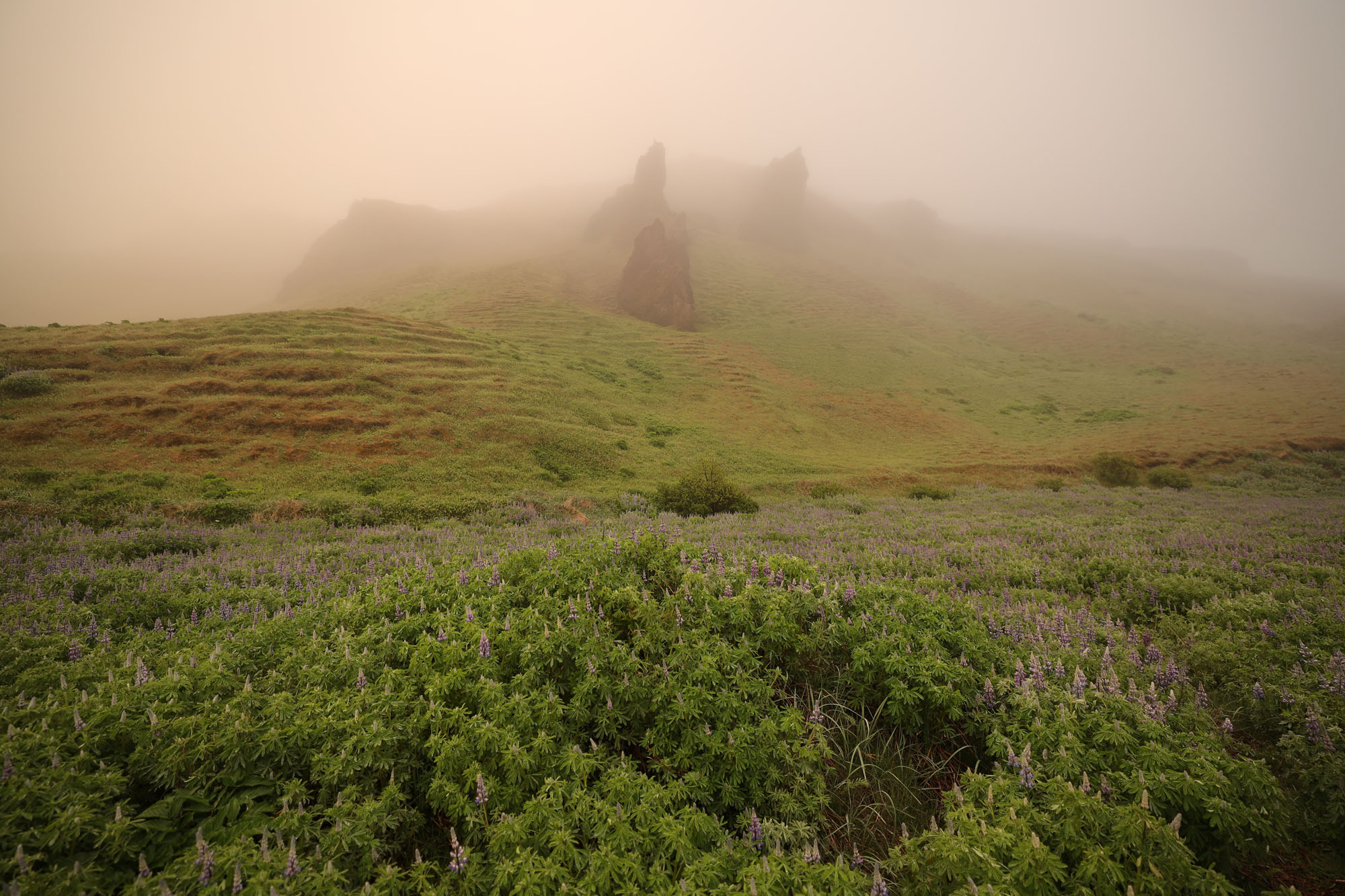
I arrived just before midnight. It was foggy but bright. This was last night before the summer solstice.
The weather forecast told me I would have more wind and even rain later in the morning so I quickly prepared the recording gear. I use the Kayak trailer behind the car to make a shelter from the breeze from the south and point the microphones toward the north in the middle of a big lupine field.
Most birds were mostly in the distance. But what makes the soundscape actually so interesting in this place is the redwing songs. They start their songs or themes differently from what I have heard in other places in Iceland. There are other places in Iceland where I have noticed this difference and it seems like it is somehow connected to places where lupine grows. These songs are also different between these „lupine locations“ e.g. Bæjarstaðarskógur in Skaftafell national park, while redwing songs sound pretty similar all over the country.
I have not investigated this in detail, but I have noticed this by listening to recordings from these locations and comparing them in spectrograms. What I need to do next is film them singing in these places to be sure I am actually listening to redwings (which is though 98% clear in my mind). Other things which make this a little bit difficult is the fact that not all birds sound similar in these locations so it is necessary to collect „closeup songs“ in good sound quality from several redwings to work with and investigate.
This is not my best quality recording, but it is almost impossible to record this place without traffic or surf noise. So I was just lucky to get this one.
Quality open headphones are recommended while listening at mid or low level
If the media player doesn’t start to play, please reload this individual blog in a new tab or frame.

(mp3 256kbps / 60Mb)

Recorder: Sound devices MixPre6
Mics: Sennheiser MKH8020/8040.  (Parallel AB) 
Pix: Canon EOS R

Location: 63.424336, -18.763861
Weather: Calm to breeze. Foggy, around 10 °C

Read Full Post »

IMG_2200

I recently noticed the best tripod I can get to avoid high levels of „mechanical wind noise“ in recordings. It is simply a hummock. I have many times recorded nature sound by leaving omni mics on the ground. But it has not been as simple for cardioid mics because it changes the EQ on the frequency range, especially when the mics are in the windshield.
Here below is a recording I did in Flói bird reserve in south Iceland. The average wind was probably around 4-5m/sec with some gust up to 5-7m/sec. The high pass filter was at 40Hz so mechanical wind noise should be with a typical tripod clearly audible at 3m/sec.
Keep in mind this is a recording of silence. It was barely nothing audible while this was recorded
It was recorded with 48dB gain and in post the gain was increased again about 27dB.
Most of the background noise is the surf on the south coast which is very noisy. The wind is almost constantly wiping the ground and airplanes make a rumble noise for many minutes. You will also hear wind noise but far less than it would have been with a typical tripod. 
One of the reasons I think it is so effective to put the rig on the ground, is mainly because the LCT540s is a heavy mic. So while the windshield lay so heavily on the ground, the ground works like a damper for all vibration on the windshield which therefore make less „mechanical wind noise“
Most bird species are in distance so this is not a very attractive recording. But many things are going on in this wide open space in south Iceland and it is always interesting to listen to soundscape which is too quiet for most human ear.
Quality open headphones are recommended while listening at low to mid level, or in speakers at low level.

(mp3 256kbps / 60Mb)
If the media player doesn’t start to play, please reload this individual blog in new tab or frame

Recorder: Sound devices MixPre6
Mics: Lewitt LCT540s IRTcross setup
Pix: Canon EOS R
Location: 63.901024, -21.192173
Weather: cloudy, calm up to 7m/sec, around 12°C

Read Full Post »

IMG_2200

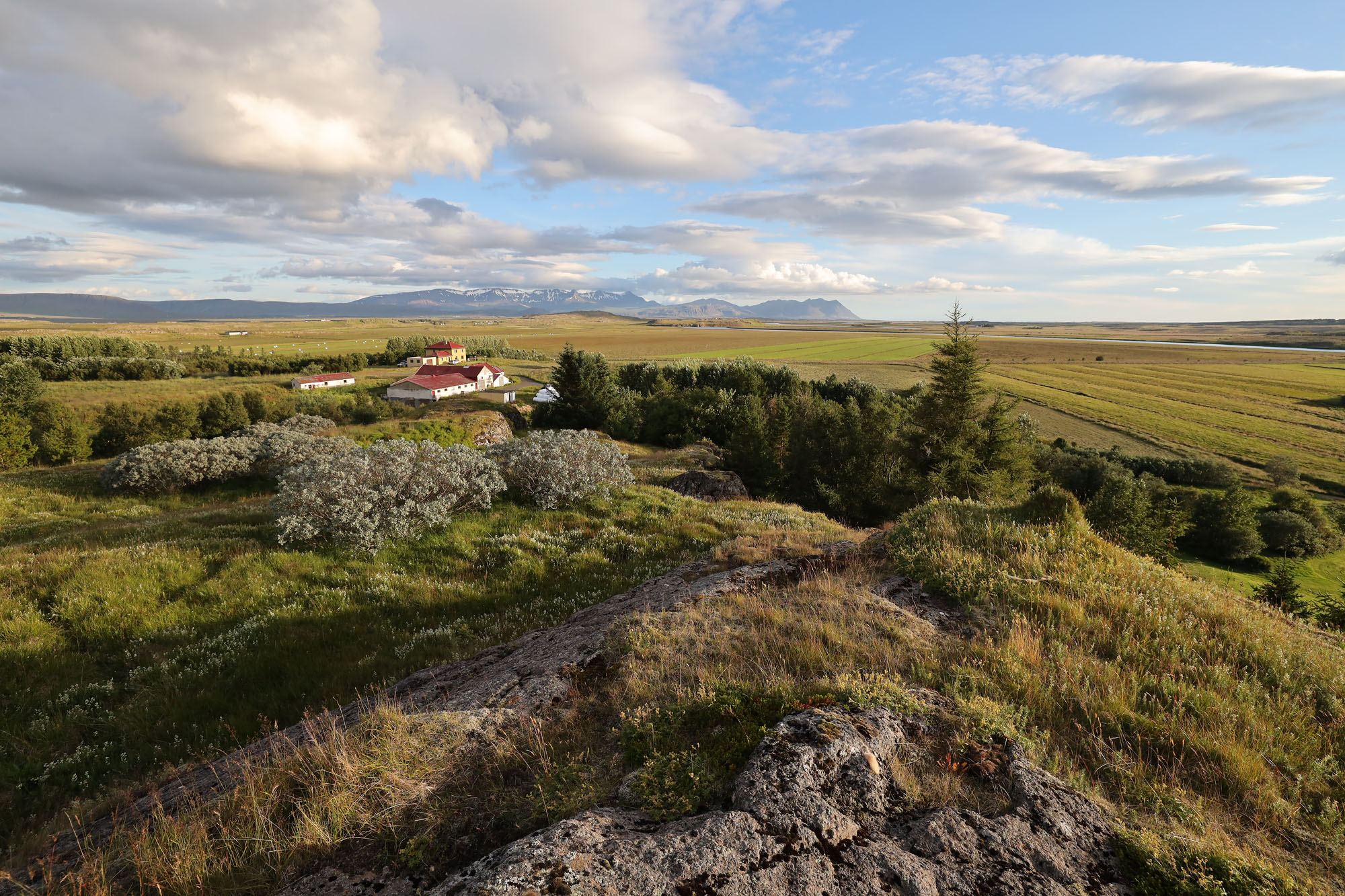
Two years ago, when I was recording in Skaftafell National Park, I noticed that Redwings sing differently between two places in the park. In the forest around Skaftafellsheiði, above the campsite and the information center, the redwings sing quiet „normal songs“ as most Redwings do in Iceland. But in nearby valley, in Morsárdalur in Bæjarstaðakógur forest, most of the Redwings colony start their song with two long tones before the „normal song“ starts.
I have search my recordings for something interesting. What makes it different and what is common with this Redwing songs which will probably bring me, or someone else, to further research.
But I will not talk about it here, because that will be another story.
By slowing down the recording four times (1min > 4min) it makes a totally new soundscape. It sounds like a rain forest full of screaming monkeys. It opens my mid for different understanding on birdsong. Redwing’s song is much more complex than I thought. They are far from being singing the same melody or make a simple message all the time. It sounds more like a complex language.
It does not matter what they are doing. Are they speaking to each other, sending messages or singing a complex song to the crowd, it always leave the question: What are they doing and what does it all mean?
Following recording was recorded last summer in Bæjarstaðaskógur. You can hear this special Redwing start his song with its two tones before he continues with a „normal“ song.
In the normal speed recording at 2:40, you will hear a rumble from the Morsárjökull glacier which was about 10km away
Background noise is mostly from streaming water in the mountains and the Morsá river.
Quality open headphones are recommended while listening at low to mid level, or in speakers at low level.

Normal speed.
(mp3 256kbps / 12Mb)

Slow speed (4x).
(mp3 256kbps /41Mb)

Recorder: Sonosax SR-X4+ (24/48)
Mics: Sennheier MKH20 (AB40)
Pics: Canon EOS-M

Weather: Light cloud, showers around, calm, 10°C
Location: 64.058877,-17.024021

Read Full Post »

IMG_2200

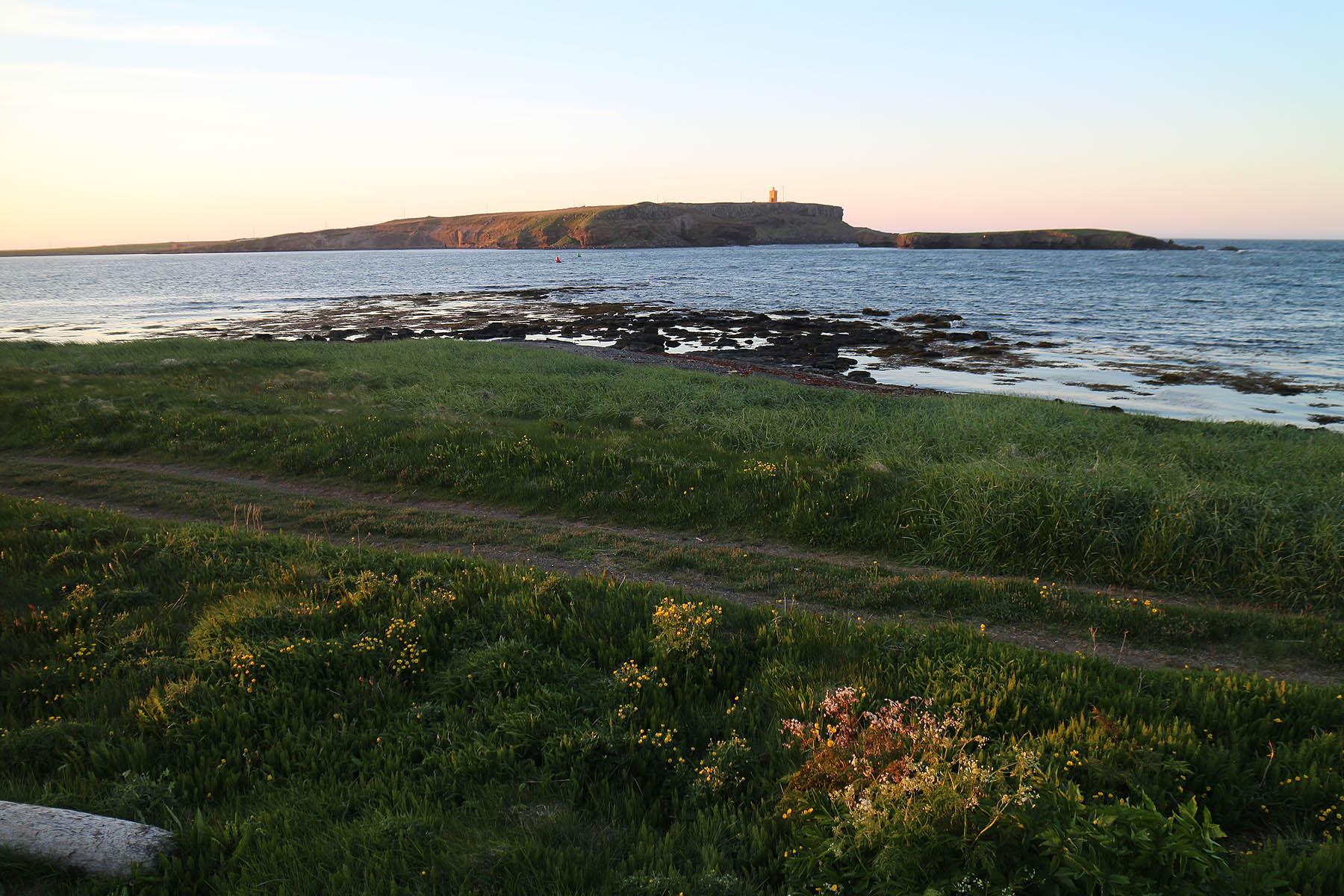
Last summer I spend one week at Raufarhöfn, a small village in north east of Iceland, close to the arctic circle. Most of the time it was a fool‘s weather for „quality“ recording. But anyway, I recorded almost 6 to 10 hours every night close to the sore. Most of theese recordings contains rumbling wind noise, but sometimes – very few times, I got what I was looking for.
Here is one of them, recorded 17th of June 2016.
It is early morning. The clock is around four. Birds are busy to protect and teach their young to search for food. Shortly after the recording starts, you can hear a fisherman pass by on his car on way to the harbor. Then later, the fishing boat goes, and passes by on the way to the sea. It takes a long time for the enginenoise to disrepair.
This is a peaceful recording. A typical midsummer morning soundscape at the arctic circle, where the sun never goes down. Many bird spices are in this recording, but mostly Common Eider and their youngs. Also you can hear Oystercatcher , Golden Plover, Purple Sandpiper, Red Necked Phalarope, Whimbrel, Common Snipe, Redwing, Snow Bunting, Svan, Great Northern Diver, Northern Fulmar, Kittiwake, Raven and probably may other.
Quality open headphones are recommended while listening at low to mid level.

(256kbps / 55Mb)

Recorder: Sound Devices 788
Mics. Sennheiser MKH20 (AB40)
Pics: Canon EOS–M

Location: 66.451296, -15.946621
Weather: Light gust, cloudy

Read Full Post »

Older Posts »