Feeds:
Færslur
Athugasemdir

Posts Tagged ‘Sound devices MixPre6’

IMG_2200

Here is a recording that came as a surprise after I put it in Spectrogram, because I was sure that I had not recorded anything special.
Earlier the evening before the recording started, a lot of wind had been forecast for later that night. So I was not spreading recording equipment around me as I would have liked in this wonderful and secret place in the highlands.
However, I decided to use Lewitt LCT540s in an IRT cross in a sheltered place from the coming storm. Two of the four microphones were pointed as much as possible into the ground, while the other two were allowed to point out into an open area. The recording seemed to only sound interesting in the wind that was present when I started the recording. The entire time I had been at this place in the highlands, I had not heard birds or any other life. Only in the wind and the flow of water in the nearby water sources.
But later that night while I was sleeping, a completely calm weather came that seemed to awaken a lot of birdlife. Birds that I had neither seen nor heard earlier the days before.
However, I never noticed this peaceful weather that night or this bird song. I just went to sleep in the breeze and woke up in a storm. It was therefore quite amusing to discover that I had managed to record the birdsong even though the microphones were placed in the wrong place for such a thing. It was first and foremost the microphones facing the ground that captured the most bird song. Those facing out into the open mainly recorded the behavior of Red necked phalarope which were at a considerable distance and goose in far distance.
To be honest, considering the placement of the microphones, this is a surprisingly good recording. This can probably be attributed to these excellent Lewitt microphones, also because they were not very visible to the birds that are best heard because they do not emit warning sounds. But if I had worn the microphones in something other than fur and been positioned closer to where the birds were, I would have achieved incredibly clear recordings in the most subtle way. In addition, very distant sounds would have become more clear and focused. But it is always difficult to be prepared for such weather conditions that it is possible to be without fur in Iceland when such times are perhaps 6-12 hours a month.
You can hear in the entire recording running water, also a kind of rumbling from running water that I assume could be a stream of spring water below the ground. But in this area there are huge water sources that could probably serve a city of millions with fresh water. The sound was recorded at +50dB gain and increased by +20dB in post up to -10dB. No RX noise reduction, mainly because I have never been satisfied with the result when I have used the LCT540. But EQ was used. Sharply pulled down below 50hz and above 10Khz, mainly to bring down unnecessary rumble and white noise from the equipment.
Quality open headphones are recommended while listening at low to mid volume.
If the media player doesn’t start to play, please reload this individual blog in a new tab or frame.

(mp3 265kbps / 66Mb)

Recorder: Sound Devices MixPre6
Mics: Lewitt LCT540s (IRT cross setup)
Pix: Samsung S22

Weather: Calm cloudy, about 7°C
Location. Secret place on the Icelandic highland

Read Full Post »

IMG_2200

The „recording summer 2025“ started rather poorly. Cold, rainy, always strong winds and the birdlife was rather quiet. However, it does happen regularly during the nighttime the weather gets calm for about 1-4 hours. There was therefore no need to panic because the equipment was allowed to work almost every night. However, it seemed to be a small gain considering the cost, time and effort.  I only could hear birds when I wandered close to their nests or youngs
The most important thing was to follow the weather forecast, search maps and try to find new recording locations as well as get to know the local conditions. If the weather was going to be completely impossible for a microphone, it was almost always possible to set up an antenna and record the space weather.
But then it suddenly happened at the beginning of July that summer arrived with warmth and less wind. Birds also started to sing without me as a human being triggering a warning sound all over the fields.
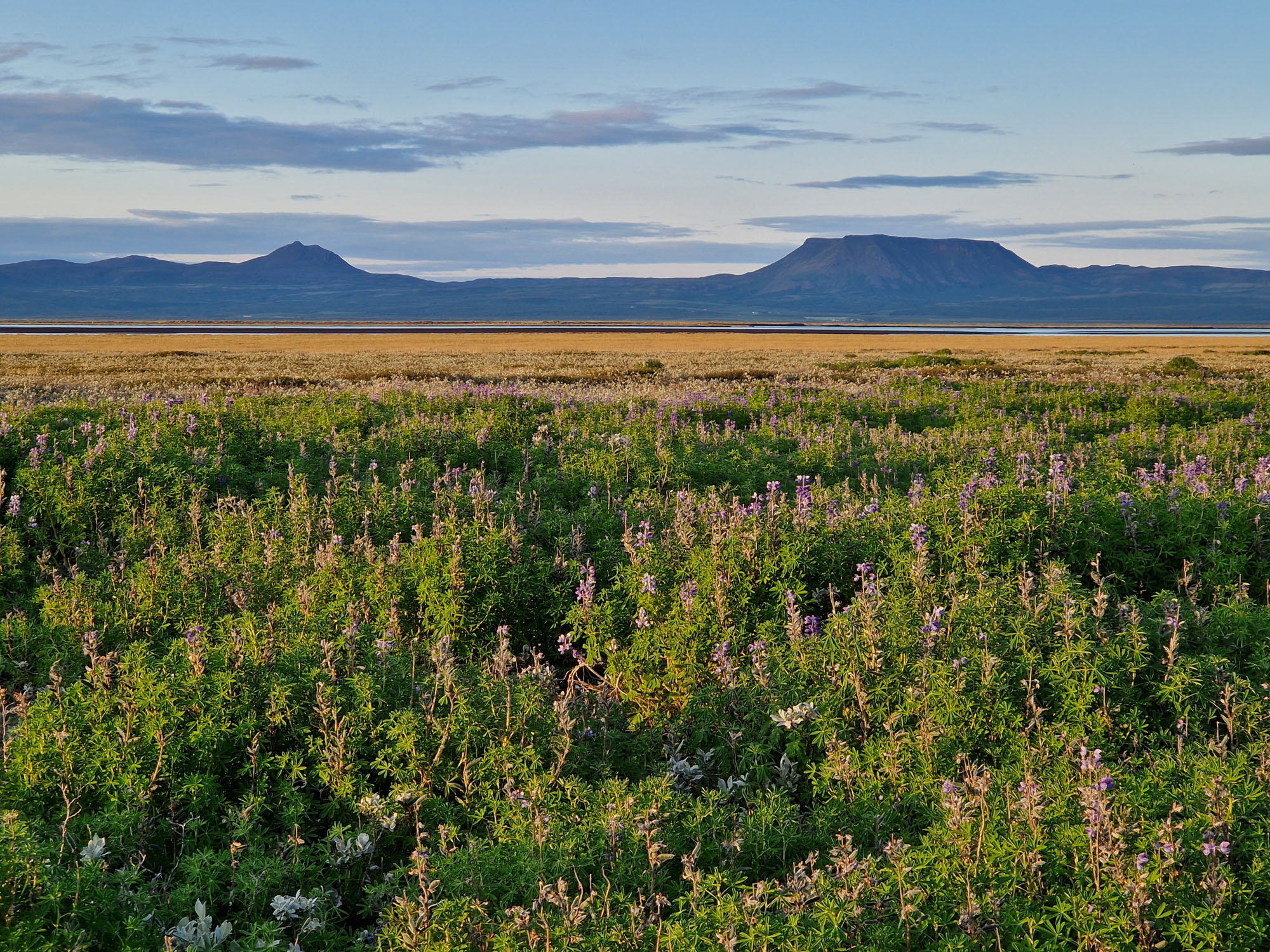
I was then at Öxarfjordur and had thought about going to an old recording site on Vestursandur. Then I saw a gate open on a trail that has always been closed when I have been there. So I drove along the trail and suddenly I was in a green oasis that contained a lot of bird life that I did not know about.
So I found a place where it was easy to find as many recording sites as possible within walking distance.
In the end, 4 recording devices were running that night. The drawback was that in the countryside you could hear most of the night that the farmers were working all night long until early morning. But after a jet flew over, the farmers quit their work and a relaxing summer silence took over.
There is still something in this recording that gives off a vibrating background, noise or hum. Which I suspect could be the surf from the beach not far away and sometimes the occasional car traveling through the county.
Quality open headphones are recommended while listening at low to mid volume.
If the media player doesn’t start to play, please reload this individual blog in a new tab or frame.

(256kbps / 66Mb)

Recorder: Sound devices MixPre
Mics: Lewitt LCT540s (IRT Quad / 4x NOS)
Pix: Samsung S22

Weather: Clear sky. Calm to 4 m/sec. 12°C
Location: 66.093326, -16.645256

Read Full Post »

IMG_2200

For about 10 years I have been using a nice „stereo“ ELF/VLF receiver built by Stephen P McGreevy. It is designed for two loop antennas.
These loop antennas have always been a lot of trouble to install. In addition, I have never known whether I was installing the antennas in a good place with regard to low or non 50Hz EMF pollution or to space weather conditions.
I have only known it afterwards and have often been disappointed.
I have therefore long dreamed of building my own receiver that would be as easy to turn on a pocket radio. So I started gathering materials this winter to build a new receiver, which actually turned out to be twins, or a pair.
This receiver has a High-ohm input and therefore is not designed for low-ohm loop antennas. However, it is using a 75cm whip antenna that can be connected to the receiver in an instant via BNC connector. Connect to headphones via mini jack, turn on and listen in very good quality. I can therefore instantly find out that the location I am in is free of 50Hz EMF pollution and check the status of the space weather.
As mentioned earlier, I had thought of using this receiver just to check whether it would be worth installing the loop antennas. But I have found that this new receiver is excellent in many ways. It reaches lower frequencies or below 10Hz and seems to reach much higher frequencies than 24Khz. The fact that the receiver should reach frequencies above 18Khz does not serve me at all regarding solar storms, except to check transmitter signals that are mainly intended for submarines for military purposes.
Solar storms are usually below the 18Khz frequency range, down to just a few Hz.
The transmitted signals above 18Khz are actually so strong that I clearly have to build a filter on the headphone output to avoid hearing damage. Old blokes like me can’t hear these high frequencies, but the strength is such that it causes a feeling of discomfort when listening and gives me tinnitus for a few days.
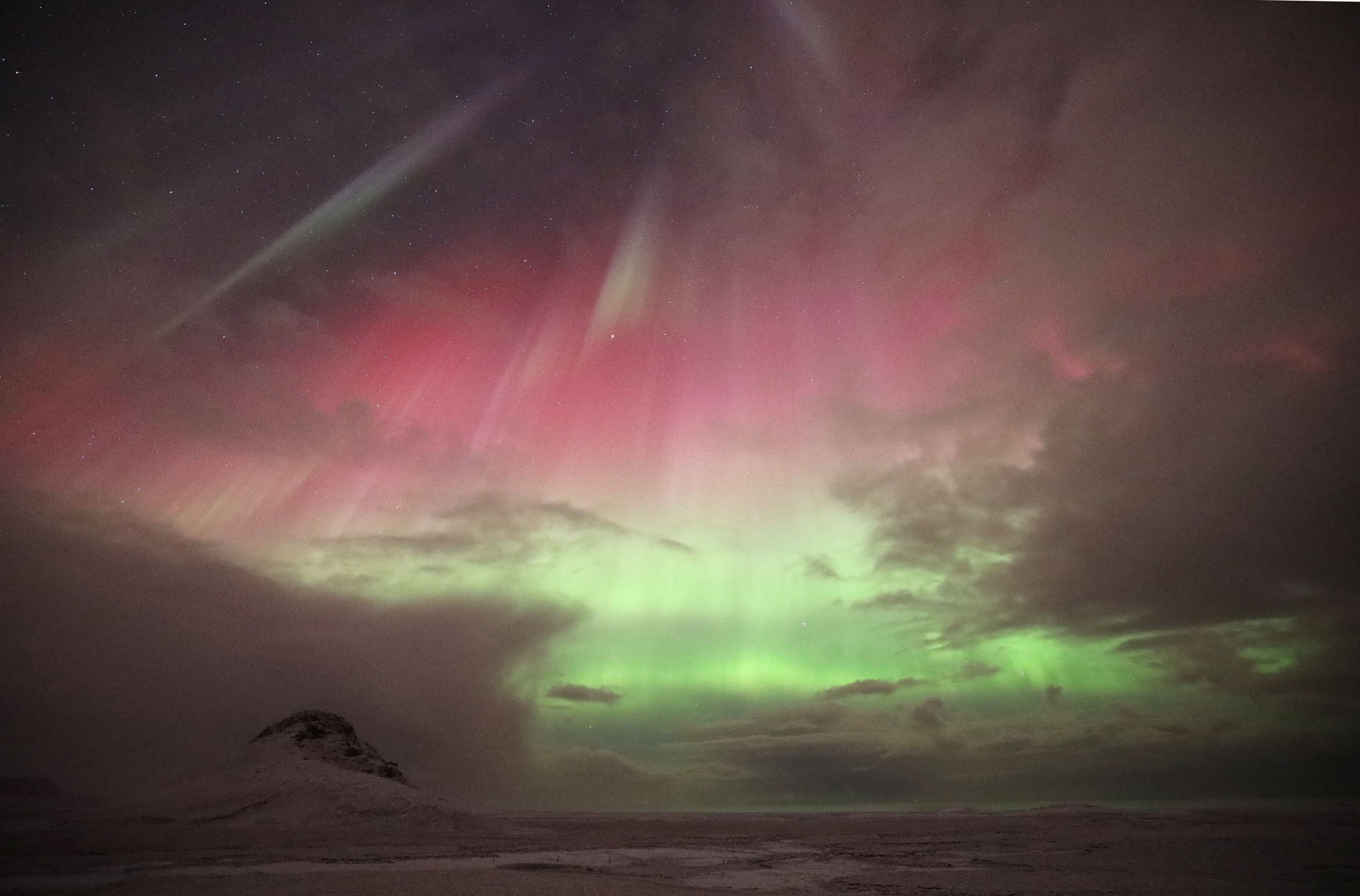
I drove out of the city in mid-March 2025 to a place that is relatively free of EMF pollution. There had been quite strong storms from the sun days before, so it was worth testing the new receiver. It was partly cloudy so that sometimes it was possible to see very power- and colorful Auroras in 3 to 4 colors. In between there was wind and hail which clearly also affected the reception conditions.
I made various attempts to record from the new receivers, which was difficult. The handheld devices that I used to use with the loop antenna receiver seemed to just send interference into the receiver. I tried ground isolation transformers, but that didn’t work. It wasn’t until I recorded with a MixPre6 and had the device far from the receivers that I was able to record solar storms without interference from the recording devices.
I am not satisfied with this recording. I am well aware that I am dependent on various details such as connection to the ground, size and type of antenna, height from the ground, location of the receiver and antenna as well as environmental and weather conditions and other things.
This recording only took into account that I did not hear interference from the recording device or other human objects during the recording. The receiver was not lying on the ground, but was on the top of a fence post.
I would like to mention that I have erased all transmitter signals above 18 Khz in this recording, so it should not bother anyone.
I could continue talking about the content of this recording, but I will stop here. You will definitely hear new recordings of solar storms on this blog in the coming months because it is not necessarily most interesting to record in late evening when Aurora is most active. It is very often just before dawn and the small details behind the clearly audible sparks, which is most interesting to listen to.
Here you can hear an older recording. Recorded from a Stephen P McGreevy receiver with a loop antenna.

(mp3 265mbps / 62Mb)

Recorder: MixPre6
Receiver: Explorer E202 ver. 1,4  with 75cm whip antenna
Pix: Canon E0S R

Location: 63.867430, -22.062817
Weather: Partly cloudy, hail, wind 2-4m/s, around -6°C

Read Full Post »

IMG_2200

Here is a recording that was left to run for a whole summer night, 29th of June, 2023.
The summer vacation was coming to an end, I had been suffering from a kind of flu for a month. I had no energy for long, difficult journeys, or lying outside in any weather to record and bird life that had been extremely silent all spring due to the cold and wet.
Field recording is by no means an easy and blissful job.
Although it is often possible to be filled with hopelessness and feel as if nothing has been recorded, it always becomes clear on closer listening that interesting material is often hidden somewhere in long recordings.
Here is one recording that I recorded at a farm that I have access to.
This night I decided to use the NT1 beneath a house wall to have a shalter against the wind. The choice of NT1 was made because if I had used an omni microphone there would have been an annoying reflection or echo from the house wall.
It is dawn and you should hear a lot of birdsong. But the wind drowns out all the birdsong.
But then the wind starts to calm down and you can hear more birdsong and bird actictivity, both near and far.
This recording is a bit of a mystery. It is therefore likely that I will later put another part of it on the web.
Quality open headphones are recommended while listening at low to mid volume.
If the media player doesn’t start to play, please reload this individual blog in a new tab or frame.

  (mp3 256kbps / 64Mb)

Recorder: Sound Devices MixPre6
Mics: Rode NT1 (NOS 30cm/90°)
Pix: Samsung S22

Weather: Windy up to 15m/sec, coudy, about 4°C
Location: 64.673300, -21.629835

Read Full Post »

IMG_2200

I made the big mistake of formatting an HD disk with photos I took throughout 2023 and into the winter of 2024, but in my absolute stupidity I didn’t have a backup. So I always run into problems if I’m going to post audio from this time period here on this blog.
But I also take photos on my SLR camera which has a fairly large card so I have consciously allowed photos to be on the card precisely to save such accidents and losing photos.
I don’t actually have a lot of good audio recordings from this summer. Both because the weather was boring most of the summer and I had the flu most of the summer vacation.
But there are a few recordings that I think are interesting from this summer. Especially the ones I took in Steingrímsfjörður and around Drangsnes in western Iceland.
I had a few pictures on my SLR SD card that saved me from being able to put these recordings on the web.
This is part 2. But part 1 was recorded at midnight, before the sunlight hit the recording location. Here in part 2 the sun has risen. Just a minute before the recording started I had to move the microphones to a slightly more sheltered spot, because over the night the wind started to increase which unfortunately can still be heard in the recording.
The recording is „unprocessed“. Recorded at +50dB gain, normalized up to -7dB by adding +20dB in post, fade in and out and then converted to mp3.
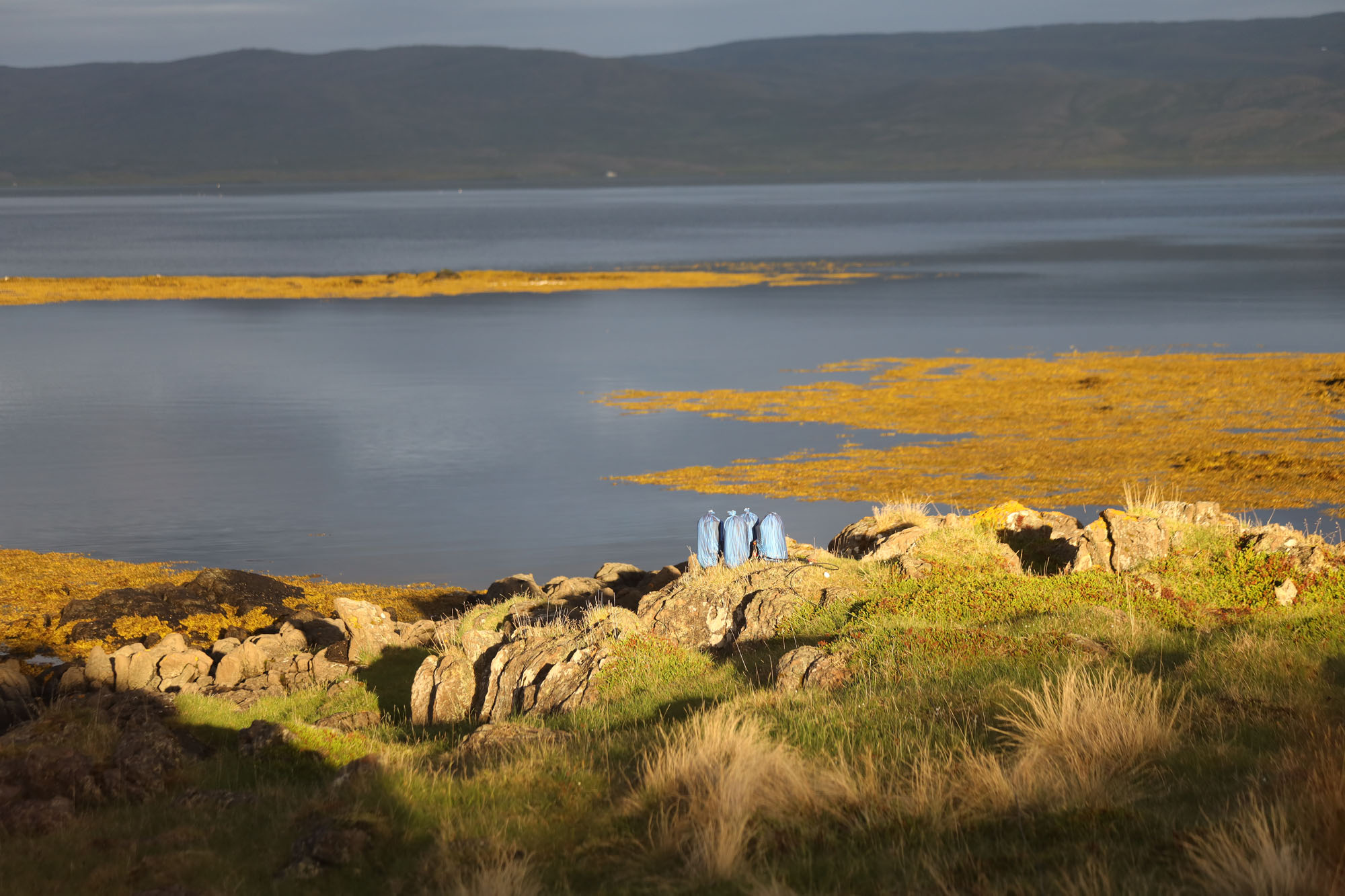
The recording starts exactly at 4:00 in the morning on June 22, 2023 and ends just over half an hour later. After a high tide earlier in the night, the tide was already starting to recede. The seaweed on the shore was still wet, which makes a soft clicking and dripping sound, which can be heard differently well with different headphones. The birds are slightly quieter than earlier this night, but the soundscape is still magnificent.
There was several gull species, at last great black backed gull. arctic tern, common eider, whimbrel, European golden plover, red throated loon, common loon, arctic puffin and eurasian oystercatcher.
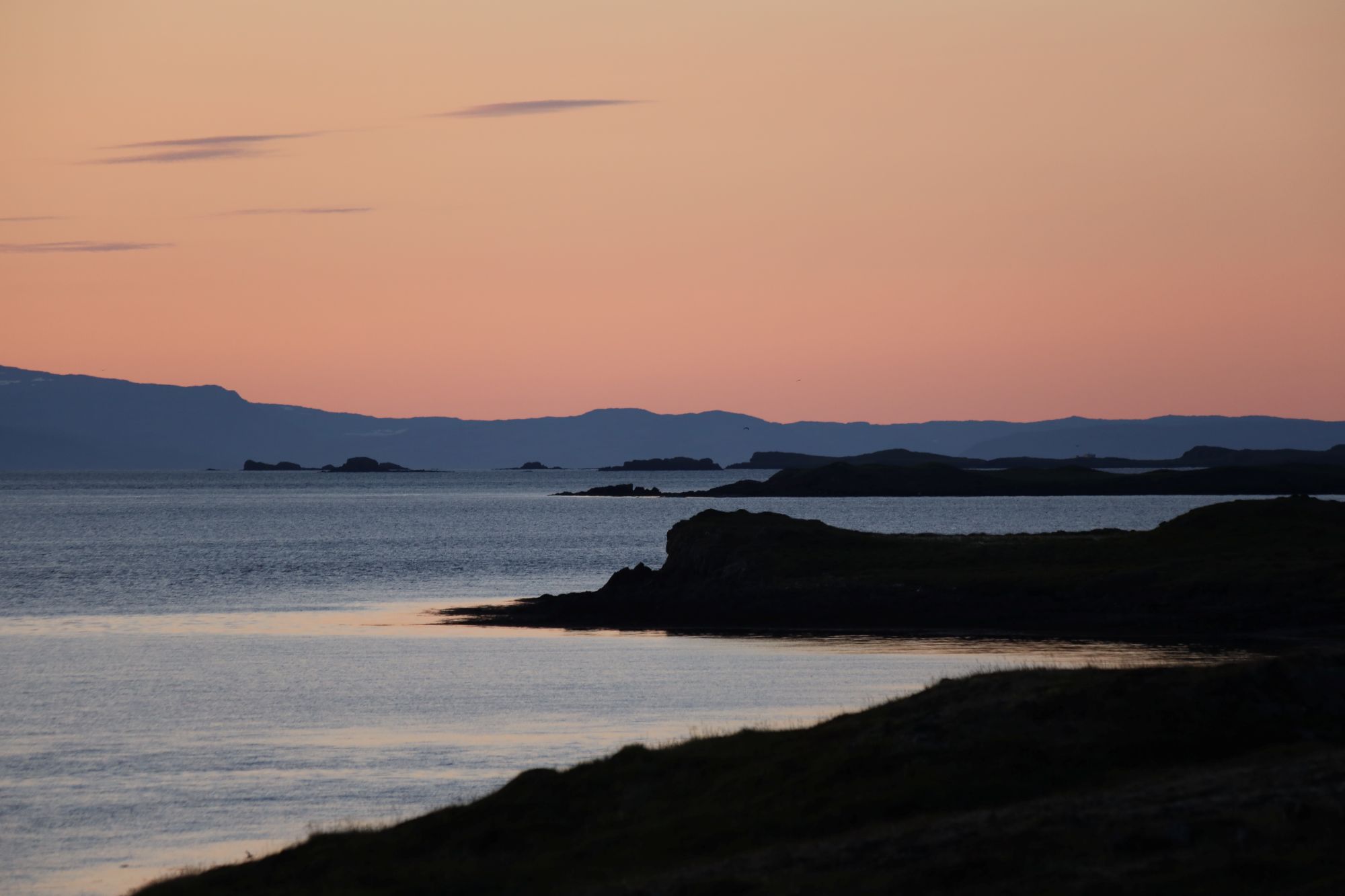
There you can hear me getting in and out of the car to take pictures. Including the accompanying picture. At least one truck can be heard from across the fjord. It can also be heard in small fishing boats at the beginning and end of the recording.
It is clearly a new day rising.
Quality open headphones are recommended while listening at low to mid volume.
If the media player doesn’t start to play, please reload this individual blog in a new tab or frame.

(mp3 256kbps / 64Mb)

Recorder: Sound Devices MixPre6 24/48
Mics: Lewitt LCT540s (IRT quad 90°/30cm)
Pix: Canon Eos R

Weather: Calm to 3m/sec, cloudy, about 7°C
Location: 65.692816, -21.558576

Read Full Post »

IMG_2200

In recent years, I feel that Iceland has cooled down and the summers have also been colder and more rainy. This should not be surprising because the meteorologists who have predicted the consequences of „global warming“ have predicted this weather pattern due to changes in the Gulf Stream. Added to this are natural fluctuations that could explain why it has been colder the last two years than the years before. This is all an emotional assessment so it is best not to say anything further about this. But this cold weather has offered the possibility of recording under frozen lakes near the capital. Something that I have not been able to do since I acquired hydrophones, except by difficult trips to remote places up in the highlands. The only thing I have to strive for is to get suitable recording weather on the weekend so that I am less busy at work. The possibilities for getting good recordings therefore have a few hours a year.
The little experience I have with these recordings has told me that it is not enough to find icy water, drill a hole and record. I can get very different recordings by finding the right hydrophone location, such as depth and the gap between two hydrophones. Then the frost must be below -5°C and the frosty days must have lasted for more than 5 days. Whether there is a thick layer of snow on the surface or naked ice, windy or calm weather. Size and depth of the lake and the thickness of the ice.
For me, this is always a bit of an issue. I have always traveled alone and been very careful when traveling and avoided all risks. Traveling on ice of varying thickness where no one sees or knows about me is therefore unexciting.
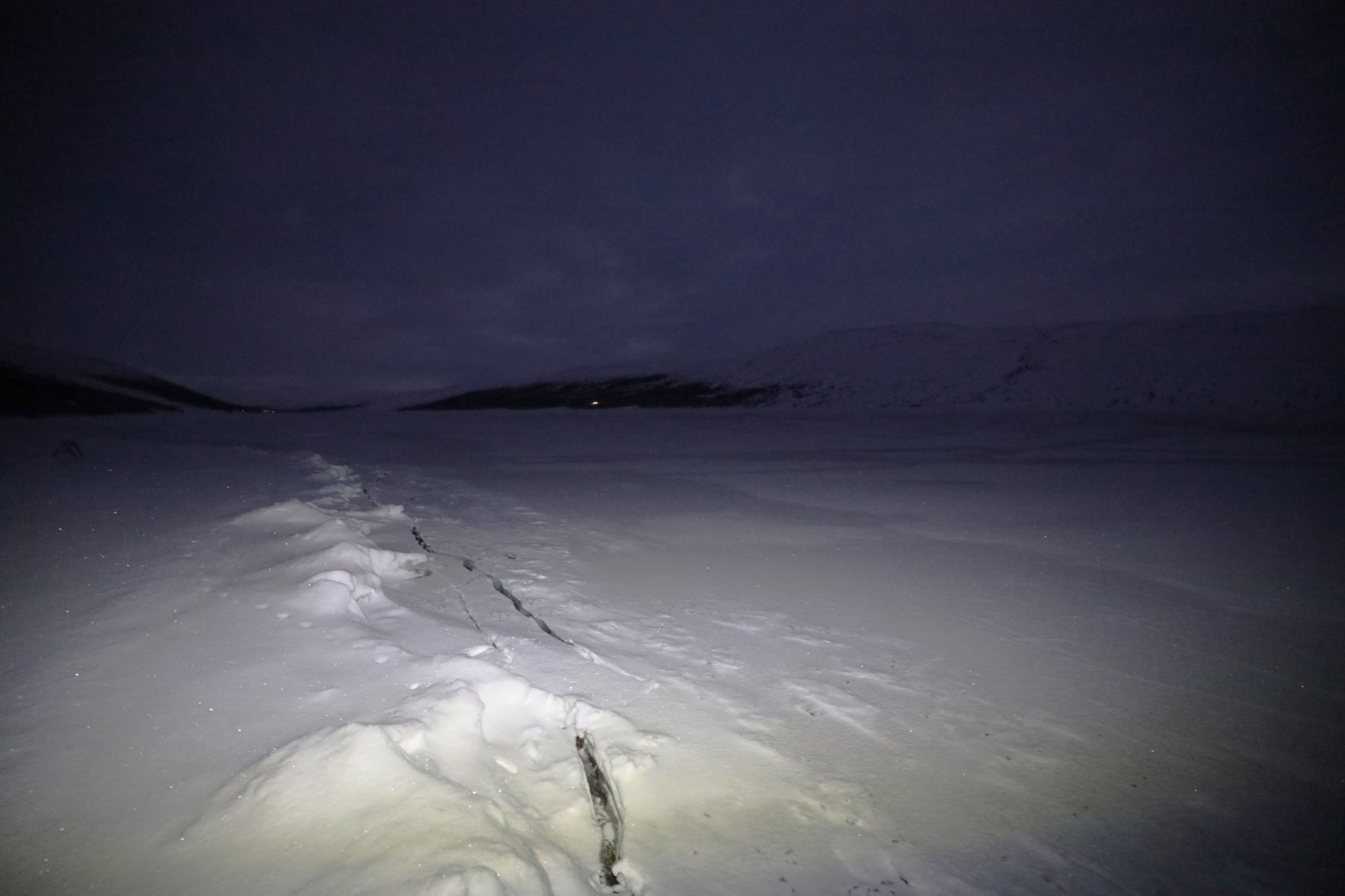
It was like that when I arrived at Skorradalsvatn (lake) in the dark and -8°C frost on January 5, 2025. I just went a few meters out onto the ice and drilled two holes there. The ice turned out to be about 25cm thick and the depth under it was almost a metre. Even though it was calm, sounds from the ice could still be heard on the surface. Sounds that would have been much clearer in the wind earlier that day.
I had to start recording immediately if I was going to be able to record these sounds under the ice. If it gets calm for a few more hours the lake will get very quiet.
The sounds heard in the recording are heard just as well on the surface, except that they are heard much louder under the ice, plus all kinds of smaller details.
Since I was not far from land, the rumble of a car driving along a road about 100 metres away is also heard through the ground. Then you can hear the rumble of air traffic very well, which is probably because the ice on the lake acts like a membrane on a microphone. At the same time, I climbed out onto the ice to take pictures so that my footsteps could be clearly heard.
Quality open headphones are recommended while listening at low to mid volume. There are a lot of very powerful sounds in this recording that can easily damage your hearing and speakers. I therefore do not recommend high volume
If the media player doesn’t start to play, please reload this individual blog in a new tab or frame.
Some of the loudest pitch there seems to be have some distortion. I didn’t notice this until the recording was transfered to mp3. But this is not a problem on the original recording WAV 24bit/48Khz. Let’s just leave it like this

(256Kbps / 60Mb)

Recorder: Sound Devices MixPre6
Mics: Benthowave BII-7121
Pix: Canon EOS-R

Weather: Cludy, Calm, about -8°C
Location: 64.5137303,-21.4130149

Read Full Post »

IMG_2200

Here is a difficult and poor recording that probably should not have taken place on this blog site, except because this is a recording of „HUM“.
This is the second Hum recording I have managed to record. In the first one, the origin of the sound was obvious, but in this recording the rumble, or drone sound, is slightly incomprehensible.
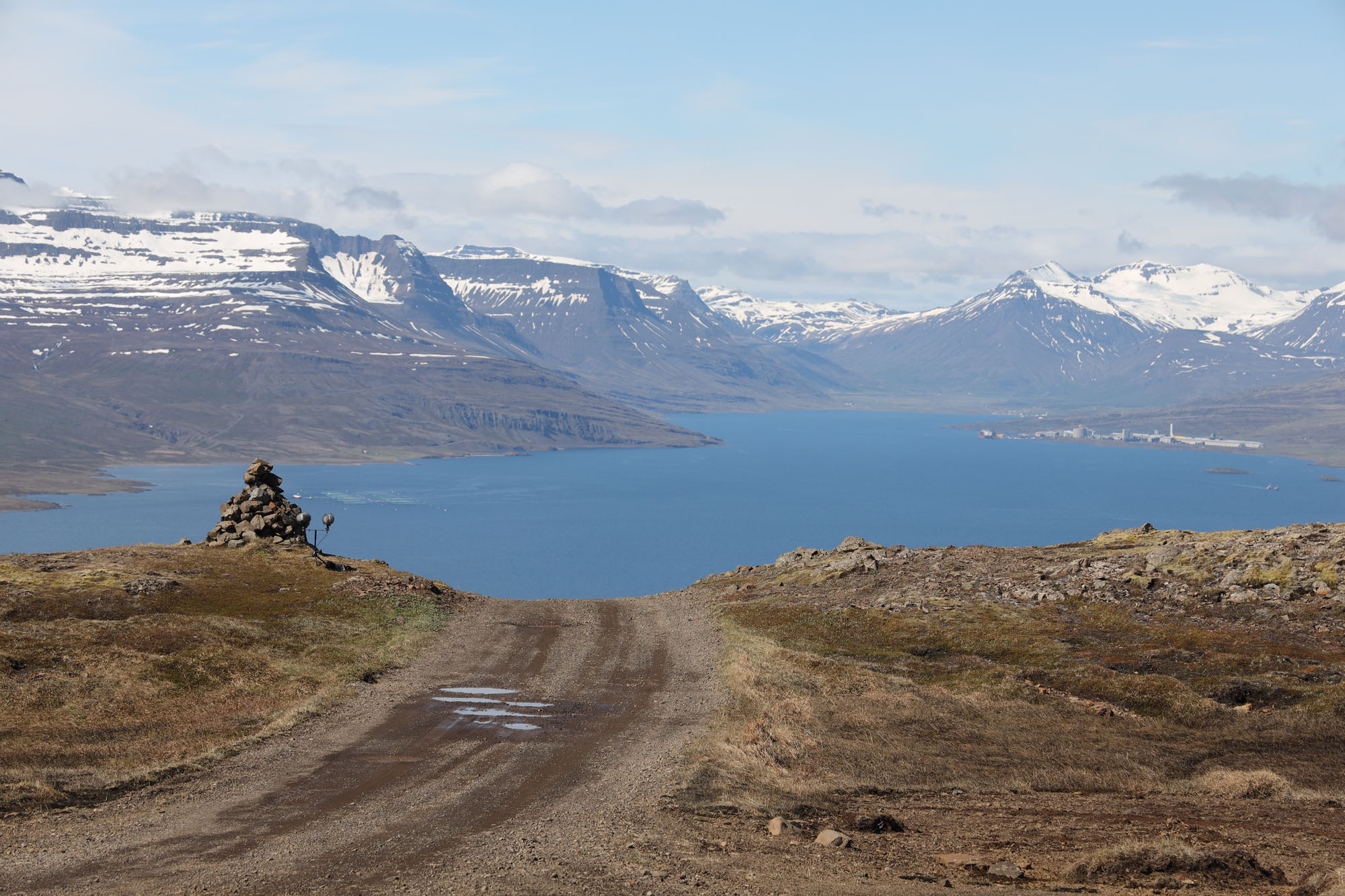
This recording was recorded in quite a bit of wind. I therefore had to hide the microphones behind a small stone cairn which in a way affects the recording and is heard differently in different headphones. It was a total coincidence that I heard this HUM because I was not walking or riding a bicycle, but in a car, which usually takes away all natural experience.
There at the top of the Vikurheiði heath I decided to stop and brew myself a coffee. That’s how I became aware of the HUM that filled the air around me. I somehow couldn’t figure out where the sound was coming from. It was coming from literally all directions, but somehow I convinced myself it probably originated from the mountaintops beyond the fjord. I tried to listen for engine noise through this rumble noise, but it wasn’t exactly clear, except twice. 
The remarkable thing about this noise was that, considering the wind and turbulence in the air, the sound was surprisingly loud. Not least if the sound originated from the aluminum plant in Reyðarfjörður, which was 17km away (in a straight line). Later that day it was confirmed that this noise was not heard from the aluminum plant.
Out in the fjord were two feeding or service boats around aquaculture. But they weren’t moving so the sounds were hardly coming from there.
At the pier by the aluminum plant there was a large bulk ship that turned its exhaust pipe towards me. But it was motionless the entire 3 hours I was up on the heath, so the sounds definitely didn’t come from the ship’s main engines.
The only explanation I have for the origin of these sounds is probably this:
The mountain slopes in Reyðarfjörður are many shaped like parabolas. They can therefore amplify sounds in certain places and directions. I therefore assume that the sounds came from the bulk ship’s generators, mixed with traffic noise in the fjord, as well as noise from the aluminum plant.
It can be assumed that this HUM will be heard differently in different headphones or speakers. Therefore, it should not be surprising if some listeners are disappointed.
Quality open headphones are recommended while listening at low to mid volume.
If the media player doesn’t start to play, please reload this individual blog in a new tab or frame.
More about this phenomenon „Global HUM
My erlier „Hum“ recording „Waste of power

(mp3 265kbps / 55Mb)

Recorder: Sound devices MixPre6
Mics: Sennheiser MKH20 (AB45)
Pix: Canon EOS-R

Location: 65.023528, -13.758306
Date: 20th of June 2024
Weather: Partly cloudy, 8°C, 1-5 m/sec

Read Full Post »

IMG_2200

I think I have annual recordings from the same place in the nature reserve in Flói in southwest Iceland almost since 2009. The reason is simple. It’s always interesting to follow the local acoustics from year to year. So I don’t have to spend a lot of time finding a location for the microphone. They stand in the same place unless something else disturbs it, e.g. high ground water level or something else that hasn’t yet happened to me. I go to the place hoping that there is no one in „my place“ in the parking lot where I can pull out my 75 meter 4ch long cable to the place where I have always recorded. I find a good ground for the microphones, get in the car, start recording and go to sleep.
I usually wake up when someone comes driving into the parking lot about 4-6 hours later.
I usually never listen to what I recorded, except when I need to look for something interesting to post on this audio blog like now.
It is well worth having a recording from Flói this month when 15 years have passed since this audio blog went online. Flói has followed this blog ever since I got my first HD recorder. It was then that the batteries suddenly lasted longer than 30 minutes, but it opened up a whole new world for me to record in nature.
Here is an audio recording from June 13, 2023. The area was extremely wet after heavy rains. I positioned the microphones to be in close proximity to the Read necked phalarope. But maybe there wasn’t as much activity as I wanted. But instead you can hear various sounds that I am not quite sure where they are coming from. There are weak „clicks“ that can be heard e.g. for 1:30 min in this recording as well during the 30 minutes that the recording lasts.
As usual, there are many species of birds in Flói. Red-throated Loon. Red-necked Phalarope, Common Snipe, Golden Plover, Whimbrel, Common Eider and certainly other duck species as well. Common Redshank, White Wagtail, Winter Wren, Northern Wheatear, Common Redpoll, Snow Bunting, Swan and maybe other bird species that I cannot name.
Background noise is some traffic and surf from the south coast and air traffic.
You can hear it occasionally in the wind because I covered the wind shield with buff but not fur. Instead, you can hear much better in subtlety details.
This is an extremely low-key recording, except where you hear the Red-throated Loon. The recording was recorded with 50db gain (40Hz HPF), then the gain was further increased by +10dB in post-processing.
Quality open headphones are recommended while listening at low to mid volume.
If the media player doesn’t start to play, please reload this individual blog in a new tab or frame.

(mp3 256kbps / 64Mb)

Recorder: Sound devices MixPre6
Mics: Lewitt LCT540s (IRT cross 90°/30cm)
Pix: Canon EosR

Location: 63.900935, -21.191930
Weather: Cloudy, calm, about 5°C

Read Full Post »

IMG_2200

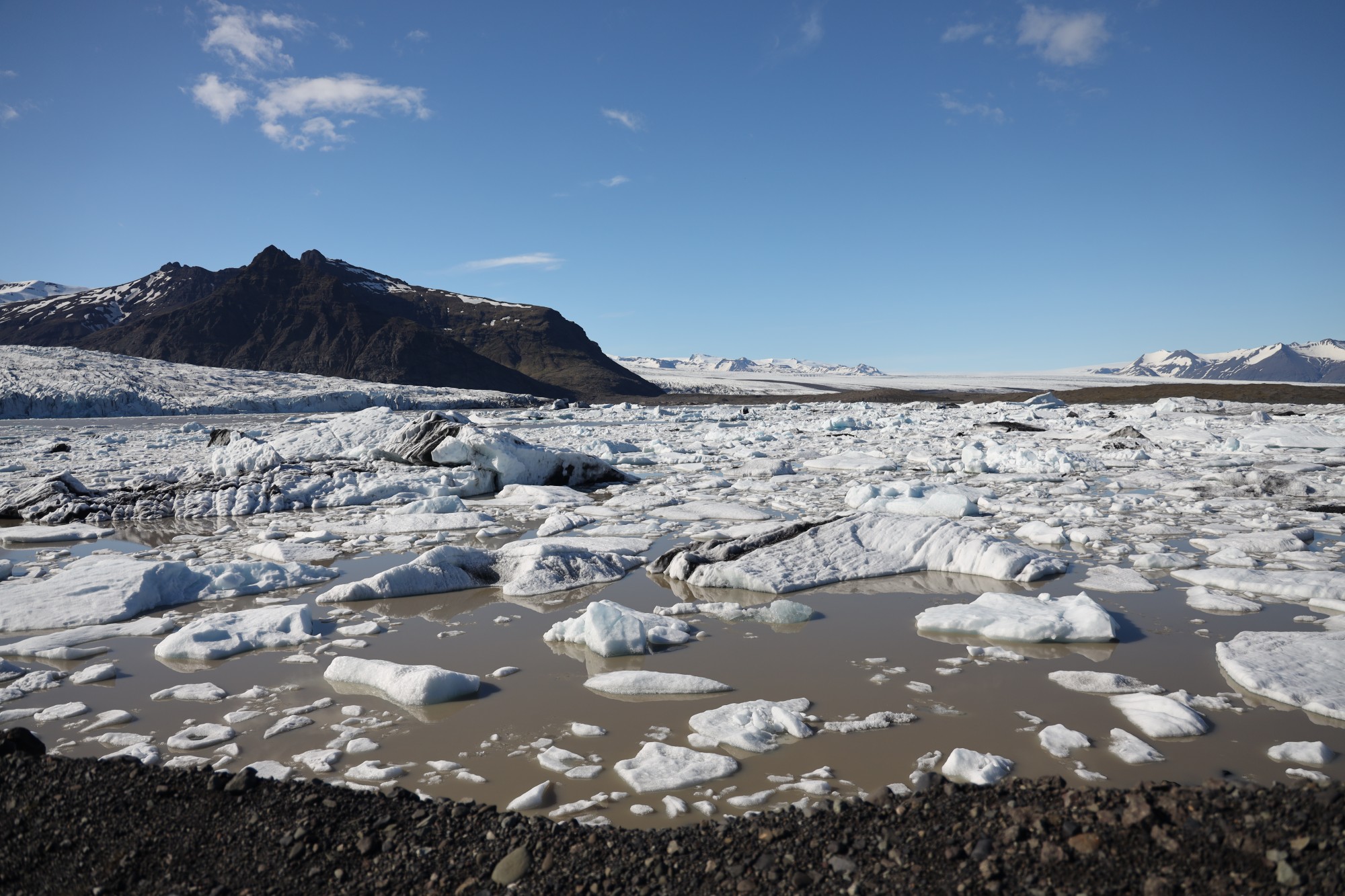
Here is one of those recordings that I record without being directly aware of what will come out of it. Equipment is placed in a suitable location where the wind was minimal and left there for 30-40 minutes while taking a walk. So I really don’t know what is being recorded until much later when you have time to listen and process the recording.
In fact, I knew of a rockfall at this location and was rather afraid about leaving the equipment behind, because the ice cave that the recording equipment was in might as well collapse. Then there would be a mud and rock slide from the mountain slope that would submerge everything.
This ice cave was at the end of Breiðamerkurjökull icefall, in a place where the glacier was probably 300 meters thicker only 40 years ago when I first came to this part of Iceland. Now the glacier is not more than dirty, „dead“ ice. A lot of it is buried under sand and rocks.
For centuries, the glacier has scraped the slopes of the mountains in Suðursveit. When the glacier retreated, gravel and rocks fell from the mountain slopes on the glacier below, which then formed a thick insulating layer over the ice closest to the mountain slopes. Under normal circumstances for centuries, the advance of the glacier would have carried this gravel down to the glacier toe. But the glacier has for two decades stopped advancing in this place. The glacier has lost all its mass so it will not crawl anymore in this place. The glacier lies flat and dirty towards the sun in the south, thin and melts rapidly. However, the ice that is covered with gravel and rocks melts much more slowly. Therefore, e.g. still possible to see ice high up on the mountain slope of Vestur Miðfell, although it is probably 30-40 years since the glacier was there and reach so high in the mountain slope
The pleasant surprise of this recording was that the wind did not interfere with the recording. You can hear mudslides sliding down the ice-covered mountain slope with all kinds of sounds that sometimes remind of car traffic. Sharp clicks in the rock as it bounces all around the mic and in good headphones you can hear the rock bouncing over the mic.
You will hear people speaking in the distance, which was several hikers coming from the glacier.
You might hear a lot of „white noise“ in this recording but it is mainly coming from nearby rivers, the wind and rapidly melting glaciers which are usually astonishingly noisy when they melt fast .
Quality open headphones are recommended while listening at medium to high volume.
But be careful. This recording has a high dynamic range and can damage both speakers and your hearing if it is played too high.

(mp3 256kbps /62Mb)

Recorder: Sound devices MixPre6
Mics: Sennheiser MKH8020/8040. (2x2ch Baffled AB35)
Pic. Samsung S22

Location: 64.134056, -16.226150
Weather: cloudy, dry, up to 8 m/sec, 7°C,

Read Full Post »

IMG_2200

It took me a while to make that decision to put this recording on the web. Mainly because then I would normally have had to tell about the recording location.
But I’m going to say as little as possible, even though the story of the location is for me more interesting than this recording.
The location will therefore be a mysterious part of this recording.
The reason I don’t want this place to be attractive is mainly because then I am sure this place is likely to be destroyed.
Every time I visit this place it is like the time is standing still.
In some weather conditions, getting to this location from a busy road can be like going through a time machine.
Quite a few people know about this house, and it’s not quite in the public eye today.
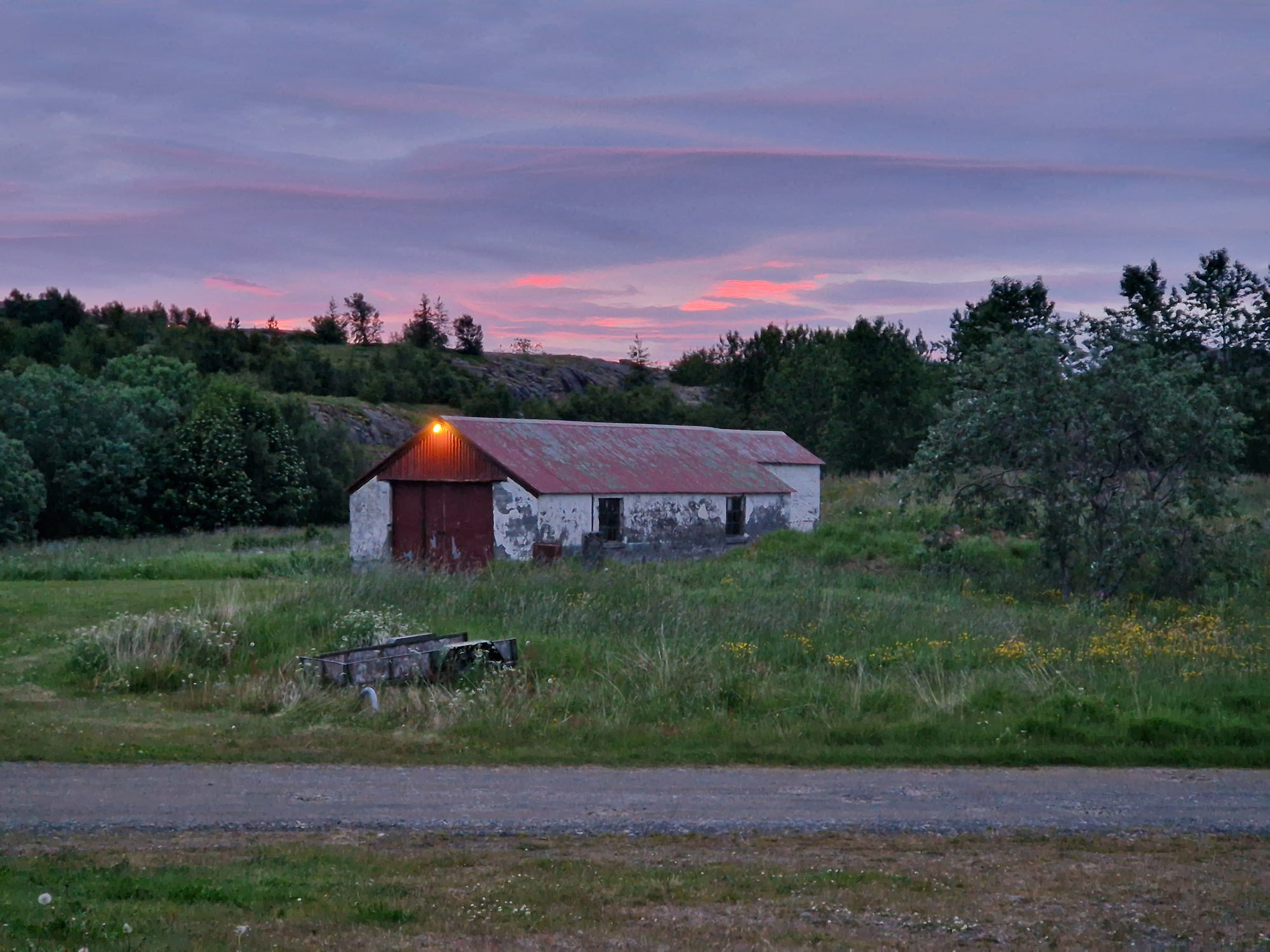
This is a stone-clad house, built in 1883. It was supposed to serve as a shelter for travelers and mail carriers, but it fell into disuse because of ghosts.
I have been coming there regularly for nearly 40 years, mostly before the turn of the century in my bicycle tours, sometimes staying overnight and seeking shelter, or just sweeping the floor and writing in the guest book. The place is therefore quite dear to me.
The weather in Iceland so far this summer has been both cold and windy, and although I am much better equipped for traveling today than I was last century, I felt the need to seek shelter at the house this summer. There were quite familiar sounds in the house that I recorded there in 3 different places. Here is one of those recordings. Rain and wind hit the windows intensely and the front door from time to time, which is most likely the ghost knocking the door.
Quality open headphones are recommended while listening at low to mid volume.
If the media player doesn’t start to play, please reload this individual blog in a new tab or frame.

(mp3 256kbps / 57Mb)

Recorder: Sound devices MixPre6
Mics: Sennheiser MKH8020/8040 (Baffled AB40)
Pix: Samsung S22

Weather: 7°C, rainy, windy 5-10 m/sec

Read Full Post »

Older Posts »