Feeds:
Færslur
Athugasemdir

Posts Tagged ‘Waterworld’

IMG_2200

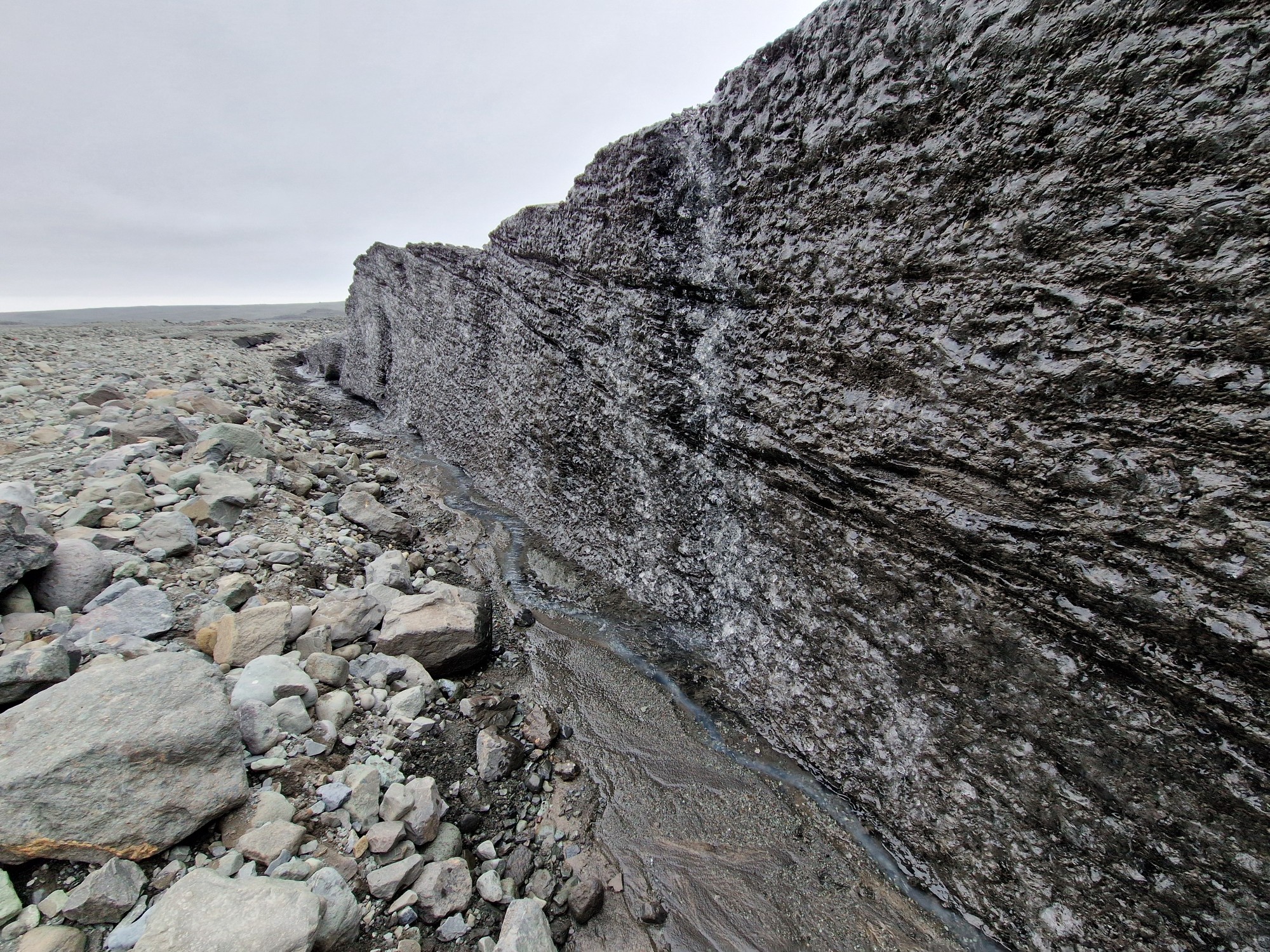
It is always striking to travel across Breiðamerkursandur and witness how the Breiðamerkurjökull glacier steadily thins year by year and retreats further inland.
Here is a recording from June 16, 2024, captured at the glacier’s terminus below Útgönguháls in Suðursveit south east Iceland. It serves as a follow-up to a recording I made at virtually the same location and published online in September 2024. Consequently, the sound of rockfalls from the slopes of Útgönguháls can be heard in this recording, just as in the previous one.
Featured here is an ice wall, approximately two to three meters high at the glacier’s terminus that is melting quite rapidly. It likely extends many meters, perhaps even tens of meters down into the ground, given that it has been barely twenty years since the glacier reached a height of up to 200 meters at this spot. High up on the slopes of Útgönguháls, glimpses of an ice mass beneath the scree slopes were visible, though that ice melted more slowly due to the insulating effect of the gravel.
The background noise in this recording comes primarily from the Veðurá river, which emerges from the glacier just a short distance from the recording site.
The soundscape at locations like this near most glacier snouts is characterized by the ceaseless flow of water, though the intensity varies throughout the year. Only on the coldest days does the flow diminish enough for the sound to fall silent or become much more subdued.

(mp3 256kbps / 56Mb)

Recorder: Sound Devices MixPre-6
Mics: Sennheiser MKH 8020/8040 (Baffled Parallel AB35)
Photo: Samsung S22

Weather: Cloudy. 2–5 m/s, 11°C
Location: 64.132776, -16.222318
Read Full Post »

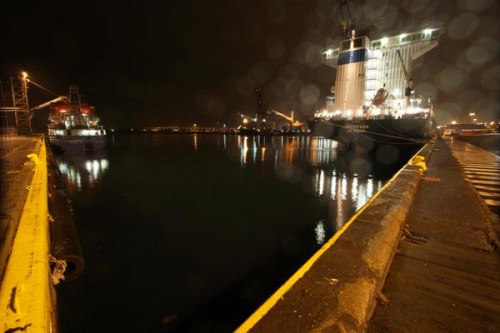
Sundahöfn við upptökustað

Fimmtudaginn 30. desember 2010 dýfði ég hljóðnemum í sjóinn í Sundahöfn. Ekki var við neinu merkilegu að búast. Þrjú skip voru í höfn, Wilson Brugge, Dettifoss og Goðafoss. Vélahljóð frá ljósavélum yfirgnæfði allt. Heyra mátti að dælur fóru í gang í skipunum og einstaka bank, líklega þegar einhverju var slegið utan í skipssíðuna. Í gegn um háfaðan má svo greina nokkra skelli sem liklega koma frá einhverri skel, hugsanlega kræklingi. Það var ekki fyrr en heim var komið og Spectrogram forrit hafði gert hljóðritið sýnilegt að það sást eitthvert undarlegt hljóð á 50Khz.
Þess skal getið, að börn með bestu heyrn ná líklega upp í 22Khz og miðaldra fólk yfirleitt ekki hærra en 14Khz. Þarna var því eitthvað sem var langt fyrir ofan heyranlega tíðni. Hljóðið var mjög reglulegt og aðeins bundið við afmarkaða tíðni eða á milli 48Khz til 51Khz. Var því óhugsandi að þetta kæmi frá einhverri skepnu. Það var því líklegt að einhver hefði gleymt að slökkva á dýptarmæli í þetta sinn. Miðað við stefnu virtist það koma frá Wilson Brugge.
Hljóðið var nokkuð áhugavert. Ég  ákvað því að nota tæknina til að gera hljóðið heyranlegt. Til þess þurfti að hreinsa út öll önnur hljóð og suð fyrir ofan og neðan 50 khz. Þá var tíðnin lækkuð með hraðabreyti þar til hljóðið var komið í 4khz. Við þetta lækkaði líka tifhraði hljóðsins svo nú heyrist tíst með löngu millibili í stað þess að vera u.þ.b. eitt á sekúndu.

_____________________________________

Undersea recording in Sundahöfn harbor.
Most of the audible sound was a noise from Motor Generators in the ships. When the recording was viewed in Spectrogram it was a notible 50kHz Echo Sounder signal.
Using pitch control the signal was downgraded to audible 4kHz. At the same time, all other sounds from ships engine and „digital sampling noise“ above 75kHz was erased.

Recorder: Korg MR1000  24bit/192khz
Mic: Aquarian H2a-XLR Hydrophone.
Pic: Canon 30D  (see more pictures and spectrogram)

Audible sound pollution in the Harbor.

Sækja mp3 skrá ( 192kbps / 4Mb )

Echo Sounder at 4kHz  (very slow activity).

Sækja mp3 skrá ( 192kbps / 5Mb )

Read Full Post »