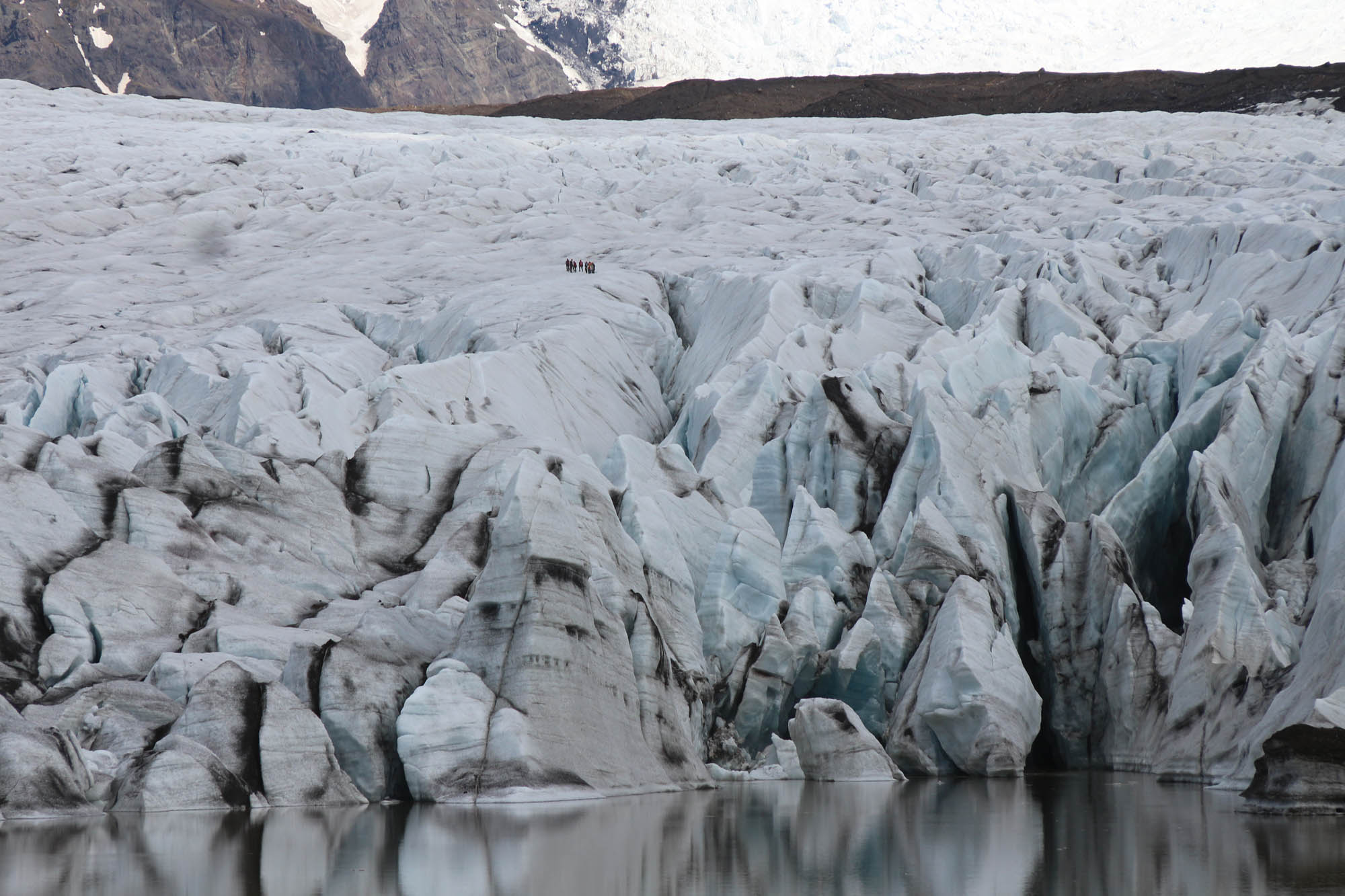
Last month I published hydrophone recording „Crawling glacier“ from the lagoon beneath Svínafellsjökul icefall.
The original recording contains two other channels with the sound above the lagoon.
It is not as clear in this short mp3 file as it is with headphones in the field, but during the recording it seems to be possible to hear the flow of the icefall though the valley. Its is a slow event. It usually starts high above in the mountain with rumbling sound and then slowly moves in a shock wave as a silk smooth „white noise“ though the valley all the way to the toe of the icefall. Regularly the ice moves faster in some places when the pressure get high. Then it cracks, some parts brake off and other just crawl faster which is usually audible for everyone.
This behavior of the glaciers is not often audible during the day because of traffic, wind or the clear sun which can easily disturb the sound waves in the air. Then it is also too slow for impatient listeners. Nights are usually the best time to hear this sound of the „flowing mass“. Changeable nature or different types of glaciers will also play a big rule how it acts and sounds.
Quality open headphones are recommended while listening at low to mid level, or in speakers at medium level.
(mp3 256kbps / 44,3Mb)
If the media player doesn’t start to play, please reload this individual blog in new tab or frame
Recorder: Sound devices 788
Mics: Aquarian H2a-XLR & Sennheiser MKH20
Pix: Canon Eos M
It is a special feeling to stay close to a glacier. It’s like standing near a wast monster that is constantly moving, but very slowly. Everywhere around this flexible ice the gravity of the ice is visible. Glaciers usually have strong smell of fresh oxygen that glaciers have captured in ice and compressed in to locked bubbles for hundreds and thousands of years. This smell from the past is like from another world, probably because today has much more carbon dioxide in the atmosphere than it has been for 800 thousand years at least. Glaciers also make sounds, sometimes quite loud, from falling drops of water to earthquakes, but most of these sounds are not audible to human ears. Glaciers make constant sound in water which needs hydrophones to capture, as can be heard on the following recording. I can not say I have been lucky in recording glacier sounds in years past. I’ve always been at the wrong place at the wrong time when glaciers produce “big sounds”, but after many hours, and several days on the same spot, I got something interesting which is worth listening to.
One of those days was 5th of June 2015 when I was at the glacier lagoon neneath of Skaftafellsjökull glacier’s icefall. This lagoon is not big, probably around 500m squared, but the depth is around 80 meters so the soundscape beneath the surface can be pretty exhilarating when the glacier is crawling at the bottom of the lagoon.
I put two hydrophones in the lagoon and two microphones on a nearby hill and recorded there for almost fourteen hours. The gain on the recorder was almost equal on all channels, or around 48dB, and during these 14 hour session the soundscape was different mostly because the glacier surface melts differently during the day then during the night with different water flows into the lagoon. All the time the glacier was grinding the bottom of the lagoon so under the lagoon’s surface the soundscape was much nosier than above.
Then just before midnight the glacier did a “big move” (starts 25:00) which lasted for several minutes, crawling with cracking and scratching sound. The soundscape down in the lagoon sounds really strange and surreal, but the listener must keep in mind that sound travels much faster in water than in the air. The soundscape above the lagoon was different. It was possible to ‘feel’ or ‘see’ through the audio the movement of the whole Svínafellsjökull glacier icefall through the valley. But that recording will be for another soundblog.
Quality open headphones are recommended while listening at mid level, or in speakers at medium level.
(mp3 256kbps / 63Mb)
If the media player doesn’t start to play, please reload this individual blog in new tab or frame
Recorder Sound Devices 788
Mics: Aquarian H2a XLR
Pix: Canon EOS M
Iceland’s electricity is produced almost entirely from renewable energy sources: hydroelectric (70%) and geothermal (30%). Less than 0.2% of electricity generated came from fossil fuels (in this case, fuel oil). In 2012 there was no wind power installed in Iceland. Electricity production increased by 24 MWh/person from 2005 to 2008, an increase of 83%.
According to Statistics Iceland the total electricity consumption was 7,958 GWh in 2002, 11,480 GWh in 2007, and 17,068 GWh in 2012. The aluminum industry in Iceland used 71% of produced electricity in 2011.
The electricity supply and consumption were equal in 2008: 53.1 MWh per inhabitant when the European union (EU15) average was 7.4 MWh. Iceland’s consumption of electricity was seven times higher than EU 15 average in 2008. The domestic electricity supply promotes use of electricity.
The Icelandic electricity market is geographically isolated. The market was closed for competition prior to 1 July 2003. Almost all electricity was supplied by Landsvirkjun and sold through regional distribution companies. Landsvirkjun had a monopoly position on investment in generation. Full market opening began in 2006 e.g. with the opportunity to switch supplier. Contracts for large scale energy users were in general long term, up to 30 years with options for extension.
Landsvirkjun, the largest electricity producer, had 76% annual production in 2007.The majority of the electricity is used in industry, mainly aluminium smelters and producers of ferroalloy. Landsvirkjun does not participate directly in the retail market for households and smaller businesses. In the retail market the main companies are RARIK, Orkuveita Reykjavíkur and Hitaveita Suðurnesja.The last two have also entered into the market for energy intensive users. The households heated with electricity, not many, receive subsidies to make their heating costs comparable to hot water heating. (Wikipedia) .
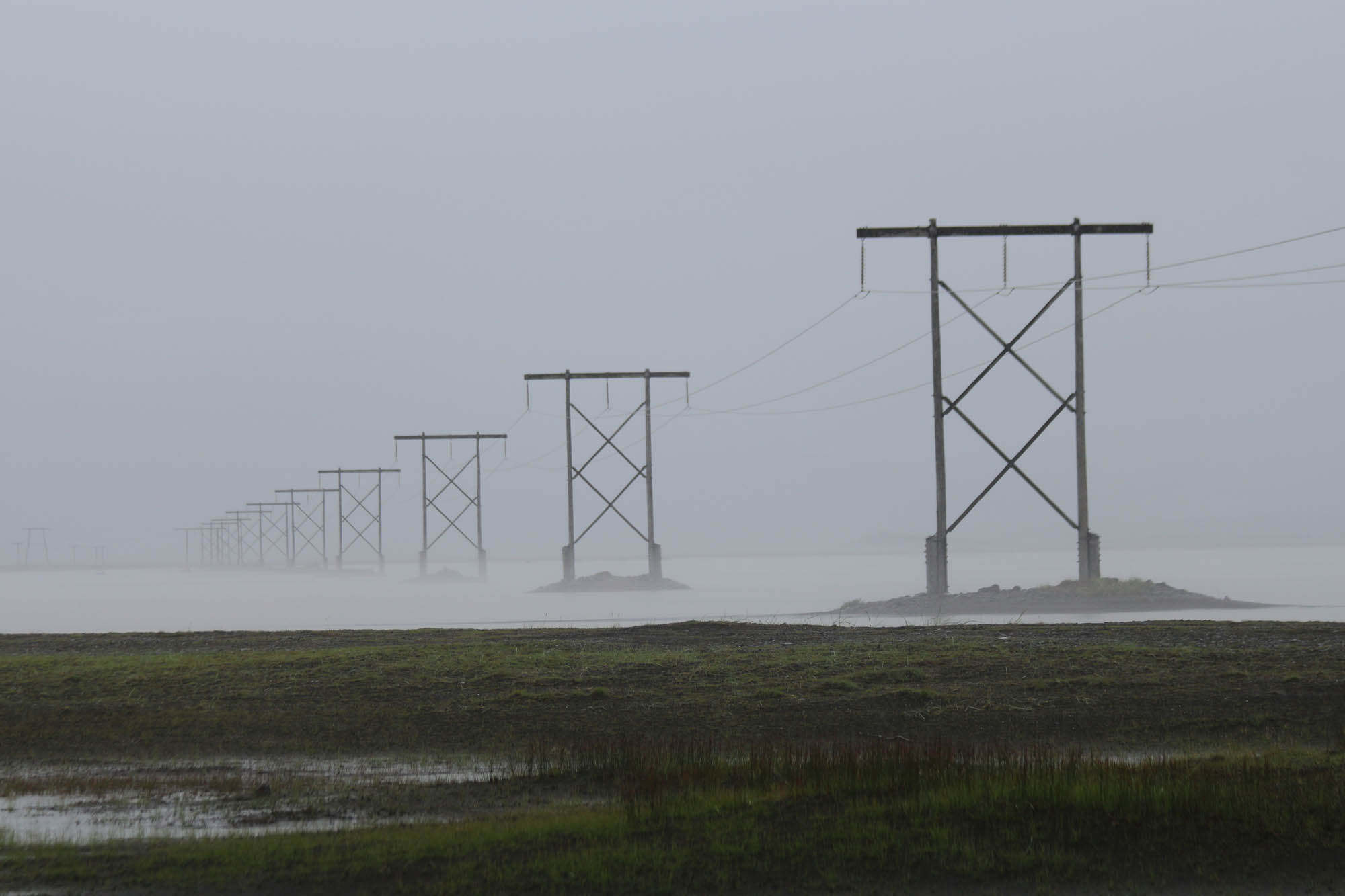
The following recording was recorded at Skóey island in Hornarfjörður fjord under a powerline “Byggðalína”. It is a 132kV powerline which connects all the regional and local electrical grids together and stabilizes the whole electrical grid in Iceland. The structure is in most parts over thirty years old and for the last several years it has been quite overloaded.
The recording was in 24bit/48Khz. Behind the aggressive electrical sound is a typical calm, quiet wetland soundscape with rumbling background noise from the ocean shore not far away and traffic.
When the recording is inspected in specrogram it shows the sparks fill the whole frequency spectrum of noise, or up to 24Khz (see picture). It would have been interesting to record this sparking sound at 192kHz because the whole microphone frequency range is up to 50Khz. That is not all, because the air is massively loaded with EMF/radiowaves, from 50Hz up to several hundred kHz. The strong radio signals travel long distances and make it almost impossible to record clean spaceweather signals with VLF receiver without human electrical noise pollution.
(mp3 256kbps / 55Mb)
Recorder: Sound devices MixPre6
Mics: Sennheiser MKH8020/8040 (Parallel AB40)
Pix: Canon Eos M
World Oceans Day takes place every 8 June. It has been celebrated unofficially since its original proposal in 1992 by Canada’s International Centre for Ocean Development (ICOD) and the Ocean Institute of Canada (OIC) at the Earth Summit – UN Conference on Environment and Development (UNCED) in Rio de Janeiro, Brazil.[1] The Brundtland Commission, i.e. the World Commission on Environment and Development, provided the inspiration for a global oceans day. The 1987 Brundtland Report noted that the ocean sector lacked a strong voice compared to other sectors. At the first World Oceans Day in 1992, the objectives were to move the oceans from the sidelines to the center of the intergovernmental and NGO discussions and policy and to strengthen the voice of ocean and coastal constituencies world wide.
The Ocean Project, working in partnership with leading organizations from all sectors, including the World Ocean Network, Association of Zoos and Aquariums, and many others in its network of 2,000 organizations, has been promoting World Oceans Day since 2002 and together with World Ocean Network led a three-year global petition movement to secure official UN recognition. World Oceans Day was officially recognized by the United Nations in late 2008.[2]
World Oceans Day events are celebrated on 8 June, the closest weekend, the week, and the month of June. The day is marked in a variety of ways, including launching new campaigns and initiatives, special events at aquariums and zoos, outdoor explorations, aquatic and beach cleanups, educational and conservation action programs, art contests, film festivals, and sustainable seafood events. Youth have been playing an increasingly important role since 2015, including the development in 2016 of a World Oceans Day Youth Advisory Council (Wikipedia).
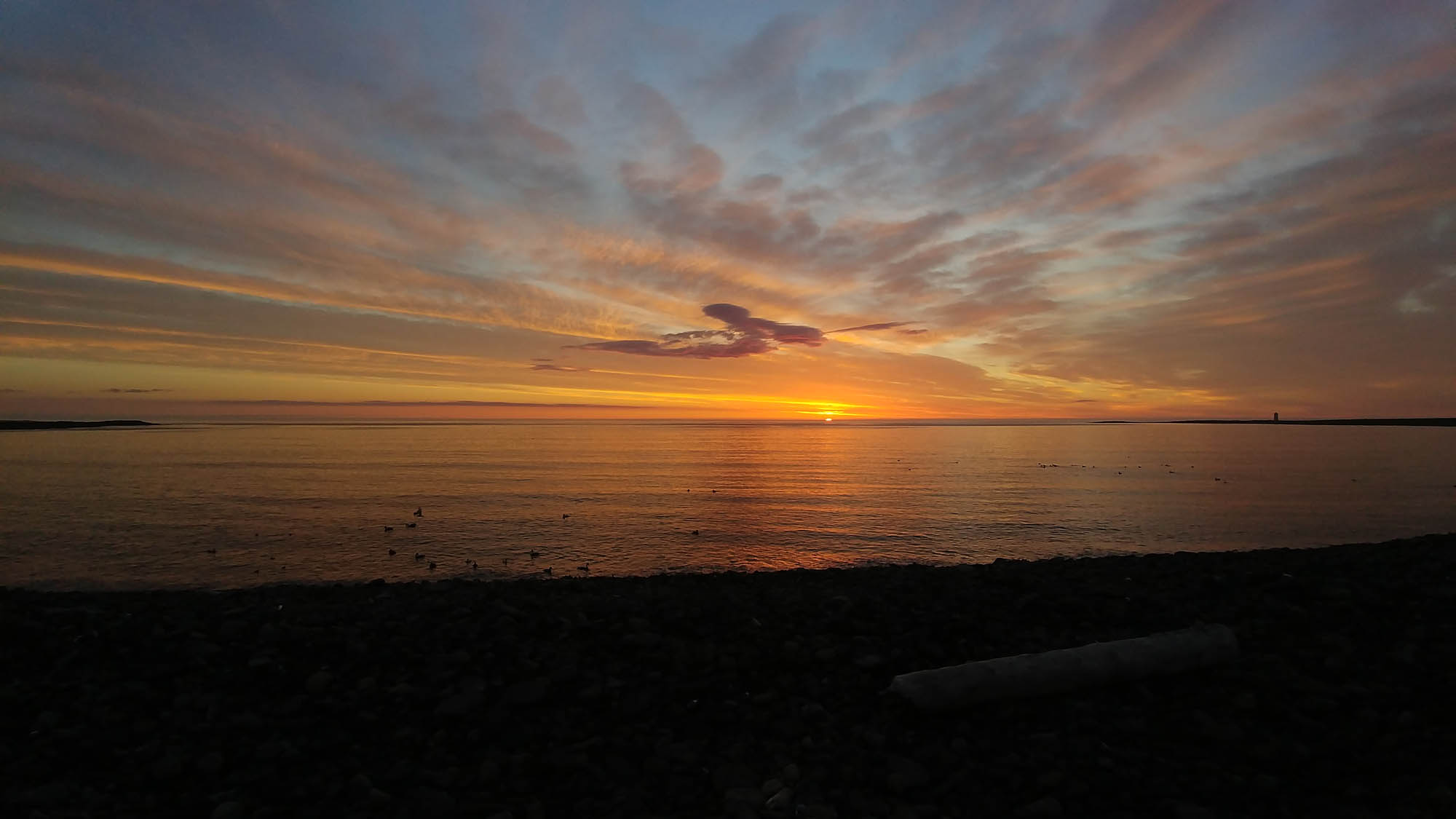
The following recording was recorded at midnight 29th of May in a wonderful weather nearby Hraunhafnartanga peninsula, close by the arctic circle.
Quality open headphones are recommended while listening at low to mid level, or in speakers at medium level.
Veturinn 2017-2018 hefur verið afar ánægjulegur fyrir þá sem hafa viljað sjá breytingar í verkalýðshreyfingunni. Eru það voandi merki þess að niðurlægingartímabili verkalýðshreyfingarinnar allt frá tímum Guðmundar J Guðmundssonar sé loks á enda.
Hófst það með kosningu Ragnars Þórs Ingólfssonar í stjórn VR og síðan Sólveigar Önna Jónsdóttur í Eflingu. Bæði hafa verið mjög skellegg í umræðunni um bætt kjör.
Það var því nokkur eftirvænting hvað myndi gerast 1. maí í ár, því sá dagur var nokkuð viðburðarríkur ári áður. Þá hélt Ragnar Þór ræðu á sérstökum baráttufund á Austurvelli á meðan gamla verkalýðsforustan með Gylfa Arnbjörnsyni hélt sinn fund á Hallærisplaninu.
Eftir útifundina 1. maí 2017 var Sósialistaflokkurinn stofnaður í Tjarnarbíó. Þar fremstur flokki var og er Gunnar Smári Egilsson sem sjaldnast hefur vafist tunga um tönn í umræðunni um spillingu og fátækt á Íslandi, orsök og afleiðingu.
Með þessu nýja fólki kemur nýtt tungutak sem hljómar eins og himnasending fyrir meðvitða launþega. Tilkoma Ragnars Þórs, Gunnars og nú síðast Sólveigar að mörgum öðrum ólöstuðum, þá er farið að heyrast langþráð tungutak í verkalýðsbaráttunni sem ekki hefur heyrst í áratugi. Fyrri verkalýðsforusta, sem greinilega var og er samgróin atvinnurekendum og fjármálageiranum, kom aldrei orðum að neinu sem máli skipti fyrir almenning, hvað þá að sýnna baráttunni með aðgerðum. Hún hefur fyrst og fremst komið sé fimlega frá aðgerðum gégn arðráni fjármálaaflanna, sjáftök þeirra ofurríku og síauknu launamisrétti.
En svo er það annað mál að hálfu ári liðnu, þegar kjarasamningar verða lausir, hvort ný forysta muni standa við gefin loforð. Því má svo ekki gleyma að almennt launafólk þarf lika að hafa vit, kjark og þor til að taka slaginn með verkalíðshrefingunni og verjast áróðri valdhafa og fjámálaafla
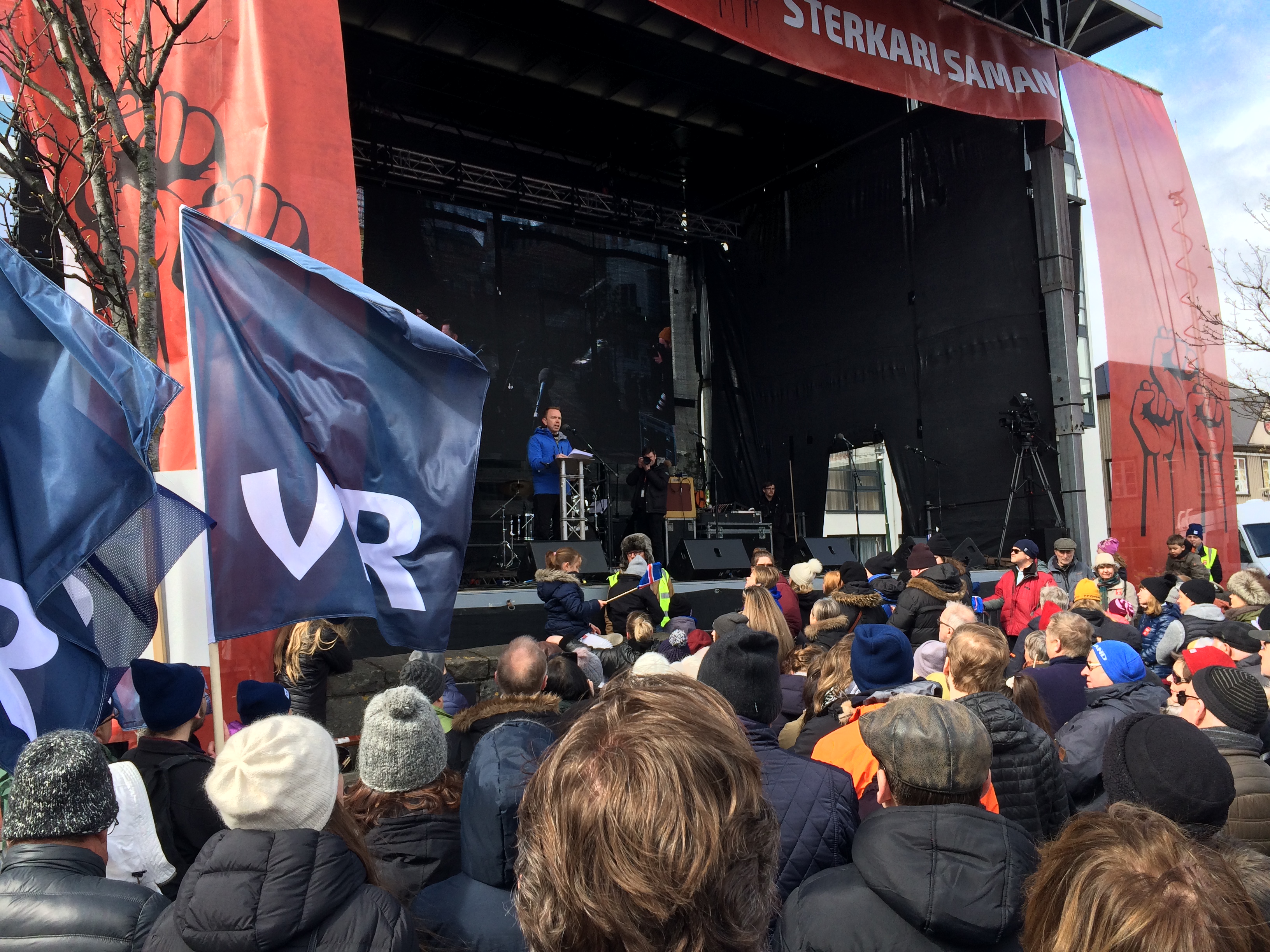
Upptakan sem hér er í boði var tekin upp á Ingólfstorgi 1. maí 2018, þ.e. tveir aðgreindir dagsrárliðir sem skeyttir eru saman. Er það ræða Ragnars og í framhaldi af því söngur almennings á Maístjörnunni og Internationalinum. Þá má heyra í ágætum miðbæjarróna taka nokkuð ákaft undir ræðu Ragnars og í lokin spaugileg, síendurtekin mismæli hjá kynni dagsins sem var Þórarinn Eyfjörð, framkvæmdastjóra SFR.
May day 2018
This is a recording of the VR union leader´s speech and two singalong songs in Mayday 2018. All is in Icelandic. It was recorded Ingólfstorg scuere in downtown Reykjavík.
Kirkjubæjarklaustur (Klaustur) is a village in the south of Iceland on the hringvegur (road no. 1 or Ring Road) between Vík í Mýrdal and Höfn. It is part of the municipality of Skaftárhreppur and has about 500 inhabitants.
Even before the time of the first Norse settlement in Iceland, Irish monks are thought to have lived here. Since 1186, a well known convent of Benedictine nuns, Kirkjubæjar Abbey, was located in Kirkjubæjarklaustur, until the Reformation in 1550. The names of the waterfall Systrafoss („waterfall of the sisters“) and of the lake Systravatn („water of the sisters“) on the highland above the village refer to this abbey. Folk tales illustrate the history with stories about good and sinful nuns. The Systrastapi (sister’s rock) is where two of the convent’s nuns were buried after being burned at the stake. One of the nuns was accused of selling her soul to the Devil, carrying Communion bread outside the church, and having carnal knowledge with men; the other was charged with speaking blasphemously of the Pope. After the Reformation, the second sister was vindicated, and flowers are said to bloom on her grave, but not that of the first nun. Systravatn also has a legend relating to the convent. The nuns traditionally bathed in the lake, and one day two nuns saw a hand with a gold ring extending from the water. When they tried to seize the ring, they were dragged below the water and drowned.
The village became well known in Iceland during the Lakagígar volcano eruptions in 1783. The pastor of the local church and dean of Vestur-Skaftafellssýsla, Jón Steingrímsson (is) (1728 – 1791), delivered what became known as the „Fire Sermon“ (eldmessu) on July 20, 1783. The legend says that this sermon stopped the lava flow, and the village was spared at the last moment. The current church, constructed in 1974, was built in memory of the Reverend Jón Steingrímsson.
Today, the village is an important service center for the farms in the region as well as for tourists and weekend visitors. (Wikipedia)
During summer time many bird species are nesting close to the village and the river Skaftá which flows beside the village. Arctic Terns have a big colony almost in the middle of the village, so many other migrant birds are nesting there too.
The recording was captured early morning 7th of June 2016 and is a part of 7 hours long recording
Many bird species are in this recording, Arctic tern, Red wing, Common Snipe, Whimbrel, Common Redshank, Red-necked Phalarope and probably many other species. What I love most in this recording is in the middle of the recording, is a „special song“ of Eurasian Wigeon which is not a common bird in my recordings.
Quality headphones are recommended while listening at low to mid level, or in speakers at low level. Be careful, sometimes the level goes high when birds fly by.
I spend almost 4 days late June 2017 recording in Þjórsárver area, which is a tundra southeast of Hofsjökull glacier. It was shortly after the road administrator open the Sprengisandur route across the highland, so there was still not much traffic. It was very early this summer so it was possible for me to record birds activity in nests.
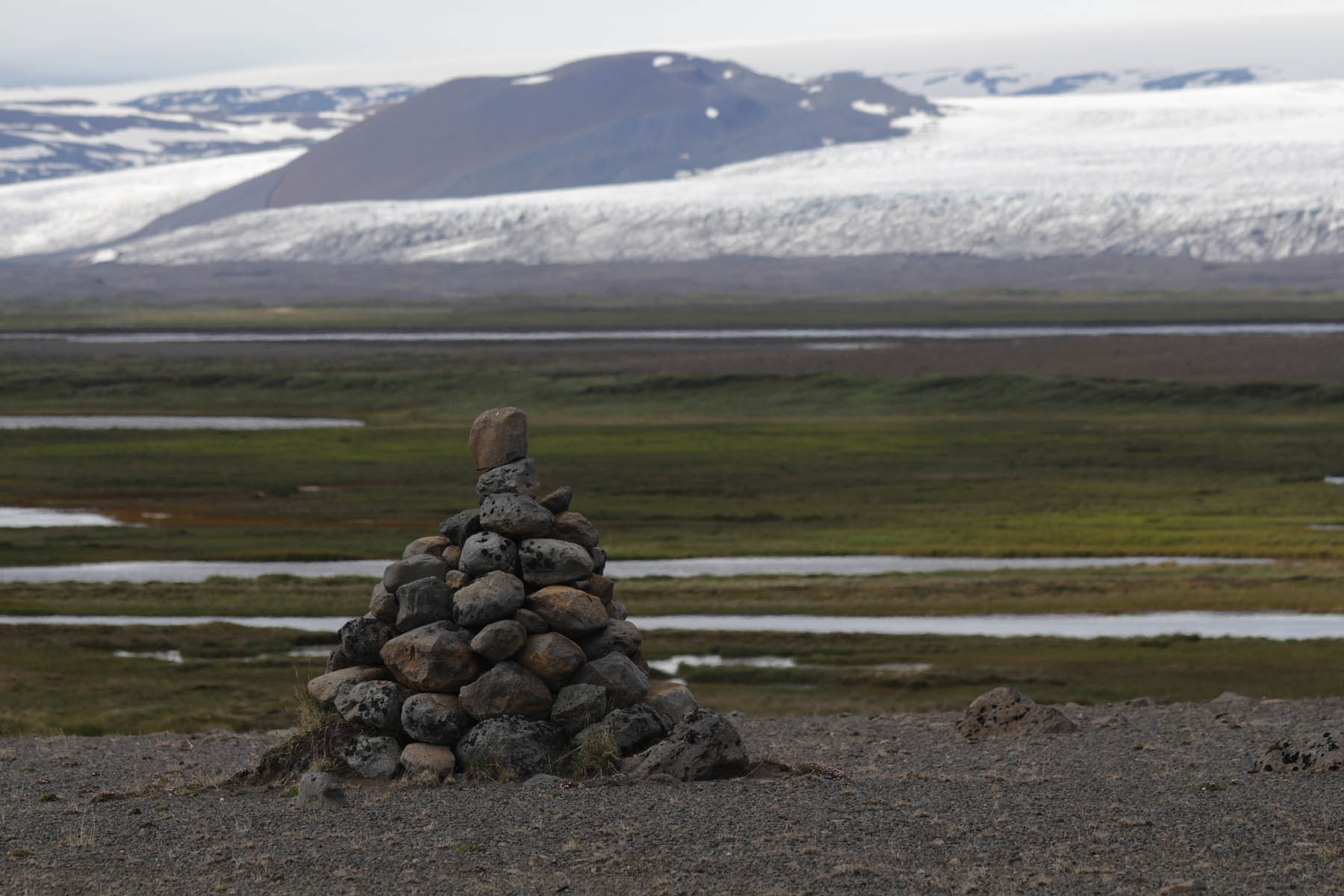
When I arrived at Eyvindakofaver I saw an Arctic fox sneaking around a stone cairns and an angry Snow Bunting flying around. It was a clear message for something interesting to record.
The weather was boring for recording. It was cloudy, the temperature about 4°C and the wind was SW, 5-10 m/sec. But the stone cairn was a suitable cover for the microphones. So I put up my gear and started recording just before midnight and then went to sleep.
At 3:40 the wind suddenly went down for about 30 minutes which was the only minutes with calm weather this four days in the area. Calm weather means normally better detail recording for the birds’ activity and deeper listening to far distance sounds.
Usually Snow Bunting lay eggs two times during the summer so this was likely the previous nesting time.
It is necessary to listen to the whole recording but suddenly something happens in the nest which we humans can guess was probably a brutal rape or other domestic violence.
If you think this was something else, feel free and leave a comment below.
Quality open headphones are recommended while listening in silence at low level, or in speakers at low level.
(256 kbps / 59,4Mb)
Recorder: Sound devices MixPre6
Mics: Sennheiser MKH20 NOS
Pics: Canon EOS-M
Weather. Cloudy, around +3°C, SW, 2m/s
Location: 64.613944, -18.575462
Hér er á ferðinni lágstemmd hljóðupptaka sem beinlínis lýsir ljóðrænni sveitasælu út við sjó. Hún er tekin upp við Kópavog fyrir neðan bæinn Ófeigsfjörð við samnefndan fjörð á Ströndum.
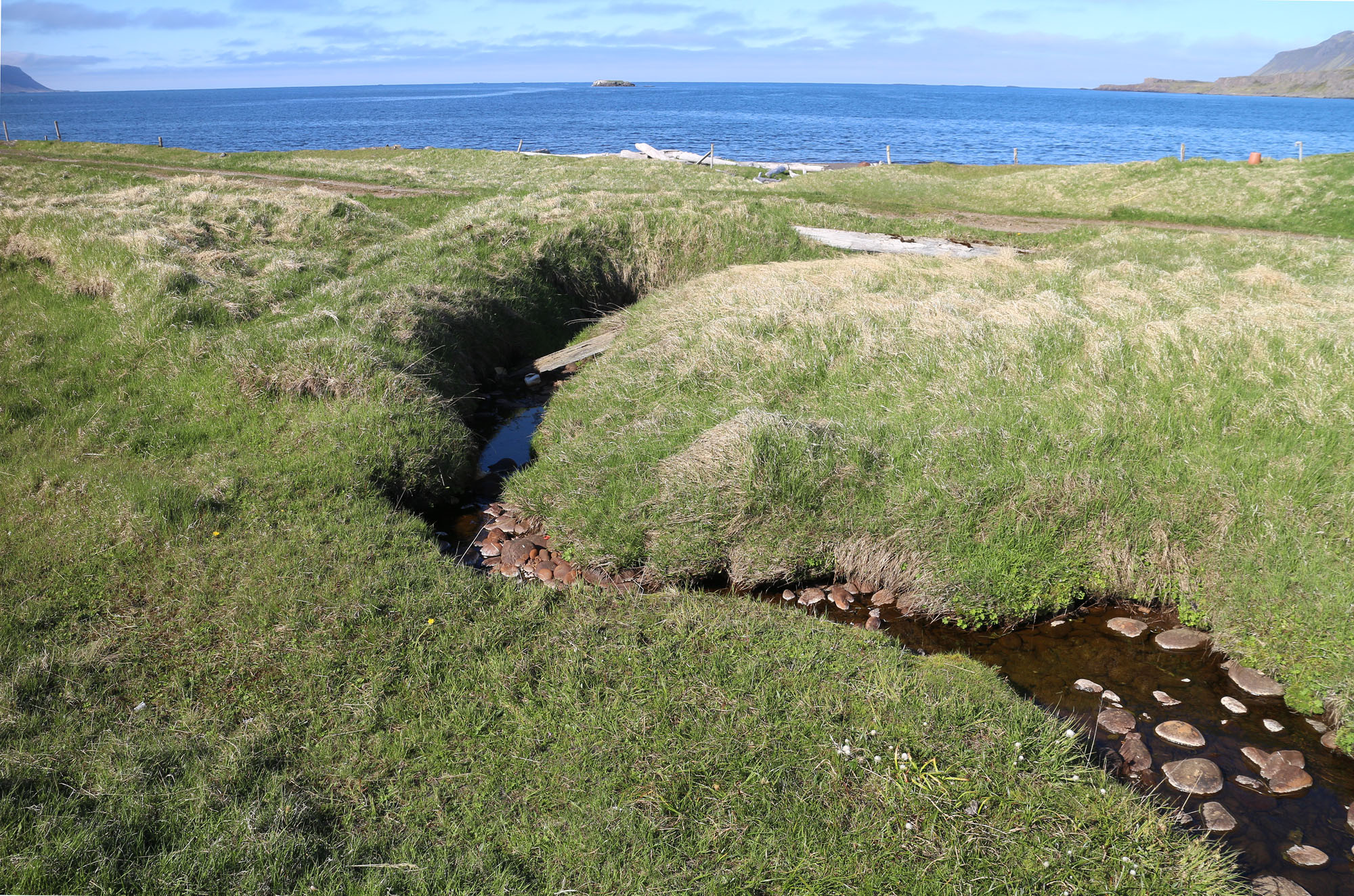
Ímyndaðu þér að þú liggir þar með lokuð augun á grasbala rétt ofan við fjöruna við hliðina á lækjarsprænu sem rennur þar til sjávar. Þú ert þar milli svefns og vöku, það er logn og sólin vermir skrokk og grundir. Lágstemmd en þung undiraldan lemur sandfjöruna fyrir neðan þig og þú heyrir í henni jafn vel neðan úr jörðinni sem ofan.
Nú stefnir allt í að þessi sveitasæla sé að hverfa á þessum dásamlega stað.
Það hefur væntanlega ekki farið fram hjá nokkrum manni að innlendir sem erlendir braskarar hafa gengið hart í því að fá að virkja Hvalá sem rennur í Ófeigsfjörð. Mikil andstaða er við þessi virkjanaáform. Hafa braskararnir því mútað fólki með ýmsum hætti s.s. með loforðum um innviðauppbyggingu ofl.
Ég ætla ekki það skrifa meira um þetta hér, en vísa á fréttir og blaðagreinar.
There are not many places left in Iceland where it is possible to have peace from traffic or feel as you are in clean unspoiled nature. But one of this places is in the northeast Iceland named Hornstrandir and Strandir.
But now, „business“ gangsters are planing to build a power plant in the river Hvalá that flows into the fjord, Ófeigsfjörður at Strandir.
Following recording was recorded in June 2015 below the old farm Ófeigsfjörður which will be just a typical noisy place in the future if the business gangsters are going to build the power plant just few kilometers north of the recording place.
Quality open headphones are recommended while listening at low to mid level, or in speakers at medium level.
(mp3 256kbps / 56Mb)
Recorder: Sound devices 788
Mics: Rode NT1a (NOS)
Pix: Canon EOS M
Recording location: 66.049968, -21.703009
Weather. Calm, sunny, about 14°C
For me nothing is as pleasant as laying in the grass on a warm summer day in good distance from human activity, looking at the sky and listen to the wind wipe the grass until I fall a sleep.
This is something I did the 30th of July 2017 when I decided to visit places I remembered as a child, almost 50 years ago. It was at my grandparents´ farmland, Efri-Brú, which they owned most of the last century.
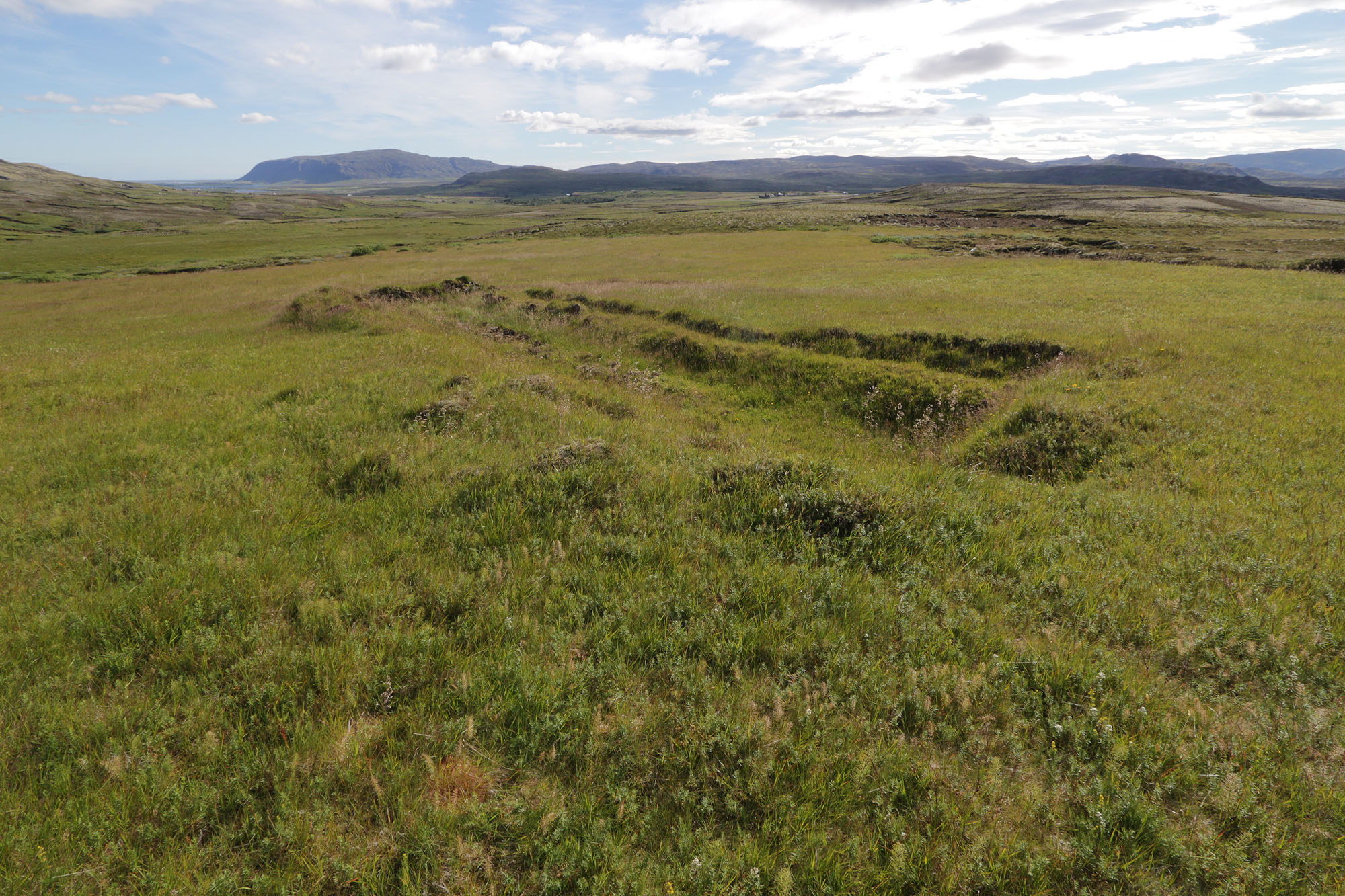
About 2 km northeast of the farm is a place named Hvítingshæðir. There is an old ruin of sheep shield, surrounded in grass field and remnants of old fence. This sheep shield in Hvítingshæðir was one of three or four sheep houses in distance from the main farm buildings. These sheep shields were usually built in places where it was easy to mow and keep hey for sheep during the winter months.
There is not much going on in this recording. Many decades have passed since farming was in the area and most birds are quiet this time of the day. So gust is playing the main role in the recording.
This was one the first recording I did with my parallel MKH8020/8040 AB setup in Rycote windshield. It was recorded on four channels with 50dB gain and HPF at 80Hz.
Quality open headphones are recommended while listening at low to mid level, or in speakers at low level.
It was very nice weather this evening. The downtown was almost overcrowded with people which was shopping or just walking around to feel and smell the atmosphere of Christmas.
It was calm so the town smelled strongly of cloves, toasted knead, spirit, red vine, beer, all kinds of perfume, tobacco and even weed…and what is never missing in Reykjavik, a smell of exhaust from traffic.This was perfect weather to catch the sound of the Christmas rush hour.
Just 30 second after I start the recording, I heard beautiful singing voices. There were six singers of female song group „Jólabjöllurnar“.
I placed my self around 4 meters from the singers. Behind me was the audience on their walk who stopped for a moment to listen. The heavy background noise is mostly from car traffic, as usual.
This recording is captured with DIY binaural microphone rig which I just finished to prepare several hours before the recording. It contains two matched pair of parallel Primo EM172 capsules, connected to LOM phantom power adapter (see pictures).
I spent two hours walking around recording this evening. I noticed some audible time error between left and right channel in 30-40° around the rig which means the rig needs some changes in the future. But the funny thing is this time error sounds like a perfect „sound effect“ in combination with this well trained singers.
This was recorded on Lækjatorg square in Reykjavik town center between 9 – 10 pm.
Quality open headphones are recommended while listening at mid level.
Lækjartorg á Þorláksmessu 2017
Það var ótrúlega gott veður þessa Þorláksmessu. Miðbærinn var líka troðfullur af fólki, sem liklega skiptist jafn milli Íslendinga og útlendinga sem voru að versla, sýna sig og sjá aðra.
Þar sem ég gekk austur Austurstræti og var var nýbúinn að ræsa upptökutækið þá mátti heyra fagran söng frá Lækjartorgi. Ég gekk á hljóðið og þar var þá sextett fagurra kvenna að syngja jölalög.
Ég mátti til með að ná þessum söng á upptökutækið og gerði það þar til yfir lauk.
(mp3 256kbps / 44Mb)
Recorder: Sound devices MixPre6
Mics: Primo EM172
Pix: Samsung Galaxy6




 HLJÓÐMYND - SOUNDIMAGE