Feeds:
Færslur
Athugasemdir

Posts Tagged ‘Golden Plover’

IMG_2200

I made the big mistake of formatting an HD disk with photos I took throughout 2023 and into the winter of 2024, but in my absolute stupidity I didn’t have a backup. So I always run into problems if I’m going to post audio from this time period here on this blog.
But I also take photos on my SLR camera which has a fairly large card so I have consciously allowed photos to be on the card precisely to save such accidents and losing photos.
I don’t actually have a lot of good audio recordings from this summer. Both because the weather was boring most of the summer and I had the flu most of the summer vacation.
But there are a few recordings that I think are interesting from this summer. Especially the ones I took in Steingrímsfjörður and around Drangsnes in western Iceland.
I had a few pictures on my SLR SD card that saved me from being able to put these recordings on the web.
This is part 2. But part 1 was recorded at midnight, before the sunlight hit the recording location. Here in part 2 the sun has risen. Just a minute before the recording started I had to move the microphones to a slightly more sheltered spot, because over the night the wind started to increase which unfortunately can still be heard in the recording.
The recording is „unprocessed“. Recorded at +50dB gain, normalized up to -7dB by adding +20dB in post, fade in and out and then converted to mp3.
The recording starts exactly at 4:00 in the morning on June 22, 2023 and ends just over half an hour later. After a high tide earlier in the night, the tide was already starting to recede. The seaweed on the shore was still wet, which makes a soft clicking and dripping sound, which can be heard differently well with different headphones. The birds are slightly quieter than earlier this night, but the soundscape is still magnificent.
There was several gull species, at last great black backed gull. arctic tern, common eider, whimbrel, European golden plover, red throated loon, common loon, arctic puffin and eurasian oystercatcher.
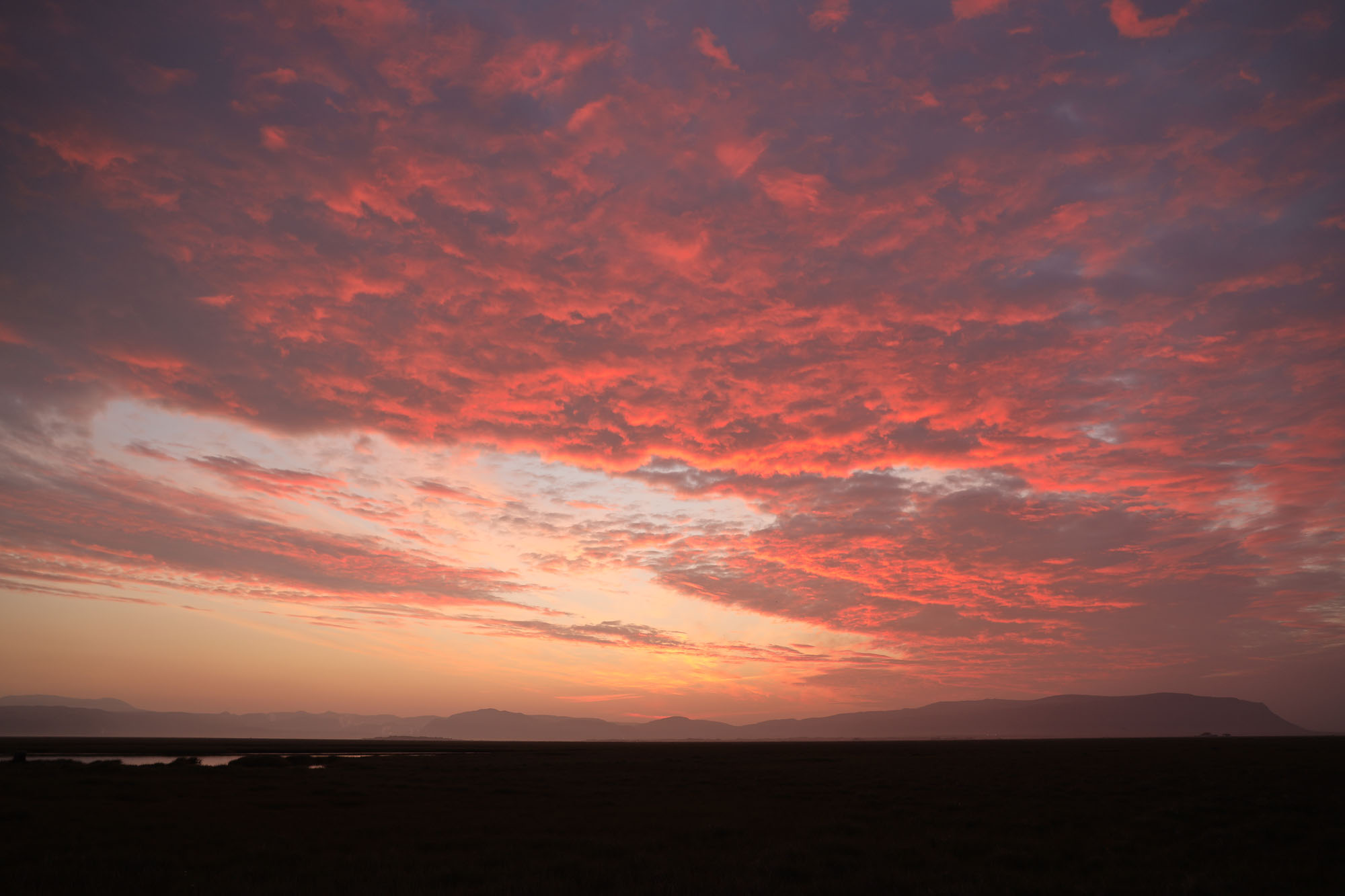
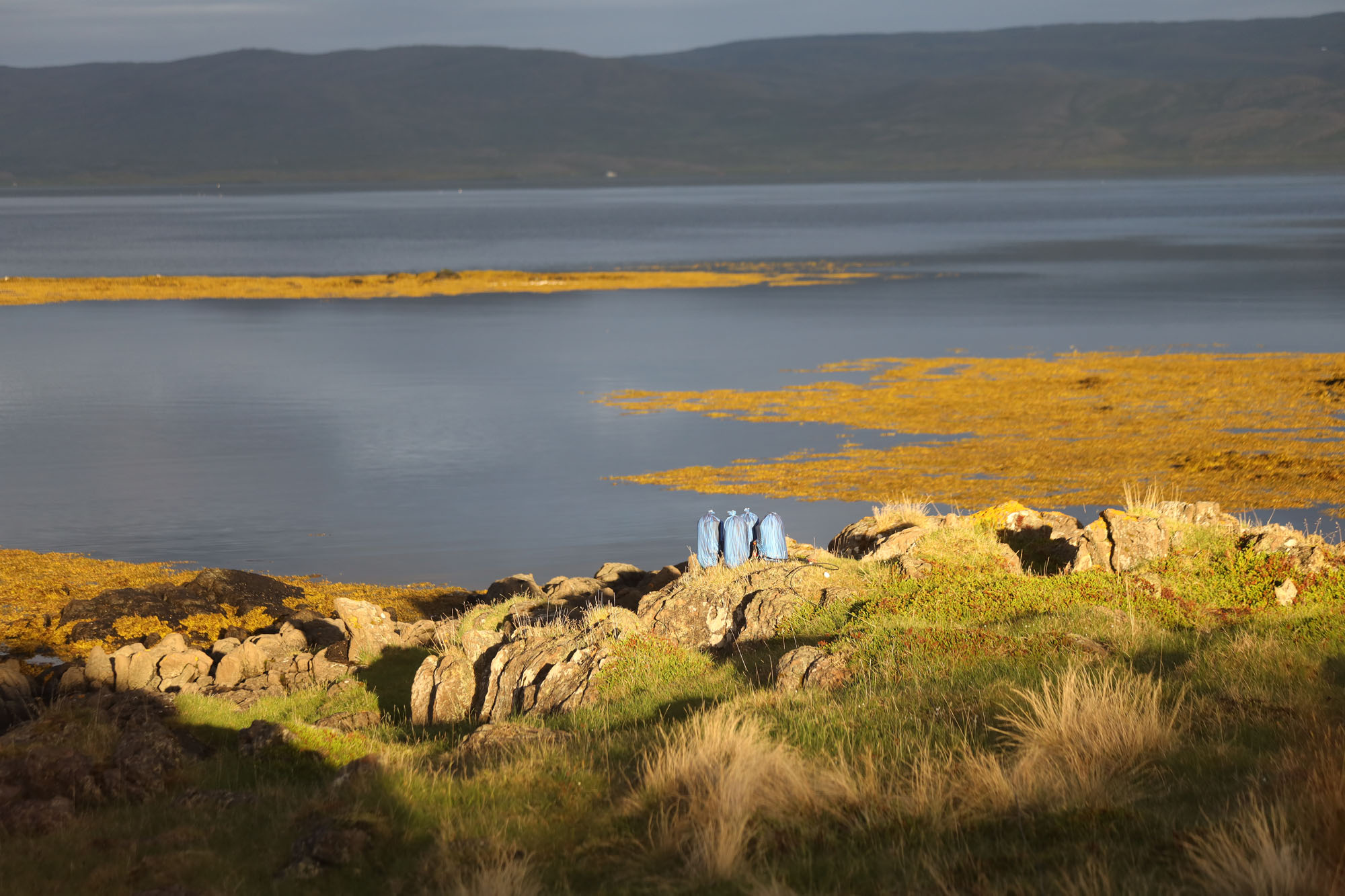
There you can hear me getting in and out of the car to take pictures. Including the accompanying picture. At least one truck can be heard from across the fjord. It can also be heard in small fishing boats at the beginning and end of the recording.
It is clearly a new day rising.
Quality open headphones are recommended while listening at low to mid volume.
If the media player doesn’t start to play, please reload this individual blog in a new tab or frame.

(mp3 256kbps / 64Mb)

Recorder: Sound Devices MixPre6 24/48
Mics: Lewitt LCT540s (IRT quad 90°/30cm)
Pix: Canon Eos R

Weather: Calm to 3m/sec, cloudy, about 7°C
Location: 65.692816, -21.558576
Read Full Post »

IMG_2200

I think I have annual recordings from the same place in the nature reserve in Flói in southwest Iceland almost since 2009. The reason is simple. It’s always interesting to follow the local acoustics from year to year. So I don’t have to spend a lot of time finding a location for the microphone. They stand in the same place unless something else disturbs it, e.g. high ground water level or something else that hasn’t yet happened to me. I go to the place hoping that there is no one in „my place“ in the parking lot where I can pull out my 75 meter 4ch long cable to the place where I have always recorded. I find a good ground for the microphones, get in the car, start recording and go to sleep.
I usually wake up when someone comes driving into the parking lot about 4-6 hours later.
I usually never listen to what I recorded, except when I need to look for something interesting to post on this audio blog like now.
It is well worth having a recording from Flói this month when 15 years have passed since this audio blog went online. Flói has followed this blog ever since I got my first HD recorder. It was then that the batteries suddenly lasted longer than 30 minutes, but it opened up a whole new world for me to record in nature.
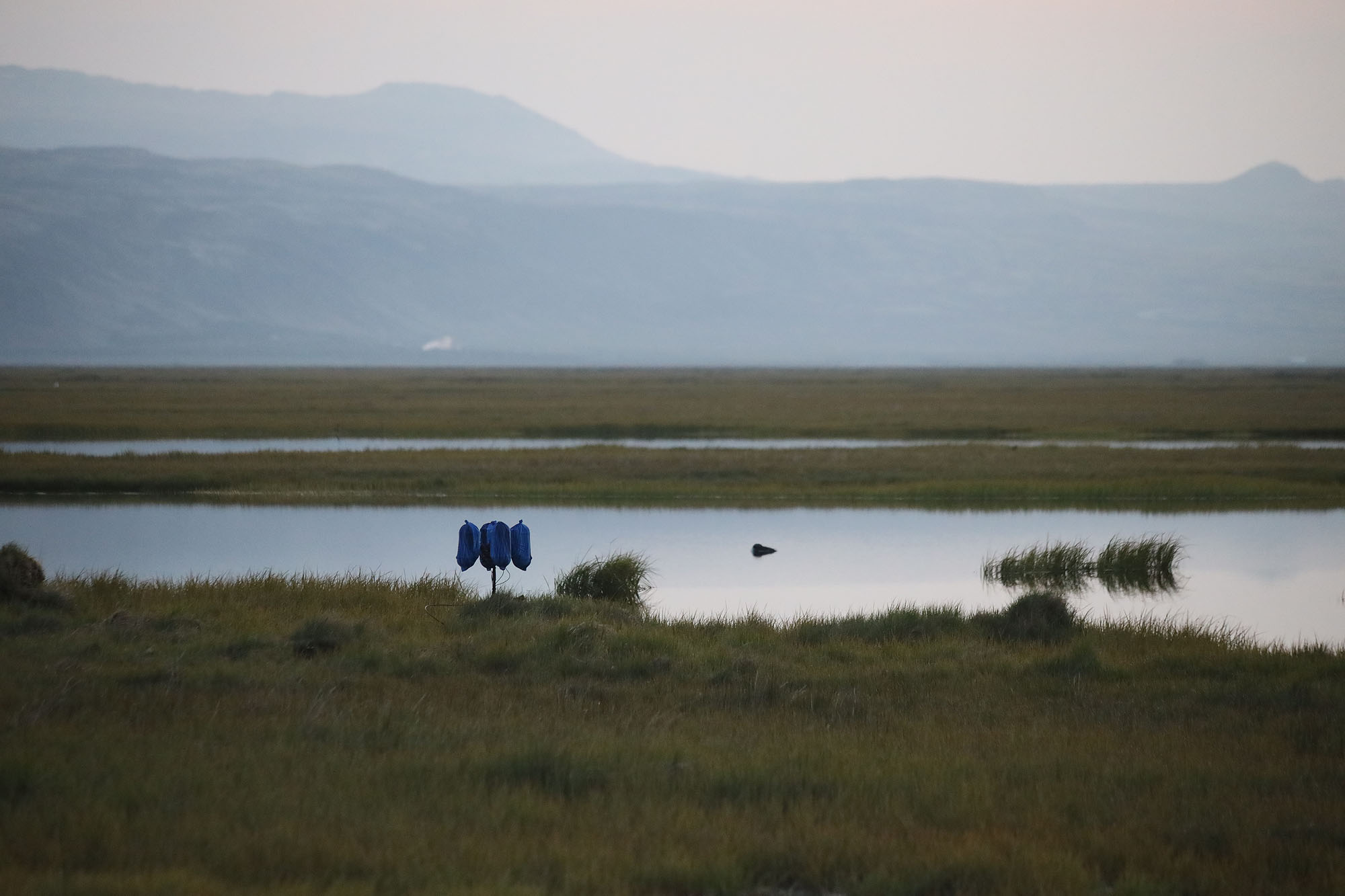
Here is an audio recording from June 13, 2023. The area was extremely wet after heavy rains. I positioned the microphones to be in close proximity to the Read necked phalarope. But maybe there wasn’t as much activity as I wanted. But instead you can hear various sounds that I am not quite sure where they are coming from. There are weak „clicks“ that can be heard e.g. for 1:30 min in this recording as well during the 30 minutes that the recording lasts.
As usual, there are many species of birds in Flói. Red-throated Loon. Red-necked Phalarope, Common Snipe, Golden Plover, Whimbrel, Common Eider and certainly other duck species as well. Common Redshank, White Wagtail, Winter Wren, Northern Wheatear, Common Redpoll, Snow Bunting, Swan and maybe other bird species that I cannot name.
Background noise is some traffic and surf from the south coast and air traffic.
You can hear it occasionally in the wind because I covered the wind shield with buff but not fur. Instead, you can hear much better in subtlety details.
This is an extremely low-key recording, except where you hear the Red-throated Loon. The recording was recorded with 50db gain (40Hz HPF), then the gain was further increased by +10dB in post-processing.
Quality open headphones are recommended while listening at low to mid volume.
If the media player doesn’t start to play, please reload this individual blog in a new tab or frame.

(mp3 256kbps / 64Mb)

Recorder: Sound devices MixPre6
Mics: Lewitt LCT540s (IRT cross 90°/30cm)
Pix: Canon EosR

Location: 63.900935, -21.191930
Weather: Cloudy, calm, about 5°C

Read Full Post »

IMG_2200

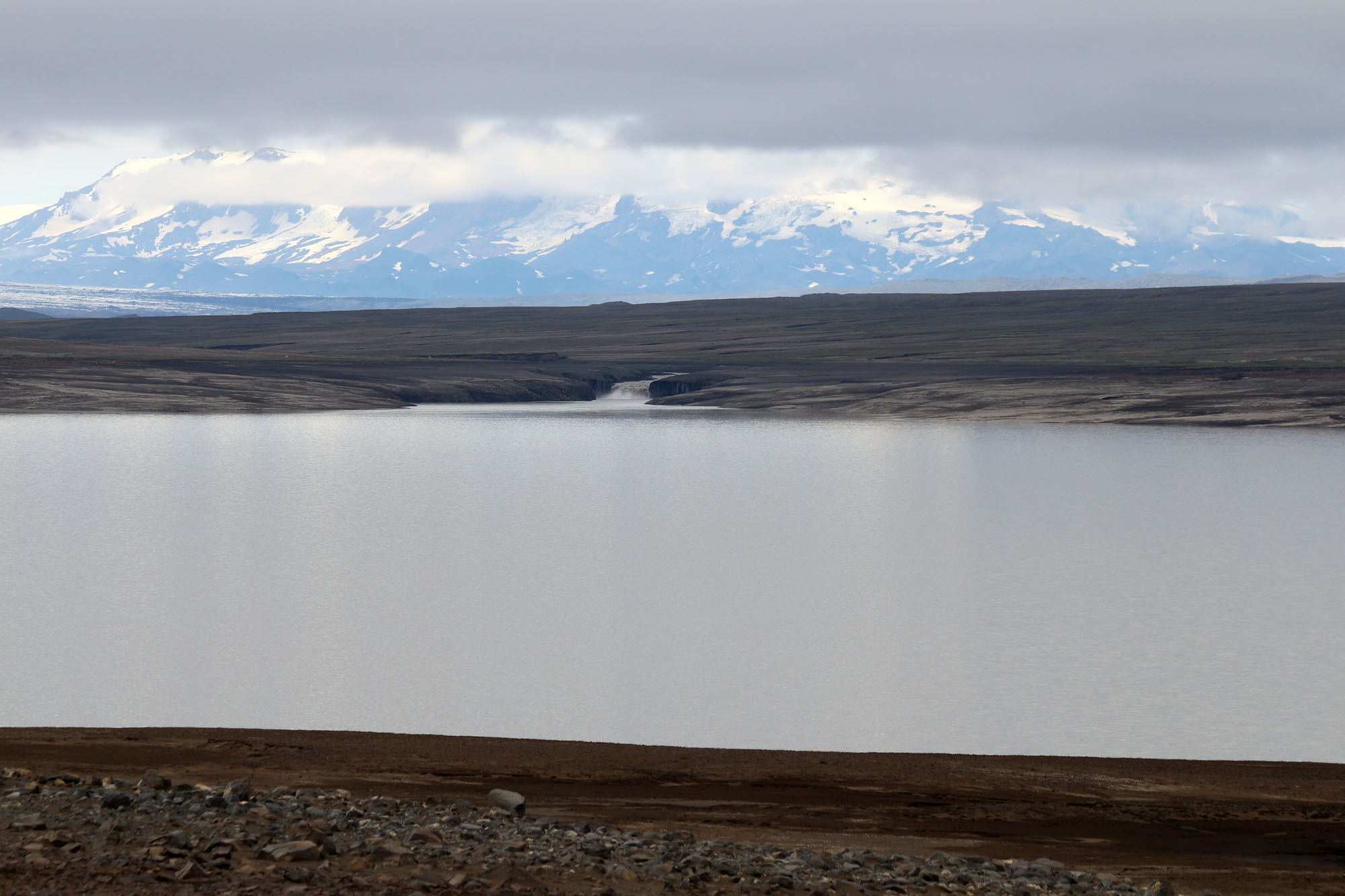
Early in July 2023 I spent one night at Sultártangalón lagoon recording in three locations.
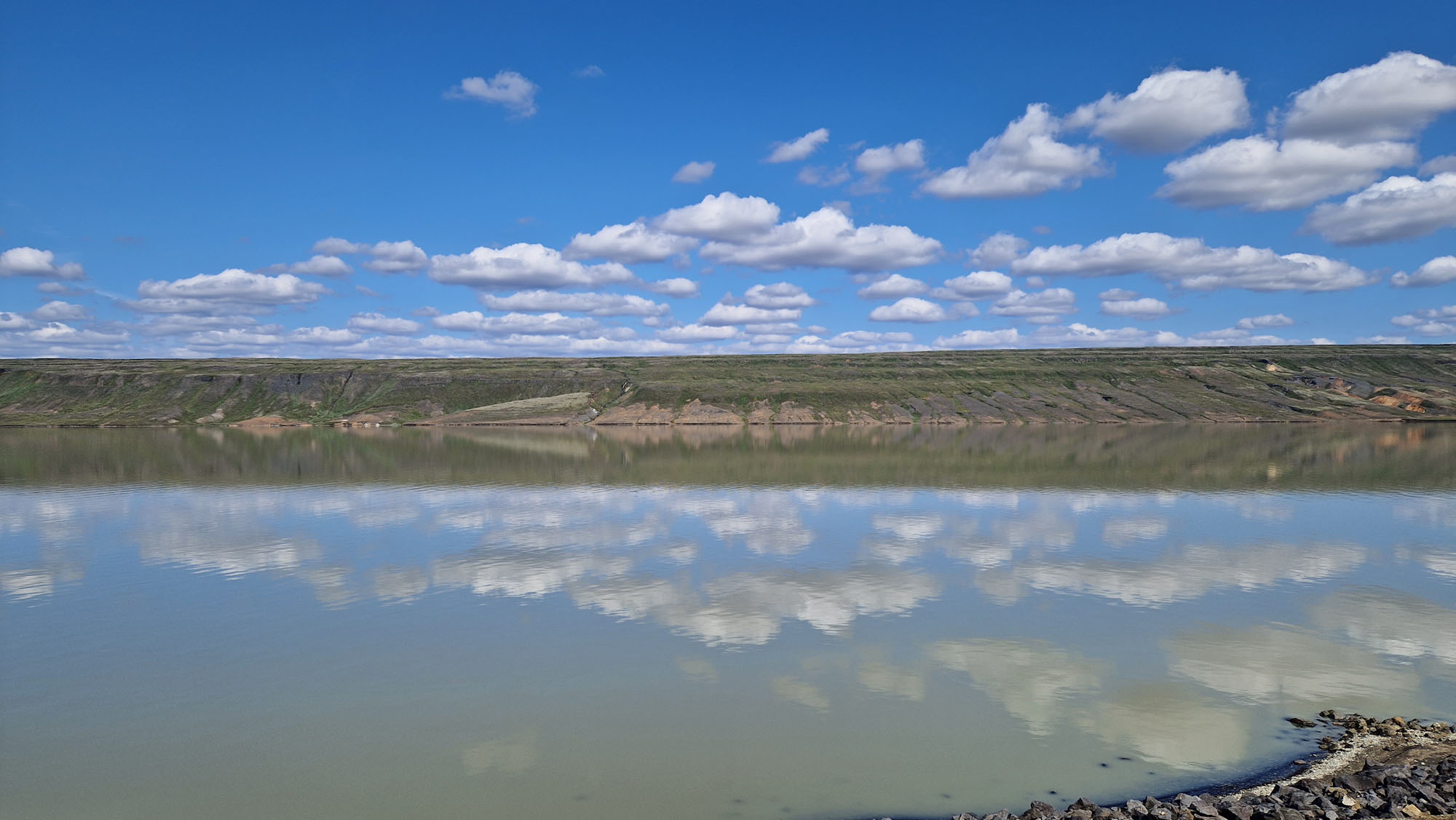
In the morning when I was leaving, it was sunny, calm and very hot, in the Icelandic way. The sight over the mirror smooth lagoon made me stop the car and enjoy the view. The recorders were ready and connected in the car, so I quickly set them up by the reservoir and took a short walk while they were recording.
The result was this. Typical Icelandic highland silence. Nothing interesting as an audio recording, but what caught my attention was the background noise of waterfalls and streams across the lagoon. This noise changed the EQ slowly in a variable thermal upstream due to the influence of the sun radiation.
Several bird species can be heard in this recording. These include Raven, Golden Plover, Dunlin, White Wagtail, Meadow Pipit and Red Throated Loon.
This was recorded with MKH8020/8040 in a fur wind shield, which was not the best choice, because the silence was considerable. Audio was recorded on MP6 with 50dB gain and in post-processing the gain was increased by another 20dB so they reached -10dBu.The MKH microphones were therefore not the most suitable for this moment. It would have been better if I had recorded with the LCT540s in IRT, to better capture all the small details all around.
To cancel out the loss of certain frequencies due to the fur wind shield, I raised the mid frequency by +2dB.
This is a rather sensitive recording. So I wasn’t using RX de-noise. But instead since nothing in the recording reaches frequencies higher than 8Khz, I lowered the EQ above 10Khz by a few dB to reduce the self noise in the microphones.
Quality open headphones are recommended while listening at low to mid volume.
If the media player doesn’t start to play, please reload this individual blog in a new tab or frame.

  (mp3 256kbps/56Mb)

Recorder: Sound Devices MixPre 6
Mics: Sennheiser MKH8020/8040 (Baffled AB)
Pix: Samsung S22

Location: 64.230420, -19.383488
Weather: Sunny, clear sky, calm, around 20°C

Read Full Post »

IMG_2200

Early last spring I was asked if I wanted to record a 24-hour long recording for Radio Art Zone.
It wasn’t a problem because I’m used to recording 8-14 hours of content whenever I can.
So I made two / three 24hrs recordings in total.  All recorded in similar locations on the 23rd-25th. April 2022 in the countryside.
I recorded on four channels with an IRT cross version and in two other locations with two channels in AB & NOS.
If I remember correctly, I sent the IRT recording to Radio art project. The AB recording is already audible on this soundblog, „The brook below Lambaklettur
The NOS recording was forgotten, until I found it last week.
It was recorded with Rode NT1 microphones and a Zoom F3 recorder.
This recording contains natural „silence“. When I talk about „silence“ I mean that most people would not hear anything with bare ears. Probably only the blood flow in their own body.
But it was not total silence when this recording started here below. The migratory birds had already started to flock to the country. It was also a drizzly rain and therefore quite humid all night while the recording took place. The fur on the windshield got quite wet and you can hear larger drops falling on the wind shield, on the tripod and on the ground around.
This recording starts around the time when birds start to be heard in the early morning. The windshield is already very wet, so it must have adversely affected the recording quality. But surprisingly it is not heard that the NT1 is cracking due to air humidity.
The Zoom F3 had gain set at „256“ and HPF at 40Hz. I’m used to recording with 47 to 50dB gain for such silent recordings. Gain „256“ is therefore not telling me anything, but having worked on this recording, 256 seems to be something similar to 50 to 55 dB gain. This actually needs further consideration because It can be an important issue. The reason why I don’t record with a gain higher than 50dB on the Sound Devices or Sonosax recorders is to prevent additional „amplify noise“ that I feel increases if the gain is over +50dB. It is therefore  always better to increase the gain digitally“ in post.
I have a hard time realizing this with the F3 device. The noise seems to go hand in hand with different gain. No matter what the gain is. Whether I should generally record with „256“ gain or „128“, when recording quiet soundscapes needs further testing. I find the noise a bit more in this recording than if I had recorded with the Sonosax for example, but that noise I hear and see on spectrograms could also be a sound from the drizzle, or raindrops when they fall to the ground. It can therefore be assumed that there is some natural noise in that recording. Therefore it is not entirely possible to blame F3 or NT1 for all the noise that can be heard.
The first sound file is over 30 minutes long which has got a gentle noise reduction and then below 5 minutes of original recording for comparison (without NR). Both recordings are normalized up to -10dB. The original files from the recorder had a -38dB peak value which is normal for „quiet“ recording like this.
Bird species in this recording is mainly common snipe, whooper swan, black tailed godwit, redwings, whimbrel, golden plover and eurasian wigeon.  Most of them are in the distance in this recording.
I will post the continuation of this recording later. Then the number of birds increases and they come closer to the microphones.
Quality open headphones are recommended while listening at low volume.
If the media player doesn’t start to play, please reload this individual blog in a new tab or frame.

  (mp3 256kbps / 62Mb)

Original recording from Zoom F3, only normalized up to -10dB & downgrade to mp3

  (mp3  256kbps / 9,4Mb)

Recorder: Zoom F3
Mics: Rode NT1 (NOS)
Pics: Canon EOS R

Location:  64.673258, -21.630001
Weather: Drizzle rain, about 4°C

Read Full Post »

IMG_2200

It has been several years since I published a recording from Flói nature reserve. The reason is more or less because of foul weather in recent years when I have had the opportunity to record there.
It was no exception last summer from late April to mid July. It was cold, windy and wet most of the time which is actually the high season for birdsong recording.
I went there on the 3rd of July 2021 and recorded overnight. The weather was calm in the beginning but the wind increased over the night. I was also struggling with increased sea tide and therefore a surf noise from the coast line, actually at the same time when the birds were most active during the dawn.
My mics were Lewitt LCT540s in IRT cross setup. Most of the bird’s activity was in front of channel 1&2. Most „silence“ was in front of channel 2&3 and most of the surf and traffic noise was at channel 4&1.
It surprised me how much traffic was there the whole night. There was almost constant rumble in the air during the ten hours I was recording, except between four and five o’clock in the morning. This noise was much more audible than I remember in my earlier recordings. The reason could be found in different mic setup and mics. Ten years ago I used to use NT1a in NOS or AB, pointing towards the open field and keeping the nearest road and coastline behind. I have also used MKH20 in AB which is less sensitive for these details than large capsule mics.
It takes time to search in this 10 hour long recording for some nice sounding 30 minutes moments. Listening to the whole four channels it starts with heavy traffic noise in all channels, then surf noise. Then traffic noise again until the wind and the sun makes the air so unstable close to noon, both traffic noise and bird activity almost disappear in the wind noise.
But with an IRT cross rig I have many options. I can turn off the channel or channels which are disturbing for the soundscape I am looking for.
The recording below is a very good example of this. Instead of using all four channels and mixing them to stereo, I use only channel 2&3 (NOS 90°/30cm) to avoid the surf noise. The time when it starts is about 04:15 so there is almost no traffic noise, but anyway, the recording starts and ends with some engine noise in the distance.
Quality open headphones are recommended while listening at mid or low level.
If the media player doesn’t start to play, please reload this individual blog in a new tab or frame.

Recorder: Sound devices MixPre6
Mics: Lewitt LCT540s,  NOS 30cm/90°
Pix: Canon EOS R

Location: 63.900944, -21.191958
Weather: Calm to breeze, partly cloudy, ca 5-10°C

Read Full Post »

IMG_2200

There is a place near Fjallsjökull glacier I have tried to record several times in recent years. But I´ve never been happy with the result.  Mainly because of noisy traffic from road no.1 and/or surf noise from Breiðamerkurfjara beach or because of weather.
But COVID19 gave me an wonderful opportunity to record this place without tourist traffic in June 2020.
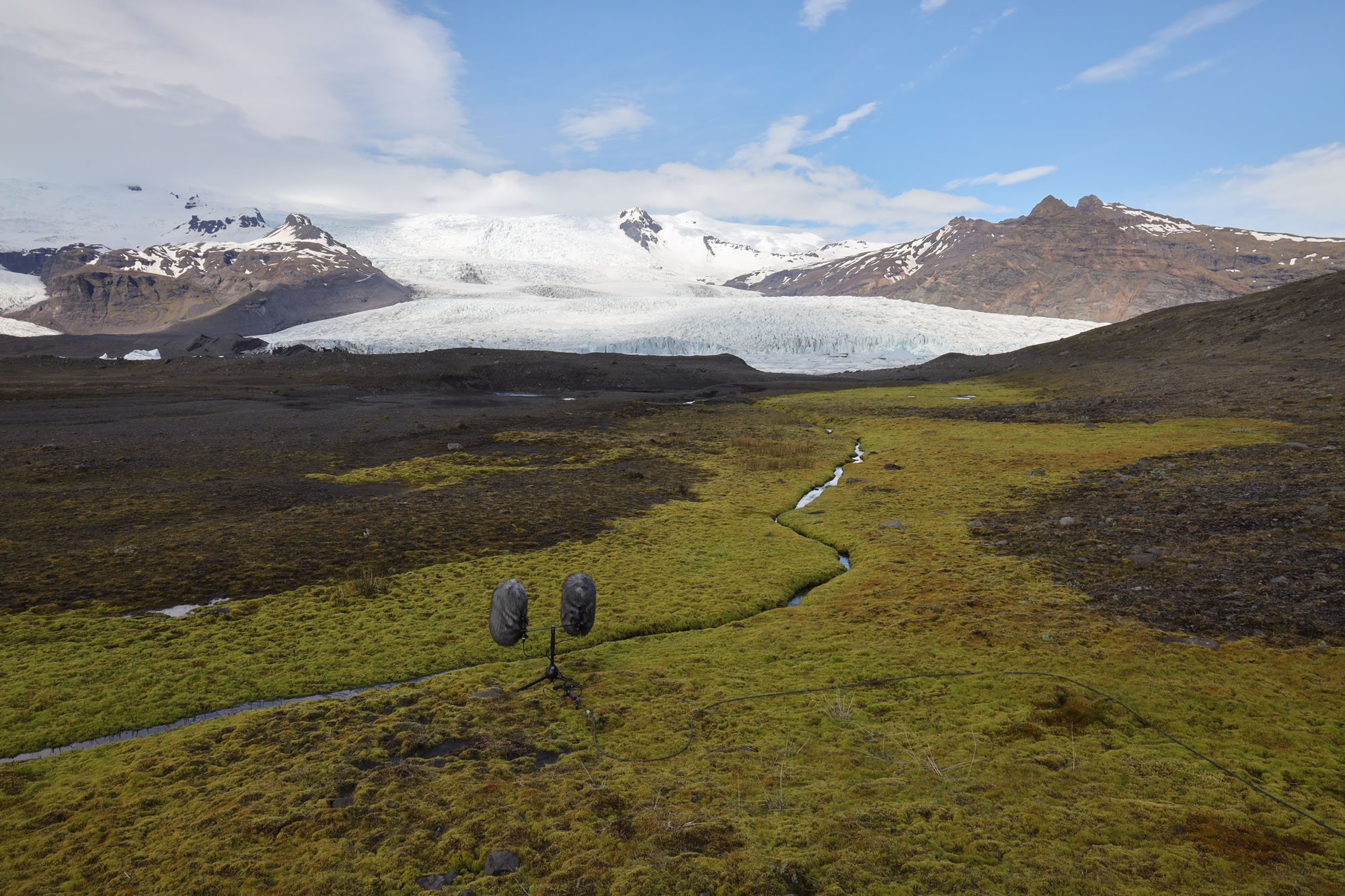
This place is a small glacial corrie south of Fjallsjökull glacier. It is a small, wet area, with several fresh water springs. Arctic flora brings lots of birds to this place so the soundscape can be very interesting with a rumbling glacier in the background.
This is a part of several hours long recording. The time is around 5 o’clock in the morning. Flock of noisy Barnacle geese has already landed not far away from the microphones. Through the whole recording these Barnacle geese come closer and closer to the microphones, so be careful, in the end they get loud.  Early in the recording two Whimbrels sing an interestingly long „love song“. Other birds are audible too, like Golden plover, Dunlin, Rock Ptarmigan and Red Throated Diver.
Once, about 2km away, a big piece of ice breaks off the glacier into the lagoon with noisy consequences.
Background noise is mainly a surf from the ocean behind the microphones, about 5 km away.
Quality open headphones are recommended while listening at low to mid level, or in speakers at low level.

(mp3 256kbps / 62Mb)

If the media player doesn’t start to play, please reload this individual blog in new tab or frame

Recorder: Sound devices MixPre6
Mics. Lewitt LCT540s (NOS setup)
Pix: Canon EOS-R

Weather: Calm, Cloudy, about 4°C
Location: 64.010735, -16.391960

Read Full Post »

IMG_2200

This following recording was made between 03:00 and  04:00, It is a part of seven hours long recording between 02:00 and 09:00 which I did in Skálholt, south Iceland 10th of July.
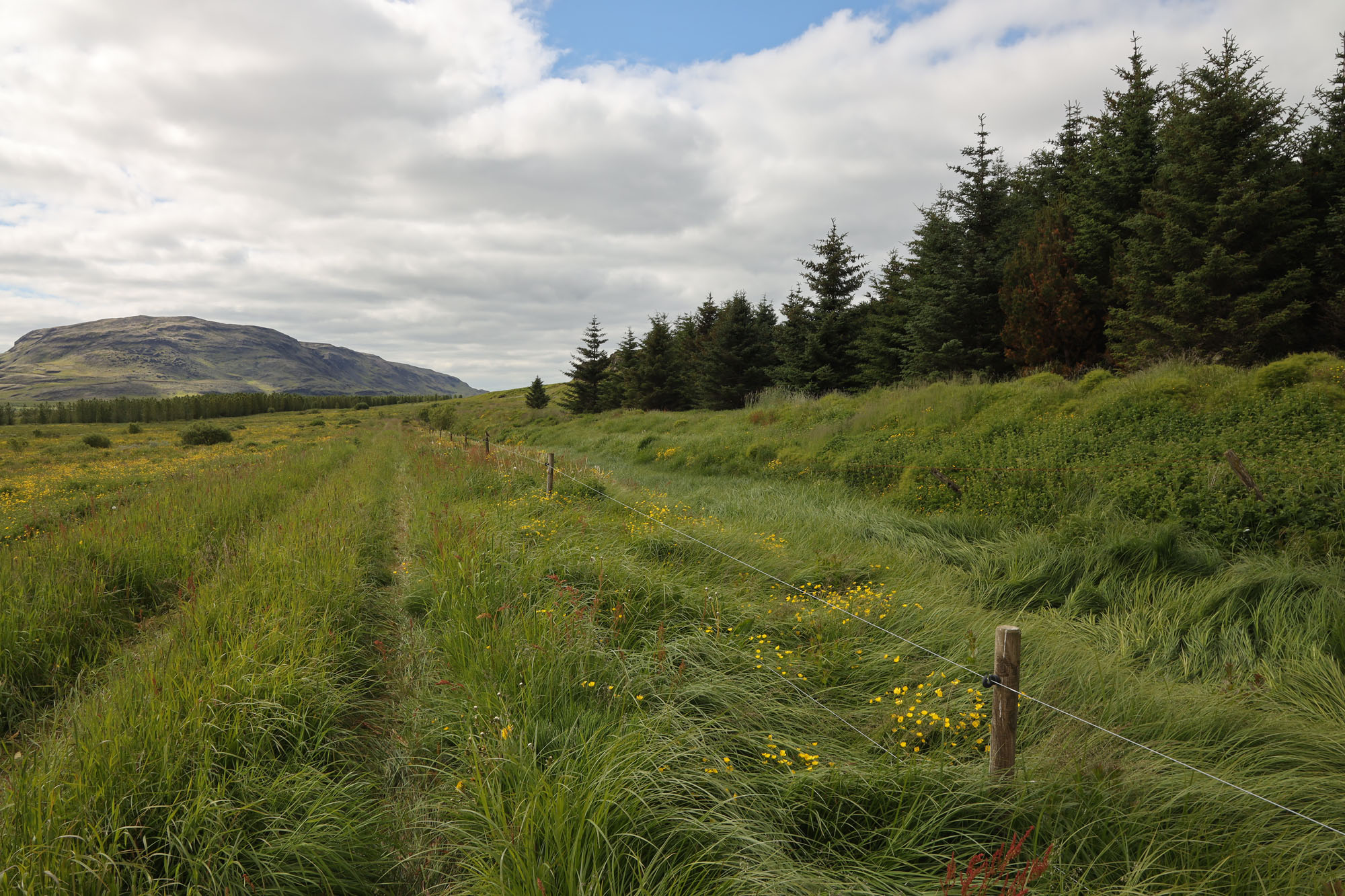
The grass was tall so the microphones were almost hidden in the grass. Lots of birds were in this grass searching for food and some of them came close to the microphones.
This is a typical soundscape of silence in a countryside which is not disturbed by traffic or by other engine noise.
Imagen you self standing in a grassland.  Front of you is a wide open wetland field.  Behind you is a  small hill with tall trees  which make a reflection of some bird calls. Two rivers are in the distance with flocks of whooper swans. The birds are all around you but mostly quiet and busy searching for flies and other insects in the grass all around you.
The recording contains many birds. Like Common Snipe, Golden Plover, Whimbrel, Raven, Common Redshank, Black Tailed Godwit, White Wagtail, Black headed Gull, Rooster, Winter Wren, Northern Wheatear, Snow Bunting, Rock Ptarmigan, Common Starling, Redwing, Whooper Swan, Eurasian Oystercatcher and probably other species.
This recording was made with four Lewitt LCT540s microphones in IRT cross. All capsules are 90° & 30cm apart which was in post mixed to two 180° stereo.
This recording is highly gained with a wide dynamic range so keep it in mind, some moments can be loud
Quality open headphones are recommended while listening at low to mid level, or in speakers at low level.

This recording is my contribution for the world listening day 18th of July 2020

  (mp3 256kbps / 60Mb)
If the media player doesn’t start to play, please reload this individual blog in new tab or frame

Recorder: MixPre6
Mics: Lewitt LCT540s (IRT cross 90¨/30cm)
Pix: Canon EOS R

Location: 64.121864, -20.534631
Weather: Calm, cloudy, around 12°C

Read Full Post »

IMG_2200

After a dark winter with an awful weather nothing is as pleasant when migrant birds arrive to the country in the spring. Most birds arrive in April and May, and few species in Mars and June. So in mid May the air is loaded with birds song. What amazes me always is the fact that many of these birds are coming far distances from hot claimed continents like Africa and when they arrive they still have the power to fly around and sing almost 24/7 in several weeks.
It was no exception to this on May 12, 2019 when I arrived at Stafholtstungur in SW of Iceland  with my recording gear. Lot of snow was still in the mountains and the weather was cold but dry.
There are many bird species in this recording. Common Snipe, Golden Plover, Whimbrel, Common Redshank, Black Taled Godwit, White Wagtail, Winter Wren, Northern Wheatrxear, Snow Bunting, Rock Ptarmigan, Common Starling, Redwing, Great Northern Diver, Read Throated Diver, Whooper Swan, Graylag Goose and probably other species too.
This is a part of 9 hour recording I record over night with four Lewitt LCT540s microphones in IRT cross setup.   
Even though this part was recorded early morning, between 3:00 & 3:30, the recording is disturbed by human traffic in air and on ground. Wind noise which is usually difficult to avoid are audible in some moments. 
I do not strictly follow the rules about the IRT setup. I have 30cm / 90° between all capsules.
Counting clockwise normal arrangement for the channels are 1-2-3-4  to  L-R & Rs-Ls. But I pair these four channels L-R-L-R into stereo. This allows me to record 360° soundscape with four separated microphones without exactly noticing any time errors.
At the same time I also have four stereo recordings into individual directions which can be useful in some circumstances.
The problem with this „IRT stereo mix“ is that I can´t locate the direction of the sound source. But if I need that information I can always get it in the original recording file. 
In this recording Ch1 is facing to north, Ch2 to east, Ch3 to south and Ch 4 to west
This is a high gained recording. Recorder with 50dB gain, plus 24dB in post, close to be normalized (-3dB). So this is a „quiet“ recording even though it seems to be loud.. Quality open headphones are recommended while listening at low to mid level, or in speakers at low level.

(mp3 256kbps / 62Mb)
If the media player doesn’t start to play, please reload this individual blog in new tab or frame

Recorder: Sound Devices MixPre6
Mics: Lewitt LCT540S (IRT cross arrangement)
Pics: Canon EOS-M
Location: 64.673439, -21.628673
Weather: Calm to light gust, Cloudy  about 2°C 

Read Full Post »

IMG_2200

Natural silence is my favorite recording material, mainly because now a days it is so difficult to find it and it gets more difficult every year. I have been interested for salience in many years, or since I discovered it in my cycling trip all over Icelandic’s highlands about three decades ago. It was before the tourist boom and before Icelanders started to travel in their own country. So I was sometimes alone for many days in the desert. This moments in deep silence have inspired me so much it has shaped my life for lifetime.
One of this quiet places in Iceland was north of Vatnajökull glacier.
Shortly after the millennium, the traffic in this area increased a lot, especially because the Icelandic government had planed to build the biggest dam in Europe (Kárahnjúkastífla dam)  to make electricity for one ALCOA aluminum smelter in Reyðarfjörður, east of Iceland.
All that project ended as a huge natural disaster, which also split the people´s community in Iceland into two groups with and against this project. More information about this disaster can be found on Saving Iceland´s website.
Last time I visited this area was early summer 2018, I spent a night in Vesturöræfi on a place named Kofaalda.
I remembered my first thought when I sat up the recording gear. I was going to waste gigabytes for nothing because I heard nothing. Totally nothing. Well, there were some birds in distance …and yes, on the left side, behind hill about 2 km away there was the river Sauðá and on the right side a waterfall in Kringislá river about 4-5 km away.
I started recording.
It was not until last summer when I got opportunity to make a noise reduction on this recording, I noticed, after about 90dB gain this silence was rich of sound.
Most of this night I was struggling with rumble by gust. But between 5 and 6 o´clock the wind went down and something unexpected happened above end near the microphone.
Several bird species are in this recording: Dunlin, Golden plover, Pink-footed goose, Purple sandpiper, Common ringed plover, Snow bunting and Arctic skua.
Quality open headphones are recommended while listening at low to mid level, or in speakers at low level.
If you have a problem to play recordings in this blog try to open each blog-post in new frame or tab

( mp3 256kbps / 48Mb )
If the media player doesn’t start to play, please reload this individual blog in new tab or frame

Recorder. MixPre6
Mics: Sennheiser MKH20  (AB40 setup laying on the ground)
Pix. Canon EOS-M50. See pictures of the landscape which was drowned by the bloody Kárahnjúkar dam project. „Lost landscape“ Part 1 & Part 2  and more pictures „Cycling trip to east fjords 2006“ Part 1 & Part 2
Location: 64.833417, -15.848694
Weather: Light gust, Calm, cloudy about 3°C

Read Full Post »

IMG_2200

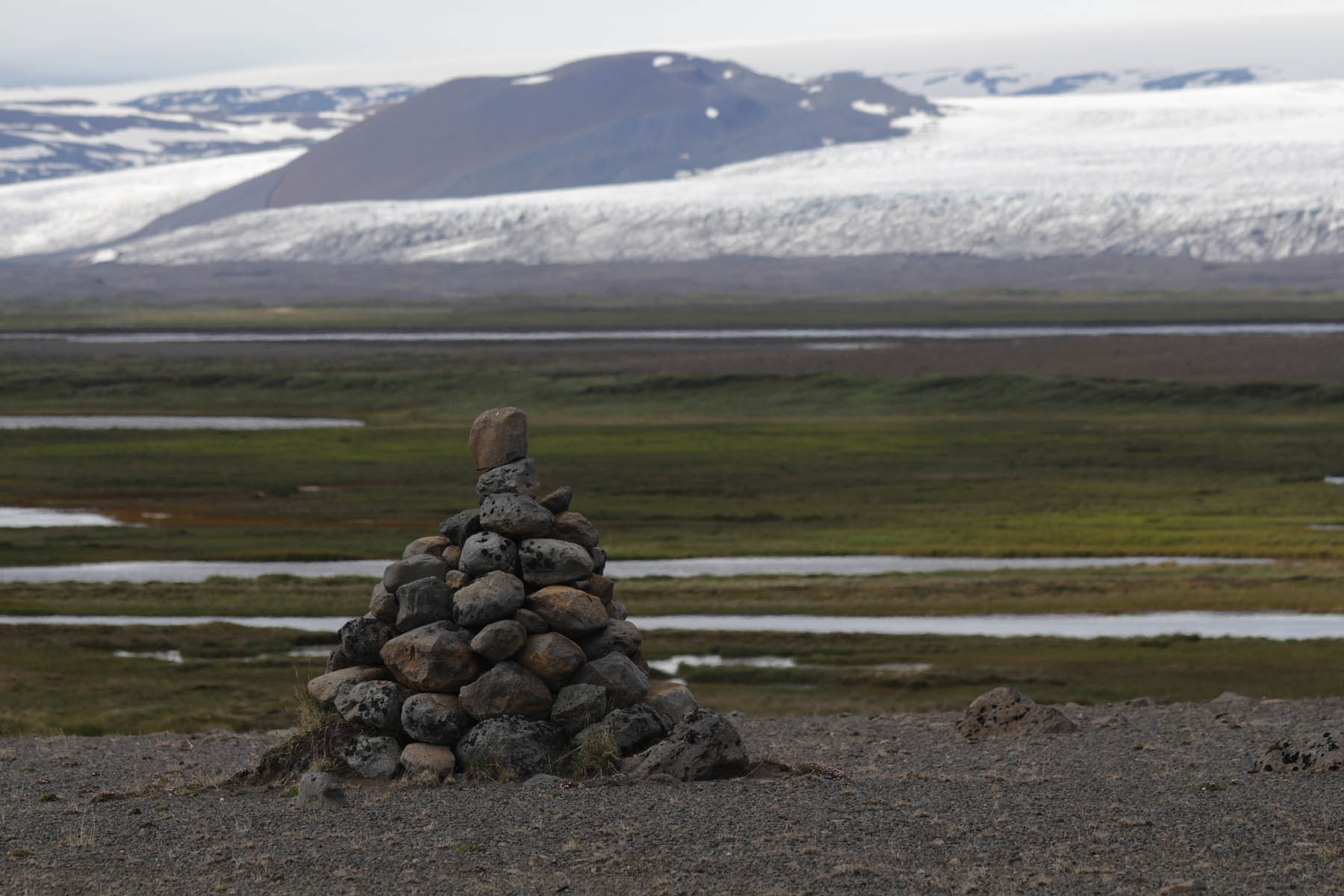
I spend almost 4 days late June 2017 recording in Þjórsárver area, which is a tundra southeast of Hofsjökull glacier. It was shortly after the road administrator open the Sprengisandur route across the highland, so there was still not much traffic. It was very early this summer so it was possible for me to record birds activity in nests.
When I arrived at Eyvindakofaver I saw an Arctic fox sneaking around a stone cairns and an angry Snow Bunting flying around. It was a clear message for something interesting to record.
The weather was boring for recording. It was cloudy, the temperature about 4°C and the wind was SW, 5-10 m/sec. But the stone cairn was a suitable cover for the microphones. So I put up my gear and started recording just before midnight and then went to sleep.
At 3:40 the wind suddenly went down for about 30 minutes which was the only minutes with calm weather this four days in the area. Calm weather means normally better detail recording for the birds’ activity and deeper listening to far distance sounds.
Usually Snow Bunting lay eggs two times during the summer so this was likely the previous nesting time.
It is necessary to listen to the whole recording but suddenly something happens in the nest which we humans can guess was probably a brutal rape or other domestic violence.
If you think this was something else, feel free and leave a comment below.
Quality open headphones are recommended while listening in silence at low level, or in speakers at low level.

(256 kbps / 59,4Mb)

Recorder: Sound devices MixPre6
Mics: Sennheiser MKH20 NOS
Pics: Canon EOS-M
Weather. Cloudy, around +3°C, SW, 2m/s
Location: 64.613944, -18.575462

Read Full Post »

Older Posts »