Feeds:
Færslur
Athugasemdir

Posts Tagged ‘Lewitt LCT540s’

IMG_2200

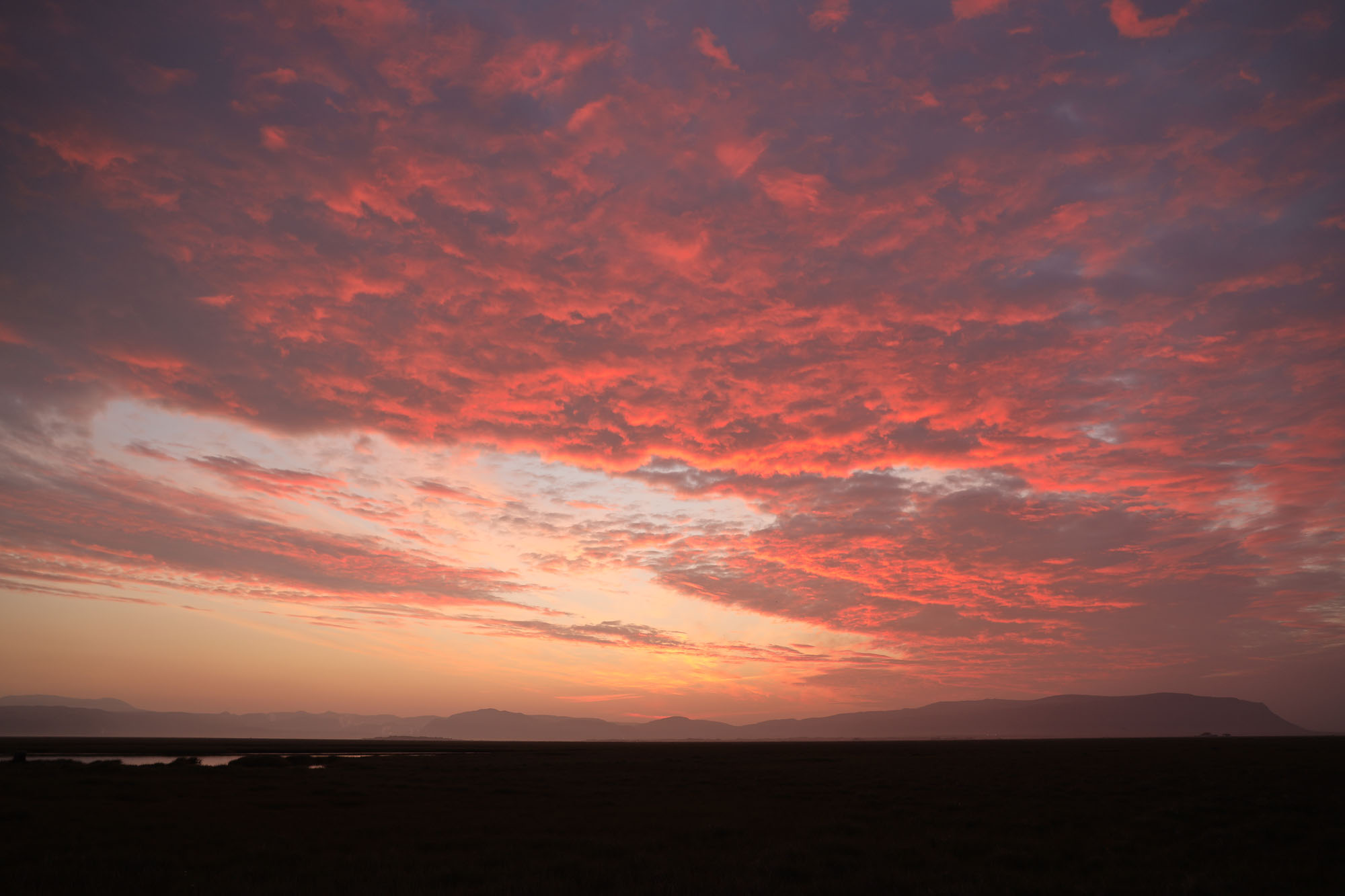
Here is a recording that came as a surprise after I put it in Spectrogram, because I was sure that I had not recorded anything special.
Earlier the evening before the recording started, a lot of wind had been forecast for later that night. So I was not spreading recording equipment around me as I would have liked in this wonderful and secret place in the highlands.
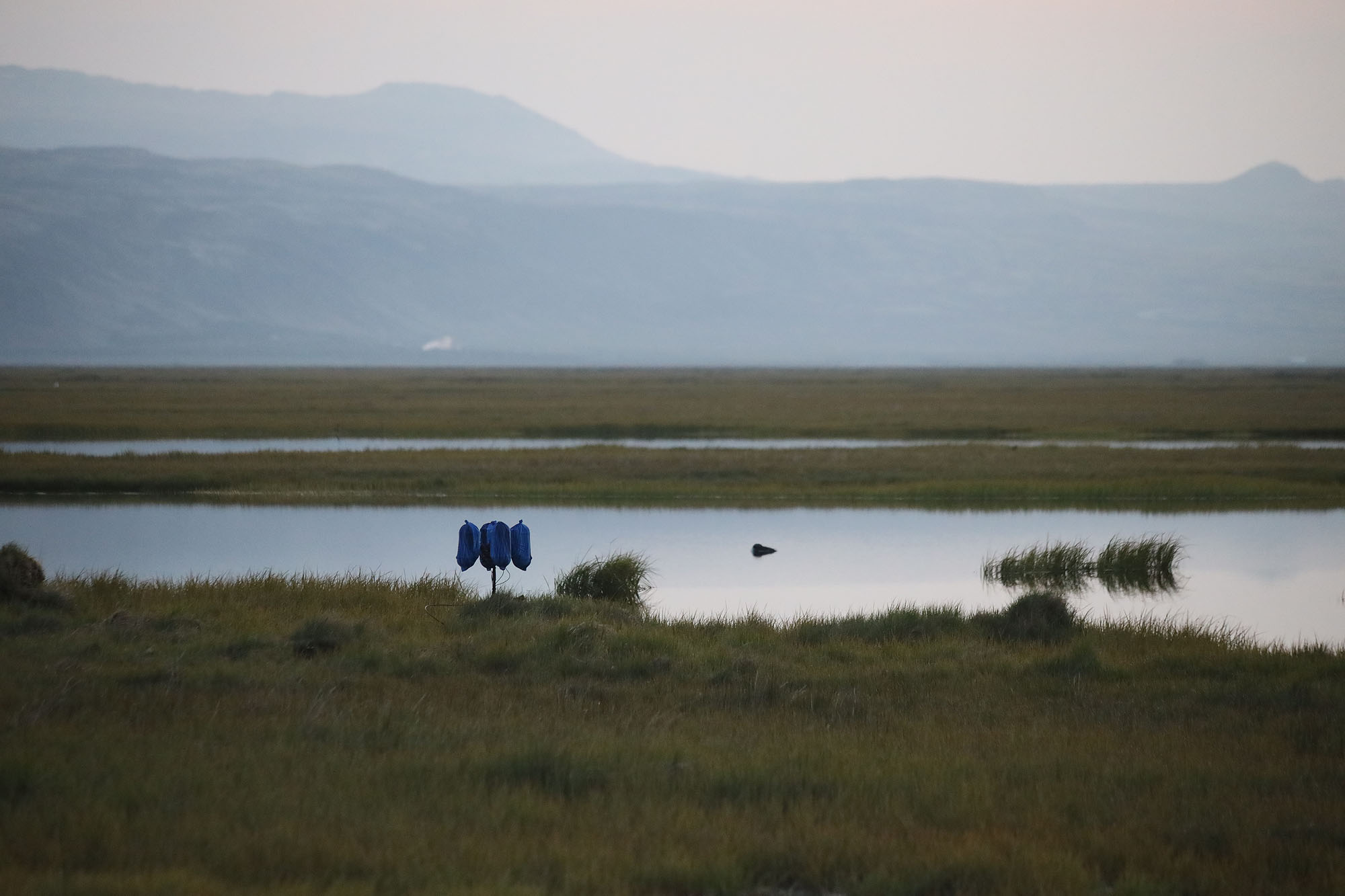
However, I decided to use Lewitt LCT540s in an IRT cross in a sheltered place from the coming storm. Two of the four microphones were pointed as much as possible into the ground, while the other two were allowed to point out into an open area. The recording seemed to only sound interesting in the wind that was present when I started the recording. The entire time I had been at this place in the highlands, I had not heard birds or any other life. Only in the wind and the flow of water in the nearby water sources.
But later that night while I was sleeping, a completely calm weather came that seemed to awaken a lot of birdlife. Birds that I had neither seen nor heard earlier the days before.
However, I never noticed this peaceful weather that night or this bird song. I just went to sleep in the breeze and woke up in a storm. It was therefore quite amusing to discover that I had managed to record the birdsong even though the microphones were placed in the wrong place for such a thing. It was first and foremost the microphones facing the ground that captured the most bird song. Those facing out into the open mainly recorded the behavior of Red necked phalarope which were at a considerable distance and goose in far distance.
To be honest, considering the placement of the microphones, this is a surprisingly good recording. This can probably be attributed to these excellent Lewitt microphones, also because they were not very visible to the birds that are best heard because they do not emit warning sounds. But if I had worn the microphones in something other than fur and been positioned closer to where the birds were, I would have achieved incredibly clear recordings in the most subtle way. In addition, very distant sounds would have become more clear and focused. But it is always difficult to be prepared for such weather conditions that it is possible to be without fur in Iceland when such times are perhaps 6-12 hours a month.
You can hear in the entire recording running water, also a kind of rumbling from running water that I assume could be a stream of spring water below the ground. But in this area there are huge water sources that could probably serve a city of millions with fresh water. The sound was recorded at +50dB gain and increased by +20dB in post up to -10dB. No RX noise reduction, mainly because I have never been satisfied with the result when I have used the LCT540. But EQ was used. Sharply pulled down below 50hz and above 10Khz, mainly to bring down unnecessary rumble and white noise from the equipment.
Quality open headphones are recommended while listening at low to mid volume.
If the media player doesn’t start to play, please reload this individual blog in a new tab or frame.

(mp3 265kbps / 66Mb)

Recorder: Sound Devices MixPre6
Mics: Lewitt LCT540s (IRT cross setup)
Pix: Samsung S22

Weather: Calm cloudy, about 7°C
Location. Secret place on the Icelandic highland
Read Full Post »

IMG_2200

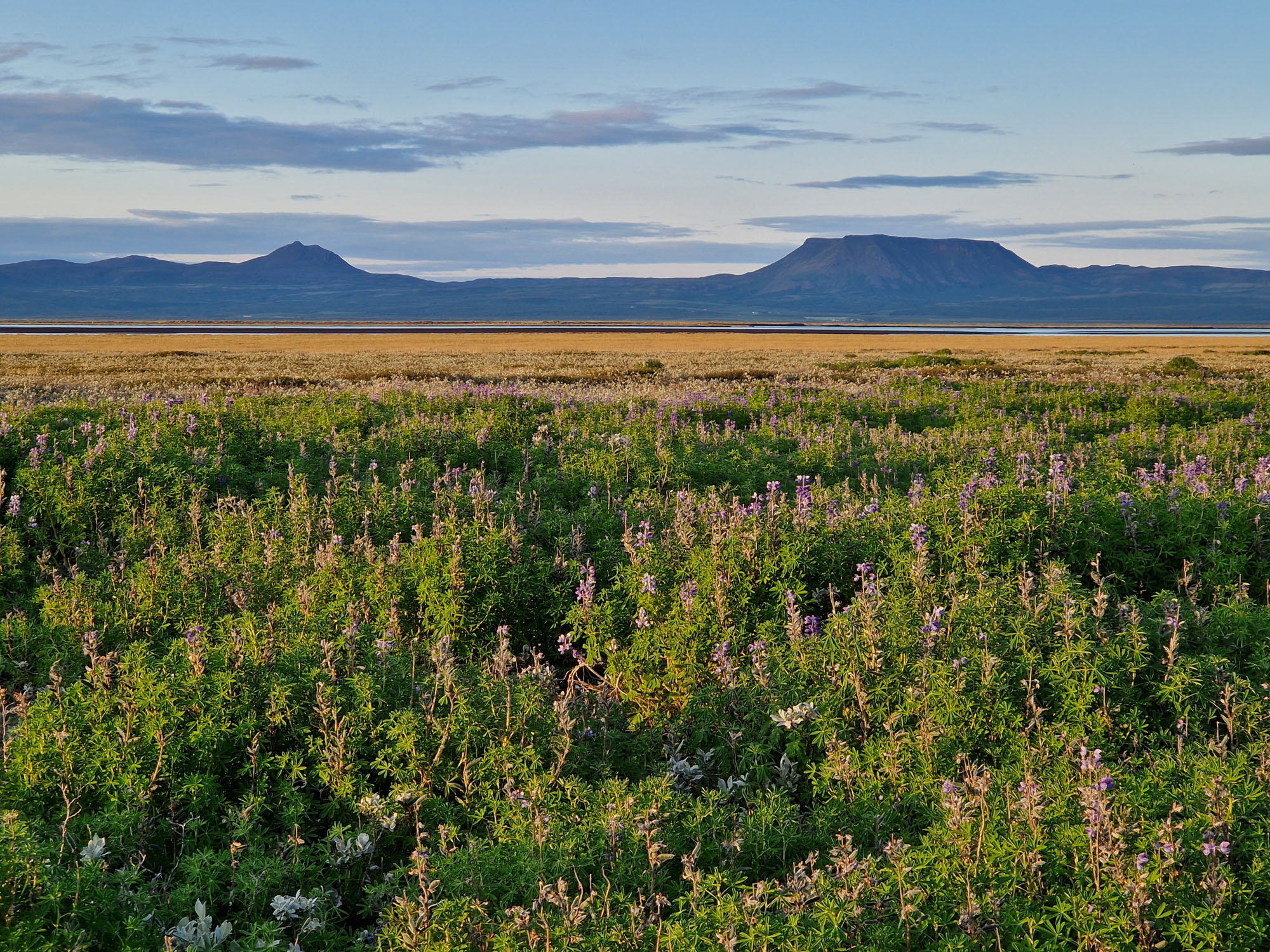
The „recording summer 2025“ started rather poorly. Cold, rainy, always strong winds and the birdlife was rather quiet. However, it does happen regularly during the nighttime the weather gets calm for about 1-4 hours. There was therefore no need to panic because the equipment was allowed to work almost every night. However, it seemed to be a small gain considering the cost, time and effort.  I only could hear birds when I wandered close to their nests or youngs
The most important thing was to follow the weather forecast, search maps and try to find new recording locations as well as get to know the local conditions. If the weather was going to be completely impossible for a microphone, it was almost always possible to set up an antenna and record the space weather.
But then it suddenly happened at the beginning of July that summer arrived with warmth and less wind. Birds also started to sing without me as a human being triggering a warning sound all over the fields.
I was then at Öxarfjordur and had thought about going to an old recording site on Vestursandur. Then I saw a gate open on a trail that has always been closed when I have been there. So I drove along the trail and suddenly I was in a green oasis that contained a lot of bird life that I did not know about.
So I found a place where it was easy to find as many recording sites as possible within walking distance.
In the end, 4 recording devices were running that night. The drawback was that in the countryside you could hear most of the night that the farmers were working all night long until early morning. But after a jet flew over, the farmers quit their work and a relaxing summer silence took over.
There is still something in this recording that gives off a vibrating background, noise or hum. Which I suspect could be the surf from the beach not far away and sometimes the occasional car traveling through the county.
Quality open headphones are recommended while listening at low to mid volume.
If the media player doesn’t start to play, please reload this individual blog in a new tab or frame.

(256kbps / 66Mb)

Recorder: Sound devices MixPre
Mics: Lewitt LCT540s (IRT Quad / 4x NOS)
Pix: Samsung S22

Weather: Clear sky. Calm to 4 m/sec. 12°C
Location: 66.093326, -16.645256

Read Full Post »

IMG_2200

I must admit that I have posted a recording with this particular mouse before, but it does not play a major role in this recording.
It is the silence, the „calm“ weather and light gusts that can be heard in the recording that I have now been waiting for for almost two weeks, i.e. the end of May – June.
The summer is not going to start well for sound recordings. Winds are well over 4 m/sec and very cold, sometimes up to -3 °C. Normal wind has been all over the country around 4-9 m/sec up to 20-32 m/sec in some places and days.
The situation has therefore been easily called a traditional „winter storm“, then and when snowfall is added.
In such weather, bird song falls silent and young birds die in nests, although some birds are breeding again.
This weather has also meant that it is not possible to install VLF antennas. But major solar storms have raged in the solar system in recent months. But VLF recordings need same weather situation as microphone recordings. Wind should preferably not exceed 2-3 m/sec if anything is to be interesting in the content of the recordings.
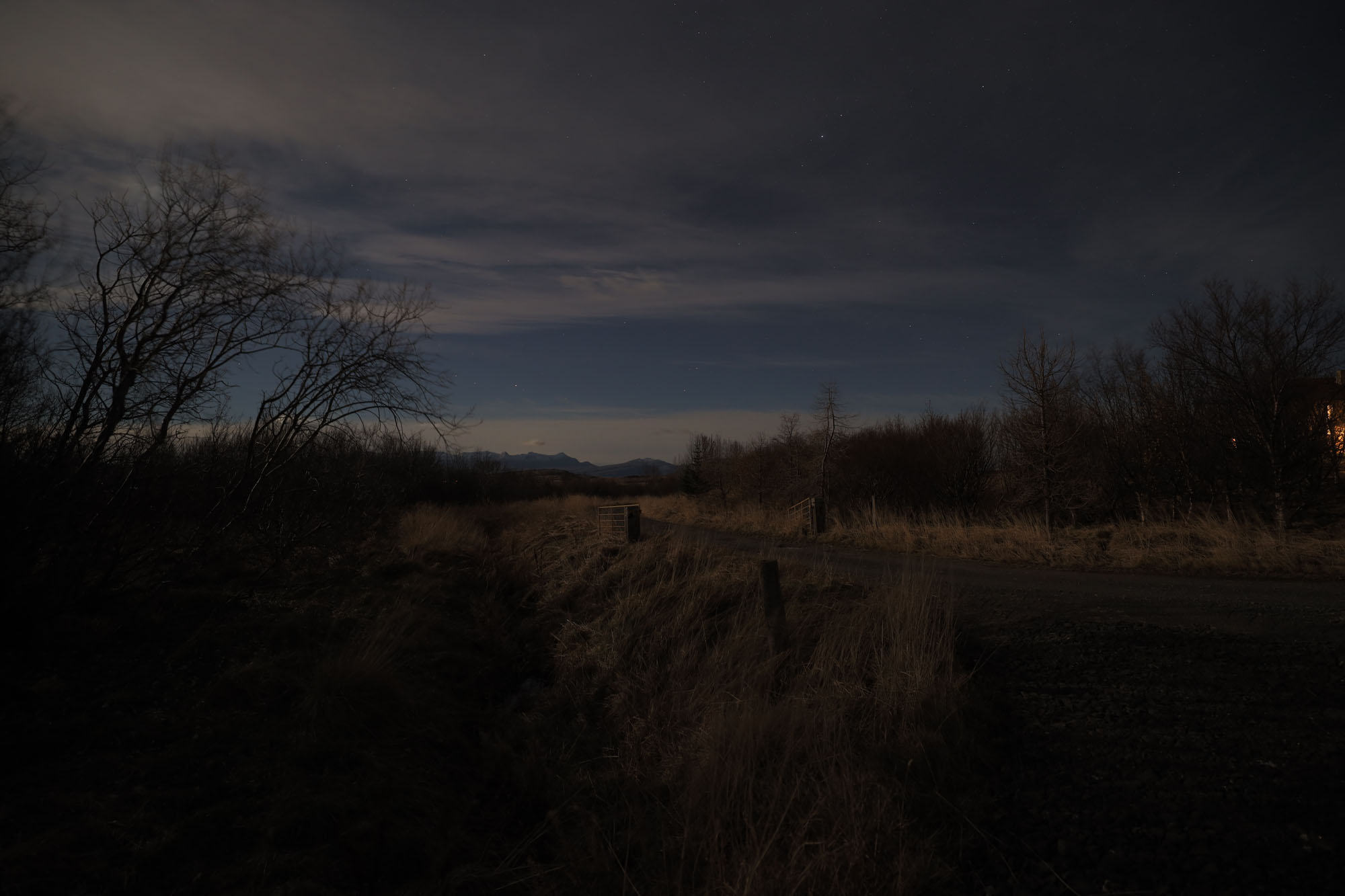
But then we turn to the accompanying recording, it was recorded early in the morning on November 26, 2023 under a full moon in Stafholtstungur at -1°C and 2-3m/sec which rustles gentle straw and leaves.
Because of an earlier experience. This time I thought that I had given the mouse a butter cake, that I spread around the microphones.. It is therefore quite remarkable that the mouse tried to chew on the cables that night. It starts chewing on the microphone cables with great noise (around 20 minutes). Almost throughout the recording, various sounds can be heard that can probably be traced to the mouse, especially in the last three minutes.
As it was getting close to 6am, you could hear some traffic in the distance
The SD788 was recorded with a gain of +48dB with no LPF, which was probably not wise. But if you can get away with it during recording, it’s often more fun to manipulate it afterwards. It was cut below 50Hz and above 10Khz
The gain was increased by another +14 dB to normalize to peak level in post-processing.
Quality open headphones are recommended while listening at low to mid level, or in speakers at medium level.

(mp3 256kbps / 62Mb)

If the media player doesn’t start to play, please reload this individual blog in new tab or frame

Recorder: Sound devices 788
Mics: Lewitt LCT540s ( IRT cross 90°/30cm)
Pix: Canon Eos R

Wether: Calm up to 2 m/sec, partly cloudy.
Location: 64.673381, -21.628700

Read Full Post »

IMG_2200

I made the big mistake of formatting an HD disk with photos I took throughout 2023 and into the winter of 2024, but in my absolute stupidity I didn’t have a backup. So I always run into problems if I’m going to post audio from this time period here on this blog.
But I also take photos on my SLR camera which has a fairly large card so I have consciously allowed photos to be on the card precisely to save such accidents and losing photos.
I don’t actually have a lot of good audio recordings from this summer. Both because the weather was boring most of the summer and I had the flu most of the summer vacation.
But there are a few recordings that I think are interesting from this summer. Especially the ones I took in Steingrímsfjörður and around Drangsnes in western Iceland.
I had a few pictures on my SLR SD card that saved me from being able to put these recordings on the web.
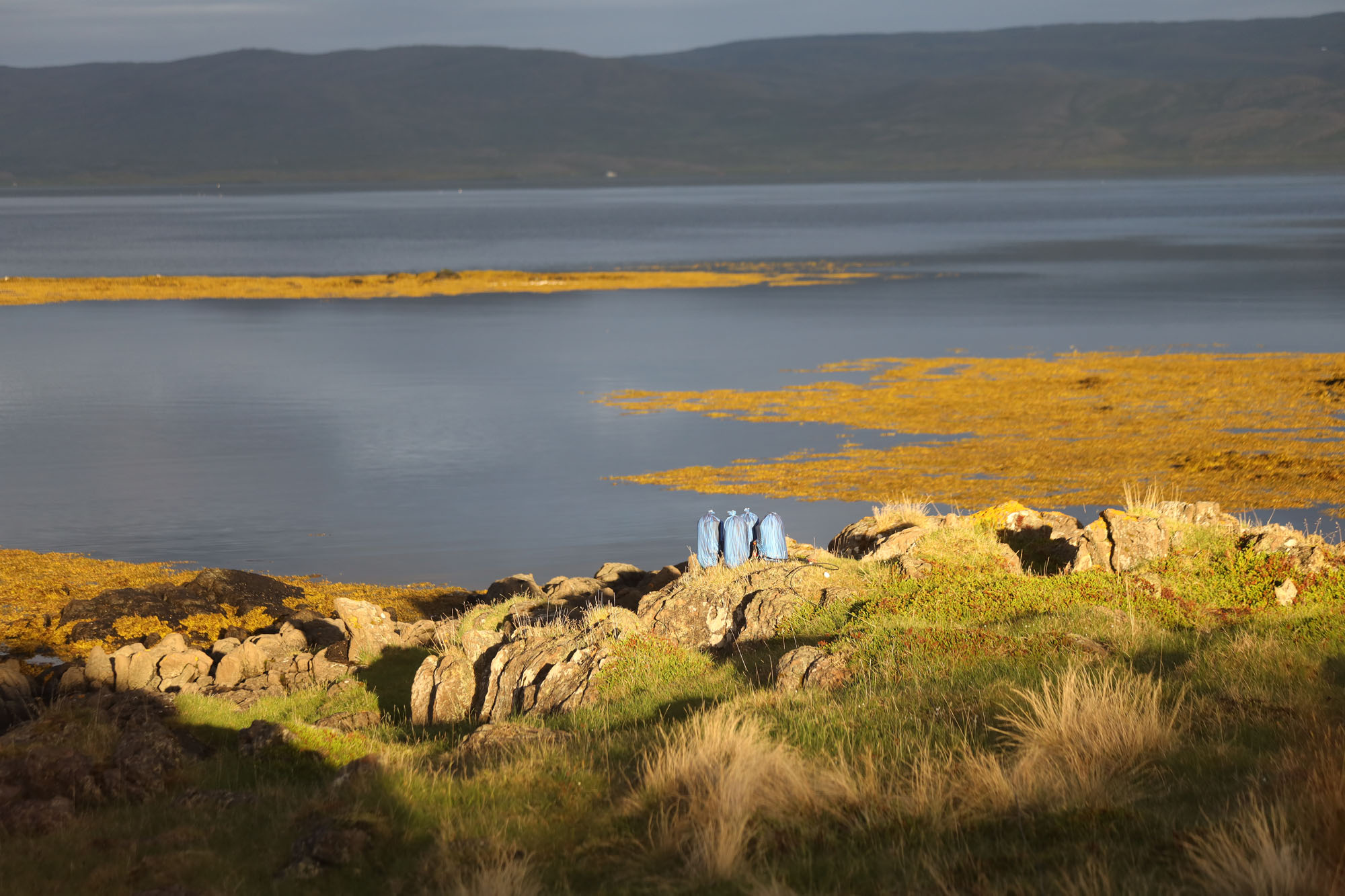
This is part 2. But part 1 was recorded at midnight, before the sunlight hit the recording location. Here in part 2 the sun has risen. Just a minute before the recording started I had to move the microphones to a slightly more sheltered spot, because over the night the wind started to increase which unfortunately can still be heard in the recording.
The recording is „unprocessed“. Recorded at +50dB gain, normalized up to -7dB by adding +20dB in post, fade in and out and then converted to mp3.
The recording starts exactly at 4:00 in the morning on June 22, 2023 and ends just over half an hour later. After a high tide earlier in the night, the tide was already starting to recede. The seaweed on the shore was still wet, which makes a soft clicking and dripping sound, which can be heard differently well with different headphones. The birds are slightly quieter than earlier this night, but the soundscape is still magnificent.
There was several gull species, at last great black backed gull. arctic tern, common eider, whimbrel, European golden plover, red throated loon, common loon, arctic puffin and eurasian oystercatcher.
There you can hear me getting in and out of the car to take pictures. Including the accompanying picture. At least one truck can be heard from across the fjord. It can also be heard in small fishing boats at the beginning and end of the recording.
It is clearly a new day rising.
Quality open headphones are recommended while listening at low to mid volume.
If the media player doesn’t start to play, please reload this individual blog in a new tab or frame.

(mp3 256kbps / 64Mb)

Recorder: Sound Devices MixPre6 24/48
Mics: Lewitt LCT540s (IRT quad 90°/30cm)
Pix: Canon Eos R

Weather: Calm to 3m/sec, cloudy, about 7°C
Location: 65.692816, -21.558576

Read Full Post »

IMG_2200

I think I have annual recordings from the same place in the nature reserve in Flói in southwest Iceland almost since 2009. The reason is simple. It’s always interesting to follow the local acoustics from year to year. So I don’t have to spend a lot of time finding a location for the microphone. They stand in the same place unless something else disturbs it, e.g. high ground water level or something else that hasn’t yet happened to me. I go to the place hoping that there is no one in „my place“ in the parking lot where I can pull out my 75 meter 4ch long cable to the place where I have always recorded. I find a good ground for the microphones, get in the car, start recording and go to sleep.
I usually wake up when someone comes driving into the parking lot about 4-6 hours later.
I usually never listen to what I recorded, except when I need to look for something interesting to post on this audio blog like now.
It is well worth having a recording from Flói this month when 15 years have passed since this audio blog went online. Flói has followed this blog ever since I got my first HD recorder. It was then that the batteries suddenly lasted longer than 30 minutes, but it opened up a whole new world for me to record in nature.
Here is an audio recording from June 13, 2023. The area was extremely wet after heavy rains. I positioned the microphones to be in close proximity to the Read necked phalarope. But maybe there wasn’t as much activity as I wanted. But instead you can hear various sounds that I am not quite sure where they are coming from. There are weak „clicks“ that can be heard e.g. for 1:30 min in this recording as well during the 30 minutes that the recording lasts.
As usual, there are many species of birds in Flói. Red-throated Loon. Red-necked Phalarope, Common Snipe, Golden Plover, Whimbrel, Common Eider and certainly other duck species as well. Common Redshank, White Wagtail, Winter Wren, Northern Wheatear, Common Redpoll, Snow Bunting, Swan and maybe other bird species that I cannot name.
Background noise is some traffic and surf from the south coast and air traffic.
You can hear it occasionally in the wind because I covered the wind shield with buff but not fur. Instead, you can hear much better in subtlety details.
This is an extremely low-key recording, except where you hear the Red-throated Loon. The recording was recorded with 50db gain (40Hz HPF), then the gain was further increased by +10dB in post-processing.
Quality open headphones are recommended while listening at low to mid volume.
If the media player doesn’t start to play, please reload this individual blog in a new tab or frame.

(mp3 256kbps / 64Mb)

Recorder: Sound devices MixPre6
Mics: Lewitt LCT540s (IRT cross 90°/30cm)
Pix: Canon EosR

Location: 63.900935, -21.191930
Weather: Cloudy, calm, about 5°C

Read Full Post »

IMG_2200

Last summer 2023 I went to a place I haven’t recorded much. Was it at Strandir in northwest Iceland. A friend invited me to stay in an apartment for a few days in Drangsnes, so I tried to use the time as well as I could for field recordings in the area.
It actually didn’t go very well. I had come down with a bad flu the same week as summer vacation started so I had little to no energy for many weeks. I was also facing another problem. The whole time I was in the area there was a strong wind except for maybe 1-2 hours during some nights. It was also rather cold, so nature was rather silent. Much of the material I caught these days was therefore not particularly interesting.
However, I had the opportunity one calm night to record a nice peace at the coastline. Part of it is here below. It’s very likely that I will put more of this recording on the web later, because the soundscape changed a bit during the 3-4 hours I was recording.
It is the summer solstice so it is therefore bright all day long. The recording starts at 23:45 and ends at 00:20 o´clock.
This is a typical soundscape in fjords in northern Iceland and in fact everywhere around the arctic circles.
This is a high gain recording.  Recorded at +50 db. Then add about 20dB up to -7dB peak RMS. No noise reduction in post. Just fade in and out.
Many bird species are in this recording. There was several gull species, at last great black backed gull. Arctic tern, common eider, whimbrel, European golden plover, red throated loon, Common loon, arctic puffin and Eurasian oystercatcher. Sheep were not far away and seals were lying on rocks near the beach.
Quality open headphones are recommended while listening at low to mid volume.
If the media player doesn’t start to play, please reload this individual blog in a new tab or frame.

(mp3 256kpps / 63Mb)

Recorder: Sound devices MixPre6
Mics: Lewitt LCT540s (IRT cross – 30cm/90°)
Pix: Samsung S22

Weather: Calm, cloudy, about 7°C
Location: 65.692865, -21.558621

Read Full Post »

IMG_2200

Recording fireworks is probably like photographing a sunset for a photographer. Nothing special but there is always some duty that calls for it to be done.
It is not the loud sound that fascinates, but the interaction of the sound with the environment. Reflection of a sound wave. e.g. the echoes from houses, mountains or trees that make it interesting to record fireworks. The problem, however, is that I am often confined to staying at home with my family on this day. I am therefore not in different places from year to year, and therefore I have to say that I have not made a good or interesting recording of fireworks, apart from maybe one recording in Tenerife. I’m also always experimenting with microphone setups, which usually don’t work out well when there’s a lot of other things going on.
It is with mixed feelings that I put a fireworks recording on the web this time. Have done it before and therefore not urgent to do it again because it always sounds as a loud noise which is not healthy for the ears or speakers.
But this new year is marked by terrible wars, which unfortunately all have their origins to the western hegemony and imperialism, as usual. Most recently with the targeted genocide in Palestine which as of this writing can easily escalate into an even bigger war, more or less all over the middle east.
The NATO proxy war in Ukraine is still going on after almost ten years conflict. It has destroyed Ukraine and seems to be also destroying Europe in coming years, if not in decades because of politicians stupidity. This time, the West, led by the United States, EU & GB has lost both credibility and the trust of most nations in the world.
The world is changing. US unipolar empire is falling and new multipolar empires are rising. At the same time, the US will drag Europe down in the fall and destroy Europe as a flourishing continent, only because of insane hatred towards Russia.
The new year therefore does not seem to offer anything good for many nations, but only continued with conflict and disaster. Fireworks with all its noise are therefore no longer part of entertainment in my mind, but a reminder of war with destruction, killings and mutilations.

This recording was made in my backyard, between houses with LCT540s in IRT. You can hear that the echo time is short. Some might think it’s because I used a Limiter. But the Limiter was turned off, as always should be done when recording fireworks. Recording sound pressure rose to a peak of +7.7dB (-7.4 LUFS-S) .
Details that can often be heard in fireworks when they are launched are not heard clearly in this recording because they were launched from beyond the houses in this backyard. However, I had another microphone set (MKH20/40 parallel AB) close to a place where people were setting off fireworks, but that recording did not go well for various reasons.
Even though this recording has been downgraded to mp3, be careful when listening to this recording. Don´t put up the volume, especially not when listening with speakers.
Quality open headphones are recommended while listening at mid/high-level.
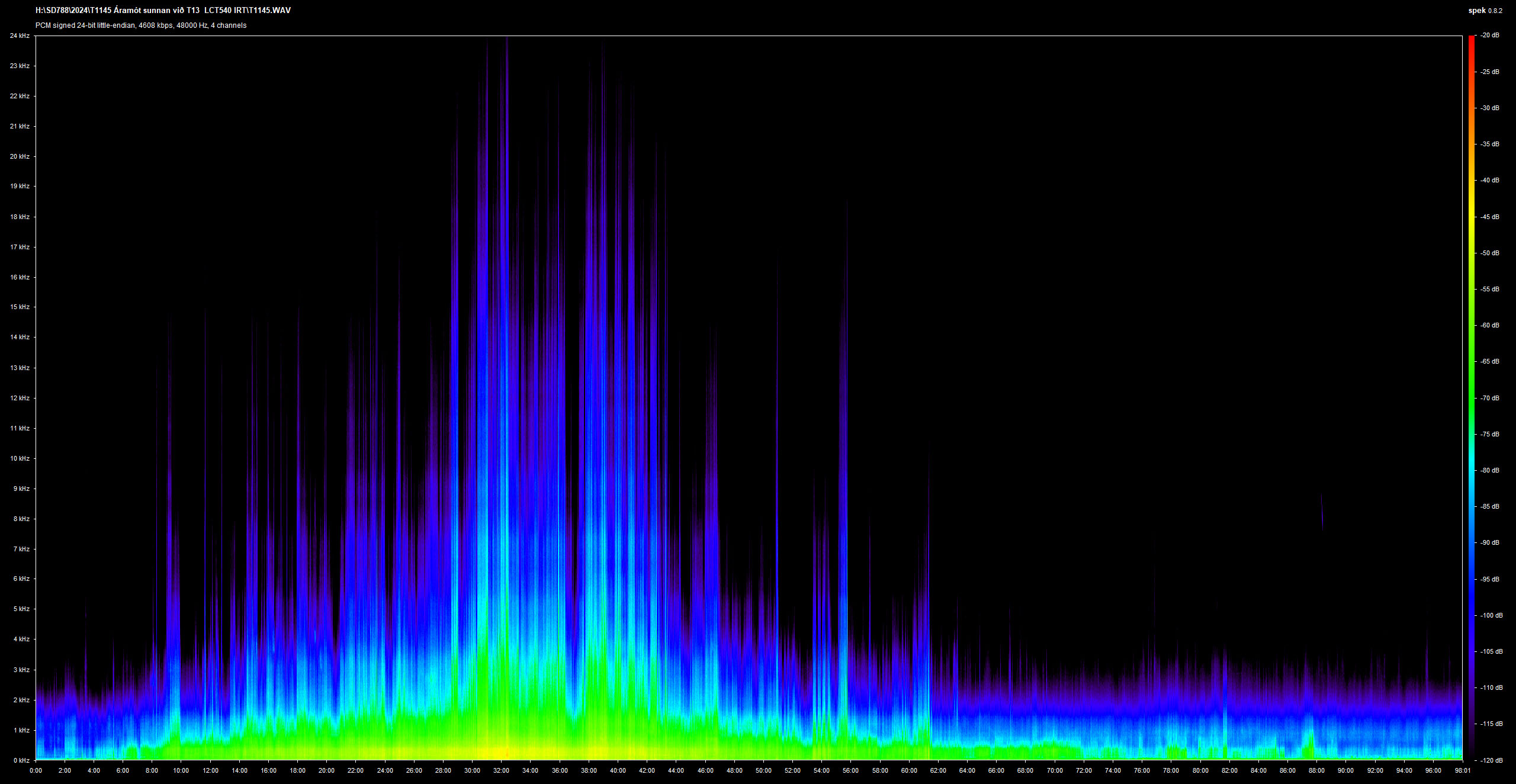
Following picture shows the spectrogram of the whole recording this new years eve. But following recording start at 22:30min. Midnight is at 30:00min and the recording end at 52:30min
If the media player doesn’t start to play, please reload this individual blog in a new tab or frame.

(mp3 256kbps / 67Mb)

Recorder: Sound devices 788
Mics: Lewitt 540s, IRT cross setup
Weather: Calm, about -4°C
Pix: Spek Spectrogram
Location: Reykjavik Iceland

Read Full Post »

IMG_2200

It doesn’t happen often that my recordings are „interrupted“ by animals. But it happened last weekend when I was recording at my traditional place in Stafholtstungur in western Iceland. This time it was mice that seemed to gnaw the rubber on the tripod or the cables that ran up to the microphones. When the recording had been going on for three hours and it was 3 o’clock in the morning, the commotion in the mice started to keep me awake. It was as if they had gnawed a hole all the way into the windshield. So I went out and gave them a piece of cake next to the microphone stand. That made them stop biting the microphones. Instead, they started gnawing on the cake, which you can clearly hear after I brought the slice of cake.
This is traditional night silence. The background noise is mainly the wind in the leaves as well as the traffic of individual cars several kilometers away. I did not clean the internal mic noise in this recording as there is no need for it. Here it was recorded with 48dB gain on SD788 and in post-processing the volume was increased by +10dB up to peak -5dB.
Quality open headphones are recommended while listening at low to mid volume.
If the media player doesn’t start to play, please reload this individual blog in a new tab or frame.

(mp3 256kbps / 58Mb)

Recorder: Sound devices 788
Mics: Lewitt 540s, IRT cross setup
Pix: Canon EOS-R
Weather: Calm, about +4°C
Location: 64.155417, -21.834806

Read Full Post »

IMG_2200

I don’t expect many people to be interested in listening to this recording. It is mainly a silence. But this is just a normal natural Icelandic soundscape in calm winter weather, so I have a lot of stuff like that in my collection which I think should be published in this blog
At least I can tell. it is very good to fall asleep from recording like this.
This one was made overnight on 4th of March 2023 and the time is around 5 o’clock. For some reason, there was unusually low traffic that night. Perhaps it had to do with the fact that the television that evening had some musical contest, so lots of folks in the county had been drinking alcohol that night. So there were few people who could or had to drive unnecessarily around the countryside that night.
But anyway it is a traffic noise in this recording. Mainly from the main road no:1 for about 5km away and one car will pass by the recording location, 250 meters away. So don’t play this too loud.
As expected at this time of year, silence was something that was significant from nature’s side. Fortunately, the weather was completely calm. It gave me the opportunity not to use low pass filter LPF, which gave me the ability to listen for a variety of low-frequency sounds that I’ve often encountered on this recording site before but has been hard to explain. Was it an earthquake or something else?
When silence is greatest, there is little or nothing that attracts attention in this recording. Two foxes can be heard calling. Rock ptarmigan, ducks and swans in the distance. But as ears sink deeper into the material and every sound is separated from each other and from the background noise, there is the „sound of water“. Sound of wet grass. Maybe an ice crystal transformed to a drop of water. At times, you may hear a „flow of water“. Probably a small creek far away or maybe as well an underground water flow because there is no stream nearby. But the ground in this place has thin soil on a rocky glacial soil
The background noise is equally fascinating. Some of them are known and could best be considered as „technical problems“. But there are also intriguing things to be found because sometimes it is hard to figure out where this noise comes from.
So let’s talk about „background noise“
At the lowest frequency, the vibrations caused by the wind are usually almost always detected, i.e. “Brown noise”. Hence, it is usually necessary to use HPF for all outdoor recordings, except in recordings like this where the weather’s so calm that it’s like being in a wardrobe. This recording, as well as others I’ve done at this location, may include rumbles or knocks that may come from a horse or horses from a great distance, possibly some kilometers away. I think this noise coming this distance travels through the ground. It might be earthquakes, but it is unlikely in this recording. Apart from the distinctly low frequency of sounds that take place in a particular setting, I suspect that the constant rumblings that can be heard in the recording have both technical and natural explanations, which mostly though is related to turbulence in the air.
On the other side of the frequency curve, at the highest frequencies, “blue noise”.
It is usually only self noise from the microphones and recorder’s amplifiers. I tried very carefully to use RX for noise reduction, but there is always a limit to what is possible to do without spoiling the recording.
In the middle is “Green noise,” something that always interests me. This is a background noise that normally includes sounds that may come from far away and be heard only in a calm weather.
There is something called “Sea State Zero Noise,” a natural silence, or background noise in the oceans. I believe that something similar is happening here. This is noise, which is due to a number of natural factors, but mainly because of the wind and water in the combination of temperature and atmospheric conditions. Today, though, „mechanical traffic“ has constantly been overwhelming the natural noise. The source of this “green noise” like the recording below has a possible origin from car traffic up to 20Km away. From the surf at the beach shoreline 20 to 30 km away as well from a waterfall behind hills, in a canyon 7km away. None of these sounds are discernible to the bare ears. So for me it is often good to identify which direction this theme comes from by recording in IRT setup as this one.
In this recording (or that night) this green noise varies as a calm wave in different frequencies. Whether it is due to variations in air pressures or layering of temperatures or something else, I cannot easily confirm
Therefore, it is best to listen and let the imagination guide you to the course.
For those of you who find a lot of noise in this recording, I would like to remind you that it was recorded with 50dB gain. In post-production the gain is increased by another 25db, up to -10dB peak. So I agree, this recording certainly doesn’t sound good. But I think you can’t do better with the Lewitt 540s and Sonosax SX-R4+ in silence.
Quality open headphones are recommended while listening at low to mid volume.
If the media player doesn’t start to play, please reload this individual blog in a new tab or frame.

  (mp3 256kbps / 56Mb)

Recorder: Sonosax SX R4+
Mics: Lewitt LCT540s in IRT setup
Pix: Canon EOS-R
Location: 64.673374, -21.628710
Weather: Calm, partly cloudy, 0°C
Information about „color of noise

Read Full Post »

IMG_2200

It has been several years since I published a recording from Flói nature reserve. The reason is more or less because of foul weather in recent years when I have had the opportunity to record there.
It was no exception last summer from late April to mid July. It was cold, windy and wet most of the time which is actually the high season for birdsong recording.
I went there on the 3rd of July 2021 and recorded overnight. The weather was calm in the beginning but the wind increased over the night. I was also struggling with increased sea tide and therefore a surf noise from the coast line, actually at the same time when the birds were most active during the dawn.
My mics were Lewitt LCT540s in IRT cross setup. Most of the bird’s activity was in front of channel 1&2. Most „silence“ was in front of channel 2&3 and most of the surf and traffic noise was at channel 4&1.
It surprised me how much traffic was there the whole night. There was almost constant rumble in the air during the ten hours I was recording, except between four and five o’clock in the morning. This noise was much more audible than I remember in my earlier recordings. The reason could be found in different mic setup and mics. Ten years ago I used to use NT1a in NOS or AB, pointing towards the open field and keeping the nearest road and coastline behind. I have also used MKH20 in AB which is less sensitive for these details than large capsule mics.
It takes time to search in this 10 hour long recording for some nice sounding 30 minutes moments. Listening to the whole four channels it starts with heavy traffic noise in all channels, then surf noise. Then traffic noise again until the wind and the sun makes the air so unstable close to noon, both traffic noise and bird activity almost disappear in the wind noise.
But with an IRT cross rig I have many options. I can turn off the channel or channels which are disturbing for the soundscape I am looking for.
The recording below is a very good example of this. Instead of using all four channels and mixing them to stereo, I use only channel 2&3 (NOS 90°/30cm) to avoid the surf noise. The time when it starts is about 04:15 so there is almost no traffic noise, but anyway, the recording starts and ends with some engine noise in the distance.
Quality open headphones are recommended while listening at mid or low level.
If the media player doesn’t start to play, please reload this individual blog in a new tab or frame.

Recorder: Sound devices MixPre6
Mics: Lewitt LCT540s,  NOS 30cm/90°
Pix: Canon EOS R

Location: 63.900944, -21.191958
Weather: Calm to breeze, partly cloudy, ca 5-10°C

Read Full Post »

Older Posts »