Feeds:
Færslur
Athugasemdir

Posts Tagged ‘NOS’

IMG_2200

Oliver Kentish was born in London in 1954. He studied cello at the Royal Academy of Music in that city. In 1977 he came to Iceland to play with the Iceland Symphony Orchestra as a substitute and has taught since then. Oliver has been involved with the Icelandic Amateur Symphony Orchestra almost since its founding, first as a cellist, and then as the orchestra’s principal conductor and artistic director for about fifteen years. He currently teaches at the New Music School in Reykjavík.
In addition to teaching, Oliver is a prolific composer, is a member of the Icelandic Composers’ Association and has around three hundred compositions on the Icelandic Music Centre’s register. It is worth mentioning that in 1994 the British government commissioned a work from him as a gift to the Icelandic people on the occasion of the 50th anniversary of the Republic. This work, „Mitt folk“, for baritone solo and symphony orchestra is dedicated to the then President of Iceland, Vigdís Finnbogadóttir.
Oliver’s works have been performed throughout Europe, in the United States and in Russia, and some of them have found their way onto CDs, including with Helga Ingólfsdóttir, Rúnar Óskarsson, Duo Harpverk and Schola Cantorum.

Hrímhvíta móðir was commissioned by the Iceland Amateur Symphony Orchestra in 2024. The work‘s title is taken from a poem by one of Iceland’s most famous poets, Jónas Hallgrímsson (1807-1845) whose poem „Ísland farsælda frón“ is an ode to Iceland, the ‘frost-white mother’ of the title. The work is cast in the form of a concert overture, lasting just over 15 minutes and contains four well-known melodies familiar to most Icelanders. Two of the melodies can be said to be typically Icelandic; the so-called quint-song, which is a uniquely Icelandic vocal tradition where the melody is sung in parallel fifths and the voices cross over in the middle – to which the Hallgrímsson poem is famously set – and another melody, known as Lilja where the unusual intervals give the tune an ambiguous tonality. It is the combination of these two which comprises the climax of the work. The two other melodies which appear are a traditional lullaby, „Kvölda tekur“ and the hymn, „Allt eins og blómstrið eina“ which, however, is not an Icelandic melody; in the Icelandic hymnal the tune is named Antwerp, and dated 1540. The hymn‘s Icelandic text is by another giant of that country‘s poetry, Hallgrímur Pétursson (1614-1674). Even today, this hymn is an integral part of almost every funeral in Iceland.

I have been fortunate enough to get to know Oliver and the work of the Amateur Symphony Orchestra for more than decade and have been able to record almost all of the orchestra’s concerts, which often feature well-known and talented musicians and students. This has always been a fun winter hobby when there is almost nothing to do in field recordings in nature. During this time with the orchestra I have been able to develop my own recording methods, testing all kinds of setup and microphones. These methods generally aim to achieve the best possible recordings with the least possible equipment, taking into account the cramped conditions, fast and easy setting up and compiling. It must be admitted that this simplicity actually affects the quality of these recordings compared to what happens with released material today. But it is based on the simplicity that was common a few decades ago when few channels were used and the recording was allowed to stand without post-processing.
In recent years, these recordings have ended up on the orchestra’s closed website.
Most concerts have been recorded with four microphones in a fixed AB/NOS array at about 3 meters above the middle of the orchestra. Soloists have then been given two channels, usually with a parallel cardioid and omni mics.
The music that follows below was recorded on four channels (AB/NOS) at 3.2 meters above the Amateur Symphony Orchestra in October 2025 in Seltjarnarnes church.
In post-production, little was done other than giving the omni microphones a slight EQ of +/-2dB and using a compressor on the master. Mixed in Sennheiser HD650 headphone
Oliver kindly gave me permission to post this recording.
Quality open headphones are recommended while listening at any comfortable level.
If the media player doesn’t start to play, please reload this individual blog in a new tab or frame.

(mp3 256kbps / 31Mb)

Recorder: Sonosax SX-R4+
Mics: Nevaton MC59O in AB & MC59C in NOS
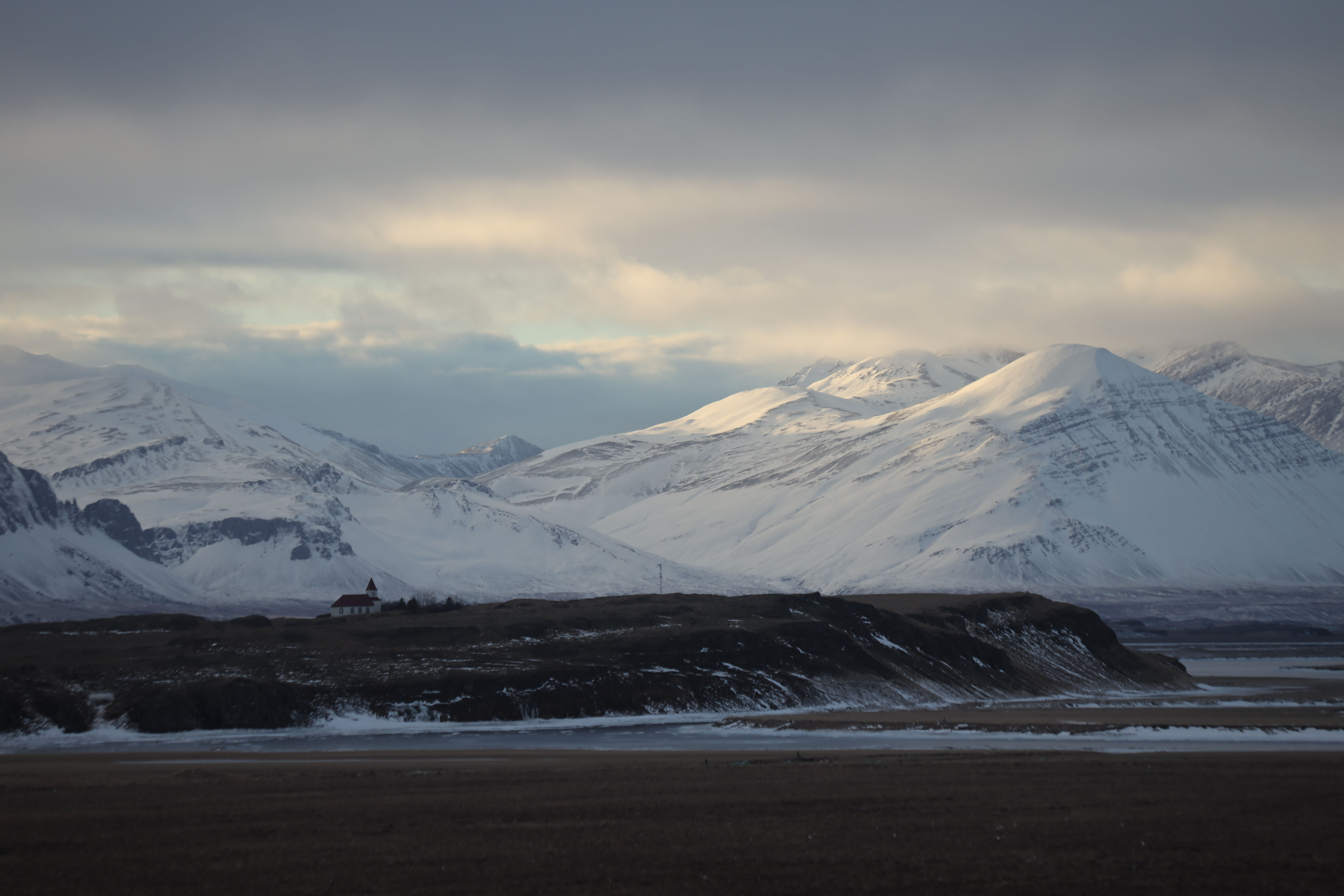
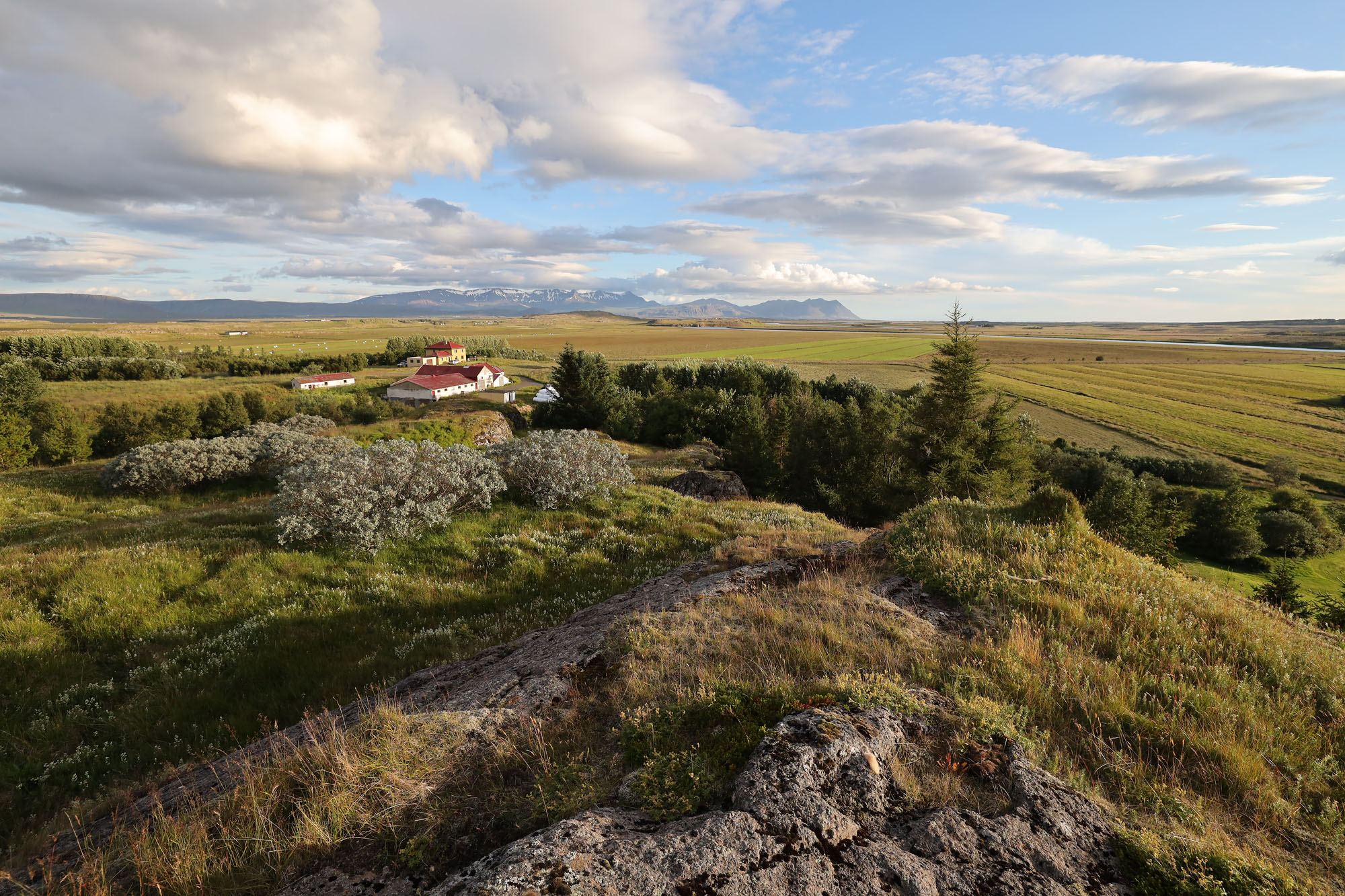
Pix: Canon EosR (Church in Stafholtstungur, west Iceland)

Location: Seltjarnarnes kirkja
Read Full Post »

IMG_2200

I do quite a bit of recording music, so it would be nice to be able to publish some of it here, especially music that I think is extremely well played and where the recording has been successful. For example, I have often wanted to put classical music on the web in December and January. But professionals have little interest in giving permission for this, possibly because I only ask these people once.
So I’m going to share different music instead, which is even more beautiful than all music, but it’s birdsong in the spring.
Here is a recording from last spring that I had forgotten I had recorded.
I had a Zoom F3 device recording in several places almost non-stop for several days in Stafholtstungur, western Iceland. I used Rode NT1 microphones and set them up to NOS 90°/30cm. It can hardly be considered the best setup for such long nature recordings. The reason is that sounds such as background noise from the wind, rustling of leaves, running streams and traffic can change a lot in 24 hours, so the sound pressure between channels can easily go out of balance. It can even be detected in this recording. Some traffic can be detected at a distance of 5-10 km in the (left) channel. That’s why it’s usually best to record in AB 40-50cm, if you’re going to record for a long time.
But since I primarily record natural „silence“, there are not many microphones that handle silence well and the ones that do it best are all cardioid, which has led me to start recording a lot in IRT (4ch 90°/30cm)
In some cases, it is possible to set the cardioid up to AB 40-50cm, but you cannot do that unless you intend to record from one direction. In this place the sounds were coming from all directions so it was not available.
It’s a low-key recording, actually amplified silence. Recorded at „Zoom gain at 256“ and HPF 40hz. In post-processing the recording was normalized (+25) up to -7dB 
There is a lot of recorded material here that I feel is a shame to be forgotten on hard disks, so I’m going to allow myself to call this „Part 1“ because Part 2 and 3 and more also need to get here on the web.
The footage will therefore not be exactly from the recording location, but not further than 500 meters away.
Quality open headphones are recommended while listening at low to mid volume.
If the media player doesn’t start to play, please reload this individual blog in a new tab or frame.

(mp3 256kbps /66,5Mb)

Recorder: Zoom F3
Mics Rode NT1 (NOS 90°/30cm)
Mics: Canon EOS R
Weather: Calm, partly cloudy, around 7 to 10°C

Read Full Post »

IMG_2200

Early last spring I was asked if I wanted to record a 24-hour long recording for Radio Art Zone.
It wasn’t a problem because I’m used to recording 8-14 hours of content whenever I can.
So I made two / three 24hrs recordings in total.  All recorded in similar locations on the 23rd-25th. April 2022 in the countryside.
I recorded on four channels with an IRT cross version and in two other locations with two channels in AB & NOS.
If I remember correctly, I sent the IRT recording to Radio art project. The AB recording is already audible on this soundblog, „The brook below Lambaklettur
The NOS recording was forgotten, until I found it last week.
It was recorded with Rode NT1 microphones and a Zoom F3 recorder.
This recording contains natural „silence“. When I talk about „silence“ I mean that most people would not hear anything with bare ears. Probably only the blood flow in their own body.
But it was not total silence when this recording started here below. The migratory birds had already started to flock to the country. It was also a drizzly rain and therefore quite humid all night while the recording took place. The fur on the windshield got quite wet and you can hear larger drops falling on the wind shield, on the tripod and on the ground around.
This recording starts around the time when birds start to be heard in the early morning. The windshield is already very wet, so it must have adversely affected the recording quality. But surprisingly it is not heard that the NT1 is cracking due to air humidity.
The Zoom F3 had gain set at „256“ and HPF at 40Hz. I’m used to recording with 47 to 50dB gain for such silent recordings. Gain „256“ is therefore not telling me anything, but having worked on this recording, 256 seems to be something similar to 50 to 55 dB gain. This actually needs further consideration because It can be an important issue. The reason why I don’t record with a gain higher than 50dB on the Sound Devices or Sonosax recorders is to prevent additional „amplify noise“ that I feel increases if the gain is over +50dB. It is therefore  always better to increase the gain digitally“ in post.
I have a hard time realizing this with the F3 device. The noise seems to go hand in hand with different gain. No matter what the gain is. Whether I should generally record with „256“ gain or „128“, when recording quiet soundscapes needs further testing. I find the noise a bit more in this recording than if I had recorded with the Sonosax for example, but that noise I hear and see on spectrograms could also be a sound from the drizzle, or raindrops when they fall to the ground. It can therefore be assumed that there is some natural noise in that recording. Therefore it is not entirely possible to blame F3 or NT1 for all the noise that can be heard.
The first sound file is over 30 minutes long which has got a gentle noise reduction and then below 5 minutes of original recording for comparison (without NR). Both recordings are normalized up to -10dB. The original files from the recorder had a -38dB peak value which is normal for „quiet“ recording like this.
Bird species in this recording is mainly common snipe, whooper swan, black tailed godwit, redwings, whimbrel, golden plover and eurasian wigeon.  Most of them are in the distance in this recording.
I will post the continuation of this recording later. Then the number of birds increases and they come closer to the microphones.
Quality open headphones are recommended while listening at low volume.
If the media player doesn’t start to play, please reload this individual blog in a new tab or frame.

  (mp3 256kbps / 62Mb)

Original recording from Zoom F3, only normalized up to -10dB & downgrade to mp3

  (mp3  256kbps / 9,4Mb)

Recorder: Zoom F3
Mics: Rode NT1 (NOS)
Pics: Canon EOS R

Location:  64.673258, -21.630001
Weather: Drizzle rain, about 4°C

Read Full Post »

IMG_2200

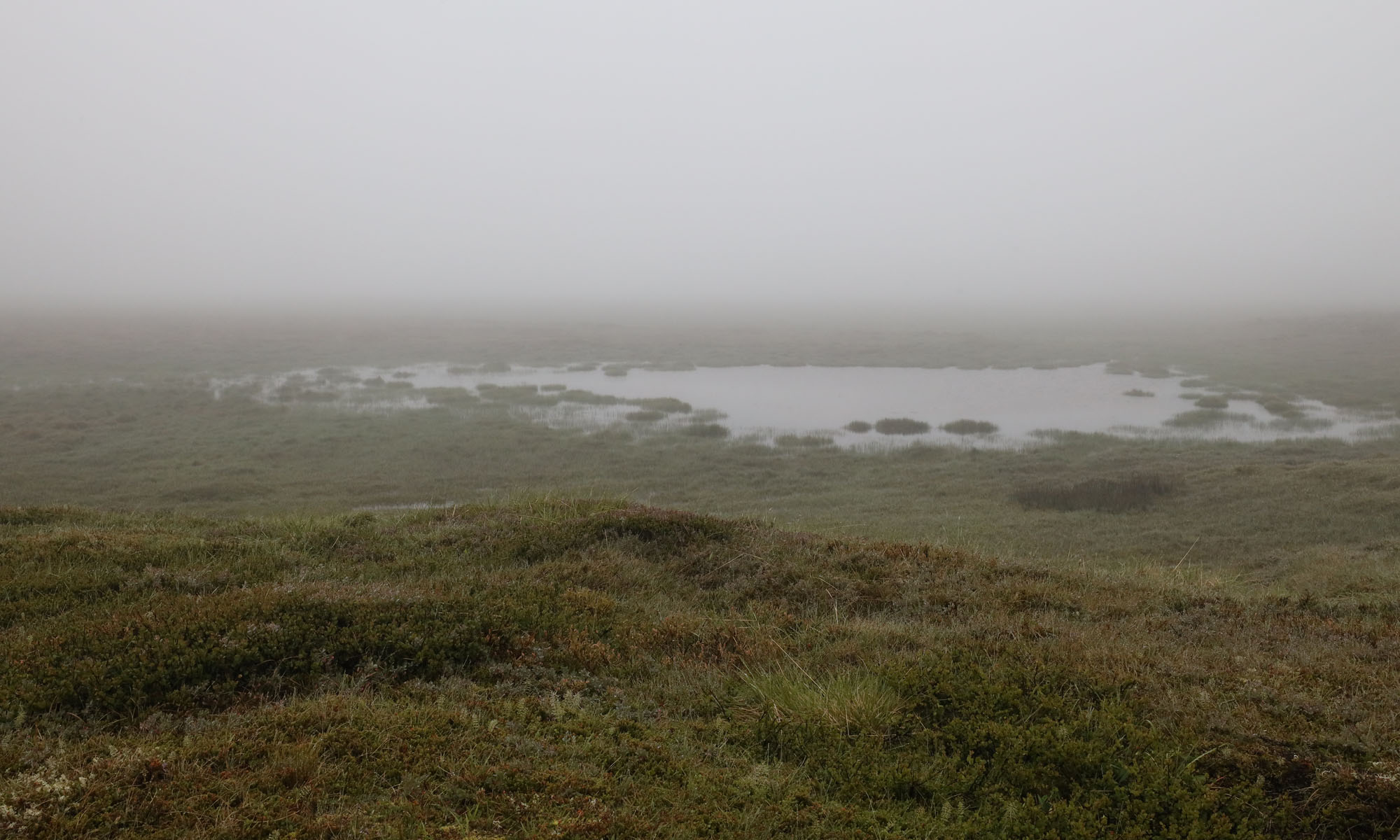
This recording is actually recorded in a „natural silence“, far away from traffic in open landscape, which can be said to be my area of interest. But the weather, as so often before, was no way to work with me. Windy and wet which means I was not able to record the „depth in the field“ that can often be heard through good recordings, recorded in calm, dry weather.
There is no doubt when I say that 95% of all the recordings I record in Icelandic nature sounds like this. Therefore, it is also wrong not to report it with examples.
Here is one. The location is the highland at Arnarvatnsheiði, northwest Iceland near a place called Hæðarsporður
I had to find a sheltered place close to the ground to protect the microphones as much as possible from wind and rain. Close to the ground isn’t a good position for microphones, but often only way to record something for a days or a weeks
While Rode NT1 is a cardioid I couldn’t find an ideal location, so it is not a good balance between right and left channels. Right channel has noise from the Norðlingafljót river just over a km away, as well as there is less bird life on the left side
The result is as it is.
This is a part of a ten hours long overnight recording. During the night the windshield gets very wet, so one of the reasons why this recording sounds a bit „dull“.
The soundscape was quiet as usual on the Icelandic highland. It was almost impossible to hear anything except wind noise. The recorder was at +50 db gain on SD788. In post the gain was increased by about +25db (up to -7db). RX noise reduction was not used. Wind noise was decreased below 100Hz with EQ, also NT1´s white noise was lowered above 10Khz about -3db,  and -6db at 15khz.  Normally it does not harm the recording while bird songs which have the highest frequency range in Icelandic nature are mostly below 7Khz.
Quality open headphones are recommended while listening at low volume
If the media player doesn’t start to play, please reload this individual blog in a new tab or frame.

  (mp3 256kbps / 55,8Mb)

Recorder: Sound Devices 788
Mics: Rode NT1 (NOS 90°/30cm)
Pix: Canon EOS-R

Weather: Windy up to 8m/sec, drizzle rain, foggy & 5°C
Location: 64.854845, -20.545331

Read Full Post »

IMG_2200

It has been several years since I published a recording from Flói nature reserve. The reason is more or less because of foul weather in recent years when I have had the opportunity to record there.
It was no exception last summer from late April to mid July. It was cold, windy and wet most of the time which is actually the high season for birdsong recording.
I went there on the 3rd of July 2021 and recorded overnight. The weather was calm in the beginning but the wind increased over the night. I was also struggling with increased sea tide and therefore a surf noise from the coast line, actually at the same time when the birds were most active during the dawn.
My mics were Lewitt LCT540s in IRT cross setup. Most of the bird’s activity was in front of channel 1&2. Most „silence“ was in front of channel 2&3 and most of the surf and traffic noise was at channel 4&1.
It surprised me how much traffic was there the whole night. There was almost constant rumble in the air during the ten hours I was recording, except between four and five o’clock in the morning. This noise was much more audible than I remember in my earlier recordings. The reason could be found in different mic setup and mics. Ten years ago I used to use NT1a in NOS or AB, pointing towards the open field and keeping the nearest road and coastline behind. I have also used MKH20 in AB which is less sensitive for these details than large capsule mics.
It takes time to search in this 10 hour long recording for some nice sounding 30 minutes moments. Listening to the whole four channels it starts with heavy traffic noise in all channels, then surf noise. Then traffic noise again until the wind and the sun makes the air so unstable close to noon, both traffic noise and bird activity almost disappear in the wind noise.
But with an IRT cross rig I have many options. I can turn off the channel or channels which are disturbing for the soundscape I am looking for.
The recording below is a very good example of this. Instead of using all four channels and mixing them to stereo, I use only channel 2&3 (NOS 90°/30cm) to avoid the surf noise. The time when it starts is about 04:15 so there is almost no traffic noise, but anyway, the recording starts and ends with some engine noise in the distance.
Quality open headphones are recommended while listening at mid or low level.
If the media player doesn’t start to play, please reload this individual blog in a new tab or frame.

Recorder: Sound devices MixPre6
Mics: Lewitt LCT540s,  NOS 30cm/90°
Pix: Canon EOS R

Location: 63.900944, -21.191958
Weather: Calm to breeze, partly cloudy, ca 5-10°C

Read Full Post »

IMG_2200

The spring of 2021 has either been windy and cold or windy and wet or both.
Even though birds are usually tough lifeforms, it has been clearly audible that they would like to have warmer days, so instead of filling the air with songs they have been quieter than other years.
Iceland is not rich with audible wildlife sounds. Everything sounds distant so if the air is unstable and wind is more than 2m/sec  then it starts to be difficult to record the wildlife   
From end of February until mid June it has been a very poor circumstances to record in an open field, mainly because of unpredictable and windy weather
In the second week of June I saw in the weather forecast a opportunity to get calm weather for a one day in Látrabjag cliffs so I packed my gear and set off.
On the way in Mjóifjörður I drove off the paved road and followed the old gravel main road to relax and make a coffee. I found a good spot. It was under a mountain slope, surrounded by low birch bush and wild flora. Beside me was a small brook and inside the bush was a shelter from the wind. The soundscape was full of life, so I put up the gear and started to record while taking a nap. 

  (mp3 256kbps / 59.7Mb)

Recorder: Sound devices MixPre6
Mics: Lewitt LCT540s (NOS)  
Pix: Canon EOS-R

Location: 65.614159, -22.823796
Weather: Cloudy, dry, 10-15m/sec, 7°C  

Read Full Post »

IMG_2200

Here is one of my „COVID recordings“ that I managed to record by Glacier lagoon, Jökulsárlón near the lagoon outfall.
This place is close to the ring road around Iceland so it is usually overcrowded by tourists and other traffic all year round, almost 24/7. I have only been able to dream of recording this place without traffic and human interruption.
But thanks to COVID, on the 10th of June 2020 I managed to record there without too much interruption.
The soundscape is different in this place, but the recording here below is typical for summer soundscape. When I first went to this place some decades ago the glacier was much closer, I guess about 2km away, but today it is about 8km away and much thinner. The sounds from the glacier have almost disappeared. But on the lagoon are large icebergs that melt down rapidly near the lagoon’s outfall. They can emit interesting sounds when they break in pieces.
Arctic terns have nested beside the outfall in many years, but probably because of traffic they seem to have moved the biggest colony closer to the glacier.  In the eighties and nineties when I passed this place every year by bike, Great Skua dominated this area with nests in many places.. But today this big bird is hardly seen near the outfall compared to how it was thirty years ago. Arctic Skua is a common bird there as it has been before.
This recording was made a few hundred meters east from the lagoon outfall.
Not far from the microphone are stranded icebergs which are constantly melting with all kinds of sound.
Most common birds in this recording are Arctic tern, Northern Fulmar, Black Headed Gull, and Razorbill. Other species are audible too.
Common Eiders come quietly close to the microphone and Seals have a fight or mating not far away,
The main background noise is a rumble from heavy surf along the Atlantic ocean coastline  several hundreds meters behind the microphones. Traffic from the ring road no1 is also audible.
Quality open headphones are recommended while listening at mid level.
If the media player doesn’t start to play, please reload this individual blog in new tab or frame.

  (mp3 256kbps / 65.5Mb)

Recorder: Sound Devices MixPre6
Mics: Lewitt LCT540s (NOS)
Pix: Canon EOS-R

Weather: Cloudy, calm, around 8°C
Location: 64.052841, -16.178658

Read Full Post »

IMG_2200

Shortly after I set up my gear in a safe spot near the lagoon beneath the Svínafellsjökull ice fall. I heard thunder behind the Hafrafell mountain
Two minutes later and suddenly all icebergs in the lagoon began to move around like corks in a boiling pot. Big waves paralyzed the shores of the lagoon, in some places for many meters.
„Shit“ was my first thought. „I was not in the right place“. I should have been on the other side of the lagoon and closer to the glacier, where I have spent hours and days in recent years trying to record incidents like this without success. I ran to the lagoon to see what was going on.
…Or maybe I was lucky to be where I was. I saw big waves go far up on the shore at the place where I have been recording the past years. I probably would have damage or destroyed the Phantom power adapters inside the hydrophones XLR´s.plugs   
Thanks to COVID I was now in a place which has been impossible to record because of the tourist explosion in recent years.
Two microphones were now placed under a high steep crawl on the lagoon´s west bank, 5 meters above the lagoon surface. Below the microphones, two hydrophones were put in the lagoon between big rocks to prevent them from getting crushed or touched by icebergs. It was a bad placement for a successful underwater recording. But I  remember quite well what happened in this lagoon few years ago. So I was sure I would lose them both and probably something more if I threw them deeper into the lagoon. 
Although the outcome is OK, even though the hydrophones did not pick up the whole soundscape underneath the lagoon’s surface. 
The glacier calving starts in this recording at 3:15 min far away and behind the Hafrafell mountain, so it doesn’t sound very loud. But it makes a big wave in the lagoon which makes a chain reaction of a few other glacier calving.
Just before the first incident you can hear the hydrophone pick up a sound of crushing ice. It would have been much louder if the hydrophones have been deeper in the lagoon. But recording glacier lagoons is not an easy task when the lagoon is full of ice which can flip without warning.  
This recording was made in the late afternoon so traffic noise from rode no:1 is audible in the background. But compared to recent years, it is nothing. Thanks to COVID.   
Quality open headphones are recommended while listening at low to mid level, or in speakers at medium level.

(mp3 256kbps / 48Mb)

If the media player doesn’t start to play, please reload this individual blog in new tab or frame

Recorder: Sound devices MixPre6 
Mics: Lewitt LCT540s (NOS) & Aquarian H2n XLR (Spaced AB)
Pix: Canon EOS R

Location: 64.007567, -16.880922
Weather: Cloudy, calm,  +11°C  
 

Read Full Post »

IMG_2200

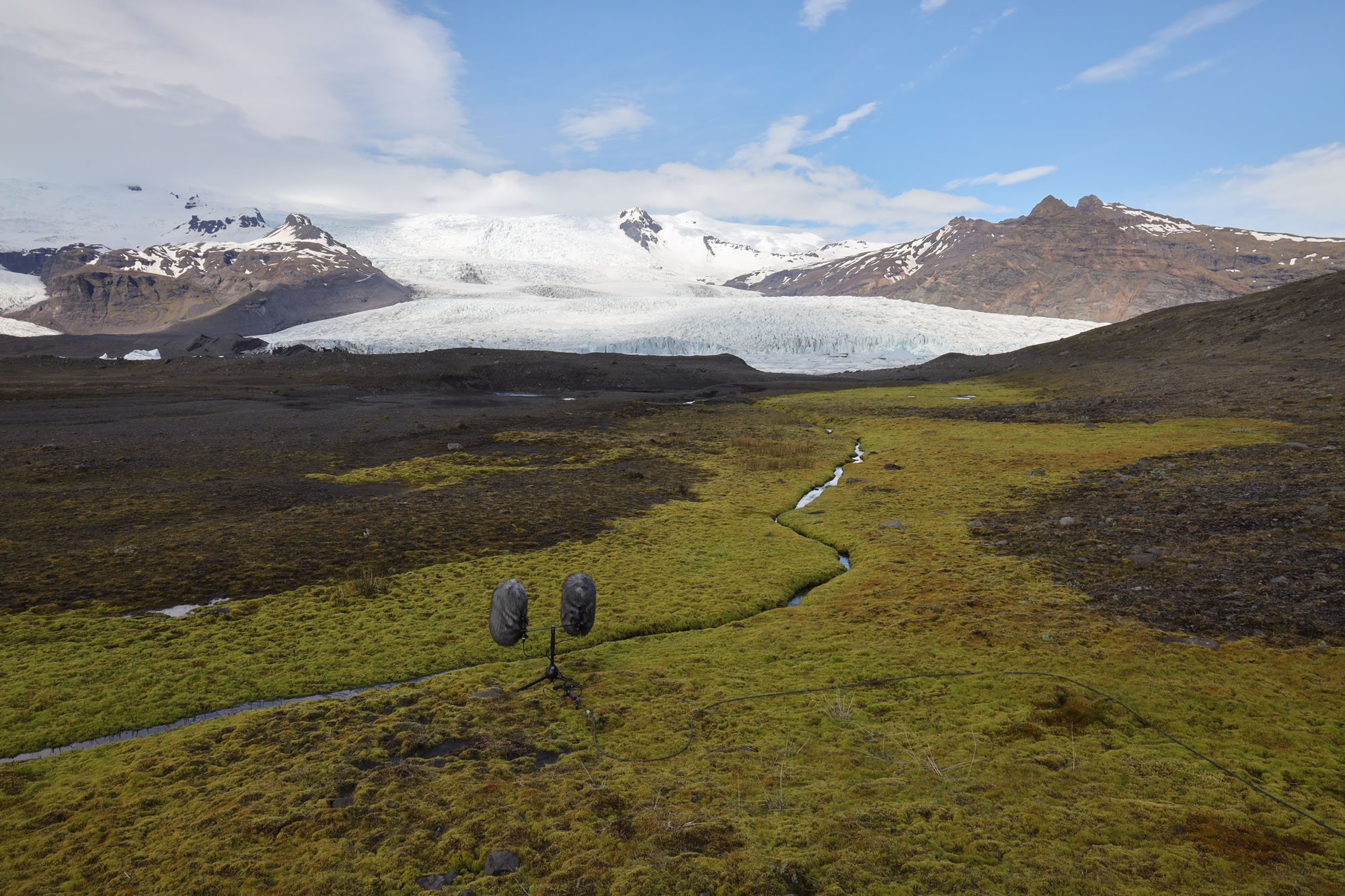
There is a place near Fjallsjökull glacier I have tried to record several times in recent years. But I´ve never been happy with the result.  Mainly because of noisy traffic from road no.1 and/or surf noise from Breiðamerkurfjara beach or because of weather.
But COVID19 gave me an wonderful opportunity to record this place without tourist traffic in June 2020.
This place is a small glacial corrie south of Fjallsjökull glacier. It is a small, wet area, with several fresh water springs. Arctic flora brings lots of birds to this place so the soundscape can be very interesting with a rumbling glacier in the background.
This is a part of several hours long recording. The time is around 5 o’clock in the morning. Flock of noisy Barnacle geese has already landed not far away from the microphones. Through the whole recording these Barnacle geese come closer and closer to the microphones, so be careful, in the end they get loud.  Early in the recording two Whimbrels sing an interestingly long „love song“. Other birds are audible too, like Golden plover, Dunlin, Rock Ptarmigan and Red Throated Diver.
Once, about 2km away, a big piece of ice breaks off the glacier into the lagoon with noisy consequences.
Background noise is mainly a surf from the ocean behind the microphones, about 5 km away.
Quality open headphones are recommended while listening at low to mid level, or in speakers at low level.

(mp3 256kbps / 62Mb)

If the media player doesn’t start to play, please reload this individual blog in new tab or frame

Recorder: Sound devices MixPre6
Mics. Lewitt LCT540s (NOS setup)
Pix: Canon EOS-R

Weather: Calm, Cloudy, about 4°C
Location: 64.010735, -16.391960

Read Full Post »

IMG_2200

Hólmavatn is a heath lake in the interior in west of Iceland between the two valley Kjarrárdalur and Hvítársíða. It is a part of a big lake system on a heath named Arnarvatnsheiði.
I have once before record the soundscape by this lake before. That was mostly a struggle with wind all the time, so I did not get anything interesting.
But at 22nd of June 2019 the weather forecast was perfect for this area, clear sky and calm most of the night.
I arrived with my gear around 9 pm at my previous recording place. It was still windy and some anglers about 500m away east of the lake. I quickly put up my rigs knowing that a calm weather meant just lot of gnats. I decided to put a two stereo pairs close to the shore, facing out to the lake. LCT450s in NOS about 60 m east from my car and MKH20 pair 70 m in the west. Suddenly around 11pm the wind stopped to blow and I started the recording.
What glorious soundscape. All those small tiny things and all those bird species. The LCT540s sounds much cleaner and brighter than MKH20, I guess mainly because of the different location.
But there was a big problem which I did not notice with my bare ears. The anglers made so much noise it was clear they would destroy my „natural silence“ recordings this night. They were playing a radio all the time, talking, starting car engines, and even worse, soon after I started the recording two of them started a motor boat. All this noise lasted for about two or two and a half hours.
Later that night when this noisy anglers were gone, all the birdsong became calm and less active. I am not sure why, but afterwards when I listened to the recordings it seemed like the anglers on the boat were disturbing birds on their habitat.
Following recording is a part of this „anglers moment“, probably the best part because the motorboat was mostly far east on the lake most of this time.
In the beginning of the recording you can clearly hear tiny sparks. It is coming from foam which forms between stones in the shore during windy days. When the bobbles in this foam blows, they make this tiny sparking sound. During the recording the sparks get fewer and lower because the weather is calm and no waves on the lake.
But there are so many bird species I guess I will not know them all. Great Northern Diver, Read Throated Diever, Arctic Tern, Whooper Swan, Pink Footed Goose, Black Headed Gull, Golden Plower, Dunlin, Whimbrell, Common Snipe, Common Redshank, Arctic Skua, Rock Ptarmigan and probably some other which you are welcome, if you know, to name in comments below.
You will hear the fish jumping and Arctic Tern hunting on the lake surface. Other background noise other than human noise from anglers is mainly from the river Kjarrá which flows in the Kjarrárdalur valley 4Km north of the lake .
This recording got a gently noise reduction, mainly because of high gain.
It was recorded with 47dB gain. In post the gain was normalized +26dB up to -5dB
Quality open headphones are recommended while listening at low to mid level, or in speakers at medium level.

(mp3 256kbps / 68Mb)
If the media player doesn’t start to play, please reload this individual blog in new tab or frame

Recorder: Sonosax SX-R4+
Mics: Lewitt LCT540s (NOS setup)
Pix: Canon EOS M50
Location: 64.799603, -20.895132
Weather: Dry. Mostly calm up to 5m/sec

Read Full Post »

Older Posts »