I must admit that I have posted a recording with this particular mouse before, but it does not play a major role in this recording.
It is the silence, the „calm“ weather and light gusts that can be heard in the recording that I have now been waiting for for almost two weeks, i.e. the end of May – June.
The summer is not going to start well for sound recordings. Winds are well over 4 m/sec and very cold, sometimes up to -3 °C. Normal wind has been all over the country around 4-9 m/sec up to 20-32 m/sec in some places and days.
The situation has therefore been easily called a traditional „winter storm“, then and when snowfall is added.
In such weather, bird song falls silent and young birds die in nests, although some birds are breeding again.
This weather has also meant that it is not possible to install VLF antennas. But major solar storms have raged in the solar system in recent months. But VLF recordings need same weather situation as microphone recordings. Wind should preferably not exceed 2-3 m/sec if anything is to be interesting in the content of the recordings.
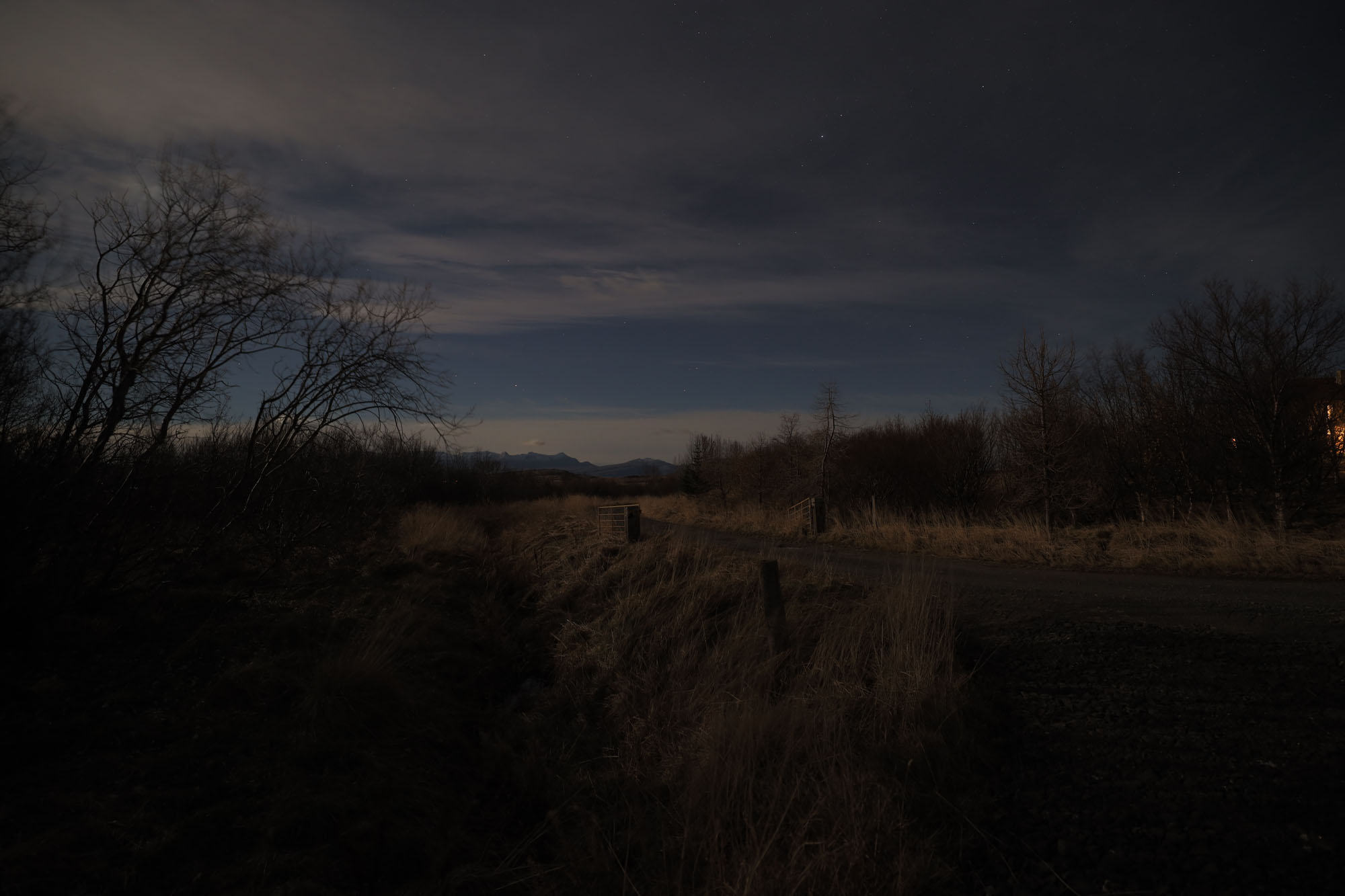
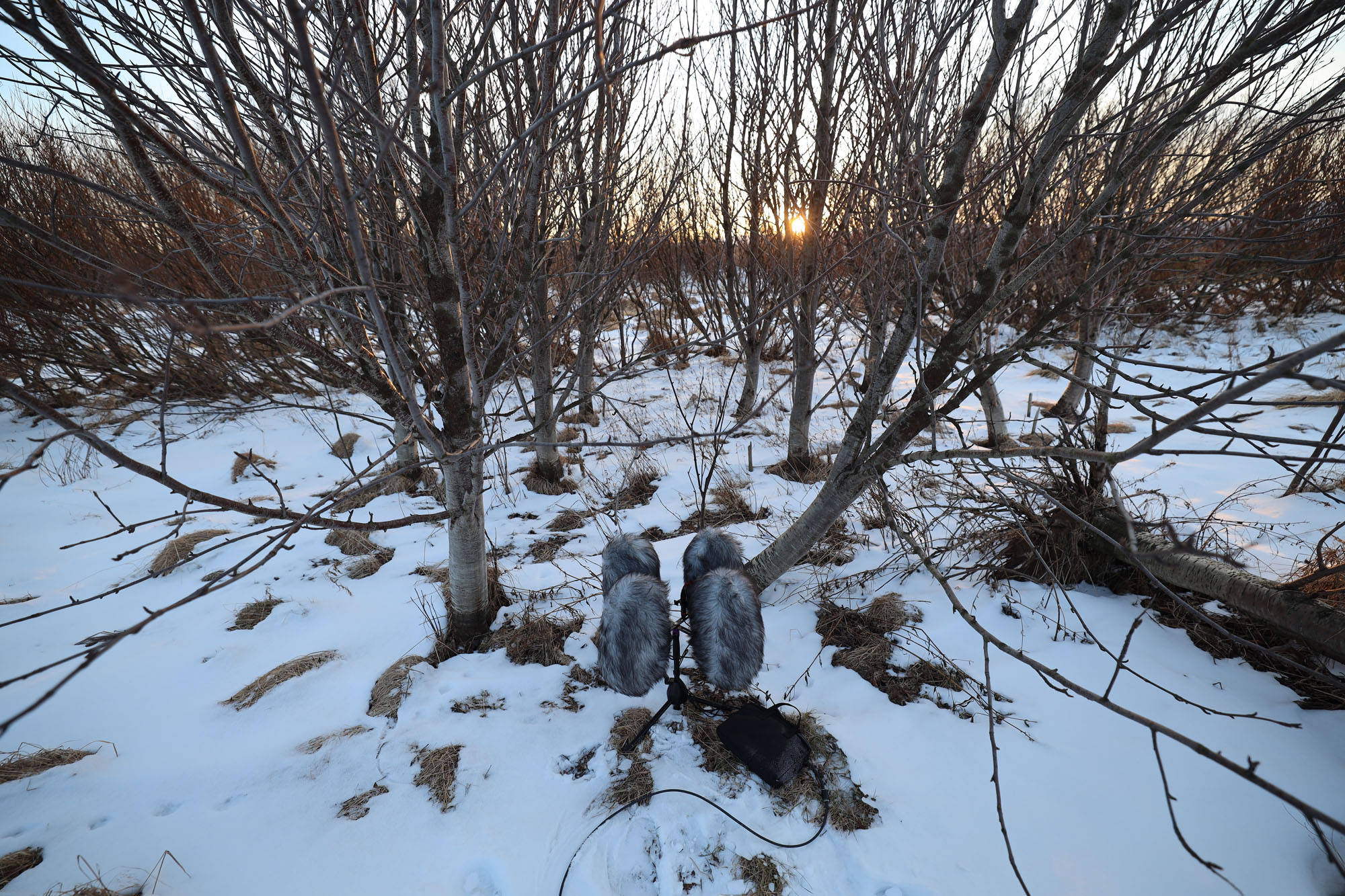
But then we turn to the accompanying recording, it was recorded early in the morning on November 26, 2023 under a full moon in Stafholtstungur at -1°C and 2-3m/sec which rustles gentle straw and leaves.
Because of an earlier experience. This time I thought that I had given the mouse a butter cake, that I spread around the microphones.. It is therefore quite remarkable that the mouse tried to chew on the cables that night. It starts chewing on the microphone cables with great noise (around 20 minutes). Almost throughout the recording, various sounds can be heard that can probably be traced to the mouse, especially in the last three minutes.
As it was getting close to 6am, you could hear some traffic in the distance
The SD788 was recorded with a gain of +48dB with no LPF, which was probably not wise. But if you can get away with it during recording, it’s often more fun to manipulate it afterwards. It was cut below 50Hz and above 10Khz
The gain was increased by another +14 dB to normalize to peak level in post-processing.
Quality open headphones are recommended while listening at low to mid level, or in speakers at medium level.
(mp3 256kbps / 62Mb)
If the media player doesn’t start to play, please reload this individual blog in new tab or frame
Recorder: Sound devices 788
Mics: Lewitt LCT540s ( IRT cross 90°/30cm)
Pix: Canon Eos R
Here is a recording that was left to run for a whole summer night, 29th of June, 2023.
The summer vacation was coming to an end, I had been suffering from a kind of flu for a month. I had no energy for long, difficult journeys, or lying outside in any weather to record and bird life that had been extremely silent all spring due to the cold and wet.
Field recording is by no means an easy and blissful job.
Although it is often possible to be filled with hopelessness and feel as if nothing has been recorded, it always becomes clear on closer listening that interesting material is often hidden somewhere in long recordings.
Here is one recording that I recorded at a farm that I have access to.
This night I decided to use the NT1 beneath a house wall to have a shalter against the wind. The choice of NT1 was made because if I had used an omni microphone there would have been an annoying reflection or echo from the house wall.
It is dawn and you should hear a lot of birdsong. But the wind drowns out all the birdsong.
But then the wind starts to calm down and you can hear more birdsong and bird actictivity, both near and far.
This recording is a bit of a mystery. It is therefore likely that I will later put another part of it on the web.
Quality open headphones are recommended while listening at low to mid volume.
If the media player doesn’t start to play, please reload this individual blog in a new tab or frame.
The summer of 2023 was difficult when it came to recording nature sound. It was always windy, except for a few moments here and there. So I got only a few recordings that I was satisfied with. But this summer 2024, the weather was even worse. The summer started with a snowstorm in the north of the country when many migratory birds had started nesting and everything disappeared under the snow. Actually the whole summer has been both cold and wet, which will not change now in late August .
I haven’t asked any experts in that field, but in my opinion, birdlife has been extremely dull or quiet all over the country. That’s why everything I recorded this summer in places where I should have heard a rich birdlife is almost nothing, except wind and rain sound recorded in temperature between 0-7 °C.
Keep in mind that when the wind exceeds 2-4 m/sec, many sounds that could otherwise travel long distances disappear. In addition, sounds that travel a relatively short distance sound much further away than if it were calm.
On June 1, 2024, I began to realize the situation because I had not been able to record bird life for a whole month of May due to the weather.
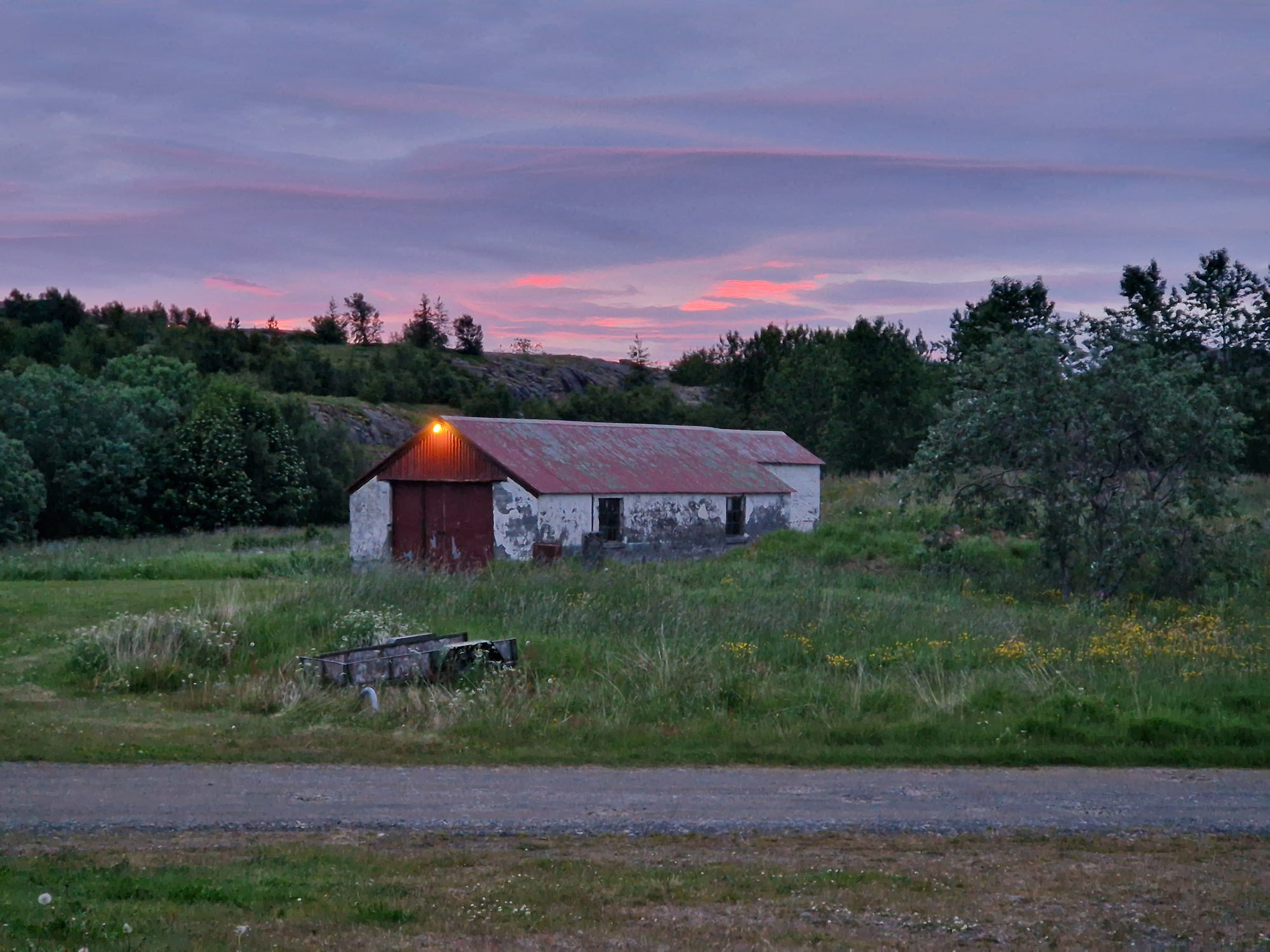
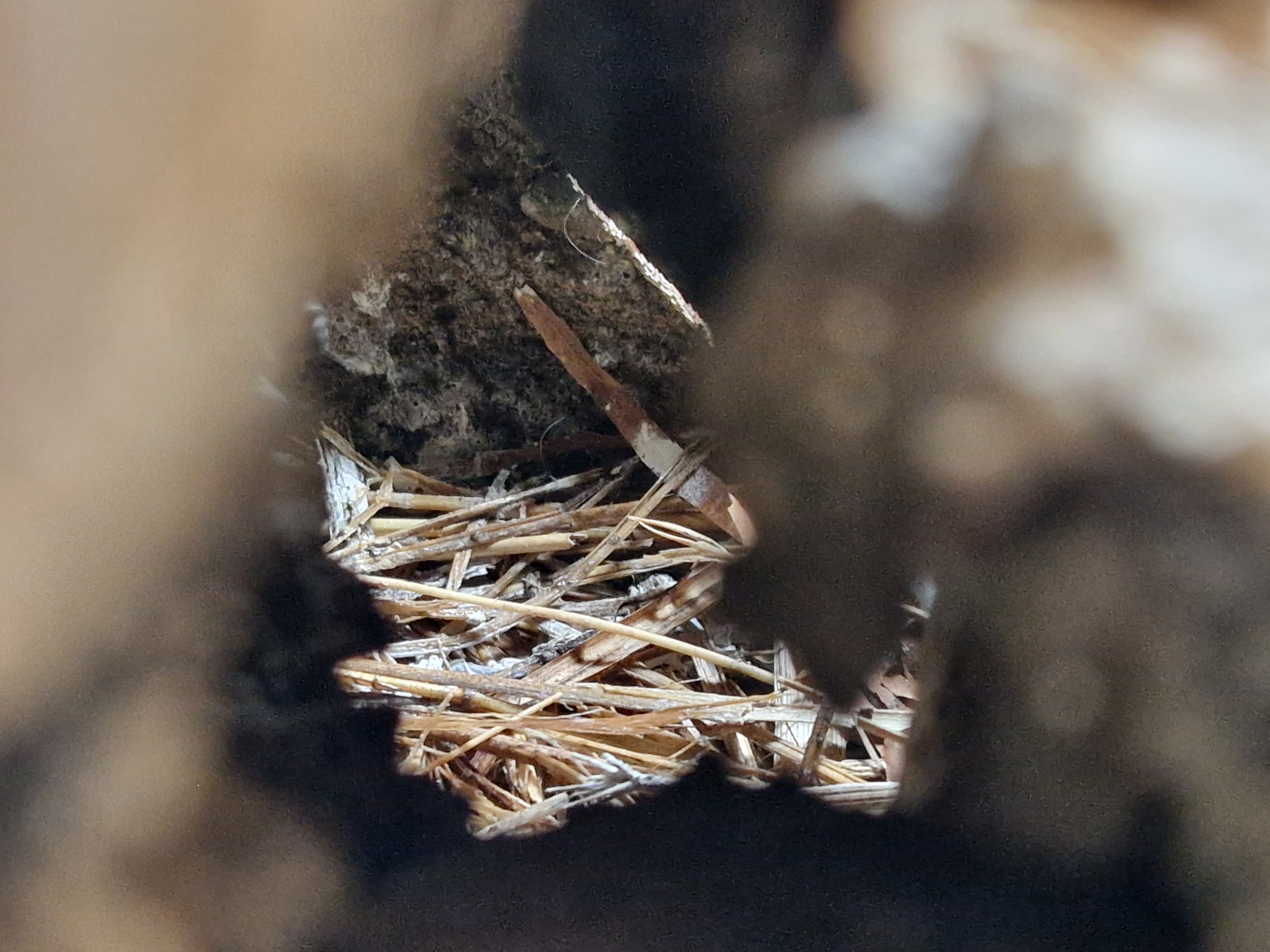
So I took the opportunity when I noticed a starling nest inside a wall in an abandoned barn to record a birdlife inside. I was able to record through a small hole in the wall but the bird had access to the nest on the outside.
I used a Nevaton MC50 quad and a Zoom F3 recorder, but made the mistake of recording in X/Y rather than in MS. I say that because the weather sound in this barn was no less interesting than what happens in the starling’s nest.
The background noise is primarily from trees blowing in the wind outside. Some of the windows in the barn are covered with plastic film, so from them comes the sound of drums in gusts and sometimes you can hear rain. You can hear a few migratory birds outside, but otherwise it’s not very lively
Because I record this in a tight situation, close to a corner, I don’t seem to have placed the microphone in the best place. There is therefore not a perfect balance between the right and left channels plus the stereo image is rather tight.
But let’s not let that distract the audience.
Quality open headphones are recommended while listening at low to mid volume.
If the media player doesn’t start to play, please reload this individual blog in a new tab or frame.
I do quite a bit of recording music, so it would be nice to be able to publish some of it here, especially music that I think is extremely well played and where the recording has been successful. For example, I have often wanted to put classical music on the web in December and January. But professionals have little interest in giving permission for this, possibly because I only ask these people once.
So I’m going to share different music instead, which is even more beautiful than all music, but it’s birdsong in the spring.
Here is a recording from last spring that I had forgotten I had recorded.
I had a Zoom F3 device recording in several places almost non-stop for several days in Stafholtstungur, western Iceland. I used Rode NT1 microphones and set them up to NOS 90°/30cm. It can hardly be considered the best setup for such long nature recordings. The reason is that sounds such as background noise from the wind, rustling of leaves, running streams and traffic can change a lot in 24 hours, so the sound pressure between channels can easily go out of balance. It can even be detected in this recording. Some traffic can be detected at a distance of 5-10 km in the (left) channel. That’s why it’s usually best to record in AB 40-50cm, if you’re going to record for a long time.
But since I primarily record natural „silence“, there are not many microphones that handle silence well and the ones that do it best are all cardioid, which has led me to start recording a lot in IRT (4ch 90°/30cm)
In some cases, it is possible to set the cardioid up to AB 40-50cm, but you cannot do that unless you intend to record from one direction. In this place the sounds were coming from all directions so it was not available.
It’s a low-key recording, actually amplified silence. Recorded at „Zoom gain at 256“ and HPF 40hz. In post-processing the recording was normalized (+25) up to -7dB
There is a lot of recorded material here that I feel is a shame to be forgotten on hard disks, so I’m going to allow myself to call this „Part 1“ because Part 2 and 3 and more also need to get here on the web.
The footage will therefore not be exactly from the recording location, but not further than 500 meters away.
Quality open headphones are recommended while listening at low to mid volume.
If the media player doesn’t start to play, please reload this individual blog in a new tab or frame.
(mp3 256kbps /66,5Mb)
Recorder: Zoom F3
Mics Rode NT1 (NOS 90°/30cm)
Mics: Canon EOS R
Weather: Calm, partly cloudy, around 7 to 10°C
It doesn’t happen often that my recordings are „interrupted“ by animals. But it happened last weekend when I was recording at my traditional place in Stafholtstungur in western Iceland. This time it was mice that seemed to gnaw the rubber on the tripod or the cables that ran up to the microphones. When the recording had been going on for three hours and it was 3 o’clock in the morning, the commotion in the mice started to keep me awake. It was as if they had gnawed a hole all the way into the windshield. So I went out and gave them a piece of cake next to the microphone stand. That made them stop biting the microphones. Instead, they started gnawing on the cake, which you can clearly hear after I brought the slice of cake.
This is traditional night silence. The background noise is mainly the wind in the leaves as well as the traffic of individual cars several kilometers away. I did not clean the internal mic noise in this recording as there is no need for it. Here it was recorded with 48dB gain on SD788 and in post-processing the volume was increased by +10dB up to peak -5dB.
Quality open headphones are recommended while listening at low to mid volume.
If the media player doesn’t start to play, please reload this individual blog in a new tab or frame.
I don’t expect many people to be interested in listening to this recording. It is mainly a silence. But this is just a normal natural Icelandic soundscape in calm winter weather, so I have a lot of stuff like that in my collection which I think should be published in this blog
At least I can tell. it is very good to fall asleep from recording like this.
This one was made overnight on 4th of March 2023 and the time is around 5 o’clock. For some reason, there was unusually low traffic that night. Perhaps it had to do with the fact that the television that evening had some musical contest, so lots of folks in the county had been drinking alcohol that night. So there were few people who could or had to drive unnecessarily around the countryside that night.
But anyway it is a traffic noise in this recording. Mainly from the main road no:1 for about 5km away and one car will pass by the recording location, 250 meters away. So don’t play this too loud.
As expected at this time of year, silence was something that was significant from nature’s side. Fortunately, the weather was completely calm. It gave me the opportunity not to use low pass filter LPF, which gave me the ability to listen for a variety of low-frequency sounds that I’ve often encountered on this recording site before but has been hard to explain. Was it an earthquake or something else?
When silence is greatest, there is little or nothing that attracts attention in this recording. Two foxes can be heard calling. Rock ptarmigan, ducks and swans in the distance. But as ears sink deeper into the material and every sound is separated from each other and from the background noise, there is the „sound of water“. Sound of wet grass. Maybe an ice crystal transformed to a drop of water. At times, you may hear a „flow of water“. Probably a small creek far away or maybe as well an underground water flow because there is no stream nearby. But the ground in this place has thin soil on a rocky glacial soil
The background noise is equally fascinating. Some of them are known and could best be considered as „technical problems“. But there are also intriguing things to be found because sometimes it is hard to figure out where this noise comes from.
So let’s talk about „background noise“
At the lowest frequency, the vibrations caused by the wind are usually almost always detected, i.e. “Brown noise”. Hence, it is usually necessary to use HPF for all outdoor recordings, except in recordings like this where the weather’s so calm that it’s like being in a wardrobe. This recording, as well as others I’ve done at this location, may include rumbles or knocks that may come from a horse or horses from a great distance, possibly some kilometers away. I think this noise coming this distance travels through the ground. It might be earthquakes, but it is unlikely in this recording. Apart from the distinctly low frequency of sounds that take place in a particular setting, I suspect that the constant rumblings that can be heard in the recording have both technical and natural explanations, which mostly though is related to turbulence in the air.
On the other side of the frequency curve, at the highest frequencies, “blue noise”.
It is usually only self noise from the microphones and recorder’s amplifiers. I tried very carefully to use RX for noise reduction, but there is always a limit to what is possible to do without spoiling the recording.
In the middle is “Green noise,” something that always interests me. This is a background noise that normally includes sounds that may come from far away and be heard only in a calm weather.
There is something called “Sea State Zero Noise,” a natural silence, or background noise in the oceans. I believe that something similar is happening here. This is noise, which is due to a number of natural factors, but mainly because of the wind and water in the combination of temperature and atmospheric conditions. Today, though, „mechanical traffic“ has constantly been overwhelming the natural noise. The source of this “green noise” like the recording below has a possible origin from car traffic up to 20Km away. From the surf at the beach shoreline 20 to 30 km away as well from a waterfall behind hills, in a canyon 7km away. None of these sounds are discernible to the bare ears. So for me it is often good to identify which direction this theme comes from by recording in IRT setup as this one.
In this recording (or that night) this green noise varies as a calm wave in different frequencies. Whether it is due to variations in air pressures or layering of temperatures or something else, I cannot easily confirm
Therefore, it is best to listen and let the imagination guide you to the course.
For those of you who find a lot of noise in this recording, I would like to remind you that it was recorded with 50dB gain. In post-production the gain is increased by another 25db, up to -10dB peak. So I agree, this recording certainly doesn’t sound good. But I think you can’t do better with the Lewitt 540s and Sonosax SX-R4+ in silence.
Quality open headphones are recommended while listening at low to mid volume.
If the media player doesn’t start to play, please reload this individual blog in a new tab or frame.
(mp3 256kbps / 56Mb)
Recorder: Sonosax SX R4+
Mics: Lewitt LCT540s in IRT setup
Pix: Canon EOS-R
Location: 64.673374, -21.628710
Weather: Calm, partly cloudy, 0°C
Information about „color of noise„
Early last spring I was asked if I wanted to record a 24-hour long recording for Radio Art Zone.
It wasn’t a problem because I’m used to recording 8-14 hours of content whenever I can.
So I made two / three 24hrs recordings in total. All recorded in similar locations on the 23rd-25th. April 2022 in the countryside.
I recorded on four channels with an IRT cross version and in two other locations with two channels in AB & NOS.
If I remember correctly, I sent the IRT recording to Radio art project. The AB recording is already audible on this soundblog, „The brook below Lambaklettur“
The NOS recording was forgotten, until I found it last week.
It was recorded with Rode NT1 microphones and a Zoom F3 recorder.
This recording contains natural „silence“. When I talk about „silence“ I mean that most people would not hear anything with bare ears. Probably only the blood flow in their own body.
But it was not total silence when this recording started here below. The migratory birds had already started to flock to the country. It was also a drizzly rain and therefore quite humid all night while the recording took place. The fur on the windshield got quite wet and you can hear larger drops falling on the wind shield, on the tripod and on the ground around.
This recording starts around the time when birds start to be heard in the early morning. The windshield is already very wet, so it must have adversely affected the recording quality. But surprisingly it is not heard that the NT1 is cracking due to air humidity.
The Zoom F3 had gain set at „256“ and HPF at 40Hz. I’m used to recording with 47 to 50dB gain for such silent recordings. Gain „256“ is therefore not telling me anything, but having worked on this recording, 256 seems to be something similar to 50 to 55 dB gain. This actually needs further consideration because It can be an important issue. The reason why I don’t record with a gain higher than 50dB on the Sound Devices or Sonosax recorders is to prevent additional „amplify noise“ that I feel increases if the gain is over +50dB. It is therefore always better to increase the gain digitally“ in post.
I have a hard time realizing this with the F3 device. The noise seems to go hand in hand with different gain. No matter what the gain is. Whether I should generally record with „256“ gain or „128“, when recording quiet soundscapes needs further testing. I find the noise a bit more in this recording than if I had recorded with the Sonosax for example, but that noise I hear and see on spectrograms could also be a sound from the drizzle, or raindrops when they fall to the ground. It can therefore be assumed that there is some natural noise in that recording. Therefore it is not entirely possible to blame F3 or NT1 for all the noise that can be heard.
The first sound file is over 30 minutes long which has got a gentle noise reduction and then below 5 minutes of original recording for comparison (without NR). Both recordings are normalized up to -10dB. The original files from the recorder had a -38dB peak value which is normal for „quiet“ recording like this.
Bird species in this recording is mainly common snipe, whooper swan, black tailed godwit, redwings, whimbrel, golden plover and eurasian wigeon. Most of them are in the distance in this recording.
I will post the continuation of this recording later. Then the number of birds increases and they come closer to the microphones.
Quality open headphones are recommended while listening at low volume.
If the media player doesn’t start to play, please reload this individual blog in a new tab or frame.
(mp3 256kbps / 62Mb)
Original recording from Zoom F3, only normalized up to -10dB & downgrade to mp3
(mp3 256kbps / 9,4Mb)
Recorder: Zoom F3
Mics: Rode NT1 (NOS)
Pics: Canon EOS R
It’s time for me to put a recording from my new Zoom F3 on the web.
The recording is from Stafholtstungar in Borgarfjörður, western Iceland, 4th of June 2022.
This is a 30 minutes part of another 35 hour long recording at circa 5AM. All these 35 hours I used only three 10Ah / 5V Li-Ion batteries. So each battery, which is smaller than the recorder, lasts for 12 hours.
It is different from around the mid eighties when I tried to record a natural sound on a Sony TC-D5M cassette recorder with a 4Ah acid battery that lasted for about 3 hours, or for 30 minutes with internal batteries.
The microphones in this recording were Rode NT1 in AB45 setup, dressed in Rycote WS2 windshields, about 20cm from the ground. It was recorded at 32bit / 48khz, with a recording gain at „32“ which I could believe was comparable to a 45dB gain at Sound Devices. In post-production, the recording was normalized by + 22dB up to -6dB and then converted to mp3 256kbps.
Various bird species are in the recording, such as Redwing, common snipe, common redpoll, whooper swan, raven, rock ptarmigan and definitely other birds too.
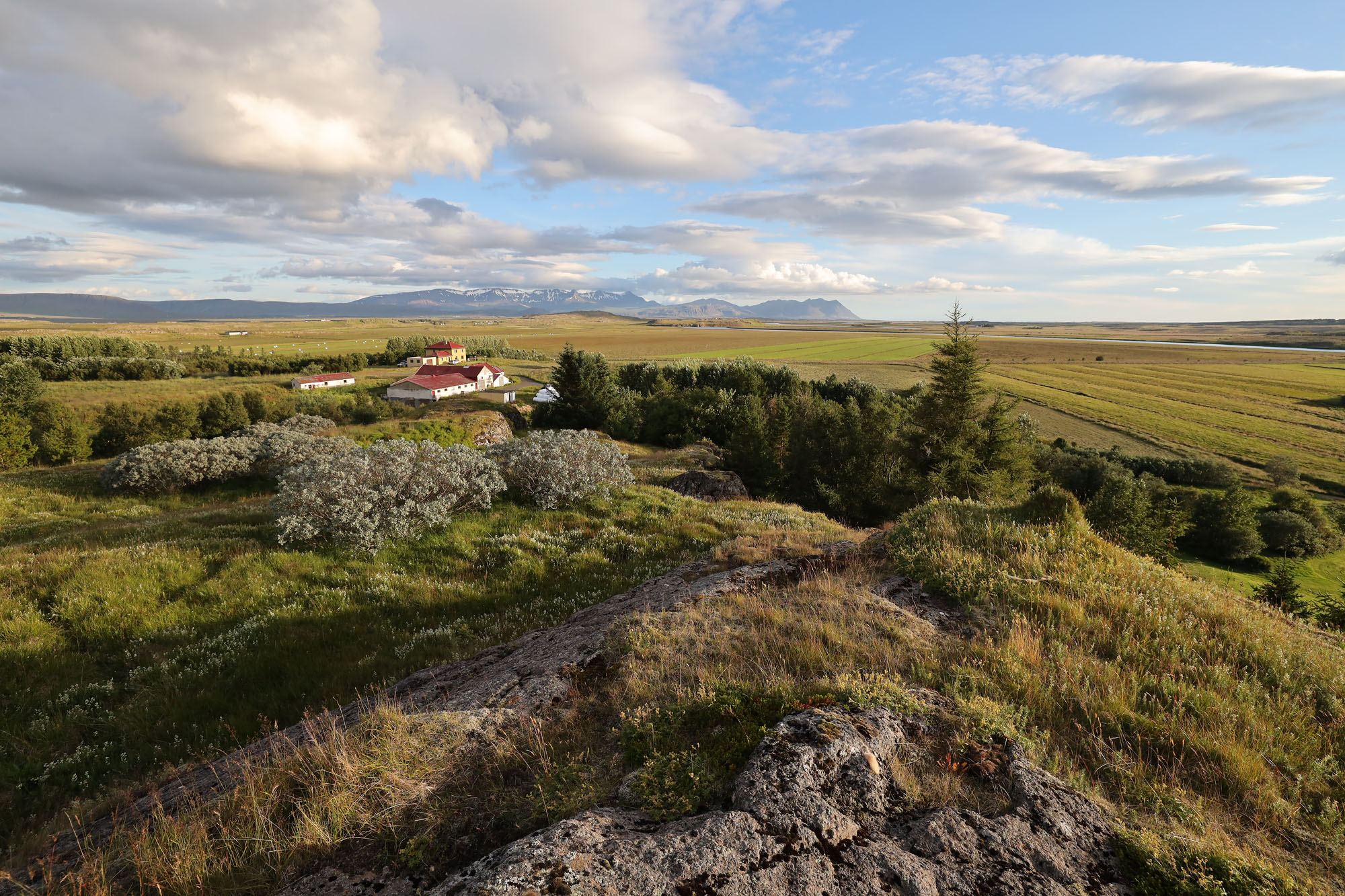
The name „Lambaklettur“ (Lamb rock) is a rocky hill above the recording site.
Quality open headphones are recommended while listening at medium or low volume
If the media player doesn’t start to play, please reload this individual blog in a new tab or frame.
(mp3 256kbps / 56Mb)
Recorder: Zoom F3
Mics: Rode NT1. AB45 setup
Pix: Canon Eos R
The natural acoustic in Iceland for 8 months a year is little more than silence or noise created by the wind. It is obvious that my recording collection contains a large amount of this sound of silence. These are usually 6-10 hour long recordings. I usually do not listen to these recordings, but I run them all through a spectrogram to look for something interesting. Sometimes something interesting happens near the microphone, but it is rare. It is usually just different weather and of course the traffic that interrupts almost all recordings except for two to three hours overnight. It was recently that the musician Hazal Elif Yalvaç contacted me and asked me about all kinds of „wind sounds“. So I searched through the collection, which made me find an interesting recording like this below. It contains all kinds of wind sounds, both near the microphones and far away. The whole recording sounds like you are in the middle of a huge symphony orchestra. When it is calm and silent you can hear when the frost bites with a tiny „pop sound“. Straws and branches rub together in the wind and the ice breaks in the soil. Literally everything between falling snowflakes to strong winds blowing through tall trees in the distance. This is a high gain recording (+50dB at rec.+ 20db in post) with microcosmic sound which was recorded in west Iceland 15th of February 2021. This Gust symphony starts in Larghissimo, so be patient. The tempo will increase within a few minutes. Quality open headphones are recommended while listening at mid level If the media player doesn’t start to play, please reload this individual blog in a new tab or frame.
(mp3 256kbps / 62Mb)
Recorder: Sound devices 788 Mics: Lewitt LCT540s (IRT cross setup, mixed to stereo) Pix: Canon EOS R
Location: 64.673367, -21.628704 Weather: partly cloudy, slightly snowing, around -7 to -12°C
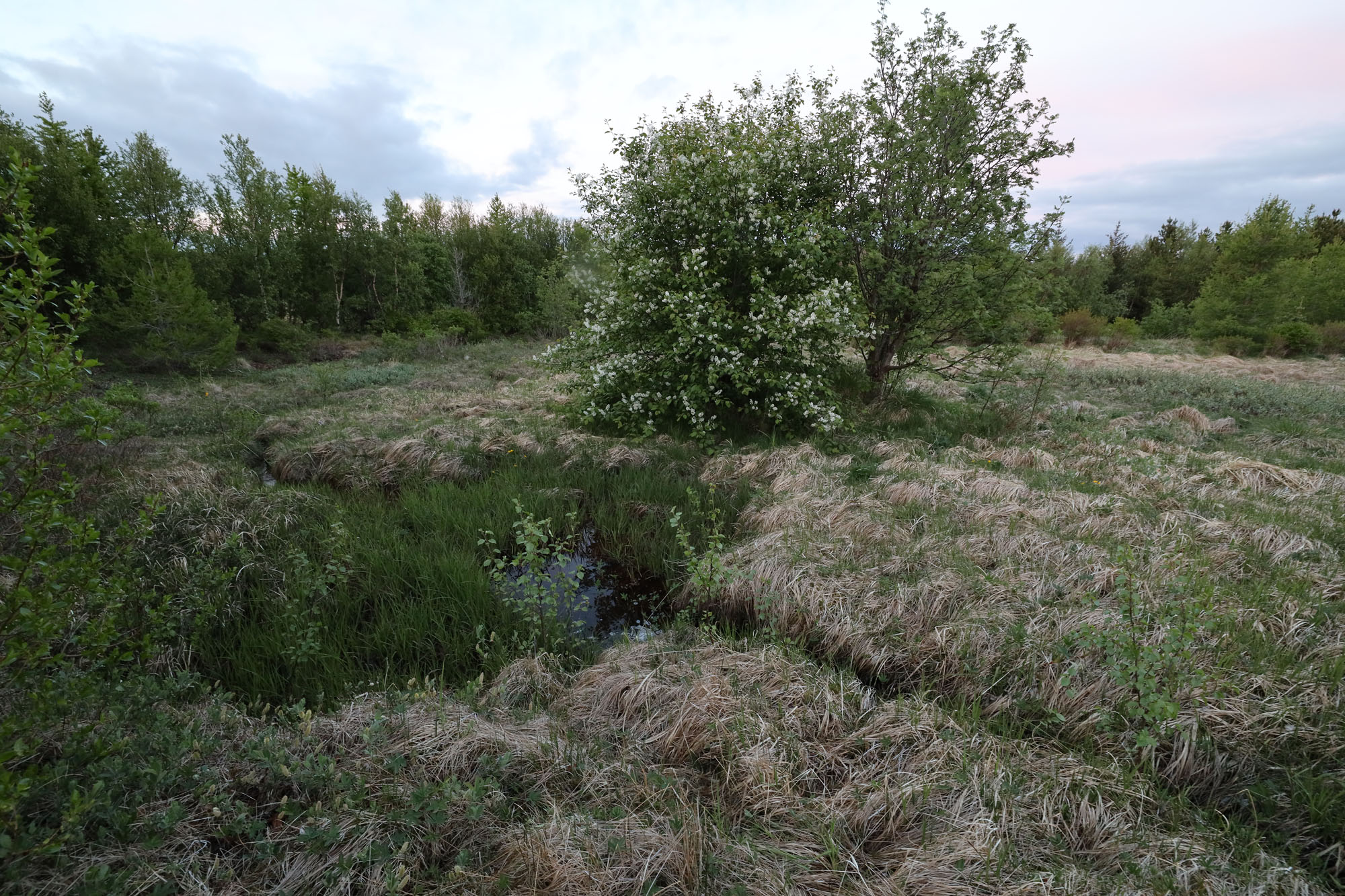
For several years I have recorded the soundscape at the same spot when I visit a cottage in west Iceland. Every time I record there I get something different and interesting, all year around. Forestry has changed the birdlife a lot on this spot in the last 20 years. Birds like Redwings, Common Redpoll, Eurasian Wren and Starlings are now in increased numbers since the beginning in this century.
I recorded this spot overnight both 6th and 7th of July 2021.
Lot of chicks had already left the nests so the grass field around the microphones was full of birds searching for insects which can be heard in this recording.
The following recording is not an example of the „best part“ which I record these two mornings. It is just a part of the first WAV file at the 6th which I choose because of low traffic. So more of these two days’ recordings will be audible in this blog in the future.
The time is between 2:30 am to 3:05. It is calm and quiet in the beginning until the Common Snipe begins to make a noise with its tail. Young Redwings, Common Redshanks and Snipes are all around the microphones. Other birds are not far away such as European Golden Plovers, Whimbrel, White Wagtail, Eurasian Wren, Rock Ptarmigan, and Whooper Swans in the distance.
This was recorded with four channel IRT setup, but sadly one of the cable was broken so I could only use three of the channels which was though easy to mix into INA-3
This was recorded at 48dB gain (HPF@80hz). In post the gain was increased about 30dB plus gentle RX noise reduction.
Quality headphones are recommended while listening at low or mid level or in speaker at low level.
If the media player doesn’t start to play, please reload this individual blog in a new tab or frame.
(mp3 / 256mbps 69,8Mb)
Recorder: Sound devices MixPre6
Mics: Lewitt LCT540 (IRT setup)
Pix: Canon EOS R





 HLJÓÐMYND - SOUNDIMAGE