Feeds:
Færslur
Athugasemdir

Posts Tagged ‘Tjaldur’

IMG_2200

I made the big mistake of formatting an HD disk with photos I took throughout 2023 and into the winter of 2024, but in my absolute stupidity I didn’t have a backup. So I always run into problems if I’m going to post audio from this time period here on this blog.
But I also take photos on my SLR camera which has a fairly large card so I have consciously allowed photos to be on the card precisely to save such accidents and losing photos.
I don’t actually have a lot of good audio recordings from this summer. Both because the weather was boring most of the summer and I had the flu most of the summer vacation.
But there are a few recordings that I think are interesting from this summer. Especially the ones I took in Steingrímsfjörður and around Drangsnes in western Iceland.
I had a few pictures on my SLR SD card that saved me from being able to put these recordings on the web.
This is part 2. But part 1 was recorded at midnight, before the sunlight hit the recording location. Here in part 2 the sun has risen. Just a minute before the recording started I had to move the microphones to a slightly more sheltered spot, because over the night the wind started to increase which unfortunately can still be heard in the recording.
The recording is „unprocessed“. Recorded at +50dB gain, normalized up to -7dB by adding +20dB in post, fade in and out and then converted to mp3.
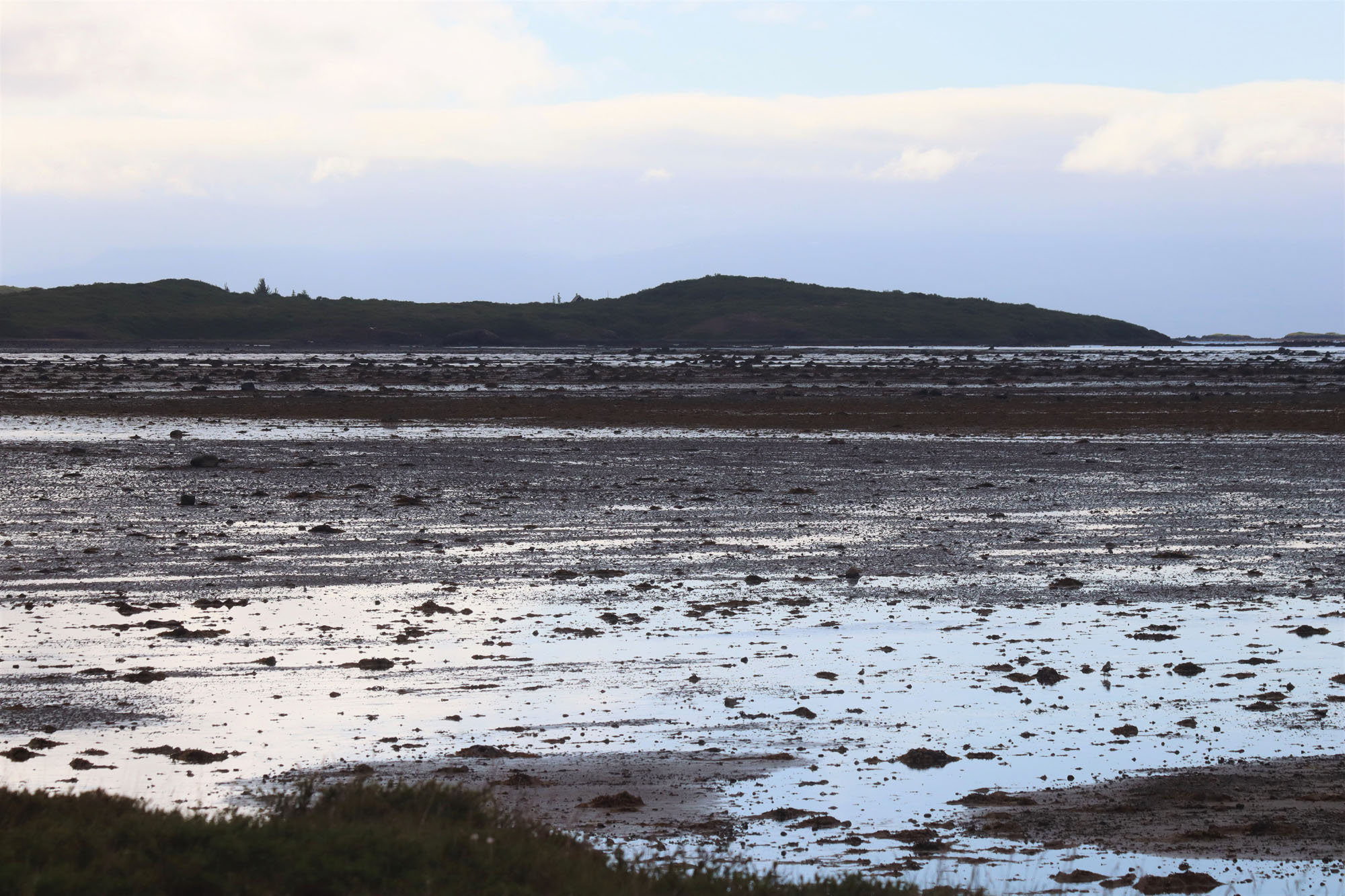
The recording starts exactly at 4:00 in the morning on June 22, 2023 and ends just over half an hour later. After a high tide earlier in the night, the tide was already starting to recede. The seaweed on the shore was still wet, which makes a soft clicking and dripping sound, which can be heard differently well with different headphones. The birds are slightly quieter than earlier this night, but the soundscape is still magnificent.
There was several gull species, at last great black backed gull. arctic tern, common eider, whimbrel, European golden plover, red throated loon, common loon, arctic puffin and eurasian oystercatcher.
There you can hear me getting in and out of the car to take pictures. Including the accompanying picture. At least one truck can be heard from across the fjord. It can also be heard in small fishing boats at the beginning and end of the recording.
It is clearly a new day rising.
Quality open headphones are recommended while listening at low to mid volume.
If the media player doesn’t start to play, please reload this individual blog in a new tab or frame.

(mp3 256kbps / 64Mb)

Recorder: Sound Devices MixPre6 24/48
Mics: Lewitt LCT540s (IRT quad 90°/30cm)
Pix: Canon Eos R

Weather: Calm to 3m/sec, cloudy, about 7°C
Location: 65.692816, -21.558576

Read Full Post »

IMG_2200

Last summer 2023 I went to a place I haven’t recorded much. Was it at Strandir in northwest Iceland. A friend invited me to stay in an apartment for a few days in Drangsnes, so I tried to use the time as well as I could for field recordings in the area.
It actually didn’t go very well. I had come down with a bad flu the same week as summer vacation started so I had little to no energy for many weeks. I was also facing another problem. The whole time I was in the area there was a strong wind except for maybe 1-2 hours during some nights. It was also rather cold, so nature was rather silent. Much of the material I caught these days was therefore not particularly interesting.
However, I had the opportunity one calm night to record a nice peace at the coastline. Part of it is here below. It’s very likely that I will put more of this recording on the web later, because the soundscape changed a bit during the 3-4 hours I was recording.
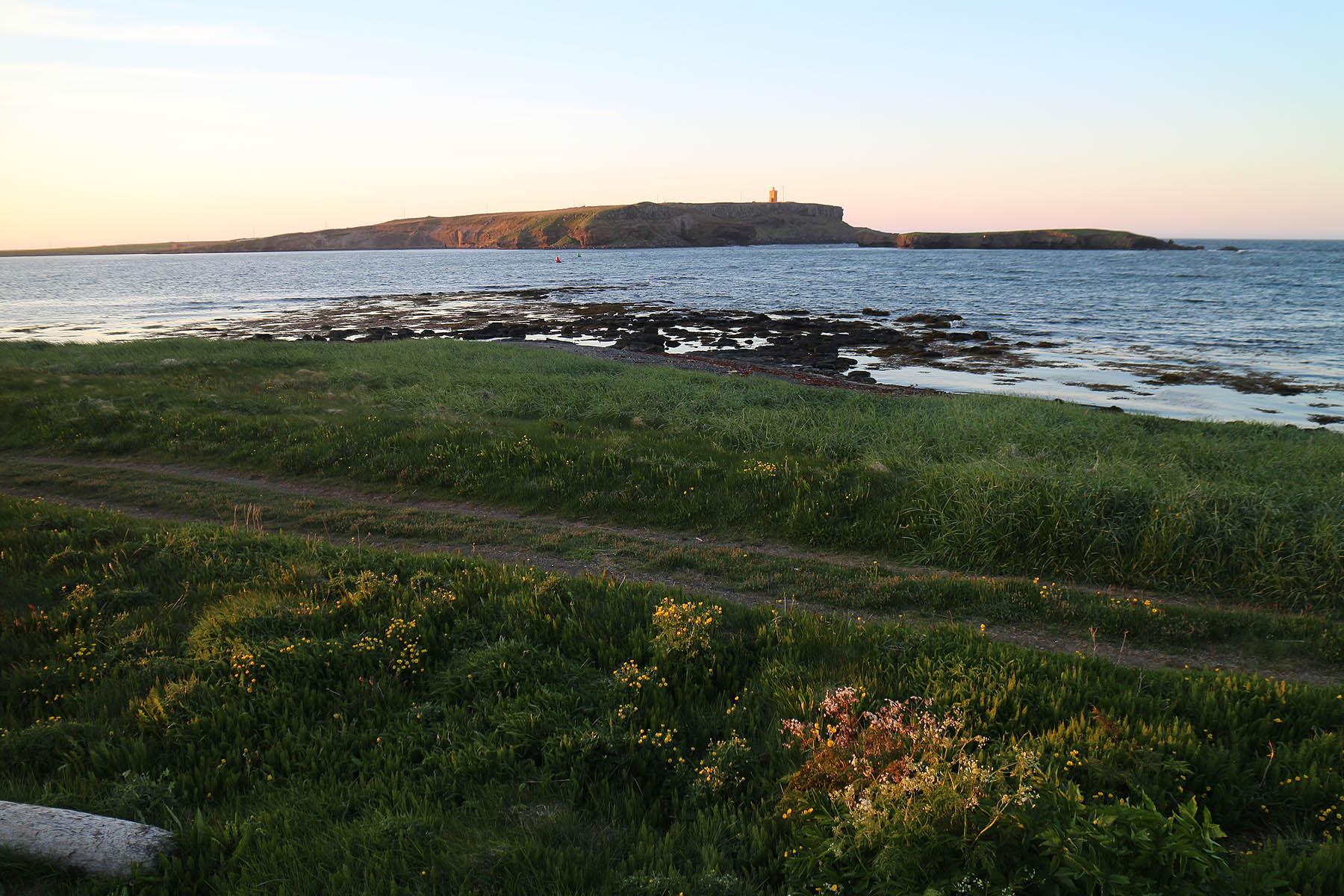
It is the summer solstice so it is therefore bright all day long. The recording starts at 23:45 and ends at 00:20 o´clock.
This is a typical soundscape in fjords in northern Iceland and in fact everywhere around the arctic circles.
This is a high gain recording.  Recorded at +50 db. Then add about 20dB up to -7dB peak RMS. No noise reduction in post. Just fade in and out.
Many bird species are in this recording. There was several gull species, at last great black backed gull. Arctic tern, common eider, whimbrel, European golden plover, red throated loon, Common loon, arctic puffin and Eurasian oystercatcher. Sheep were not far away and seals were lying on rocks near the beach.
Quality open headphones are recommended while listening at low to mid volume.
If the media player doesn’t start to play, please reload this individual blog in a new tab or frame.

(mp3 256kpps / 63Mb)

Recorder: Sound devices MixPre6
Mics: Lewitt LCT540s (IRT cross – 30cm/90°)
Pix: Samsung S22

Weather: Calm, cloudy, about 7°C
Location: 65.692865, -21.558621

Read Full Post »

IMG_2200

It is rear now a days to discover new places without traffic or engine nose. I found one in June 2019. It was at Fellströnd, in the northwest of Iceland. That means I have natural silence for more than a one hour. It is a south part of a peninsula which only have gravel roads and no shopping service so motorist are normally not driving there for pleasure.
Less human traffic means more biodiversity. It thrives better in places with less farming and fast driving cars. One roadkill can as well mean a death of the whole family. Car covered with smashed bugs means less food for birds… and so on. This is clearly visible and audible in those areas which have „industry“ farming and lots of fast driving traffic.
No traffic, or engine noise, means more natural silence and more transparent soundscape. Therefor it is very interesting to listen to this recordings. It is even possible to hear sheep footsteps far away and detect what bird species are in the area, even far away. In fact it is possible to analyze the situation of the biodiversity.
This is a high gain recording, recorded at +50dB. Gain was then increased in post about +25dB, normalized at -8dB and gently NR.
This is a part of 10 hour recording. This part was recorded between 7 and 8 in the morning at 21st of June.
Many bird species are audible in this recording. Black tailed Godwit, Common Redsank, Whimprel, Red necked Phalarope, Eurasian Oystercatcher, Common Ringed Plover, European Golden Plover, Dunlin, Raven, Redwing, Purple Sandpiper, Meadow Pipit, Geylag Goose, Whooper Swan, Red Throated Diver and Common Eider. I am almost sure I have not counted them all.
You can hear sheep footsteps which was though far away, also birds wing flaps as a low rumble noise.
Quality open headphones are recommended while listening at low or medium level.

(Mp3 256Kbps / 48Mb)
If the media player doesn’t start to play, please reload this individual blog in new tab or frame

Recorder: Sonosax SX-R4+
Mics: Sennheiser MKH20 (AB40)
Pix: Canon EOS M50
Location: 65.169836, -22.404601
Weather: Calm, cloudy ca 13°C

Read Full Post »

IMG_2200

Last summer I spend one week at Raufarhöfn, a small village in north east of Iceland, close to the arctic circle. Most of the time it was a fool‘s weather for „quality“ recording. But anyway, I recorded almost 6 to 10 hours every night close to the sore. Most of theese recordings contains rumbling wind noise, but sometimes – very few times, I got what I was looking for.
Here is one of them, recorded 17th of June 2016.
It is early morning. The clock is around four. Birds are busy to protect and teach their young to search for food. Shortly after the recording starts, you can hear a fisherman pass by on his car on way to the harbor. Then later, the fishing boat goes, and passes by on the way to the sea. It takes a long time for the enginenoise to disrepair.
This is a peaceful recording. A typical midsummer morning soundscape at the arctic circle, where the sun never goes down. Many bird spices are in this recording, but mostly Common Eider and their youngs. Also you can hear Oystercatcher , Golden Plover, Purple Sandpiper, Red Necked Phalarope, Whimbrel, Common Snipe, Redwing, Snow Bunting, Svan, Great Northern Diver, Northern Fulmar, Kittiwake, Raven and probably may other.
Quality open headphones are recommended while listening at low to mid level.

(256kbps / 55Mb)

Recorder: Sound Devices 788
Mics. Sennheiser MKH20 (AB40)
Pics: Canon EOS–M

Location: 66.451296, -15.946621
Weather: Light gust, cloudy

Read Full Post »

IMG_2200

Hjalteyri is a small village on the western shores of Eyjafjörður, fjord in north of Iceland.
It all began when the Norwegians started salting herring around 1880 and the village Hjalteyri was confirmed by law as a trading post in 1897. Swedes, Scots and Germans would fish there in the following years but all foreigners had left by 1914.
The Icelandic fishing company Kveldulfur was active there from 1914 and in 1937 built the largest herring factory in Europe at Hjalteyri, which ran until 1966. The company also built many of the beautiful residential buildings that still stand in the village, such as the house of Thor Jensen, the founder of the company, and Asgardur, where the head of the factory lived.
The herring disappeared from the fishing grounds in the 1960s and Kveldulfur thus left as well. Fishing from small boats increased. Today, at Hjalteyri is a harbor and a small fishing industry, the drying of fish heads and aquaculture are the mainstay of the economy. During the summer months the buildings of the old herring factory are often used as a venue for art exhibitions. Around 40 people lives there today. There is also a pretty big Arctic Tern colony which brings also many other bird species to the area.
The following recording was captured in 8th of July 2015. It is 25 minutes of 6 hours long overnight recording.
This is one of my recording where I probably should have used another microphones because of the noise source in the surrounding. In this case a „fan noise“ from the factory. I use cardioid mics so the noise is only on the left side, instead of omni which would have brought the noise more to both sides and made the listening more pleasant in headphones.
So now I would recommend to listen to this recording in speakers in low-mid level, instead of headphones.

(256kbps / 46Mb)

Recorder: Sound devices 744
Mics: Rode NT1a in NOS setup
Pics. EOS-M
Location: 65.853976, -18.194666
Weather: Calm up to 4m N, almost clear sky, temp around 8-12°C

Read Full Post »

IMG_5637

During Icelandic independence day, 17. of June 2012, I was in Önundarfjörður fjord in the Westfjords, the north west peninsula of Iceland. This fjord lies deep between steep mountains with high cliffs. After midnight I entered an Arctic tern colony to record their sounds. The recording conditions was as good as it gets. The weather was calm, dry but cloudy, and the temperature was about 7 °C. Almost no traffic was in the fjord so most of the background noise was only coming from falling water in the mountains and sea waves at the shore.
This Arctic tern colony is big and has been there for decades, even centuries. This bird is very territorial and aggressive protecting the colony and many other bird more passive species feel safe to nest among the Arctic tern. So this recording includes sounds from many other bird spaces such as Whimbrel, Black-headed Gull, Black-tailed Godwit, Common Redshank, Oystercatcher, and Golden Plover… and many more
The recording contains also human and sheep voices from a nearby farm. Swans, Red-throat Diver, and common Eider at the shore side and a some sound from a Gull colony high in the cliffs all around the fjord.
During the recording the Arctic Terns attack many times the furry microphones. Sometimes you may hear their excrement fall to the ground around the microphones, but at this time they never hit or peck the Blimps.
The duration of the recording was almost 80 minutes. Following recording contains the last 36 minutes so my disturbing visit is not much audible. This is just a nice ordinary summer night in the north west of Iceland.

Krían í Önundarfirði 17. júní 2012.

Upptaka þessi var gerð í kríuvarpi nærri Holtstanga innst í Önundarfirði.
Veður var stillt, þurrt en skýjað og hiti um 7°C. Það var því varla hægt að kjósa sér ákjósanlegra veður til upptöku á fuglalífi. Allt iðaði af lífi. Fyrir utan kríu mátti sjá og heyra í hettumáfum, spóa, lóu, stelk, tjaldi og fleiri fuglum, Efst í fjöllunum mátti sjá allt fullt af fuglum á sveimi björgunum. Í flæðamálinu voru álftir, lóm og æðarfugl.

Download mp3 file (192kbps / 50,7Mb)

Recorder: Sound devices 744t
Mics: Rode NT1a
Pics: Canon D30

Read Full Post »