Always nice to find a recording from 2023 that I had forgotten. Although mainly because the summer of 2023 was difficult to record due to cold, wind and rain from spring until just over mid-summer. What also happened was that I lost all the photos I took on my phone this summer, so the possibilities of posting material from this summer on this website decreased.
With this recording session I remembered that I had taken a lot of photos on the SLR camera from the recording location, photos that had not been lost.
This recording was made on July 11, when Summer nights are bright.
As often happened this summer, the birdlife was extremely silent and distant. There was no exception in this recording with very brief exceptions.
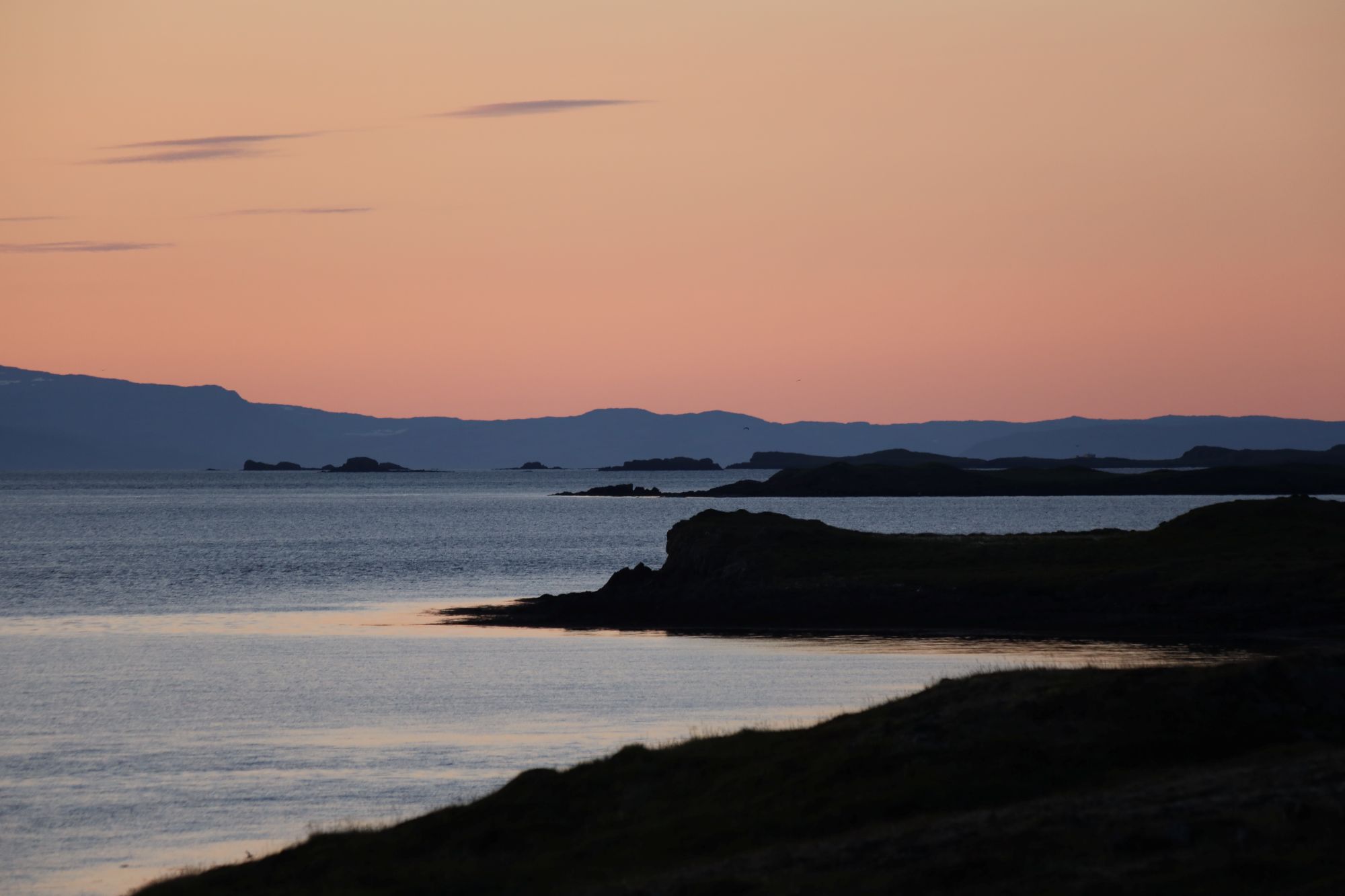
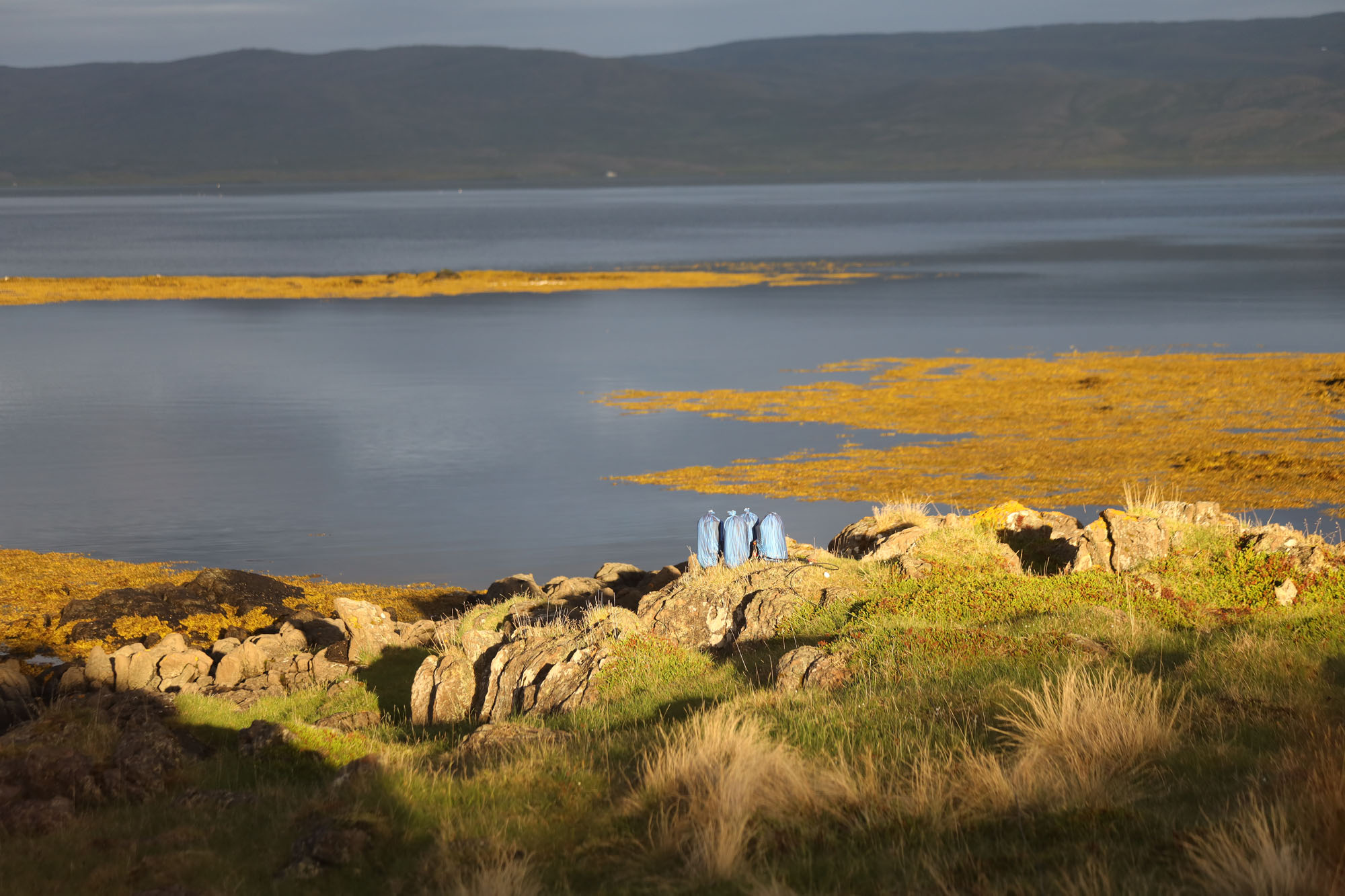
I placed the microphones in shelter under the shoreline and pointed them out to sea. The tide was in the middle and the wind was out to sea so the waves were calm.
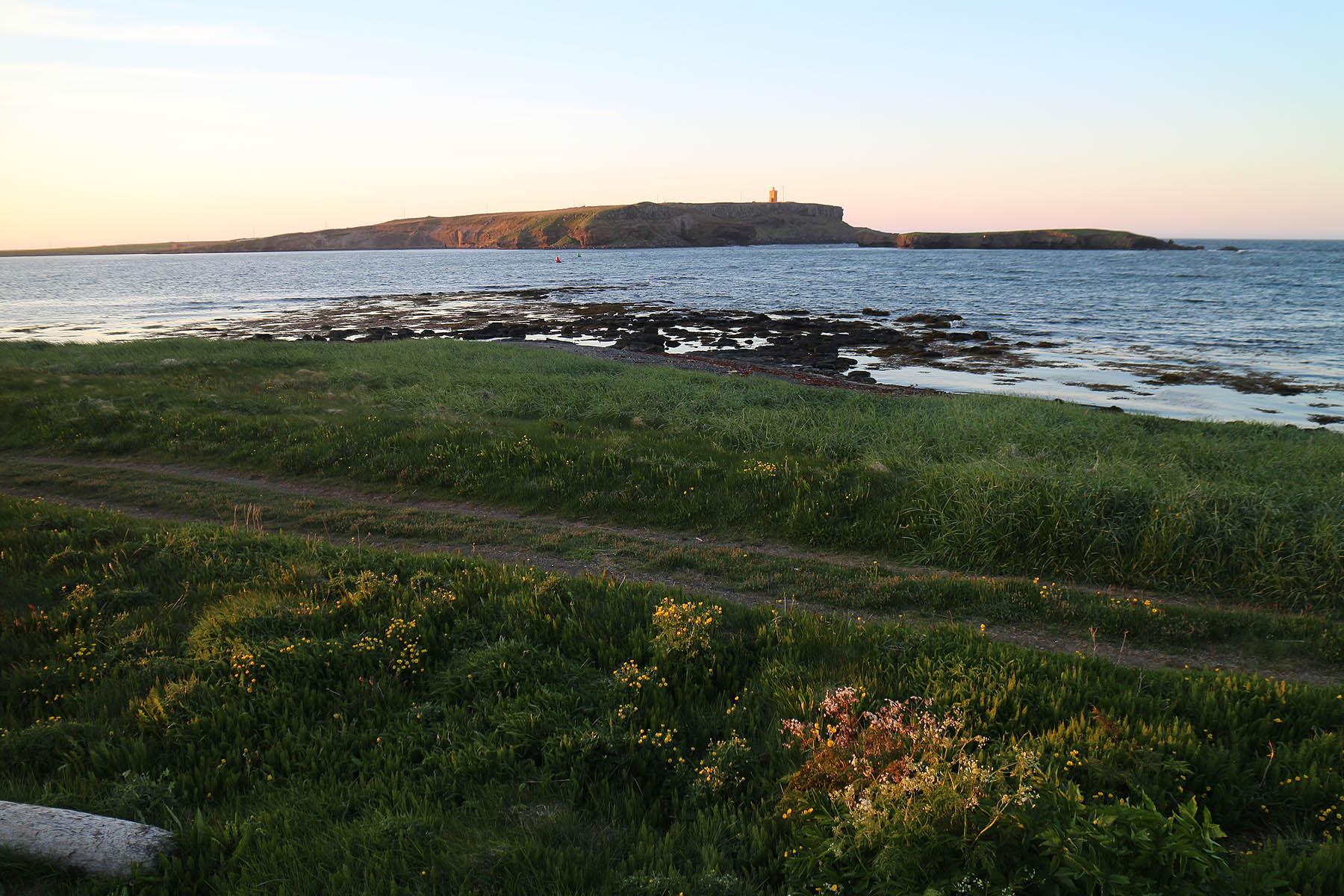
While the sun was setting north of the Westfjords mountain range, it was nice to lie in the grass and let time pass while the recorder captured the moment down to the shore.
I let the first 35 minutes resonate here. It is therefore heard in me as I start the device and leave. At the end, most likely a raven sits right next to the microphone, probably hoping to have found food, but flies away when it turns out that the microphones did not resemble as two dead fury animals.
The recording was done with 48dB gain in the audio processing, it was increased by 23dB up to -5dB. The HPF was at 80hz
(mp3 256kbps / 66,7Mb)
Recorder: Sound devices MixPre6
Mics: Rode NT1a (NOS)
Pix: Canon EOS R
I made the big mistake of formatting an HD disk with photos I took throughout 2023 and into the winter of 2024, but in my absolute stupidity I didn’t have a backup. So I always run into problems if I’m going to post audio from this time period here on this blog.
But I also take photos on my SLR camera which has a fairly large card so I have consciously allowed photos to be on the card precisely to save such accidents and losing photos.
I don’t actually have a lot of good audio recordings from this summer. Both because the weather was boring most of the summer and I had the flu most of the summer vacation.
But there are a few recordings that I think are interesting from this summer. Especially the ones I took in Steingrímsfjörður and around Drangsnes in western Iceland.
I had a few pictures on my SLR SD card that saved me from being able to put these recordings on the web.
This is part 2. But part 1 was recorded at midnight, before the sunlight hit the recording location. Here in part 2 the sun has risen. Just a minute before the recording started I had to move the microphones to a slightly more sheltered spot, because over the night the wind started to increase which unfortunately can still be heard in the recording.
The recording is „unprocessed“. Recorded at +50dB gain, normalized up to -7dB by adding +20dB in post, fade in and out and then converted to mp3.
The recording starts exactly at 4:00 in the morning on June 22, 2023 and ends just over half an hour later. After a high tide earlier in the night, the tide was already starting to recede. The seaweed on the shore was still wet, which makes a soft clicking and dripping sound, which can be heard differently well with different headphones. The birds are slightly quieter than earlier this night, but the soundscape is still magnificent.
There was several gull species, at last great black backed gull. arctic tern, common eider, whimbrel, European golden plover, red throated loon, common loon, arctic puffin and eurasian oystercatcher.
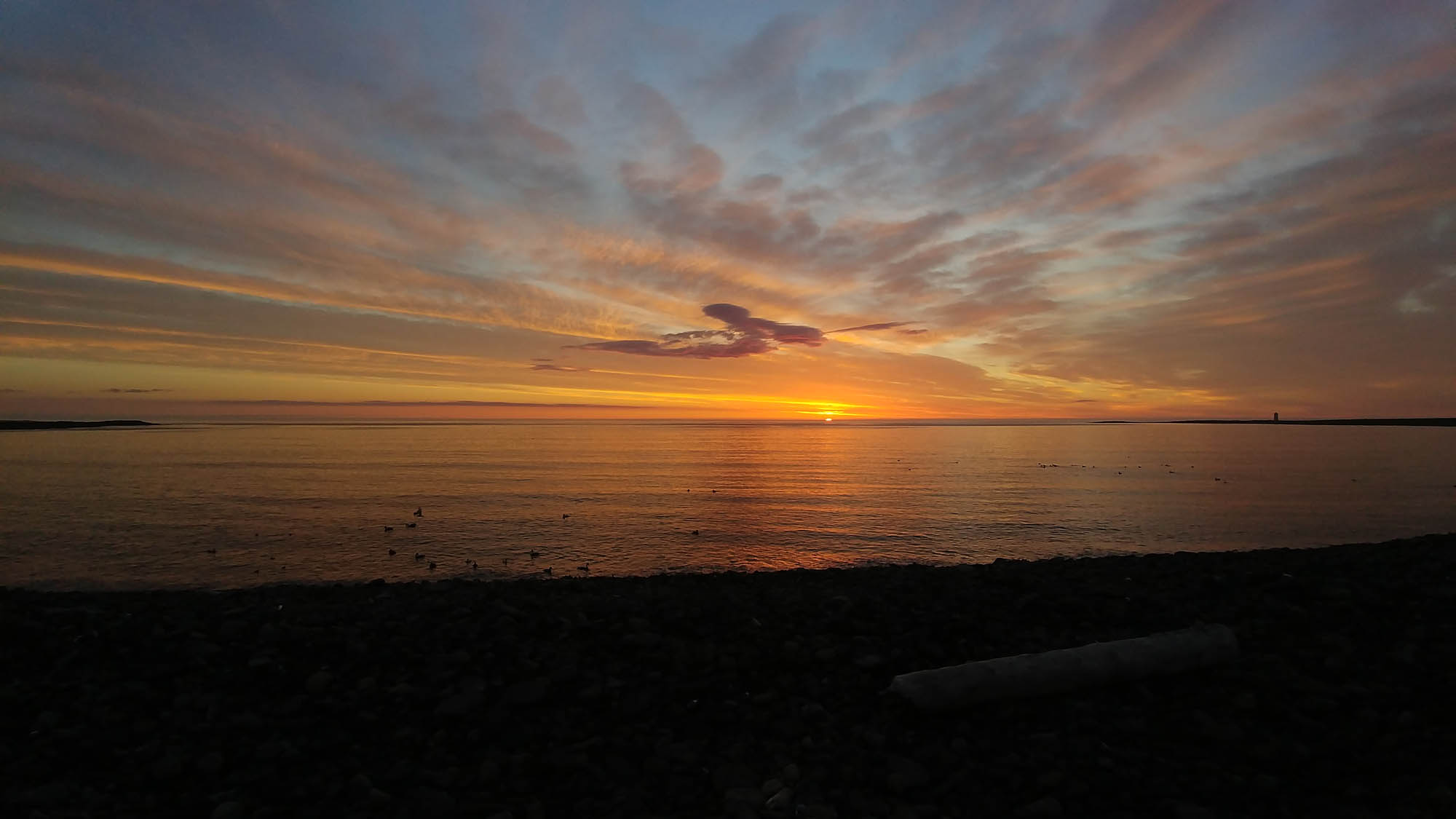
There you can hear me getting in and out of the car to take pictures. Including the accompanying picture. At least one truck can be heard from across the fjord. It can also be heard in small fishing boats at the beginning and end of the recording.
It is clearly a new day rising.
Quality open headphones are recommended while listening at low to mid volume.
If the media player doesn’t start to play, please reload this individual blog in a new tab or frame.
(mp3 256kbps / 64Mb)
Recorder: Sound Devices MixPre6 24/48
Mics: Lewitt LCT540s (IRT quad 90°/30cm)
Pix: Canon Eos R
I think I have annual recordings from the same place in the nature reserve in Flói in southwest Iceland almost since 2009. The reason is simple. It’s always interesting to follow the local acoustics from year to year. So I don’t have to spend a lot of time finding a location for the microphone. They stand in the same place unless something else disturbs it, e.g. high ground water level or something else that hasn’t yet happened to me. I go to the place hoping that there is no one in „my place“ in the parking lot where I can pull out my 75 meter 4ch long cable to the place where I have always recorded. I find a good ground for the microphones, get in the car, start recording and go to sleep.
I usually wake up when someone comes driving into the parking lot about 4-6 hours later.
I usually never listen to what I recorded, except when I need to look for something interesting to post on this audio blog like now.
It is well worth having a recording from Flói this month when 15 years have passed since this audio blog went online. Flói has followed this blog ever since I got my first HD recorder. It was then that the batteries suddenly lasted longer than 30 minutes, but it opened up a whole new world for me to record in nature.
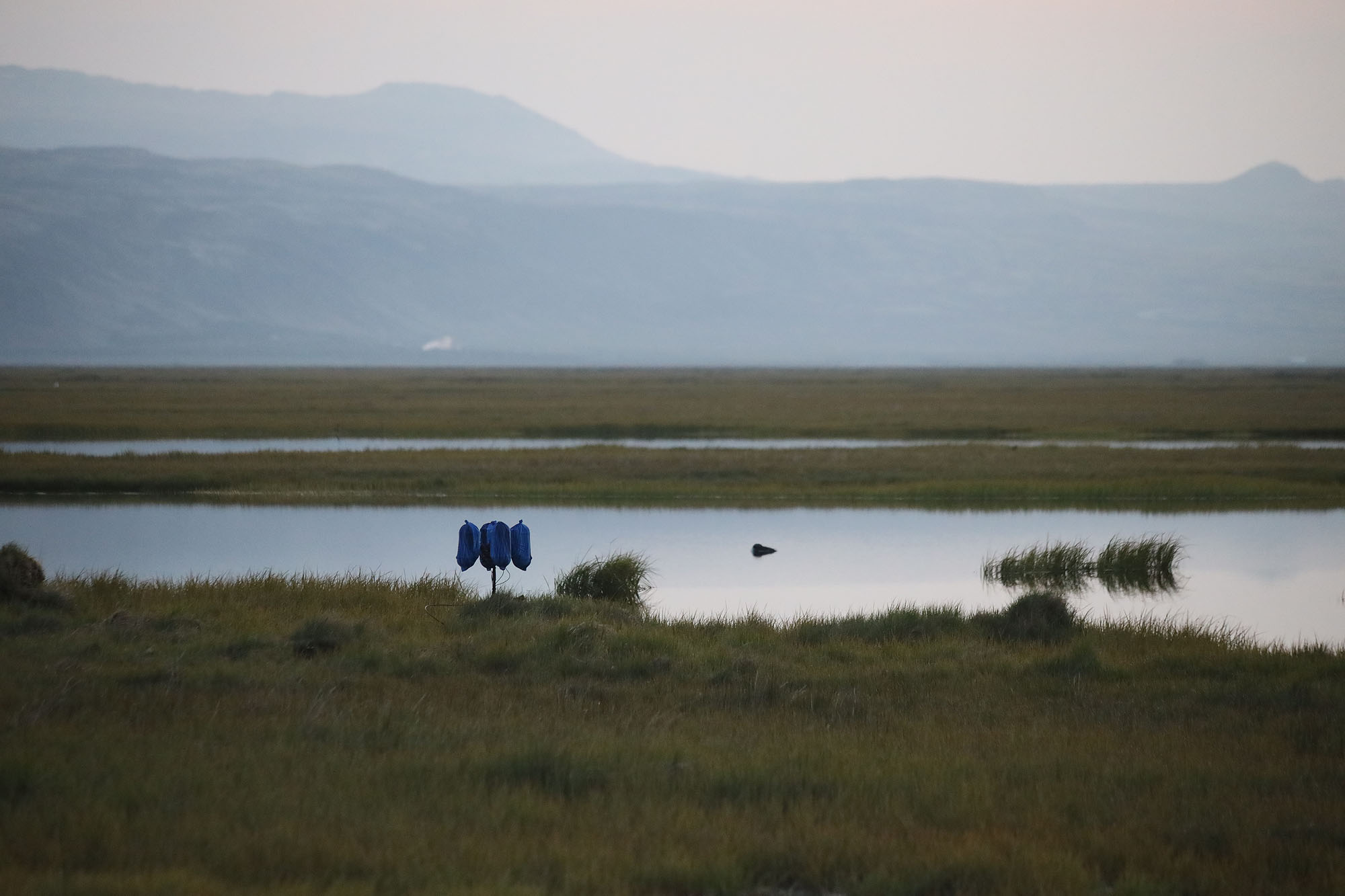
Here is an audio recording from June 13, 2023. The area was extremely wet after heavy rains. I positioned the microphones to be in close proximity to the Read necked phalarope. But maybe there wasn’t as much activity as I wanted. But instead you can hear various sounds that I am not quite sure where they are coming from. There are weak „clicks“ that can be heard e.g. for 1:30 min in this recording as well during the 30 minutes that the recording lasts.
As usual, there are many species of birds in Flói. Red-throated Loon. Red-necked Phalarope, Common Snipe, Golden Plover, Whimbrel, Common Eider and certainly other duck species as well. Common Redshank, White Wagtail, Winter Wren, Northern Wheatear, Common Redpoll, Snow Bunting, Swan and maybe other bird species that I cannot name.
Background noise is some traffic and surf from the south coast and air traffic.
You can hear it occasionally in the wind because I covered the wind shield with buff but not fur. Instead, you can hear much better in subtlety details.
This is an extremely low-key recording, except where you hear the Red-throated Loon. The recording was recorded with 50db gain (40Hz HPF), then the gain was further increased by +10dB in post-processing.
Quality open headphones are recommended while listening at low to mid volume.
If the media player doesn’t start to play, please reload this individual blog in a new tab or frame.
Last summer 2023 I went to a place I haven’t recorded much. Was it at Strandir in northwest Iceland. A friend invited me to stay in an apartment for a few days in Drangsnes, so I tried to use the time as well as I could for field recordings in the area.
It actually didn’t go very well. I had come down with a bad flu the same week as summer vacation started so I had little to no energy for many weeks. I was also facing another problem. The whole time I was in the area there was a strong wind except for maybe 1-2 hours during some nights. It was also rather cold, so nature was rather silent. Much of the material I caught these days was therefore not particularly interesting.
However, I had the opportunity one calm night to record a nice peace at the coastline. Part of it is here below. It’s very likely that I will put more of this recording on the web later, because the soundscape changed a bit during the 3-4 hours I was recording.
It is the summer solstice so it is therefore bright all day long. The recording starts at 23:45 and ends at 00:20 o´clock.
This is a typical soundscape in fjords in northern Iceland and in fact everywhere around the arctic circles.
This is a high gain recording. Recorded at +50 db. Then add about 20dB up to -7dB peak RMS. No noise reduction in post. Just fade in and out.
Many bird species are in this recording. There was several gull species, at last great black backed gull. Arctic tern, common eider, whimbrel, European golden plover, red throated loon, Common loon, arctic puffin and Eurasian oystercatcher. Sheep were not far away and seals were lying on rocks near the beach.
Quality open headphones are recommended while listening at low to mid volume.
If the media player doesn’t start to play, please reload this individual blog in a new tab or frame.
Here is one of my „COVID recordings“ that I managed to record by Glacier lagoon, Jökulsárlón near the lagoon outfall.
This place is close to the ring road around Iceland so it is usually overcrowded by tourists and other traffic all year round, almost 24/7. I have only been able to dream of recording this place without traffic and human interruption.
But thanks to COVID, on the 10th of June 2020 I managed to record there without too much interruption.
The soundscape is different in this place, but the recording here below is typical for summer soundscape. When I first went to this place some decades ago the glacier was much closer, I guess about 2km away, but today it is about 8km away and much thinner. The sounds from the glacier have almost disappeared. But on the lagoon are large icebergs that melt down rapidly near the lagoon’s outfall. They can emit interesting sounds when they break in pieces.
Arctic terns have nested beside the outfall in many years, but probably because of traffic they seem to have moved the biggest colony closer to the glacier. In the eighties and nineties when I passed this place every year by bike, Great Skua dominated this area with nests in many places.. But today this big bird is hardly seen near the outfall compared to how it was thirty years ago. Arctic Skua is a common bird there as it has been before.
This recording was made a few hundred meters east from the lagoon outfall.
Not far from the microphone are stranded icebergs which are constantly melting with all kinds of sound.
Most common birds in this recording are Arctic tern, Northern Fulmar, Black Headed Gull, and Razorbill. Other species are audible too.
Common Eiders come quietly close to the microphone and Seals have a fight or mating not far away,
The main background noise is a rumble from heavy surf along the Atlantic ocean coastline several hundreds meters behind the microphones. Traffic from the ring road no1 is also audible.
Quality open headphones are recommended while listening at mid level.
If the media player doesn’t start to play, please reload this individual blog in new tab or frame.
Remote islands are interesting places. Almost every island has it’s own ecosystem which can be interesting to record. One of those islands is Elliðaey, which is a part of Vestmannaeyjar islands, south of Iceland.
I got an opportunity to go there on a 24 hours trip with Bob McGuire, which is recording birds in association with the Cornell Lab of Ornithology, Macaulay Library of Natural Sounds.
I am not a specialist in the ecosystem in Elliðaey so I will not say much about it here. It is slightly different between each island in the region and the bird species can be different from cliff to cliff
Our main target in Elliðaey was European storm petrel and Leach’s storm petrel. Bob was collecting individual calls and songs but I was going to record hours of ambiances. The bird colony gives a strong smell as usual, but this island also has a strong smell of sheep. For decades there have been several landowners and farmers from Heimaey island who keep there several dozens of sheep during the summertime.
Puffins have been in a very difficult situation for many years, especially south Iceland and Vestmannaeyjar islands. Mainly because some annually rhythm changes in the ocean biosphere. That situation was visible in Elliðaey. Probably more than 50% of the Puffins burrows were empty and abandoned and dead chicks were also visible around.
Not all birds have difficulties and many other bird species also live and breed in the island; Atlantic Puffin, Manx Shearwater, Leach’s Storm-petrel, European (British) Storm-petrel, Great Black-backed Gull, Lesser Black-backed Gull, Herring Gull, Black-legged Kittiwake, Northern Fulmar, Common Eider, Common Murre, Black Guillemot, Common Raven, European Starling, White Wagtail
As soon as we arrived I quickly found locations for the recorders and then we walked around in the bumpy landscape for other locations. We were early in the breeding season, 4th of June, so we were even not sure if birds we were going to record, like European storm petrel, had already arrived. What surprised me most was the silence in the interior island. No sound from the ocean waves or cliff birds, only wing flaps from busy birds above our heads, mostly puffins. But there was also a low rumbling noise, which filled the air and was difficult to locate. It took me time to figure out what it was, but it was from ships somewhere far away on the ocean, so far I could not even see them in the horizon. This noise never stopped when I was awake. It was just differently loud during day and the night, and of course louder when ship passed close to the island.
The following recording was made just before midnight on a hill south of the hut in the island, located almost in the middle of a puffin colony.
It is mostly puffins wing flaps, when they fly over, landed close by the microphones and sometimes a „spray & splash sound“ when they poop
Later that night both Leach’s Storm-petrel, European Storm-petrel surprisingly arrived to the island. But that will be for another blog.
Quality open headphones are recommended while listening at low to mid level, or in speakers at medium level.
(mp3 256kbps / 60.3Mb)
If the media player doesn’t start to play, please reload this individual blog in new tab or frame
Recorder: Sound devices MixPre6
Mics: Sennheiser paralell MKH8020/8040 in AB40 (4ch)
Pix. LG G6
Location: 63.466604, -20.176682
Weather: Calm, misty & light shower, ca 12°C
World Oceans Day takes place every 8 June. It has been celebrated unofficially since its original proposal in 1992 by Canada’s International Centre for Ocean Development (ICOD) and the Ocean Institute of Canada (OIC) at the Earth Summit – UN Conference on Environment and Development (UNCED) in Rio de Janeiro, Brazil.[1] The Brundtland Commission, i.e. the World Commission on Environment and Development, provided the inspiration for a global oceans day. The 1987 Brundtland Report noted that the ocean sector lacked a strong voice compared to other sectors. At the first World Oceans Day in 1992, the objectives were to move the oceans from the sidelines to the center of the intergovernmental and NGO discussions and policy and to strengthen the voice of ocean and coastal constituencies world wide.
The Ocean Project, working in partnership with leading organizations from all sectors, including the World Ocean Network, Association of Zoos and Aquariums, and many others in its network of 2,000 organizations, has been promoting World Oceans Day since 2002 and together with World Ocean Network led a three-year global petition movement to secure official UN recognition. World Oceans Day was officially recognized by the United Nations in late 2008.[2]
World Oceans Day events are celebrated on 8 June, the closest weekend, the week, and the month of June. The day is marked in a variety of ways, including launching new campaigns and initiatives, special events at aquariums and zoos, outdoor explorations, aquatic and beach cleanups, educational and conservation action programs, art contests, film festivals, and sustainable seafood events. Youth have been playing an increasingly important role since 2015, including the development in 2016 of a World Oceans Day Youth Advisory Council (Wikipedia).
The following recording was recorded at midnight 29th of May in a wonderful weather nearby Hraunhafnartanga peninsula, close by the arctic circle.
Quality open headphones are recommended while listening at low to mid level, or in speakers at medium level.
Last summer I spend one week at Raufarhöfn, a small village in north east of Iceland, close to the arctic circle. Most of the time it was a fool‘s weather for „quality“ recording. But anyway, I recorded almost 6 to 10 hours every night close to the sore. Most of theese recordings contains rumbling wind noise, but sometimes – very few times, I got what I was looking for.
Here is one of them, recorded 17th of June 2016.
It is early morning. The clock is around four. Birds are busy to protect and teach their young to search for food. Shortly after the recording starts, you can hear a fisherman pass by on his car on way to the harbor. Then later, the fishing boat goes, and passes by on the way to the sea. It takes a long time for the enginenoise to disrepair.
This is a peaceful recording. A typical midsummer morning soundscape at the arctic circle, where the sun never goes down. Many bird spices are in this recording, but mostly Common Eider and their youngs. Also you can hear Oystercatcher , Golden Plover, Purple Sandpiper, Red Necked Phalarope, Whimbrel, Common Snipe, Redwing, Snow Bunting, Svan, Great Northern Diver, Northern Fulmar, Kittiwake, Raven and probably may other.
Quality open headphones are recommended while listening at low to mid level.
During Icelandic independence day, 17. of June 2012, I was in Önundarfjörður fjord in the Westfjords, the north west peninsula of Iceland. This fjord lies deep between steep mountains with high cliffs. After midnight I entered an Arctic tern colony to record their sounds. The recording conditions was as good as it gets. The weather was calm, dry but cloudy, and the temperature was about 7 °C. Almost no traffic was in the fjord so most of the background noise was only coming from falling water in the mountains and sea waves at the shore.
This Arctic tern colony is big and has been there for decades, even centuries. This bird is very territorial and aggressive protecting the colony and many other bird more passive species feel safe to nest among the Arctic tern. So this recording includes sounds from many other bird spaces such as Whimbrel, Black-headed Gull, Black-tailed Godwit, Common Redshank, Oystercatcher, and Golden Plover… and many more
The recording contains also human and sheep voices from a nearby farm. Swans, Red-throat Diver, and common Eider at the shore side and a some sound from a Gull colony high in the cliffs all around the fjord.
During the recording the Arctic Terns attack many times the furry microphones. Sometimes you may hear their excrement fall to the ground around the microphones, but at this time they never hit or peck the Blimps.
The duration of the recording was almost 80 minutes. Following recording contains the last 36 minutes so my disturbing visit is not much audible. This is just a nice ordinary summer night in the north west of Iceland.
Krían í Önundarfirði 17. júní 2012.
Upptaka þessi var gerð í kríuvarpi nærri Holtstanga innst í Önundarfirði.
Veður var stillt, þurrt en skýjað og hiti um 7°C. Það var því varla hægt að kjósa sér ákjósanlegra veður til upptöku á fuglalífi. Allt iðaði af lífi. Fyrir utan kríu mátti sjá og heyra í hettumáfum, spóa, lóu, stelk, tjaldi og fleiri fuglum, Efst í fjöllunum mátti sjá allt fullt af fuglum á sveimi björgunum. Í flæðamálinu voru álftir, lóm og æðarfugl.
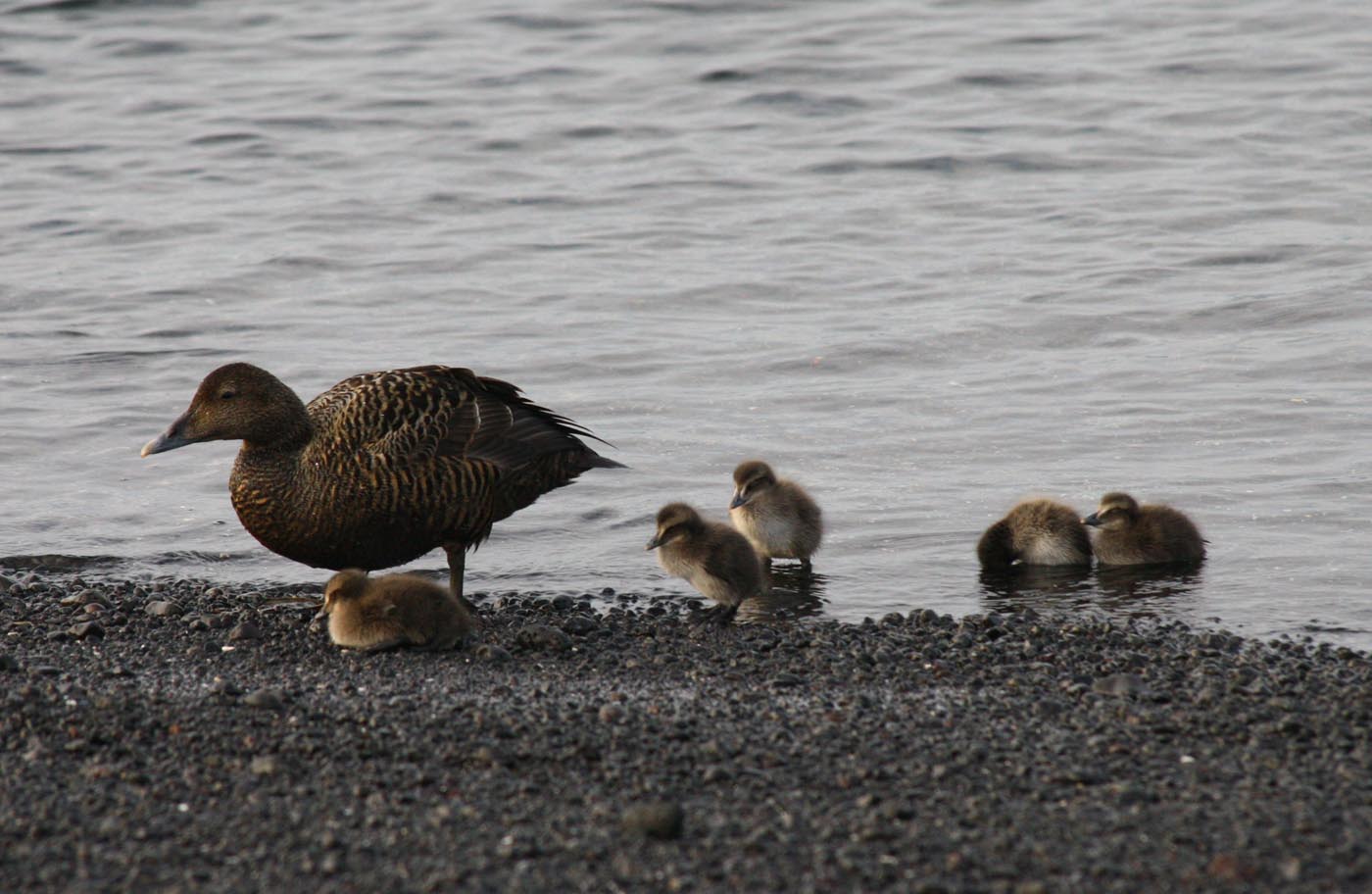
It is not possible every day to record nature sounds in as nice weather condition that was early morning at Seltjarnarnes in 25th of May 2000. Weather was calm and dry. Birds as Black backed Gull, Eurasian Oystercatcher, Common Snipe, Golden Plover and Arctic Tern were everywhere along the shore side, busy with their daily life. Close by, a group of female Common Eider was teaching very young ducklings how to search food.
Just after few minutes, I finished to set up the microphones, the Eiders came so close to the rig it was possible to listen their conversation in smallest details for almost two hours.
The quality of this recording still surprises me. It is one of the latest recording I made with Sony TC-D5M cassette deck with a pair of ME 20 microphones. The key of the quality was the microphone cables. Instead of ordinary mic cables I used CAT6 data cables. It makes extraordinary difference for the high frequency signal. All small details in the recording were cleaner and much brighter.
This recording is part of my second CD release, published in limited edition later the year 2000.
Fuglar í Seltjarnarnes fjöru 25. maí 2000
Það er ekki á hverjum degi sem hægt er að taka upp fuglasöng við veðurskilyrði eins og voru þessa nótt á Seltjarnarnesi 25. júní 2000. Veður var einstaklega stillt og allir fuglar voru komnir með unga. Einkenni þessarar upptöku er návígið við æðarkollur og unga þeirra sem leita fæðu í flæðarmálinu. Í mikilli nálægð er hægt að heyra buslið í ungunum og hvernig kollan kennir þeim og ver þá gegn varasömum gestum. Að auki má heyra í öðrum fuglum sem einkenna Seltjarnarnesið s.s. kríu, tjaldi, lóu og hrossagauk. Hljóðin eru síðan síbreytileg þar sem heyra má fuglahópa koma og fara í stöðugri leit sinni að fæðu.
Á sínum tíma þótti upptakan svo góð að hún endaði á CD útgáfu (sjá nánar á sölusíðu).





 HLJÓÐMYND - SOUNDIMAGE