The „recording summer 2025“ started rather poorly. Cold, rainy, always strong winds and the birdlife was rather quiet. However, it does happen regularly during the nighttime the weather gets calm for about 1-4 hours. There was therefore no need to panic because the equipment was allowed to work almost every night. However, it seemed to be a small gain considering the cost, time and effort. I only could hear birds when I wandered close to their nests or youngs
The most important thing was to follow the weather forecast, search maps and try to find new recording locations as well as get to know the local conditions. If the weather was going to be completely impossible for a microphone, it was almost always possible to set up an antenna and record the space weather.
But then it suddenly happened at the beginning of July that summer arrived with warmth and less wind. Birds also started to sing without me as a human being triggering a warning sound all over the fields.
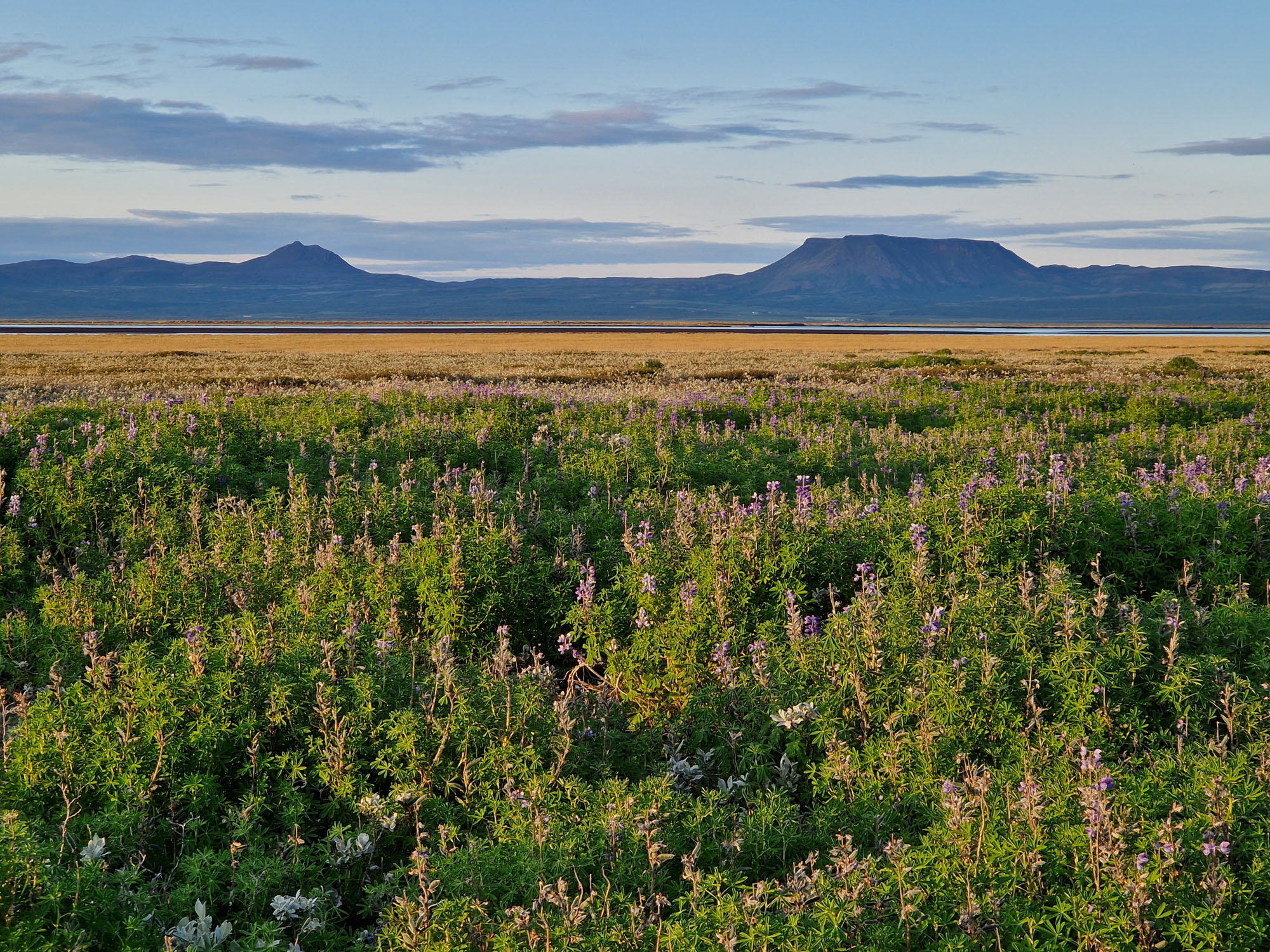
I was then at Öxarfjordur and had thought about going to an old recording site on Vestursandur. Then I saw a gate open on a trail that has always been closed when I have been there. So I drove along the trail and suddenly I was in a green oasis that contained a lot of bird life that I did not know about.
So I found a place where it was easy to find as many recording sites as possible within walking distance.
In the end, 4 recording devices were running that night. The drawback was that in the countryside you could hear most of the night that the farmers were working all night long until early morning. But after a jet flew over, the farmers quit their work and a relaxing summer silence took over.
There is still something in this recording that gives off a vibrating background, noise or hum. Which I suspect could be the surf from the beach not far away and sometimes the occasional car traveling through the county.
Quality open headphones are recommended while listening at low to mid volume.
If the media player doesn’t start to play, please reload this individual blog in a new tab or frame.
Here is a recording that was left to run for a whole summer night, 29th of June, 2023.
The summer vacation was coming to an end, I had been suffering from a kind of flu for a month. I had no energy for long, difficult journeys, or lying outside in any weather to record and bird life that had been extremely silent all spring due to the cold and wet.
Field recording is by no means an easy and blissful job.
Although it is often possible to be filled with hopelessness and feel as if nothing has been recorded, it always becomes clear on closer listening that interesting material is often hidden somewhere in long recordings.
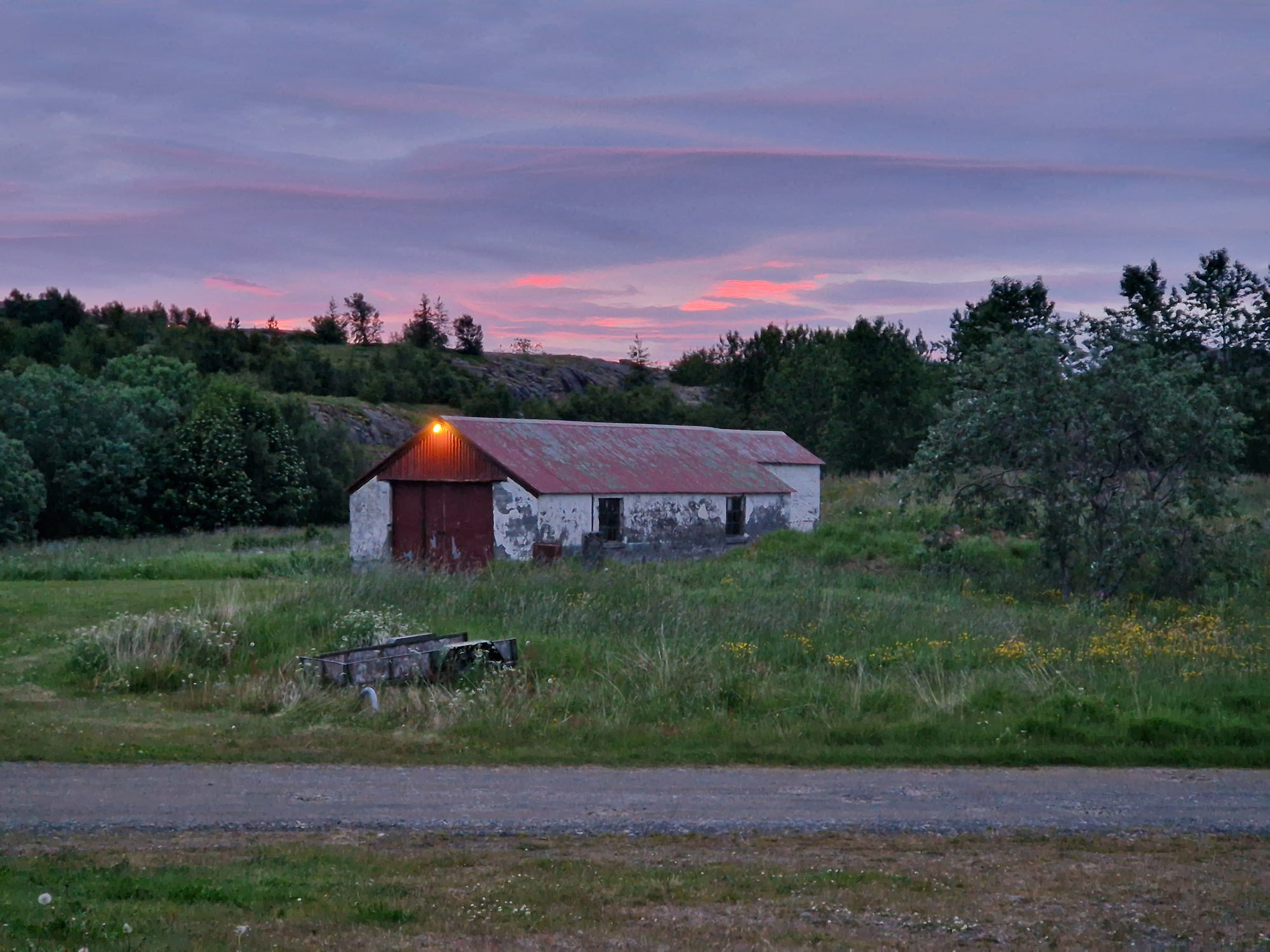
Here is one recording that I recorded at a farm that I have access to.
This night I decided to use the NT1 beneath a house wall to have a shalter against the wind. The choice of NT1 was made because if I had used an omni microphone there would have been an annoying reflection or echo from the house wall.
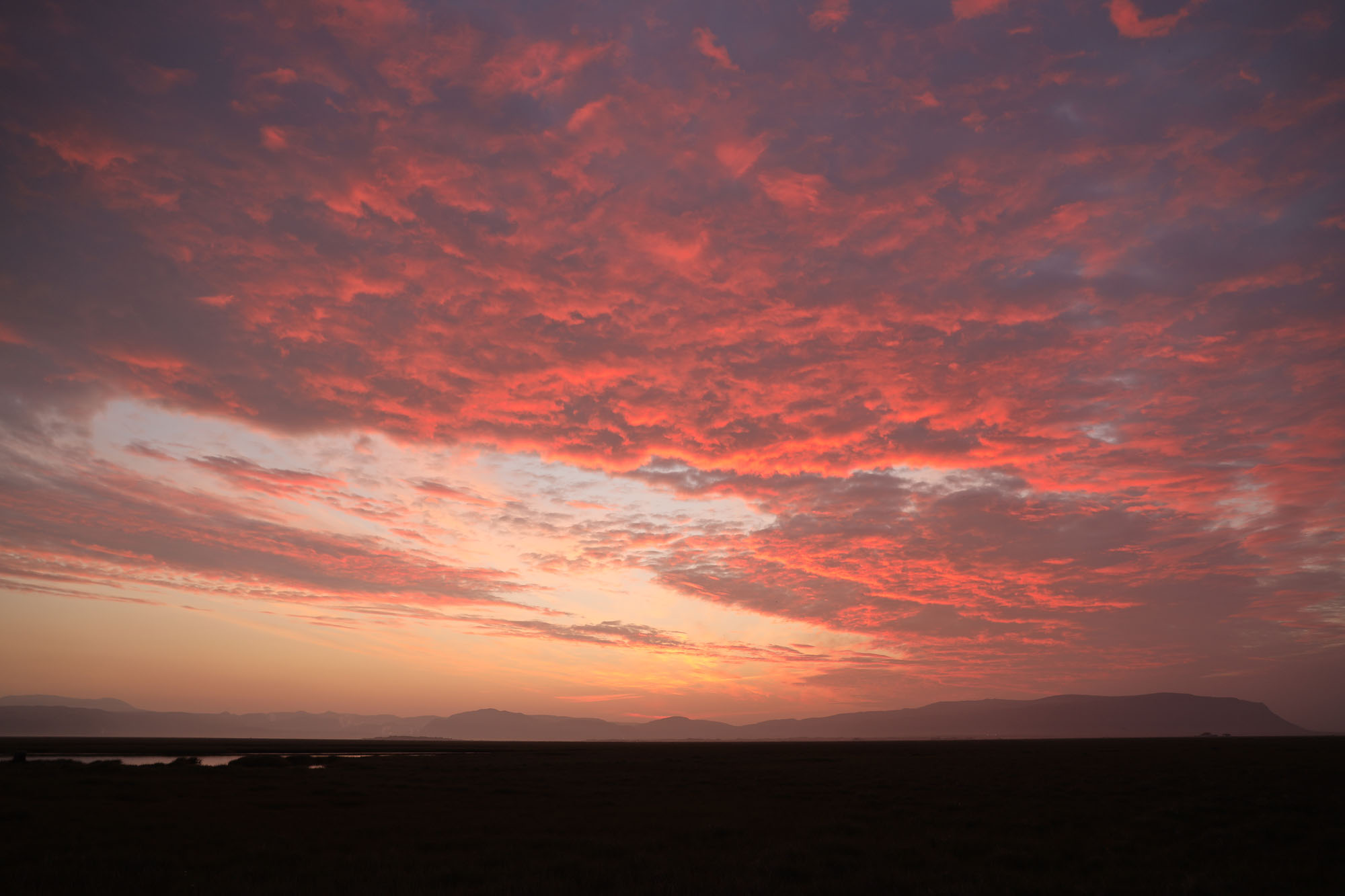
It is dawn and you should hear a lot of birdsong. But the wind drowns out all the birdsong.
But then the wind starts to calm down and you can hear more birdsong and bird actictivity, both near and far.
This recording is a bit of a mystery. It is therefore likely that I will later put another part of it on the web.
Quality open headphones are recommended while listening at low to mid volume.
If the media player doesn’t start to play, please reload this individual blog in a new tab or frame.
Early last spring I was asked if I wanted to record a 24-hour long recording for Radio Art Zone.
It wasn’t a problem because I’m used to recording 8-14 hours of content whenever I can.
So I made two / three 24hrs recordings in total. All recorded in similar locations on the 23rd-25th. April 2022 in the countryside.
I recorded on four channels with an IRT cross version and in two other locations with two channels in AB & NOS.
If I remember correctly, I sent the IRT recording to Radio art project. The AB recording is already audible on this soundblog, „The brook below Lambaklettur“
The NOS recording was forgotten, until I found it last week.
It was recorded with Rode NT1 microphones and a Zoom F3 recorder.
This recording contains natural „silence“. When I talk about „silence“ I mean that most people would not hear anything with bare ears. Probably only the blood flow in their own body.
But it was not total silence when this recording started here below. The migratory birds had already started to flock to the country. It was also a drizzly rain and therefore quite humid all night while the recording took place. The fur on the windshield got quite wet and you can hear larger drops falling on the wind shield, on the tripod and on the ground around.
This recording starts around the time when birds start to be heard in the early morning. The windshield is already very wet, so it must have adversely affected the recording quality. But surprisingly it is not heard that the NT1 is cracking due to air humidity.
The Zoom F3 had gain set at „256“ and HPF at 40Hz. I’m used to recording with 47 to 50dB gain for such silent recordings. Gain „256“ is therefore not telling me anything, but having worked on this recording, 256 seems to be something similar to 50 to 55 dB gain. This actually needs further consideration because It can be an important issue. The reason why I don’t record with a gain higher than 50dB on the Sound Devices or Sonosax recorders is to prevent additional „amplify noise“ that I feel increases if the gain is over +50dB. It is therefore always better to increase the gain digitally“ in post.
I have a hard time realizing this with the F3 device. The noise seems to go hand in hand with different gain. No matter what the gain is. Whether I should generally record with „256“ gain or „128“, when recording quiet soundscapes needs further testing. I find the noise a bit more in this recording than if I had recorded with the Sonosax for example, but that noise I hear and see on spectrograms could also be a sound from the drizzle, or raindrops when they fall to the ground. It can therefore be assumed that there is some natural noise in that recording. Therefore it is not entirely possible to blame F3 or NT1 for all the noise that can be heard.
The first sound file is over 30 minutes long which has got a gentle noise reduction and then below 5 minutes of original recording for comparison (without NR). Both recordings are normalized up to -10dB. The original files from the recorder had a -38dB peak value which is normal for „quiet“ recording like this.
Bird species in this recording is mainly common snipe, whooper swan, black tailed godwit, redwings, whimbrel, golden plover and eurasian wigeon. Most of them are in the distance in this recording.
I will post the continuation of this recording later. Then the number of birds increases and they come closer to the microphones.
Quality open headphones are recommended while listening at low volume.
If the media player doesn’t start to play, please reload this individual blog in a new tab or frame.
(mp3 256kbps / 62Mb)
Original recording from Zoom F3, only normalized up to -10dB & downgrade to mp3
(mp3 256kbps / 9,4Mb)
Recorder: Zoom F3
Mics: Rode NT1 (NOS)
Pics: Canon EOS R
It has been several years since I published a recording from Flói nature reserve. The reason is more or less because of foul weather in recent years when I have had the opportunity to record there.
It was no exception last summer from late April to mid July. It was cold, windy and wet most of the time which is actually the high season for birdsong recording.
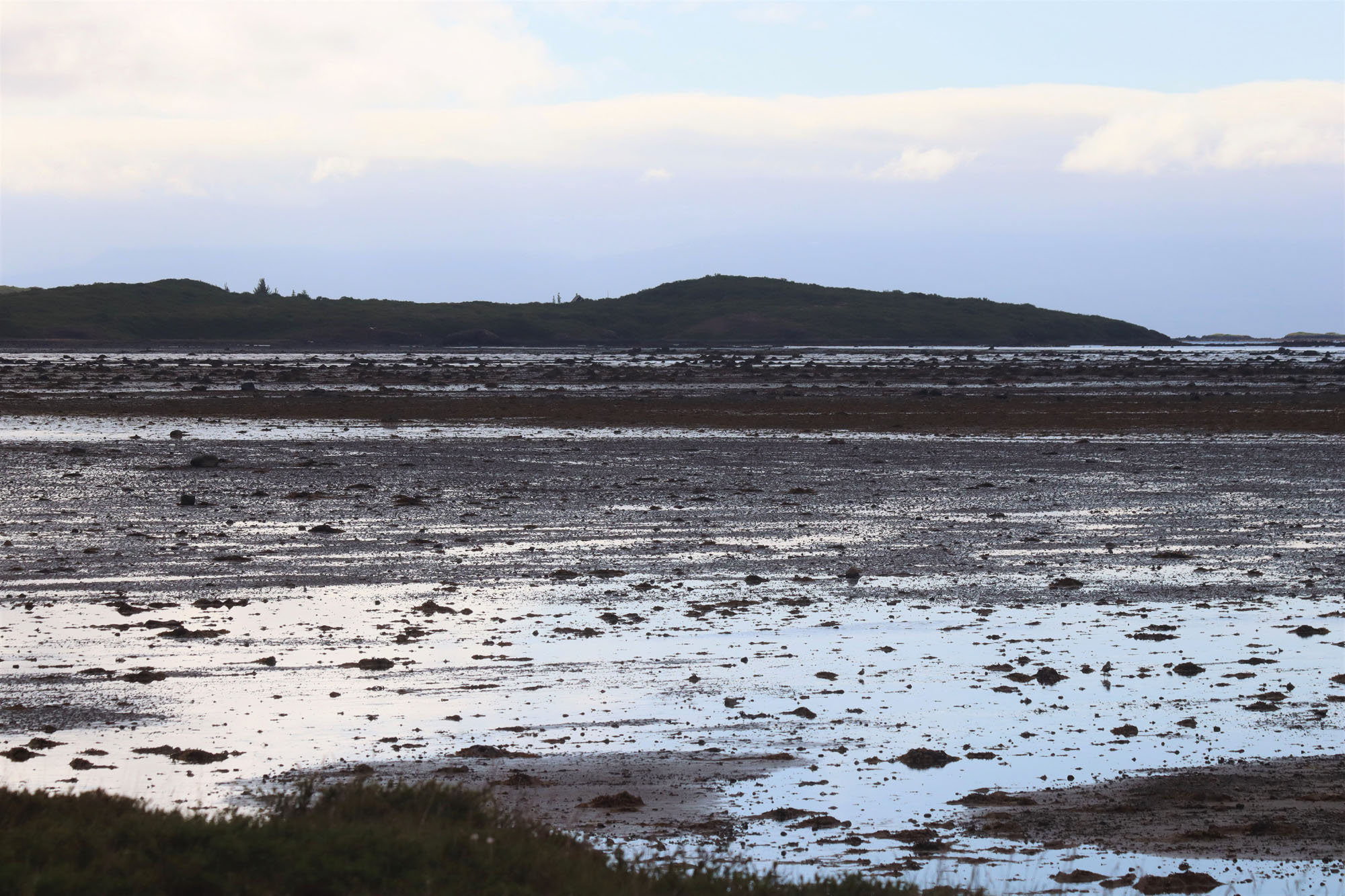
I went there on the 3rd of July 2021 and recorded overnight. The weather was calm in the beginning but the wind increased over the night. I was also struggling with increased sea tide and therefore a surf noise from the coast line, actually at the same time when the birds were most active during the dawn.
My mics were Lewitt LCT540s in IRT cross setup. Most of the bird’s activity was in front of channel 1&2. Most „silence“ was in front of channel 2&3 and most of the surf and traffic noise was at channel 4&1.
It surprised me how much traffic was there the whole night. There was almost constant rumble in the air during the ten hours I was recording, except between four and five o’clock in the morning. This noise was much more audible than I remember in my earlier recordings. The reason could be found in different mic setup and mics. Ten years ago I used to use NT1a in NOS or AB, pointing towards the open field and keeping the nearest road and coastline behind. I have also used MKH20 in AB which is less sensitive for these details than large capsule mics.
It takes time to search in this 10 hour long recording for some nice sounding 30 minutes moments. Listening to the whole four channels it starts with heavy traffic noise in all channels, then surf noise. Then traffic noise again until the wind and the sun makes the air so unstable close to noon, both traffic noise and bird activity almost disappear in the wind noise.
But with an IRT cross rig I have many options. I can turn off the channel or channels which are disturbing for the soundscape I am looking for.
The recording below is a very good example of this. Instead of using all four channels and mixing them to stereo, I use only channel 2&3 (NOS 90°/30cm) to avoid the surf noise. The time when it starts is about 04:15 so there is almost no traffic noise, but anyway, the recording starts and ends with some engine noise in the distance.
Quality open headphones are recommended while listening at mid or low level.
If the media player doesn’t start to play, please reload this individual blog in a new tab or frame.
Recorder: Sound devices MixPre6
Mics: Lewitt LCT540s, NOS 30cm/90°
Pix: Canon EOS R
It is rear now a days to discover new places without traffic or engine nose. I found one in June 2019. It was at Fellströnd, in the northwest of Iceland. That means I have natural silence for more than a one hour. It is a south part of a peninsula which only have gravel roads and no shopping service so motorist are normally not driving there for pleasure.
Less human traffic means more biodiversity. It thrives better in places with less farming and fast driving cars. One roadkill can as well mean a death of the whole family. Car covered with smashed bugs means less food for birds… and so on. This is clearly visible and audible in those areas which have „industry“ farming and lots of fast driving traffic.
No traffic, or engine noise, means more natural silence and more transparent soundscape. Therefor it is very interesting to listen to this recordings. It is even possible to hear sheep footsteps far away and detect what bird species are in the area, even far away. In fact it is possible to analyze the situation of the biodiversity.
This is a high gain recording, recorded at +50dB. Gain was then increased in post about +25dB, normalized at -8dB and gently NR.
This is a part of 10 hour recording. This part was recorded between 7 and 8 in the morning at 21st of June.
Many bird species are audible in this recording. Black tailed Godwit, Common Redsank, Whimprel, Red necked Phalarope, Eurasian Oystercatcher, Common Ringed Plover, European Golden Plover, Dunlin, Raven, Redwing, Purple Sandpiper, Meadow Pipit, Geylag Goose, Whooper Swan, Red Throated Diver and Common Eider. I am almost sure I have not counted them all.
You can hear sheep footsteps which was though far away, also birds wing flaps as a low rumble noise.
Quality open headphones are recommended while listening at low or medium level.
(Mp3 256Kbps / 48Mb)
If the media player doesn’t start to play, please reload this individual blog in new tab or frame
Recorder: Sonosax SX-R4+
Mics: Sennheiser MKH20 (AB40)
Pix: Canon EOS M50
Location: 65.169836, -22.404601
Weather: Calm, cloudy ca 13°C
Hólmavatn is a heath lake in the interior in west of Iceland between the two valley Kjarrárdalur and Hvítársíða. It is a part of a big lake system on a heath named Arnarvatnsheiði.
I have once before record the soundscape by this lake before. That was mostly a struggle with wind all the time, so I did not get anything interesting.
But at 22nd of June 2019 the weather forecast was perfect for this area, clear sky and calm most of the night.
I arrived with my gear around 9 pm at my previous recording place. It was still windy and some anglers about 500m away east of the lake. I quickly put up my rigs knowing that a calm weather meant just lot of gnats. I decided to put a two stereo pairs close to the shore, facing out to the lake. LCT450s in NOS about 60 m east from my car and MKH20 pair 70 m in the west. Suddenly around 11pm the wind stopped to blow and I started the recording.
What glorious soundscape. All those small tiny things and all those bird species. The LCT540s sounds much cleaner and brighter than MKH20, I guess mainly because of the different location.
But there was a big problem which I did not notice with my bare ears. The anglers made so much noise it was clear they would destroy my „natural silence“ recordings this night. They were playing a radio all the time, talking, starting car engines, and even worse, soon after I started the recording two of them started a motor boat. All this noise lasted for about two or two and a half hours.
Later that night when this noisy anglers were gone, all the birdsong became calm and less active. I am not sure why, but afterwards when I listened to the recordings it seemed like the anglers on the boat were disturbing birds on their habitat.
Following recording is a part of this „anglers moment“, probably the best part because the motorboat was mostly far east on the lake most of this time.
In the beginning of the recording you can clearly hear tiny sparks. It is coming from foam which forms between stones in the shore during windy days. When the bobbles in this foam blows, they make this tiny sparking sound. During the recording the sparks get fewer and lower because the weather is calm and no waves on the lake.
But there are so many bird species I guess I will not know them all. Great Northern Diver, Read Throated Diever, Arctic Tern, Whooper Swan, Pink Footed Goose, Black Headed Gull, Golden Plower, Dunlin, Whimbrell, Common Snipe, Common Redshank, Arctic Skua, Rock Ptarmigan and probably some other which you are welcome, if you know, to name in comments below.
You will hear the fish jumping and Arctic Tern hunting on the lake surface. Other background noise other than human noise from anglers is mainly from the river Kjarrá which flows in the Kjarrárdalur valley 4Km north of the lake .
This recording got a gently noise reduction, mainly because of high gain.
It was recorded with 47dB gain. In post the gain was normalized +26dB up to -5dB
Quality open headphones are recommended while listening at low to mid level, or in speakers at medium level.
(mp3 256kbps / 68Mb)
If the media player doesn’t start to play, please reload this individual blog in new tab or frame
Recorder: Sonosax SX-R4+
Mics: Lewitt LCT540s (NOS setup)
Pix: Canon EOS M50
Location: 64.799603, -20.895132
Weather: Dry. Mostly calm up to 5m/sec
Kirkjubæjarklaustur (Klaustur) is a village in the south of Iceland on the hringvegur (road no. 1 or Ring Road) between Vík í Mýrdal and Höfn. It is part of the municipality of Skaftárhreppur and has about 500 inhabitants.
Even before the time of the first Norse settlement in Iceland, Irish monks are thought to have lived here. Since 1186, a well known convent of Benedictine nuns, Kirkjubæjar Abbey, was located in Kirkjubæjarklaustur, until the Reformation in 1550. The names of the waterfall Systrafoss („waterfall of the sisters“) and of the lake Systravatn („water of the sisters“) on the highland above the village refer to this abbey. Folk tales illustrate the history with stories about good and sinful nuns. The Systrastapi (sister’s rock) is where two of the convent’s nuns were buried after being burned at the stake. One of the nuns was accused of selling her soul to the Devil, carrying Communion bread outside the church, and having carnal knowledge with men; the other was charged with speaking blasphemously of the Pope. After the Reformation, the second sister was vindicated, and flowers are said to bloom on her grave, but not that of the first nun. Systravatn also has a legend relating to the convent. The nuns traditionally bathed in the lake, and one day two nuns saw a hand with a gold ring extending from the water. When they tried to seize the ring, they were dragged below the water and drowned.
The village became well known in Iceland during the Lakagígar volcano eruptions in 1783. The pastor of the local church and dean of Vestur-Skaftafellssýsla, Jón Steingrímsson (is) (1728 – 1791), delivered what became known as the „Fire Sermon“ (eldmessu) on July 20, 1783. The legend says that this sermon stopped the lava flow, and the village was spared at the last moment. The current church, constructed in 1974, was built in memory of the Reverend Jón Steingrímsson.
Today, the village is an important service center for the farms in the region as well as for tourists and weekend visitors. (Wikipedia)
During summer time many bird species are nesting close to the village and the river Skaftá which flows beside the village. Arctic Terns have a big colony almost in the middle of the village, so many other migrant birds are nesting there too.
The recording was captured early morning 7th of June 2016 and is a part of 7 hours long recording
Many bird species are in this recording, Arctic tern, Red wing, Common Snipe, Whimbrel, Common Redshank, Red-necked Phalarope and probably many other species. What I love most in this recording is in the middle of the recording, is a „special song“ of Eurasian Wigeon which is not a common bird in my recordings.
Quality headphones are recommended while listening at low to mid level, or in speakers at low level. Be careful, sometimes the level goes high when birds fly by.
This two midsummer recordings were made around four o´clock in the morning 15th of July 2017 nearby Arnarholt farm in Stafholtstungur, in west of Iceland. It is recorded on two stereo channels with two different microphones because usually every time I recorded in this place the recordings has been disturbed by traffic noise all night long. But somehow for some unexplained reason no car went around nearby road for more than two hours, so I got a wonderful recording this morning.
I placed those two microphone rigs very close to each other and pointed them toward north. Afterwards I could not decided which of those recordings were better so it is yours to decide which you like.
There are many bird species in this recording. Common Snipe, Golden Plover, Whimbrel, Common Redshank, Black Taled Godwit, White Wagtail, Black headed Gull, Winter Wren, Northern Wheatear, Snow Bunting, Rock Ptarmigan, Common Starling, Redwing, Great Northern Dever, Whooper Swan, Graylag Goose and probably other species. Birds like Starling and Redwing are flying between branches in nearby trees.
My favorite microphones for nature recordings are Sennheiser MKH20 an omni-directional condenser microphone and Rode NT1A (slightly modified), a large capsule cardioid polar pattern studio condenser microphone. Both these mics have lowest self-noise available on the market.
I am used to use MKH20 in AB setup which mean the mics are in 40-45cm spaced parallel position (AB40). Then I turn the capsules 2-5° outward which gave me sometimes slightly „wider or more open space feeling“. This setup give me a stereo recording, 360° surround the rig.
My second best omni-directional ultra low noise mic for nature recordings is AT4022 but it does not sound as „musical“ or „natural“ as MKH20, so it is not as often in my tool box,
Cardioid mic detect sound mainly from one direction. so I use NT1A in different circumstances.
Lets say I like to record a birdsong. At the same time it is disturbed with unwanted noise, coming from another direction like waterfall, river flow, surf or traffic noise. I can place the backside of the cardioid mic to the noise source which mean I will get less of the unwanted noise and more of the birdsong.
In last two or three years I have not used NT1A in ORTF or NOS setup for outdoor recordings. But instead use AB4, same as for MKH20, which seems to give less phase error for the sound behind the rig.
These two recordings are NOT good examples for this two different mics in critical circumstances because no car passed by behind the rigs and most of the birds activity was also front of the rigs. But it gives a nice insight how this two different mics sounds and how the self-noise act in „quiet“ nature recordings.
NT1A was inside Rycote Cyclone + fur. MKH20 was inside Rycote WS2 windshield + fur. Both rigs are in AB40 +3°
I use MixPre6 in this recording. There is no doubt, the new Sound devices Kashmir mic preamplifier is ultra low noise and a sweet step forward to get better field recordings.
The HPF was at 40Hz and the gain was at 50dB for NT1A and 43dB for MKH20. The gain settings mainly get this arrangement because then both rigs sounds have equal level in the headphones while I was recording. In post the gain was increased almost 30dB on both stereo channels, up to -10dB.
Specrogram shows „all“ frequencies was bellow 8Khz so to lower unwanted mic self-noise I pull everything above 10Khz down with EQ (-5db @ 11Khz & -30dB @ 15Khz) .
This is a „quiet“ recording which mean you should listen to it at low level in quality headphones or speakers in quiet place.
NT1A recording
(mp3, 256kbps / 50,6Mb)
MKH20 recording
(mp3, 256kbps / 50,6Mb)
Here are two shorter version of this recording but now without high frequency cutoff and the gain level is normalized up to 0dB, so it should be easy to hear the mic self-noise in low quality headphones and PC amplifiers.
It is also easy to notice that MKH20 is covering 360° of the surround soundscape, while NT1A is only covering 180° with less bird songs and other activity.
NT1A. Without high freq cut off, normalized to 0dB
(mp3, 256kbps / 11Mb)
MKH20 Without high freq cut off, normalized to 0dB
(mp3, 256kbps / 11Mb)
I have published many times recordings from the Nature Reserve Flói in southwest Iceland, so I will not introduce that area again.
During the years I remember couple of times when curious sheeps have disturbed the recording. This is one of them.
This peace is a 30 minutes of nine hour overnight recording. It was recorded between 7 and 8 o´clock in the morning 25th of July 2015.
The recording is not only disturbed by the sheeps, it is also highly disturbed by tourist traffic, especially in the air. Jets are arriving and leaving the country and smaller planes in sightseeing so this peaceful area is not especially quite this time.
Quality open headphones are recommended while listening at medium level.
(256kbps / 57,2Mb)
Recorder: Sound devices 788
Mics: RodeNT1 (NOS) & MKH20 (AB40) as close together as possible
Pix: Canon EOSM
Location: 63.901026, -21.192189
Weather: Calm, cloudy, around 11°C
Last summer I spend one week at Raufarhöfn, a small village in north east of Iceland, close to the arctic circle. Most of the time it was a fool‘s weather for „quality“ recording. But anyway, I recorded almost 6 to 10 hours every night close to the sore. Most of theese recordings contains rumbling wind noise, but sometimes – very few times, I got what I was looking for.
Here is one of them, recorded 17th of June 2016.
It is early morning. The clock is around four. Birds are busy to protect and teach their young to search for food. Shortly after the recording starts, you can hear a fisherman pass by on his car on way to the harbor. Then later, the fishing boat goes, and passes by on the way to the sea. It takes a long time for the enginenoise to disrepair.
This is a peaceful recording. A typical midsummer morning soundscape at the arctic circle, where the sun never goes down. Many bird spices are in this recording, but mostly Common Eider and their youngs. Also you can hear Oystercatcher , Golden Plover, Purple Sandpiper, Red Necked Phalarope, Whimbrel, Common Snipe, Redwing, Snow Bunting, Svan, Great Northern Diver, Northern Fulmar, Kittiwake, Raven and probably may other.
Quality open headphones are recommended while listening at low to mid level.





 HLJÓÐMYND - SOUNDIMAGE