Feeds:
Færslur
Athugasemdir

Posts Tagged ‘Northern Wheatear’

IMG_2200

Here is a recording that came as a surprise after I put it in Spectrogram, because I was sure that I had not recorded anything special.
Earlier the evening before the recording started, a lot of wind had been forecast for later that night. So I was not spreading recording equipment around me as I would have liked in this wonderful and secret place in the highlands.
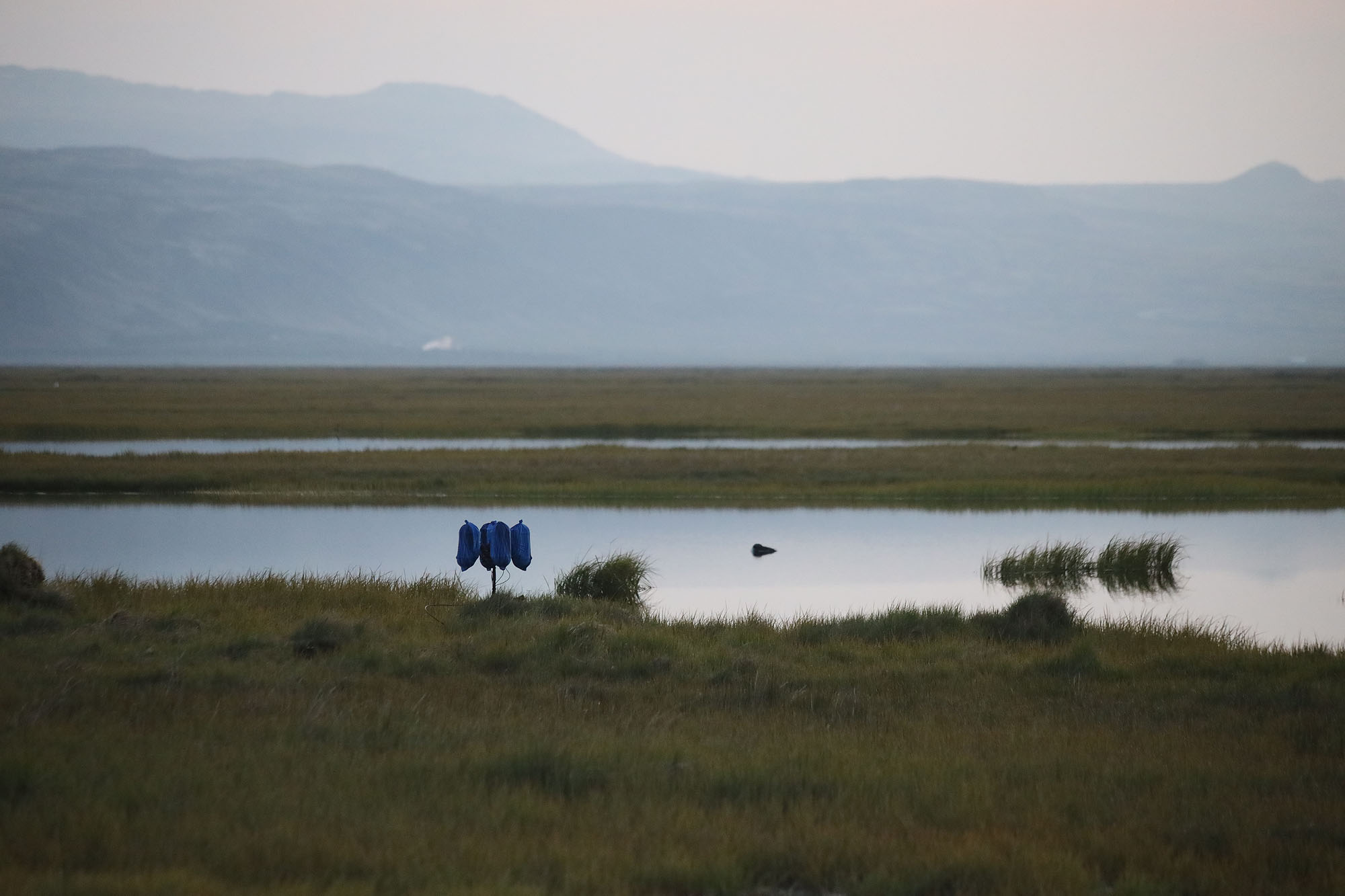
However, I decided to use Lewitt LCT540s in an IRT cross in a sheltered place from the coming storm. Two of the four microphones were pointed as much as possible into the ground, while the other two were allowed to point out into an open area. The recording seemed to only sound interesting in the wind that was present when I started the recording. The entire time I had been at this place in the highlands, I had not heard birds or any other life. Only in the wind and the flow of water in the nearby water sources.
But later that night while I was sleeping, a completely calm weather came that seemed to awaken a lot of birdlife. Birds that I had neither seen nor heard earlier the days before.
However, I never noticed this peaceful weather that night or this bird song. I just went to sleep in the breeze and woke up in a storm. It was therefore quite amusing to discover that I had managed to record the birdsong even though the microphones were placed in the wrong place for such a thing. It was first and foremost the microphones facing the ground that captured the most bird song. Those facing out into the open mainly recorded the behavior of Red necked phalarope which were at a considerable distance and goose in far distance.
To be honest, considering the placement of the microphones, this is a surprisingly good recording. This can probably be attributed to these excellent Lewitt microphones, also because they were not very visible to the birds that are best heard because they do not emit warning sounds. But if I had worn the microphones in something other than fur and been positioned closer to where the birds were, I would have achieved incredibly clear recordings in the most subtle way. In addition, very distant sounds would have become more clear and focused. But it is always difficult to be prepared for such weather conditions that it is possible to be without fur in Iceland when such times are perhaps 6-12 hours a month.
You can hear in the entire recording running water, also a kind of rumbling from running water that I assume could be a stream of spring water below the ground. But in this area there are huge water sources that could probably serve a city of millions with fresh water. The sound was recorded at +50dB gain and increased by +20dB in post up to -10dB. No RX noise reduction, mainly because I have never been satisfied with the result when I have used the LCT540. But EQ was used. Sharply pulled down below 50hz and above 10Khz, mainly to bring down unnecessary rumble and white noise from the equipment.
Quality open headphones are recommended while listening at low to mid volume.
If the media player doesn’t start to play, please reload this individual blog in a new tab or frame.

(mp3 265kbps / 66Mb)

Recorder: Sound Devices MixPre6
Mics: Lewitt LCT540s (IRT cross setup)
Pix: Samsung S22

Weather: Calm cloudy, about 7°C
Location. Secret place on the Icelandic highland
Read Full Post »

IMG_2200

I think I have annual recordings from the same place in the nature reserve in Flói in southwest Iceland almost since 2009. The reason is simple. It’s always interesting to follow the local acoustics from year to year. So I don’t have to spend a lot of time finding a location for the microphone. They stand in the same place unless something else disturbs it, e.g. high ground water level or something else that hasn’t yet happened to me. I go to the place hoping that there is no one in „my place“ in the parking lot where I can pull out my 75 meter 4ch long cable to the place where I have always recorded. I find a good ground for the microphones, get in the car, start recording and go to sleep.
I usually wake up when someone comes driving into the parking lot about 4-6 hours later.
I usually never listen to what I recorded, except when I need to look for something interesting to post on this audio blog like now.
It is well worth having a recording from Flói this month when 15 years have passed since this audio blog went online. Flói has followed this blog ever since I got my first HD recorder. It was then that the batteries suddenly lasted longer than 30 minutes, but it opened up a whole new world for me to record in nature.
Here is an audio recording from June 13, 2023. The area was extremely wet after heavy rains. I positioned the microphones to be in close proximity to the Read necked phalarope. But maybe there wasn’t as much activity as I wanted. But instead you can hear various sounds that I am not quite sure where they are coming from. There are weak „clicks“ that can be heard e.g. for 1:30 min in this recording as well during the 30 minutes that the recording lasts.
As usual, there are many species of birds in Flói. Red-throated Loon. Red-necked Phalarope, Common Snipe, Golden Plover, Whimbrel, Common Eider and certainly other duck species as well. Common Redshank, White Wagtail, Winter Wren, Northern Wheatear, Common Redpoll, Snow Bunting, Swan and maybe other bird species that I cannot name.
Background noise is some traffic and surf from the south coast and air traffic.
You can hear it occasionally in the wind because I covered the wind shield with buff but not fur. Instead, you can hear much better in subtlety details.
This is an extremely low-key recording, except where you hear the Red-throated Loon. The recording was recorded with 50db gain (40Hz HPF), then the gain was further increased by +10dB in post-processing.
Quality open headphones are recommended while listening at low to mid volume.
If the media player doesn’t start to play, please reload this individual blog in a new tab or frame.

(mp3 256kbps / 64Mb)

Recorder: Sound devices MixPre6
Mics: Lewitt LCT540s (IRT cross 90°/30cm)
Pix: Canon EosR

Location: 63.900935, -21.191930
Weather: Cloudy, calm, about 5°C

Read Full Post »

IMG_2200

It has been several years since I published a recording from Flói nature reserve. The reason is more or less because of foul weather in recent years when I have had the opportunity to record there.
It was no exception last summer from late April to mid July. It was cold, windy and wet most of the time which is actually the high season for birdsong recording.
I went there on the 3rd of July 2021 and recorded overnight. The weather was calm in the beginning but the wind increased over the night. I was also struggling with increased sea tide and therefore a surf noise from the coast line, actually at the same time when the birds were most active during the dawn.
My mics were Lewitt LCT540s in IRT cross setup. Most of the bird’s activity was in front of channel 1&2. Most „silence“ was in front of channel 2&3 and most of the surf and traffic noise was at channel 4&1.
It surprised me how much traffic was there the whole night. There was almost constant rumble in the air during the ten hours I was recording, except between four and five o’clock in the morning. This noise was much more audible than I remember in my earlier recordings. The reason could be found in different mic setup and mics. Ten years ago I used to use NT1a in NOS or AB, pointing towards the open field and keeping the nearest road and coastline behind. I have also used MKH20 in AB which is less sensitive for these details than large capsule mics.
It takes time to search in this 10 hour long recording for some nice sounding 30 minutes moments. Listening to the whole four channels it starts with heavy traffic noise in all channels, then surf noise. Then traffic noise again until the wind and the sun makes the air so unstable close to noon, both traffic noise and bird activity almost disappear in the wind noise.
But with an IRT cross rig I have many options. I can turn off the channel or channels which are disturbing for the soundscape I am looking for.
The recording below is a very good example of this. Instead of using all four channels and mixing them to stereo, I use only channel 2&3 (NOS 90°/30cm) to avoid the surf noise. The time when it starts is about 04:15 so there is almost no traffic noise, but anyway, the recording starts and ends with some engine noise in the distance.
Quality open headphones are recommended while listening at mid or low level.
If the media player doesn’t start to play, please reload this individual blog in a new tab or frame.

Recorder: Sound devices MixPre6
Mics: Lewitt LCT540s,  NOS 30cm/90°
Pix: Canon EOS R

Location: 63.900944, -21.191958
Weather: Calm to breeze, partly cloudy, ca 5-10°C

Read Full Post »

IMG_2200

In recent years I have spent several nights in Skeiðarársandur to record the changes in the ecosystem.
Skeiðarársandur is a huge broad sandy wasteland along Iceland’s south-eastern coast, between the Vatnajökull icecap and the sea. It is a wonderful place to record deep natural silence in a huge open flat landscape.
For hundreds of years Skeiðarársandur has been a barren desert. but recently with shrinking glaciers and smaller glacial rivers, Birch, moss and other flora have occupied the northeast part of the sand. That means the soundscape on Skeiðarársandur will change in the future which will be interesting to record regularly in the coming years.
I have usually stayed at the same spot near a traditional sheep pen because structures like that are attractive for birds like Snow bunting, Northern wheatear and Rock ptarmigan.
I was very excited when I went to this spot on the 9th of June 2020. Because of COVID, there were almost no tourists in Iceland and therefore far less traffic.  So I was hoping for a beautifully quiet night there. I was not disappointed either. It was calm so the silence was deep. I could hear the Atlantic ocean surf among the coastline 20-30km away, which sounds slightly like low frequency rumble in the background of this recording. I could not see any bird but bird songs came from every direction, clearly far away. During the night the glacier rumbled several times in Skaftafell national park like a thunder in the distance. Once a ship engine noise was audible out of the coastline which sounds pretty spooky. It sounds more coming from the sky rather than from the coastline in the horizon, which was probably a reflection from different temperature layers in the atmosphere.
Anyway the ship engine is not audible in the following recording, but maybe in another blog.
The microphone rig was on the top of the sheep pen wall, not far away from the place which I think Northern wheatear has had a nest every year since I started to record this place. (Listen to recording since mid May 2016)
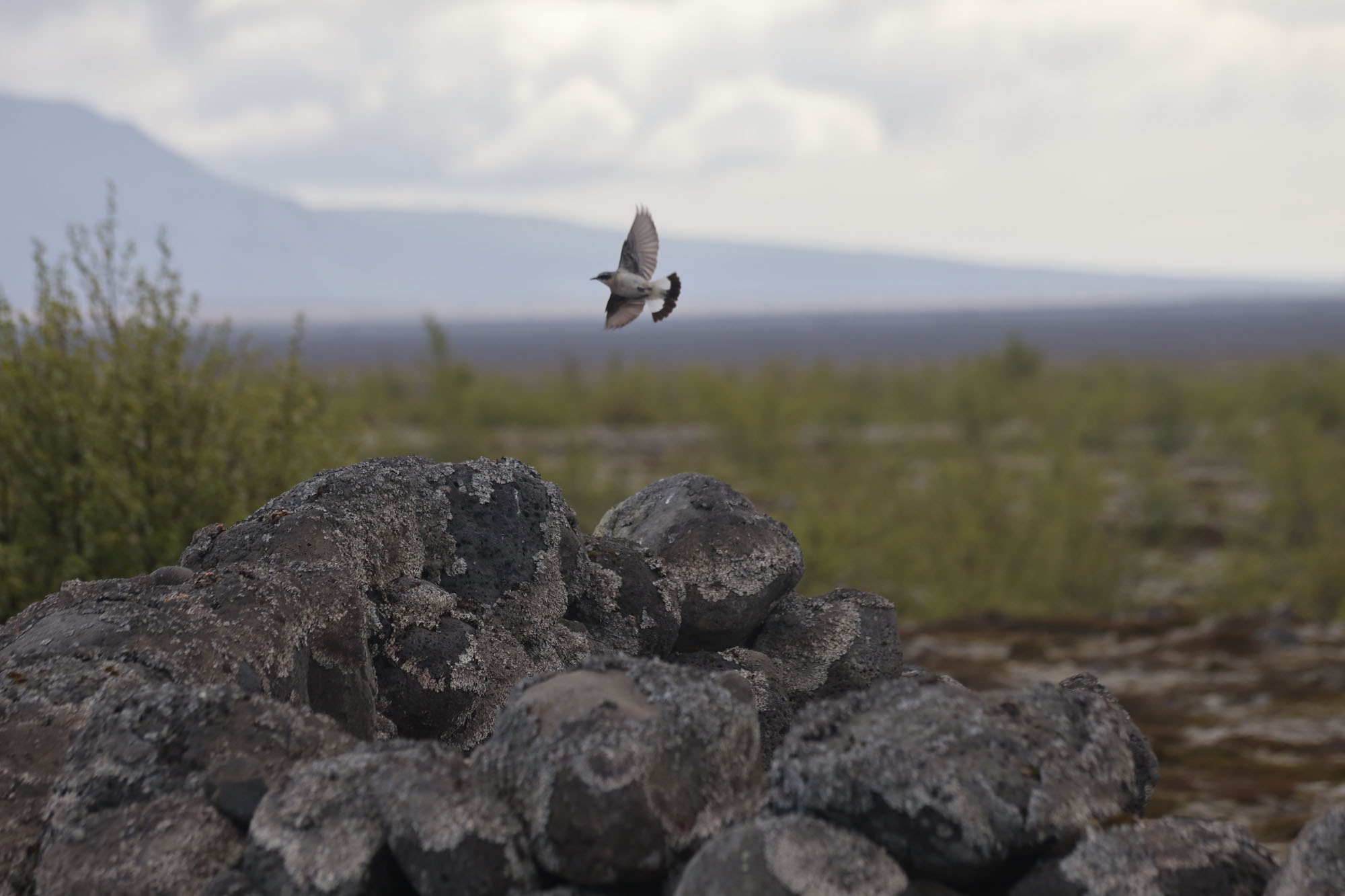
Luckily the Northern wheatear was not far away. This time the bird was not as angry about the hairy microphones as when I first brought the microphones in this place. The bird just sang for me for almost one hour and here comes part of it.

  (mp3 256kbps / 67,7Mb)

Quality open headphones are recommended while listening at low to mid level, or in speakers at low level.
If the media player doesn’t start to play, please reload this individual blog in new tab or frame

Recorder: Sound devices MixPre6
Mics: Lewitt LCT540s (IRT Cross)
Pix: Canon EOS-R 

Weather:  Calm to 5m/sek, clear sky, 3 to 7°C
Location:  63.969925, -17.160018


Read Full Post »

IMG_2200

This following recording was made between 03:00 and  04:00, It is a part of seven hours long recording between 02:00 and 09:00 which I did in Skálholt, south Iceland 10th of July.
The grass was tall so the microphones were almost hidden in the grass. Lots of birds were in this grass searching for food and some of them came close to the microphones.
This is a typical soundscape of silence in a countryside which is not disturbed by traffic or by other engine noise.
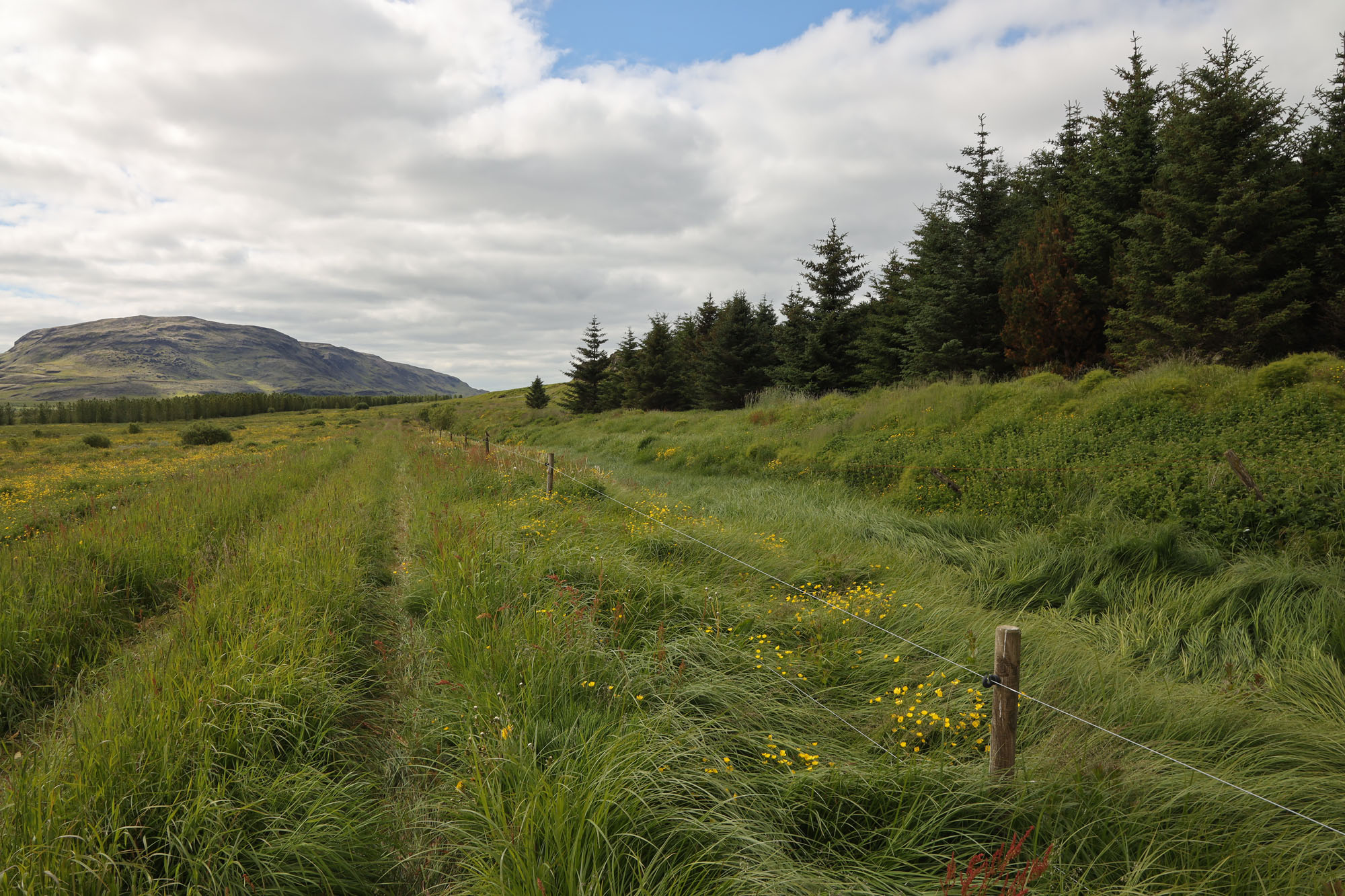
Imagen you self standing in a grassland.  Front of you is a wide open wetland field.  Behind you is a  small hill with tall trees  which make a reflection of some bird calls. Two rivers are in the distance with flocks of whooper swans. The birds are all around you but mostly quiet and busy searching for flies and other insects in the grass all around you.
The recording contains many birds. Like Common Snipe, Golden Plover, Whimbrel, Raven, Common Redshank, Black Tailed Godwit, White Wagtail, Black headed Gull, Rooster, Winter Wren, Northern Wheatear, Snow Bunting, Rock Ptarmigan, Common Starling, Redwing, Whooper Swan, Eurasian Oystercatcher and probably other species.
This recording was made with four Lewitt LCT540s microphones in IRT cross. All capsules are 90° & 30cm apart which was in post mixed to two 180° stereo.
This recording is highly gained with a wide dynamic range so keep it in mind, some moments can be loud
Quality open headphones are recommended while listening at low to mid level, or in speakers at low level.

This recording is my contribution for the world listening day 18th of July 2020

  (mp3 256kbps / 60Mb)
If the media player doesn’t start to play, please reload this individual blog in new tab or frame

Recorder: MixPre6
Mics: Lewitt LCT540s (IRT cross 90¨/30cm)
Pix: Canon EOS R

Location: 64.121864, -20.534631
Weather: Calm, cloudy, around 12°C

Read Full Post »

IMG_2200

This two midsummer recordings were made around four o´clock in the morning 15th of July 2017 nearby Arnarholt farm in Stafholtstungur, in west of Iceland. It is recorded on two stereo channels with two different microphones because usually every time I recorded in this place the recordings has been disturbed by traffic noise all night long. But somehow for some unexplained reason no car went around nearby road for more than two hours, so I got a wonderful recording this morning.
I placed those two microphone rigs very close to each other and pointed them toward north. Afterwards I could not decided which of those recordings were better so it is yours to decide which you like.
There are many bird species in this recording. Common Snipe, Golden Plover, Whimbrel, Common Redshank, Black Taled Godwit, White Wagtail, Black headed Gull, Winter Wren, Northern Wheatear, Snow Bunting, Rock Ptarmigan, Common Starling, Redwing, Great Northern Dever, Whooper Swan, Graylag Goose and probably other species. Birds like Starling and Redwing are flying between branches in nearby trees.

My favorite microphones for nature recordings are Sennheiser MKH20 an omni-directional condenser microphone and Rode NT1A (slightly modified), a large capsule cardioid polar pattern studio condenser microphone. Both these mics have lowest self-noise available on the market.
I am used to use MKH20 in AB setup which mean the mics are in 40-45cm spaced parallel position (AB40). Then I turn the capsules 2-5° outward which gave me sometimes slightly „wider or more open space feeling“. This setup give me a stereo recording, 360° surround the rig.
My second best omni-directional ultra low noise mic for nature recordings is AT4022 but it does not sound as „musical“ or „natural“ as MKH20, so it is not as often in my tool box,
Cardioid mic detect sound mainly from one direction. so I use NT1A in different circumstances.
Lets say I like to record a birdsong. At the same time it is disturbed with unwanted noise, coming from another direction like waterfall, river flow, surf or traffic noise. I can place the backside of the cardioid mic to the noise source which mean I will get less of the unwanted noise and more of the birdsong.
In last two or three years I have not used NT1A in ORTF or NOS setup for outdoor recordings. But instead use AB4, same as for MKH20, which seems to give less phase error for the sound behind the rig.

These two recordings are NOT good examples for this two different mics in critical circumstances because no car passed by behind the rigs and most of the birds activity was also front of the rigs. But it gives a nice insight how this two different mics sounds and how the self-noise act in „quiet“ nature recordings.
NT1A was inside Rycote Cyclone + fur. MKH20 was inside Rycote WS2 windshield + fur. Both rigs are in AB40 +3°
I use MixPre6 in this recording. There is no doubt, the new Sound devices Kashmir mic preamplifier is ultra low noise and a sweet step forward to get better field recordings.
The HPF was at 40Hz and the gain was at 50dB for NT1A and 43dB for MKH20. The gain settings mainly get this arrangement because then both rigs sounds have equal level in the headphones while I was recording. In post the gain was increased almost 30dB on both stereo channels, up to -10dB.
Specrogram shows „all“ frequencies was bellow 8Khz so to lower unwanted mic self-noise I pull everything above 10Khz down with EQ (-5db @ 11Khz & -30dB @ 15Khz) .
This is a „quiet“ recording which mean you should listen to it at low level in quality headphones or speakers in quiet place.

NT1A recording
(mp3, 256kbps / 50,6Mb)

MKH20 recording
(mp3, 256kbps / 50,6Mb)

Here are two shorter version of this recording but now without high frequency cutoff and the gain level is normalized up to 0dB, so it should be easy to hear the mic self-noise in low quality headphones and PC amplifiers.
It is also easy to notice that MKH20 is covering 360° of the surround soundscape, while NT1A is only covering 180° with less bird songs and other activity.

NT1A. Without high freq cut off, normalized to 0dB
(mp3, 256kbps / 11Mb)

MKH20 Without high freq cut off, normalized to 0dB
(mp3, 256kbps / 11Mb)

Recorder: Sound devices MixPre6
Mics: Rode NT1a and Sennheiser MKH20 (AB40 setup)
Pix. Canon EOSM

Location: 64.673460, -21.629304
Weather: Calm, cloudy, ca. 7°C

Read Full Post »

IMG_2200

An outwash plain, also called a sandur is a plain formed of glacial sediments deposited by meltwater outwash at the terminus of a glacier. As it flows, the glacier grinds the underlying rock surface and carries the debris along. The meltwater at the snout of the glacier deposits its load of sediment over the outwash plain, with larger boulders being deposited near the terminal morraine, and smaller particles travelling further before being deposited. Sandurs are common in Iceland where geothermal activity accelerates the melting of ice flows and the deposition of sediment by meltwater.
The original sandur from which the general name is derived is Skeiðarársandur, a broad sandy wasteland along Iceland’s south-eastern coast, between the Vatnajökull icecap and the sea. Skeiðarársandur is the largest sandur in the world, covering an area of 1,300 km2 (500 sq mi). Volcanic eruptions under the icecap have given rise to many large glacial bursts (jökulhlaups in Icelandic), most recently in 1996, when the Ring Road was washed away (minor floods have also occurred since then). This road, which encircles Iceland and was completed in 1974, has since been repaired. The 1996 jökulhlaup was caused by the eruption of the Grímsvötn volcano, with peak flow estimated to be 50,000 m3/s (1,800,000 cu ft/s) compared to the normal summer peak flow of 200 to 400 m3/s (7,100–14,100 cu ft/s). Net deposition of sediment was estimated to be 12,800,000 m3 (450,000,000 cu ft).
The main braided channels of Skeiðarársandur are the Gígjukvísl and Skeiðará rivers, which incurred net gains of 29 and 24 cm (11.4 and 9.4 in) respectively during the 1996 jökulhlaup. In the Gígjukvísl there was massive sediment deposition of up to 12 m (39 ft), which occurred closest to the terminus of the glacier. The erosional patterns of Skeiðarársandur can be seen by looking at the centimeter-scale elevation differences measured with repeat-pass laser altimetry (LIDAR) flown in 1996 (pre-flood), 1997, and 2001. Of the overall deposition during the 1996 jökulhlaup, nearly half of the net gain had been eroded 4 years after the flood. These two rivers on the sandur display drastically different erosional patterns. The difference in sediment erosion can be attributed to the 2 km (1.2 mi) wide trench near the terminus where the Gígjukvísl flows, in contrast with the Skeiðará, which has braided flows directly onto the outwash plain. The Gígjukvísl river is where some of the highest level of sediment deposit occurred and also where the largest erosion happened afterward. This indicates that these massive jökulhlaup deposits may have a large geomorphic impact in the short term, but the net change on the surface relief could be minimal after a couple years to a decade. (*Wikipedia)
This recording is just 23 minutes of 1o hours long overnight recording. It is very quiet and highly amplified. The microphones are unexpected located near to Northern Wheatear´s nest which is between stones in old ruins in the middle of Skeiðarársandur. You can hear wing flaps and some kind of a conversation between the birds and the youngsters. The birds sounds a little bit out of phase but that could be either because the bird is mostly behind the microphones, or the stone wall, or because the fury windshield was still soaking wet after heavy rain one hour earlier.
At 1:35 min a thunderous boom sounds from glacier in distance. During the recording the weather changed from calm to be windy.
Quality open headphones are recommended while listening at low to mid level, or in speakers at low level.

Sögur af Skeiðarársandi 1. hluti

Hér er á ferðinni rúmlega 20 mínútna löng upptaka sem er partur af 10 klst langri næturupptöku frá því 29. maí 2016 á Skeiðarársandi. Á sandinum svo til miðjum er hlaðin rúst sem líklega hefur gengt því hlutverki að vera fjárrétt áður en árnar á sandinum voru brúaðar. Í upptökunni má heyra að í vegghleðsluni er hreiður Steindepils. Hann pirrar sig eitthvað á óboðnum gesti þessa nótt, hljóðnemunum, en virðist svo líka eiga einhver samskipti við unga sína með lágværu tísti eða muldri. Heyra má að á þessum rúmu 20 mínútum að veðrið breytist frá því að vera logn yfir í rok.
Mælt er með því að hlusta á upptökuna í góðum opnum heyrnartólum og á miðlungs- lágum hljóðstyrk.

(256kbps / 43Mb)

Recorder: Sound Devices 788
Mics: Sennheiser MKH20 (AB40)
Pix: Canon EOS-M
Weather & time: Clam and windy, Drissle rain, at 2AM
Location: 63.969892, -17.160032

Read Full Post »

IMG_2200

I think I don‘t need to present the nature reserve in Flói in many words. It is a wetland / moors in south of Iceland. I have already published in this blog several hours of „Flói recordings“.
Last spring was cold, wet and windy so I did not spend much time there. But in June, I stayed there for two nights while I recorded several hours of recordings during the nights.
As usual I fell in to sleep in the field during that time, so I did not know what I was recording. Last week when I was searching trough the recordings, I noticed some interesting moments.
At 14th of June the overnight weather forecast was nice and I started to record at midnight. Between 2 and 5 in the morning the wind went down so the field got „quieter“ for far distance sound waves.
I put up Rode NT1 in NOS in the same place as usual and pointed them to north. The soundscape is always spectacular in this place.
This soundscape is probably not what everyone would hear by bear ears. The recording is highly amplified. In this circumstances and Rode NT1, I normally adjust the gain on the recorder between 54-58dB. In this particular recording the gain is increased again in post about +24 dB so the peak level in one moment (at 13:16) reach 0dBf.
Many bird species are audible in this recording like Red throat Diver, Common Snipe, Golden Plover, Dunlin, Whimbrel, Gull, Arctic Tern, Northern Wheatear, Greylag Goose, Whooper Svan, Meadow Pipit and other bird species I have forgotten, or can’t name. Other audible animals like horses and sheep’s are there too.
Background noise is mostly from the Atlantic ocean’s waves along the south coast behind the mics. Then as usual, traffic noise and sometimes a party music somewhere in the county.
Quality open headphones are recommended while listening at low to mid level, or in speakers at low level.

Flói 2015. 1. Hluti

Hér er á ferðinni upptaka úr friðlandinu í Flóa frá því á laugardagskvöldi og sunnudagsmorgni 14. júní 2015. Eins og fyrri upptökur úr Flóa sem finna má hér á síðunni eru hljóðnemarnir ávallt staðsettir á sama stað við sömu tjörn norðan við fuglaskoðunarhúsið.
Í upptökunni má heyra í ýmsum fuglategundum. Má þar nefna lóm, hrossagauk, heiðlóu, lóuþræl, spóa, máfa, kríu, steindepli, grágæs, álft og þúfutitling. Þá heyrist lika í hestum og kindum.
Bakgrunnssuð er einkum brim meðfram Suðurströndinni og einkum við Ölfusárósa. Svo berst hávaði frá bílum og partítónlist einhvers staðar í sveitinni.
Mælt er með því að hlusta á upptökuna í góðum opnum heyrnartólum og á miðlungs- lágum hljóðstyrk.

Download mp3 file (256kbps / 60,7Mb)

Recorder: Sound devices 788
Mics. Rode NT1 (NOS)
Pix. Canon EOS M
Weather: clear sky, mostly calm, between -1 to 4°C
Time: 14 June 2015, between 2 and 3 o’clock
Location: 63.900933, -21.191876

Read Full Post »