Feeds:
Færslur
Athugasemdir

Posts Tagged ‘Sennheiser MKH20’

IMG_2200

This two midsummer recordings were made around four o´clock in the morning 15th of July 2017 nearby Arnarholt farm in Stafholtstungur, in west of Iceland. It is recorded on two stereo channels with two different microphones because usually every time I recorded in this place the recordings has been disturbed by traffic noise all night long. But somehow for some unexplained reason no car went around nearby road for more than two hours, so I got a wonderful recording this morning.
I placed those two microphone rigs very close to each other and pointed them toward north. Afterwards I could not decided which of those recordings were better so it is yours to decide which you like.
There are many bird species in this recording. Common Snipe, Golden Plover, Whimbrel, Common Redshank, Black Taled Godwit, White Wagtail, Black headed Gull, Winter Wren, Northern Wheatear, Snow Bunting, Rock Ptarmigan, Common Starling, Redwing, Great Northern Dever, Whooper Swan, Graylag Goose and probably other species. Birds like Starling and Redwing are flying between branches in nearby trees.

My favorite microphones for nature recordings are Sennheiser MKH20 an omni-directional condenser microphone and Rode NT1A (slightly modified), a large capsule cardioid polar pattern studio condenser microphone. Both these mics have lowest self-noise available on the market.
I am used to use MKH20 in AB setup which mean the mics are in 40-45cm spaced parallel position (AB40). Then I turn the capsules 2-5° outward which gave me sometimes slightly „wider or more open space feeling“. This setup give me a stereo recording, 360° surround the rig.
My second best omni-directional ultra low noise mic for nature recordings is AT4022 but it does not sound as „musical“ or „natural“ as MKH20, so it is not as often in my tool box,
Cardioid mic detect sound mainly from one direction. so I use NT1A in different circumstances.
Lets say I like to record a birdsong. At the same time it is disturbed with unwanted noise, coming from another direction like waterfall, river flow, surf or traffic noise. I can place the backside of the cardioid mic to the noise source which mean I will get less of the unwanted noise and more of the birdsong.
In last two or three years I have not used NT1A in ORTF or NOS setup for outdoor recordings. But instead use AB4, same as for MKH20, which seems to give less phase error for the sound behind the rig.

These two recordings are NOT good examples for this two different mics in critical circumstances because no car passed by behind the rigs and most of the birds activity was also front of the rigs. But it gives a nice insight how this two different mics sounds and how the self-noise act in „quiet“ nature recordings.
NT1A was inside Rycote Cyclone + fur. MKH20 was inside Rycote WS2 windshield + fur. Both rigs are in AB40 +3°
I use MixPre6 in this recording. There is no doubt, the new Sound devices Kashmir mic preamplifier is ultra low noise and a sweet step forward to get better field recordings.
The HPF was at 40Hz and the gain was at 50dB for NT1A and 43dB for MKH20. The gain settings mainly get this arrangement because then both rigs sounds have equal level in the headphones while I was recording. In post the gain was increased almost 30dB on both stereo channels, up to -10dB.
Specrogram shows „all“ frequencies was bellow 8Khz so to lower unwanted mic self-noise I pull everything above 10Khz down with EQ (-5db @ 11Khz & -30dB @ 15Khz) .
This is a „quiet“ recording which mean you should listen to it at low level in quality headphones or speakers in quiet place.

NT1A recording
(mp3, 256kbps / 50,6Mb)

MKH20 recording
(mp3, 256kbps / 50,6Mb)

Here are two shorter version of this recording but now without high frequency cutoff and the gain level is normalized up to 0dB, so it should be easy to hear the mic self-noise in low quality headphones and PC amplifiers.
It is also easy to notice that MKH20 is covering 360° of the surround soundscape, while NT1A is only covering 180° with less bird songs and other activity.

NT1A. Without high freq cut off, normalized to 0dB
(mp3, 256kbps / 11Mb)

MKH20 Without high freq cut off, normalized to 0dB
(mp3, 256kbps / 11Mb)

Recorder: Sound devices MixPre6
Mics: Rode NT1a and Sennheiser MKH20 (AB40 setup)
Pix. Canon EOSM

Location: 64.673460, -21.629304
Weather: Calm, cloudy, ca. 7°C
Read Full Post »

IMG_2200

One year ago I was recording in Skaftafell national park and neighborhood in southeast of Iceland. One of my favorite recording place in this area is not exactly in the park, but on Skeiðarársandur, a huge broad sandy wasteland along Iceland’s south-eastern coast, between the Vatnajökull icecap and the sea.
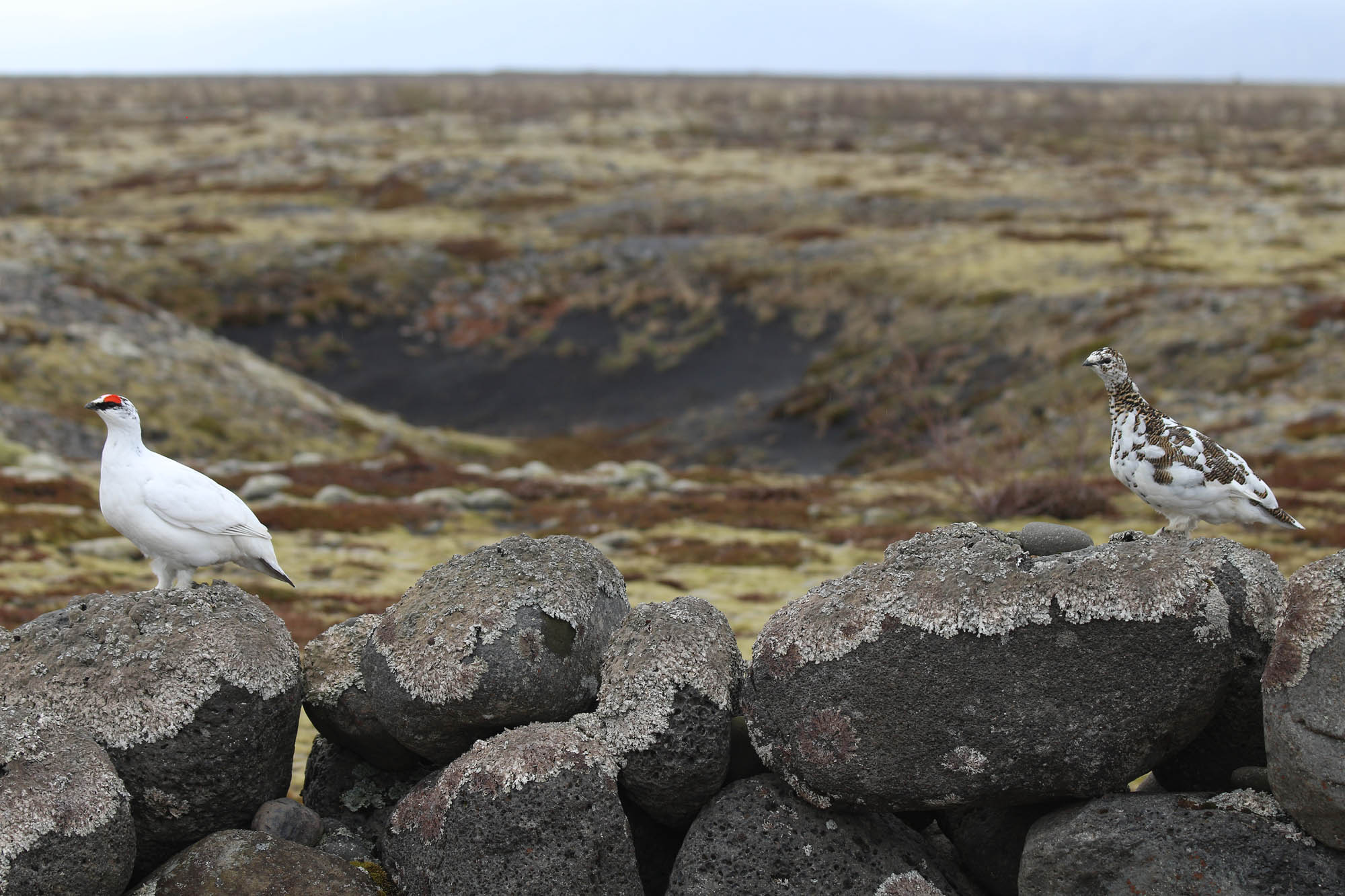
One of the reason I love this place is the silence. There is almost „nothing“. Just the sand. In the horizon far away is the glacier Vatnajökull on the one side, and on the other side just the sky. The only thing that disturbs this silence is traffic or the wind. So when it is calm during the night and traffic is down it is possible to listen deep into this amazing open space. There is not much life. There is probably only Rock Ptarmigan that lives there all year around. Other species are migrants during the summertime so it is easy to say, Rock Ptarmigan is the residents of silence.
This recording is a recording of silence. Most people will not hear anything in this circumstances, probably only its own heartbeat and notice „they have“ tinnitus. But with best equipment is it possible to listen deeper into this quiet place.
You will hear some birds and insects. With good headphones you will hear the rumble sound of heavy surf on the beach 20 to 30 km far away.
BUT this recording is not completely quiet. So be careful while listening. Two birds, a male and female Rock Ptarmigan, are coming very close, „talking“ loud into your ears (2:05).
It is also worth to listen to another earlier recording from this place. „Stories from Skeiðarársandur„.
Quality open headphones are recommended while listening at low to mid level, or in speakers at low level.

(256kbps / 61Mb)

Recorder: Sound devices 788
Mics: Sennheiser MKH20 (AB40 +5° outward)
Weather: Calm, cloudy, +5°C
Location: 63.969892, -17.160072

Read Full Post »

IMG_2200

Last summer I spend one week at Raufarhöfn, a small village in north east of Iceland, close to the arctic circle. Most of the time it was a fool‘s weather for „quality“ recording. But anyway, I recorded almost 6 to 10 hours every night close to the sore. Most of theese recordings contains rumbling wind noise, but sometimes – very few times, I got what I was looking for.
Here is one of them, recorded 17th of June 2016.
It is early morning. The clock is around four. Birds are busy to protect and teach their young to search for food. Shortly after the recording starts, you can hear a fisherman pass by on his car on way to the harbor. Then later, the fishing boat goes, and passes by on the way to the sea. It takes a long time for the enginenoise to disrepair.
This is a peaceful recording. A typical midsummer morning soundscape at the arctic circle, where the sun never goes down. Many bird spices are in this recording, but mostly Common Eider and their youngs. Also you can hear Oystercatcher , Golden Plover, Purple Sandpiper, Red Necked Phalarope, Whimbrel, Common Snipe, Redwing, Snow Bunting, Svan, Great Northern Diver, Northern Fulmar, Kittiwake, Raven and probably may other.
Quality open headphones are recommended while listening at low to mid level.

(256kbps / 55Mb)

Recorder: Sound Devices 788
Mics. Sennheiser MKH20 (AB40)
Pics: Canon EOS–M

Location: 66.451296, -15.946621
Weather: Light gust, cloudy

Read Full Post »

IMG_2200

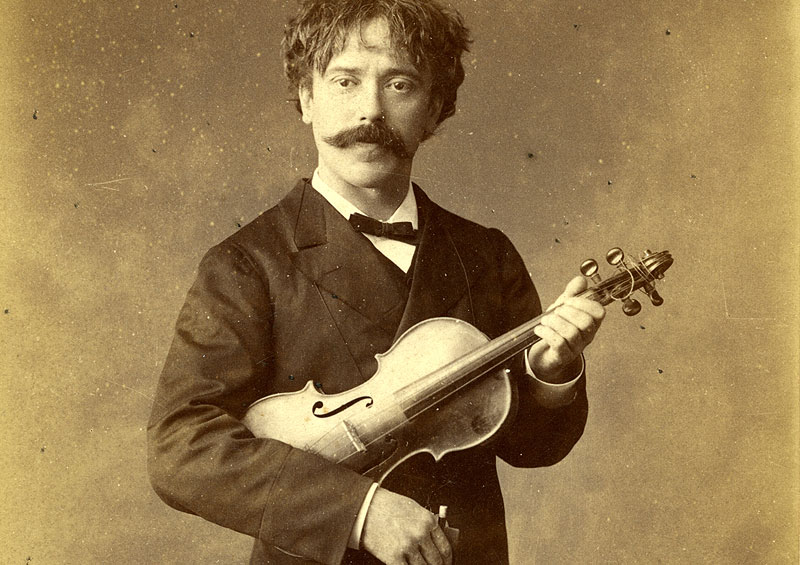
Pablo Sarasate was born 10 March 1844 in Pamplona, Navarre, the son of an artillery bandmaster. He began studying the violin with his father at the age of five and later took lessons from a local teacher. His musical talent became evident early on and he appeared in his first public concert in A Coruña at the age of eight.
His performance was well-received, and caught the attention of a wealthy patron who provided the funding for Sarasate to study under Manuel Rodríguez Saez in Madrid, where he gained the favor of Queen Isabella II. Later, as his abilities developed, he was sent to study under Jean-Delphin Alard at the Paris Conservatoire at the age of twelve.
There, at seventeen, Sarasate entered a competition for the Premier Prix and won his first prize, the Conservatoire’s highest honour. (There was not another Spanish violinist to achieve this until Manuel Quiroga did so in 1911; Quiroga was frequently compared to Sarasate throughout his career.)
Sarasate, who had been publicly performing since childhood, made his Paris debut as a concert violinist in 1860, and played in London the following year. Over the course of his career, he toured many parts of the world, performing in Europe, North America, and South America. His artistic pre-eminence was due principally to the purity of his tone, which was free from any tendency towards the sentimental or rhapsodic, and to that impressive facility of execution that made him a virtuoso. In his early career, Sarasate performed mainly opera fantasies, most notably the Carmen Fantasy, and various other pieces that he had composed. The popularity of Sarasate’s Spanish flavour in his compositions is reflected in the work of his contemporaries. For example, the influences of Spanish music can be heard in such notable works as Édouard Lalo’s Symphonie Espagnole which was dedicated to Sarasate; Georges Bizet’s Carmen; and Camille Saint-Saëns’ Introduction and Rondo Capriccioso, written expressly for Sarasate and dedicated to him.
Of Sarasate’s idiomatic writing for his instrument, the playwright and music critic George Bernard Shaw once declared that though there were many composers of music for the violin, there were but few composers of violin music. Of Sarasate’s talents as performer and composer, Shaw said that he „left criticism gasping miles behind him“. Sarasate’s own compositions are mainly show-pieces designed to demonstrate his exemplary technique. Perhaps the best known of his works is Zigeunerweisen (1878), a work for violin and orchestra. Another piece, the Carmen Fantasy (1883), also for violin and orchestra, makes use of themes from Georges Bizet’s opera Carmen. Probably his most performed encores are his two books of Spanish dances, brief pieces designed to please the listener’s ear and show off the performer’s talent. He also made arrangements of a number of other composers’ work for violin, and composed sets of variations on „potpourris“ drawn from operas familiar to his audiences, such as his Fantasia on La forza del destino (his Opus 1), his „Souvenirs of Faust“, or his variations on themes from Die Zauberflöte. In 1904 he made a small number of recordings. In all his travels Sarasate returned to Pamplona each year for the San Fermín festival.
Sarasate died in Biarritz, France, on 20 September 1908, from chronic bronchitis. He bequeathed his violin, made by Antonio Stradivari in 1724, to the Musée de la Musique. The violin now bears his name as the Sarasate Stradivarius in his memory. His second Stradivari violin, the Boissier of 1713, is now owned by Real Conservatorio Superior de Música, Madrid. Among his violin pupils was Alfred De Sève. The Pablo Sarasate International Violin Competition is held in Pamplona. (Wikipedia)
Following recording Zigeunerweisen is performed by Chrissie Telma Guðmundsdóttir (violin) and The Iceland Amateur Symphony Orchestra directed by Oliver Kentish.
This was recorded at Seltjarnarnes Church 16th of October 2016.
Thanks to Oliver and Chrissie who gave me a permission to publish this recording on the web.

(320Mbps / 24,4Mb)

Recorder: Sound devices 788
Mics: Neumann KM184 (NOS) & Line Audio OM1 (AB40) in 3m above orchestra. Sennheiser MKH20 for bass and Line Audio CM3 on soloist (Chrissie).
Location: 64.1485379,-22.0052351

More information:
Chrissie Telma Guðmundsdóttir
Oliver Kentish
The Iceland Amateur Symphony Orchestra

Read Full Post »

IMG_2200

The Vestmannaeyjar archipelago is young in geological terms. The islands lie in the Southern Icelandic Volcanic Zone and have been formed by eruptions over the past 10,000–12,000 years. The volcanic system consists of 70–80 volcanoes both above and below the sea.[3]
The largest island, Heimaey, has a population of 4,135. The other islands are uninhabited, although six have single hunting cabins. Vestmannaeyjar came to international attention in 1973 with the eruption of Eldfell volcano, which destroyed many buildings and forced a months-long evacuation of the entire population to mainland Iceland. Approximately one fifth of the town was destroyed before the lava flow was halted by application of 6.8 billion litres of cold sea water.[2]
With extremely high precipitation considering the latitude, Vestmannaeyjar features an ET Tundra climate (closely bordering Subpolar Oceanic (Cfc)) under the Köppen climate classification. It is often very windy in the islands, and the highest wind speed measured in Iceland (61 metres per second;140 mph) was recorded in Stórhöfði. The main wind directions are easterly and south-easterly. The islands enjoy the country’s highest average annual temperature, the Gulf Stream having a strong warming effect, especially in winter. (Text Wikipedia)
The following recording was made at Stórhöfði 31st of March 2016 in a windspeed around 20 m. pr/sec

Stormur í Vestmannaeyjum

Upptaka þessi var hljóðrituð hádegi á Stórhöfða þann 31. mars 2016 stuttu áður en viðvera á Stórhöfða varð óbærileg vegna veðurs.
Þarna hvín ansi hátt í stögum á loftnetsmöstrum sem eru sunnan við vitahúsið. Hljóðnemarnir voru hafðir skjólmegin við húsið á meðan á upptöku stóð. Gera má ráð fyrir að vindstyrkur hafi náð þarna 20m/sek en síðar um kvöldið komst vindstyrkur upp í 35m/sek og enn meira í hviðum.

  (mp3 192kbps / 30Mb)

Recorder: Sound devices 744
Mics: Sennheiser MKH20 (AB40)
Pics: Canon EOS-M (see more pictures)
Location: 63°23’58.7″N 20°17’19.2″W

Read Full Post »

IMG_2200

Whatever the mainstream media says, the Paris talk COP21 was a fraud. The outcome was almost nothing, just promises. For me and many others is it too late. The chain reaction has already started so radical actions was needed at last sixteen years ago.
Paris talk was tailor made for investors, corporations and politicians with different needs, probably to make different outcome from previous conferences.
I have wait for political actions all times since beginning of this century so I was really hoping for radical actions after COP21.
The only thing that Icelandic politics brought from COP21 was mostly a nonsense. Icelanders were already doing most of the “solutions” for other reasons. Icelanders will just plant trees and fill up drainage ditches to restore swampland. When investors are ready somewhere in the future, Icelanders will change fossil fuel cars into electric cars.
At the same time Icelanders will increase tourism, even though extreme growth in tourism last decade has already damaged the nature with following pollution and intrusion. Icelanders will also keep on making cheap power for antitrust corporations by building more polluting power stations. They are even going to search for oil well in the North Atlantic ocean.
So as so many earthlings Icelanders intend to continue their greedy and polluting lifestyle.
We are in War against Mother nature like we are all brainwashed by Sauron . We are not only polluting the earth´s atmosphere with poison gasses. We are also polluting the ground, the oceans and fresh waters with dangerous materials and gasses. Irritating audible noise is now everywhere, from the sky, on the surface and in the ocean.
Unpolluted space on our planet is now rarer than gold, in fact more valuable too.
I want to dedicate the accompanying recording to our foolish lifestyle. It was recorded on Mosfellsheiði, east of Reykjavik 25th of July 2013. It should be a quiet place, far away from busy roads in beautiful open landscape. But instead a rumbling noise filled the air from all directions. The recording contains “fossil fuel cars and air traffic”. But the loudest steady noise comes from Hellisheiðarvirkjun, a geothermal power station in more than 10 km distance. It normally blows huge amount of gases into the atmosphere. It is mostly hot steam but is mixed with toxic gases like carbon dioxide (CO2), hydrogen sulphide (HS) and also substantial quantities of hydrogen (H2). Other gases such as nitrogen (N2), methane (CH4) and argon (Ar) are in the gas mixture, but in lesser extent.
Quality open headphones are recommended while listening at mid-low level

Erum við heilaþvegin af Souron?

Loftslagsráðstefnan í París COP21 var mér mikil vonbrigði. Ég hafði vonast eftir mjög rótækum aðgerðum STRAX, en niðustaða ráðstefnunnar varð aðeins í grófum dráttum sú, að fyrirtæki og fjárfestar þurfa að huga að í lotslagsmálum á næstu árum. Það er einfaldlega of seint.
Enginn þorir að takast á við vandann. Menn ætla bara að bíða og sjá hvort það sé nauðsynlegt að gera eitthvað og vonast svo til að tæknin bjargi öllu. Flest okkar hafa séð hversu skelfilegt ástandið þarf að verða svo menn taki nýja stefnu. Nægir þar að nefna mengun í iðnaðarborgum Kína. Fátt bendir til annars en að ástandið verði eins á heimsvísu. Það er því eins og mannkynið sé heilaþvegið af “Sauron
Framtíðn er því ekki beinlínis til að gleðjast yfir. Því vill ég tileinka upptöku hér fyrir neðan viðfangsefninu. Meðfylgjandi mynd er tekin á upptökustað. Allt virðist þar í fljótu bragði óspillt og ómengað. En það er ekki allt sem sýnist. Í loftinu er óvenju mikið af óheppilegum ósýnilegum gastegundum af mannavöldum eins og frá Hellisheiðarvirkjun.
Hljóðritið gefur aðeins til kynna hljóðmengun á stað þar sem ríkja ætti “þögn” ef mannfólkið hefði haft vit og rænu á því að þróast í sátt og samlyndi við Móður náttúru.
Mælt er með því að hlusta á upptökuna í góðum opnum heyrnartólum og á miðlungs- lágum hljóðstyrk.

Download mp3 file (256kbps / 50Mb)

Recorder: Sound Devices 788
Mics: Sennheiser MKH20 (AB40)
Pics: Canon EOS-M (see more pictures)
Weather: Calm, Sunny, ca. 14°C at 20:00 o´clock
Location: 64.110946, -21.541311

Þeir sem vilja fræðast meira um Loftslagsmál geta hlustað á útvarpsþáttinn Þræði á Rás 1.
En dagana 28. nóvember, 5. og 12. desember 2015 var fjallað um loftslagsmál og ráðsetnuna í París sem þá stóð sem hæst.

Read Full Post »

IMG_5077

This recording is almost straight forward from the recording I posted about a year ago “Dawn in Stafholtstungur, part 1”.
Now the traffic in the county increase slowly from previous recording, but all the time it is possible to listen to the birds activity in details around the recording place.
This was recorded the 18th of October 2013, between 6 and 7 in the morning near the farm Arnarholt.
Quality headphones are recommended while listening at low level in relaxed position.

Dögun í Stafholtstungum, annar hluti

Hér er á ferðinni  svo til beint framhald af upptöku sem fór á vefinn fyrir um ári síðan; “Dögun í Stafholtstungum, fyrsti hluti”.  Heyra má að umferð eykst í sveitinni  þar sem klukkan er farinn að ganga sjö.  Gera má ráð fyrir að það heyrist í sumum bílum, þá líklega flutningabílum, um langan veg  frá Norðurárdal suður til Borgarfjarðar. En þegar þögnin er sem mest er vel hægt að heyra í fuglum  athafna sig í smáatriðum nærri upptökustaðnum.
Upptakan var gerð við bæinn Arnarholt þann 18. október 2013
Mælt er með því að hlusta á þessa upptöku í góðum heyrnartólum og á lágum hljóðstyrk um leið og slakað er á í þægilegum stól eða rúmi.

Download mp3 file (256kbps / 60Mb)

Recorder:  Sound devices 744
Mics: Sennheiser MKH20 (AB40)
Pix: Canon EOS M
Rec. location: 64.672593, -21.629240
Weather: Clear sky, calm, -4°C

Read Full Post »

IMG_7641

Vatnajökull is the largest ice cap in Europe by volume (3,100 km³). Vatnajökull has around 30 outlet glaciers (icefall) flowing from the ice cap. Svíafellsjökull is one of them.
Glaciers are not a playground for everyone. They have its own weather system and the gravity force will destroy everything that get lost in the ice.
Two British students lost their lives 1953 in a storm which lasted for 10 days on the glacier. It was not until 2003 that some of their equipment was found, carried forward with the movement of the outlet glacier. No human remains were found.
Two German tourist have been missing since 1st of August 2007 when they were on a hiking trip on Svínafellsjökull. Nobody knows what really happened but it is most likely that they fell in a swallow somewhere on the glacier, but their equipment was found in a small valley, high in the nearby mountains.
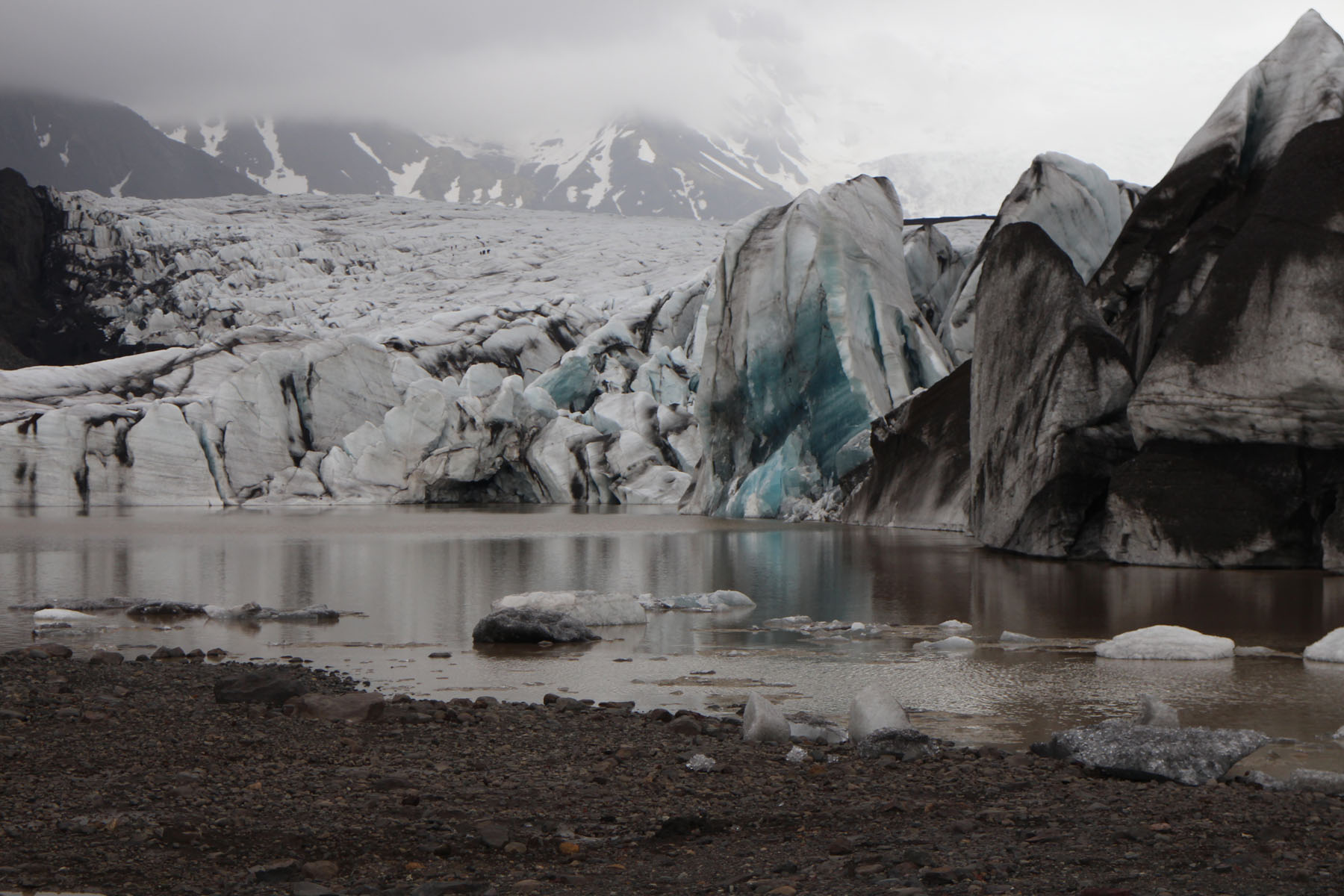
All glaciers have been shrinking fast last decade. That can be easily seen at the end of Svínafellsjökull witch now has a big glacier lagoon that did not exist few years ago.
As glaciers the glacier lagoons can be also dangerous. Icebergs can suddenly fall off the icefall and make huge waves in the lagoon, also when icebergs turns around or brake down in a parts.
I got in touch of these forces when I was recording the lagoon under Svínafellsjökull, 23rd of May 2014. I hid the equipment from other tourist in a landslide nearby and about two meters above the lagoon surface. Two Aquarian hydrophones where placed in the lagoon and a pair of MKH20 was used to pick up the sounds above the lagoon. The idea was to record in two or three hours.
I was in another place with my second recorder to record a sound close by the glacier.
After one and half hour I suddenly hear a big „bang“ with a long powerful echo from nearby mountains. All the icebergs on the lagoon suddenly moved around as a beans in a boiling pot.
I ran to the recorder´s place on the other side of the lagoon. The bag with the recorder was floating between the Icebergs so it was no problem to locate it in the muddy water. I disconnect the battery and took it inside to dry it as fast as I could. But nevertheless, it had several malfunctions since this drowning.
I am not sure what really happened. The flood line does´t goes all the away to the recorder´s place. I think it is most likely that some icebergs pulled the recorder by the hydrophones into the lagoon.
Thanks to Sound Devices in US and the reseller in Iceland (Pfaff-Borgarljós and Bragi Kort) I got a new recorder for a very nice price. Most of the loss was then covered by the insurances.
Update: In late summer 2020, I took the recorder apart, piece by piece, and cleaned it. It is now in top condition.

Flóðbylgjan við Svínafellsjökul

Jöklar og umhverfi þeirra getur verið hættulegt þeim sem það ekki þekkjir. Jöklarnir eru síbreytilegir og hafa sitt eigið veðrakerfi. Því ber að umgangast þá með varúð. Skemmst er að minnast hvarf tveggja þjóðverja á Svínafellsjökli þann 1. ágúst 2007 .
Mér var það svo sem lika ljóst að jökullón geta verið hættuleg þann 23. maí 2014 þegar ég staðsetti upptökutæki við jökullónið neðan við Svínafellsjökul. Tveir Aquarian vatnahljóðnemar voru staðsettir ofan í lóninu og aðrir tveir MKH20 hljóðnemar ofan við lónið. Sjálfur fór ég með annað upptökutæki til að hljóðrita upp við jökulinn sjálfan.
En líklega er aldrei of varlega farið. Eftir u.þ.b. eina og hálfa klukkustund kvað við mikill hvellur frá jökulsporðinum sem bargmálaði í fjöllunum ofan við jökulinn. Stuttu síðar fór allt jökullónið á hreyfingu eins og iðandi suðupottur. Mér varð því ljóst að upptökutækið við lónið gæti verið í hættu. Hljóp ég því sem fætur toguðu að staðnum, en allt kom fyrir ekki. Tækið var komið út í lónið og flaut þar í tösku milli ísjaka. Eftir að hafa þrifið það og þurrkað kom í ljós að tækið hafði bilað varanlega eftir þessa sundferð.
Allt bendir til þess að ísjaki hafi dregið tækið í lónið á vatnahljóðnemunum því flóðlínan hafði ekki náð upp að staðnum þar sem tækið hafði staðið. En skaðinn var skeður sem leytist þó á endanum þokkalega farsællega þó tjónið hafi verið eitthvert. Með óútskýranlegum hætti vistaði upptökutækið upptökuna áður en það drukknaði. Það sem hér má heyra eru síðustu andartök tækisins.
Síðla sumars 2020 tók ég upptökutækið í sundur, stykki fyrir stykki og hreynsaði það. Það er nú í topp standi.

Recorder: Sound devices 788
Mics: Aquarian H2n-XLR & Sennheiser MKH20 (AB40)
Pics: Canon EOS-M (See more pictures)
Recording location: 64.007509, -16.883081
Weather: Calm, cloudy, around 9°C

Read Full Post »

IMG_8472

Jökulsárgljúfur canyon in Vatnajökull National Park is situated in the north of Iceland near the river Jökulsá á Fjöllum. In the middle of Jökulsárgljúfur, between Dettifoss waterfall and Ásbyrgi canyon, is Vesturdalur valley.
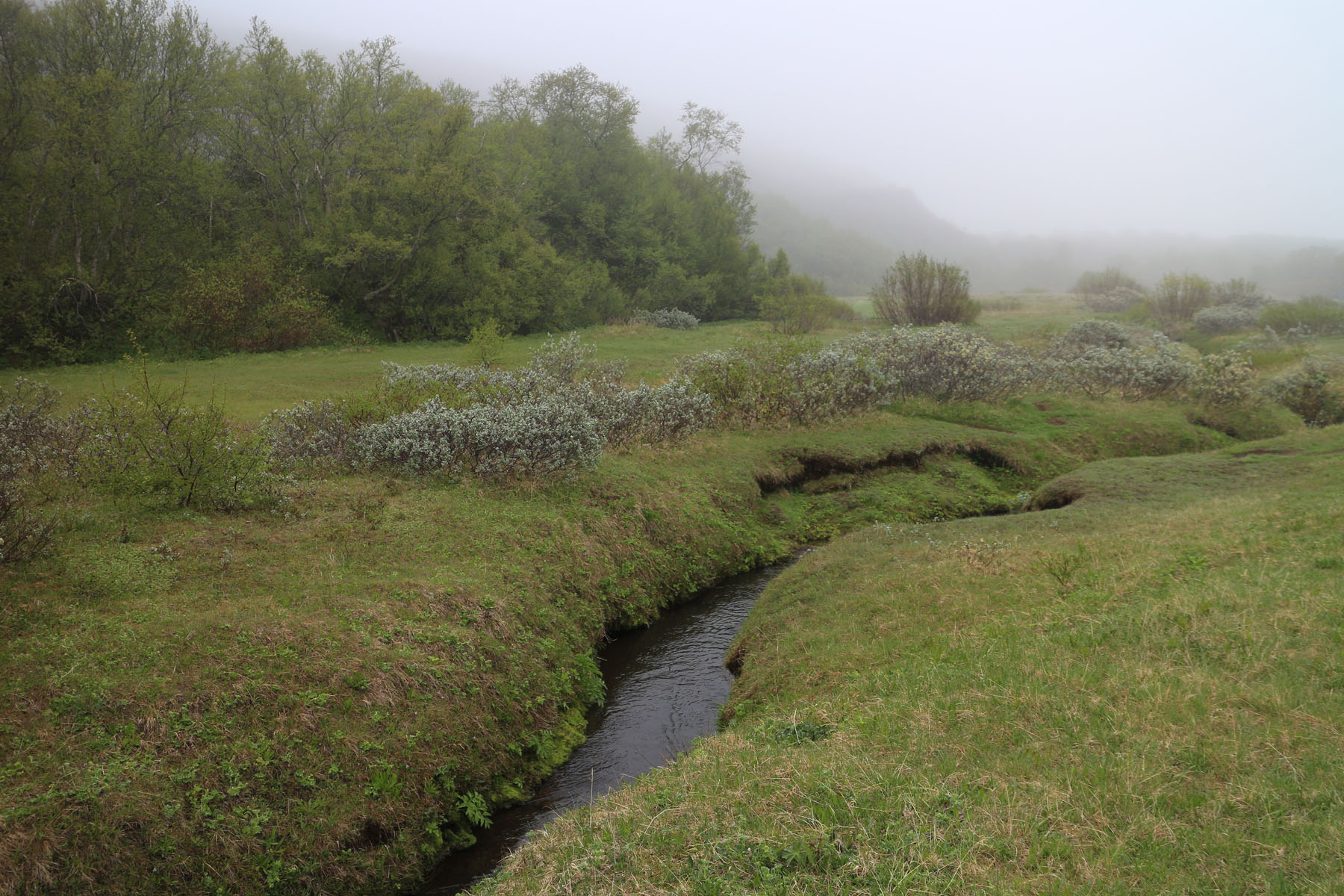
Vesturdalur is mostly surrounded with steep cliffs with luxuriant flat bottom. Through the valley flows a small creek, Vesturdalsá, on its way to the river Jökulsá á Fjöllum.
The first week in June 2014 I arrived there on a foggy night and placed the microphones close beside the creek. The soundscape in the fog was particular. The rumble sound from Jökulsá River about 3 km away, filled the air with extreme murky mysterious power. But all around me was a beautiful bird song that followed me in to the sleep.
This recording is several hours long so it is most likely that more of this recording will be available online someday.
Thanks to the Friends of Vatnajokull who made this recording trip possible.
Quality headphones are recommended while listening at low level.

Vestudalur við Jökulsá á fjöllum

Þann 8. júní 2014 eftir miðnætti kom ég í Vesturdal við Jökulsárgljúfur. Talsverð þoka var á svæðinu svo skyggni var fremur lélegt. Mikil frðsæld var í dalnum enda mjög fáir á svæðinu. Fjölskrúðugur fuglasöngur kom úr öllum áttum, en loftið var þrungið drungalegum drunum frá Jökulsá á Fjöllum í austri. Áður en ég lagðist til svefns fann ég stað fyrir hljóðnemana við bakka Vesturdalsár sem liðaðiðst hljóðlega um dalinn.
Um leið og tækið var komið í gang leið ekki á löngu þar til ég var kominn í draumheima með notalegan fuglasöng í eyrunum næstu klukkustundir fram undir morgun.
Þessa upptöku má þakka samtökunum Vinum Vatnajökuls sem gerðu það kleift að af þessari upptökuferð gat orðið.
Mælt er með því að hlusta á upptökuna í góðum heyrnartólum og á lágum hljóðstyrk.

Download mp3 file (256kbps/51Mb)

Recorder: Sound Device 744
Mics: Sennheiser MKH20 (AB40)
Pics: Canon EOS M (See more pictures)
Recording location: 65.933496, -16.555915
Weather: Calm, fog, around 6°C

Read Full Post »

IMG_8059

The Jökulsá á Fjöllum river was a large obstacle in the past. River crossings on horseback were not possible so ferries were used at three different locations. The refuge hut was built at one of these locations, intended to house the travellers. The river was first bridged here in 1948. The road through Mývatnsöræfi was partially buried underneath the lava flow during the Mývatnseldar eruption in 1875. A few years later a new road was laid though this wilderness. The cairns indicate the location of this road, which is one of the earliest examples of a public road making. This was also used as a postal road.
The refuge hut was built in 1883 from dressed stone quarried from the surrounding area and bound with lime. A number of men participated in transporting the timber, lime and cement for the construction, all the way from Vopnafjörður, Húsavík and Akureyri. The low ceilinged cellar was used as a stable, its entrance having once been protected by a lean-to. The suspected haunting of the hut prevented a proper use of it.
The refuge hut at Jökulsá á Fjöllum plays a role in the novella Aðventa (The good Shepard) by Gunnar Gunnarsson.
Not only was this a period of intense volcanic activity, it was also a time of innovation in building techniques in Iceland, of which the construction of stone houses was a part. Prior to the construction of the refuge hut, stone houses had been built in a few places in the North-east. These included Þverárkirkja in Laxárdalur (1878) and a vicarage in Sauðanes (1879). The construction of the Althing Parliament House in Reykjavík in 1881 also had a considerable impact on the propagation of stone houses in Iceland.
The refuge hut was previously managed by the Icelandic Road Administration, but has been a part of the National Museum of Iceland‘s Historic Buildings Collection since 1988 (*National Museum of Iceland)
The recording starts under the hut´s wall. The wind gently wipes the surface around the hut when a lonely Snow Bunting gives a weak song to the empty black desert.
Then the recording slowly moves from the hut to the river’s bank, to a place that could tell many stories from the past if the stones could speak. The recording ends with a squawk from two Pink Footed Goose that overfly close over river’s surface on the way to the north.
Quality headphones are recommended while listening at low- to mid level.

Sæluhúsið við Jökulsá á Fjöllum.

Fyrr á öldum var Jökulsá á Fjöllum víðfeðmur farartálmi. Áin var hvergi talin reið og voru lögferjur á þremur stöðum. Sæluhúsið var reist við einn slíkan ferjustað en fyrst var brúað hér árið 1948. Þjóðleiðin um Mývatnsöræfi fór að hluta undir hraun í Mývatnseldum árið 1875. Nokkrum árum síðar var ráðist í að leggja nýjan veg um öræfin og var Jakob Hálfdanarson, síðar kaupfélagsstjóri kaupfélags Þingeyinga, valinn til að stýra verkinu. Vörður sýna legu vegarins en þessar vegleifar eru með elstu minjum um opinbera vegagerð á Íslandi en þetta var jafnframt póstleið.
Sæluhúsið var reist árið 1883 úr tilhöggnu grjóti úr nánasta umhverfi. Timbur, kalk, sement og önnur byggingarefni í húsið voru flutt alla leið frá Vopnafirði, Húsavík og Akureyri með aðkomu fjölda manna. Lágreistur kjallarinn var notaður sem hesthús og var inngangsskúr, bíslag, áður yfir kjallaratröppum. Notkun hússins varð þó ekki sem skyldi sökum frásagna um reimleika. Húsið er hluti af sögusviði Aðventu eftir Gunnar Gunnarsson, þar sem greinir frá ferðum Fjalla-Bensa, Benedikts Sigurjónssonar.
Gamalíel Einarsson var fenginn að byggingu sæluhússins sumarið 1883 sem aðalsmiður hússins en Sigurbjörn Sigurðsson, Jakob Sigurgeirsson og Friðrik Guðmundsson áttu þar einnig stóran hlut. Jakob Hálfdanarson mun hafa ráðið staðsetningu og útliti hússins. Landssjóður veitti fé til smíðinnar.
Þessi umbrotatími jarðskorpunnar var einnig tímabil nýrra hugmynda um byggingatækni á Íslandi og var bygging steinhúsa hluti af þeirri nýbreytni. Steinhlaðin hús voru tekin að rísa hér og þar á Norðausturlandi nokkru áður en sæluhúsið reis af grunni. Meðal þeirra voru Þverárkirkja í Laxárdal (1878) og prestsbústaður á Sauðanesi (1879). Bygging Alþingishússins í Reykjavík árið 1881 hafði einnig umtalsverð áhrif til frekari fjölgunar steinhúsa á Íslandi.
Sæluhúsið var áður í umsjá Vegagerðar ríkisins en hefur verið í húsasafni Þjóðminjasafns Íslands frá 1988. (*Þjóðminjasafn Íslands)
Upptakan hefst undir húsvegg sæluhússins þar sem vindurinn gælir við hrjúfa veggi. Einmana sólskríkja gefur tóninn út á eyðisandinn. Upptakan færist síðan hægt og rólega niður að árbakkanum á stað sem eflaust gæti sagt margar fornar raunasögur ef steinarnir gætu talað.
Mælt er með því að hlusta á þessa upptöku í góðum heyrnartólum og á lágum- til miðlungs hljóðstyrk.

Download mp3 file (192kbps / 33,7Mb)

Recorder: Sound devices 744
Mics: Sennheiser MKH20 (AB40)
Pics: Canon EOS M (see more pictures)
Recording location: 65.638964, -16.224181
Weather: Cloudy, gusty, ca. 6°C.

Read Full Post »

« Newer Posts - Older Posts »