Feeds:
Færslur
Athugasemdir

Posts Tagged ‘Vatnajökulsþjóðgarður’

IMG_2200

Here is one of those recordings that I record without being directly aware of what will come out of it. Equipment is placed in a suitable location where the wind was minimal and left there for 30-40 minutes while taking a walk. So I really don’t know what is being recorded until much later when you have time to listen and process the recording.
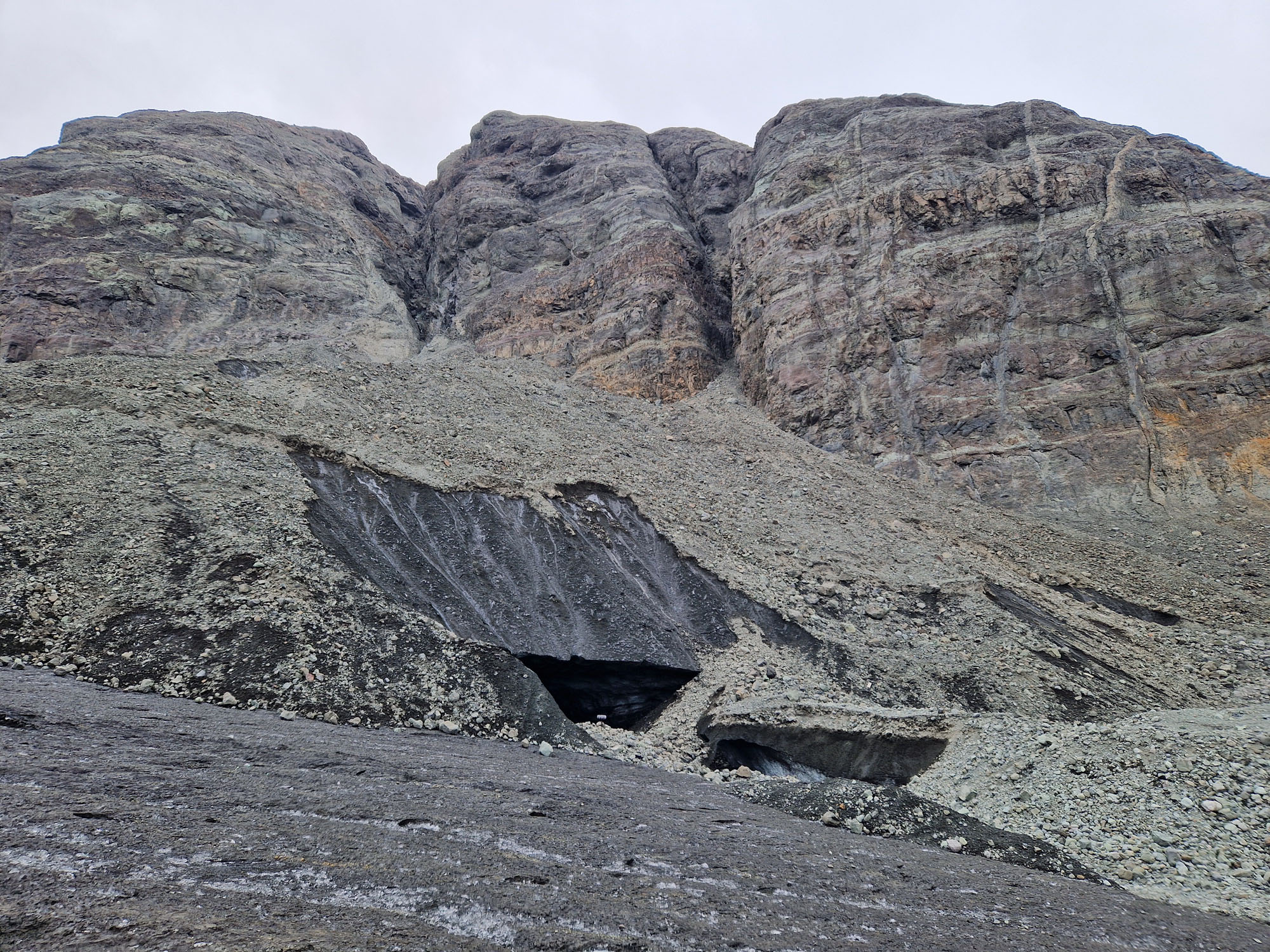
In fact, I knew of a rockfall at this location and was rather afraid about leaving the equipment behind, because the ice cave that the recording equipment was in might as well collapse. Then there would be a mud and rock slide from the mountain slope that would submerge everything.
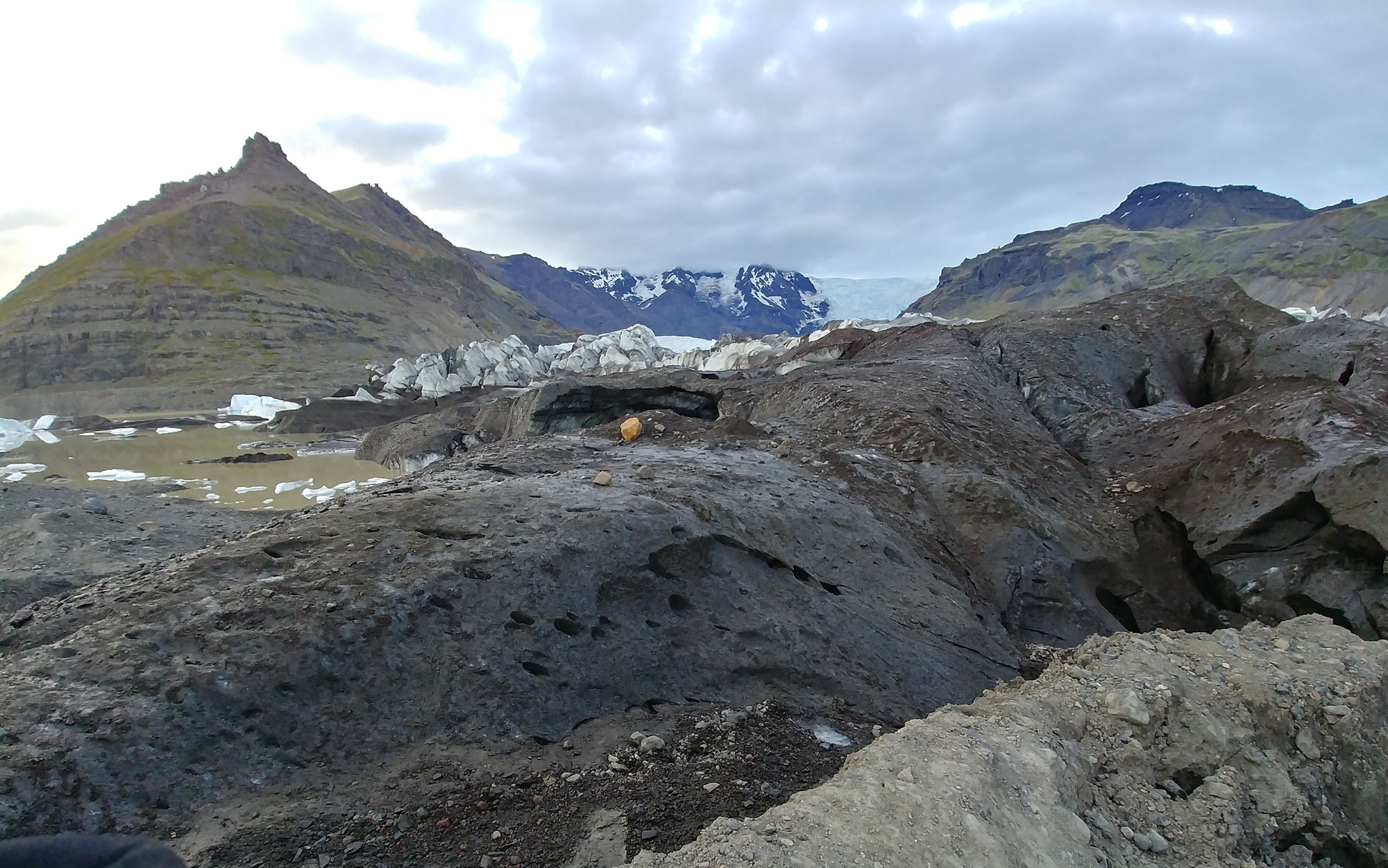
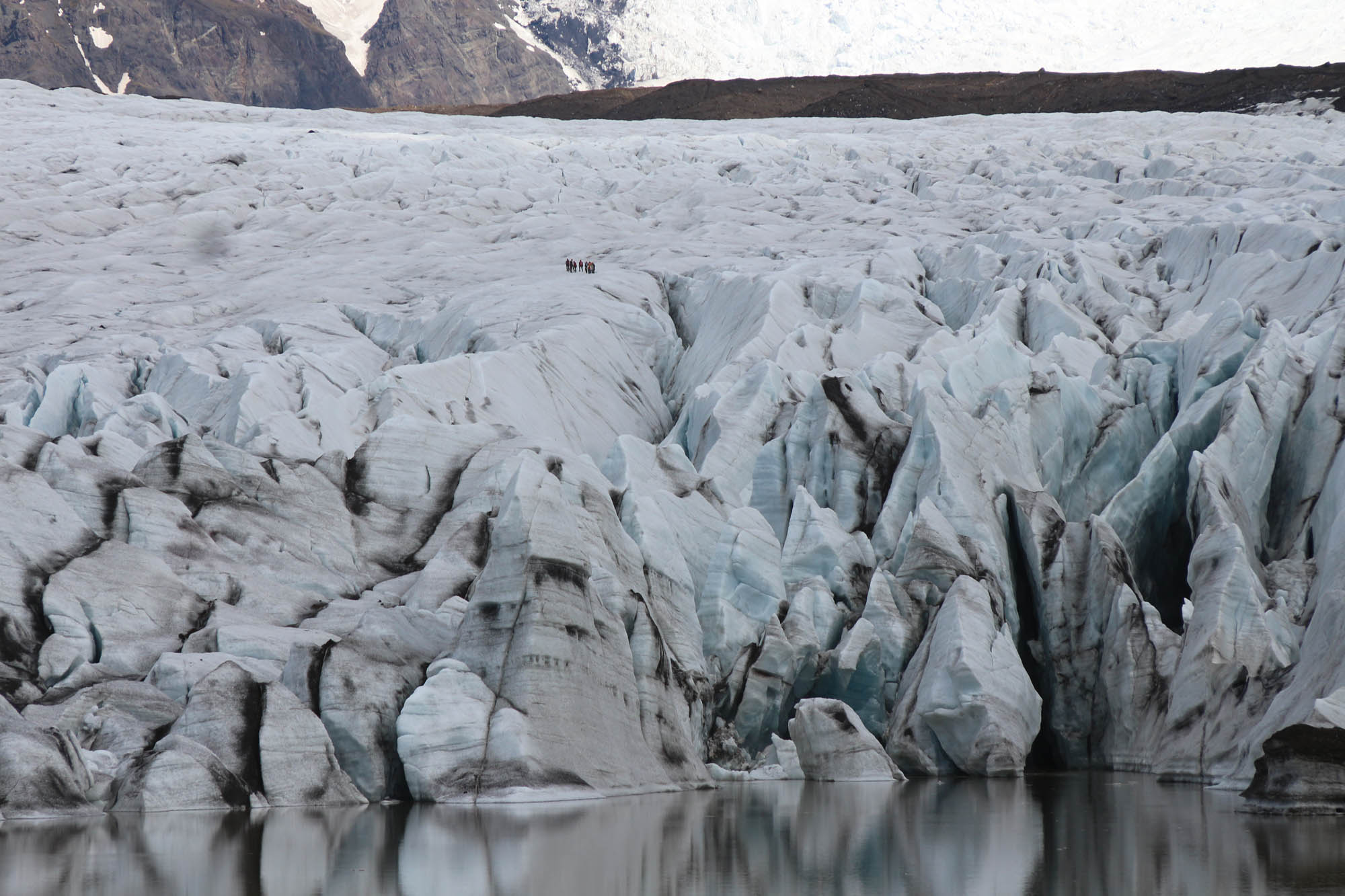
This ice cave was at the end of Breiðamerkurjökull icefall, in a place where the glacier was probably 300 meters thicker only 40 years ago when I first came to this part of Iceland. Now the glacier is not more than dirty, „dead“ ice. A lot of it is buried under sand and rocks.
For centuries, the glacier has scraped the slopes of the mountains in Suðursveit. When the glacier retreated, gravel and rocks fell from the mountain slopes on the glacier below, which then formed a thick insulating layer over the ice closest to the mountain slopes. Under normal circumstances for centuries, the advance of the glacier would have carried this gravel down to the glacier toe. But the glacier has for two decades stopped advancing in this place. The glacier has lost all its mass so it will not crawl anymore in this place. The glacier lies flat and dirty towards the sun in the south, thin and melts rapidly. However, the ice that is covered with gravel and rocks melts much more slowly. Therefore, e.g. still possible to see ice high up on the mountain slope of Vestur Miðfell, although it is probably 30-40 years since the glacier was there and reach so high in the mountain slope
The pleasant surprise of this recording was that the wind did not interfere with the recording. You can hear mudslides sliding down the ice-covered mountain slope with all kinds of sounds that sometimes remind of car traffic. Sharp clicks in the rock as it bounces all around the mic and in good headphones you can hear the rock bouncing over the mic.
You will hear people speaking in the distance, which was several hikers coming from the glacier.
You might hear a lot of „white noise“ in this recording but it is mainly coming from nearby rivers, the wind and rapidly melting glaciers which are usually astonishingly noisy when they melt fast .
Quality open headphones are recommended while listening at medium to high volume.
But be careful. This recording has a high dynamic range and can damage both speakers and your hearing if it is played too high.

(mp3 256kbps /62Mb)

Recorder: Sound devices MixPre6
Mics: Sennheiser MKH8020/8040. (2x2ch Baffled AB35)
Pic. Samsung S22

Location: 64.134056, -16.226150
Weather: cloudy, dry, up to 8 m/sec, 7°C,
Read Full Post »

IMG_2200

I was recording at Breiðamerkurjökull when the weather forecast suddenly changed. It was nothing special, except that I had to row a kayak with another one in tow with a lot of recording equipment about 8 km on Jökulsárlón glacier lagoon before the weather would hit the area.
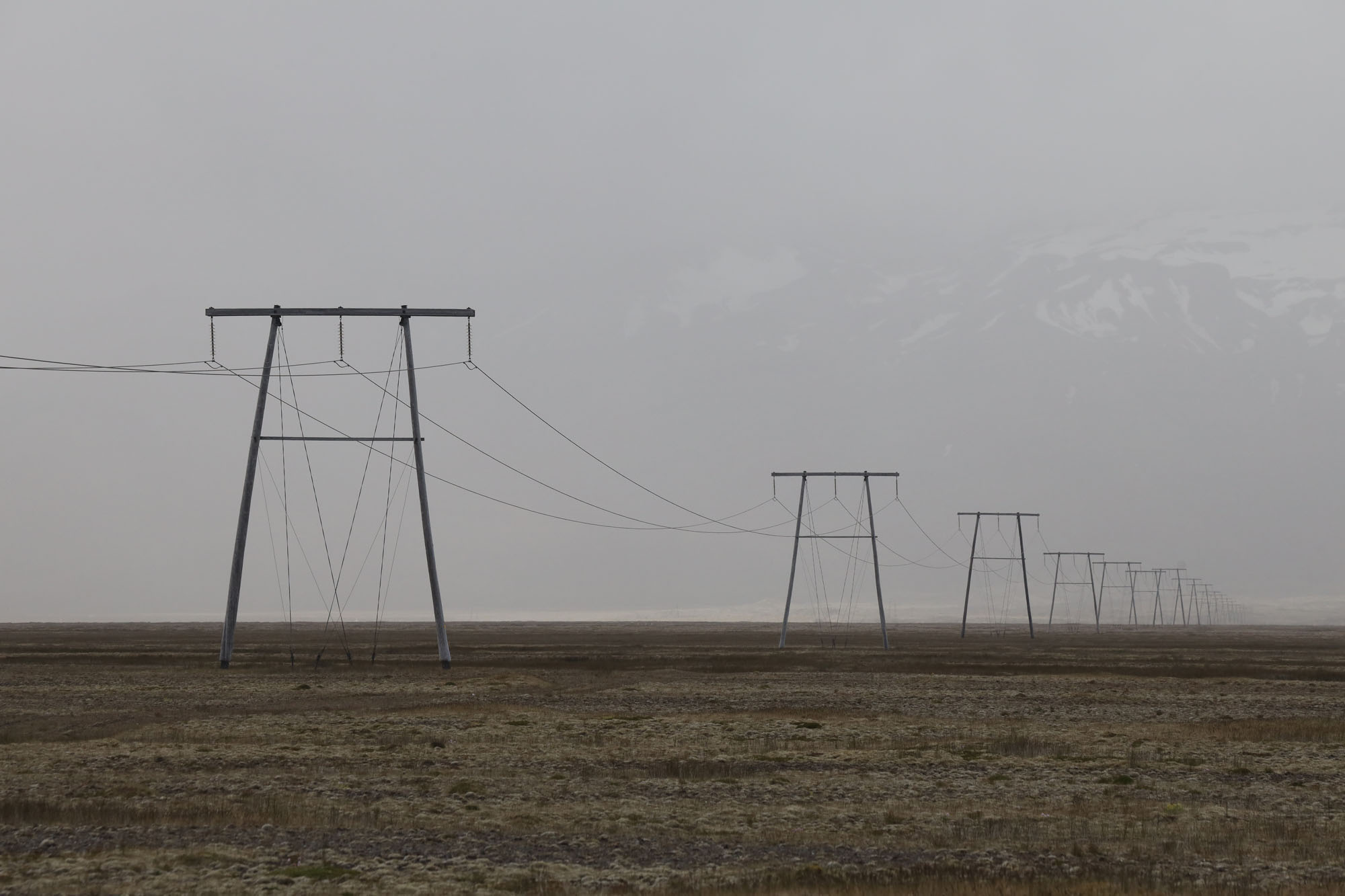
It fit, as soon as I got to land on the other side of the lagoon at midnight the fool weather arrived, so I just managed to pack all the equipment in the car and on the trailer before everything got wet. It was around two in the morning when I was able to leave. But I didn’t go far. I decided to sleep in the car near the high voltage power line (Byggðalína) on Breiðamerkursandi, south of highway no.1.
The next day it was dry, but still very windy. In fact, I could barely see Öræfjajökull glacier through a sandstorm. I decided not to be on the road with the trailer and the kayaks, but to wait until later in the day when it would calm down.
I could not sit idly by, but recorded in several places close to me. Including the high voltage line with all available equipment I had. With Omni & Cardioid microphones as well as Geophone and hydrophone which I use as a contact mic.
The result was quite amusing. By the time this happened, the strongest wind had subsided. But that moment a moisture was in the air, which caused a sizzle noise from the power line, which added a different sound and gave the recording a clearer picture of the recording location.
The recording below starts with the audible sound (microphone). Then slowly the contact mics are added . In the end and microphones faded out and you will only hear the sound from the contact mics (geophone and the hydrophone)
Because the microphone are located close to the ground in grass under the electricity pylons you will hear lot of „gray noise“ when the wind wipe the grass.
If you keep your attention Whimbrel are also audible.
So I explain the name of this blog, „Byggðalína“ is a name of high-voltage line that connects all the main settlements around Iceland. „Breiðamerkursandur“ is a name of a broad sandy wasteland south of Jökulsárlón Glacier lagoon.

  (mp3 265kps / 46Mb)

Recorder: Sound Devices MixPre6
Mics: MKH8020/8040 & LOM geophone & Aquarian H2a
Pix: Conon EOS-R

Weather: Gust up to 20m/s. Clear sky, ca. 14C°
Location: 64.028360, -16.265129

Read Full Post »

IMG_2200

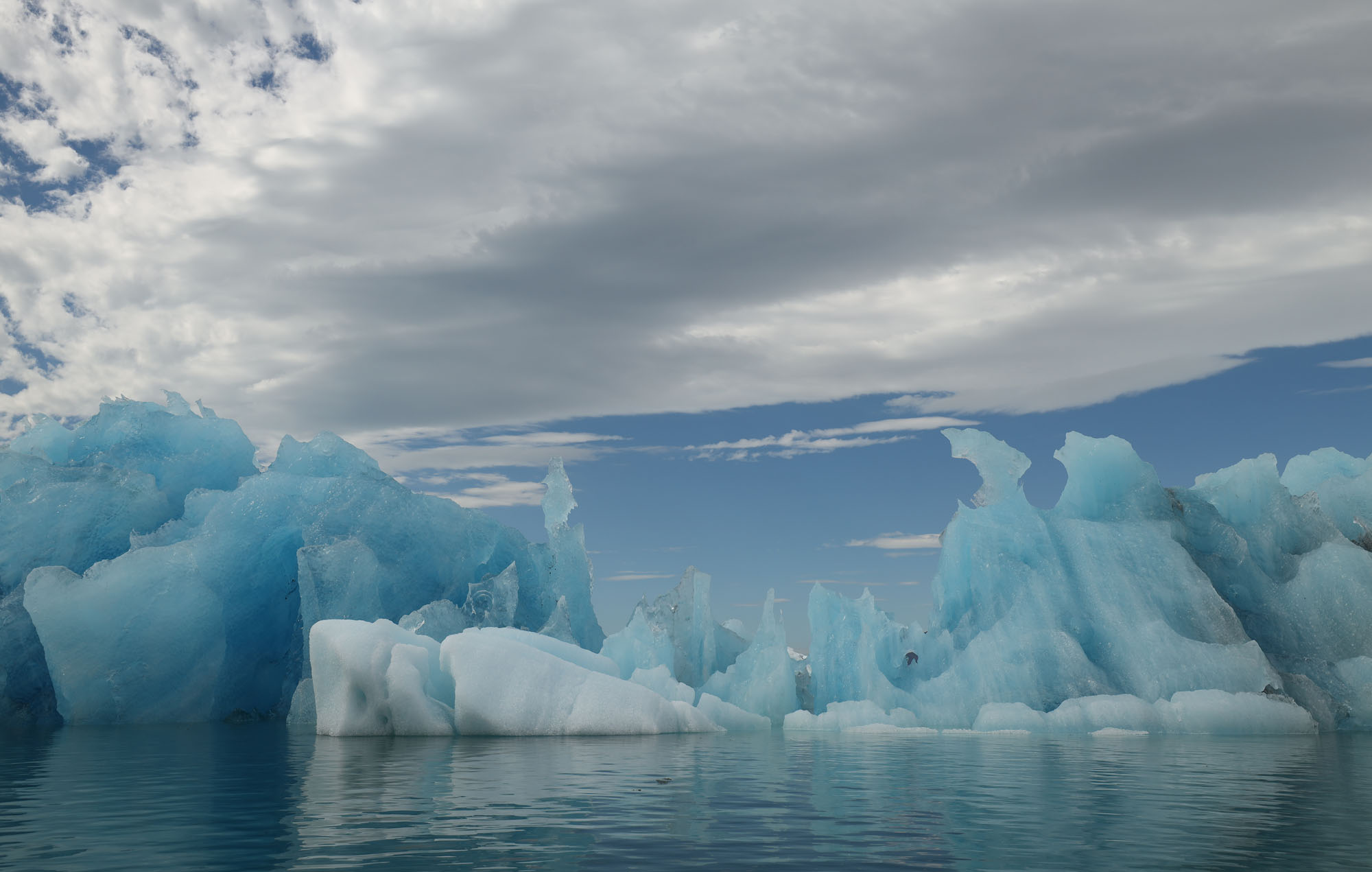
Jökulsárlón is a fascinating glacial lagoon. It is about 300m deep below the glacier tongue and from Kayak I have measured with sonar a spot which was more than 280m deep. It is deeper than many places far away in the Atlantic ocean. So if something happens in this lagoon, like Iceberg calving, the sound will echo in this huge space down there as in a large dome.
It has been almost eight years since I recorded the sound in Jökulsárlón for the first time. I was both surprised and disappointed. The sound was much richer than I thought and because of this loud and rich sound down there it was clear I could not get a detailed sound of it when an Iceberg was scratching the bottom of the lake, or calving glacier.
The most common sound there is a loud „spark sound“ when highly pressed air bubbles break out of the ice, but also when dripping water falls on the surface from the melting ice above. Sometimes the iceberg moves and scratches the gravel in the bottom of the lagoon.
The following recording is made from a Kayak, where the lagoon is 40-80 meters deep and not far away, about 200-400m, from the place I did the recording 8 years ago.
You will hear a buzzing engine noise from sightseeing boats in this recording which has sadly increased in the past decade on the lagoon. Because of increasing tourist traffic this lagoon has almost constant engine noise pollution, both above and under the surface between 9-19 o´clock every day mainly during the summer time.
It is anyway interesting to use the engine noise to get insight into how loud the natural soundscape is in this lagoon. If there were NO ice surrounded by salty seawater, then engine noise would have been echoing loudly in the space below the surface, just as an noisy moped gang was driving inside Pantheon in Rome.

(mp3 256kbps / 63Mb)

Recorder: Sound devices MixPre6
Mics: Benthowave Bll-7121 hydrophones  1,8meters apart.
Pix: Canon EOS R

Location: 64.048029, -16.192690
Weather: Calm to breeze. cloudy around 13 °C
Recording date: 25th of June 2021

Read Full Post »

IMG_2200

Here is one of my „COVID recordings“ that I managed to record by Glacier lagoon, Jökulsárlón near the lagoon outfall.
This place is close to the ring road around Iceland so it is usually overcrowded by tourists and other traffic all year round, almost 24/7. I have only been able to dream of recording this place without traffic and human interruption.
But thanks to COVID, on the 10th of June 2020 I managed to record there without too much interruption.
The soundscape is different in this place, but the recording here below is typical for summer soundscape. When I first went to this place some decades ago the glacier was much closer, I guess about 2km away, but today it is about 8km away and much thinner. The sounds from the glacier have almost disappeared. But on the lagoon are large icebergs that melt down rapidly near the lagoon’s outfall. They can emit interesting sounds when they break in pieces.
Arctic terns have nested beside the outfall in many years, but probably because of traffic they seem to have moved the biggest colony closer to the glacier.  In the eighties and nineties when I passed this place every year by bike, Great Skua dominated this area with nests in many places.. But today this big bird is hardly seen near the outfall compared to how it was thirty years ago. Arctic Skua is a common bird there as it has been before.
This recording was made a few hundred meters east from the lagoon outfall.
Not far from the microphone are stranded icebergs which are constantly melting with all kinds of sound.
Most common birds in this recording are Arctic tern, Northern Fulmar, Black Headed Gull, and Razorbill. Other species are audible too.
Common Eiders come quietly close to the microphone and Seals have a fight or mating not far away,
The main background noise is a rumble from heavy surf along the Atlantic ocean coastline  several hundreds meters behind the microphones. Traffic from the ring road no1 is also audible.
Quality open headphones are recommended while listening at mid level.
If the media player doesn’t start to play, please reload this individual blog in new tab or frame.

  (mp3 256kbps / 65.5Mb)

Recorder: Sound Devices MixPre6
Mics: Lewitt LCT540s (NOS)
Pix: Canon EOS-R

Weather: Cloudy, calm, around 8°C
Location: 64.052841, -16.178658

Read Full Post »

IMG_2200

In recent years I have spent several nights in Skeiðarársandur to record the changes in the ecosystem.
Skeiðarársandur is a huge broad sandy wasteland along Iceland’s south-eastern coast, between the Vatnajökull icecap and the sea. It is a wonderful place to record deep natural silence in a huge open flat landscape.
For hundreds of years Skeiðarársandur has been a barren desert. but recently with shrinking glaciers and smaller glacial rivers, Birch, moss and other flora have occupied the northeast part of the sand. That means the soundscape on Skeiðarársandur will change in the future which will be interesting to record regularly in the coming years.
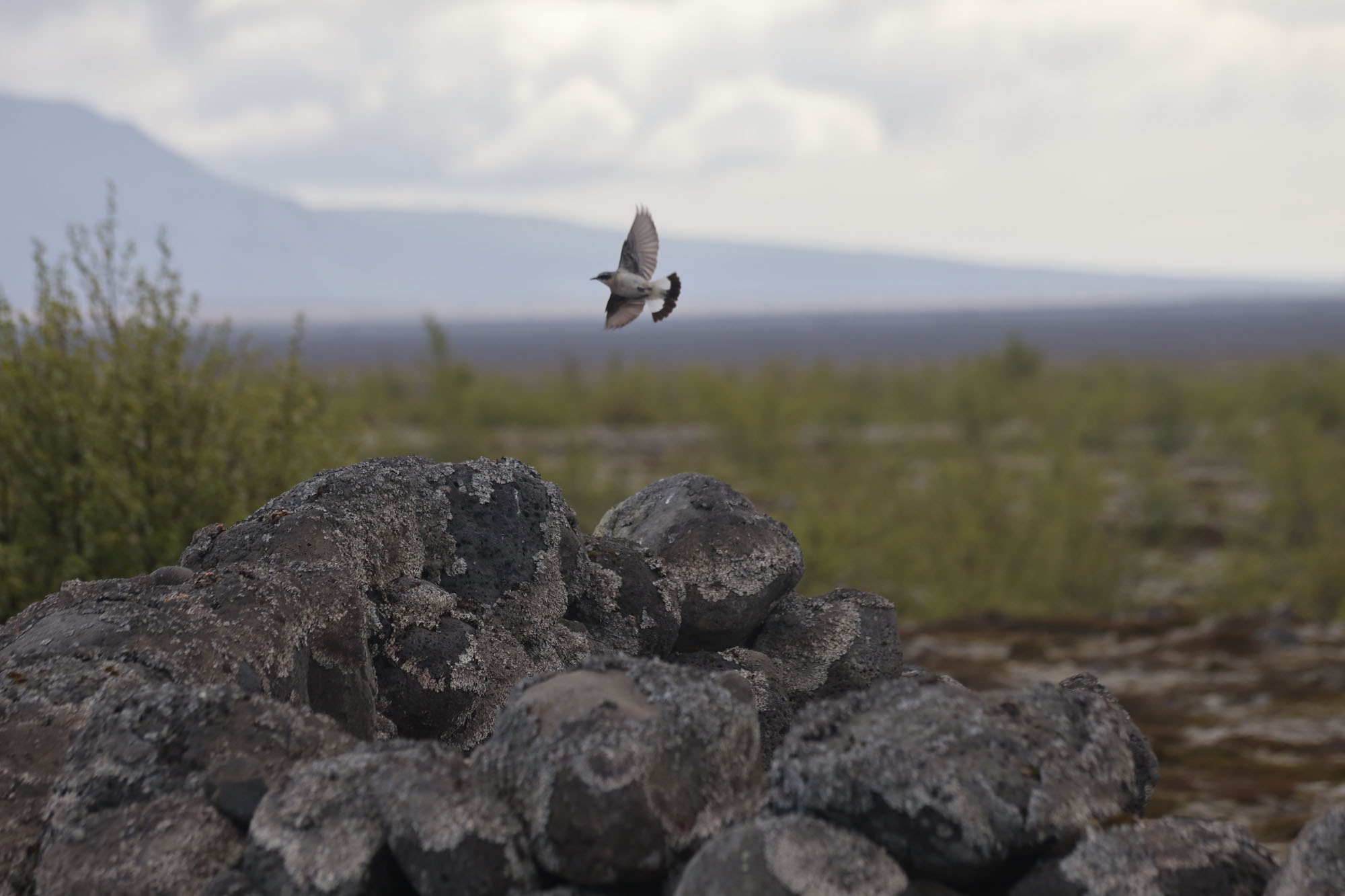
I have usually stayed at the same spot near a traditional sheep pen because structures like that are attractive for birds like Snow bunting, Northern wheatear and Rock ptarmigan.
I was very excited when I went to this spot on the 9th of June 2020. Because of COVID, there were almost no tourists in Iceland and therefore far less traffic.  So I was hoping for a beautifully quiet night there. I was not disappointed either. It was calm so the silence was deep. I could hear the Atlantic ocean surf among the coastline 20-30km away, which sounds slightly like low frequency rumble in the background of this recording. I could not see any bird but bird songs came from every direction, clearly far away. During the night the glacier rumbled several times in Skaftafell national park like a thunder in the distance. Once a ship engine noise was audible out of the coastline which sounds pretty spooky. It sounds more coming from the sky rather than from the coastline in the horizon, which was probably a reflection from different temperature layers in the atmosphere.
Anyway the ship engine is not audible in the following recording, but maybe in another blog.
The microphone rig was on the top of the sheep pen wall, not far away from the place which I think Northern wheatear has had a nest every year since I started to record this place. (Listen to recording since mid May 2016)
Luckily the Northern wheatear was not far away. This time the bird was not as angry about the hairy microphones as when I first brought the microphones in this place. The bird just sang for me for almost one hour and here comes part of it.

  (mp3 256kbps / 67,7Mb)

Quality open headphones are recommended while listening at low to mid level, or in speakers at low level.
If the media player doesn’t start to play, please reload this individual blog in new tab or frame

Recorder: Sound devices MixPre6
Mics: Lewitt LCT540s (IRT Cross)
Pix: Canon EOS-R 

Weather:  Calm to 5m/sek, clear sky, 3 to 7°C
Location:  63.969925, -17.160018


Read Full Post »

IMG_2200

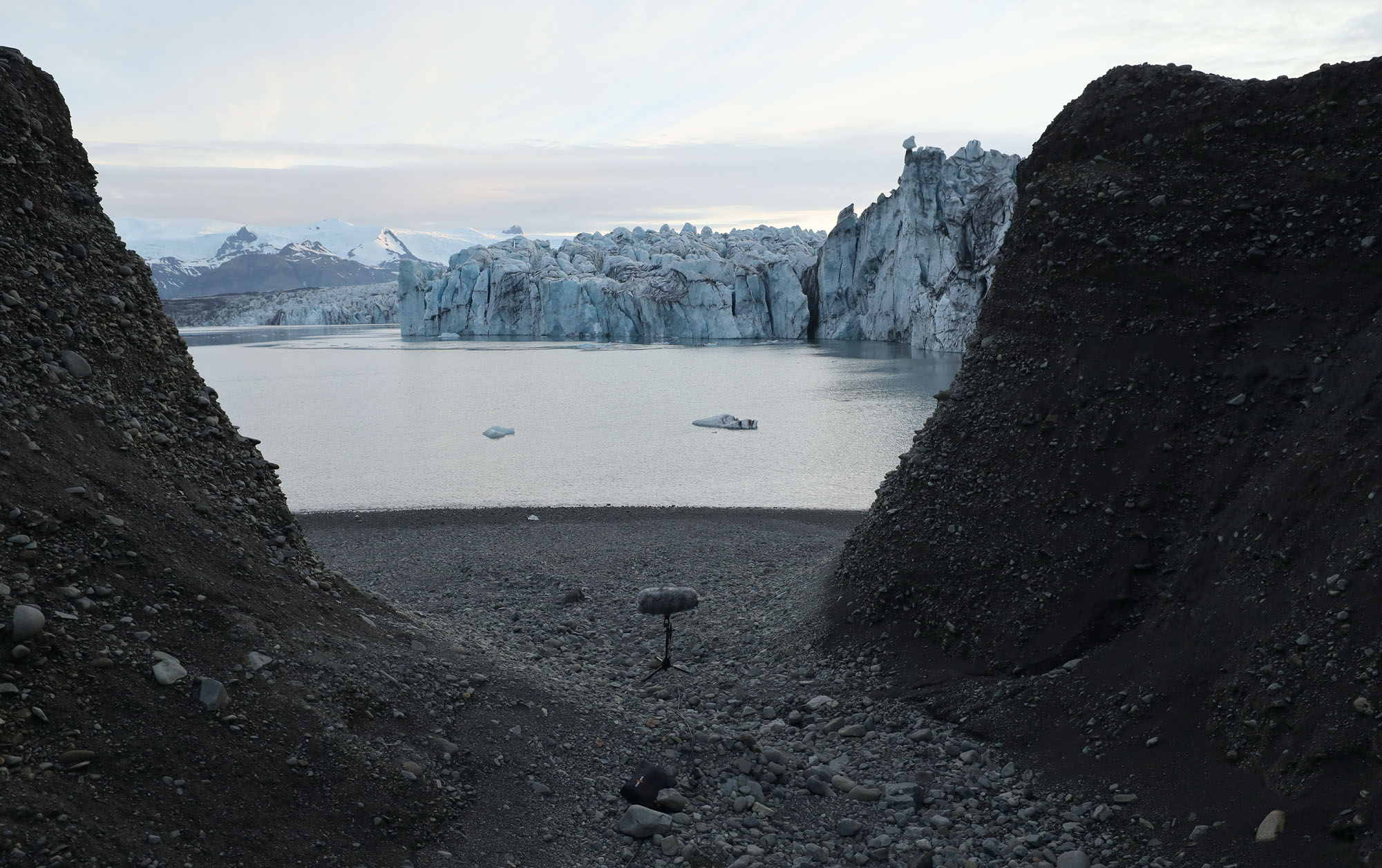
Shortly after I set up my gear in a safe spot near the lagoon beneath the Svínafellsjökull ice fall. I heard thunder behind the Hafrafell mountain
Two minutes later and suddenly all icebergs in the lagoon began to move around like corks in a boiling pot. Big waves paralyzed the shores of the lagoon, in some places for many meters.
„Shit“ was my first thought. „I was not in the right place“. I should have been on the other side of the lagoon and closer to the glacier, where I have spent hours and days in recent years trying to record incidents like this without success. I ran to the lagoon to see what was going on.
…Or maybe I was lucky to be where I was. I saw big waves go far up on the shore at the place where I have been recording the past years. I probably would have damage or destroyed the Phantom power adapters inside the hydrophones XLR´s.plugs   
Thanks to COVID I was now in a place which has been impossible to record because of the tourist explosion in recent years.
Two microphones were now placed under a high steep crawl on the lagoon´s west bank, 5 meters above the lagoon surface. Below the microphones, two hydrophones were put in the lagoon between big rocks to prevent them from getting crushed or touched by icebergs. It was a bad placement for a successful underwater recording. But I  remember quite well what happened in this lagoon few years ago. So I was sure I would lose them both and probably something more if I threw them deeper into the lagoon. 
Although the outcome is OK, even though the hydrophones did not pick up the whole soundscape underneath the lagoon’s surface. 
The glacier calving starts in this recording at 3:15 min far away and behind the Hafrafell mountain, so it doesn’t sound very loud. But it makes a big wave in the lagoon which makes a chain reaction of a few other glacier calving.
Just before the first incident you can hear the hydrophone pick up a sound of crushing ice. It would have been much louder if the hydrophones have been deeper in the lagoon. But recording glacier lagoons is not an easy task when the lagoon is full of ice which can flip without warning.  
This recording was made in the late afternoon so traffic noise from rode no:1 is audible in the background. But compared to recent years, it is nothing. Thanks to COVID.   
Quality open headphones are recommended while listening at low to mid level, or in speakers at medium level.

(mp3 256kbps / 48Mb)

If the media player doesn’t start to play, please reload this individual blog in new tab or frame

Recorder: Sound devices MixPre6 
Mics: Lewitt LCT540s (NOS) & Aquarian H2n XLR (Spaced AB)
Pix: Canon EOS R

Location: 64.007567, -16.880922
Weather: Cloudy, calm,  +11°C  
 

Read Full Post »

IMG_2200

Recording Icelandic glaciers aims to be my main passion for the coming years.
Unfortunately, I feel I’m starting too late because the sounds have changed significantly over the last 20-30 years. It is because they have lost a lot of mass, especially on the edges of the glaciers where they mainly produce sound.
It is becoming increasingly difficult to get to places where a glacier is crawling because there are no roads or tracks near the places that are considered suitable for recording today.
Not enough. Most of the glaciers are within national parks and protected areas today. Therefore, I need to apply for a permit to go to various places within the national park to record.
Once in place, it is not a given that it is possible to record exactly where it would be best to get an interesting sound. It must be taken into account that glaciers are not playgrounds and they can be dangerous. Glacier lagoons’ coastline are also dangerous when large pieces of ice fall from glaciers and large icebergs flip over and break down in pieces.
Weather conditions are also important. I am used to record continuously for many hours, even days, so calm and dry weather most of the time is always on the wish list.  
Last summer Jökulsárlón lagoon and Breiðamerkurjökul glacier were my main targets. It was slightly more difficult than I thought in the beginning, mainly because I did not have a clue what microphones worked best for this project so I brought with me microphones for all kinds of situations which is a hell a lot of stuff. In the end it was my parallel MKH8020/8040 rig which worked best for this glacier project last summer. Mainly because glaciers are not so quiet and therefore microphones with the lowest noise floor are not so important . 
It takes me almost two hours to sail on pedal Kayak with all luggage to the location near the glacier. I started immediately to record with two recorders after arriving. Then it takes me almost a day to find the best location for the microphones. It was not the best place to get the highest quality of sound recording. But they were sheltered from the wind and in safe distance from big waves or tsunami from the lagoon.
This following recording is a part of a 20 hour recording on this location. 
WARNING. This recording has a wide dynamic range. It includes several blasts (especially at 6:34) which are very loud that can damage speakers, headphones or your hearing if played too loud.
As usual for nature recordings it has not got any process in post. Just add gain about 20dB. Therefore is clipping inevitable in the „blast“ at 6:34.
Quality open headphones are recommended while listening at low to mid level, or in speakers at low level.

(mp3 256kbps / 56,3Mb)
If the media player doesn’t start to play, please reload this individual blog in new tab or frame

Recorder: Sound devices MixPre6
Mics: Sennheiser MKH8020/8040 in Parallel AB40. Mixed50/50%
Pix: Canon EOS R

Location: 64.109285, -16.243593
Weather: 4°C 2-4m/sek, cloudy

Read Full Post »

IMG_2200

I was shocked last summer. Then I realized it was becoming increasingly difficult to get interesting recordings of glaciers. I was missing out on unique opportunities if I would not change my traditional methods of recording glacier sounds.
Glaciers that have so far been accessible with all kind of sound seems much quieter than before. Finding good places seems to be more difficult each year and to reach them with all of my equipment are getting even more difficult. Many glacier toes in Iceland seem to be turning into „dead ice“ at the toe end so they will not be crawling under its own weight anymore just lay where they are until they melt down.
One of this glacier which has gotten thinner, smaller and quieter each year is Svínafellsjökull glacier.
I spent three nights recording there last summer without recording anything „interesting“
The temperature varies between 2°C over the night, to 18°C during the day. During the night it melted little but it started to melt intensely at dawn and became very intense during the day, especially when the sun was shining on the glacier.
The following recording was made in a small „Ice cave“ in the glacier toe, 27th of May 2019. The time was around 8 AM, about an hour after the heat started to rice and the melting began. In this 27 minutes long recording  you will clearly hear the melting of the ice increase until I became afraid about the microphone and I stop the recording.
You can hear several times a deep rumble sound, probably because the glacier is crawling high in the mountain. Many other strange sounds are in this recording, some are known, while other unexplainable. I was never close by so it is not sound from me.  Some of them are loud, so be careful, do not listen to the recording on high level.
Other sound in distance are tourists, almost constant motorist traffic. But fossil fuel machines and humans mobility are sadly one of the reason for rapidly shrinking glaciers now a days.
Quality open headphones are recommended while listening at low to mid level, or in speakers at low-mid level.
If you are having problems playing this or other recordings on this blog, try to open each blog-post in separate new frame or tab.

(mp3 256kbps / 51Mb)
If the media player doesn’t start to play, please reload this individual blog in new tab or frame

Recorder: Sound Devices MixPre6
Mics: Sennheiser MKH8020/8040 in Parallel AB40
Pix: LG G6
Location: 63.996493, -16.874061
Weather: Calm, light clouds, around 10°C

Read Full Post »

IMG_2200

It is a special feeling to stay close to a glacier. It’s like standing near a wast monster that is constantly moving, but very slowly. Everywhere around this flexible ice the gravity of the ice is visible. Glaciers usually have strong smell of fresh oxygen that glaciers have captured in ice and compressed in to locked bubbles for hundreds and thousands of years. This smell from the past is like from another world, probably because today has much more carbon dioxide in the atmosphere than it has been for 800 thousand years at least. Glaciers also make sounds, sometimes quite loud, from falling drops of water to earthquakes, but most of these sounds are not audible to human ears. Glaciers make constant sound in water which needs hydrophones to capture, as can be heard on the following recording. I can not say I have been lucky in recording glacier sounds in years past. I’ve always been at the wrong place at the wrong time when glaciers produce “big sounds”, but after many hours, and several days on the same spot, I got something interesting which is worth listening to.
One of those days was 5th of June 2015 when I was at the glacier lagoon neneath of Skaftafellsjökull glacier’s icefall. This lagoon is not big, probably around 500m squared, but the depth is around 80 meters so the soundscape beneath the surface can be pretty exhilarating when the glacier is crawling at the bottom of the lagoon.
I put two hydrophones in the lagoon and two microphones on a nearby hill and recorded there for almost fourteen hours. The gain on the recorder was almost equal on all channels, or around 48dB, and during these 14 hour session the soundscape was different mostly because the glacier surface melts differently during the day then during the night with different water flows into the lagoon. All the time the glacier was grinding the bottom of the lagoon so under the lagoon’s surface the soundscape was much nosier than above.
Then just before midnight the glacier did a “big move” (starts 25:00) which lasted for several minutes, crawling with cracking and scratching sound. The soundscape down in the lagoon sounds really strange and surreal, but the listener must keep in mind that sound travels much faster in water than in the air. The soundscape above the lagoon was different. It was possible to ‘feel’ or ‘see’ through the audio the movement of the whole Svínafellsjökull glacier icefall through the valley. But that recording will be for another soundblog.
Quality open headphones are recommended while listening at mid level, or in speakers at medium level.

(mp3 256kbps / 63Mb)
If the media player doesn’t start to play, please reload this individual blog in new tab or frame

Recorder Sound Devices 788
Mics: Aquarian H2a XLR
Pix: Canon EOS M

Location: 64°00’12.7″N 16°52’39.6″W
Weather. Calm, cloudy, 11°C

Read Full Post »

IMG_2200

Two years ago, when I was recording in Skaftafell National Park, I noticed that Redwings sing differently between two places in the park. In the forest around Skaftafellsheiði, above the campsite and the information center, the redwings sing quiet „normal songs“ as most Redwings do in Iceland. But in nearby valley, in Morsárdalur in Bæjarstaðakógur forest, most of the Redwings colony start their song with two long tones before the „normal song“ starts.
I have search my recordings for something interesting. What makes it different and what is common with this Redwing songs which will probably bring me, or someone else, to further research.
But I will not talk about it here, because that will be another story.
By slowing down the recording four times (1min > 4min) it makes a totally new soundscape. It sounds like a rain forest full of screaming monkeys. It opens my mid for different understanding on birdsong. Redwing’s song is much more complex than I thought. They are far from being singing the same melody or make a simple message all the time. It sounds more like a complex language.
It does not matter what they are doing. Are they speaking to each other, sending messages or singing a complex song to the crowd, it always leave the question: What are they doing and what does it all mean?
Following recording was recorded last summer in Bæjarstaðaskógur. You can hear this special Redwing start his song with its two tones before he continues with a „normal“ song.
In the normal speed recording at 2:40, you will hear a rumble from the Morsárjökull glacier which was about 10km away
Background noise is mostly from streaming water in the mountains and the Morsá river.
Quality open headphones are recommended while listening at low to mid level, or in speakers at low level.

Normal speed.
(mp3 256kbps / 12Mb)

Slow speed (4x).
(mp3 256kbps /41Mb)

Recorder: Sonosax SR-X4+ (24/48)
Mics: Sennheier MKH20 (AB40)
Pics: Canon EOS-M

Weather: Light cloud, showers around, calm, 10°C
Location: 64.058877,-17.024021

Read Full Post »

Older Posts »