Feeds:
Færslur
Athugasemdir

Posts Tagged ‘Neðansjávarupptaka’

IMG_2200

I far too rarely go out to sea or lakes to record underwater soundscapes. The problem is probably that I need to get to a depth of 30 meters or more, be calm and smooth seas and be free of ship and boat traffic. In places where currents can be expected, I prefer to be able to attach to a buoy, because I want to be able to record for an hour or more.
Such situations are not directly accessible around me, but sometimes places are discovered in the most unlikely places. I found one not far from my workplace, which is the largest shipping port in Iceland.
There were no cargo ships in port, so I was probably free from engine noise. Not far away were 3 large cruise ships. But the remarkable thing about these ships was that there was no engine noise from them, although I know that the ships are not connected to land. There was only a strong 22Khz signal, probably from a sonar which I could easily delete in post processing so it shouldn’t bother those with good hearing.
In my opinion, this is not a remarkable recording, but still you can hear a „natural silence“ even if there were some waves on the surface, which usually produces white noise. I settled on a pontoon dock south east of Viðey island during the high tide, to be able to have the maximum depth which was 6-7 meters.
It was a good place to be able to sit on the pier for a while and forget myself while listening to the soundscape of the sea below while the recorder recorded.
It had been raining heavily hours before so the loudest thing in this recording is the raindrops falling from the pier floor to the sea above the hydrophones.
Shortly after the recording starts, there is a light rain shower which is clearly heard as added noise. Behind all this noise from water drops and rain, you can hear soft clicks and sparks that I suspect are coming from Blue Mussels and a low-short „fart“ sound that I think is coming from Pollock. At one point in the recording, you can hear bubbles, possibly methane gas, coming up from the ocean floor. Other strange sounds similar to birdsong can also be detected, which are not easy to identify where they are coming from. It is therefore important to pay attention while listening.
This is a recording made at midnight. Perhaps more life would have been heard on a bright, sunny day. But since I have made some nice recordings in the sea in the last months in several places, this recording seems to describe a rather typical acoustic environment inside the fjords along the coast of Iceland.
Quality open headphones are recommended while listening at low to mid volume.
If the media player doesn’t start to play, please reload this individual blog in a new tab or frame.

(mp3 256kbps / 59,1Mb)

Recorder: Sound devices MixPre6
Mics: Benthowave BII-7121
Pix: Samsung S22
Weather: Light gust, calm to 3m/s, Heavy rain – light sowers
Location: 64.155404, -21.834807

Read Full Post »

IMG_2200

Jökulsárlón is a fascinating glacial lagoon. It is about 300m deep below the glacier tongue and from Kayak I have measured with sonar a spot which was more than 280m deep. It is deeper than many places far away in the Atlantic ocean. So if something happens in this lagoon, like Iceberg calving, the sound will echo in this huge space down there as in a large dome.
It has been almost eight years since I recorded the sound in Jökulsárlón for the first time. I was both surprised and disappointed. The sound was much richer than I thought and because of this loud and rich sound down there it was clear I could not get a detailed sound of it when an Iceberg was scratching the bottom of the lake, or calving glacier.
The most common sound there is a loud „spark sound“ when highly pressed air bubbles break out of the ice, but also when dripping water falls on the surface from the melting ice above. Sometimes the iceberg moves and scratches the gravel in the bottom of the lagoon.
The following recording is made from a Kayak, where the lagoon is 40-80 meters deep and not far away, about 200-400m, from the place I did the recording 8 years ago.
You will hear a buzzing engine noise from sightseeing boats in this recording which has sadly increased in the past decade on the lagoon. Because of increasing tourist traffic this lagoon has almost constant engine noise pollution, both above and under the surface between 9-19 o´clock every day mainly during the summer time.
It is anyway interesting to use the engine noise to get insight into how loud the natural soundscape is in this lagoon. If there were NO ice surrounded by salty seawater, then engine noise would have been echoing loudly in the space below the surface, just as an noisy moped gang was driving inside Pantheon in Rome.

(mp3 256kbps / 63Mb)

Recorder: Sound devices MixPre6
Mics: Benthowave Bll-7121 hydrophones  1,8meters apart.
Pix: Canon EOS R

Location: 64.048029, -16.192690
Weather: Calm to breeze. cloudy around 13 °C
Recording date: 25th of June 2021

Read Full Post »

Í fjöruborðinu fyrir neðan Europe Villa Cortes GL hótelið á Tenerife er sjávarlaug. Sá ég fáar manneskjur synda í þessari laug. Hún leit því út fyrir að vera frekar líflaus. En þegar betur var að gáð var hún full af lífi. Í lauginni var urmull krabba, snigla og annarra kvikinda sem ég kann lítil deili á.
Síðla dags þann 22. desember 2011, rétt fyrir sólsetur, stakk ég hljóðnemum í laugina og gleymdi mér í rúman klukkutíma við að hlusta á einhver kvikindi gefa frá sér hljóð. Í bland við öldunið og fótatak fólks sem gekk um laugarbakkann mátti heyra ýmis hljóð. Öðru hvoru skvettust öldur inn í laugina en háværastir voru líklega sniglar sem nörtuðu botn og veggi laugarinnar í ætisleit.

_____________________________________________________________

Creatures in the pool

In the beach below the Hotel “Europe Villa Cortes GL” at Tenerife is a sea pool. It was probably build some years ago for people to swim, but today it is full of all kinds of algae, snails, crabs and other creatures, so it looks not popular for humans.
In the afternoon at 22 of December 2011, I put hydrophone in the pool and recorded more than one hour of mystique sound. Most audible sound are rumbling sound from the surf. Sometimes the waves goes all the way in the pool with splashing sound and sometimes footsteps can be heard when people walk by the pool side. But there is also many other sounds from organic creatures, most likely from hungry snails scratching the pool surface.

Short version
Download mp3 file (192kbps / 4,2Mb)

Long version
Download mp3 file (192kbps / 28Mb)

Recorder: Sound Devices 744 (24bit / 48Khz)
Mic: Aquarian H2a-XLR
Pix: Olympus 4040 (underwater) and Canon 30D (See more pictures)

Read Full Post »

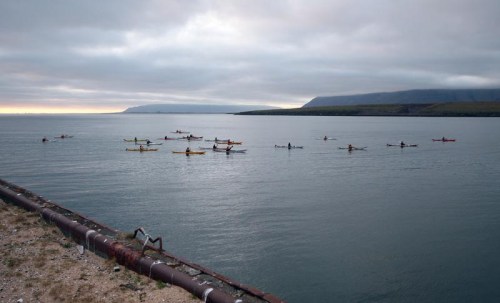
Þau skipti sem ég hef róið kajak á sjó hef ég oft leitt hugann að því að líklega væri meira spennandi að vera neðansjávar en ofan. Áhugi minn á lífinu neðansjávar minnkaði svo ekkert við það þegar ég fékk mér neðansjávarhljóðnema og gat farið að hlusta á þann hljóðheim sem þar er. Hljóðin sem hér heyrast voru tekin upp fimmtudaginn 11. ágúst 2011, austan við bryggjukantinn við Áburðarverksmiðjuna. Hljóðin sem þarna heyrast geta komið frá rækjum, skeljum og hrúðurkörlum en hæst heyrist í einhverju sem líkist því að verið sé að róta í möl á botninum. Þá heyrast líka hljóð sem hugsanlega koma frá sel eða hval og tíst sem líkist tísti hjá auðnutitlingi. Þó það hafi verið stafalogn á meðan á upptöku stóð þá eru drunurnar líklega tilkomnar vegna þess að létt gola leikur um hljóðnemakaplana. Fljóðtlega í upphafi hljóðritsins má heyra eitthvað snerta hljóðnemana í nokkur skipti en það er annaðhvort þang eða nart fiskiseiða sem mikið er af á þessum slóðum á þessum árstíma. Á 12. mínútu kemur stór hópur kajakræðara fyrir hornið á viðlegukantinum. Þá heyrist greinilega í áratökunum á leið þeirra inn í Eiðsvík.
Ef einhver veit hvaða skepnur það eru sem gefa frá sér hljóð í þessu hljóðriti þá er um að gera segja frá því í hér.

____________________________________________

What is under the Kayak?
Every time I´am sailing on my kayak I start to imagine how the world is beneath the kayak. When I got my Aquarian microphone it opened a whole new world for me.
In mid of August 2011 I recorded this world from the dock at Gufunes in Reykjavik. Most of the sounds are pops and crackles, possibly from shrimps and/or shells. The highest level comes from something that looks like someone is routing gravel on the seabed. But sometimes other strange sounds are audible, such as “birdsong”, “mumble Duck” „crying child“ and „sounds from piano strings“. Other sounds are easy to explain like diving ducks searching food and small waves at nearby beach. At 11:40. min. a group of Kayak rowers pass by with a splashing sound.

Sækja mp3 skrá (196kbps / 27,6Mb)

Recorder: Korg MR1000 v/Sound Devices 552 preamp (24bit/96Khz)
Mic: Aquarian H2a_XLR (with 40cm interval)
Pix: Canon 30D (see more pictures)

Read Full Post »

Sundahöfn við upptökustað

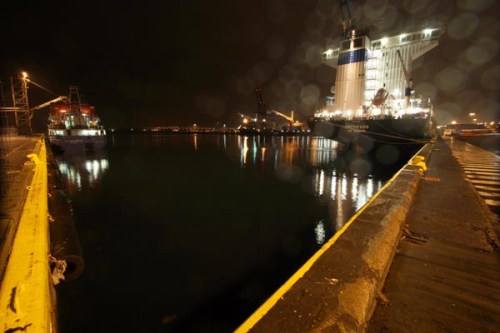
Fimmtudaginn 30. desember 2010 dýfði ég hljóðnemum í sjóinn í Sundahöfn. Ekki var við neinu merkilegu að búast. Þrjú skip voru í höfn, Wilson Brugge, Dettifoss og Goðafoss. Vélahljóð frá ljósavélum yfirgnæfði allt. Heyra mátti að dælur fóru í gang í skipunum og einstaka bank, líklega þegar einhverju var slegið utan í skipssíðuna. Í gegn um háfaðan má svo greina nokkra skelli sem liklega koma frá einhverri skel, hugsanlega kræklingi. Það var ekki fyrr en heim var komið og Spectrogram forrit hafði gert hljóðritið sýnilegt að það sást eitthvert undarlegt hljóð á 50Khz.
Þess skal getið, að börn með bestu heyrn ná líklega upp í 22Khz og miðaldra fólk yfirleitt ekki hærra en 14Khz. Þarna var því eitthvað sem var langt fyrir ofan heyranlega tíðni. Hljóðið var mjög reglulegt og aðeins bundið við afmarkaða tíðni eða á milli 48Khz til 51Khz. Var því óhugsandi að þetta kæmi frá einhverri skepnu. Það var því líklegt að einhver hefði gleymt að slökkva á dýptarmæli í þetta sinn. Miðað við stefnu virtist það koma frá Wilson Brugge.
Hljóðið var nokkuð áhugavert. Ég  ákvað því að nota tæknina til að gera hljóðið heyranlegt. Til þess þurfti að hreinsa út öll önnur hljóð og suð fyrir ofan og neðan 50 khz. Þá var tíðnin lækkuð með hraðabreyti þar til hljóðið var komið í 4khz. Við þetta lækkaði líka tifhraði hljóðsins svo nú heyrist tíst með löngu millibili í stað þess að vera u.þ.b. eitt á sekúndu.

_____________________________________

Undersea recording in Sundahöfn harbor.
Most of the audible sound was a noise from Motor Generators in the ships. When the recording was viewed in Spectrogram it was a notible 50kHz Echo Sounder signal.
Using pitch control the signal was downgraded to audible 4kHz. At the same time, all other sounds from ships engine and „digital sampling noise“ above 75kHz was erased.

Recorder: Korg MR1000  24bit/192khz
Mic: Aquarian H2a-XLR Hydrophone.
Pic: Canon 30D  (see more pictures and spectrogram)

Audible sound pollution in the Harbor.

Sækja mp3 skrá ( 192kbps / 4Mb )

Echo Sounder at 4kHz  (very slow activity).

Sækja mp3 skrá ( 192kbps / 5Mb )

Read Full Post »