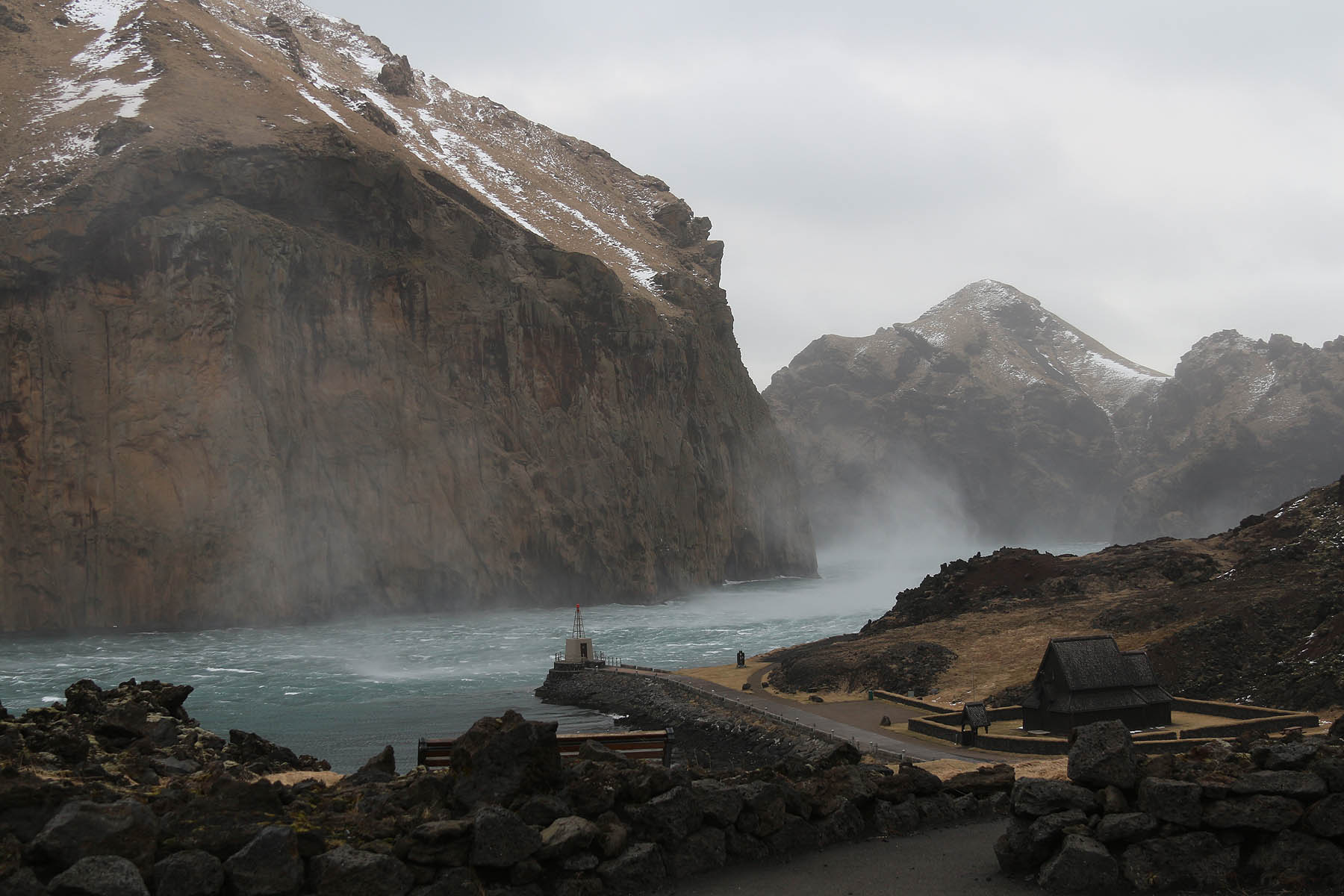
The Vestmannaeyjar archipelago is young in geological terms. The islands lie in the Southern Icelandic Volcanic Zone and have been formed by eruptions over the past 10,000–12,000 years. The volcanic system consists of 70–80 volcanoes both above and below the sea.[3]
The largest island, Heimaey, has a population of 4,135. The other islands are uninhabited, although six have single hunting cabins. Vestmannaeyjar came to international attention in 1973 with the eruption of Eldfell volcano, which destroyed many buildings and forced a months-long evacuation of the entire population to mainland Iceland. Approximately one fifth of the town was destroyed before the lava flow was halted by application of 6.8 billion litres of cold sea water.[2]
With extremely high precipitation considering the latitude, Vestmannaeyjar features an ET Tundra climate (closely bordering Subpolar Oceanic (Cfc)) under the Köppen climate classification. It is often very windy in the islands, and the highest wind speed measured in Iceland (61 metres per second;140 mph) was recorded in Stórhöfði. The main wind directions are easterly and south-easterly. The islands enjoy the country’s highest average annual temperature, the Gulf Stream having a strong warming effect, especially in winter. (Text Wikipedia)
The following recording was made at Stórhöfði 31st of March 2016 in a windspeed around 20 m. pr/sec
Stormur í Vestmannaeyjum
Upptaka þessi var hljóðrituð hádegi á Stórhöfða þann 31. mars 2016 stuttu áður en viðvera á Stórhöfða varð óbærileg vegna veðurs.
Þarna hvín ansi hátt í stögum á loftnetsmöstrum sem eru sunnan við vitahúsið. Hljóðnemarnir voru hafðir skjólmegin við húsið á meðan á upptöku stóð. Gera má ráð fyrir að vindstyrkur hafi náð þarna 20m/sek en síðar um kvöldið komst vindstyrkur upp í 35m/sek og enn meira í hviðum.
The day after the Panama papers were published, people gathered together all over Iceland to protest against the government. At last, thee ministers in the parliament and two members in the Reykjavik city council was involved in the disclosure. All this folks were members in the two right wings, republican parties that have ruled the Icelandic Parliament since spring 2013.
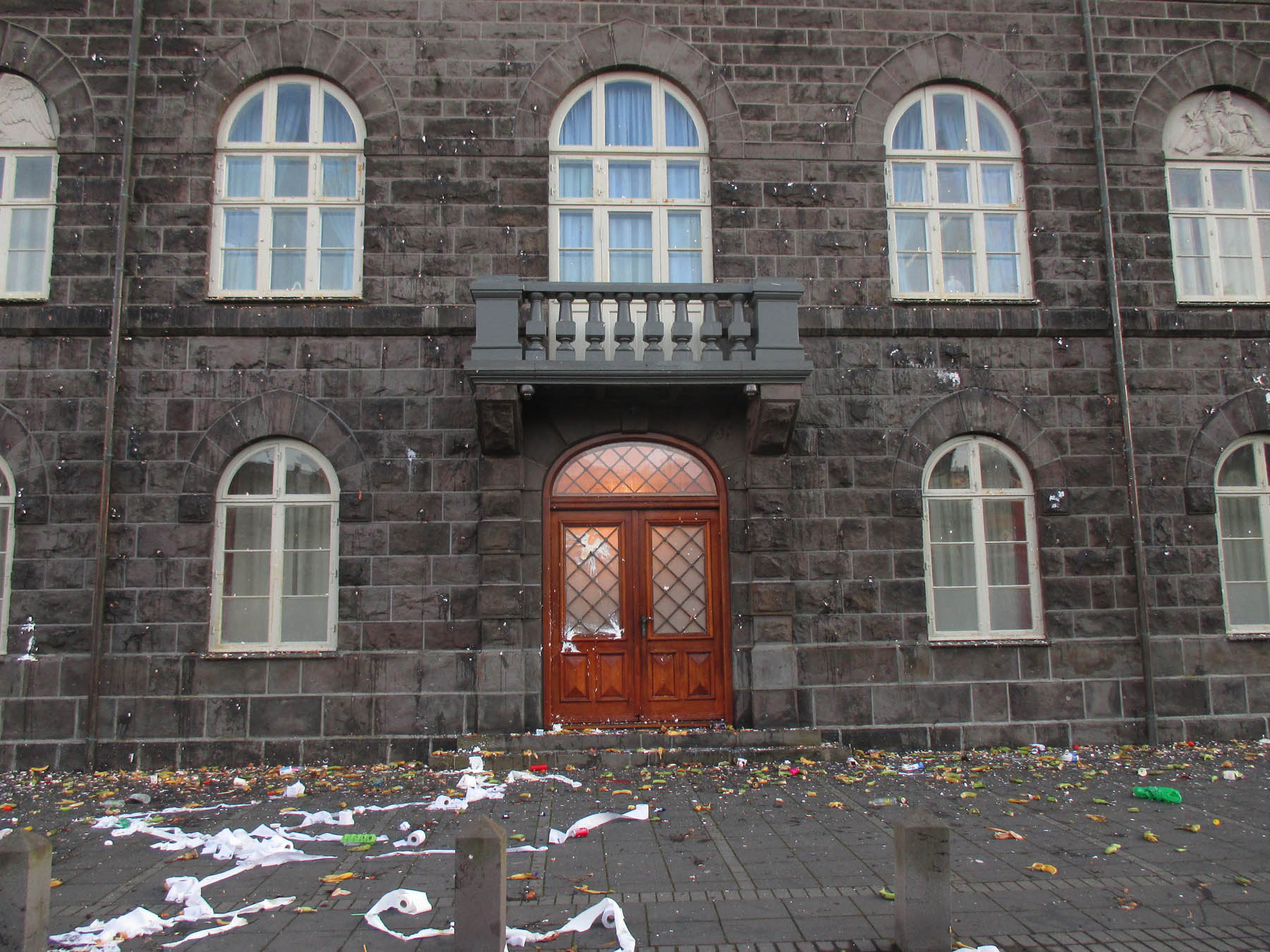
The following recording is recorded at the „first day in protest“ when around 20 thousand citizens gathered together downtown Reykjavik in the front of the Parliament house.
More info: https://panamapapers.icij.org/
The Guardian: Mossack Fonseca: inside the firm that helps the super-rich hide their money
The Guardian: The fallout from Panama Papers revelations so far, country by country
Mótmæli gegn pólitískri spillingu og siðleysi
Það hafði legið í loftinu í heilan sólahring að kvöld hins 3. apríl 2016 yrði viðburðarríkt.
Þjóðin sat því límd við sjónvarpsskjáinn þegar Alþjóðasamtök rannsóknarblaðamanna sendu frá sér fréttaþátt um aðkomu íslenskra stjórmálamanna að skattaskjólum.
Þetta kvöld var stór hluti þjóðarinnar beinlínis tekinn í þurrt rassgatið. Fram til þessa hafði fjöldi fólks fylgt gömlu hægri hrunflokkunum í blindni en þetta kvöld upplifðu margir algert siðrof gagnvart þessum flokkum.
Það fór því svo að met var slegið í þátttöku í mótmælum daginn eftir þegar á milli 20 – 25 þúsund manns mættu á Austurvöll og kröfðust afsagnar Sigmundar forsætisráðherra og allra þeirra sem höfðu verið nafngreindir við að fela fé í aflandsfélögum. Þá var einnig krafist þingrofs og að boðað yrði til þingkosninga hið bráðasta.
Hljóðupptakan sem hér fylgir var tekin upp á fyrsta degi mótmæla framan við Alþingishúsið.
It is easy to go in to a special mood when I think of the Icelandic highland and all the fabulous moments I have experienced there twenty to thirty years ago.
This quiet black desert gives me always a wonderful feeling. Just like I am in love.
Endless fields of weather beaten black and gray gravel, with a soundscape of wind and water, or just a real silence.
River sources and oases are there in many places. This water sources have very often some life. If not just a thin layer of sensitive moss, then grassland with birds, insects and even mammals.
Sadly, many of these wonderful quiet places have been under a threat by humans activity last decades, so they are not anymore this magic places as they were for a lonely cyclist more than twenty years ago. Some of them has been totally destroyed, like huge area in the east highland, like Vesturöræfi
For that reason I will not inform where the following recording was made. I just like to say, it was recorded in the highland in one of my „hidden places“ that still exists and has not been destroyed with hydro power plant, tourists, offroad driving motorist, or human waste.
This recording is very quiet. It contains a dunlin, howling arctic fox, europian golden plover, red necked phalarope and pink footed goose.
The background noise is a waterflow from nearby water source.
This was recorded 17th of July 2015 around two o´clock in the morning.
Quality open headphones are recommended while listening at low to mid level, or in speakers at low level .
Tófuvæl
Það verður að viðurkennast að á þeim árum sem ég ferðaðist sem mest um landið á reiðhjóli, var ég ekki oft var við tófu, hvað þá að heyra í þeim. Eftir að hætt var að greiða mönnum fyrir skott hafa tófuveiðar svo til lagst af. Tófu er því að fjölga og það líklega um allt land því ég er farinn að sjá hana oftar og heyra.
Það gerðist svo í sumar að ég náði að hljóðrita tófuvæl á hálendinu á einum af mínum leyndu eftirlætis dvalarstöðum frá fyrri tíð.
Í upptökunni hér fyrir neðan má heyra í tófu á 5. mínútu. Hún er því miður í talsverðri fjarlægð enda kannski ekki furða með mann í næsta nágrenni. Þótt þetta sé ákaflega þögul upptaka heyrist líka í lóuþræl, heiðlóu og grágæs, sem og óðinshönum í návígi á 18. mínútu.
Recorder: Sound device 744
Mics: Rode NT1a (NOS)
Pics: Canon EOS M
Weather: Cloudy, drissle rain, calm- up to 8 m/s, around +3¨C
Location: Sorry, no comment
This recording is almost straight forward from the recording I posted about a year ago “Dawn in Stafholtstungur, part 1”.
Now the traffic in the county increase slowly from previous recording, but all the time it is possible to listen to the birds activity in details around the recording place.
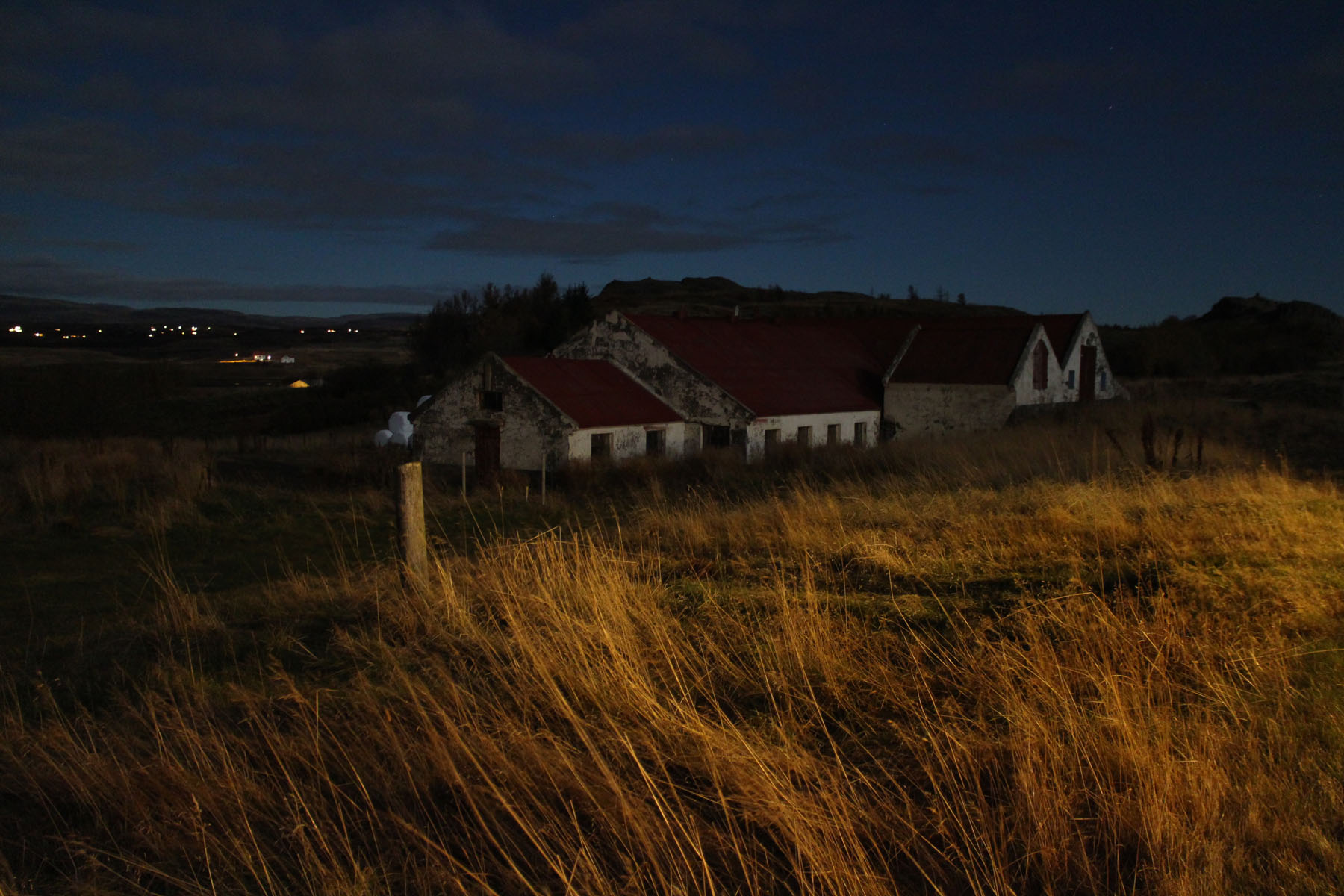
This was recorded the 18th of October 2013, between 6 and 7 in the morning near the farm Arnarholt.
Quality headphones are recommended while listening at low level in relaxed position.
Dögun í Stafholtstungum, annar hluti
Hér er á ferðinni svo til beint framhald af upptöku sem fór á vefinn fyrir um ári síðan; “Dögun í Stafholtstungum, fyrsti hluti”. Heyra má að umferð eykst í sveitinni þar sem klukkan er farinn að ganga sjö. Gera má ráð fyrir að það heyrist í sumum bílum, þá líklega flutningabílum, um langan veg frá Norðurárdal suður til Borgarfjarðar. En þegar þögnin er sem mest er vel hægt að heyra í fuglum athafna sig í smáatriðum nærri upptökustaðnum.
Upptakan var gerð við bæinn Arnarholt þann 18. október 2013
Mælt er með því að hlusta á þessa upptöku í góðum heyrnartólum og á lágum hljóðstyrk um leið og slakað er á í þægilegum stól eða rúmi.
Recording fireworks can be difficult. The dynamic of the blast is normally far more than the equipment can record in full quality. So acceptable recording level is very important, especially when sound process afterwards is not allowed.
The limiter in Sound devices 744 & 302 can work smoothly if they are not „overloaded“ too much, so again, acceptable recording level is very important.
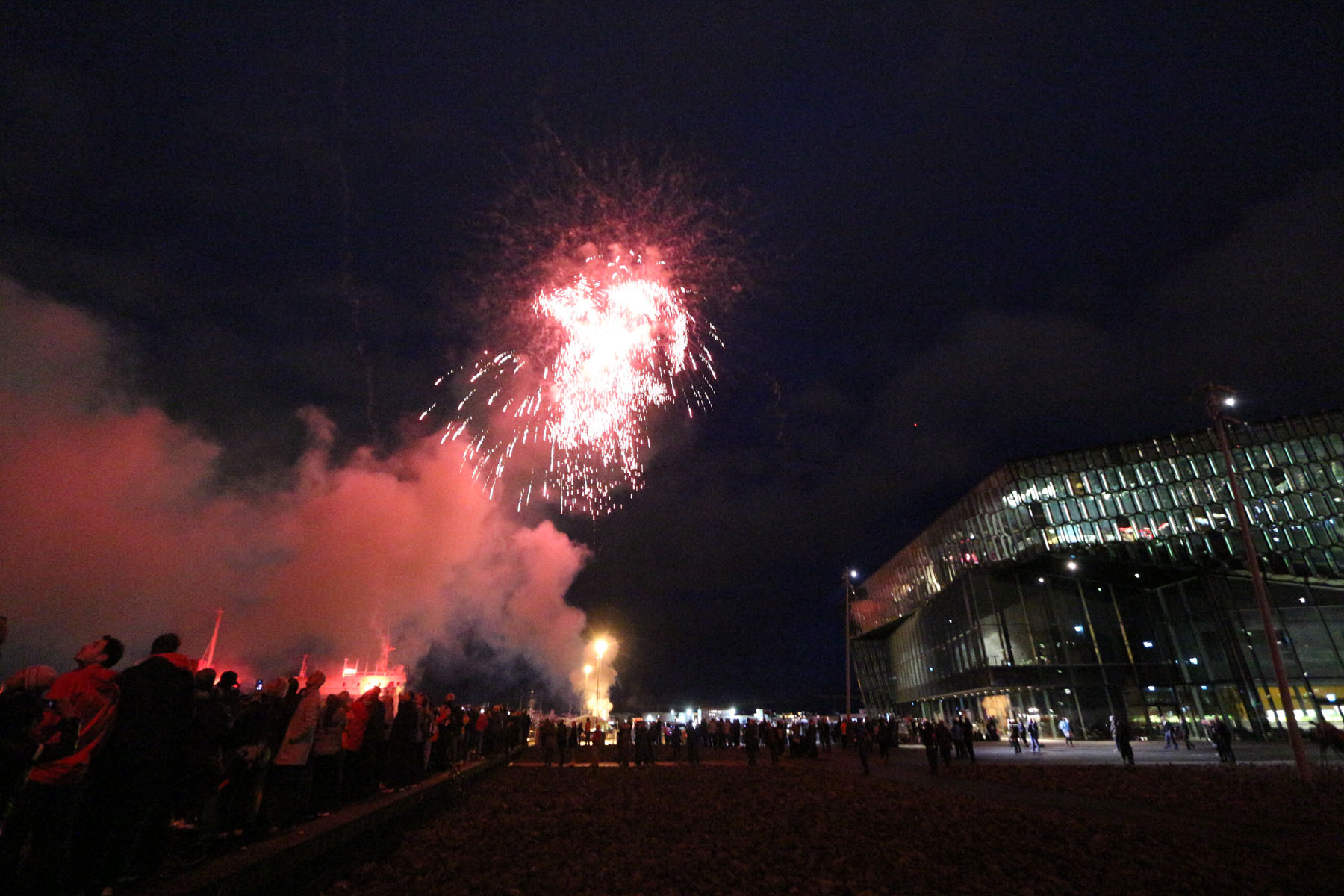
Another big factor for good fireworks recording is the location. Any reflection or echo from nearby buildings or mountains can make the whole blasting thing as an outstanding symphony. Culture night has been held in August in Reykjavik for twenty years and it normally ends with huge down town rock concert and a firework show. As usual I went there this year to record the fireworks. For a one year I have been thinking for better recording location, because I have never been happy with my firework recordings before. This year I spotted place nearby Harpa concert hall where two big buildings are on two sides. I was pretty excited for the outcome.
I waited there for the last song from the rock concert. Normally I would have about 5 to 10 minutes to prepare my gear after the last song, until the fireworks starts.
But suddenly the fireworks stated before the concert ended.
I panicked! I started my gear while I tried to run in the darkness to my deliberate place. I was tangled in the mic cord so I was afraid to damage something on the run. And because of the tangled cord I could not rise the boom above my head.
I was MAD! I lost about half and the best part of the show and faced some stupid troubles and mistakes, like level adjustments.
As usual it would take me one year to have another opportunity!
I did not listen to the recording when I came home. It was not until last week, when the dance artist and the author of the firework show, Sigríður Soffia Nielsdóttir asked me for the recording. She was planing to use it in a dance project show. Sadly I could not send her the whole firework show. But who knows, it will probably all, or part of it, be used in her dance project this October.
The following recording is just as it comes out of the recorder, it is just fade in/out and downgraded to mp3. So it start suddenly without warning with loud blasts. So be careful, don´t put up the volume, especially not when listening with speakers.
Quality open headphones are recommended while listening at mid/high-level.
Flugeldasýningin á menningarnótt 2015
Hér er á ferðinni upptaka frá flugeldasýningu á Menninganótt í Rykjavik 22. ágúst 2015.
Það gekk bókstaflega allt á afturfótunum þegar hún var tekin upp. Því vantar fyrri hluta sýningarinnar í upptökuna. Upptakan er gerð á milli Seðlabanka og Hörpu. En vegna staðsetningarinnar þá má heyra ýmiss konar áhugaverð hljóð sem myndast vegna endurvaps milli húsanna. Mér þótti það þess vert að setja upptökna á vefinn.
Hljóðritið byrjar mjög snögglega því ætti ekki að stilla hljómtæki hátt, sér í lagi ef hlustað er með hátölurum.
Mælt er með því að hlusta á upptökuna í góðum opnum heyrnartólum og á miðlungs/háum hljóðstyrk.
The Ófeigsfjarðarflói is divided into three fiords, furthest east is Ingólfsfjörður, in the middle is Ófeigsfiörður, and furthest west is Eyvindarfiörður. Those fiords were named after three brothers, the sons of the Norwegian Herraudur White Cloud (Herraauður Hvítaský) , who settled there. According to the land registry of 1706 the farm in Ófeigsfiörður was abandoned, but soon afterwards it was re-inhabited. The register also states, that the most important advantages of the property were seal hunting, driftwood collecting and processing, eiderdown and the winter grazing on the shoreline. The greatest disadvantages were the long and hard winters and the long and dangerous way to the nearest church. The farm was abandoned in the sixties, but the driftwood and the eider colonies are exploited every summer.
The eiderdown is mainly collected on the islet Hrútey, just off the headland Hrúteyjarnesmúli, and also around the farmhouses. Sustenance fisheries were also practiced during the centuries and the shark fishing was an important enterprise until 1915.
During Catholic times a prayer chapel stood in Ófeigsfiörður. Some geothermal activity was spotted in two places on the property.
Nowadays travellers use the nice camping grounds in Ófeigsfiörður. Hikers in the northern Strandir area use them in the beginning or at the end of their hiking tours. The closest you get to Ófeigsfiörður by car is Eyri in Ingólfsfiörður, but a 4wd track continues all the way.
Following recording was recorded nearby the camping side.
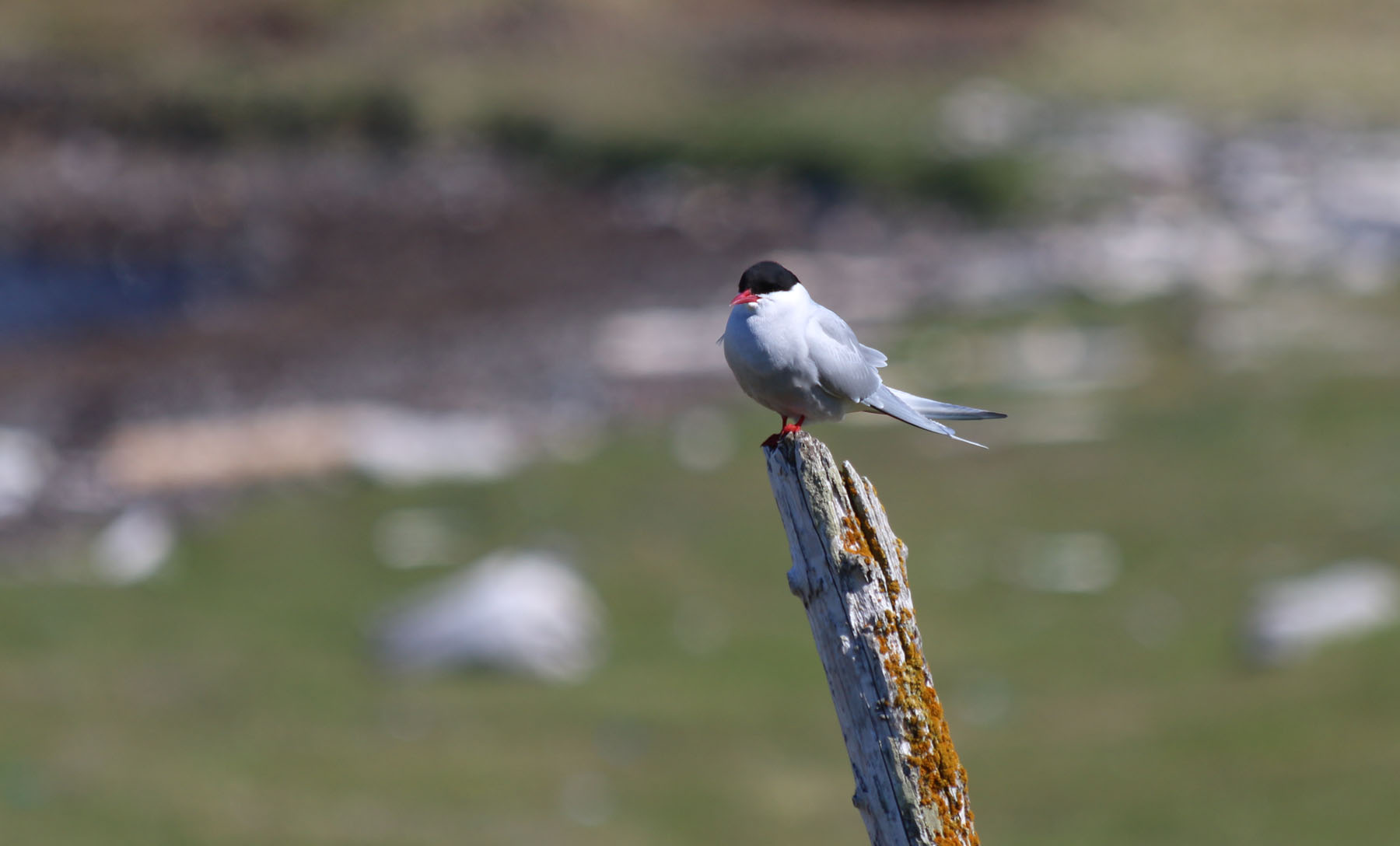
In the recording an Arctic tern is constantly attacking the fury microphones. But the battle last for only twenty minutes so the recording ends in a peaceful sonic experience.
Quality open headphones are recommended while listening at mid-level
Árás í Ófeigsfirði
Hér er á ferðinni upptaka sem tekin var upp við tjaldsvæðið í Ófeigsfirði, síðdegis þann 25. júní 2015.
Kría gerir ótal árásir á óboðinn gest við hreiðurstæð sitt. Árásirnar standa yfir í u.þ.b. 20 mínútur en eftir það fellur allt í dúnalogn og við tekur hljóðmynd sem er hljóðlát og draumkennd.
Mælt er með því að hlusta á upptökuna í góðum opnum heyrnartólum og á miðlungs hljóðstyrk.
The Independence Day, June 17, 2015, was a little different from what it usually is, on Austurvöllur. A few thousand people were supposed to attend a meeting there, to protest the government. So there was a lot of preparation by the police, to make a clear line, between the public, and the politicians and the representatives of foreign embassies, attending this formal ceremony, on Austurvöllur in front of the parliament.
After the banking collapse in 2008, it was clear that the nation was divided into two separate groups. Firstly those that had been badly affected by this banking system, that a few years back, had been privatized, into the ownership of the friends of corrupt right-wing politicians. Secondly those, about 30% of the nation that were making a profit of all the corruption or had not the intelligence to understand what had been going on, before the banking collapse in October 2008.
In 2009 the nation voted for a left-wing government, the first one for a very long time, but as it was a time of great crisis, for example the national bank was really bankrupt, this government made a few mistakes that the nation did not like. So it happened, by giving a whole lot of false promises and by owning a majority of the mass media, the right-wing „crash parties“ came back to power after the elections 2013.
Those two right-wing political parties have since coming to power, just tried to make the economic system into what it was like, before the banking collapse of 2008, like nothing had ever happened.
The opposition to the right-wing politics of the government, has constantly been increasing, not the least because the government has been systematically destroying the good things the left-wing government had done. With the increasing consciousness of the public, people are putting a lot of work, protesting in the streets. It can be said that the most magnificent protest, has been when the the prime minister of the right-wing government, did his zero cents speech during the festivities on June 17 in front of the parliament, that can be heard here below. As usual the representatives of different foreign embassies were there, attending a ceremony that has been formally festive for many decades and that the public could before participate in with a close presence. But now the police had put up a fence to hold the public outside of the festive area and away from politicians and other officials of the state. The protesters and the public still did let their voices and their message be heard, in a splendid accomplishment.
Those that can understand the murmur in the speech of the prime minister understand that the speech is in no way in coherence with reality. Those that remember his last years speech, realize that probably it is the same speech, read aloud a second time.
The sound quality in this recording is not good because of poor quality of the sound system in the ceremony
Mótmæli á þjóðhátíðardegi
Hátíðarhöldin 17. júni 2015 voru svolítið óvenjuleg á Austurvelli. Fjöldi fólks hafði boðað komu sína til að mótmæla. Eitt og sér var það ekki óvenjulegt, nema hvað mótmælin áttu að standa á meðan hátíðarhöldin stóðu yfir. Það var því nokkur viðbúnaður af hálfu lögreglu til að almenningur kæmist ekki í færi við stjórnmálamenn og fulltrúa sendiráða sem að venju mættu í ofur hefðbundna athöfn við Austurvöll framan við Alþingishúsið.
Eftir bankahrunið 2008 var það ljóst að þjóðin skiptist í tvær fylkingar. Fyrst má telja þá sem urðu grátt leiknir af bankakerfi sem nokkrum árum áður hafði verið einkavinavætt af spilltum hægrisinnuðum stjórnmálamönnum. Svo voru það hinir, sem eru u.þ.b. 30% þjóðarinnar, sem annað hvort þrifust á spillingunni eða höfðu ekki greind til að skilja hvað gerðist árin fyrir bankahrunið í október 2008.
Árið 2009 kaus þjóðin vinstri stjórn. Hún tók við skelfilegu búi og í óðagoti gerði sú stjórn ýmis mistök sem þjóðinni mislíkaði. Það fór því svo að með loforðaflaumi, lygum og eignarhaldi á flestum fjölmiðlum, að hægri sinnuðu „hrunflokkarnir“ komust aftur til valda í kostningum 2013.
Þessir tveir hægri flokkar hafa síðan leynt og ljóst reynt að endurvekja hagkerfið í þeirri mynd eins og það var fyrir bankahrun 2008 eins og ekkert hefði gerst.
Andstaðan við þessa hægri pólitík hefur sífellt verið að aukast, ekki síst vegna þess að hægri stjórnin hefur meira og minna verið að eyðileggja það góða sem þó hafðist í gegn í tíð vinstri stjórnarinnar. Með aukinni meðvitund almennings er svo komið að fólk er farið að leggja á sig talsverða vinnu til að mótmæla á götum úti. Segja má að glæsilegustu mótmælin hafi einmitt verið þegar forsætisráðherra hægri stjórnarinnar hélt ræðu sína við hátíðarhöldin 17. júní framan við Alþingishúsið og heyra má hér fyrir neðan. Að venju mættu þar fulltrúar ýmissa sendiráða við athöfn sem í áratugi hefur verið mjög hátíðleg og hefðbundin þar sem almenningur hefur geta tekið þátt með nærveru sinni. En nú var hins vegar búið að girða hátíðarsvæðið af undir lögregluvernd svo almenningur kæmist hvergi nærri pólitíkusum eða öðrum embættismönnum. Samt sem áður tókst almenningi með glæsibrag að láta í sér heyra og koma viðeigandi skilaboðum á framfæri.
Þeir sem ná að skilja muldrið í ræðu forsætisráðherra geta greinilega heyrt að ræðan er í engu samhengi við raunveruleikann. Þeir sem svo muna ræðu hanns frá því ári áður geta eflaust greint að hér er ræðan líklega lesin í annað sinn.
Hljómgæði þessara upptöku er ekki sérlega góð sem stafar af lélegu hljóðkerf á Austurvelli við þessa athöfn
Jökulsárgljúfur canyon in Vatnajökull National Park is situated in the north of Iceland near the river Jökulsá á Fjöllum. In the middle of Jökulsárgljúfur, between Dettifoss waterfall and Ásbyrgi canyon, is Vesturdalur valley.
Vesturdalur is mostly surrounded with steep cliffs with luxuriant flat bottom. Through the valley flows a small creek, Vesturdalsá, on its way to the river Jökulsá á Fjöllum.
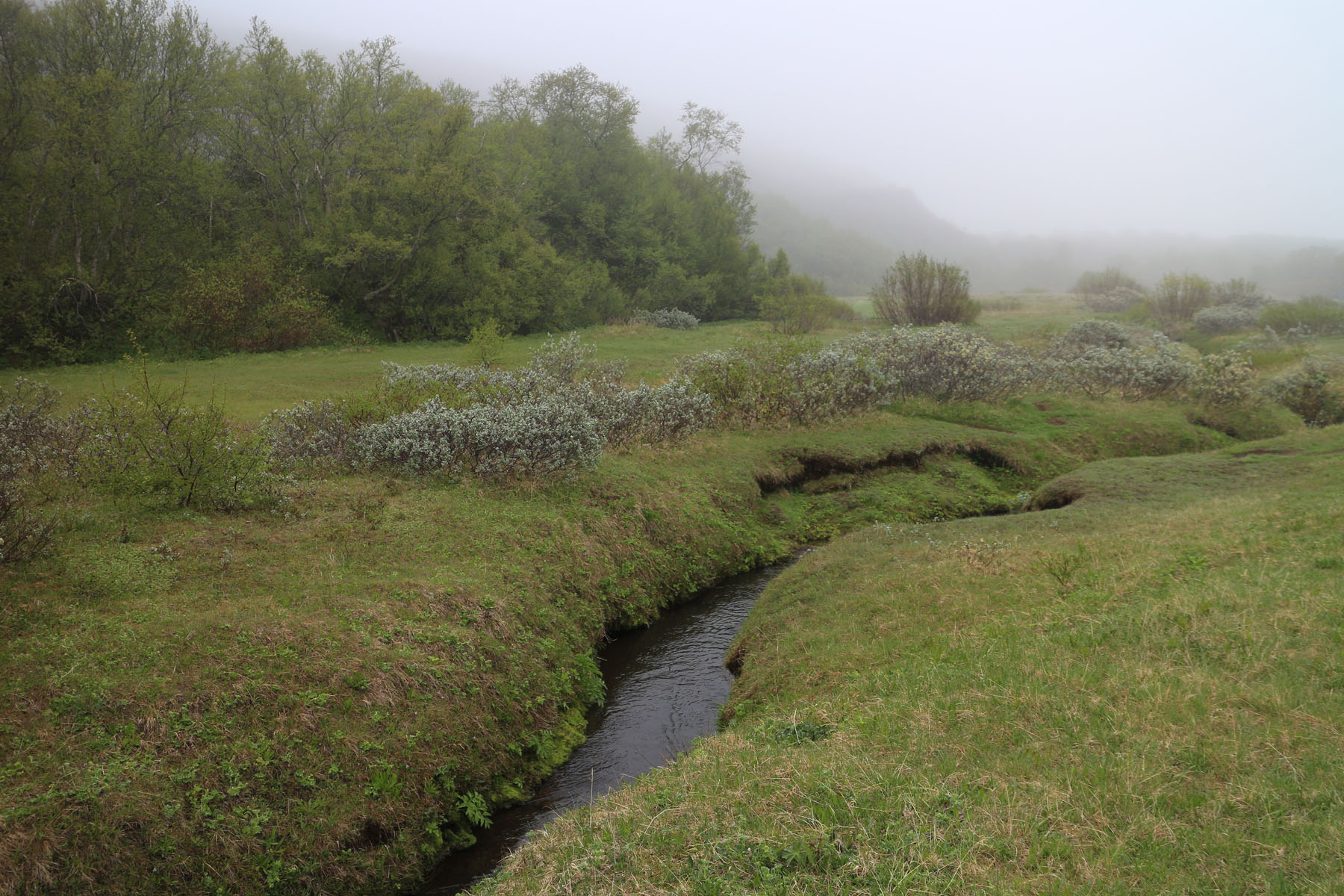
The first week in June 2014 I arrived there on a foggy night and placed the microphones close beside the creek. The soundscape in the fog was particular. The rumble sound from Jökulsá River about 3 km away, filled the air with extreme murky mysterious power. But all around me was a beautiful bird song that followed me in to the sleep.
This recording is several hours long so it is most likely that more of this recording will be available online someday.
Thanks to the Friends of Vatnajokull who made this recording trip possible.
Quality headphones are recommended while listening at low level.
Vestudalur við Jökulsá á fjöllum
Þann 8. júní 2014 eftir miðnætti kom ég í Vesturdal við Jökulsárgljúfur. Talsverð þoka var á svæðinu svo skyggni var fremur lélegt. Mikil frðsæld var í dalnum enda mjög fáir á svæðinu. Fjölskrúðugur fuglasöngur kom úr öllum áttum, en loftið var þrungið drungalegum drunum frá Jökulsá á Fjöllum í austri. Áður en ég lagðist til svefns fann ég stað fyrir hljóðnemana við bakka Vesturdalsár sem liðaðiðst hljóðlega um dalinn.
Um leið og tækið var komið í gang leið ekki á löngu þar til ég var kominn í draumheima með notalegan fuglasöng í eyrunum næstu klukkustundir fram undir morgun.
Þessa upptöku má þakka samtökunum Vinum Vatnajökuls sem gerðu það kleift að af þessari upptökuferð gat orðið.
Mælt er með því að hlusta á upptökuna í góðum heyrnartólum og á lágum hljóðstyrk.
Recorder: Sound Device 744
Mics: Sennheiser MKH20 (AB40)
Pics: Canon EOS M (See more pictures)
Recording location: 65.933496, -16.555915
Weather: Calm, fog, around 6°C
Everyone who has travelled on road no.1 between Höfn and Djúpivogur in the east Iceland know the road at Hvalnes- and Þvottárskriður. These places are a huge mountain landslide with cliffs above and below the road. Many days when the weather is bad, with heavy rain or strong wind it can be dangerous to pass the road trough this landslide. Some days the road is closed.
This road at Hvalnes and Þvottárskriður was built 1981, but before, the road lied through difficult valley, high in the mountain named Lónsheiði.
Until 1981 it was unusual to pass this landslide, even the beautiful coast below.
The north Atlantic ocean surf is heavy on the miscellaneous beach which has beautiful gravel beaches and huge cliffs and rocks.
Just below Þrottárskriður landslide is Stapavík, a beautiful gravel beach with high rock in the middle, like a huge stoned giant or troll. Along the beach are low cliffs where fresh water seeps out between the geologic age and wets the rocks.
The following recording was made near one of this place where the fresh water is dripping of the rock down to the gravel below.
Quality headphones are recommended while listening at medium level.
Lindin í Stapavík
Fyrir neðan Þvottárskriður, austur af Hvalnesskriðum, er nokkuð löng malarfjara sem heitir Stapavík. Þessi vík eða fjara skartar gríðarstórum stapa sem minnir á steinrunnið tröll. Stapavík er meira og minna umgirt tiltölulega lágum klettum og skriðum. Þar má víða sjá ferskt vatn streyma undan jarðlögunum og niður klettana.
Upptakan hér fyrir neðan var tekin upp á einum slíkum stað í júní 2014 þar sem vatnið seitlar niður klettavegginn og niður í fjörumölina. Í bakgrunni, bak við malarkamb, má heyra í þungri úthafsöldunni þegar hún skellur á fjörunni í gríð og erg, eins og hún hefur gert á þessum stað í árþúsundir.
Mælt er með því að hlusta á þessa upptöku í góðum heyrnartólum og á miðlungs hljóðstyrk.
Recorder: Sound deivices 744
Mics: Audio Tecnica AT4022 (binaural)
Pics: Canon EOS M (see more pictures)
Recording location: 64.476665, -14.492781
Weather: Calm, cloudy, around +12°C
The Jökulsá á Fjöllum river was a large obstacle in the past. River crossings on horseback were not possible so ferries were used at three different locations. The refuge hut was built at one of these locations, intended to house the travellers. The river was first bridged here in 1948. The road through Mývatnsöræfi was partially buried underneath the lava flow during the Mývatnseldar eruption in 1875. A few years later a new road was laid though this wilderness. The cairns indicate the location of this road, which is one of the earliest examples of a public road making. This was also used as a postal road.
The refuge hut was built in 1883 from dressed stone quarried from the surrounding area and bound with lime. A number of men participated in transporting the timber, lime and cement for the construction, all the way from Vopnafjörður, Húsavík and Akureyri. The low ceilinged cellar was used as a stable, its entrance having once been protected by a lean-to. The suspected haunting of the hut prevented a proper use of it.
The refuge hut at Jökulsá á Fjöllum plays a role in the novella Aðventa (The good Shepard) by Gunnar Gunnarsson.
Not only was this a period of intense volcanic activity, it was also a time of innovation in building techniques in Iceland, of which the construction of stone houses was a part. Prior to the construction of the refuge hut, stone houses had been built in a few places in the North-east. These included Þverárkirkja in Laxárdalur (1878) and a vicarage in Sauðanes (1879). The construction of the Althing Parliament House in Reykjavík in 1881 also had a considerable impact on the propagation of stone houses in Iceland.
The refuge hut was previously managed by the Icelandic Road Administration, but has been a part of the National Museum of Iceland‘s Historic Buildings Collection since 1988 (*National Museum of Iceland)
The recording starts under the hut´s wall. The wind gently wipes the surface around the hut when a lonely Snow Bunting gives a weak song to the empty black desert.
Then the recording slowly moves from the hut to the river’s bank, to a place that could tell many stories from the past if the stones could speak. The recording ends with a squawk from two Pink Footed Goose that overfly close over river’s surface on the way to the north.
Quality headphones are recommended while listening at low- to mid level.
Sæluhúsið við Jökulsá á Fjöllum.
Fyrr á öldum var Jökulsá á Fjöllum víðfeðmur farartálmi. Áin var hvergi talin reið og voru lögferjur á þremur stöðum. Sæluhúsið var reist við einn slíkan ferjustað en fyrst var brúað hér árið 1948. Þjóðleiðin um Mývatnsöræfi fór að hluta undir hraun í Mývatnseldum árið 1875. Nokkrum árum síðar var ráðist í að leggja nýjan veg um öræfin og var Jakob Hálfdanarson, síðar kaupfélagsstjóri kaupfélags Þingeyinga, valinn til að stýra verkinu. Vörður sýna legu vegarins en þessar vegleifar eru með elstu minjum um opinbera vegagerð á Íslandi en þetta var jafnframt póstleið.
Sæluhúsið var reist árið 1883 úr tilhöggnu grjóti úr nánasta umhverfi. Timbur, kalk, sement og önnur byggingarefni í húsið voru flutt alla leið frá Vopnafirði, Húsavík og Akureyri með aðkomu fjölda manna. Lágreistur kjallarinn var notaður sem hesthús og var inngangsskúr, bíslag, áður yfir kjallaratröppum. Notkun hússins varð þó ekki sem skyldi sökum frásagna um reimleika. Húsið er hluti af sögusviði Aðventu eftir Gunnar Gunnarsson, þar sem greinir frá ferðum Fjalla-Bensa, Benedikts Sigurjónssonar.
Gamalíel Einarsson var fenginn að byggingu sæluhússins sumarið 1883 sem aðalsmiður hússins en Sigurbjörn Sigurðsson, Jakob Sigurgeirsson og Friðrik Guðmundsson áttu þar einnig stóran hlut. Jakob Hálfdanarson mun hafa ráðið staðsetningu og útliti hússins. Landssjóður veitti fé til smíðinnar.
Þessi umbrotatími jarðskorpunnar var einnig tímabil nýrra hugmynda um byggingatækni á Íslandi og var bygging steinhúsa hluti af þeirri nýbreytni. Steinhlaðin hús voru tekin að rísa hér og þar á Norðausturlandi nokkru áður en sæluhúsið reis af grunni. Meðal þeirra voru Þverárkirkja í Laxárdal (1878) og prestsbústaður á Sauðanesi (1879). Bygging Alþingishússins í Reykjavík árið 1881 hafði einnig umtalsverð áhrif til frekari fjölgunar steinhúsa á Íslandi.
Sæluhúsið var áður í umsjá Vegagerðar ríkisins en hefur verið í húsasafni Þjóðminjasafns Íslands frá 1988. (*Þjóðminjasafn Íslands)
Upptakan hefst undir húsvegg sæluhússins þar sem vindurinn gælir við hrjúfa veggi. Einmana sólskríkja gefur tóninn út á eyðisandinn. Upptakan færist síðan hægt og rólega niður að árbakkanum á stað sem eflaust gæti sagt margar fornar raunasögur ef steinarnir gætu talað.
Mælt er með því að hlusta á þessa upptöku í góðum heyrnartólum og á lágum- til miðlungs hljóðstyrk.
Recorder: Sound devices 744
Mics: Sennheiser MKH20 (AB40)
Pics: Canon EOS M (see more pictures)
Recording location: 65.638964, -16.224181
Weather: Cloudy, gusty, ca. 6°C.




 HLJÓÐMYND - SOUNDIMAGE