Feeds:
Færslur
Athugasemdir

Archive for the ‘Óflokkað’ Category

IMG_2200

For a long time I have used Rode NT1a for nature recordings. It is a very good mic to capture the finest details in quiet soundscapes. But at the same time there is something missing in the sound quality, especially when it comes to low frequency and „audio depth“.
Last summer I got interest in IRT cross mic setup, so there was a perfect opportunity to invest in other microphones. There were not many mics to choose from with extra low self noise. Nevaton in Russia makes very interesting low noise & high sensitive mics. But my experience with MC50Quad was it did not capture the finest details of the silence as clearly as NT1a or MKH20. So I decided to invest in Lewitt LCT540s which I got for a acceptable nice price (See comparison)
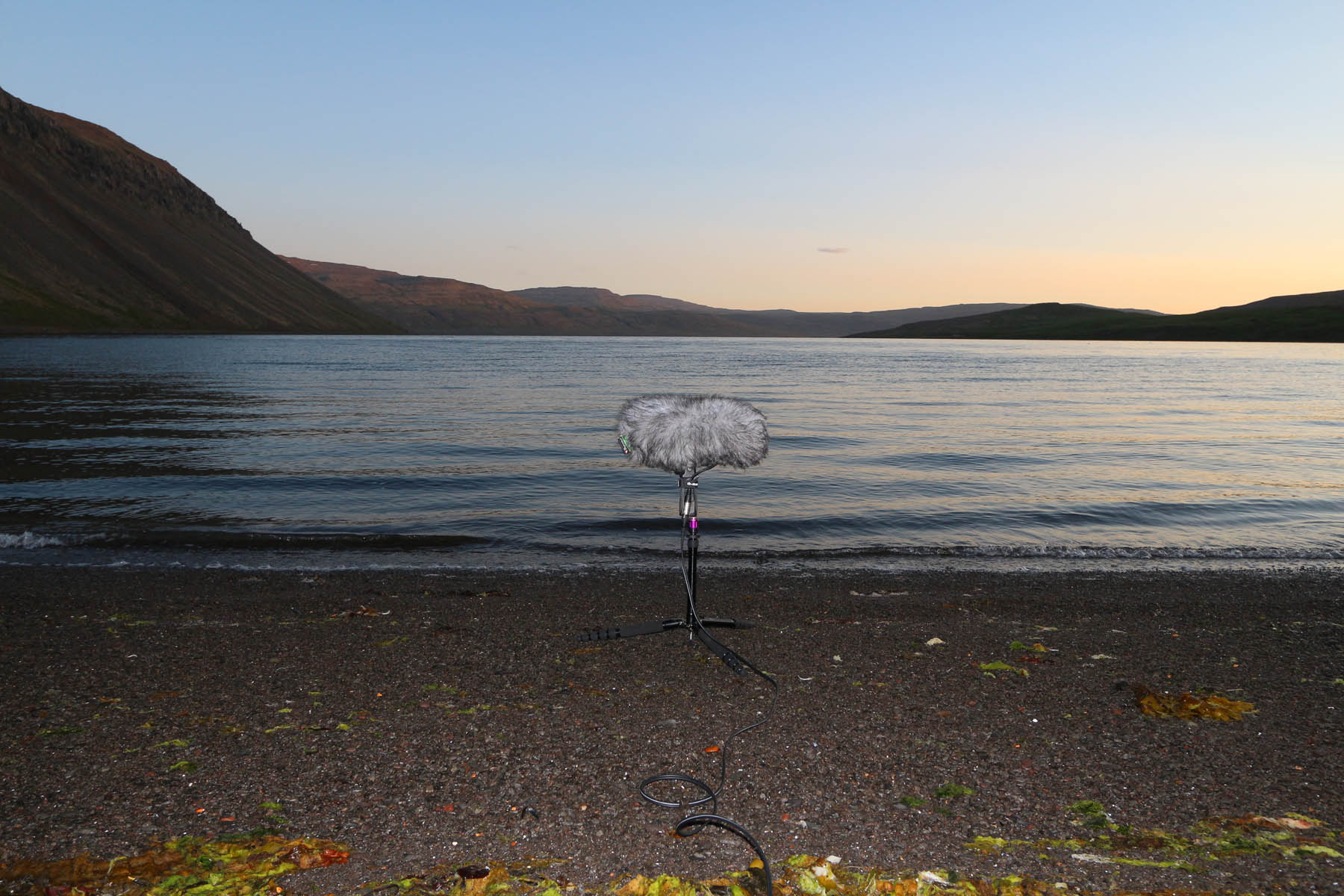
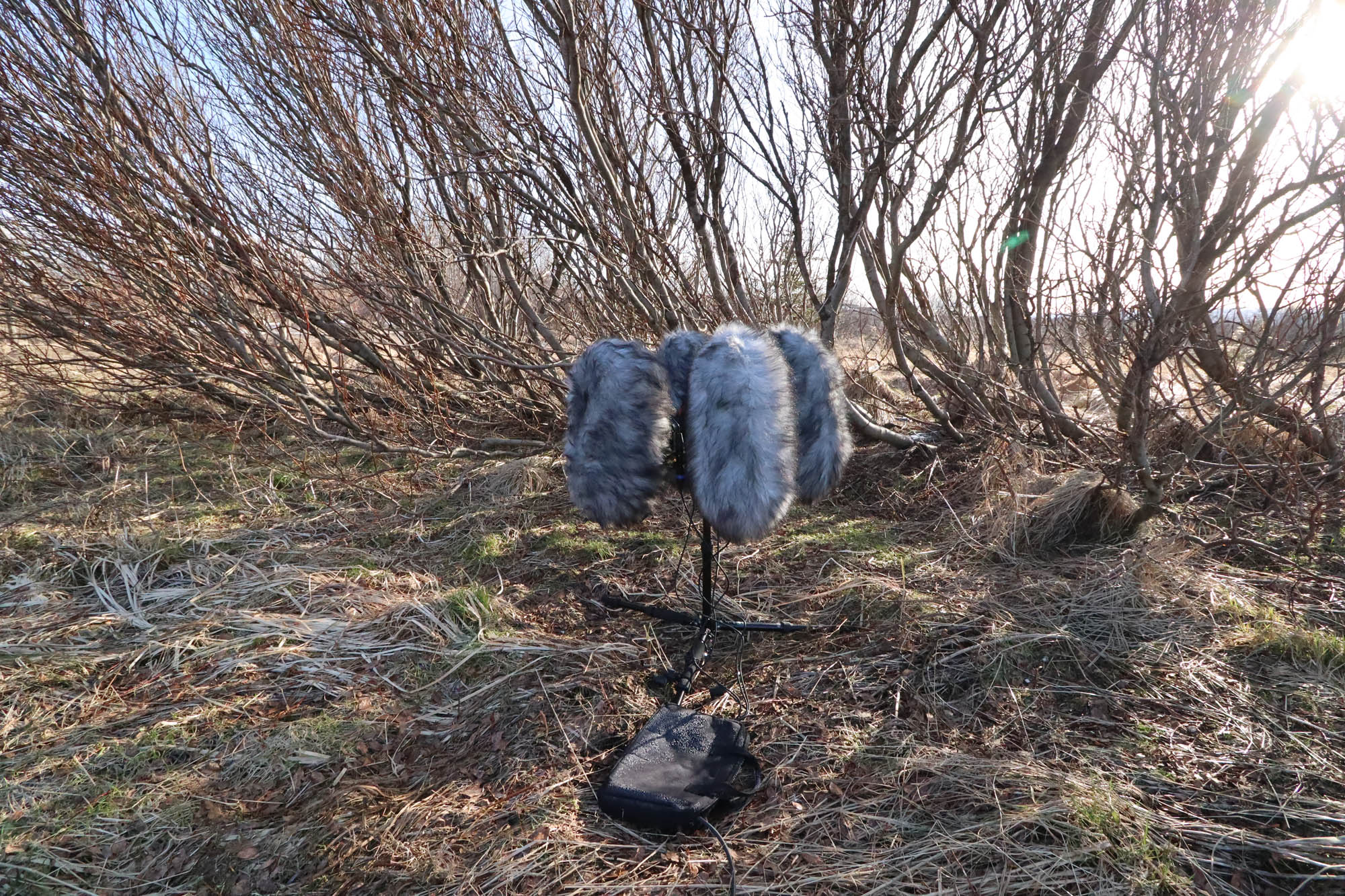
I built a special shock mount for the LCT540s inside Rycote AE windshields (ORTF WS kit P/N:080210). That AE windshield is wider than normal WS windshield, especially made for stereo rigs so it is very good for large capsule, side address mics like LCT540s. Low handling noise is important for less rumbling wind noise and when it comes to LCT540, it is slightly better than NT1a.
Everything was ready for a field test in late Mars so I followed the silence into the country side. I was lucky with the weather, dry and calm, maybe too calm because it makes the silence too quiet for this field test. Anyway sometimes light gust gently wipes the top of trees and bushes which sounds fantastic in the headphones, moving slowly from left to right. It was much easier to feel the depth of the field with LCT540 than it has been with NT1a.
Nothing interesting was audible until in the early morning, about half hour before sunrise, when two Rock Ptarmigan started to „sing“. First in distance, but suddenly, maybe because of curiosity, they flied closer to the microphones and walked around the rig. The following recording is actually this moment.
It was recorded in IRT cross, which gives lot of opportunities in mixing. It gives me four different stereo recording in to four directions, all in NOS, plus many other versions too with different channel mix. It can be useful when looking into specific soundscape. It is for example possible to avoid traffic noise or other unexpected sounds from one or another direction.
The two first enclosed recording below have go through noise reduction process (above 3Khz). But the last one is a short peace without noise reduction, just as it comes from MixPre6, so you can hear the LCT540 self noise, which is about 2dB higher than in NT1a. It was recorded with 48dB gain and HPF at 40Hz. In post, I only normalize the gain level up to max, which rise the gain about +10dB. I did not change the EQ so audience can hear the sound quality at the low frequency. My feeling is that LCT540 have almost same low frequency quality as the MKH series & Nevaton which is very good
This is two versions of the same recording where I mix four channels differently into stereo. Counting channels 1-2-3-4 clockwise to L-R-Ls-Rs and the second one L-R-Rs-Ls (which is usually normal IRT setup).
This is a „high dynamic“ recording of silence, so I don´t recommend it played loud. It might destroy some speakers (ears too) if it is played too loud without attention.
Good monitor headphones are recommended or quality open headphones while listening at low to medium level.

If the media player doesn’t start to play, please reload this individual blog in new tab or frame

Recording L-R-Ls-Rs
(mp3 256Kbps / 35,6Mb)

Recording L-R-Rs-Ls
(mp3 256kbps / 35,6Mb)

Short version of recording L-R-Ls-Rs without NR
(mp3 256kbps / 7,4Mb

Recorder: Sound devices MixPre6
Mics. Lewitt LCT540s (IRT cross setup) Running on 70m Sommer Mercator CAT7 S/STP cable
Pix: Canon EOS M50
Weather: Calm, dry, between -2 to +4°C, about 7:30 o´clock

Location: 64°40’23.7″N 21°37’43.7″W

Read Full Post »

IMG_2200

It is difficult to compare LCT540 and NT1a in details. I am not sure which one is better for silence recordings. Both have same specification of lowest self noise on the market, they have their own characteristics and after my NT1a mod, they seems to have slightly different polar pattern.
I record this audio samples at 24bit/48khz with 45dB gain (40Hz HPF) on MixPre6
In post I increase the gain approximately another 45dB and normalized to -5dB
The outcome is shown on the spectrograms on recording A and recording B. The LCT540 is above. NT1a below.

NT1a is extremely well focused in the mid-range 500hz – 5Khz. which is exactly the frequency where most common birds sing. So NT1a is very good for nature recordings. But sometimes NT1a sounds „flat“ because NT1a is rather poor on low frequency, sometimes like out of phase (which could be as well caused of wrong setup).
I have not a long experience recording with LCT540s, but at the moment the overall sound quality seems to be better than NT1a, especially in lower frequencies which give better „juicy“ sound and „depth feeling“. But at the same time it is not as „clear“ as NT1a in the mid range.

Following audio samples will give some insight how LCT540s compares to NT1a in silence. You can clearly compare the mics self noise which sounds almost equal.. You can also hear how this two microphones pick up the details in two alarm clocks and a pocket radio at the lowest level in ca 2,5m distance, inside ca 45m2 garage. Other background sound is a light gust outside which swipe the garage walls and roof, a fly in the window and a traffic in air and ground in the county. Anyway this is a silence which most people will barely hear anything else than just their own heartbeat. See pictures

How do they withstand humidity or handling noise in windscreen? I can only say this.
Both need DIY shock mount if they should be fit in Rycote windshield. Both are sensitive for handling noise especially NT1a. High humidity is usually not a problem for microphones in Iceland, but there are stories about problem with NT1a in other countries.
I will update this information/comparison as soon as I have got more experience with LCT540s. You can also search for NT1a and LCT540s on this website and listen to nature recordings.

Listening with quality headphones will give best result.
If the media player doesn’t start to play, please reload this individual blog in new tab or frame

Lewitt LCT540s Recording A (mp3 256kbps / 7Mb)

Rode NT1a Recording A (mp3 265kbps / 7Mb)

Lewitt LCT540s Recording B (mp3 256kbps / 4,8Mb)

Rode NT1a Recording B (mp3 256kbps / 4,8Mb)

Short comparison of both LCT540S & NT1a

Read Full Post »

IMG_2200

When I use boom in recording I have used Audio Technica BP4025 stereo mic in Rycote windshield. It is not too heavy and it gives me stereo recordings. But very often I have been disappointed with the „musical“ sound quality, so I don´t often get quality ambiance recordings with this setup. Saying that, it does not mean BP4025 is a bad mic. BP4025 has a very low noise floor. It is the perfect mic for special circumstances like where size does matter and for very quiet environment/nature recordings.
DPA4060 is a pretty sounding miniature mic, sold in pairs and much lighter than any original stereo mic on the market. That means it is perfect to use for boom recordings. But because DPA4060 is an omni mic it is necessary to separate the capsules to get stereo. It is done in two ways. Separate the capsules with space (around 40cm) to get time difference, or place them in two sides of some sonic baffle materials.
The BP4025 was in a short Rycote WS2 windshield which has overall length (wide) 34cm. So it was important to place the capsules each side of some baffle material to get acceptable wide stereo.
I end up with a simple „binaural“ project I made out of wooden leftover (see pictures).
I decided not to use silicon artificial human ears because the ears will change the frequency curve at 2,5Khz and 5,5Khz, which means I needed to fix the EQ afterwards on all recordings made with this rig.
The result was stunning. The rig I made was lighter and better wight balanced than previous BP4025 setup. The overall wight is only 750gr (mics+wood baffle+WS2 basked+fur). It also gives me wider „stereo image“. But best of all, it withstands wind- and handling noise much better than previous BP4025 setup.
Following recordings are 4 and were made in three locations. The two first one are waves on seashore, then one from a cliff, 300 m above sea level with seabirds and the last one is from a football game in Reykjavik. All where recorded on Sound devices 744.
All recordings are straight from the recorder. Just cut and paste, fade in and out and then down grade from WAV to mp3.

(256kbps / 29Mb)

The two first recordings are big and then small waves. The mic have fur, HPF is off and gain at 45db. The mics are faced from the beach to the fjords. You will hear car pass by „behind“ the mic. Notice, you will hear a short „drop out“ when it pass. It is because it passes my car which was located on the road side. See location.
In the cliff recording the mic is without fur. It is possible to hear how strong gust sounds on the Rycote basket, but that is anyway much better (or different) than the my previous BP4025 setup. HPF at 40Hz and gain at 45dB. The boom with the mic reaches the cliff edge about one meter. See location.
The last recording is from a football game celebration in downtown Reykjavik. No fur, HPF at 40Hz and gain at 40dB. The mic stood on a boom about 1 meter above the crowds head. See location.

Read Full Post »

IMG_4016

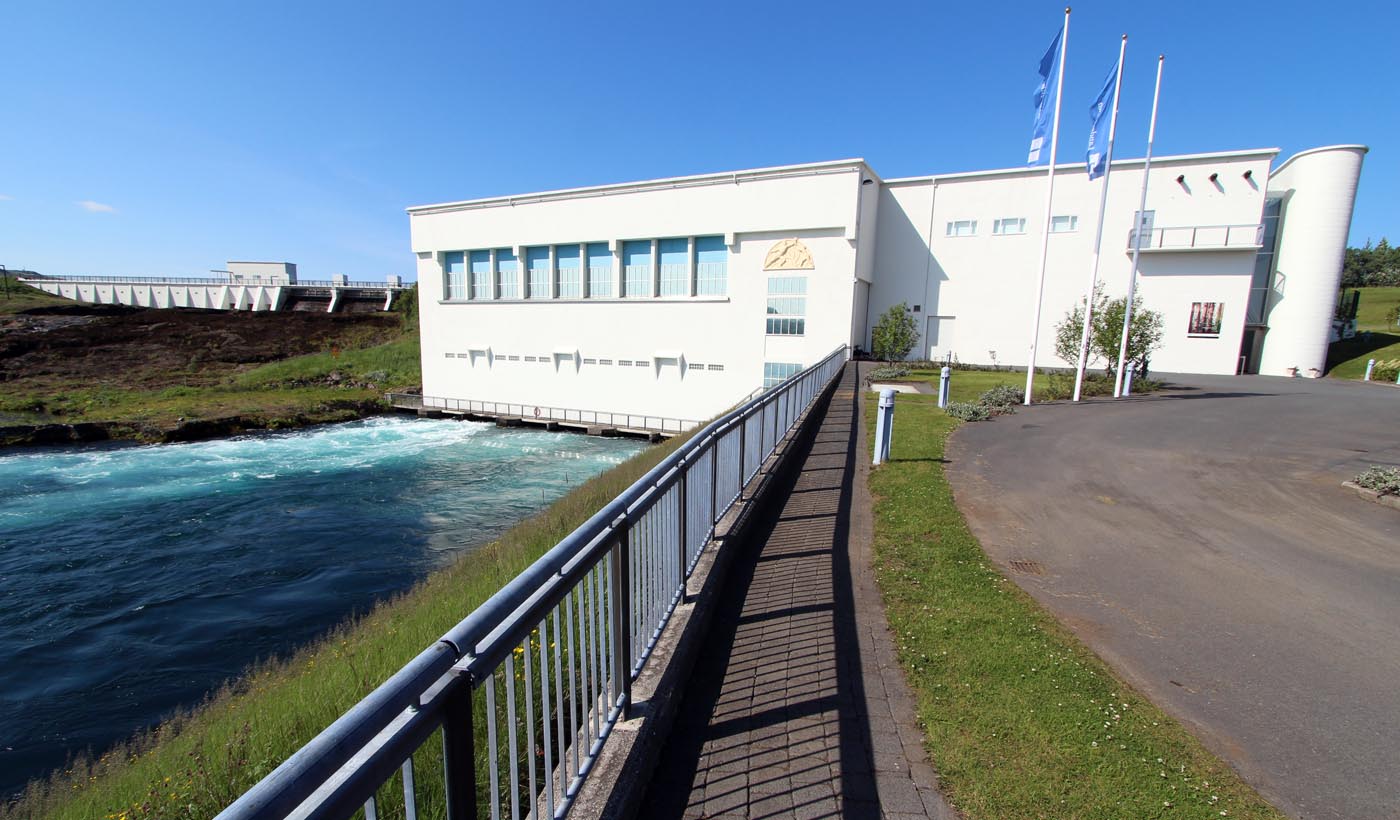
The summer 1978 I got a job at Sogsvirkjanir power stations, about 50 km east of Reykjavik capital. There are three power stations close to each other in the river Sog south of Þingvallavatn lake.
This place was familiar to me because my grandparents lived at a nearby farm, Efri Brú.
For me, as a tanager, this summer was very important. It was the time to decide what I would like to do for a living; a technician, farmer, engineer, or something else. I was not sure.
My job at Sogsvirkjanir was miscellaneous, gardening, cleaning and painting. But what interested me most was working in the power stations when generators were shut down for cleaning and overhauling. As a thin, lithe teenager I was used to go into and work inside places in the generators where older, fatter and stiffer engineers could not access or work. Afterwards I think it was very damaging environment for my health. Working almost every day with 1,1,1Trichloroethane and other toxic liquids with useless mask. But in these days nobody took care of it, and I did not take care of it either.
All this machineries fascinated me so I decided to start learning electrician in the autumn 1978.
The following recording is a combination of five recordings I made in and around Ljósafoss power station the summer 2013. This is the oldest power station in the river and was built on my grandfather’s land 1934. The birdsong in the recording is from a nearby county at Laugarvatn which is my grandmothers’ birthplace. It reminds me of my childhood at my grandparent’s farm, especially in the swamp behind the cowshed, so it is worth to keep it with this recording.
Even though all these sounds gives me some nice memories, they sound also far in my mind. It feels like a memory from my “last life”, not something that happened in my life about 40 years ago. Every thing has changed fast in this county. My grandparents are long gone and almost all farming in the county too. Land in many places has been broken up in peaces for cottages. Farming and animals have disappeared.
Instead of narrow gravel roads, all roads now have asphalt. Fast driving, noisy traffic, day and night seems to be the only human activity.
Sadly, in just thirty years, this beautiful countryside has changed into “American style suburb”
The following recording gives you a flight as a ghost, or a spirit from my grandparents farm to Ljósafoss power station. Your flight goes above and through water, concrete and steel. It starts over the reservoir, then trough the intake, penstock, power house, transformer and to the outflow canal.
The flight ends as it starts with “quiet bird song” far away from the nosy power station.

Miningar frá sumrinu 1978.

Sumarið 1978 fékk ég sumarvinnu við Sogsvirkjanir. Þetta sumar varð mér heldur örlagaríkt, en þá tók ég ákvörðun um að læra rafvirjun. Eftirarandi hljóðmynd var tekin upp sumarið 2013 í og við Ljósafossstöð. Segja má að það sé í raun minningabrot frá sumrinu 1978 og þremur næstu sumrum á meðan ég vann þar við ýmis störf.

Download mp3 file (192kbps / 36,0Mb)

Recorder Sound devices 788
Mics. Sennheiser MKH8040 (ORTF setup)
Pics. Canon EOS-M (more pictures)
Rafn sigurbjörnsson’s picture gallery

Read Full Post »

IMG_3890

About 30km east of Reykjavik capitol is Hellisheiðarvirkjun a geothermal power station. This power station uses energy from drilled wells in the surrounding area.
In the drilling process it is necessary to let the wells “breath” or “blow” for a while. When it happens it is extremely noisy when the energy is wasted into the atmosphere, mostly as a hot steam in mixture with toxic gas like carbon dioxide (CO2), hydrogen sulfide (H2S) and also substantial quantities of hydrogen (H2). Other gases such as nitrogen (N2), methane (CH4) and argon (Ar) are in the gas mixture, but in lesser extent.
The rumbling noise from blowing wells is so loud that it can be easily heard in far distances (up to 20-30km, depends of condition).
It was easily audible when I was on my way east of Reykjavik on a cycle trip last summer. I was cycling Nesjavallavegur (road) when I decided to record this noise. The power station was in about 10 km distance, but the blowing wells were somewhere between in 10-15km distance, probably behind the mountain Hengill.
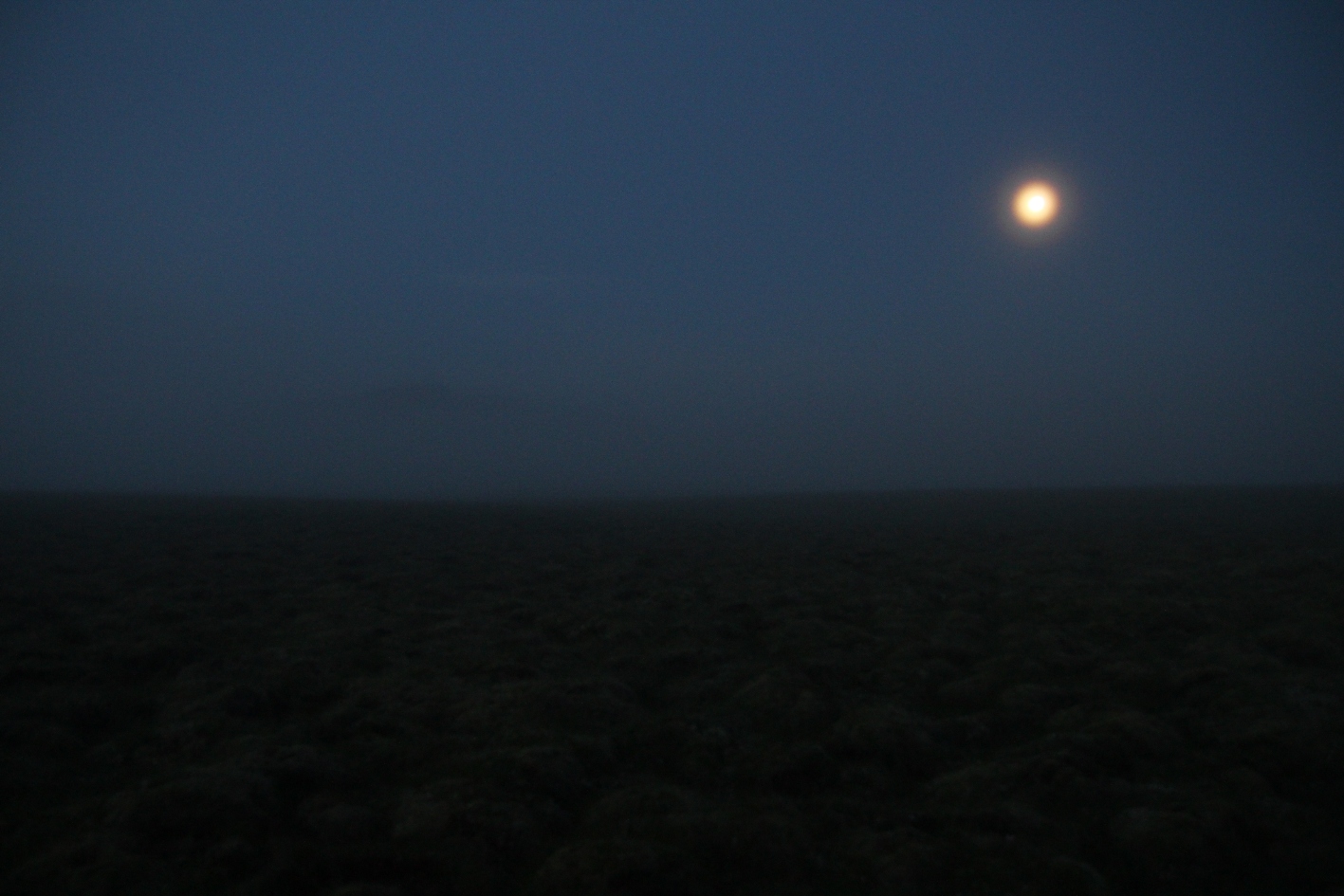
This recording was made at 3am, 24th of July 2013 at Mosfellsheiði. The weather was calm, but cold, very humid and fogy.
Keep in mind, this is a “quiet nature recording” so you should not play it loud. On the field the birdsong was barely audible.

Orkusóun

Hér er á ferðinni upptaka frá því 24. júlí 2013, þegar ég fór í stutt helgarferðalag austur fyrir Fjall. Þegar ég lagði af stað var vel liðið á kvöld og skollin á blaut og köld þoka.
Þegar á Nesjavallaveginn var komið varð ég var við miklar drunur ofan af Hellisheiði en þar blés borhola út orku og eiturgasi engum til gagns. Drunurnar virtust fylla loftið fremur en að koma úr tiltekinni átt svo ímyndunaraflið fékk að blómstra. Það var ekki laust við að maður léti hugann reika, því þar sem maður átti að venjast þögn á þessum tíma sólahringsins voru nú þungar drunur allt um liggjandi sem hér um bil kaffærðu söng sumarfuglanna. Nálægð við helvíti eða heimsendi var manni efst í huga þar sem maður sniglaðist einsamall eftir veginum fremur kaldur og blautur í dimmri þokunni.
Rétt eftir að hæstu hæð Mosfellsheiðar var náð ákvað ég að staldra við og taka upp þetta sérkennilega andrúmsloft sem þarna ríkti þessa júlínótt.

Download Mp3 file (192kbps / 28,2Mb)

Recorder: Sound devices 788
Mics: Sennheiser MKH20 (AB40 setup)
Pics: Canon EOS M (see more pictures)

Read Full Post »

DSC05272

In Iceland it is possible to find many hot springs all over the country. Many of them have optimal temperature for bath and to relax. For centurys people have piled stones and turf around some of this known natural hot springs.
In the beginning of last centuries many of this natural hot springs were used to teach people to swim. Soon, many communities all over the country built real swimming pools of concrete near these springs.
One of these places can be found at Krossholt at Barðastönd, Southwest Iceland. There is Krosslaug, a 12 meters long swiming pool, built in 1948. There is also newly built natural hot tub, build on a hot spring in traditional style. It was the Youth Association of Barðaströnd County who piled this tub with stones, gravel and turf.
From the bottom through the ground of the tub comes the warm water with bobbles that gives relaxing sound while laying there with the ear below the surface. You can hear the bobbles moving upwards trough the gravel deep from the ground under the tub.
This recording was made with hydrophones at 15th of June 2012.
Another interesting recording from Krossholt, nearby place is: Opus for power line, bass, wind and birds.

Krosslaug í Mórudal við Barðastönd.

Á Birkimel við mynni Mórudals, hefur myndast þjónustukjarni Barðastrandar.
Það hefur reynst mér ótrúlega erfitt að afla sögulegra heimilda um þennan stað á vefnum. Því segi ég aðeins það litla sem ég tel mig muna.
Á sjöunda til níunda ártaugar síðustu aldar var þar skóli, félagsheimili, kaupfélagsútibúð og litilsháttar iðnaður. Þar var einnig reynt að koma upp fiskeldi. Það fór á hausinn.
Í dag er staðurinn líklega betur þekktur fyrir ferðaþjónustu. Stéttarfélög eru þar með orlofshús sem og ferðaþjóunsta sem rekin er frá nærliggjandi bæ.
Víða í Mórudal er að finna volgar uppsprettur. Sundlaug var reist við eina slíka í fjörunni neðan við Krossholt 1948. Hefur hún átt það til að fara nokkuð illa í vondum veðrum. Vorið 2011 var laugin tekin í gegn og var þá hlaðinn heitur pottur að ég held yfir volgri uppsprettu fremur en borholu..
Það er ákaflega notalegt liggja í þessum potti í makindum með eyrun undir yfirborðinu og hlusta á volgt vatnið og loftbólur streyma upp úr jarðlögum pottsins. Meðfylgjandi upptaka var gerð í pottaferð 15. júní 2012.
Önnur áhugaverð upptaka sem gerð var við Krossholt er: Tónverk fyrir háspennustrengi, bassa, vind og fugla.

Download mp3 file (192kbps / 28,8Mb)

Recorder: Sound Devices 744
Mics: Aquarian H2a-XLR
Pics. Sony CyberShot DSC-P120 & Olympus 4040 & EOS 30D (see more pictures)

Read Full Post »

060520135027

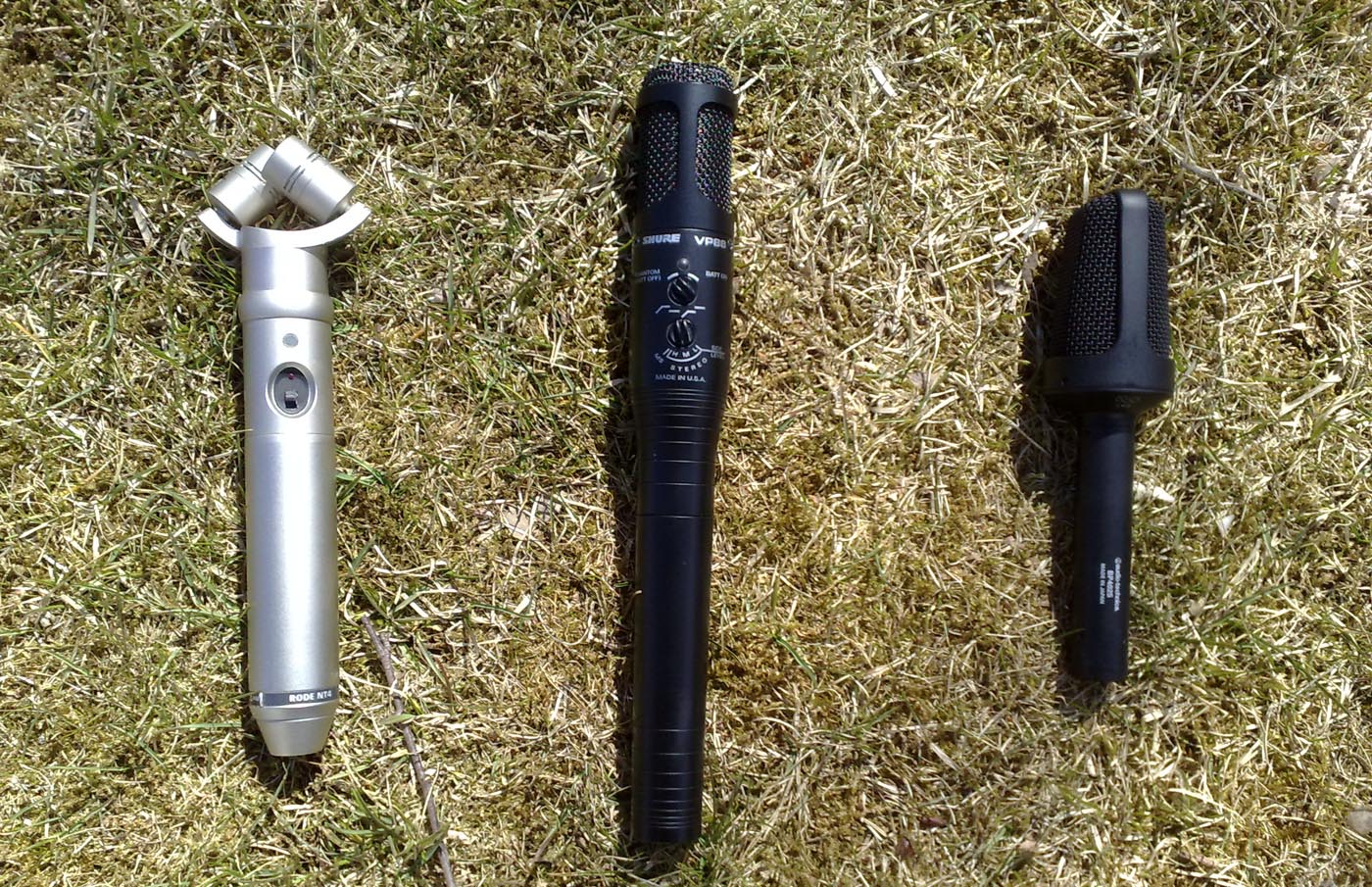
Three stereo microphones noise and sensitivity comparison.
Shure VP88 – Rode NT4 – Audio Technica BP4025

This recordings include a spoken word from pocket radio at very low volume and ticking alarm clock in 1,6m distance. The volume settings on the radio was so low, the sound was hardly audible with bare ears. Noise from radiator pipeline is audible in the background. Miscellaneous bird life is outside and should be also clearly audible.
Keep in mind. This test is only noise and sensitivity comparison. High sensitivity and low noise is VERY important for nature recordings. This comparison does not give any information how this microphones sounds for music recording or how they withstand high pressure sound level.
See spectrogram and pictures
Quality headphones recommended while listen.

Shure VP88, Rode NT4 and Audio Technica BP4025 direct from recorder. All at same gain level at 55dB.

All three recordings are now independently level normalized up to 0dB.

Links to the products:
Shure VP88
Rode NT4
Audio Technica BP4025

Read Full Post »

Seltjarnarnes

Sometimes when I am going to record a specific sound I bring home something totally different.
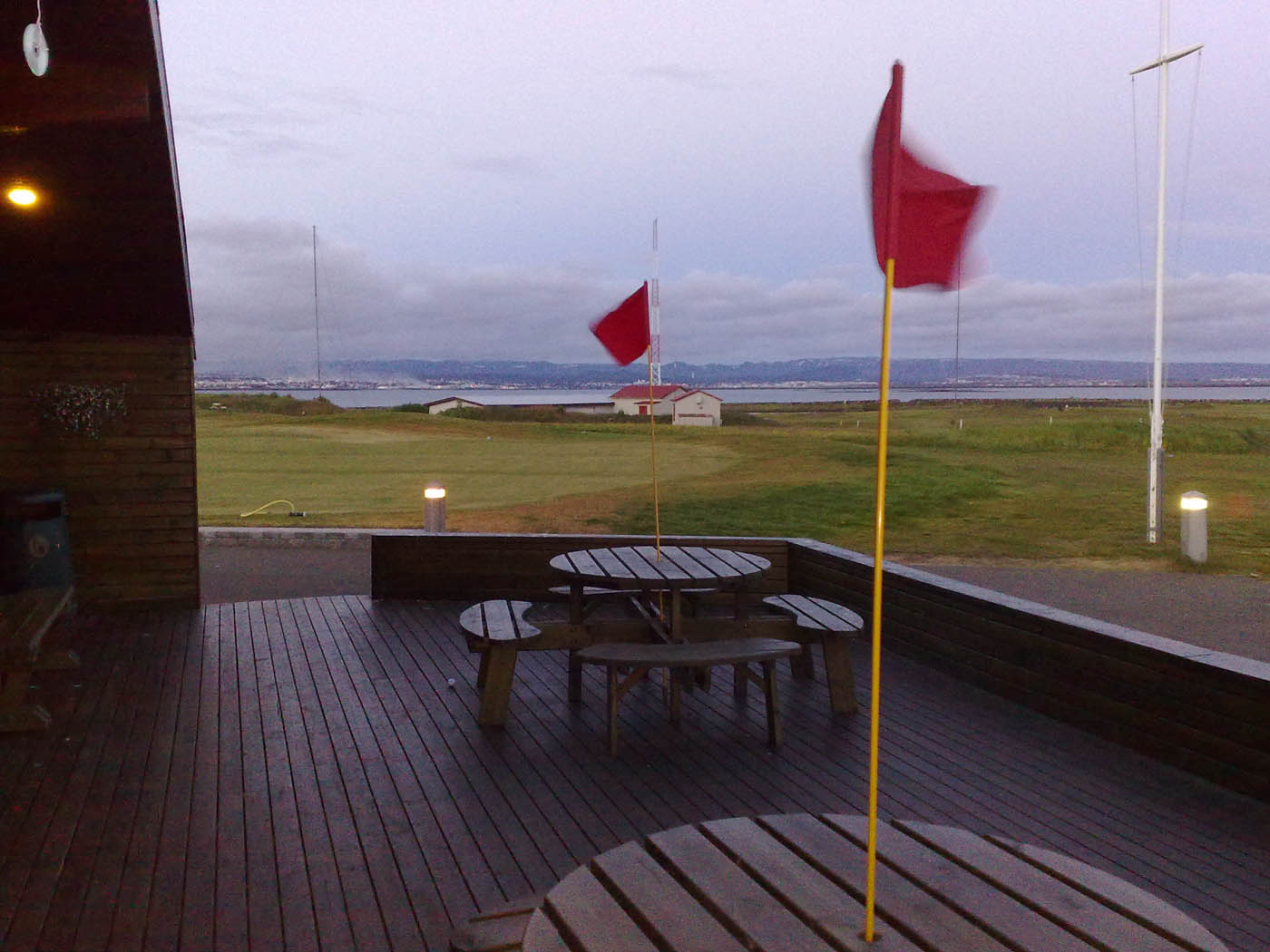
That happened 4th of July 2012. It was a very nice weather, calm and dry, so I made a decision to cycle with my gear to the shore at Seltjarnarnes to record bird sounds and ambiance.
But shortly after I left home the wind started to blow and it got stronger with cold northern breeze . When I arrived to Seltjarnarnes the wind was too much for almost any wildlife recordings. So as usual with most cycle trips like this, I decided to go back.
But before the wind blow me back home again I found a shelter on wooden platform beside a golf clubhouse. And there was an interesting sound. Two golf course flags with poles were flapping and hammering two picnic tables. Their flaps were like an “audio indicator” for the wind waves.
Arctic Tern, Oystercatcher and other bird spices in combination with heavy sea waves at the shore made this all as a great concert.
I stayed there about one hour while I recorded and listened to the concert, watching a thick smoke coming from burning garage in Kopavogur district, seven kilometers away.
Following is twenty minutes of this session.

Fánar í vindi

Ætli það séu ekki í u.þ.b. 80% þeirra ferða sem ég fer til að hljóðrita, að ekkert kemur út úr því. Oftar en ekki er ætlunin að taka upp eitt, en ég kem heim með eitthvað annað. Þá gerist stundum það óvænta að slík hljóðrit koma skemmtilega á óvart.
Eitt af slíkum tilviljunum var hljóðritað 4. júlí 2012.
Logn og blíða var í Austurbænum svo ég ákvað að skjótast út á Seltjarnarnes til að fanga dásamlegt sumarkvöld nærri sjó með fjölskrúðugu fuglalífi. En því nær sem dró Nesið því snarpari gerðist vindurinn og þegar þangað var komið var ekkert veður til að fanga nein rólegheit.
Áður en ég lét goluna feykja mér til baka þá ákvað ég að leita skjóls undir skyggninu við Golfskálann. Þar vanaði ekki hljóðin sem umsvifalaust gripu áhuga minn. Tveir golffánar á nestisborðum hömuðust þar í takt við breytilegan vind. Þegar svo við bættust önnur hljóð frá kríu, tjaldi og öðrum fuglum sem og þungum nið haföldunnar, þá hljómaði þetta eins og skemmtilegt tónverk.
Ég kveikti á upptöku og naut tónverksins í klukkutíma á meðan ég horfði á breytilegan reyk leggja frá eldsvoða í Kópavogi.
Hér má heyra 20 mínútur af þessu hljóðriti.

Download mp3 file (192kbps / 32,6Mb)

Recorder: Sound devices 744T
Mics: RodeNT1a (NOS 90°/30cm)
Pics: Nokia N82

Read Full Post »

Some months ago my plan was to buy Rode NTG3. I was looking for a low noise and better sounding microphone than ME66 I already own. But after some research at home I found this microphone even worse than ME66 for nature recording.
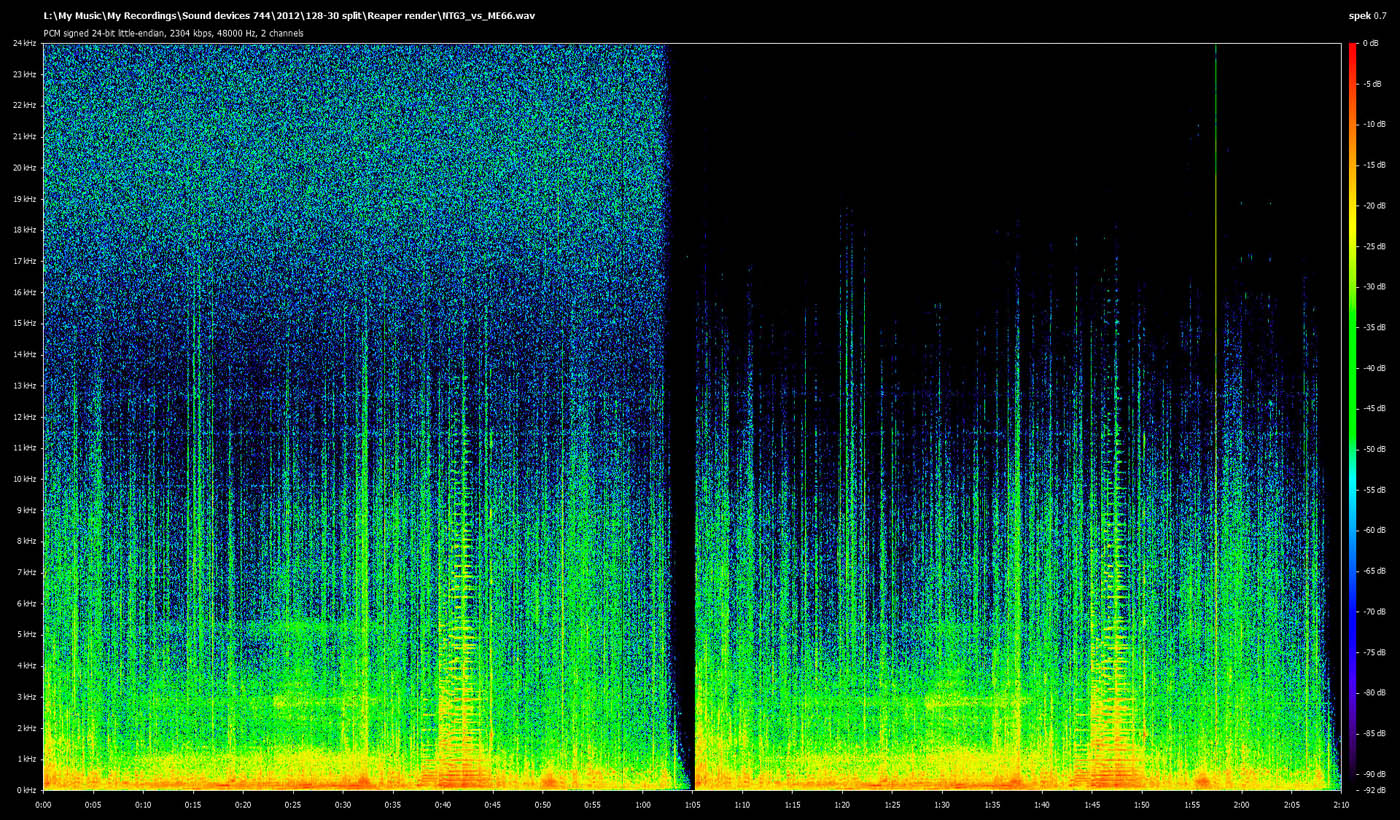
The audible noise and sensitivity between these two mics was almost equal, but NTG3 have noticeably higher low frequency response.
But what surprised me most was all the noise in NTG3. If something, it was even more than in ME66. But spectrogram shows a shocking pictures for NTG3, a white noise in the whole frequency spectrum up to 50Khz. See spectrogram.
This NTG3 was sent back to the shop, but I was never sure if I did some mistakes in this measurements. So last week I vent to the shop and picked up some recording samples on the same NTG3.
The recorder was Sound devises 744 at 24bit/48Khz. NTG3 was in channel 1 and for comparison ME66 was in channel 2. They were laying side by side and the gain was in full position. Input filter for both channels was at 80Hz, 12dB/oct.
It is no doubt. There is some strange white noise in NTG3.
The sound sample below is about two minutes long. First minute is NTG3 and the second is ME66.
This particular NTG3 can be defective, so I am waiting for next supply of Rode NTG3 in the shop.
I will update this post as soon after I have got a chance to test some other NTG3 mics.
See more pictures and spectrogram in this last test.

Conclusion – Summary

The spectrogram looks very bad for NTG3 but the mic is not as bad as it looks. The ME66 datasheets display referred noise as 10dB(A) and the NTG3 datasheets display referred noise as 13dB(A), so  ME66 has lower referred noise than NTG3. This difference is probably what we see on the spectrogram.  This microphones does not have exactly same bandwidth, as the ME66 has a reduced audio bandwidth which in turn reduces the referred noise. The ME66 top end roll off starts around 14Khz (0dB) and is -6dB at 20KHz, NTG3 is +2dB at 14KHz and -2dB at 20KHz.
NTG3 is RF biased microphones designed to withstand high humidity and harsher environments than the ME66 condenser microphone. So while the NTG3 and ME66 are both shotgun microphones they are designed for different operating conditions.
NTG3 would be my choice for most “normal sound pressure” level. But for quiet nature sounds where most audible sounds are in low level and mid-high frequency, I would choose some other mic.
In my opinion Rode NT1a is one of the best.  Sadly NT1a is not a shotgun or small diaphragm condenser that can be fit nicely in a Blimp. But NT1a have only 5dB(A) noise and that makes the whole different for those who don’t like to use noise reduction software.    See solutions how to fit NT1a in Blimp in NOS and XY setup.
For those who are searching for sound quality in NTG3 I recommend this search: http://www.google.com/search?hl=en&q=NTG3+vs+ME66&meta=
Also this one:
http://www.google.co.uk/search?hl=en&q=NTG3+vs+MKH416&meta=

Download mp3 file (192kbps / 3Mb)

Read Full Post »

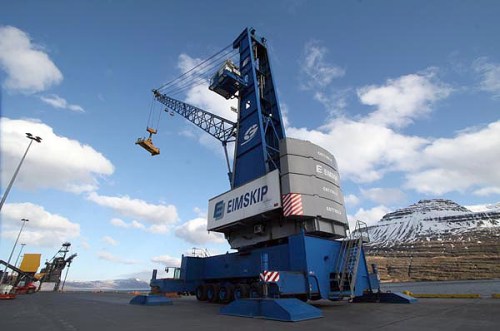
Um miðjan mars 2011 var ég sendur austur á Reyðarfjörð til að sinna viðgerð á Gottwald HMK300E hafnarkrana, öðru nafni Jötunn II. Krana þennan eignaðist Eimskip sumarið 2004. Var hann fyrstu árin í Sundahöfn í Reykjavík eða til ársins 2007. Þá fékk Eimskip það verkefni að sjá um lestun og losun í tengslum við álverið í Reyðarfirði. Jötunn var því sendur austur þar sem hann hentaði vel í verkefnið.
Er hér um að ræða 5. kynslóð krana frá Gottwald. Stendur þessi u.þ.b. 70 metra hái og rúmlega 400 tonna krani á sjö hásingum og 28 hjólbörðum sem skila honum um allt hafnarsvæðið. Gengur hann á díselvél sem keyrir 500KW rafal. Rafmótorar og glussastkerfi sjá svo um hreyfingu kranans sem stýrast af PLC stýringum og tíðnibreytum.
Bilunin lýsti sér með þeim hætti að eftir að unnið hafði verið við lestun eða losun um stund þá kom upp viðvörun á skjá um að spreddi (Gámagripla – Spreader frá Bromma) væri bæði opinn og læstur. Bilunin stöðvaði kranann og varð að endurræsa hann til að halda áfram vinnu. Var þessi bilun farin að ágerast og farin að tefja losun og lestun skipa.
Í ljós kom að “draugaspenna” kom frá spredda. Það varð til þess að liðar fyrir bæði “opin og læstur” skipunina fóru í lokaða stöðu. Tölva í spredda gaf þó ekkert óeðlilegt til kynna.
Ég vissi þó að útgangar spredda eru thýristorar sem gáfu vissar vísbendingar. Eftir nokkrar mælingar fór því að læðast að mér grunur um að koma mætti í veg fyrir bilunina með því að auka örlítið álagið á útgangana. Það reyndist rétt og fór krani að vinna eðlilega eftir að bætt hafði verið við álagið.
Hér heyrast þrjú hljóðdæmi sem voru tekin upp eftir að kraninn var komin í lag og hann var í prufukeyrslu.
Það fyrsta er úr vélarúmi kranans. Það næsta er í stýrishúsi uppi í turni og það þriðja í töfluklefa . Má þar helst heyra í opin-læstur liðanum smella þegar spreddi læsir sig við gám og losar.

________________________________________________

Gottwald HMK300E in duty
Even though machines are often my worst enemy while recording in nature, machines by their own can often make interesting sound. Ward Weis from Belgium remind me some weeks ago I should look for it when I listen on his Washing machine website.
When I am in work I normally need to listen and feel the tools and machines I am working with. I was repair harbor crane in Reyðarfjörður east of Iceland in Mars 2011. I bring with me a recorder and recorded some places in the crane while crane was tested after repair.

Machinery room. Mics are near the hoist gear. Most of the noise comes from hydraulic pump when lifting boom. Then cooling fan on the Hoist motor and the „song“ in the variable frequency and speed in the hoist motor. In background is the diesel motor (in another room). Sometimes are the disk brake clapping.
Sækja mp3 skrá. (196kbps / 6,2Mb)

Tower cabin. Mics are behind the crane operator beside a control cabinet. The open door on the cabinet are sometimes shaking rapidly. Switches are clapping and a radio is playing on low level. Sounds from outside are the hydraulic pump and swivel motor. Diesel engine sounds differently on different load. In more far distance noise comes from container when landing on ground or when spreader is landing on the container.
Sækja mp3 skrá. (192kbps / 4,9Mb)

Electronics room. Mics are between hoist and swivel speed controllers. Most of the noise comes from cooling fans in the controllers. Some switches are clapping.
Sækja mp3 skrá. (196kbps / 1,7Mb)

Recorder: Sound devises 552
Mics: Rode NT4
Pix: Canon D30.  See more pictures

Read Full Post »

« Newer Posts - Older Posts »