Feeds:
Færslur
Athugasemdir

Archive for the ‘Náttúra’ Category

IMG_2200

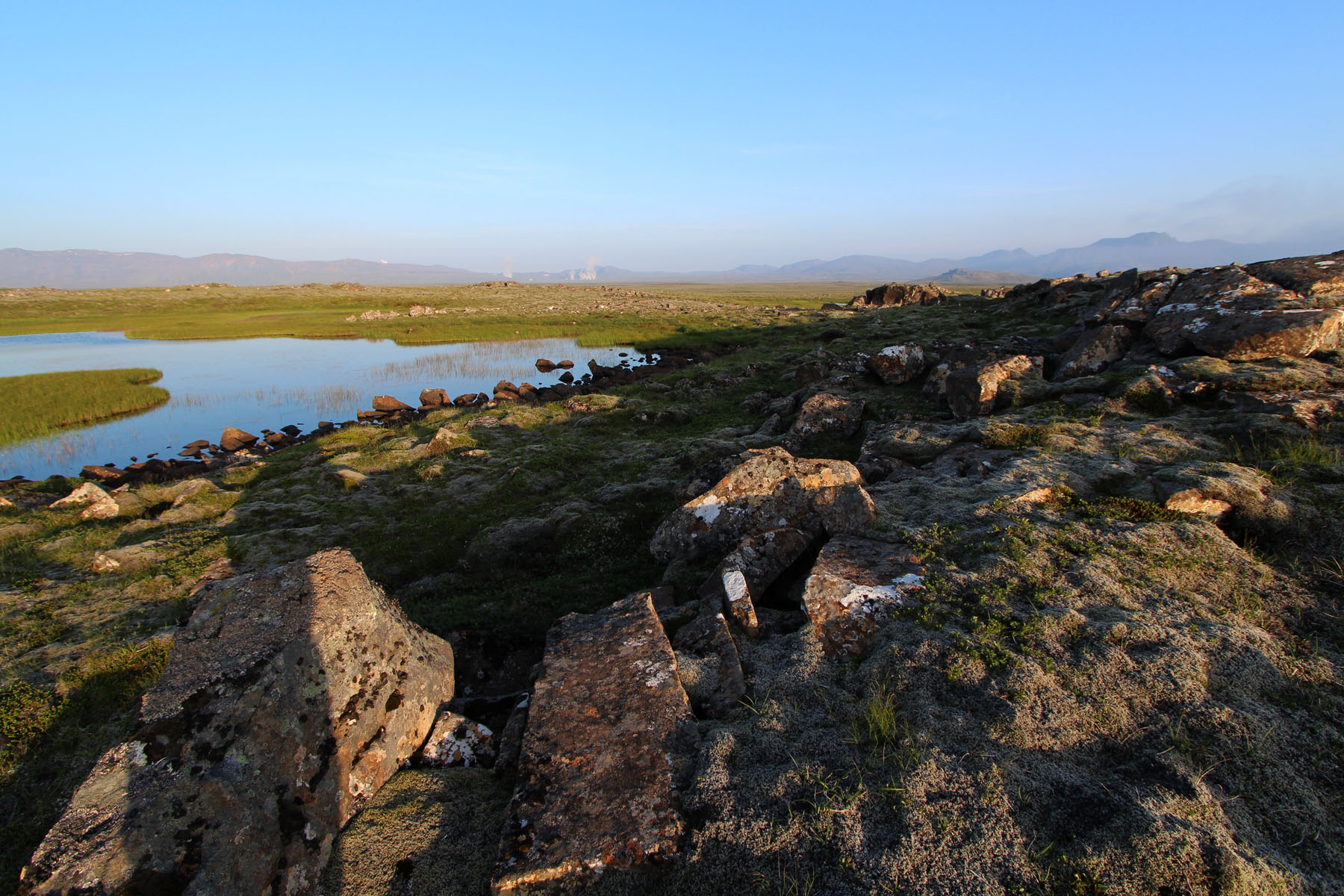
I think I don‘t need to present the nature reserve in Flói in many words. It is a wetland / moors in south of Iceland. I have already published in this blog several hours of „Flói recordings“.
Last spring was cold, wet and windy so I did not spend much time there. But in June, I stayed there for two nights while I recorded several hours of recordings during the nights.
As usual I fell in to sleep in the field during that time, so I did not know what I was recording. Last week when I was searching trough the recordings, I noticed some interesting moments.
At 14th of June the overnight weather forecast was nice and I started to record at midnight. Between 2 and 5 in the morning the wind went down so the field got „quieter“ for far distance sound waves.
I put up Rode NT1 in NOS in the same place as usual and pointed them to north. The soundscape is always spectacular in this place.
This soundscape is probably not what everyone would hear by bear ears. The recording is highly amplified. In this circumstances and Rode NT1, I normally adjust the gain on the recorder between 54-58dB. In this particular recording the gain is increased again in post about +24 dB so the peak level in one moment (at 13:16) reach 0dBf.
Many bird species are audible in this recording like Red throat Diver, Common Snipe, Golden Plover, Dunlin, Whimbrel, Gull, Arctic Tern, Northern Wheatear, Greylag Goose, Whooper Svan, Meadow Pipit and other bird species I have forgotten, or can’t name. Other audible animals like horses and sheep’s are there too.
Background noise is mostly from the Atlantic ocean’s waves along the south coast behind the mics. Then as usual, traffic noise and sometimes a party music somewhere in the county.
Quality open headphones are recommended while listening at low to mid level, or in speakers at low level.

Flói 2015. 1. Hluti

Hér er á ferðinni upptaka úr friðlandinu í Flóa frá því á laugardagskvöldi og sunnudagsmorgni 14. júní 2015. Eins og fyrri upptökur úr Flóa sem finna má hér á síðunni eru hljóðnemarnir ávallt staðsettir á sama stað við sömu tjörn norðan við fuglaskoðunarhúsið.
Í upptökunni má heyra í ýmsum fuglategundum. Má þar nefna lóm, hrossagauk, heiðlóu, lóuþræl, spóa, máfa, kríu, steindepli, grágæs, álft og þúfutitling. Þá heyrist lika í hestum og kindum.
Bakgrunnssuð er einkum brim meðfram Suðurströndinni og einkum við Ölfusárósa. Svo berst hávaði frá bílum og partítónlist einhvers staðar í sveitinni.
Mælt er með því að hlusta á upptökuna í góðum opnum heyrnartólum og á miðlungs- lágum hljóðstyrk.

Download mp3 file (256kbps / 60,7Mb)

Recorder: Sound devices 788
Mics. Rode NT1 (NOS)
Pix. Canon EOS M
Weather: clear sky, mostly calm, between -1 to 4°C
Time: 14 June 2015, between 2 and 3 o’clock
Location: 63.900933, -21.191876

Read Full Post »

IMG_2200

It is easy to go in to a special mood when I think of the Icelandic highland and all the fabulous moments I have experienced there twenty to thirty years ago.
This quiet black desert gives me always a wonderful feeling. Just like I am in love.
Endless fields of weather beaten black and gray gravel, with a soundscape of wind and water, or just a real silence.
River sources and oases are there in many places. This water sources have very often some life. If not just a thin layer of sensitive moss, then grassland with birds, insects and even mammals.
Sadly, many of these wonderful quiet places have been under a threat by humans activity last decades, so they are not anymore this magic places as they were for a lonely cyclist more than twenty years ago. Some of them has been totally destroyed, like huge area in the east highland, like Vesturöræfi 
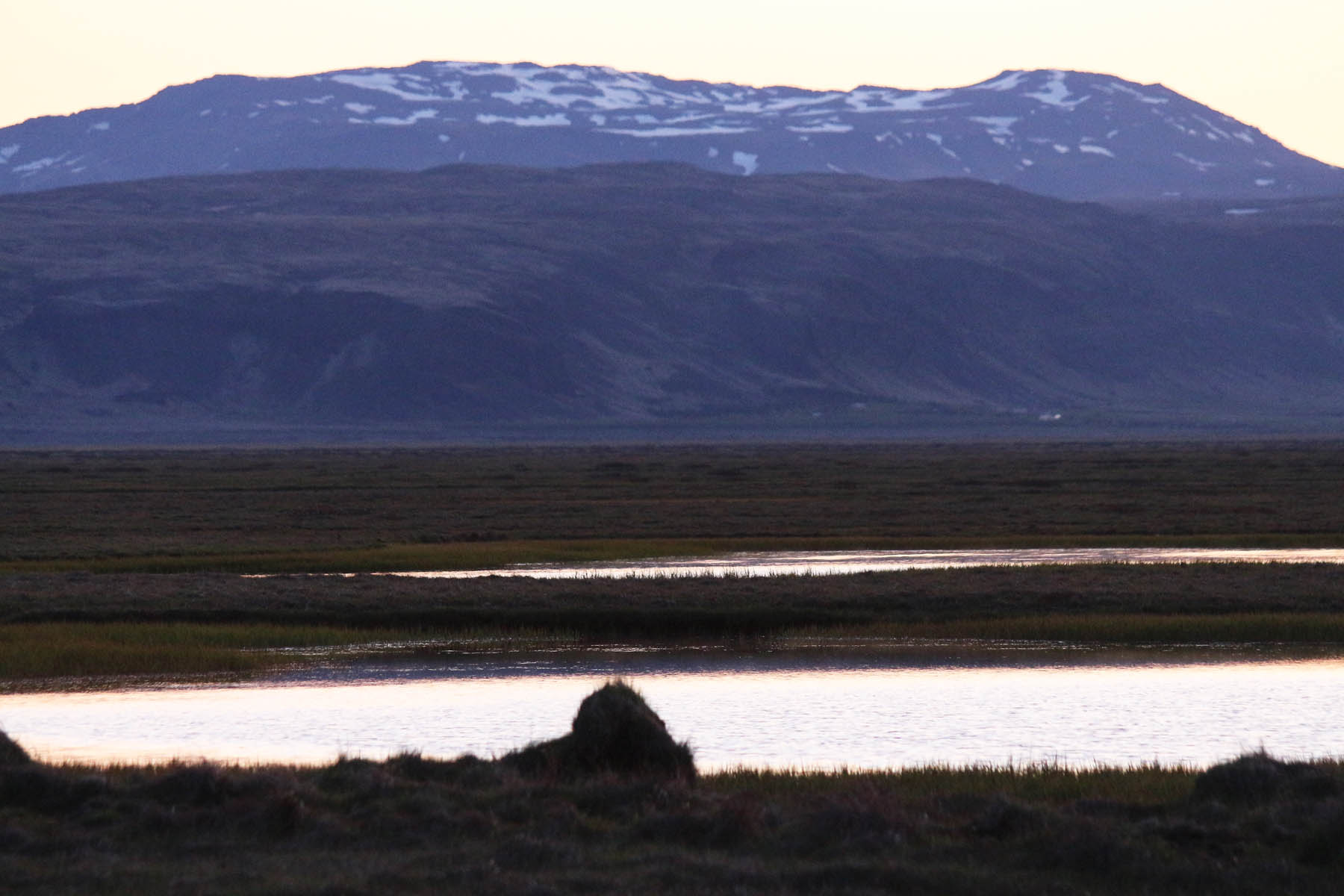
For that reason I will not inform where the following recording was made. I just like to say, it was recorded in the highland in one of my „hidden places“ that still exists and has not been destroyed with hydro power plant, tourists, offroad driving motorist, or human waste.
This recording is very quiet. It contains a dunlin, howling arctic fox, europian golden plover, red necked phalarope and pink footed goose.
The background noise is a waterflow from nearby water source.
This was recorded 17th of July 2015 around two o´clock in the morning.
Quality open headphones are recommended while listening at low to mid level, or in speakers at low level .

Tófuvæl

Það verður að viðurkennast að á þeim árum sem ég ferðaðist sem mest um landið á reiðhjóli, var ég ekki oft var við tófu, hvað þá að heyra í þeim. Eftir að hætt var að greiða mönnum fyrir skott hafa tófuveiðar svo til lagst af. Tófu er því að fjölga og það líklega um allt land því ég er farinn að sjá hana oftar og heyra.
Það gerðist svo í sumar að ég náði að hljóðrita tófuvæl á hálendinu á einum af mínum leyndu eftirlætis dvalarstöðum frá fyrri tíð.
Í upptökunni hér fyrir neðan má heyra í tófu á 5. mínútu. Hún er því miður í talsverðri fjarlægð enda kannski ekki furða með mann í næsta nágrenni. Þótt þetta sé ákaflega þögul upptaka heyrist líka í lóuþræl, heiðlóu og grágæs, sem og óðinshönum í návígi á 18. mínútu.

 Download mp3 file  (256kbps / 52Mb)

Recorder: Sound device 744
Mics: Rode NT1a (NOS)
Pics: Canon EOS M
Weather: Cloudy, drissle rain, calm- up to 8 m/s, around +3¨C
Location: Sorry, no comment

Read Full Post »

IMG_2200

Whatever the mainstream media says, the Paris talk COP21 was a fraud. The outcome was almost nothing, just promises. For me and many others is it too late. The chain reaction has already started so radical actions was needed at last sixteen years ago.
Paris talk was tailor made for investors, corporations and politicians with different needs, probably to make different outcome from previous conferences.
I have wait for political actions all times since beginning of this century so I was really hoping for radical actions after COP21.
The only thing that Icelandic politics brought from COP21 was mostly a nonsense. Icelanders were already doing most of the “solutions” for other reasons. Icelanders will just plant trees and fill up drainage ditches to restore swampland. When investors are ready somewhere in the future, Icelanders will change fossil fuel cars into electric cars.
At the same time Icelanders will increase tourism, even though extreme growth in tourism last decade has already damaged the nature with following pollution and intrusion. Icelanders will also keep on making cheap power for antitrust corporations by building more polluting power stations. They are even going to search for oil well in the North Atlantic ocean.
So as so many earthlings Icelanders intend to continue their greedy and polluting lifestyle.
We are in War against Mother nature like we are all brainwashed by Sauron . We are not only polluting the earth´s atmosphere with poison gasses. We are also polluting the ground, the oceans and fresh waters with dangerous materials and gasses. Irritating audible noise is now everywhere, from the sky, on the surface and in the ocean.
Unpolluted space on our planet is now rarer than gold, in fact more valuable too.
I want to dedicate the accompanying recording to our foolish lifestyle. It was recorded on Mosfellsheiði, east of Reykjavik 25th of July 2013. It should be a quiet place, far away from busy roads in beautiful open landscape. But instead a rumbling noise filled the air from all directions. The recording contains “fossil fuel cars and air traffic”. But the loudest steady noise comes from Hellisheiðarvirkjun, a geothermal power station in more than 10 km distance. It normally blows huge amount of gases into the atmosphere. It is mostly hot steam but is mixed with toxic gases like carbon dioxide (CO2), hydrogen sulphide (HS) and also substantial quantities of hydrogen (H2). Other gases such as nitrogen (N2), methane (CH4) and argon (Ar) are in the gas mixture, but in lesser extent.
Quality open headphones are recommended while listening at mid-low level

Erum við heilaþvegin af Souron?

Loftslagsráðstefnan í París COP21 var mér mikil vonbrigði. Ég hafði vonast eftir mjög rótækum aðgerðum STRAX, en niðustaða ráðstefnunnar varð aðeins í grófum dráttum sú, að fyrirtæki og fjárfestar þurfa að huga að í lotslagsmálum á næstu árum. Það er einfaldlega of seint.
Enginn þorir að takast á við vandann. Menn ætla bara að bíða og sjá hvort það sé nauðsynlegt að gera eitthvað og vonast svo til að tæknin bjargi öllu. Flest okkar hafa séð hversu skelfilegt ástandið þarf að verða svo menn taki nýja stefnu. Nægir þar að nefna mengun í iðnaðarborgum Kína. Fátt bendir til annars en að ástandið verði eins á heimsvísu. Það er því eins og mannkynið sé heilaþvegið af “Sauron
Framtíðn er því ekki beinlínis til að gleðjast yfir. Því vill ég tileinka upptöku hér fyrir neðan viðfangsefninu. Meðfylgjandi mynd er tekin á upptökustað. Allt virðist þar í fljótu bragði óspillt og ómengað. En það er ekki allt sem sýnist. Í loftinu er óvenju mikið af óheppilegum ósýnilegum gastegundum af mannavöldum eins og frá Hellisheiðarvirkjun.
Hljóðritið gefur aðeins til kynna hljóðmengun á stað þar sem ríkja ætti “þögn” ef mannfólkið hefði haft vit og rænu á því að þróast í sátt og samlyndi við Móður náttúru.
Mælt er með því að hlusta á upptökuna í góðum opnum heyrnartólum og á miðlungs- lágum hljóðstyrk.

Download mp3 file (256kbps / 50Mb)

Recorder: Sound Devices 788
Mics: Sennheiser MKH20 (AB40)
Pics: Canon EOS-M (see more pictures)
Weather: Calm, Sunny, ca. 14°C at 20:00 o´clock
Location: 64.110946, -21.541311

Þeir sem vilja fræðast meira um Loftslagsmál geta hlustað á útvarpsþáttinn Þræði á Rás 1.
En dagana 28. nóvember, 5. og 12. desember 2015 var fjallað um loftslagsmál og ráðsetnuna í París sem þá stóð sem hæst.

Read Full Post »

IMG_2200

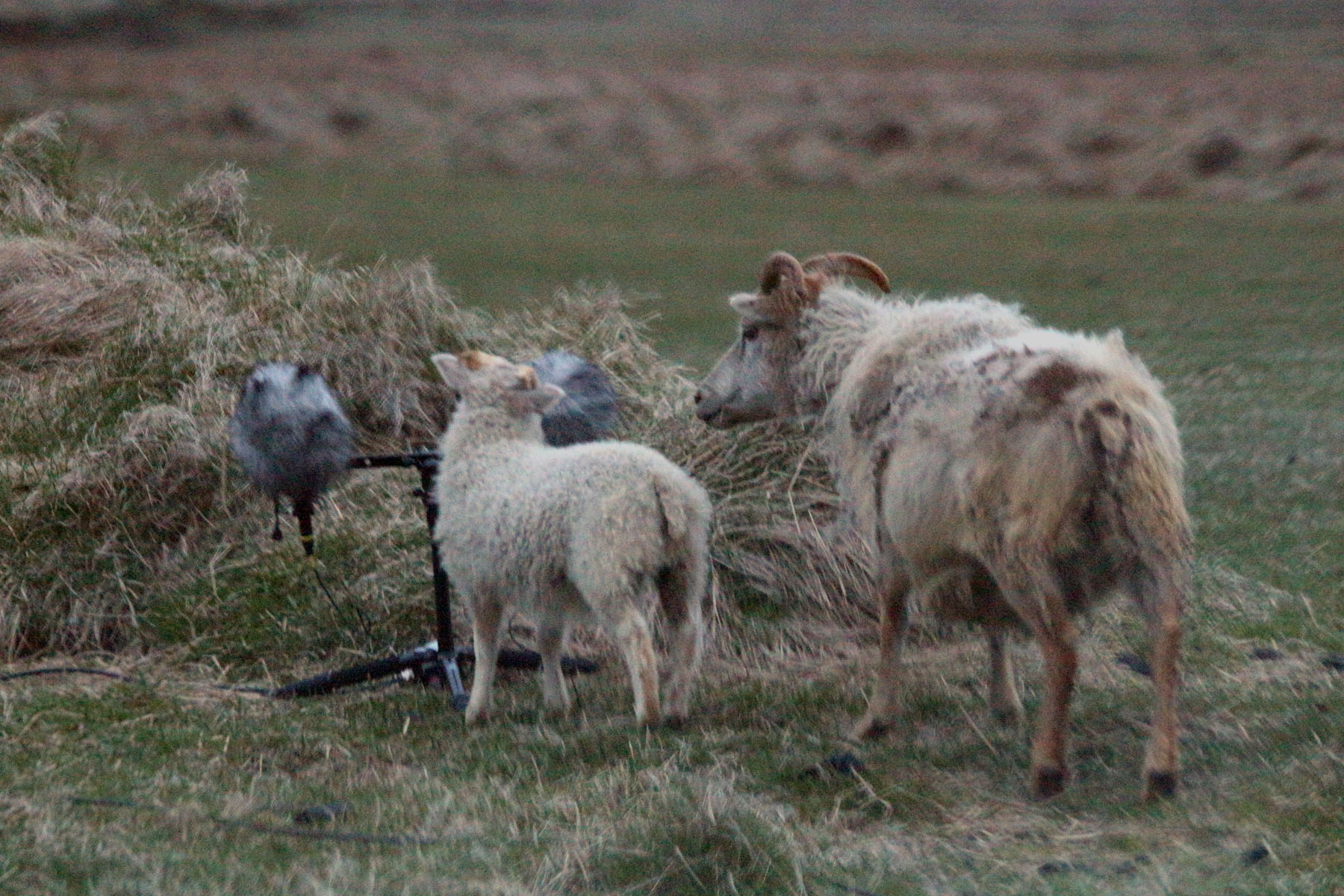
My favorite recordings are those who are many hours long. Even in places where I hear „nothing“, I will more often end up with expressively moments. Here is one of these moments when curious sheeps are sniffing, licking and biting the microphones. Not very interesting, but anyway the loudest part of seven hours long recording. It was recorded in Álftaver, in the south east south of Iceland, around midnight, 4th of June 2015.

Forvitnar kindur

Mitt skemmtilegasta viðfangsefni eru langar upptökur úti í náttúrunni. Jafnvel þó fátt makrvert heyrist, þá er oftar en ekki eitthvað áheyrilegt í þessum upptökum. Hér er ein slík uppákoma þegar rolla og lambrútur snuðra við hljóðnemasettið. Þetta er ekki merkileg upptaka en engu að síður háværasti parturinn úr sjö klukkustunda langri upptöku. Þessi hljóðpartur var tekinn upp um miðnætti í Álftaveri þann 4. júní 2015.

  Download mp3 file (256kbps / 30,8Mb)

Recorder: Sound Devices 788
Microphones: Sennheiser MKH20 (AB40)
Pix Canon EOS-M
Rec. Location: 63.522821, -18.351570
Weather: ca. 4°C, calm (SW 2m) cloudy

Read Full Post »

IMG_5077

This recording is almost straight forward from the recording I posted about a year ago “Dawn in Stafholtstungur, part 1”.
Now the traffic in the county increase slowly from previous recording, but all the time it is possible to listen to the birds activity in details around the recording place.
This was recorded the 18th of October 2013, between 6 and 7 in the morning near the farm Arnarholt.
Quality headphones are recommended while listening at low level in relaxed position.

Dögun í Stafholtstungum, annar hluti

Hér er á ferðinni  svo til beint framhald af upptöku sem fór á vefinn fyrir um ári síðan; “Dögun í Stafholtstungum, fyrsti hluti”.  Heyra má að umferð eykst í sveitinni  þar sem klukkan er farinn að ganga sjö.  Gera má ráð fyrir að það heyrist í sumum bílum, þá líklega flutningabílum, um langan veg  frá Norðurárdal suður til Borgarfjarðar. En þegar þögnin er sem mest er vel hægt að heyra í fuglum  athafna sig í smáatriðum nærri upptökustaðnum.
Upptakan var gerð við bæinn Arnarholt þann 18. október 2013
Mælt er með því að hlusta á þessa upptöku í góðum heyrnartólum og á lágum hljóðstyrk um leið og slakað er á í þægilegum stól eða rúmi.

Download mp3 file (256kbps / 60Mb)

Recorder:  Sound devices 744
Mics: Sennheiser MKH20 (AB40)
Pix: Canon EOS M
Rec. location: 64.672593, -21.629240
Weather: Clear sky, calm, -4°C

Read Full Post »

IMG_4449

The 10th of July 2015 I visited Ásbyrgi national park, in the north east Iceland.
I arrived around 9 pm. The weather was rather cold, with light drizzle rain. However there was a sport game on the old camp side held by the local community. Calls, yell and sheers from audience sounded fantastic in the echo from the surrounding cliffs. Mixed with the birdsong from the forest and the cliffs above it sounded like I was in another world.
I found a good place to record this amazing soundscape.
Soon I noticed a boring noise in the background from petrol power generator so the recording was shorter than I hoped .
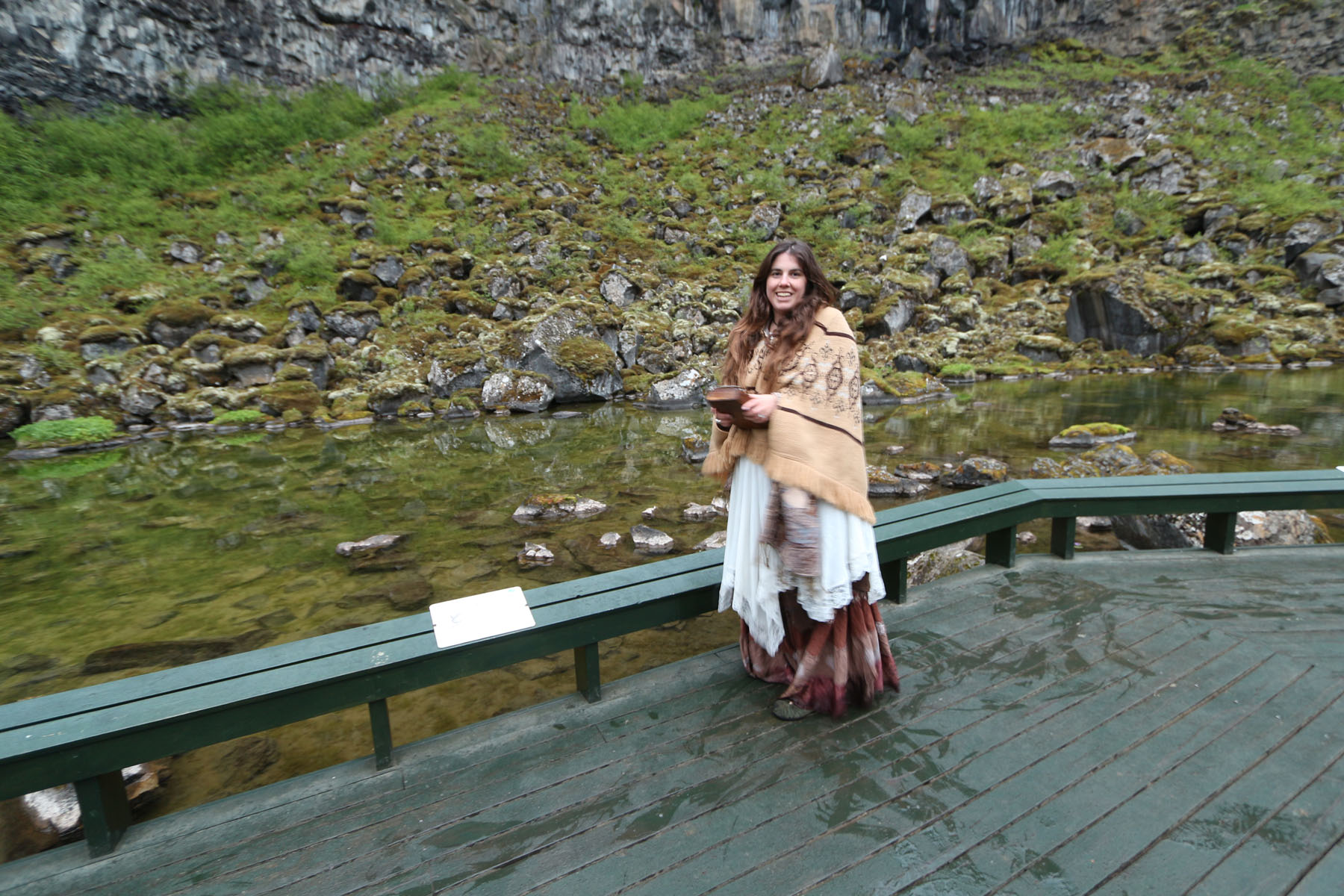
When I came back to the car park the sport game was finished and the people were leaving the place. I heard someone in the crowd playing on Mbira thump piano. It came from female in traditional dress. Her instrument sounded nice in this place, so I enjoyed listening while I was packing my gear in the car.
Some Icelandic male in the crowd called after her: ‘Where are you from?“
„I am from everywhere“ she repleted.
Funny answer, I thought and started to listen to the conversations. Why not record her while she was playing?
She gave me a permission, so we took a walk to Botnstjörn pound in the bottom of Ásbyrgi.
Her name is Jessica Rose, with nickname Fairy.
I did not dare to ask her about her nationality, but her English was from the west, maybe from Canada, or north east USA. She was traveling in Iceland with her sister and two friends.

Fairy in Ásbyrgi

Um miðjan júlí 2015 kom ég við í Ásbyrgi. Ég hafði gefið mér nægan tíma þar árið áður svo ég ætlaði ekki að að eyða þar miklum tíma heldur fara á aðra staði í þjóðgarðinum sem ég hafði „hljóðstað“ á.
Ég kom á bílastæðið í botni Ásbyrgis um kl. 21. Á gamla tjaldsvæðinu stóð yfir íþróttamót. Það var því óvenju mikið af bílum og fólki á svæðinu. Hvattningarköll áhorfenda bergmáluðu sérkennilega milli klettanna í bland við fuglasöng úr skóginum og fýlahjal ofan úr klettunum. Ég rauk því til og fann mér upptökkustað. En það leið ekki á löngu að suð frá bensínrafstöð á keppnissvæðinu fór að pirra mig. Upptakan var því styttri en til stóð.
Þegar á bílastæðið var komið var fólk að streyma af mótssvæðinu. Heyri ég þá að einhver spilar á þumalpiano sem hljómaði skemmtilega á þessum stað. Var þar á ferð dama að nafni Jessica Rose sem vildi láta kalla sig Fairy. Var hún þarna í félagsskap með systur sinni og tveimur öðrum vinum á ferð um landið.
Ég stóst ekki mátið. Ég fékk leyfi hjá henni til að taka tónlist hennar upp og var það gert á pallinum við Botnstjörn.

Download mp3 file (256kbps / 48Mb)

Recorder Sound devices 788
Mics: Rode NT1a (NOS) & Sennheiser MKH8020/8040 (ORTF)
Pic: Canon EOS M
Recording location: 65.998557, -16.513076
Weather: Drizzle rain, calm and about 9°C

Read Full Post »

IMG_3303

The Ófeigsfjarðarflói is divided into three fiords, furthest east is Ingólfsfjörður, in the middle is Ófeigsfiörður, and furthest west is Eyvindarfiörður. Those fiords were named after three brothers, the sons of the Norwegian Herraudur White Cloud (Herraauður Hvítaský) , who settled there. According to the land registry of 1706 the farm in Ófeigsfiörður was abandoned, but soon afterwards it was re-inhabited. The register also states, that the most important advantages of the property were seal hunting, driftwood collecting and processing, eiderdown and the winter grazing on the shoreline. The greatest disadvantages were the long and hard winters and the long and dangerous way to the nearest church. The farm was abandoned in the sixties, but the driftwood and the eider colonies are exploited every summer.
The eiderdown is mainly collected on the islet Hrútey, just off the headland Hrúteyjarnesmúli, and also around the farmhouses. Sustenance fisheries were also practiced during the centuries and the shark fishing was an important enterprise until 1915.
During Catholic times a prayer chapel stood in Ófeigsfiörður. Some geothermal activity was spotted in two places on the property.
Nowadays travellers use the nice camping grounds in Ófeigsfiörður. Hikers in the northern Strandir area use them in the beginning or at the end of their hiking tours. The closest you get to Ófeigsfiörður by car is Eyri in Ingólfsfiörður, but a 4wd track continues all the way.
Following recording was recorded nearby the camping side.
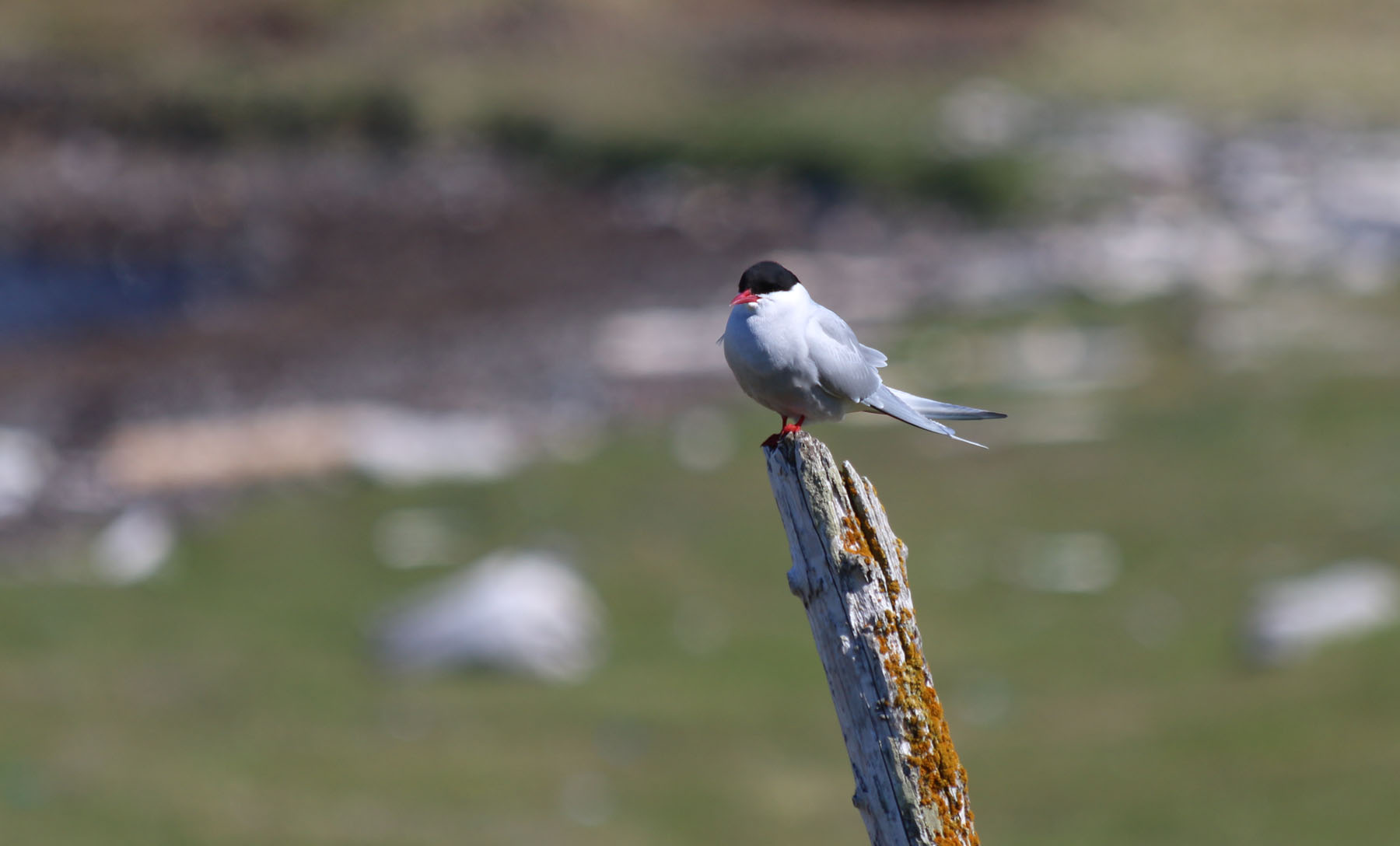
In the recording an Arctic tern is constantly attacking the fury microphones. But the battle last for only twenty minutes so the recording ends in a peaceful sonic experience.
Quality open headphones are recommended while listening at mid-level

Árás í Ófeigsfirði

Hér er á ferðinni upptaka sem tekin var upp við tjaldsvæðið í Ófeigsfirði, síðdegis þann 25. júní 2015.
Kría gerir ótal árásir á óboðinn gest við hreiðurstæð sitt. Árásirnar standa yfir í u.þ.b. 20 mínútur en eftir það fellur allt í dúnalogn og við tekur hljóðmynd sem er hljóðlát og draumkennd.
Mælt er með því að hlusta á upptökuna í góðum opnum heyrnartólum og á miðlungs hljóðstyrk.

Download mp3 file (224kbps / 30Mb)

Recorder: Sound devises 744/302
Mics: Sennheiser MKH8020/8040 (Parallel ORTF)
Pix: Canon EOS M
Recording location: 66.049999, -21.702376
Weather: Around 12°C , Calm, dry and sunny.

Read Full Post »

IMG_7641

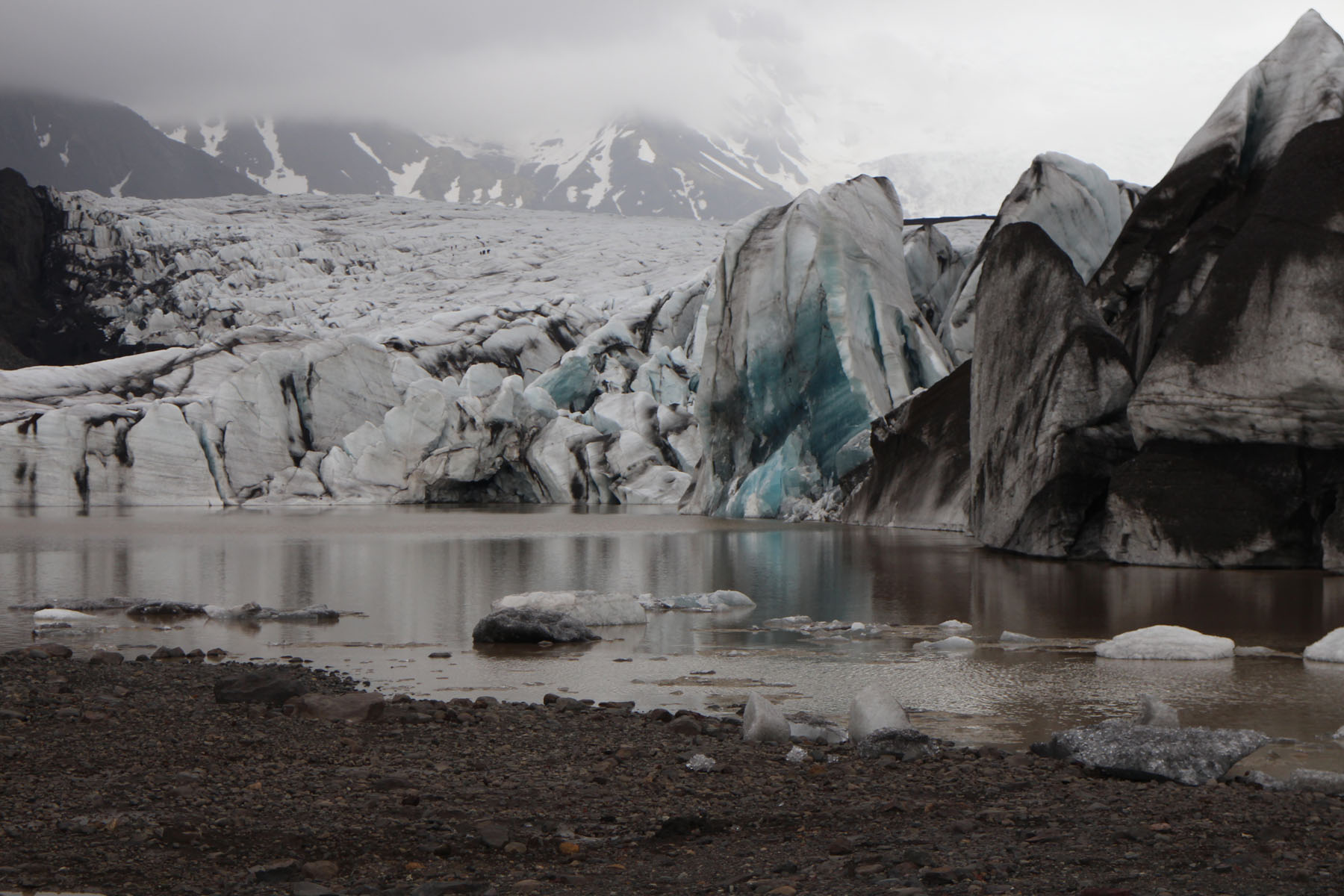
Vatnajökull is the largest ice cap in Europe by volume (3,100 km³). Vatnajökull has around 30 outlet glaciers (icefall) flowing from the ice cap. Svíafellsjökull is one of them.
Glaciers are not a playground for everyone. They have its own weather system and the gravity force will destroy everything that get lost in the ice.
Two British students lost their lives 1953 in a storm which lasted for 10 days on the glacier. It was not until 2003 that some of their equipment was found, carried forward with the movement of the outlet glacier. No human remains were found.
Two German tourist have been missing since 1st of August 2007 when they were on a hiking trip on Svínafellsjökull. Nobody knows what really happened but it is most likely that they fell in a swallow somewhere on the glacier, but their equipment was found in a small valley, high in the nearby mountains.
All glaciers have been shrinking fast last decade. That can be easily seen at the end of Svínafellsjökull witch now has a big glacier lagoon that did not exist few years ago.
As glaciers the glacier lagoons can be also dangerous. Icebergs can suddenly fall off the icefall and make huge waves in the lagoon, also when icebergs turns around or brake down in a parts.
I got in touch of these forces when I was recording the lagoon under Svínafellsjökull, 23rd of May 2014. I hid the equipment from other tourist in a landslide nearby and about two meters above the lagoon surface. Two Aquarian hydrophones where placed in the lagoon and a pair of MKH20 was used to pick up the sounds above the lagoon. The idea was to record in two or three hours.
I was in another place with my second recorder to record a sound close by the glacier.
After one and half hour I suddenly hear a big „bang“ with a long powerful echo from nearby mountains. All the icebergs on the lagoon suddenly moved around as a beans in a boiling pot.
I ran to the recorder´s place on the other side of the lagoon. The bag with the recorder was floating between the Icebergs so it was no problem to locate it in the muddy water. I disconnect the battery and took it inside to dry it as fast as I could. But nevertheless, it had several malfunctions since this drowning.
I am not sure what really happened. The flood line does´t goes all the away to the recorder´s place. I think it is most likely that some icebergs pulled the recorder by the hydrophones into the lagoon.
Thanks to Sound Devices in US and the reseller in Iceland (Pfaff-Borgarljós and Bragi Kort) I got a new recorder for a very nice price. Most of the loss was then covered by the insurances.
Update: In late summer 2020, I took the recorder apart, piece by piece, and cleaned it. It is now in top condition.

Flóðbylgjan við Svínafellsjökul

Jöklar og umhverfi þeirra getur verið hættulegt þeim sem það ekki þekkjir. Jöklarnir eru síbreytilegir og hafa sitt eigið veðrakerfi. Því ber að umgangast þá með varúð. Skemmst er að minnast hvarf tveggja þjóðverja á Svínafellsjökli þann 1. ágúst 2007 .
Mér var það svo sem lika ljóst að jökullón geta verið hættuleg þann 23. maí 2014 þegar ég staðsetti upptökutæki við jökullónið neðan við Svínafellsjökul. Tveir Aquarian vatnahljóðnemar voru staðsettir ofan í lóninu og aðrir tveir MKH20 hljóðnemar ofan við lónið. Sjálfur fór ég með annað upptökutæki til að hljóðrita upp við jökulinn sjálfan.
En líklega er aldrei of varlega farið. Eftir u.þ.b. eina og hálfa klukkustund kvað við mikill hvellur frá jökulsporðinum sem bargmálaði í fjöllunum ofan við jökulinn. Stuttu síðar fór allt jökullónið á hreyfingu eins og iðandi suðupottur. Mér varð því ljóst að upptökutækið við lónið gæti verið í hættu. Hljóp ég því sem fætur toguðu að staðnum, en allt kom fyrir ekki. Tækið var komið út í lónið og flaut þar í tösku milli ísjaka. Eftir að hafa þrifið það og þurrkað kom í ljós að tækið hafði bilað varanlega eftir þessa sundferð.
Allt bendir til þess að ísjaki hafi dregið tækið í lónið á vatnahljóðnemunum því flóðlínan hafði ekki náð upp að staðnum þar sem tækið hafði staðið. En skaðinn var skeður sem leytist þó á endanum þokkalega farsællega þó tjónið hafi verið eitthvert. Með óútskýranlegum hætti vistaði upptökutækið upptökuna áður en það drukknaði. Það sem hér má heyra eru síðustu andartök tækisins.
Síðla sumars 2020 tók ég upptökutækið í sundur, stykki fyrir stykki og hreynsaði það. Það er nú í topp standi.

Recorder: Sound devices 788
Mics: Aquarian H2n-XLR & Sennheiser MKH20 (AB40)
Pics: Canon EOS-M (See more pictures)
Recording location: 64.007509, -16.883081
Weather: Calm, cloudy, around 9°C

Read Full Post »

IMG_8472

Jökulsárgljúfur canyon in Vatnajökull National Park is situated in the north of Iceland near the river Jökulsá á Fjöllum. In the middle of Jökulsárgljúfur, between Dettifoss waterfall and Ásbyrgi canyon, is Vesturdalur valley.
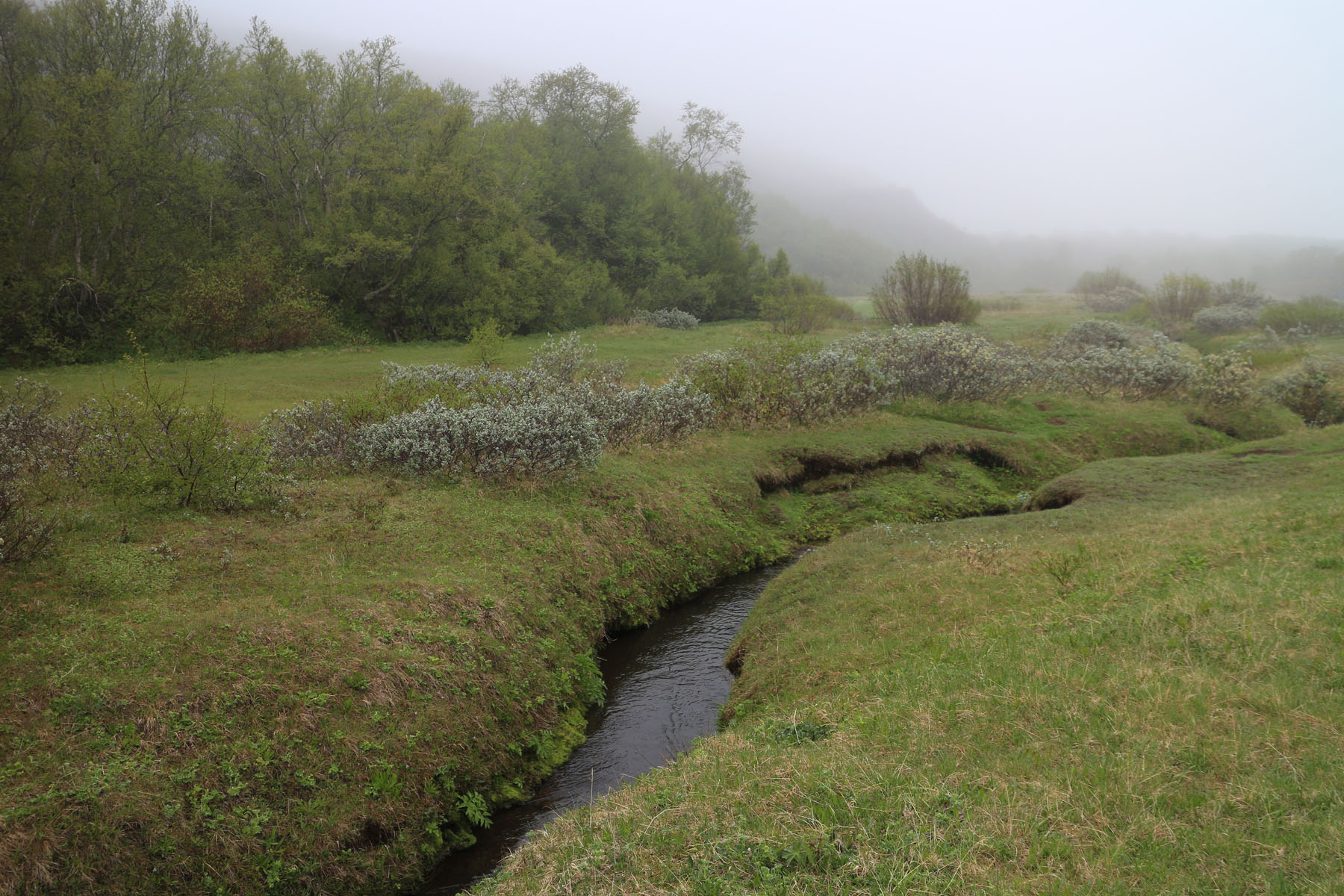
Vesturdalur is mostly surrounded with steep cliffs with luxuriant flat bottom. Through the valley flows a small creek, Vesturdalsá, on its way to the river Jökulsá á Fjöllum.
The first week in June 2014 I arrived there on a foggy night and placed the microphones close beside the creek. The soundscape in the fog was particular. The rumble sound from Jökulsá River about 3 km away, filled the air with extreme murky mysterious power. But all around me was a beautiful bird song that followed me in to the sleep.
This recording is several hours long so it is most likely that more of this recording will be available online someday.
Thanks to the Friends of Vatnajokull who made this recording trip possible.
Quality headphones are recommended while listening at low level.

Vestudalur við Jökulsá á fjöllum

Þann 8. júní 2014 eftir miðnætti kom ég í Vesturdal við Jökulsárgljúfur. Talsverð þoka var á svæðinu svo skyggni var fremur lélegt. Mikil frðsæld var í dalnum enda mjög fáir á svæðinu. Fjölskrúðugur fuglasöngur kom úr öllum áttum, en loftið var þrungið drungalegum drunum frá Jökulsá á Fjöllum í austri. Áður en ég lagðist til svefns fann ég stað fyrir hljóðnemana við bakka Vesturdalsár sem liðaðiðst hljóðlega um dalinn.
Um leið og tækið var komið í gang leið ekki á löngu þar til ég var kominn í draumheima með notalegan fuglasöng í eyrunum næstu klukkustundir fram undir morgun.
Þessa upptöku má þakka samtökunum Vinum Vatnajökuls sem gerðu það kleift að af þessari upptökuferð gat orðið.
Mælt er með því að hlusta á upptökuna í góðum heyrnartólum og á lágum hljóðstyrk.

Download mp3 file (256kbps/51Mb)

Recorder: Sound Device 744
Mics: Sennheiser MKH20 (AB40)
Pics: Canon EOS M (See more pictures)
Recording location: 65.933496, -16.555915
Weather: Calm, fog, around 6°C

Read Full Post »

IMG_8941

Everyone who has travelled on road no.1 between Höfn and Djúpivogur in the east Iceland know the road at Hvalnes- and Þvottárskriður. These places are a huge mountain landslide with cliffs above and below the road. Many days when the weather is bad, with heavy rain or strong wind it can be dangerous to pass the road trough this landslide. Some days the road is closed.
This road at Hvalnes and Þvottárskriður was built 1981, but before, the road lied through difficult valley, high in the mountain named Lónsheiði.
Until 1981 it was unusual to pass this landslide, even the beautiful coast below.
The north Atlantic ocean surf is heavy on the miscellaneous beach which has beautiful gravel beaches and huge cliffs and rocks.
Just below Þrottárskriður landslide is Stapavík, a beautiful gravel beach with high rock in the middle, like a huge stoned giant or troll. Along the beach are low cliffs where fresh water seeps out between the geologic age and wets the rocks.
The following recording was made near one of this place where the fresh water is dripping of the rock down to the gravel below.
Quality headphones are recommended while listening at medium level.

Lindin í Stapavík

Fyrir neðan Þvottárskriður, austur af Hvalnesskriðum, er nokkuð löng malarfjara sem heitir Stapavík. Þessi vík eða fjara skartar gríðarstórum stapa sem minnir á steinrunnið tröll. Stapavík er meira og minna umgirt tiltölulega lágum klettum og skriðum. Þar má víða sjá ferskt vatn streyma undan jarðlögunum og niður klettana.
Upptakan hér fyrir neðan var tekin upp á einum slíkum stað í júní 2014 þar sem vatnið seitlar niður klettavegginn og niður í fjörumölina. Í bakgrunni, bak við malarkamb, má heyra í þungri úthafsöldunni þegar hún skellur á fjörunni í gríð og erg, eins og hún hefur gert á þessum stað í árþúsundir.
Mælt er með því að hlusta á þessa upptöku í góðum heyrnartólum og á miðlungs hljóðstyrk.

Download mp3 file (192Kbps/31,15Mb)

Recorder: Sound deivices 744
Mics: Audio Tecnica AT4022 (binaural)
Pics: Canon EOS M (see more pictures)
Recording location: 64.476665, -14.492781
Weather: Calm, cloudy, around +12°C

Read Full Post »

« Newer Posts - Older Posts »