In Iceland it is possible to find many hot springs all over the country. Many of them have optimal temperature for bath and to relax. For centurys people have piled stones and turf around some of this known natural hot springs.
In the beginning of last centuries many of this natural hot springs were used to teach people to swim. Soon, many communities all over the country built real swimming pools of concrete near these springs.
One of these places can be found at Krossholt at Barðastönd, Southwest Iceland. There is Krosslaug, a 12 meters long swiming pool, built in 1948. There is also newly built natural hot tub, build on a hot spring in traditional style. It was the Youth Association of Barðaströnd County who piled this tub with stones, gravel and turf.
From the bottom through the ground of the tub comes the warm water with bobbles that gives relaxing sound while laying there with the ear below the surface. You can hear the bobbles moving upwards trough the gravel deep from the ground under the tub.
This recording was made with hydrophones at 15th of June 2012.
Another interesting recording from Krossholt, nearby place is: Opus for power line, bass, wind and birds.
Krosslaug í Mórudal við Barðastönd.
Á Birkimel við mynni Mórudals, hefur myndast þjónustukjarni Barðastrandar.
Það hefur reynst mér ótrúlega erfitt að afla sögulegra heimilda um þennan stað á vefnum. Því segi ég aðeins það litla sem ég tel mig muna.
Á sjöunda til níunda ártaugar síðustu aldar var þar skóli, félagsheimili, kaupfélagsútibúð og litilsháttar iðnaður. Þar var einnig reynt að koma upp fiskeldi. Það fór á hausinn.
Í dag er staðurinn líklega betur þekktur fyrir ferðaþjónustu. Stéttarfélög eru þar með orlofshús sem og ferðaþjóunsta sem rekin er frá nærliggjandi bæ. Víða í Mórudal er að finna volgar uppsprettur. Sundlaug var reist við eina slíka í fjörunni neðan við Krossholt 1948. Hefur hún átt það til að fara nokkuð illa í vondum veðrum. Vorið 2011 var laugin tekin í gegn og var þá hlaðinn heitur pottur að ég held yfir volgri uppsprettu fremur en borholu..
Það er ákaflega notalegt liggja í þessum potti í makindum með eyrun undir yfirborðinu og hlusta á volgt vatnið og loftbólur streyma upp úr jarðlögum pottsins. Meðfylgjandi upptaka var gerð í pottaferð 15. júní 2012.
Önnur áhugaverð upptaka sem gerð var við Krossholt er: Tónverk fyrir háspennustrengi, bassa, vind og fugla.
In 27th July I decided to cycle with recording gear out of Reykjavik. It was late in the evening when I left my house. Just after I left the street lights, I cycled into dark, wet fog.
I was both whet and cold when I passed the fog on the highest peak of the road in the mountain Hengill.
I waited there almost for two hours in a very calm weather, just to enjoy the prospect. Noise from nearby hydroelectric plant filled the air with a powerful rumbling noise. Below, all around me, was this thick fog and a clear sky above.
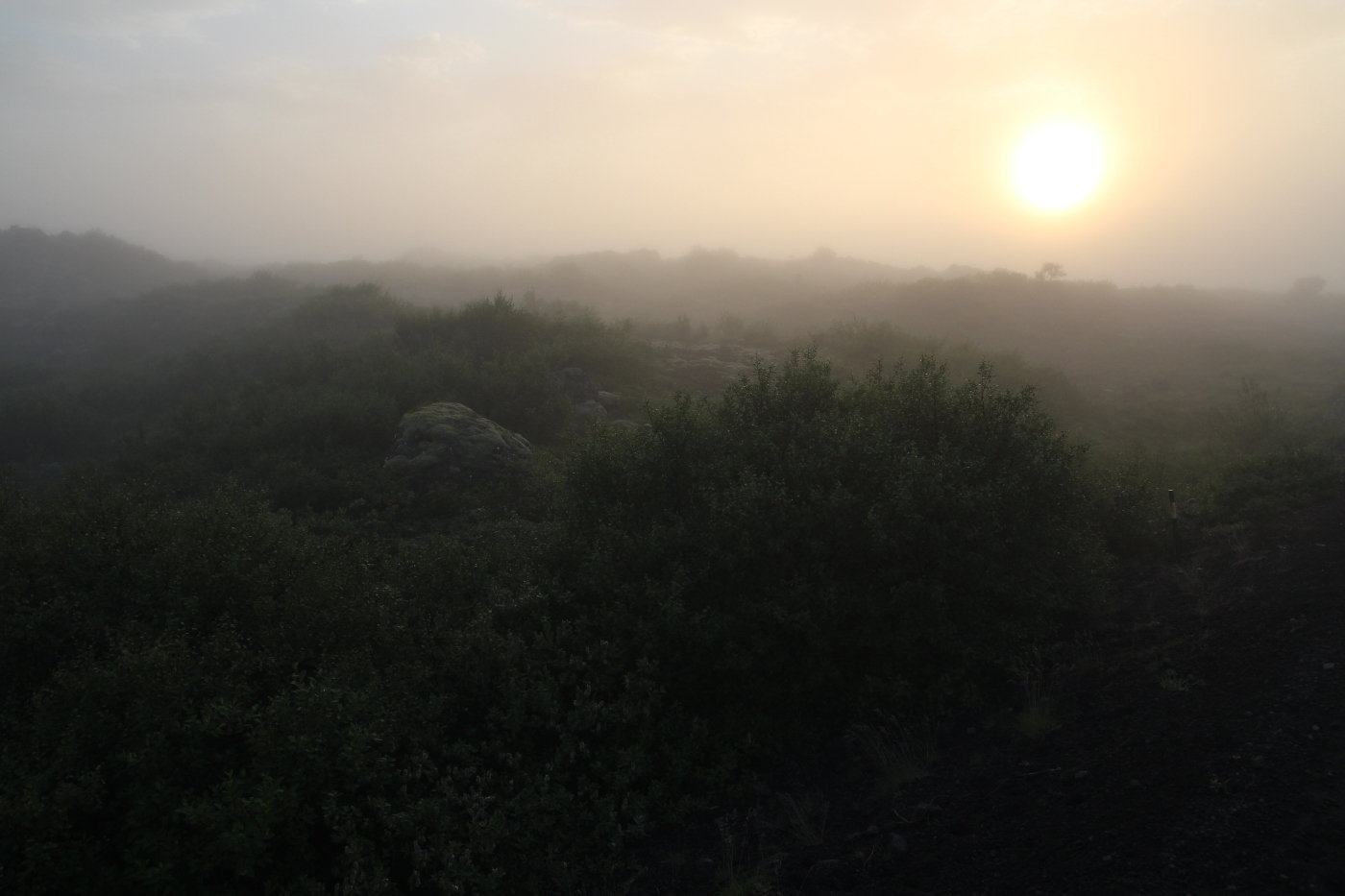
I was getting tired when I saw the sun rice above the horizon around 4 am. After several photo shots I decided to find a place to sleep and feed my recorder with “early morning summer sound”.
On my way, was a place named Hagavik, a very nice cove in the southwest of Þingvallavatn lake. When I arrived, the fog was still very thick. I spread out my bivi sack on a place I remembered I put up my tent for about 35 years ago, when this place was not so popular. It was now a filthy motorist parking and fish hunting place. But, just as in the past, the soundscape was glorious.
Two MKH20 was placed close to the lake and I went to sleep 10 meters away.
The time was about 5:40 in the morning and the atmosphere was very quiet in the fog when the recording start.
Hagavík við Þingvallavatn. 1. hluti
Þann 27. júlí nýtti ég síðustu daga sumarfrísins til að hjóla með upptökutækin austur fyrir fjall. Við Hagavík fann ég mér náttstað snemma morguns. Hljóðnemana setti ég við fjöruborðið en lagðust sjálfur í Bivi poka á grasbala sem var illa troðin eftir marga bíla. Veiðisóðar höfðu greinilega verið þarna á ferð því úldin beita, sígarettustubbar og annað rusl lá þar um allt. En hljóðmyndin og kyrrðin var dásamleg eins og vanalega, alveg þangað til bílaumferðin fór að aukast síðar um morguninn.
In last week of August the first “real winter storm” arrived to Iceland, with strong cold wind and snow down to 300 m o.s. Luckily it was not as bad as weather forecast expected.
But for sure more and stronger storms will arrive in coming months. Sometimes it happens during high tide and with extremely low air pressure so the whole harbor is floating in deep seawater.
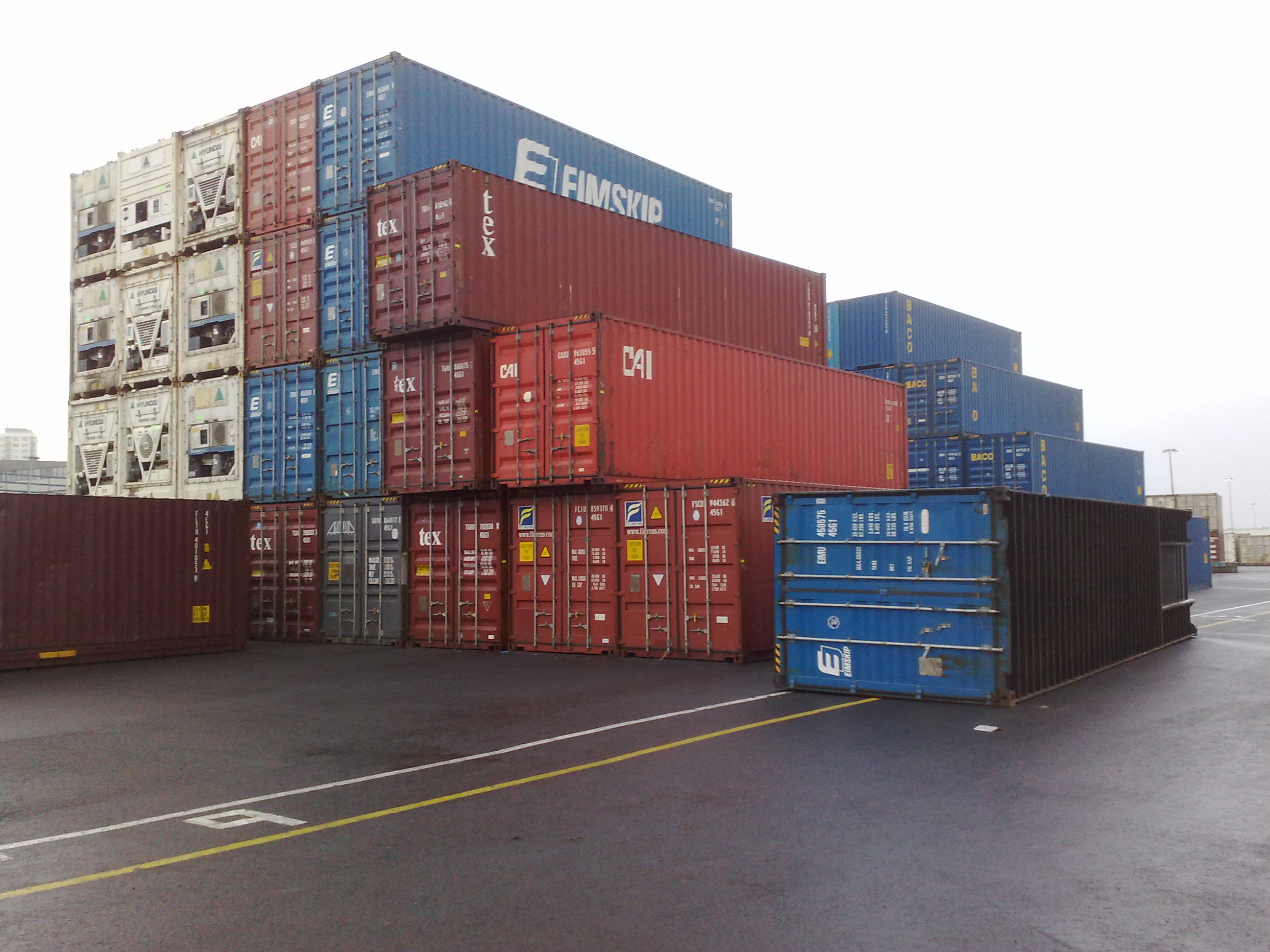
Last autumn 2012, we got at last two times a “real storm”, and both this storms arrived while I was at work. It was really dangerous to be outside so we spent most of the day inside. Regularly we heard loud “drumming sound” and got a taste of an earthquake when containers and reefers flew of the stacks to the ground.
Following recording was recorded in one of those bad weather situations 2nd of November 2012. It is mostly audible wind noises with flying garbage around when suddenly somewhere in the harbor one container take off from a stack and fells to the ground.
Fljgúandi gámar
Upptaka frá Sundahafnarsvæðinu í Reykavik frá því 2. november 2012, þegar gekk á með miklu norðan hvassviðri. Þá fór mikið af Sundahafnarsvæðinu á flot og nokkrir gámar tókust á loft með miklum látum. Í upptökunni sem hér fylgir má heyra í gám þegar hann fellur úr stæðu einhvers staðar á svæðinu.
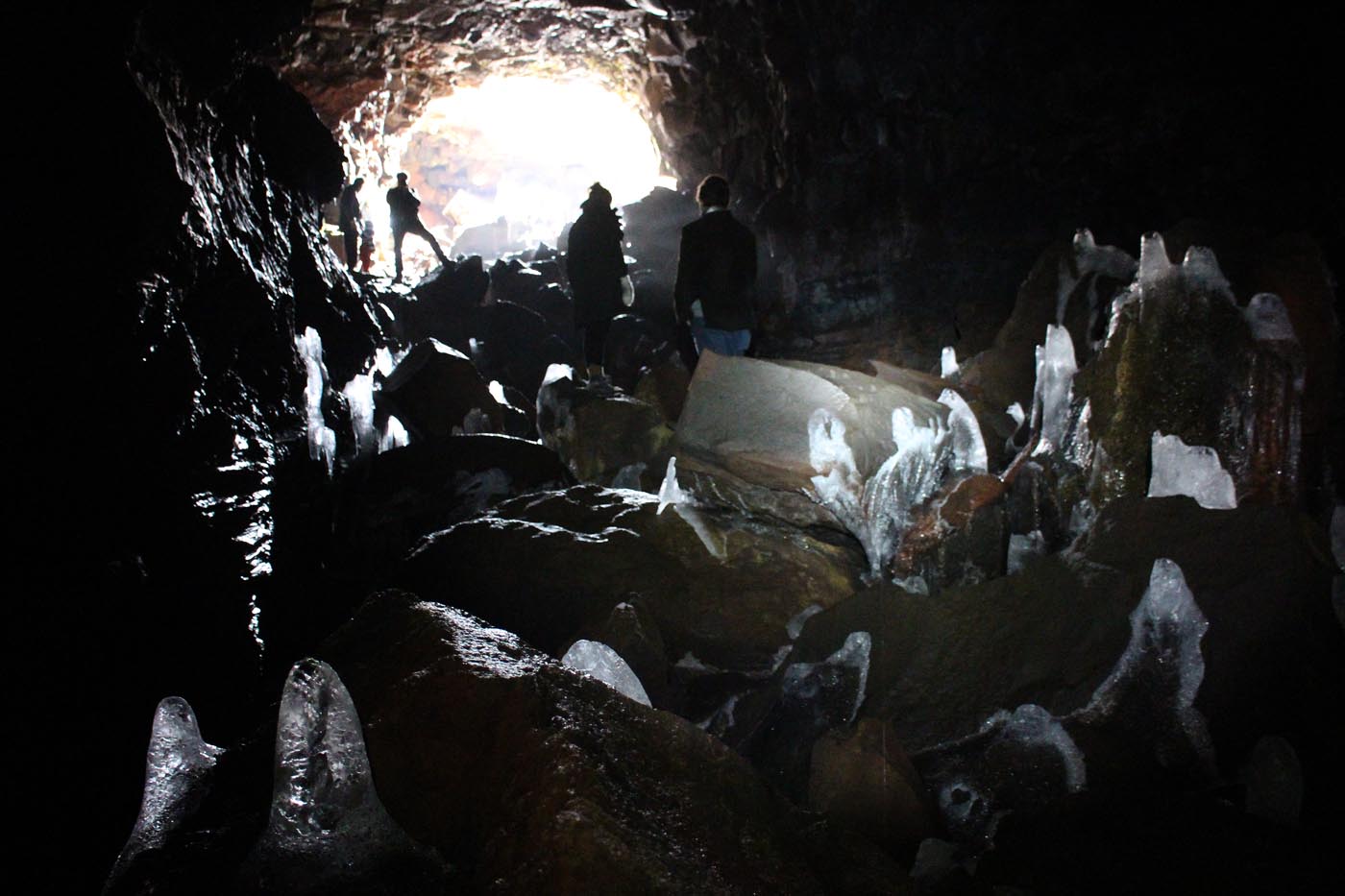
Early May I went into the Raufarhólshellir cave with a group of peoples. The tour was done to listen to the sound in the cave when water drops fall on ice on the floor. This sound can be really amazing when hundreds of drops fall in to all kinds of sizes and depths of holes in the ice.
But, most of the ice was gone, so the sound was not as expected.
Anyway, the experience and the sound was nice.
Hljóðin í Raufarhólshelli
Annan maí s.l. fór ég með ágætu fólki í Raufarhólshelli til að hlusta á vatnsdropa falla niður á ísinn á hellisgólfinu. Við viss skilyrði, þegar gólfið er ísi lagt, þá mynda vatnsdropar misdjúpar holur í ísinn. Þegar svo droparnir falla í þessar holur heyrist heil sinfónía af dropahljóðum sem er ákaflega gaman að hlusta á.
Því miður þá var mestallur ísinn horfinn þegar við mættum í hellinn. Hljóðin voru því ekki eins breytileg og vonast var til, en þó var ákaflega notalegt að gefa sér tíma til að setjast niður og hlusta.
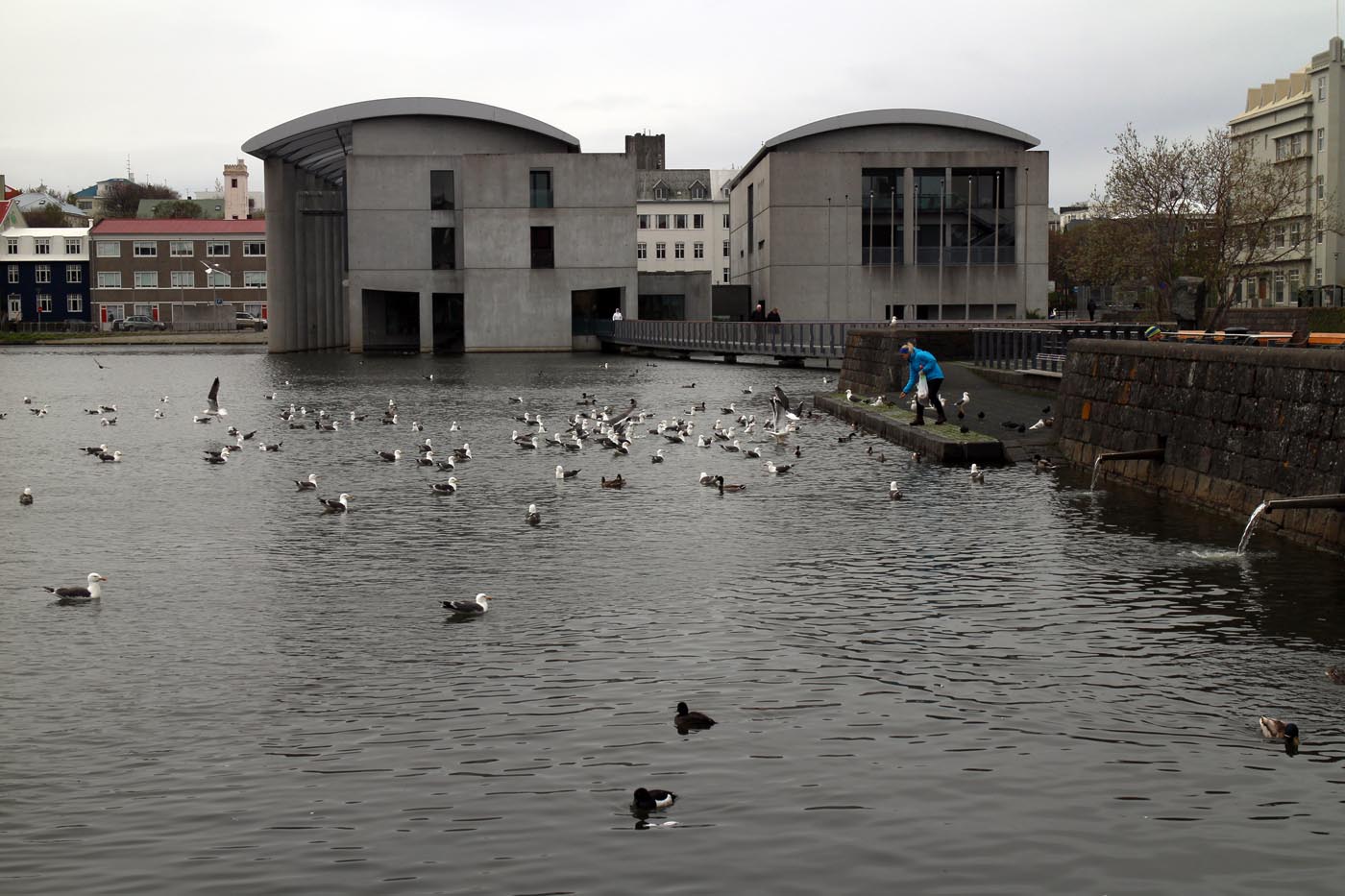
Last spring was cold and windy and 26th of May was no exception when I cycle downtown Reykjavik with my recording gear. It was a accordion day and members of the Accordion club of Reykjavik was playing in the city hall. When I arrive it was overcrowded and the sound quality was poor from the amplified monitors. So I decided to stay outside and listen instead to the birds on the pound, close to the hall.
This recording contain my walk beside the pond, from the southeast side (as seen on the picture) trough the city hall to the northwest side, into very different atmosphere.
Gengið í gegn um ráðhús Reykjavíkur
Þann 26 maí gerði ég mér ferð í ráðhúsið í norðankalda til að hlusta á Harmonikkufélag Reykjavíkur spila á hinum árvissa harmonikkudegi. Það átti ekki að koma á óvart að hljómburðurinn í Ráðhúsinu var handónýtur svo ég staldraði stutt við. Í staðinn fór ég að fylgjast með fuglum á tjörninni og hljóðrita það sem fyrir augu og eyru bar.
Last autumn and winter I published some of my recordings from 25th of June 2012 in the nature reserve at Flói in the south of Iceland.
Day after, during the night and early morning at 26th I continued to record, but now I moved the microphones about 3-5 meter closer to nearby pond.
Something happened. There was a strange echo or reverb in some directions. It sounded strange because this area is very flat. But afterwards I thought it came from a ridge about 50cm high along the pond. This echo was sometimes very nice so it is worth to continue to put this recordings from Flói on the web, maybe in 2 to 4 parts.
I skip the first two hours of this night recording, mostly because of a high noise from the surf along the coast site, 3-4 km behind the microphones and some truck traffic 7 -14 km front of the microphones.
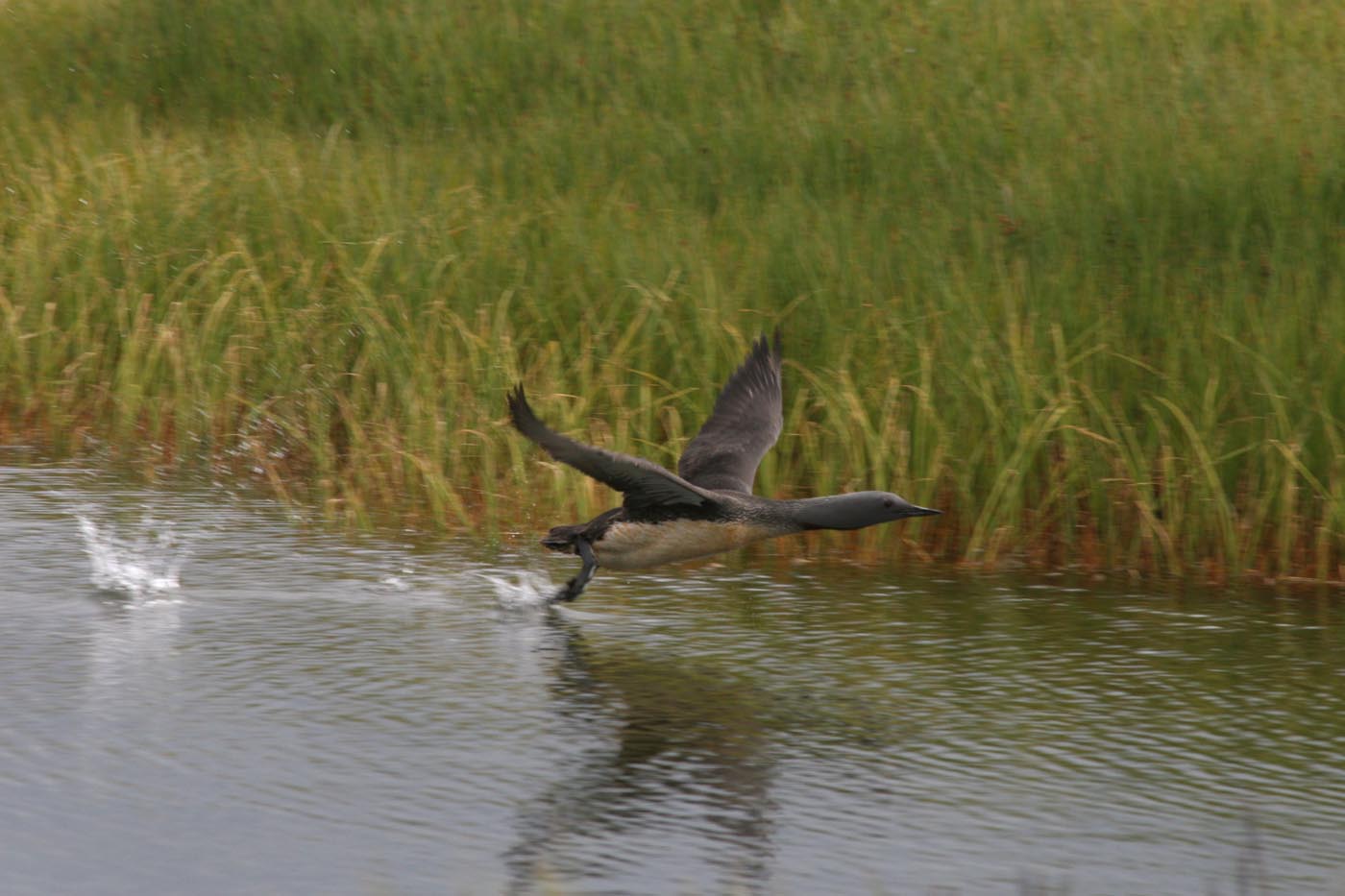
As usual this recording are made in virtually quiet environment. It starts around 1 am and lasts for 25 minutes. It is mostly very quiet, but in the end a choir of Red throated Diver gets very loud.
Friðlandið i Flóa 2012, 5. hluti
Síðastliðið haust og í vetur setti ég nokkrar upptökur úr friðlandinu í Flóa á vefinn. Voru það upptökur sem ég tók upp nóttina 25. júni 2012 .
Daginn eftir tók ég líka upp svo til á sama stað en færði hljóðnemana örlítið úr stað. Við það gerðist það undraverða að fuglar úr vissum áttum hljómuðu í einhverju bergmáli. Það er frekar óskiljanlegt nema að bakkar umhverfis nærliggjandi tjörn eru frekar brattir og u.þ.b. 50cm háir.
Það er því vel þess virði að halda áfram að setja á netið hljóðmyndir úr Flóanum.
Hér má heyra í fuglum s.s. óðinshana, hrossagauk, stelk, lómi, spóa, kríu, hettumáfi, músarindli og maríuerlu sem og mörgum öðrum fuglum. Bakgrunnssuð er helst frá briminu með suðuröndinni u.þ.b. 3-5 km fjarlægð fyrir aftan hljóðnemana og svo trukkaumferð eftir þjóðvegi nr.1 í 7-14 km fjarlægð. Upptakan er líklega frá því milli kl. 1 og 2 eftir miðnætti.
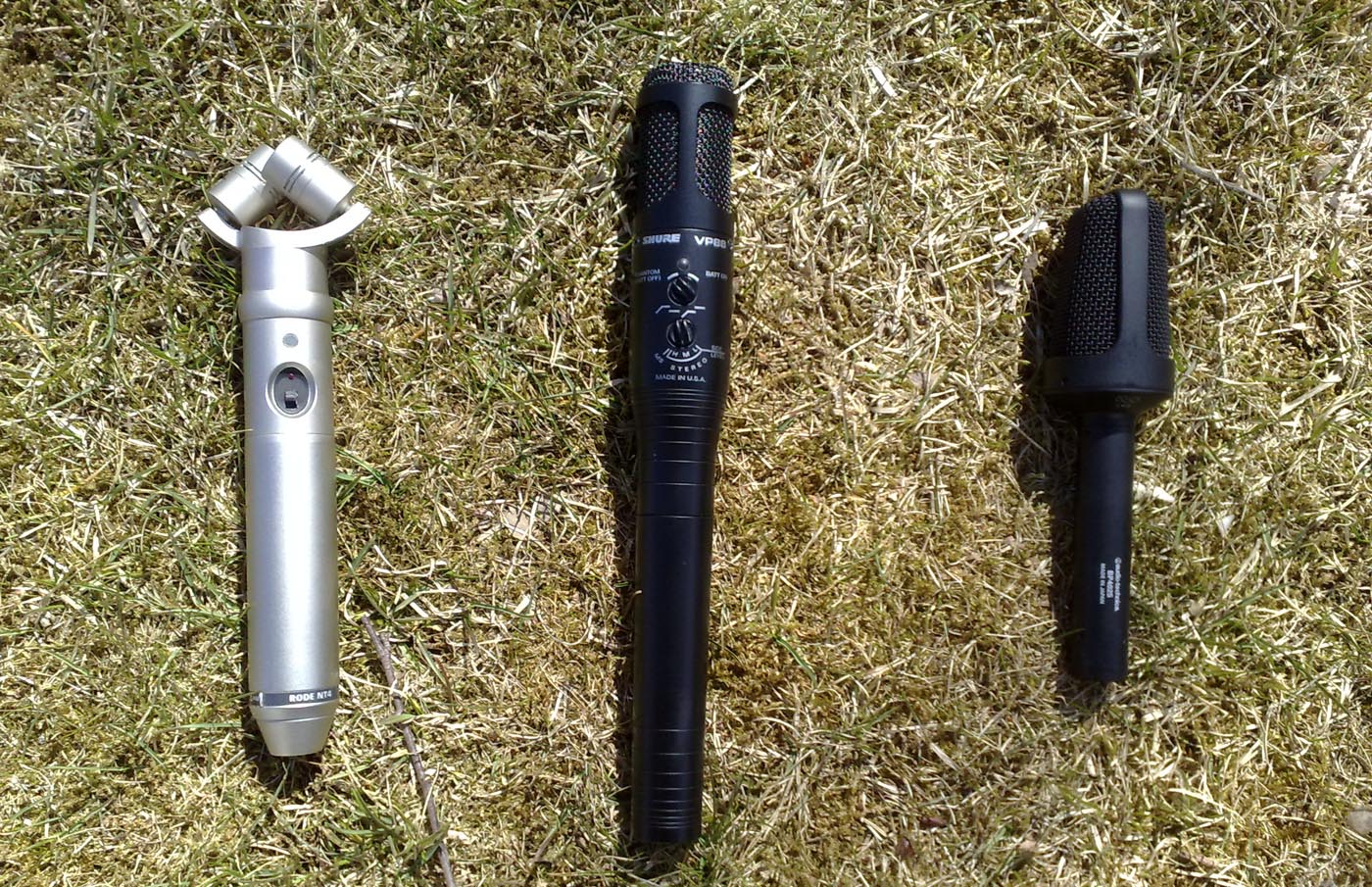
Three stereo microphones noise and sensitivity comparison.
Shure VP88 – Rode NT4 – Audio Technica BP4025
This recordings include a spoken word from pocket radio at very low volume and ticking alarm clock in 1,6m distance. The volume settings on the radio was so low, the sound was hardly audible with bare ears. Noise from radiator pipeline is audible in the background. Miscellaneous bird life is outside and should be also clearly audible.
Keep in mind. This test is only noise and sensitivity comparison. High sensitivity and low noise is VERY important for nature recordings. This comparison does not give any information how this microphones sounds for music recording or how they withstand high pressure sound level. See spectrogram and pictures
Quality headphones recommended while listen.
Shure VP88, Rode NT4 and Audio Technica BP4025 direct from recorder. All at same gain level at 55dB.
All three recordings are now independently level normalized up to 0dB.
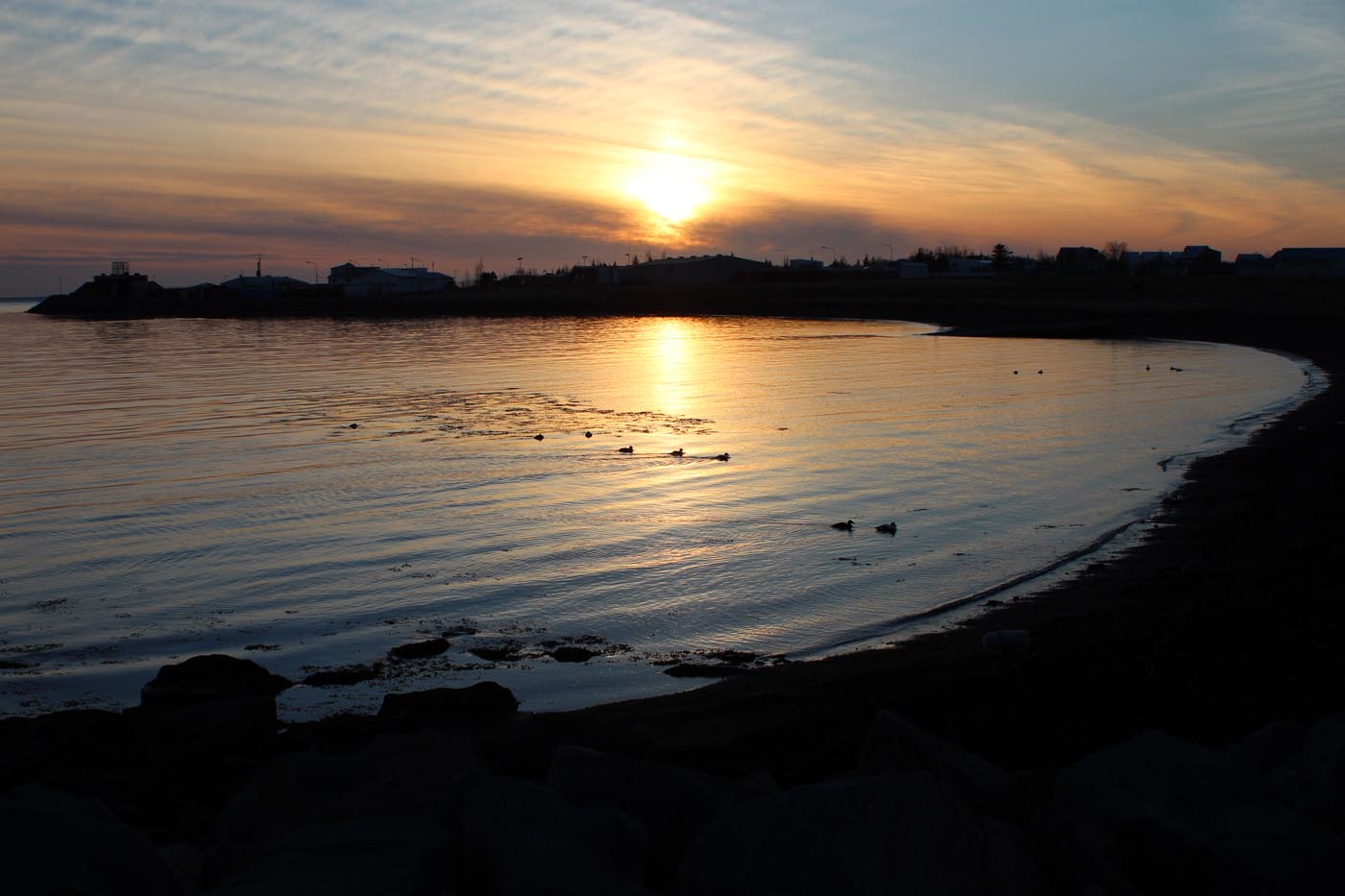
At 13th of May I cycled to the shore, west side of Reykjavik to make some microphones setup test in quiet environment. It was sunny and calm, but cold as it has been all this year’s spring.
This coastline is mostly unspoiled from humans works so there is miscellaneous birdlife. Along is a very popular walking and cycle path. Some places can be very quiet like the beach south of Skildinganes where I have recorded many times nature sounds…as far as it goes.
As usual where nature are close to humans automotive world there is a deep rumbling noise, a terrifying noise from burning fossil fuel. It does not only disturb my ears or recordings, it is a very clear warning about our stupid lifestyle that will sooner or later destroy our planet within a century.
Drunurnar frá Mordor
Upptaka af notalegri vorstemmningu í Grófinni sunnan við Skeljanes.
En í bakgrunni heyrast drunur frá vítisvélum borgarbúa sem fyrr en síðar munu breyta þessum ljúfu vorhljóðum í fjörunni.
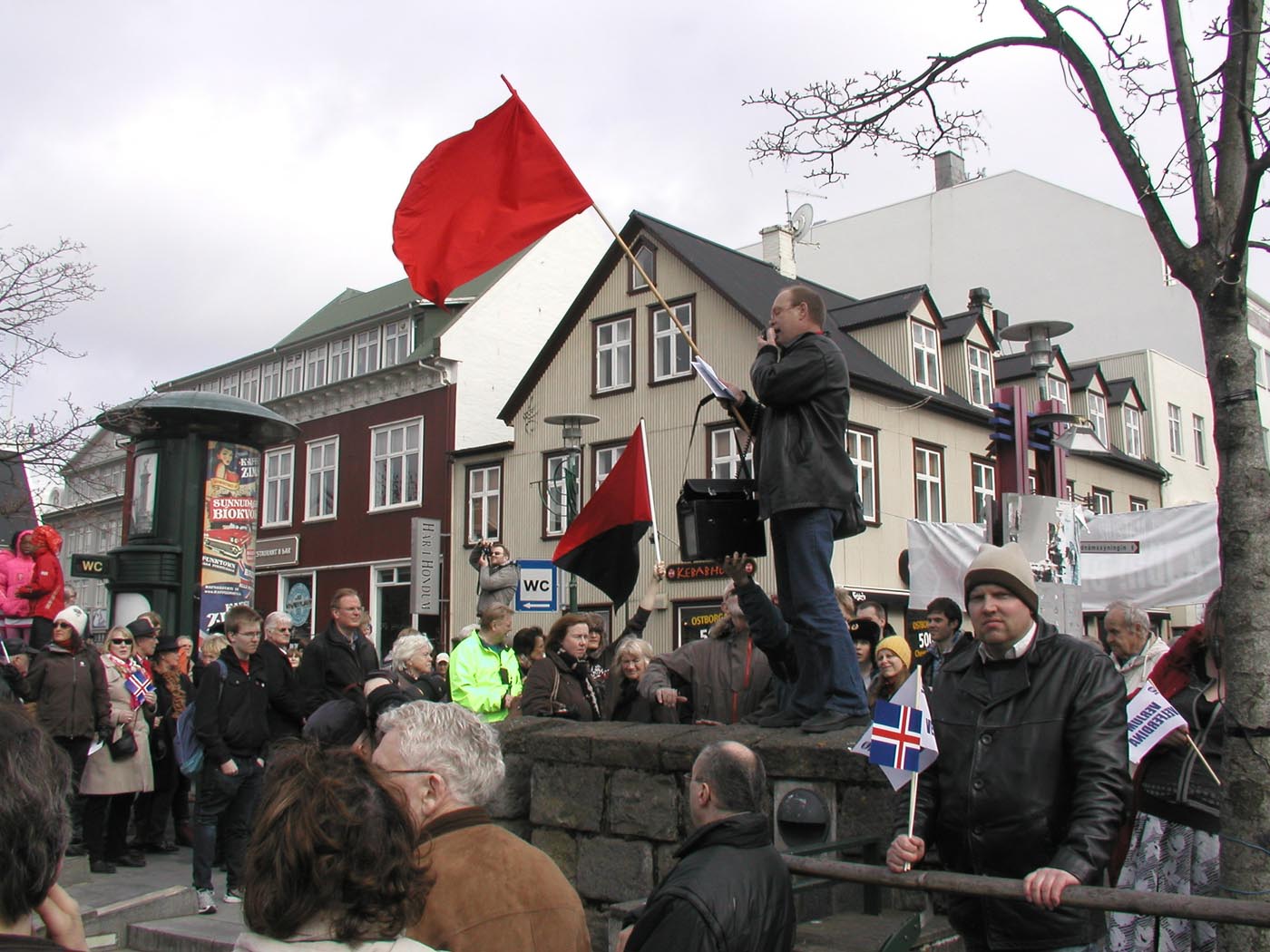
Every 1st of May is a Labour day parade in Reykjavik, where people walk together to the city center, listening to speeches and music.
For one year ago I walked this parade and listening to the day’s program with binaural microphones. Following recording contains the end of the day’s program and suddenly song and speech income of Iceland’s well known socialist Þorvaldur Þorvaldsson.
Another recording from the parade this day can be found at Audioboo
Verkaliðsdagurinn 1. maí 2012
Verkaliðsdaginn 1. maí, nákvæmlega fyrir ári síðan, mætti ég niður í bæ með Binaural hljóðnema. Ég bjóst ekki við neinu spennandi en lét upptökutækið þó ganga allan tíman. Þegar opinberum ræðuhöldum á Hallærisplaninu lauk tók við söngur Karlakór Reykjavíkur og Léttsveitarinnar. Þar á eftir tók við samsöngur á Internationalinum.
En óvænt í lokin þegar öllu átti að vera lokið kom Þorvaldur Þorvaldsson (Þorvaldur kommi) inn með hressilegan söng og hélt beztu ræðu dagsins.
Önnur upptaka, frá gönguni sjálfri þennan dag er að finna á Audioboo.
This is another ambience recording from the island Flatey in Breiðafjörður, a straight continue of part one.
Women, children as well as the elderly all gather for a boat is docking. Two men, with the day’s catch, step ashore.
When the catch has been divided, the whole throng returns to the village in a cacophony of conversations and drift homewards.
Somewhat nearer, in front of the microphone are a few Red-necked Phalaropes as well as Mallard ducks with ducklings. Other distinguishing birds like the loud Arctic tern and Whimbrel, as well as many other species of bird, can be heard.
Flatey í Breiðafirði 2012. Annar hluti.
Þetta er beint framhald af fyrsta hluta.
Nú safnast allir saman, konur, börn jafnt sem gamalmenni því bátur kemur að landi. Tveir menn með afla dagsins ganga á land. Þegar honum hefur verið skipt, kemur allur manskapurinn aftur inn í þorp með miklu skvaldri þar sem hver fer til síns heima.
Nokkuð nærri, framan við hljóðnemana voru fjörugir Óðinshanar og stokendur með unga. Aðrir háværar tegundir eru háværar s.s. kría og spói auk margra annarra fuglategunda.



 HLJÓÐMYND - SOUNDIMAGE